


Conservative Blogger
Democrats hold polling leads in several closely watched Senate races, including five Republican-held seats, as the party seeks to overcome the GOP's 53-47 majority in the Nov. 3 midterm elections. The latest RealClearPolitics polling averages show Democratic candidates ahead in Texas, Maine, Alaska, Ohio and North Carolina, all seats currently held by Republicans. Democrats also lead in Michigan, Minnesota and New Hampshire, where they are defending seats. Republicans retain narrow polling advantages in Iowa and Kansas, two other contests that have become increasingly competitive. Democrats need a net gain of four seats to reach a 51-49 majority, assuming the two independents who caucus with them continue doing so. Republicans currently hold 53 seats, compared with 45 Democrats and two independents. North Carolina represents one of the Democrats' strongest opportunities to capture a Republican-held seat. Former Democratic Gov. Roy Cooper leads Republican Michael Whatley by 9.9 percentage points, 50.6%-40.7%, in the RealClearPolling average. In Texas, Democrat James Talarico holds a 1.5-point advantage over Republican Ken Paxton, 48.4%-46.9%, in a state where Republicans have dominated statewide elections for decades. Maine's contest is considerably closer. Democrat Troy Jackson leads Republican Sen. Susan Collins by 1.4 points, 48.8%-47.4%. Collins, who has repeatedly won reelection despite Maine's Democratic lean in presidential contests, is seeking another term in a race that could help determine Senate control. In Alaska, former Democratic Rep. Mary Peltola leads Republican Sen. Dan Sullivan by 1.2 points, 49.4%-48.2%. Ohio offers another potential Democratic pickup. Former Sen. Sherrod Brown holds a 3.3-point advantage over Republican Sen. Jon Husted, 48.2%-44.9%, in a special election. Brown is attempting a political comeback after losing his Senate seat in 2024. Democrats also hold polling leads in three states where the party must defend existing seats. In Michigan, Democrat Abdul El-Sayed leads Republican Mike Rogers by 1.9 points, 47.9%-46.0%, in the contest to succeed retiring Democratic Sen. Gary Peters. All eight polls included in the current RealClearPolling average show El-Sayed ahead, although several place the candidates within a few percentage points of each other. Minnesota Democrat Peggy Flanagan holds a 3.2-point lead over Republican Michele Tafoya, 46.5%-43.3%, in the race for retiring Democratic Sen. Tina Smith's seat. In New Hampshire, Democratic Rep. Chris Pappas has a wider advantage over Republican John E. Sununu, leading by 6.5 points, 49.5%-43.0%, in the contest for another Democratic-held seat. Republicans, meanwhile, are narrowly ahead in two races that have attracted increased attention. In Iowa, Republican Rep. Ashley Hinson leads Democrat Josh Turek by just 0.6 points, 46.1%-45.5%. An InsiderAdvantage survey conducted Oct. 21-22 gave Hinson a two-point advantage, while an earlier Marist poll showed Turek ahead by three points. Kansas presents an even narrower polling margin. Republican Sen. Roger Marshall leads Democrat Adam Hamilton by 0.3 points, 46.0%-45.7%, in a state that has traditionally favored Republicans. The Senate math leaves Democrats with little room for losses in states they already control. Capturing four Republican-held seats while successfully defending their existing seats would give them a 51-49 majority. For example, Democratic victories in North Carolina, Texas, Maine, and Alaska would be enough to flip control if the party also holds its other seats. Ohio offers another potential pickup. Several of the contests remain within typical polling margins of error, however, and the averages reflect voter preferences before Election Day rather than guaranteed outcomes. © 2026 Newsmax. All rights reserved. |
 |
Continuing our look at the 14 propositions on the November 2026 California ballot (Proposition 1, regarding the authorization of bonds to finance affordable housing, is here, and Proposition 2, regarding an increase of the state’s “rainy day fund,” is here), we now come to Proposition 3. Which, since this is California we’re talking about, unsurprisingly involves taxes. Not technically raising taxes, but rather making permanent a tax increase approved by voters in 2012. Back in 2012 — my apologies for reminding you how that election went — California’s voters agreed to a temporary, in this case seven years in duration, state income tax increase for residents who, if single, made $250,000 a year or more and couples who made $500,000 or more. The law specified that all revenue from the income tax so acquired had to go directly to local school districts and community colleges. Because, like everything Democrats do (ask them), it’s for the CHILDREN!!! The proposition also increased California’s sales tax from 7.25 percent to 7.5 percent for four years. In 2016, California voters approved a proposition that extended the income tax increase from its original seven-year duration to 12 years. The sales tax increase expired; the rate returned to 7.25 percent, where it remains. However, unbeknownst to many, including California residents, additional sales taxes can be levied at both the county and city levels. But that is a discussion for another time. Back to Proposition 3. It would make the income tax brackets originally affected by the 2012 initiative permanent. The rates are adjusted for inflation; at 2025 levels, we are talking about $371,000 for a single, $742,000 for a couple, and $505,000 for those who, when filing their state income tax return, list themselves as the head of household. 89 percent of the tax revenue would be allocated to local K-12 schools, with the remainder given to community colleges. How the funds would be spent would be decided by local school boards, with the stipulation that none of it be used for administrative costs. The Legislative Analyst’s office estimates the amount of money involved at between five and 15 billion dollars a year.
According to the state’s own numbers, California has 5,731,260 students enrolled in its public education system. This is a seven-percent decrease from 10 years ago. This year alone saw a 1.3 percent drop in enrollment from the previous year. One would think that, given fewer students requiring money to be spent on their indoctrination … er, education, a corresponding decrease in the money available for spending would suggest itself. But this is California we’re talking about. It will never happen, but it would be nice if once — just once — the powers that be would say, “You know, we need more money for this or that. Tell you what we’re going to do. We’re going to find the most ornery financial auditing firm out there, one that despises both sides of the aisle with equal fervor, and let them not only check all the books but also do on-site evaluations with no questions unasked and no stones unturned. Then, we’ll let them present all their findings. If, and only if, they produce evidence that more money needs to spent will we come to you with any kind of tax increase.” As I said, it will never happen. But it’s fun to dream. In the meantime, let’s guarantee that there will be less tax revenue, regardless of whether Proposition 3 passes, because people affected by measures like Proposition 3 will continue leaving California, except now in ever-increasing numbers. BRILLIANT! Editor’s Note: The 2026 Midterms will determine the fate of President Trump’s America First agenda. Republicans must maintain control of both chambers of Congress. Credit: redstate.com |
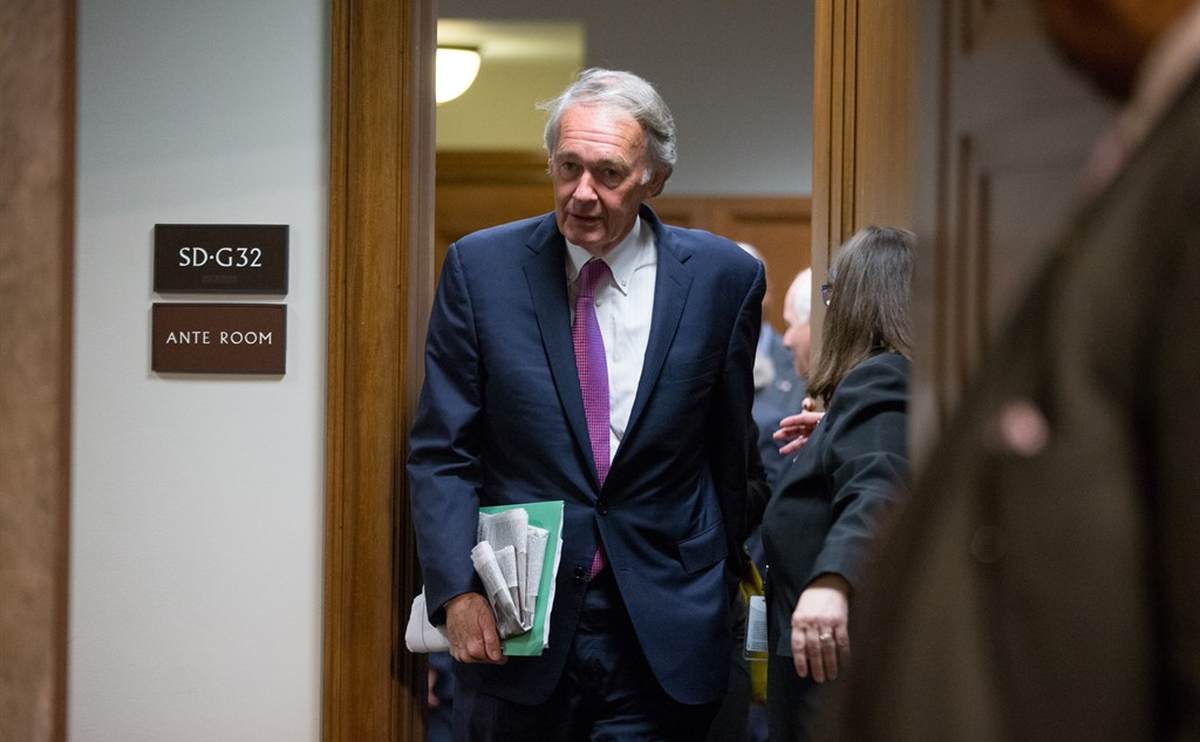 |
After what we’ve seen historically, it takes a brave soul indeed to apply for a job as an intern to a Democrat politician. Sen. Ed Markey (D-MA) is putting out the call anyway, and although he doesn’t come right out and say it, it sure sounds like white straight folks should look elsewhere for employment:
If I’m a 20-something-year-old “cisgender” male or female who is not a member of a minority group and not a veteran, and I’m reading that posting, I’m thinking, well, they sure as hell don’t want me. What happened to diversity and inclusion and not discriminating against people because of their skin color, religion, or sexual identity? It’s not the first time Markey has caused controversy with similar posts. This time, however, it’s getting attention because a commentator for, of all things, the left-leaning Atlantic, is calling out the very white octogenarian senator for creating more problems than he’s solving with his seemingly discriminatory post. The headline and sub-headline of the article pretty much sum up the author’s point:
It’s not every day that I find myself nodding my head to points made in leftist publications, but I can’t argue with these conclusions:
The idea of leveling the playing field for people of all backgrounds is one that I can get behind, and America has been working to do just that for decades. The problem with the DEI movement, however, is that their version of that often actually involves tilting the stage and, ironically, openly discriminating against some demographics. Trump has done an admirable job of fighting back against prejudice, but ancient relics like Ed Markey show there’s still a long way to go. Credit: redstate.com |
 |
Before I accept an expert witness engagement, I run a conflicts check. The case, the client, and the counsel all have to clear it. An expert with a bias is an expert with no value. I worked my way through college and built a career on one asset nobody can lend you, which is a reputation for fairness. Federal judges answer to the same rule, and two Minnesota judges are finding out how it feels. The Justice Department has asked them to step aside from immigration-related cases after both spoke to The New York Times about Operation Metro Surge, the administration's immigration enforcement campaign. The department can't fire a judge or pull one off a case by itself. It filed a misconduct complaint with the Eighth Circuit, filed separate recusal motions, and now waits while the courts decide. I think the judges handed DOJ a loaded argument. A judge who publicly sizes up a litigant's conduct invites a fair question about open-mindedness. Judge Patrick Schiltz sat for a 90-minute interview and said the government's actions "created a grave threat to the rule of law." Judge John Tunheim said agents weren't "arresting, in my view, people who were dangerous criminals on the street." Schiltz now oversees the government's effort to revoke the citizenship of Salah Osman Ahmed, who pleaded guilty to a terrorism charge in 2009. Tunheim presides over the case of Hester Sophia Weihmann, a South African permanent resident whom prosecutors allege voted illegally in 2024. She is accused, not convicted. Two days after DOJ filed its complaint, Schiltz repeated many of the same points at a law school symposium, and DOJ cited those remarks in its motion. The federal judiciary's code of conduct tells judges not to comment publicly on the merits of a pending or impending case, and its commentary says that restraint lasts until the appeal is over. Explaining court procedure and giving scholarly talks are allowed. A separate federal statute requires a judge to step aside in any proceeding where the judge's "impartiality might reasonably be questioned." That test needs no proof of actual bias. It asks how things look to a reasonable person, the same question I ask myself before every engagement. Party labels explain nothing here. Schiltz is a George W. Bush appointee who clerked for Antonin Scalia. Tunheim was appointed by Bill Clinton. Scalia's recusal memo in the Cheney duck-hunting case accepted the reasonable-questioning test and held that it turns on the facts as they existed, not as they were reported. In Minnesota, the facts sit on the record in the judges' own words. Hollywood grasped this decades ago. In The Verdict, Paul Newman's ambulance-chasing lawyer faces a high-end defense attorney and a politically connected judge. The film needs no bribe to make its point. Audiences distrust that bench on sight. The standard can't bend with the speaker's party. In the Cornell fraternity case, one of the men named in the lawsuit asked a New York judge on Oct. 7 to remove Attorney General Letitia James as special prosecutor, arguing her public statements show prejudgment. Gov. Kathy Hochul says James will follow the facts. These are allegations, not findings, and no court has ruled. A judge hears arguments Oct. 29 on one challenge. If I posted opinions about a case before taking the engagement, I'd expect to be struck from it, and I'd deserve it. The judges have a fair answer. Schiltz says a February advisory opinion from the Judicial Conference's ethics committee lets judges speak about the rule of law and judicial independence, and Minnesota's federal bench says the interviews stayed within the rules. Schiltz also reported 96 instances of ICE disobeying directives in 74 cases. The code itself says it is not meant for tactical advantage. When DOJ went after Judge James Boasberg over remarks at a closed-door judges' meeting, Chief Judge Jeffrey Sutton, a Bush appointee, dismissed the complaint. Ethics experts expect DOJ to lose its bid to sideline Schiltz and Tunheim. But the same advisory opinion warns judges against commenting on pending cases or speaking in ways that call their impartiality into question. Defending the courts in general is one thing. Telling a reporter that a government ignoring court orders invites anarchy or authoritarianism, then hearing that government's denaturalization case, is another. DOJ argues that a judge who has taken sides on enforcement can't preside over its largest denaturalization effort. Whether those remarks reach a terror-support case or an election-fraud prosecution is a question the judges should answer on the record. The procedure has its own problem. Schiltz and Tunheim will decide the motions themselves. I wouldn't let a client audit its own books, and I'm not sure a judge should grade its own impartiality. DOJ hasn't helped its cause either. Attorney General Todd Blanche announced the complaint at a press conference, an odd way to object to judges talking to reporters. Three changes would help. Judges should speak through written opinions in active cases involving the government and leave interviews to law professors. The Judicial Conference should draw a brighter line between defending the courts and characterizing a litigant. Recusal motions that turn on a judge's own words should go to a different judge as a matter of course. Congress holds the removal power, and it takes a two-thirds Senate vote reserved historically for serious misconduct. Judges who can't stay impartial should recuse. Those who won't answer to Article I. I coach youth sports. Picture a referee who tells a reporter before kickoff what they think of the home team, then works the game. Aristotle called the judge "a sort of animate justice." People accept verdicts they dislike because they believe no thumb sat on the scale. Judges who want that trust can earn it the way I do, by passing the conflicts check and keeping their opinions to themselves until the case is over. Credit: Jay Rogers is a financial professional with more than 30 years of experience in private equity, private credit, hedge funds, and wealth management. He writes about issues in finance, constitutional law, national security, human nature, and public policy. |
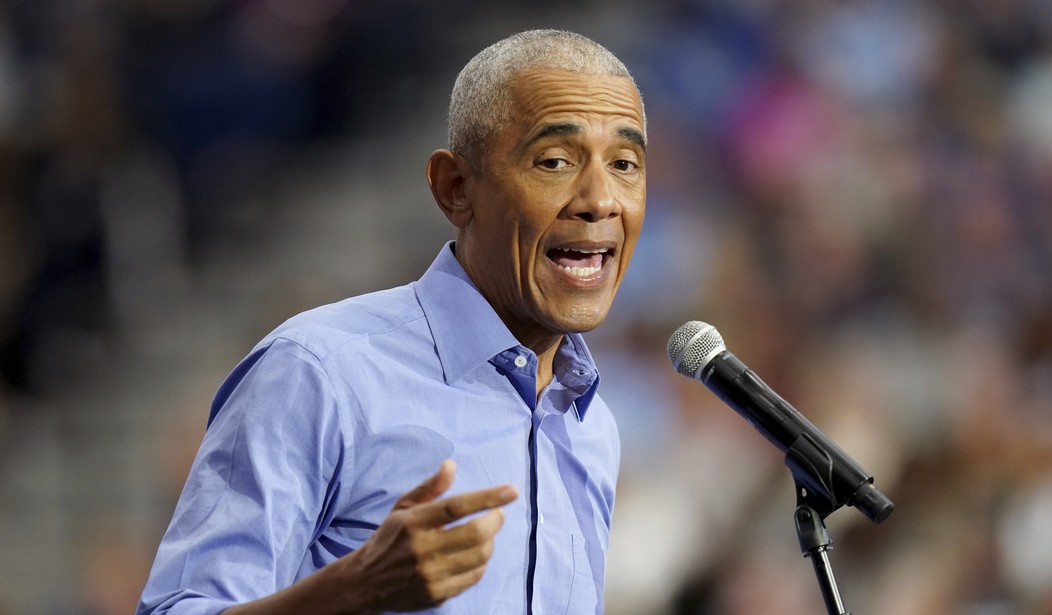 |
I didn’t watch this rally, but Barack Obama is back on the trail, as promised. He went up to Michigan, usually a kiss of death for any Democrat running there. The former president will also swing by Ohio. Two states he won, though, have become shakier for Democrats, thanks to Donald J. Trump. Obama is campaigning for Abdul El-Sayed, an odd-couple pairing: El-Sayed opposed most, if not all, of Obama’s key agenda items when he was president. Yet this swipe at Trump during the rally was amusingly awful. He mocked Trump for the Iran War. It’s not an operation without criticism, as Trump has been too gracious to Tehran when he should be bombing the hell out of it. Barry, you and braindead Joe Biden are bad at world affairs. Maybe it’s that default Democrat self-righteousness, but you allowed Russia to annex Crimea and did nothing. You let Bashar al-Assad deploy chemical weapons multiple times and did nothing. You did nothing in Syria. 😝 👇
You used Yemen as the poster child for future counterterrorism operations, only for it to devolve into an ongoing civil war featuring the Houthis. Your nuclear deal was also feckless; you paid a ransom to the Iranians to free detained Americans — everyone knew your playbook, Barry, which is why you got owned in your second term. So, please, stop acting like the Marshall Plan is on your resume. Trump won in 2016 for a reason, Barry. It was to undo your mess. And later, Joe Biden’s. Credit: townhall.com |
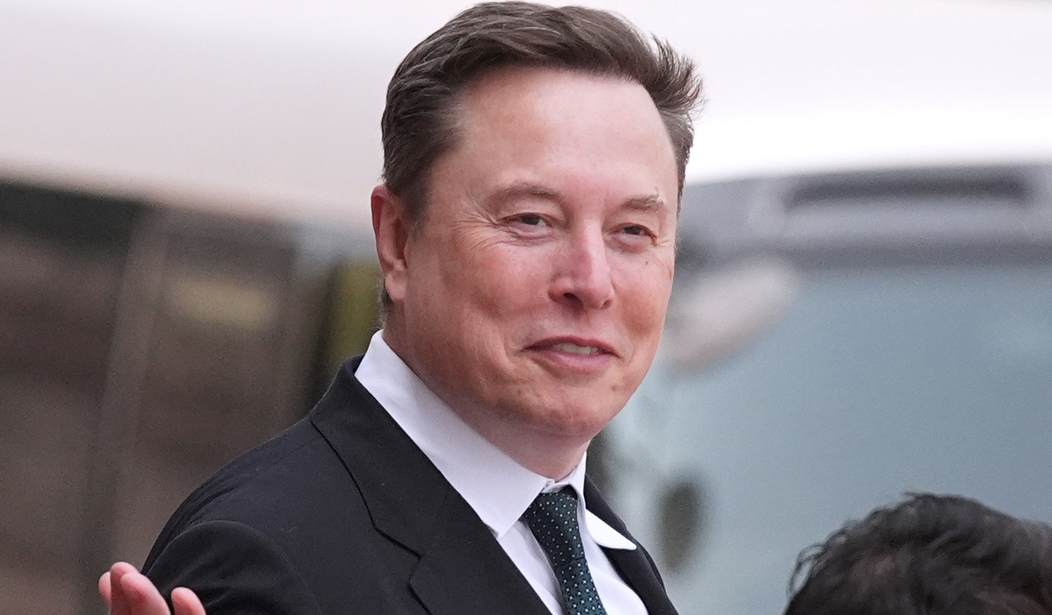 |
Elon Musk, the main figure behind SpaceX, Tesla, and X, is attempting to set the record straight on Starlink’s use in the Russo-Ukrainian War. Musk says that the recent throttling of Starlink in Ukraine was due to drone operators misusing the resource to conduct “offensive drone strikes” that struck deep into Russia and targeted their energy infrastructure in a move that violates their terms of service. Musk says a loophole in the system allowed for its misuse, and has now been closed. Ukrainian forces will now have to use Starshield, a separate system controlled by U.S. government officials, to conduct these strikes. Musk also pushed back on criticism that his company was not doing enough to aid the defense of Ukraine. “Starlink remains critical to the defense of Ukraine, as it is the only system that cannot be jammed or blown up, at least for now,” he said in a social media post. “Were Starlink to be turned off, the Ukrainian front line would collapse immediately. This is NOT a threat, it is simply a statement of fact.” “SpaceX has done more to defend Ukraine than any private company on Earth BY FAR,” Musk added. “That said, I have nothing but UTTER CONTEMPT for the virtue-signaling evil warmongers who push for endless slaughter and offer no realistic solution to the conflict.” The statement follows nearly one week of Ukrainian complaints that American officials and Musk were preventing their ability to carry out drone strikes. It was another development in a growing list of tensions between the U.S. and Ukraine over the four and a half year long war. President Donald Trump has suggested that a change in Ukrainian leadership may be necessary to bring the war to a close, as Ukrainian leader Volodymyr Zelensky’s military forces continue to strike at Russian energy infrastructure despite American demands to cease operations. At Trump’s request, peace talks between the U.S., Russia, and Ukraine could take place as soon as next month. Credit: townhall.com |
 |
Director of National Intelligence (DNI) Jay Clayton warned of increased Iranian activity to target United States personnel, with deadly plots against Iran reaching “advanced stages” in the Middle East and certain other countries. In an intelligence memo sent on Friday to Secretary of State Marco Rubio, and obtained by news outlets, Clayton explained that intelligence indicated increased targeting by Iran. Axios, which first reported on the memo, provided a copy of the document.
The DNI also added that “every effort to downgrade as much intelligence as possible” would be made so that Rubio could disseminate the material to State Department personnel.
The memo followed the order by the State Department earlier this week directing the departure for non-emergency U.S. government employees and their families in Saudi Arabia, with State Department spokesperson Thomas Pigott citing increased hostilities against the Kingdom, including on civilian airports, by the Iranian-backed Houthis terrorist group. According to CBS News, several other American embassies in the region also adjusted their staffing under the status of “restricted operations,” allowing them to reduce personnel without going under a formal ordered departure. On Friday, the State Department updated its travel advisories for many Middle Eastern countries. Though the advisory level and indicators of risk were not changed, the department emphasized “an increase in potential armed attacks by the Iranian-supported Houthis and Iranian efforts to target U.S. government officials in the region.” Credit: oann.com |
 |
President Donald Trump and First Lady Melania Trump cast their ballots in Palm Beach County, Florida, for the pivotal November 3rd elections. The president and first lady entered the polling station on Saturday to participate in early voting ahead of President Trump’s rally planned in Perry, Georgia, that evening. Though the commander-in-chief did not reveal the specific candidates he voted on after casting his ballot, he has vocally supported and rallied behind GOP candidates, posting lists of his endorsements for various states to Truth Social. In Florida, he listed:
Speaking with reporters after voting on Saturday, President Trump commented on his midterm blitz, referencing the political trend of the president’s party losing seats in the midterms.
In an effort to energize GOP voters, President Trump has held campaign rallies across the country in recent weeks, asking voters to “pretend I’m on the ballot.” Americans nationwide have already participated in early voting with just over one week to go before the midterm elections. Credit: oann.com
|


