Conservative Blogger
With two weeks to go before the midterm elections, Republicans hope they have found a potent closing message. President Donald Trump, Vice President JD Vance, and House Speaker Mike Johnson, R-La., are among the many Republicans who are using the riots in France to warn about what the country might look like if Democrats win back power. "What's happening to France, they want to happen to our country," Trump said at a rally in Kansas. "Democrats are the party of anti-Western Marxists and hostile Third World migrants." French authorities reported nearly 2,400 arrests and about 1,000 injured officers during the unrest. A fire severely damaged the city hall in Limoges in west-central France, while businesses were looted and clashes with police were reported in Paris, Marseille, and other cities. Republicans have used images of the unrest in France to argue that similar violence could occur in the United States if Democrats regain power. "What we are witnessing is a chilling warning for all Americans of what happens if the radical Marxist insurgent left gets their way," Johnson wrote on X. The Republican National Committee has argued the riots in France are what happens when immigration is left unchecked, pointing to Trump's efforts to secure the border. "What's happening in France serves as a reminder that when unvetted migrants who refuse to assimilate are imported into a country they hate, that country will fall into violent chaos," said RNC national press secretary Natalie Baldassarre in a statement to Politico. "Democrats are pushing the same failed policies that led France to this point, and Republicans are fighting every day to secure our borders, enforce the law and protect the American way of life," Baldassarre added. The White House has also posted images of the violence in France on social media, saying that "the future doesn't have to look like this." "President Trump is right: the riots in France are a direct result of their leader's open border policies. This is what will happen in America if radical Democrats have their way," White House spokesperson Lauren Bis told Politico. "They are the party of open borders, amnesty, lawlessness, and chaos while President Trump and Republicans are the party of commonsense and law and order," Bis added. Democrats argue that what is happening in France will not resonate with Americans concerned about the cost of living. "This is not about persuasion," pollster John Della Volpe told Politico. "It's about mobilization of the MAGA base." Sam Barron ✉Sam Barron has almost two decades of experience covering a wide range of topics including politics, crime and business. © 2026 Newsmax. All rights reserved. |
 |
The United States Department of Justice and the State of California continue to clash over operations in Operation Protect the Vote, a coordinated effort among all four of the California-based Offices of the U.S. Attorney which focuses on protection of election integrity and combatting and rooting out fraud in U.S. elections. The operation has thus far swept up more than 28 foreign nationals in the net of election fraud.
As our Managing Editor Jennifer Van Laar reported, on October 14, the State of California was given 48 hours to comply with a DOJ request to verify whether the more than 20,000 people discovered on the state's voter roll were citizens or not. Acting Deputy Attorney General Trent McCotter supplied California Secretary of State Shirley Weber and Los Angeles County Registrar-Recorder Dean Logan with a password-protected thumb drive which contained the names, addresses, and dates of birth of those the DOJ believed to be noncitizens and as Van Laar documented, made simple requests:
California decided to California, and on Thursday, the DOJ filed a lawsuit ordering the state's compliance with federal law. First Assistant United States Attorney for the Central District of California Bill Essayli said,
In reviewing Los Angeles' response to the lawsuit, Essayli highlighted a glaring admission: the Registrar-Recorder's office has no verification system in place. Like, none at all.
And have been diluted going on 40 years now. As Fox News' congressional correspondent Bill Melugin revealed, California could have been actively participating in the Systematic Alien Verification for Entitlements (SAVE) program, which was established in 1986 to verify whether a person was indeed a citizen of the United States or simply a foreign national legally in the country or an illegal alien. Thanks to California's sanctuary state policies, they ignored this tool and tacitly refused to use it. This is not exactly protecting the integrity of elections nor honoring the vote of your citizens.
Just like CA Gov. Gavin Newsom and AG Rob Bonta, SOS Weber continues to double down on this as a "political stunt" that will "disenfranchise thousands" of California voters.
Newsom's press office full of theater kids thought that snark would be the appropriate response.
Essayli is as clear on the law as he is on his role, posted the exact statute for the slow to process.
Newsom's theater kids threw their gaslight net a bit wider. Now that Newsom has admitted that voter fraud is happening in his state, he still is playing stompy-foot because Trump and his DOJ are just a bunch of meanies... or something like that.
The lawsuit is in the court of Trump-appointed Judge John W. Holcomb, and since we are two weeks out from the midterm elections, it promises to become more popcorn-worthy.
Credit: redstate.com |
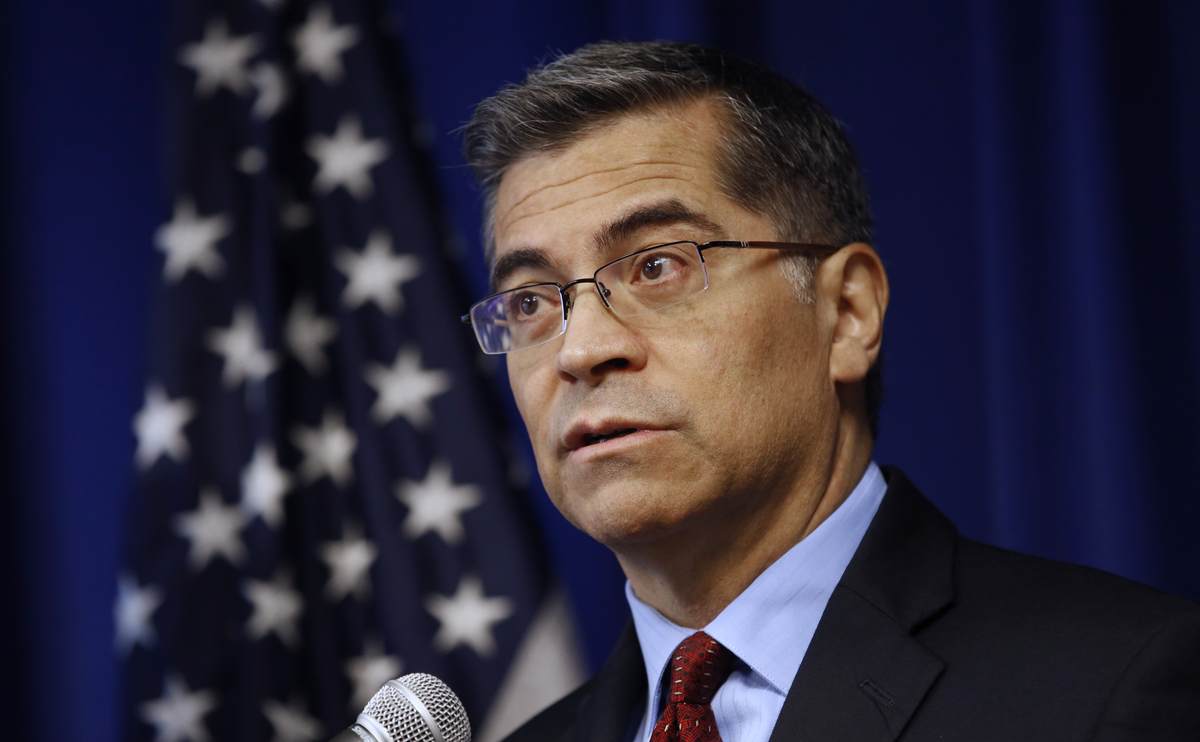 |
It's government cheese time, y'all. When I was a youngin', just after the dinosaurs stopped roaming the earth, a few weeks before the elections, our alderman would pop into the neighborhood with government cheese, powdered milk, and a claim about how much he'd done for the neighborhood and to make sure we vote for him. He kept getting re-elected every year, so I assumed it worked. The pandering from Democrat candidates has changed forms over the years, but the approach is still the same: the handouts are as fake and inauthentic as that cheese, and promises made will never be promises kept. KBLA talk radio host Tavis Smiley got to field some of that cheese and promises from former Biden HHS Secretary and Democrat nominee for California governor Xavier Becerra. When Smiley asked Becerra what he would do for Black Californians, Becerra did the then-Senator Kamala Harris dodge when she was asked in her 2019 presidential run about reparations: "I'm not gonna sit here and say I'm going to do something that only gonna benefit Black people!" Becerra dug real deep — all the way back to Reconstruction, for his answer:
Racist much? So, Blacks are either criminals worried about making bail, or we're only interested in handouts? What about those hardworking Black families in Altadena who lost their home in the Eaton Fire, and thanks to government incompetence and an insurance and regulatory quagmire, they're prevented from rebuilding a home that has been in their family for generations? Becerra has no clear answers because he a) doesn't think very highly of anyone Black and b) hasn't given it an ounce of thought beyond a campaign response. Political commentator Seneca Scott rightly calls out the disdain that Democrats, and especially Becerra, truly feel for Black voters as they pander for their vote. WATCH:
Of course, Becerra has seen all the video and press that Republican gubernatorial nominee Steve Hilton has garnered for actually going into neighborhoods, listening to, and breaking bread with voters; so, Becerra decided he needed to pander to his ace-in-the-hole L.A. Black contingent.
Newsflash: Nothing has been done about Black maternal health, and those missing and trafficked unaccompanied minors would like a word about his "experience." Becerra's pander tour included kissing the ring of the pastor of West Angeles Church of God in Christ, Bishop Charles Blake and First Lady DeAndrea Blake. "West Angeles" is the largest Black church in South L.A. and a necessary campaign stop for Democrats wanting the Black vote. So far, there is no footage showing Becerra broke out a Black accent or whether he had some hot sauce stashed in his suit jacket.
Becerra used the word "opportunity," but as Scott points out, they have no opportunities for Black people — they don't want Blacks to have opportunities. The soft bigotry of low expectations is clearly evident in the fact that all Becerra could come up with is cash bail. They just want to inebriate, medicate, and incarcerate us. As Scott so aptly said: "Black people need to start respecting ourselves and not vote for these people." We'll see, but California may be way gone at this point. But not Michigan. On Saturday, former President Barack Obama will campaign with Democrat Senate nominee Abdul El-Sayed, because El-Sayed has a Black voter problem. The only time they drag the now desiccated Hope and Change prez is when a candidate needs to get the Blacks in line. In the meantime, El Sayed is filming an embarrassing Black voter outreach video where he tries to "Blacksplain" our troubled experiences with people of Middle Eastern descent. WATCH:
Even more embarrassing, he goes to lunch with this Black podcaster and orders fried chicken. Are you kidding me?! And if that chicken is the genuine article and made in true Southern fashion, it's definitely not Halal.
In the August Michigan primary, Black voters overwhelmingly chose his opponent, Democrat Rep. Haley Stevens (MI-11), and despite her post-primary endorsement of El-Sayed, these voters have not moved into his camp. If El-Sayed's pandermonium keeps going as expected, Republican nominee Mike Rogers could run away with this. This latest Democrats for Mike Rogers ad is straight fire. WATCH:
And as we've documented well on these pages, TX Democrat Senate nominee James Talarico has had a Black voter issue since he bested their favorite Democrat Congresswoman Jasmine Crockett (TX-30) in the March Senate primary, and he's been circling the drain ever since. Since then, Talarico has blown off events in Black communities, disappeared from a Black voter outreach ZOOM call, and a pledged $25 million for outreach and door knocking has been nonexistent as the campaign pulls the purse strings tight.
According to Republican strategist Rebecca Trahan, early voting is going well.. for the Republicans.
Seems like Black Texans may be getting the memo from their Michigan brothers and sisters. It would be nice if this election cycle is the death knell to Democrats' pander theater. Credit: redstate.com |
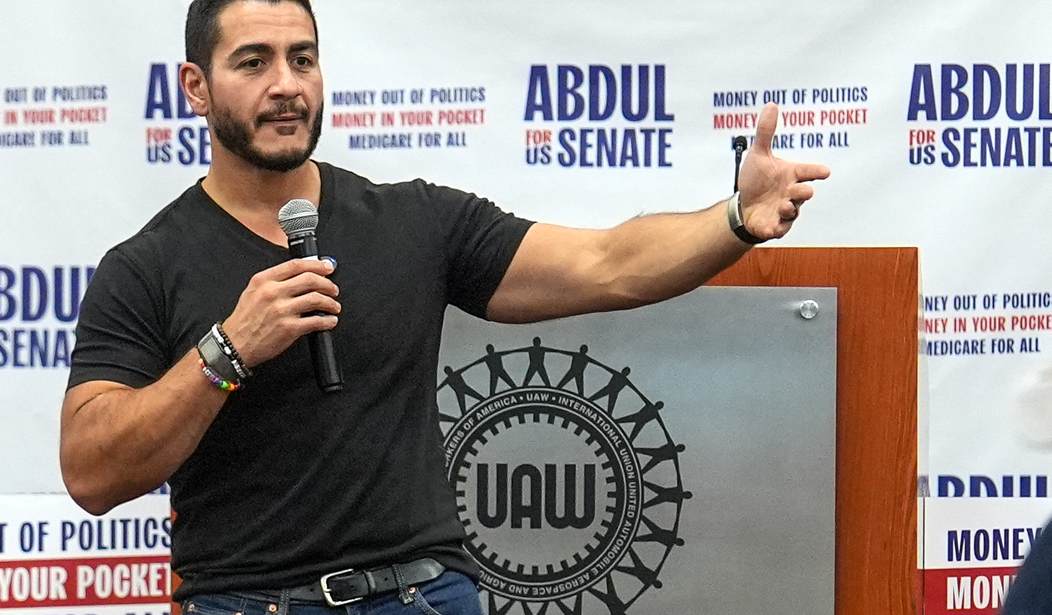 |
Abdul El-Sayed is in trouble with black voters. It’s not a new story: we saw that in the primary, where black and Jewish voters, two of the largest minority voter blocs in Michigan, viewed him as the plague. Now, we have Barack Obama
coming up to stump for him, an odd choice since El-Sayed ripped into the former Democratic president and is on opposite sides of the core issues within today’s Communist Party. Every time Obama must go to Michigan, it’s not good news. He went up there in 2016 to help shore up Hillary. It failed. Now, he’s going to help El-Sayed with black voters. Well, El-Sayed tried to do that by ordering fried chicken in this clip, and the rest is just bad. Is it as bad as when he turned into gas station Abdul, grabbed Gatorade, and bought spicy snacks? And I thought Hillary Clinton’s ‘I have hot sauce all the time’ moment was peak cringe regarding political pandering. Credit: townhall.com |
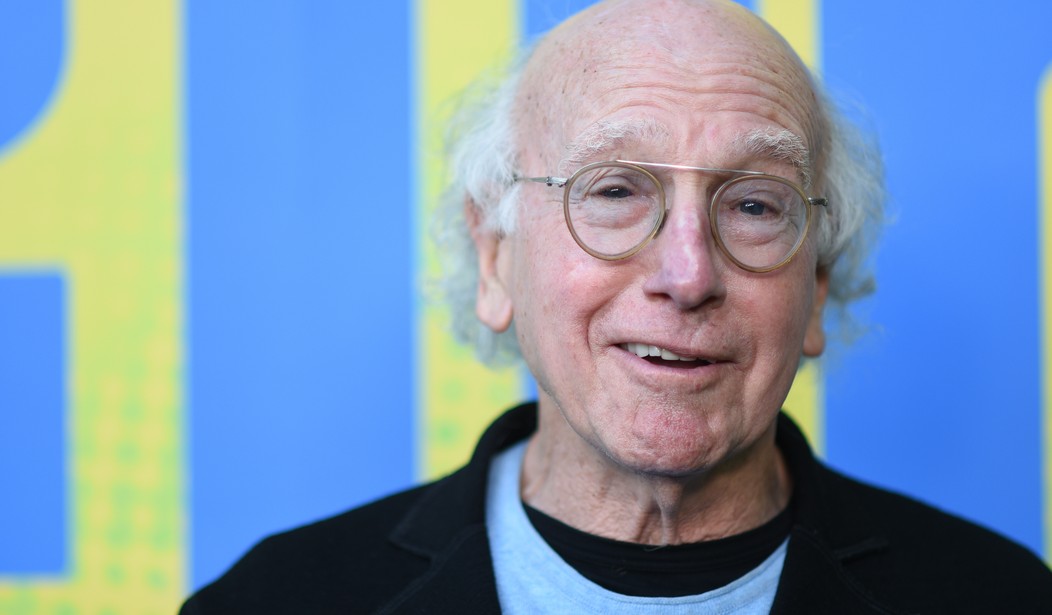 |
Larry David torched Bill Maher for having dinner with President Trump, writing a satirical op-ed about it in The New York Times. Maher shrugged it off. But now the Seinfeld co-creator and Curb Your Enthusiasm host is taking aim at the Democrat Socialists of America, and they’re not happy. I agree it’s probably not David’s best work, but the Left doesn’t know what’s funny. Let’s be honest, they don’t like it because it was written by a Jewish person.
The Left will always eat their own. Credit: townhall.com
|
 |
The Federal Bureau of Investigation (FBI) has escalated its search for a fugitive accused in the 2021 ambush killing of an Illinois Army National Guard soldier, adding the suspect to the agency’s Ten Most Wanted Fugitives list and offering a $1 million reward for information leading to his arrest. Authorities announced the massive reward for Joseph “Troubles” Matos, 44, who is wanted in connection with the fatal shooting of 19-year-old Private First Class Chrys Carvajal
in Chicago. Law enforcement officials hope the substantial financial incentive will break the silence surrounding the long-unsolved murder and encourage someone with critical information to step forward. The tragic encounter took place during the Fourth of July holiday weekend on July 3, 2021, in Chicago’s Belmont Cragin neighborhood. Carvajal, who had recently completed basic military training and was scheduled to be stationed with a transportation unit in Riverside, Illinois, was walking to his parked vehicle after attending a family party. Federal prosecutors say that Matos, a reputed member of the Milwaukee Kings street gang, along with co-defendant Gary “Gotti” Roberson, spotted Carvajal — who had no gang affiliations — and targeted him simply for being in the wrong place at the wrong time. Carvajal was shot and killed on the corner of Lockwood Avenue and Palmer Street in what investigators describe as an “unprovoked gang-related violence incident aimed at maintaining the gang’s turf dominance.”
While Roberson was apprehended in 2024 and remains in federal custody facing racketeering and firearms charges, Matos has evaded law enforcement for years. Authorities suspect Matos is receiving assistance to remain hidden and believe he may still be lurking in the Chicago area, though he also maintains potential ties to Dallas and California. Federal investigators have released extensive physical descriptions, noting Matos is “6-foot-2, weighs approximately 220 pounds, and features distinct tattoos, including ‘M-Town Kings’ on his neck, ‘MOST WANTED’ across his abdomen and ‘Trust no one’ on his hand. The drastic increase in the reward — which rose from $50,000 up to $1 million — reflects the severity of the federal charges and the commitment of investigators to deliver justice for the Carvajal family, officials emphasized. Carvajal’s mother and sister have consistently held public memorials and community vigils, pleading for witnesses to overcome their fear of retaliation and speak out. FBI officials stress that tips can be submitted completely anonymously through tips.fbi.gov or by calling 1-800-CALL-FBI, as they urge anyone who recognizes Matos to help resolve a tragedy that stole the life of a young service member.
Credit: oan.com |
 |
Greenwich still means one thing in American politics: fundraising. Wealthy hosts open their homes, pour wine, and hand the mic to candidates who hope those guests will cut big checks. The big donors in towns like Greenwich are not just buying dinner — they are shaping which races get the heavy spending, which judges get confirmed, and which policies get defended in Washington.Greenwich: A Fundraising Hub With Real MuscleGreenwich is where the donor class gathers. Hedge‑fund founders, financiers, and business leaders host dinners and bundle checks that can move a race. You don’t need a conspiracy theory to see why: a handful of mega‑donors and super PACs already have record war chests for the 2026 midterms. MAGA Inc. alone has raised roughly $300M+ since the 2024 election, with a big slice from million‑dollar donors. That kind of cash buys TV time, voter outreach, and the attention of lawmakers. What These Donors Really WantPower, Policy, and PredictabilityDonors have a short list. First, they want control of Congress so Washington can make lasting rules they can plan around. Second, they want tax and regulatory policies that help businesses grow — think permanent tax relief, less red tape for energy, finance, and tech, and clear rules for AI and crypto. Third, the courts matter: donors fund fights over judges who will interpret laws for decades. Finally, many want stability and access. They reward candidates who deliver predictable results, not hot‑air promises. Why This Shapes the MidtermsWhen a small number of donors concentrates money on a few swing districts, it changes the map. Big ad buys and turnout programs can flip tight House seats or protect Senate margins. That means Greenwich fundraisers matter far beyond their town borders. Critics will squawk about “dark money” and influence — and some of that criticism has teeth — but donors argue they are protecting the economy and defending judges who respect the rule of law. Either way, the result is the same: money will decide which messages reach voters. So What Should Voters and Candidates Do?Voters should not be passive. Donors can tip the scales, but they don’t cast the ballots. Candidates must show they can win suburban precincts and deliver real answers on taxes, schools, and crime — not just schmooze at cocktail parties. Reporters and watchdogs should keep an eye on where the money goes. And voters should ask whether big checks are backing competence or just influence. In the end, Greenwich will keep hosting fundraisers. It’s on the rest of us to decide whether the politics that money buys match the promises candidates make to the people who actually vote. Credit: https://patriotpowerednetwork.com/ |
 |
The Justice Department has reportedly served grand‑jury subpoenas on the Philadelphia District Attorney’s Office after a federal judge referred District Attorney Larry Krasner
and his top deputy to federal prosecutors. The initial report — sourced to a national outlet that cited unnamed people — says the subpoenas target possible obstruction of justice. That claim has not yet been confirmed by the U.S. Attorney’s Office or the Justice Department on the record. DOJ subpoenas reported after judge’s referralAccording to the media report, federal prosecutors recently issued grand‑jury subpoenas seeking documents and testimony tied to the judge’s referral. The story says the subpoenas focus on whether actions by the DA’s office crossed the line into obstruction. Remember: grand‑jury work is secret and the Justice Department commonly declines comment on active matters. So this is a significant report, but not yet a sealed indictment of anyone. Judge Paul S. Diamond’s blunt referral |
President Donald Trump on Monday used violent unrest in France as an argument against Democrats in his battle to defend a Kansas Senate seat long held by Republicans but in danger of falling. Trump's rally on behalf of Republican incumbent Sen. Roger Marshall was his latest foray into conservative states where Republican candidates are on defense due to voter frustrations over the Iran war and rising prices. "I love you Kansas, but I'm here for a guy named Roger Marshall," Trump said. In a new addition to his stump speech, Trump pointed to widespread protests in France as a scenario that could erupt in the United States unless Republicans win. France in recent days has seen some of the worst unrest in years as huge protests over the cost of living and underfunded public services descended into riots and looting. “If you want to see what is at stake in this election, just look at what's happening in France — a once great nation that is being conquered, looted and burned to the ground by migrants, jihadists and communists who hate Christianity,“ Trump said. In his speech, Trump renewed his tough stance on illegal immigration and raised concerns about the growing influence of Islam, echoing themes central to his three presidential campaigns. "We're not going to let that happen to this country," he said. "When you see burning steeples and raging fires in France, just remember that is what the radical Dumocrats want to do to America." KANSAS COMPETITION Kansas, a conservative Midwestern state Trump won by 16 points in 2024, has not elected a Democrat to the Senate in 94 years. First-term Senator Marshall is in a close fight with Democratic candidate Adam Hamilton, pastor of a Methodist megachurch, who is running against Trump’s tariff agenda and what he calls the president's “erratic leadership.” “He wants you to repent for being born White,” Trump said of Hamilton. Marshall, in remarks to the rally, led his campaign argument on cultural issues like stopping "radical Islam." He called Hamilton "too woke" for Kansas because he supports gay pride parades, which the crowd loudly booed. "We need someone who can sort heifers and steers," he said. In a Monday video, Hamilton welcomed Trump to the state and said his supporters have “a place” in his campaign. Hamilton said he will work with Trump when it makes sense and stand up for Kansans when Washington policies hurt farmers and rural hospitals. The tightness of the race is emblematic of the challenges looming for Republicans in the Nov. 3 midterm elections as they try to defy political headwinds and retain control of the Senate and the House of Representatives. Trump is deep into a 32-day campaign blitz, frequently going to friendly areas that he won handily in previous elections. One Republican familiar with Trump's midterm strategy said the president’s attention on rural parts of the country is in response to internal polling showing soft support from men 55 years and younger in rural areas nationwide, a voting bloc crucial to Trump’s 2024 presidential win. ECONOMIC CONCERNS The latest Reuters/Ipsos poll, published on Monday, found that 31% of Americans approve of Trump's performance in office, a record low for the president. Democrats need a net gain of four seats in both the US House of Representatives and US Senate to overturn Republicans' narrow 218-214 and 53-47 majorities. In Park City, near Wichita, many rallygoers walked more than a mile across Interstate 135 to reach the rural arena, as a red-and-green truck stop sign flashed its latest prices above their heads: $3.98 for gas and $5.78 for diesel. That is up about 45% compared to average gas prices in the state last year, according to motoring club AAA. Economic concerns were palpable among Trump's most loyal supporters. “Being on disability, I don’t have much, but it seems like the prices are still going up and they need to come down. It feels like you’re having to search or hunt for food," said Monique Mullen, 59, a Republican voter from Hutchinson, Kansas, who takes care of her father. A small bloc of protesters gathered near the arena, including James Nightingale, a self-described independent from Halstead, Kansas. “I’m a farmer from Kansas and the Trump administration has decimated the farm economy in my area. Not only have his tariffs decimated our markets for grain sales, now he is bringing in imported beef from outside the country. What happened to ‘America First’?” he said. Kansans have proven a willingness to cross parties, as voters have elected a Democratic governor, Laura Kelly, for the last two terms. "I don't think it's ever easy to get elected here," said Gina Seman, a Trump voter from Towanda, Kansas, noting that Republican candidates in the past have taken their popularity for granted. Credit: newsmax.com |
 |
With just two weeks to go before Election Day, final pitches are being made by the candidates for public office across the country in hopes of winning over wavering or undecided voters. In the Michigan Senate race, which could ultimately decide which party controls the upper chamber, GOP nominee Mike Rogers' closing argument is simple: Abdul El-Sayed, the Democrat nominee, is a dangerous conman whose allegiances are with America's enemies and not the people of Michigan. The Great Lakes State, he notes, is on its way to being made great again under President Trump's leadership, but El-Sayed will try to undo all that if elected. El-Sayed's closing argument has basically been to prove Rogers right. Since the August 4 Michigan primary, this race has been close in terms of polling, with El-Sayed's "leads" mostly being within the margin of error, as Rogers has steadily worked to win over disaffected Democrat voters, some of whom have appeared with him at campaign stops and in TV ads. As we also reported, there's even been a concerted effort among some prominent Democrats down the homestretch to get the party members who can't bring themselves to vote for Rogers despite their dislike for El-Sayed to simply leave the circle next to the DSA-backed candidate's name blank. But for pro-El-Sayed Democrats, the talk from respected pollsters and data analysts about how the polls might yet again be underestimating Republicans has got to be concerning in light of not only how close this race is but also how they overestimated support for El-Sayed during the primary to a significant extent. I mean, pretty much every poll in July showed him handily beating his opponent, Democrat Rep. Haley Stevens (MI-11), by comfortable margins. Instead, he barely squeaked by in what turned out to be a nail-biter. Out of over 1.5 million votes cast in the Democrat Senate primary, he won by less than 13,000. With all of that in mind, we turn to comments made on Monday by New York Times national reporter Jeremy Peters, who, as a Michigan native, has been following this race closely. On the Morning Joe program of all places, he, too, pointed to the real possibility that El-Sayed's support may be overstated and Rogers' support underestimated based on what he's seen and heard in Michigan:
That somewhat matches up with what we've heard about in previous Trump-era election cycles where Republican voters were either reluctant to tell a pollster they supported Donald Trump or just flat out declined to take part in the poll at all. Except in this case, you've got Democrats who are undoubtedly conflicted over the choice they have to make in this particular race and who may want to admit only to themselves and no one else that they will support Rogers. Credit: redstate.com
|
 |
Indiana Democrat Jaime West has gotten more earned media over the past week than any super-downballot candidate could reasonably dream of getting – and it's all because of a questionable pre-debate action she took to calm her nerves.
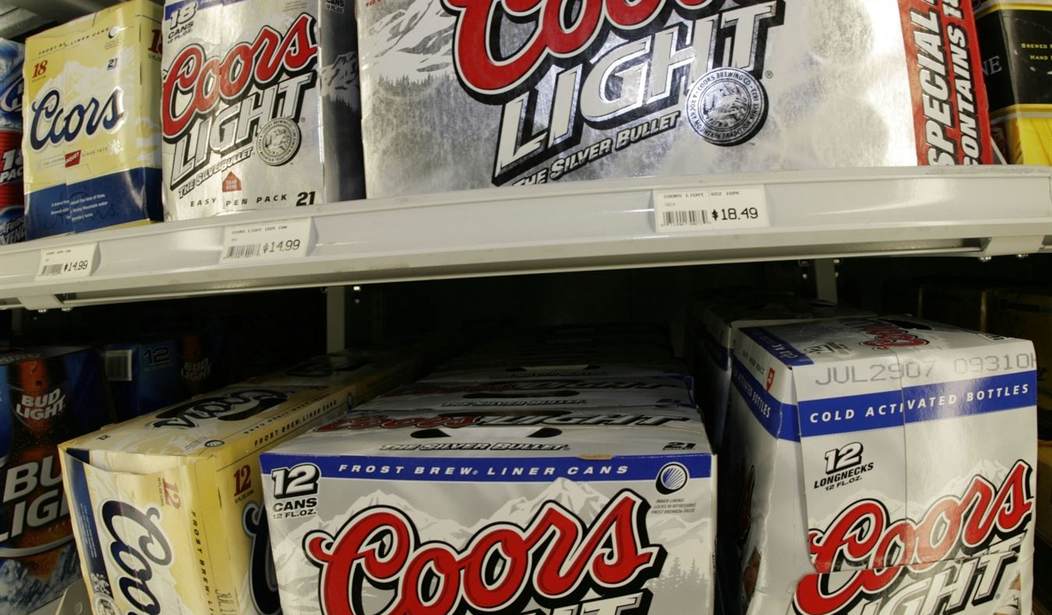
As RedState's Nick Arama reported last week, West – who is running for Fayette County Council, District 4 in Indiana – went viral after giving a candidate-forum performance that was, shall we say, a tad difficult to forget. When asked what decision she might make that might be unpopular with her constituents but would be in the best interests of the country, West responded, “Firing all Republicans!” She went on to say she doesn’t actually talk to Republicans because she doesn’t like them, declared that MAGA voters are “racist” individuals who “aren’t very intelligent at all,” and then topped things off with a final, emphatic message for voters: “We have guns too.” Something was definitely off with Ms. West that night, and she finally owned up to what happened in a Monday appearance on the Piers Morgan Uncensored. Morgan remarked to West that a lot of people who watched the original interview had come away with the sneaking suspicion that maybe she’d had a drink beforehand. “Did you?” he asked. “I had a Coors Light,” West admitted. “I had a beer.” One beer? “I mean, maybe a couple.” Morgan kept pressing, and West finally let loose with the truth: “All right. Three.” “Three beers,” Morgan replied. “Okay, well, it’s trebled in the last 30 seconds.” “What do you want me to say, man?” West shot back. “I had three beers, okay?” West then explained that she had been quite nervous about appearing in a room full of Republicans, which, apparently, led to her quaffing three Coors Lights. Things got even better when Morgan then gave West the chance to blame the booze for her unhinged remarks about Republicans and the MAGA base and perhaps walk some of them back. She declined, saying she regretted nothing, revealing, “I say it all the time. I’m not friends with them. I don’t like them.” Well, there you have it. Yeah, Jaime West was, as you probably suspected, drunk. And, yeah, she'll still never sit down for a frosty Coors Light with anyone who doesn't adhere to her admittedly sloppy brand of politics. Oh well. Credit: redstate.com |
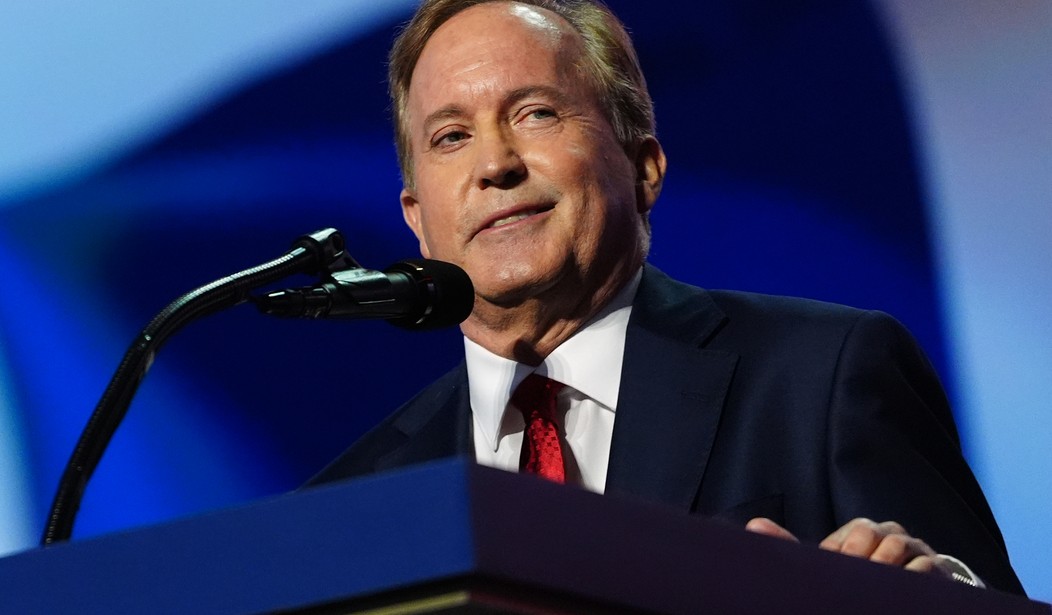 |
Texas Democrats are suddenly super concerned about the optics of churches doubling as polling places — at least when a Republican candidate is involved. Here's what happened to get their knickers in a twist: Republican Senate nominee Ken Paxton visited San Antonio's Cornerstone Church on Sunday and tweeted his thanks to the pastor for hosting him and some of his fellow Republican candidates. After acknowledging the candidates who were taking part in the worship service – none of whom addressed the congregation or electioneered in any way – the pastor reminded his flock that early voting in Texas began Monday and that the Cornerstone building would serve as a polling place. Cue the outrage. San Antonio's Democrat mayor, Gina Ortiz Jones, who is running for governor, stormed on over to social media to rage about Paxton's church visit, tagging James Talarico and suggesting Cornerstone’s relationship with Republican candidates was questionable because the church is also being used as a voting site.
The media happily picked up where Jones left off, with one reporting there are now "calls from voting rights advocates for Bexar County elections to not use the site as a polling place." Apparently, politicians who associate with churches that also serve as polling places are now a matter of grave concern for Democrats, which makes what is happening in Dallas more than a little awkward for them. Friendship-West Baptist Church is an official Dallas County voting location. Its senior pastor, Frederick Douglass Haynes III, has led the church since 1983. He is also the Democrat nominee for Texas’ 30th Congressional District, looking to replace Jasmine Crockett. So, voters can walk into the church Haynes has led for more than four decades and cast a ballot in a congressional race with his own name on it. Haynes' church has been anything but apolitical during his tenure as pastor, having flown a BLM flag in recent years. His Republican opponent, Everett Jackson, held a protest outside the church last week and called the arrangement an obvious conflict of interest. “How can you be on the ballot and the church that you reside over is a polling site with your name on that ballot?” Jackson asked. Now, to be clear, there's no evidence that any laws are being broken here – by Democrats or by Republicans – but it's crystal clear that Democrats are doing what Democrats always do: adhere to double standards when it's politically advantageous for them. Early voting is now underway in Texas and continues through October 30. Editor’s Note: The 2026 Midterms will determine the fate of President Trump’s America First agenda. Republicans must maintain control of both chambers of Congress. Credit: redstate.com |
Bill Maher’s dinners with President Trump did not come without a cost. It’s sad that it did, but that’s your typical liberal American today. If you don't agree with their views, you’re a bad person and, even worse, might need to be eliminated entirely. They’re obsessed with being on the right side of this arc of history that no one knows, and the self-righteousness is as deadly as mustard gas; you’ll suffocate and your lungs ripped to shreds from the inside. But we are talking about family here: Maher’s sister stopped talking to him after he dined with Trump. The HBO host described his sister as your typical liberal Democrat, who always has MSNBC on. Still, the comedian noted that sure, you can go about talking about how much of an “a**hole” he is, but let’s acknowledge that your little brother got invited to privately dine with the president of the United States, and that’s pretty cool:
Kid Rock described his second dinner with Trump last week as epic, and Stephen A. Smith joined him. Trump told old Maher to bring one of his lunatic leftist friends, and so he did.
And they all talked, frankly, about a host of issues. The horror for a liberal who likely couldn’t keep up, since their intellectual arrogance has left them in a persistent vegetative state, where slogans and authoritarian tactics have replaced common decency. That’s what happens when you freebase communism. Credit: townhall.com |
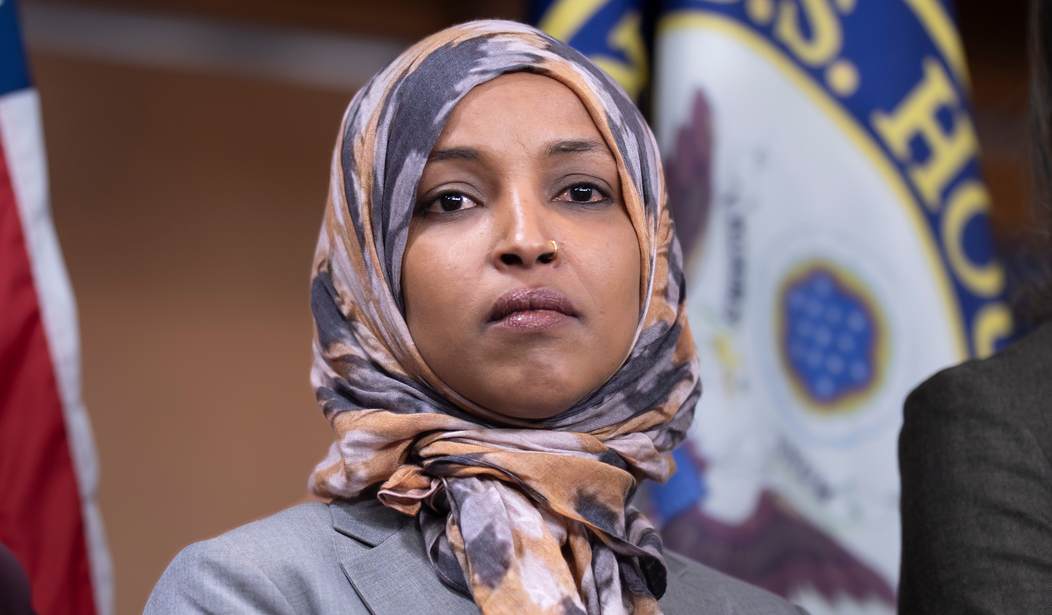 |
Is this the ballgame for Ilhan Omar? The Minnesota Democrat has gone into the bunker ever since federal agents searched her D.C. residence last Monday. The search warrant was framed as political persecution, a talking point that died a quick death: a Democrat judge signed it, and such searches aren’t approved unless the evidence is damning. Federal agents confiscated Omar’s passport, phone, and computer. The major development in the investigation into Omar, at least regarding the immigration fraud allegations, stems from her sister’s text messages, and federal agents seized her device before the search. Federal agents were reportedly dumpster diving through Omar’s trash, looking for DNA evidence. Was something else going on? We know that evidence was obtained, and that thing about marrying her brother that the liberal media dismissed as a conspiracy theory — it might be true. Also, we’ve learned the trash sifting was not for DNA
Oh, and there's the winery development: they allegedly sold empty barrels.
This investigation into Omar started under Joe Biden. Credit: townhall.com |
 |
The United States Chamber of Commerce has endorsed Texas Attorney General Ken Paxton over far-left Democrat state Representative James Talarico in the Lone Star state’s highly scrutinized U.S. Senate election.
The support from the nation’s largest pro-business organization comes right in time for early voting, which began on Monday, and as Republicans fight to retain a Senate seat in Texas. Recent polling has shown that Talarico (D-Texas) poses a real threat to the GOP attorney general, backed by President Donald Trump. The Cook Political Report shifted the contest to a “toss-up” in August. Meanwhile, the RealClearPolitics polling average shows Talarico holding a narrow lead over Paxton. During his “Come and Take It Tour” stop in San Antonio on Sunday, Paxton stressed the national importance of keeping Texas — traditionally a Republican stronghold — red.
He also highlighted his commitment to reducing government interference in the economy and to “get bureaucrats out of the way of the men and women who drive our economy.”
The chamber represents companies across every sector in the country, ranging from small businesses to leading corporations. Credit: oan.com |