Conservative Blogger
 |
Washington doubled its tariffs on steel and aluminum imports on Wednesday, the same day President Donald Trump's administration expects trading partners to make "best offers" to avoid other punishing import levies from taking effect in early July. Maros Sefcovic, the trade negotiator for the European Union, said he "had a productive and constructive discussion" with U.S. Trade Representative Jamieson Greer in Paris on Wednesday morning. "We're advancing in the right direction at pace - and staying in close contact to maintain the momentum," Sefcovic said on X, without giving any detail on the talks. He had been due to make the case for cutting or eliminating threatened tariffs on European imports. Late on Tuesday, Trump signed an executive proclamation that activates from Wednesday a hike in the tariffs on imported steel and aluminum to 50% from the 25% rate introduced in March. "We started at 25 and then after studying the data more, realized that it was a big help, but more help is needed. And so that is why the 50 is starting tomorrow," White House economic adviser Kevin Hassett told a steel industry conference in Washington on Tuesday. The increase came into effect at 12:01 a.m. The increase applies to all trading partners except Britain, the only country so far that has struck a preliminary trade agreement with the U.S. during a 90-day pause on a wider array of Trump tariffs. The rate for steel and aluminum imports from the U.K. - which does not rank among the top exporters of either metal to the U.S. - will remain at 25% until at least July 9. The United States imports about a quarter of all its steel, and Census Bureau data shows the increased levies will hit the closest U.S. trading partners - Canada and Mexico - especially hard. Canada will be even more exposed to the aluminum levies since it exports to the U.S. roughly twice as much as the rest of the top 10 exporters' volumes combined. The U.S. gets about half of its aluminum from foreign sources. Prime Minister Mark Carney's office said Canada was "engaged in intensive and live negotiations to have these and other tariffs removed." Mexico's Economy Minister Marcelo Ebrard reiterated that the tariffs were unsustainable and unfair, especially given that Mexico imports more steel from the U.S. than it exports there. The increase in the levies jolted the market for both metals this week, especially for aluminum, which has seen price premiums more than double this year. With little capacity to increase domestic production, U.S. import volumes are likely to be unaffected unless the price increases undercut demand. Wednesday is also when the White House would like trading partners to propose deals that might help them avoid Trump's hefty "reciprocal" tariffs on imports across the board from taking effect in five weeks. U.S. officials have been in talks with a number of countries since Trump announced a pause on those tariffs on April 9, but so far only the U.K. deal has come to fruition. Even that pact is more of a preliminary framework for more talks. Reuters reported on Monday that Washington was asking countries to list their best proposals in a number of key areas, including tariff and quota offers for U.S. products and plans to remedy any non-tariff barriers. In turn, the letter promises answers "within days" with an indication of a "landing zone," including what tariff rates countries can expect after the 90-day pause ends on July 8. At issue for most trading partners is whether they retain the current baseline rate of 10% on most exports to the U.S. after that date, or something possibly much higher. Separately, alarm over China's hold on the critical minerals market is growing as global automakers joined U.S. counterparts to complain that its restrictions on exports of rare earth alloys, mixtures and magnets could cause production delays. China's decision in April to suspend exports of a wide range of rare earths and related magnets has upended the supply chains central to automakers, aerospace manufacturers, semiconductor companies and military contractors globally. Uncertainty around U.S. trade policy is creating havoc for businesses around the world. On Wednesday, French spirits group Remy Cointreau abandoned its 2030 sales growth ambitions, saying tariffs, slow U.S. sales and high uncertainty could derail its plans for this financial year and beyond. Austrian speciality steelmaker Voestalpine also warned that tariffs were likely to dent its earnings, while German engineering lobby group VDMA blamed uncertainty caused by Trump's tariffs for a 6% drop in orders its members reported in May. Meadow, a Swedish business which reuses aluminum cans to make packaging for consumer goods, said the company was looking for ways to protect against future shocks. "One way to do that is to move supply chains closer to home so as to become less reliant on strategically compromised countries for supply," said Meadow's head of sustainability Ross Murdoch. |
 |
After the terror attack carried out in Boulder over the weekend by an Egyptian radical who overstayed his visa, a lot of attention is understandably being paid to the issue of finding and deporting people who have overstayed their visas. And, the Trump administration is already in the process of "aggressively" revoking student visas for Chinese students, especially those studying in critical fields or who have ties to the Chinese Communist Party (which, I would argue, is every single one). But they might need to work faster, given the indictment of two Chinese nationals - one a student working in a laboratory at the University of Michigan - for attempting to smuggle a bioterror agent into the country last July. On Tuesday federal authorities announced that Yunqing Jian, 33,
and Zunyong Liu, 34, had been charged with conspiracy, smuggling goods into the United States, false statements, and visa fraud. From the press release:
According to the complaint, Jian received Chinese government funding for her work on this pathogen in China, and a January 2024 work assessment form found on her phone, which she signed, contained a pledge of loyalty to China and to "support the leadership of the Communist Party of China, resolutely implement the party’s educational guidelines and policies, love education, care for students, unite colleagues, love the motherland and care about international affairs." When customs agents at Detroit Metropolitan Airport found baggies containing various strains of the fungus in his luggage Liu at first denied they were his, according to the complaint. Eventually he admitted they were his and told agents what they were, and that he planned to clone them and make more samples if his experiments failed. The customs agent wrote:
Liu would be able to continue that research at the University of Michigan, where his girlfriend was also conducting research on Fusarium.
Investigators searched Liu's phones (yes, multiple phones) before immediately sending him back to China and on one of them found an article titled “2018 Plant-Pathogen Warfare under Changing Climate Conditions," which listed Fusarium graminearum as a "destructive disease and pathogen for crops." Liu had worked with Jian at the University of Michigan lab until April 2024, when he returned to China. It's believed that Liu has been in China since being denied entry to the United States on July 27, 2024. FBI Director Kash Patel called the attempt "a direct threat to national security" in a statement to Fox News Digital:
Jian made an initial appearance Tuesday afternoon and is being held without bond until a detention hearing scheduled for Thursday. Liu has returned to China. These attempts by China aren't going to slow down; if anything, they will increase as Xi Jinping faces growing internal challenges due to President Trump's tariffs and the cancellation of their (spy) student visas. |
 |
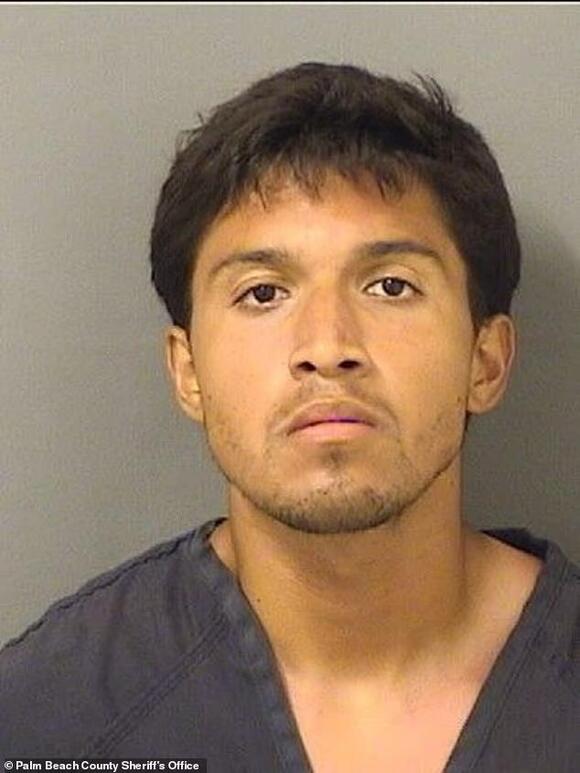
The Secret Service has detained a Texas man after he jumped the wall at President Trump's Mar-a-Lago estate early Tuesday morning. His reasoning for being on the property is nerve-racking. Anthony Thomas Reyes
was caught by law enforcement just after midnight, according to an arrest report, where he confessed to officers his intent to “spread the gospel” to the President and marry his granddaughter, Kai. Kai Trump just turned 18 in May. "An adult male was arrested early Tuesday morning by the Palm Beach Police Department for unlawfully entering the Mar-a-Lago Club property in Florida," the Secret Service told Fox News Digital. "Shortly after midnight, the individual scaled a perimeter fence and triggered alarms." It is at least the second time the man has tried getting into Mar-a-Lago. This Is Astonishing: After J13 Attempt on Trump, USSS Wasted Money on LGBTQ Summit Reyes, who is 23 years old, was previously caught on the property on New Year's Eve, where he was issued a warning for trespassing, according to the Palm Beach Daily News. President Trump was in Washington, D.C. during the latest incident, but was on the property during Reyes' first attempt to get in. Why he was only issued a warning is unclear. It is also unclear if Kai was on the property during either incident. Reyes is now facing a misdemeanor trespassing charge, according to court documents, and remains at the Palm Beach County Jail on a $50,000 bond after pleading not guilty. He may also be subject to federal charges. While multiple attempts by the same man to get into Mar-a-Lago are harrowing, the Palm Beach Daily News reports that there have been numerous breaches since the July 13th assassination attempt on the President, including a 39-year-old Chinese national who was arrested just weeks after the attempt on Trump's life. Approximately nine people have been arrested trying to get onto the property since the Secret Service established a security zone around Mar-a-Lago following J13. Kai Madison Trump burst on the scene delivering a speech at the Republican National Convention (RNC) last summer, where she mentioned how her grandpa always keeps up to date on her golf game. “He calls me during the middle of the school day to ask how my golf game is going, and tells me all about his, but then I have to remind him that I’m in school and I’ll have to call him back later,” she said. “When we play golf together, if I’m not on his team, he’ll try to get inside of my head," Kai added before delivering this zinger that brought down the house. "But I have to remind him I'm a Trump, too." This past January, she posted a video on social media explaining that she had "butterflies" over attending her grandfather's Inauguration. "I think these next four years (are) going to be the best four years America has ever had in a very long time," she said at the time. "I'm so happy for him." |
| Daughter pictured on Left. |
 |
| These Illegals lived in this while American Veterans live on the streets. Could it be later tonight? Will it be in the early morning hours? Will it be tomorrow? Either way, the family of Boulder terror suspect Mohamed Soliman is getting deported. The State Department revoked all their visas today and fast-tracked them for deportation. It’s time for them to go back to whatever terrorist hellhole whence they came. Katie wrote and got the news of their imminent expulsion from the country. The White House has responded to those reports by saying their final boarding call is “coming soon.” It’s amazing that the official White House account tweeted that:
Mr. Soliman’s family is being kicked the hell out of our country after he firebombed a pro-Israel event in Boulder, Colorado, on June 1. He threw Molotov cocktails and made a makeshift flamethrower, which injured six people. He did it for the Palestinian cause, another act of antisemitic terrorism. Police arrested him and later revealed to have been staying in the US illegally on an expired visa. He came into the country under the Biden administration.
Trending on Townhall Videos |
 |
How many times do we need to say this? If you’re here illegally and get caught, you’re going back. It’s the law. But liberals don’t care about that; they’re mad because they see their political base, which they’ve imported here for the better part of a generation, getting shipped out. A federal raid at a local restaurant in Minneapolis turned into a street fight between police and local leftists.
— Defiant L’s (@DefiantLs) June 3, 2025 It all began at Las Cuatro Milpas, where a search warrant was executed for numerous crimes, including drug running and human trafficking (via Minnesota Star Tribune):
It led to mayhem, and it doesn’t help that Democrats are out here calling federal agents fascists and the Gestapo. It’s how death threats can be hurled at these guys who are enforcing federal immigration law. It’s no longer words or empty threats when it comes from the mouth of the liberal. They’ll act on it. They’re already acting on ‘globalizing the intifada’ as leftists are now murdering and firebombing Jewish people. This battle for Minneapolis isn’t over. There are more to come. These people are going back.
Trending on Townhall Videos |
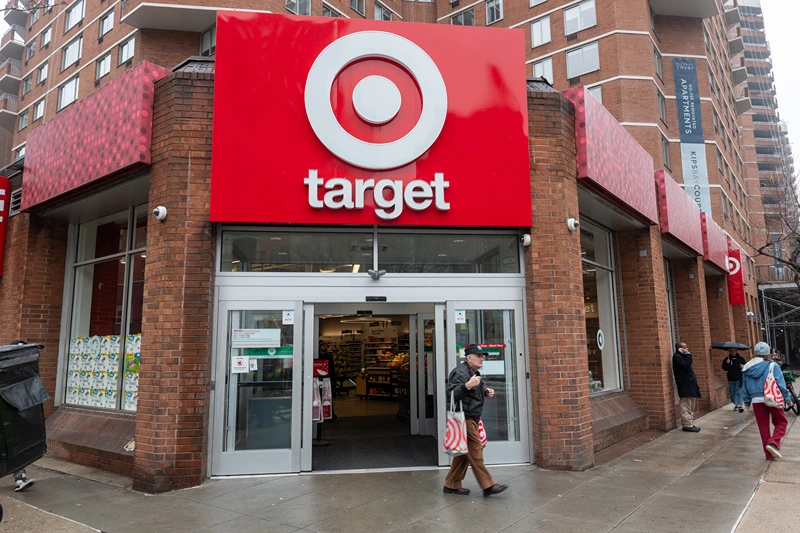 |
| A Target store stands in Manhattan on March 05, 2024 in New York City. Target’s merchandising strategy has gone viral since early June, following a notable shift from its typical Pride Month (June) displays to a focus on all American-themed apparel. However, the unsuspected shift has now sparked significant backlash among liberal and leftist consumers. Target previously revealed in January that it would take steps to eliminate its diversity, equity, and inclusion (DEI) programs in alignment with President Donald Trump’s executive order — disbanding all federal DEI initiatives.
As Pride Month begins, many left-leaning shoppers have voiced disappointment over Target’s newly introduced “USA Section,” which appears to have taken the place of the prominent LGBTQ-themed displays and branded apparel typically featured during June. Nonetheless, Target does still have a Pride collection, though it is noticeably smaller and much less emphasized in Target’s marketing than in previous years.
Stay informed! Receive breaking news alerts directly to your inbox for free. Subscribe here. https://www.oann.com/alerts |
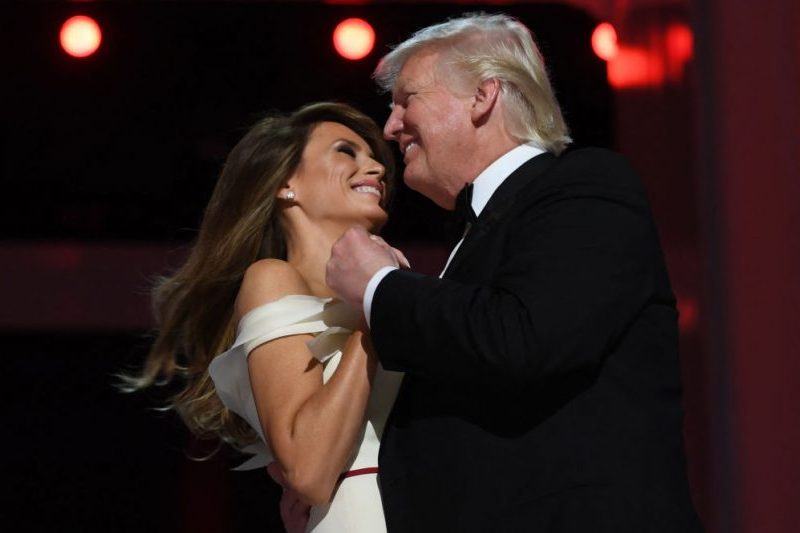 |
| U.S. President Donald Trump and the first lady Melania Trump dance at
the Liberty Ball at the Washington DC Convention Center following Donald
Trump’s inauguration as the 45th President of the United States, in
Washington, DC, on January 20, 2017. President Donald Trump, First Lady Melania Trump, Vice President JD Vance and Second Lady Usha Vance are all reportedly set to attend the opening night of the musical “Les Misérables” at the Kennedy Center next week. According to a report by Fox News Digital, the four will be attending the opening night on June 11th.
Trump has previously played many songs from the musical at some of his rallies and events. The outlet stated that Kennedy Center President Richard Grennell said that “‘Les Misérables’ is proving to be a huge hit.”
Officials at the Kennedy Center told the outlet that there will be a red carpet for opening night and that certain members of the media will be invited. Officials have also stated that guests to the opening-night performance will be encouraged to walk the red carpet. Kennedy Center executives said that the first two weeks of the performance were nearly sold out, with ticket sales reaching $3 million at the box office and exceeding the average sales timeline.
Stay informed! Receive breaking news alerts directly to your inbox for free. Subscribe here. https://www.oann.com/alerts |
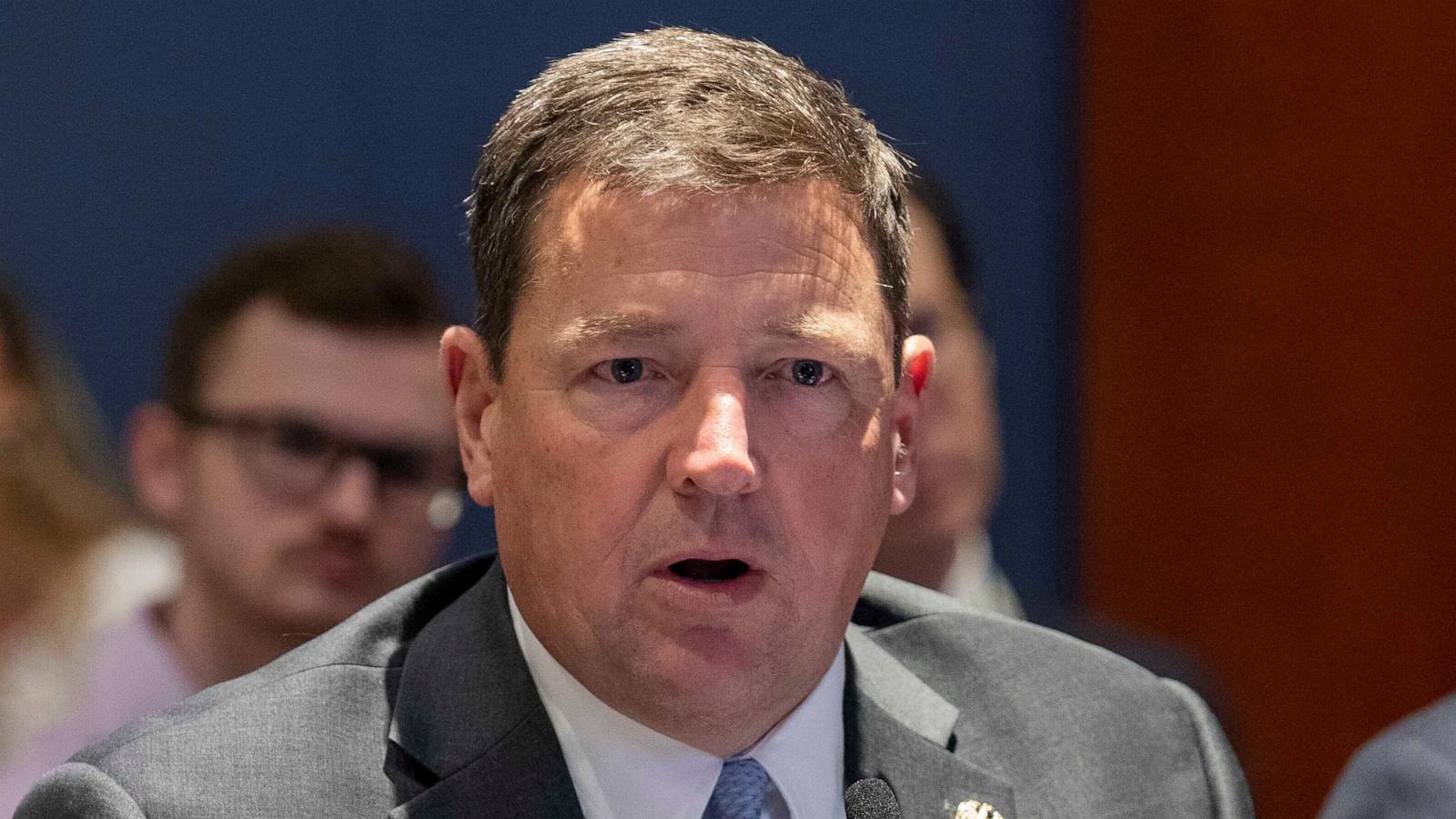 |
A senior official in President Donald Trump's Justice Department told staff Monday that he has been directed to investigate clemency granted by Democrat Joe Biden in the waning days of his presidency to members of his family and death row inmates. Ed Martin, the Justice Department's pardon attorney, wrote in an email seen by Reuters that the investigation involves whether Biden "was competent and whether others were taking advantage of him through use of AutoPen or other means." An autopen is a device used to automatically affix a signature to a document. Trump and his supporters have made a variety of unfounded claims that Biden's use of the device while president invalidated his actions or suggested that he was not fully aware of these actions. It is not known whether Biden used autopen on pardons. The email stated that Martin's investigation is focused on preemptive pardons Biden issued to several members of his family and clemency that spared 37 federal inmates from the death penalty, converting their sentences to life in prison. Just before he relinquished the presidency to Trump on Jan. 20, Biden pardoned five members of his family, saying he wanted to protect them from future politically motivated investigations. The pardons went to Biden's siblings James Biden, Frank Biden and Valerie Biden Owens as well as their spouses, John Owens and Sara Biden. Biden on December 1 pardoned his son Hunter Biden, who had pleaded guilty to tax violations and was convicted on firearms-related charges. Martin's email did not specify which pardons of Biden family members were being investigated. It also did not make clear who directed Martin to launch the investigation. A Justice Department spokesperson did not immediately respond to a request for comment. A Biden spokesperson did not immediately provide comment. The U.S. Constitution gives the president broad power to issue pardons to wipe away federal criminal convictions or commutations to modify sentences. Trump himself has made extensive use of executive clemency. For instance, he granted clemency Jan. 20 to all of the nearly 1,600 of his supporters who faced criminal charges in connection with the Jan. 6, 2021, attack on the U.S. Capitol, which was a failed attempt to prevent congressional certification of Biden's 2020 election victory over Trump. Martin previously served as the interim U.S. attorney in Washington before his nomination for that post foundered in the Senate. Martin told reporters last month he viewed the presidential pardon power as "plenary," meaning it is absolute. "If you use the autopen for pardon power, I don't think that that's necessarily a problem," Martin said during a May 13 press conference, adding he still felt the Biden pardons warranted scrutiny. The investigation appears designed to use the Justice Department to amplify questions about Biden's health and mental acuity, a conversation that has intensified in recent weeks following his cancer diagnosis and a new book revealing Democratic concerns last year about Biden's condition. Biden, who is 82, last year dropped his reelection bid amid questions about his mental acuity after a disastrous presidential debate performance. Biden was the oldest person to serve as U.S. president, and Trump is the second oldest. Biden's closest aides have dismissed those concerns, saying Biden was fully capable of making important decisions. A Justice Department memo from 2005 found it was legitimate for a subordinate to use an autopen for the president's signature. |