Presumptuous Politics

Sunday, July 24, 2016

Wikileaks dump appears to show DNC favored Clinton campaign

Democratic National Committee (DNC) Chair Debbie Wasserman Schultz (D-FL) (2nd R) attends a LGBT Pride Month reception at the White House in Washington, U.S. June 9, 2016
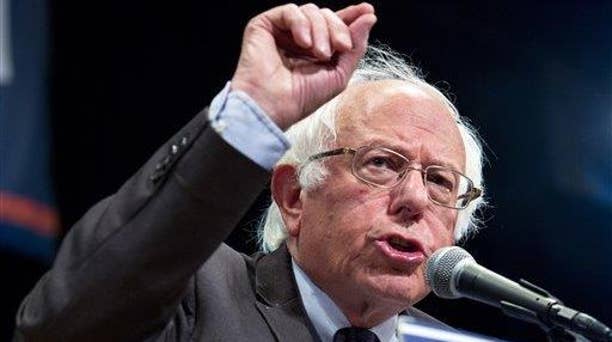
A new trove of leaked emails seem to show that top officials at the Democratic National Committee openly mocked and criticized Sen. Bernie Sanders during the primary race against Hillary Clinton -- a startling revelation that raises questions about the Democratic Party’s impartiality and an issue that could play out poorly at the party’s convention this week in Philadelphia.
WikiLeaks posted close to 20,000 emails and 8,000 attachments Friday sent or received from top Democratic officials that seem to suggest the committee’s chairwoman, Rep. Debbie Wasserman Schultz and other higher ups tried to tip the scales in Clinton’s favor. WikiLeaks dubbed the document dump the “Hillary Leaks series.”
Sanders has repeatedly claimed that he thought the system was “rigged” during the primaries.
Republican candidate Donald Trump weighed in Saturday morning, tweeting: “Leaked e-mails of DNC show plans to destroy Bernie Sanders. Mock his heritage and much more. On-line from Wikileakes (sic), really vicious. RIGGED.”
The leaks, from January 2015 to May 2016, purportedly came the from accounts of seven DNC officials and feature conversations by staffers debating everything from how to deal with media requests to syncing the party’s message with interest groups in Washington.
Now Playing Leaked DNC emails show effort to undermine Bernie Sanders
The officials are: Senior Adviser Andrew Wright, National Finance Director Jordan Kaplan, Finance Chief of Staff Scott Comer, Communications Director Luis Miranda, Northern California Finance Director Robert Stowe, Finance Director of Data & Strategic Initiatives Daniel Parrish and Finance Director Allen Zachary.
The latest headlines on the 2016 elections from the biggest name in politics. See Latest Coverage →
In one email, DNC staffers were looking for ways to blunt Sanders’ popularity with Democrats. In a May 5 email, a DNC employee asked a colleague to collect information on his religious beliefs – claiming it might sway voters in West Virginia and Kentucky. In that particular email, Sanders name was not mentioned but he was the only other candidate in the race at that time against Clinton.
DNC chief financial officer Brad Marshall wrote, “This would make several points difference with my peeps. My Southern Baptist peeps would draw a big difference between a Jew and an atheist.”
Stephen Hayes, a columnist at the Weekly Standard, told “Special Report” on Fox News that the emails show a clear pattern of Wasserman Schultz and the DNC “thumbing the scales’ in favor of Clinton and scheming for ways to “thwart” Sanders.
A May 15, 2016 email, shows the DNC was in close contact with news websites on articles related to the Democratic Party, Sanders and Clinton.
A Real Clear Politics article claimed that Sanders supporters are causing a lack of unity at the Democratic National Convention. Wasserman Schultz took issue with the headline and told another Democratic official the “headline needs to be changed.”
What followed was a back and forth between DNC officials to pressure Real Clear Politics to change their story.
The last email on the thread between DNC officials reads, “Done. Article has been updated.”
The Real Clear Politics story headline was corrected to reflect that the incident in question involved the Nevada state convention and not the national one.

Clinton, Sanders compromise could limit role of superdelegates in future campaigns (A day late and a dollar short?)

Sanders looks like he's crying!
The Democratic National Convention's rules committee Saturday defeated an attempt by supporters of Sen. Bernie Sanders to abolish superdelegates in future presidential campaigns, but later approved a plan that could see their influence significantly reduced.
The Sanders and Hillary Clinton campaigns worked out an agreement to create a so-called "unity commission" to revise the nominating process, including changing superdelegate rules. The plan won near-unanimous support from the committee.
The 21-member commission will study a number of issues, including how to improve access to caucuses and how to broaden the party's appeal. For superdelegates, the commission's recommendation is that Congress members, governors and other elected officials should remain as unpledged delegates, but that other delegates would be bound proportionally to the primary results of their state.

Sanders campaign manager Jeff Weaver endorsed the plan, saying it would "result in the reduction of superdelegates as we know them by two-thirds." The Clinton campaign also expressed support for the commission.

Any changes to superdelegate rules would still be subject to DNC approval. A report by the commission is due by Jan. 1, 2018.
The compromise was reached after a lengthy meeting in which Sanders supporters grew increasingly frustrated as their efforts on superdelegates were voted down.
The latest headlines on the 2016 elections from the biggest name in politics. See Latest Coverage →
Discussing his proposal to eliminate superdelegates, Aaron Regunberg, a Sanders delegate and a Rhode Island lawmaker, argued that the current system does not reflect the "core values" of the Democratic party.
Supporters of the effort said earlier Saturday that they had enough support to potentially bring the issue to a vote on the convention floor in Philadelphia next week. But it was not immediately clear whether that would still happen after the passage of the compromise plan.

As the various amendments were voted down, Sanders supporters in the back of the hall expressed their frustration, shouting: "Shame ... shame ... shame!"
"Young people in the Democratic Party are very, very angry," Indiana delegate Jonathan Little said during debate on one of the amendments. "The party is very close to splitting."
Sanders has been critical of superdelegates during his contentious primary fight with Clinton for the nomination. His supporters argue Clinton's substantial superdelegate lead may have influenced the outcome of the race, although Clinton also led Sanders with pledged delegates. Late in the race, Sanders sought to flip superdelegates with little success.
There are 713 superdelegates, mainly members of Congress and members of the Democratic National Committee. Clinton leads Sanders with superdelegates 602 to 48. Combining pledged delegates and superdelegates, Clinton leads 2,807 to 1,894.
With the convention just days away, the hearing was one of the last opportunities for Sanders' supporters to push their agenda.
The party platform debate concluded recently with a draft document that included many of Sanders' priorities, including proposals for a $15 federal minimum wage, abolition of the death penalty and steps to break up large Wall Street banks.

Trump pushing for a 'Philly fight?'


Republican presidential candidate Donald Trump on Saturday called on Bernie Sanders supporters to unite against presumptive presidential Democratic nominee Hillary Clinton.
Trump tweeted: “The Bernie Sanders supporters are furious with the choice of Tim Kaine, who represents the opposite of what Bernie stands for. Philly fight?”
Clinton on Friday announced Virginia Sen. Tim Kaine as her running mate. Kaine, an experienced politician seen as a strong centrist, was widely thought to be Clinton’s safest pick.
But the Trump campaign wasted no time in slamming Kaine on social media.
“Tim Kaine is, and always has been, owned by the banks,” Trump tweeted. “Bernie supporters are outraged, was their last choice. Bernie fought for nothing!”
Trump also name-checked Sanders during his primetime speech on the last day of the Republican National Convention in Cleveland, reaching out to Sanders supporters join the Trump train.
The latest headlines on the 2016 elections from the biggest name in politics. See Latest Coverage →
“I have seen firsthand how the system is rigged against our citizens, just like it was rigged against Bernie Sanders. He ever had a chance,” Trump said. “But his supporters will join our movement, because we will fix his biggest issue.”

Saturday, July 23, 2016

Virginia Sen. Timothy Kaine Cartoons


Justice Department charges three in $1 billion Medicare fraud scheme


Philip Esformes

The Justice Department on Friday unsealed charges in its largest-ever criminal health-care-fraud case, charging three individuals with using a network of doctors, hospitals and health-care providers across South Florida to improperly bill more than $1 billion to Medicare and Medicaid.
Philip Esformes, the owner of more than 30 Miami-area skilled-nursing and assisted-living facilities, was the project’s mastermind, the indictment alleged. He and two co-defendants, along with other co-conspirators, allegedly paid and received bribes and kickbacks to get thousands of patients admitted to facilities Mr. Esformes controlled.
In those facilities, they were often given medically unnecessary and sometimes harmful treatments, which were then billed to Medicare and Medicaid, according to court papers.
Esformes attorneys Marissel Descalzo and Michael Pasano of Carlton Fields said their client “adamantly denies these allegations and will fight hard to clear his name.”
The case was brought as part of an interagency Medicare Fraud Strike Force, which operates in nine locations across the country, officials said. Since its creation in March 2007, the task force has charged nearly 2,900 defendants who have collectively billed the Medicare program for more than $10 billion, they said.
Fraud continues to plague the roughly $600 billion Medicare program, though new criminal cases have slowed in recent years. Fraud enforcers have brought fewer cases since 2013, but convictions and settlements since the start of the decade have netted Medicare between $1 billion and $2.5 billion annually, according to a report from the Department of Health and Human Services’ Office of the Inspector General.

Trump buries bitter rival Cruz in farewell to Cleveland

Trump: Cruz will still try to endorse but I don't want it
Donald Trump said goodbye to Cleveland Friday, pronouncing the Republican National Convention a yuge success and launching a barrage of parting shots at GOP rival Ted Cruz, who refused to endorse Trump in a controversial speech that got the Texas senator booed off the stage.
The vindictive victory lap laid bare Trump's simmering anger at Cruz, who brought drama to Quicken Loans Arena on Wednesday when he began a speech to cheers and ended it by garnering a raucous chorus of boos after he refused to endorse the man who had bested him.
“I like Ted, he’s fine,” Trump said in a trademark, ad-libbed press conference. “I don’t need his endorsement. If he gives it to me, I will not accept it.”
Trump said if Cruz had endorsed him, it may have brightened his former rival's future presidential prospects.
"He should have done it," Trump said. "He would have been in better shape in four years."
Added Trump: "He's got intellect, but he didn't use it."
The latest headlines on the 2016 elections from the biggest name in politics. See Latest Coverage →
Speaking 12 hours after his historic acceptance speech, and with running mate and Indiana Gov. Mike Pence at his side, Trump praised his children, and predicted a major bounce coming out of the four-day convention. But the GOP nominee spent most of the news conference pounding Cruz, who finished second to Trump in a bruising primary campaign that began as a field of 17.
Trump dredged through a primary’s worth of animosity with Cruz, blasting him repeatedly while basking in the glow of his victory.
While Trump and Cruz initially steered clear of criticizing each other as other candidates fell by the wayside, the gloves came off once state primaries and caucuses began. A Cruz super PAC ran an ad featuring a racy picture of Trump’s former supermodel wife, Melania, in an effort to tar him in the conservative state.
Trump responded with a retweet that showed Melania side-by-side with an unflattering picture of Cruz’s wife, Heidi, and the words:  “No need to ‘spill the beans.’ The images are worth a thousand words.”
On Friday, Trump managed to praise Heidi while delivering a stinging backhanded blow to Cruz.
“I think Heidi Cruz is a great person,” Trump said yesterday. “I think she’s the best thing he’s got going, (that) and his kids.”
Trump was just getting started in settling his score with Cruz, who he allowed to speak in a prime time slot on Wednesday, even though Cruz declined to endorse him. Trump predicted Cruz would never mount a serious campaign for president and said that if he does, “maybe I’ll start a super PAC” to attack him.
Hopes that the two could bury the hatchet and unite the party disappeared when Cruz spoke on Wednesday, urging Republicans to “vote your conscience” but refusing to accede to chants of “Endorse Trump” that were followed by a loud chorus of boos.
During the campaign, Cruz bitterly lashed out at Trump when the National Enquirer, which had also ran an unsubstantiated story accusing him of having multiple affairs, published a picture purportedly of Cruz’s father, Rafael Cruz, standing near Lee Harvey Oswald. Trump mentioned the story in multiple interviews, clearly angering Cruz.
“[I’m not going to] come like a servile puppy dog and say, ‘thank you very much for maligning my wife and maligning my father,’” Cruz told Texas delegates during a sometimes contentious meeting Thursday morning.
Trump took a shot at Ohio Gov. John Kasich, another primary rival who refused to attend the convention even though it was in his home state.
"Whether you're the governor of Ohio, whether you're a senator from Texas, or any of the other people that I beat so easily and so badly, you have no choice," Trump said. "You've got to go for Trump."

Obama administration mum as Turkey's post-coup crackdown expands

Van Hipp: Turkey had been festering, but Obama admin asleep
The Obama administration’s relative silence on Turkey’s alarming crackdown following last week’s failed coup attempt is tantamount to a green light for President Recep Tayyip Erdogan to continue his assault on democracy in the NATO nation, experts said.
Questioned about Erdogan’s ongoing roundup of some 50,000 academics, judges, teachers, soldiers and civil servants, and the declaration Wednesday of a state of emergency, a State Department official earlier this week meekly warned against “overreach.”
“I cannot overstate the sense of the Turkish government and the Turkish people right now that they truly felt and truly feel under threat,” State Department spokesman Mark Toner told an Associated Press reporter at a department briefing. “We support completely the efforts to bring the perpetrators of the coup to justice. We just also caution against any kind of overreach that goes beyond that.”
But when pressed, Toner declined to characterize the arrest, firing or suspension of the tens of thousands of Turkish government workers as “overreach.”
Erdogan’s government, which blames U.S.-based cleric Fethullah Gulen for inciting the coup attempt, in which more than 200 people were killed and members of the military briefly commandeered tanks, aircraft and communications channels, has reacted with a vengeance.
The state of emergency gives Erdogan and his cabinet new powers to implement laws without parliamentary approval. It also allows Ankara to censor media broadcasts, search citizens, impose curfews and restrict gatherings both public and private.
Erdogan has simultaneously demanded the U.S. hand over Gulen, a onetime Erdogan ally who lives in a Pennsylvania mountain compound and runs a profitable chain of Islamic charter schools. Secretary of State John Kerry has said the department is considering the request, but it remains unclear what evidence Erdogan’s administration has provided.
Former U.S. Ambassador to the United Nations John Bolton said the crackdown shows Erdogan is taking advantage of the failed coup to further strengthen his grip on power. The strongman, who has ruled Turkey as either president or prime minister since 2001, has been steadily stripping the long proudly secular nation of its constitutional freedoms and increasingly adopted Islamist rhetoric.
“When he was mayor of Istanbul 20 years ago, he said democracy is like a street car — you ride it to the stop you want and then you get off,” Bolton said of Erdogan. “This will enable him to pursue his objective of Islamisizing the Turkish government and overturning the secular constitution. That’s what’s underway. I don’t think there’s much question about it.”
Bolton said that the Obama administration appears to have done “very little” to pressure Turkey to ease up on its people, either publicly or behind the scenes. That gives Erdogan all the encouragement he needs, Bolton said.
“The situation will continue to deteriorate as Erdogan arrests more people and puts them in jail,” he said.
The European Union has more aggressively sought to rein in the crackdown, with two EU officials warning Thursday that Turkey’s declaration of a state of emergency had led to “unacceptable decisions on the education system, judiciary and the media.”
“We call on Turkish authorities to respect under any circumstances the rule of law, human rights and fundamental freedoms, including the right of all individuals concerned to a fair trial,” EU high representative Federica Mogherini and commissioner Johannes Hahn said in a statement.
Ahmet Yayla, who was chairman of the sociology department at Harran University and a former police chief in Turkey, said many of those being rounded up in Turkey include the Muslim nation’s bulwark against terrorism.  Police, soldiers and judges deemed disloyal to Erdogan have been detained, leaving a diminished human infrastructure to deal with security threats, he said.
“Those are the people who were fighting against terrorism in Turkey,” said Yayla, who fled to the U.S.  eight months ago when ISIS threatened his life for interrogating terrorist defectors.
Yayla said Erdogan’s dangerous dance with ISIS – tacitly supporting the terror group and allowing foreign fighters to pass through Turkey on their way to the terrorist army’s caliphate – could combine with the post-coup unrest to threaten the nation’s stability.
“In the near future, Turkey will face a lot of danger coming from terrorism because the newly appointed officers in the military and police are not going to be able to fight or deal with terrorism threats that exist in the country, especially by Erdogan’s allowing the terrorists inside the country,” he said.

Clinton names Virginia Sen. Kaine as running mate

Looks like a strong leader to me, little hands :-)

Hillary Clinton on Friday announced Virginia Sen. Timothy Kaine as her running mate, going with an experienced politician seen as a strong centrist who could attract independents and possibly disenchanted Republicans – and most certainly the safe pick.
 “I'm thrilled to announce my running mate, @TimKaine, a man who's devoted his life to fighting for others,” Clinton tweeted ahead of the Democratic National Convention set to kick off Monday in Philadelphia.
For his part, Kaine tweeted that he was "honored" to be her running mate.

The pair was expected to make their first campaign appearance Saturday at a rally in Miami at Florida International University.
Their opponent, Donald Trump, texted supporters several hours after the anouncement, "Tim Kaine is Hillary's VP pick. The ultimate insiders - Obama, Hillary and Kaine. Don't let Obama have a 3rd Term."
The latest headlines on the 2016 elections from the biggest name in politics. See Latest Coverage →
In the final deliberations, Clinton was said to be weighing Kaine, Agriculture Secretary Tom Vilsack and New Jersey Sen. Cory Booker, having whittled down her short-list over the past several weeks.
In Kaine, who also is a former Virginia governor and former chairman of the Democratic National Committee, her campaign is going not with a bulldog or political firestarter but a measured, moderate nice guy with swing-state appeal, including in his home battleground state of Virginia.
One of the first to react to the announcement was House Democratic leader Nancy Pelosi who called Kaine "an exceptional choice."
On the Republican side, RNC Chairman Reince Priebus said, "Hillary Clinton has chosen someone who holds positions she's spent the entire primary trying to get to the left of."
The pick comes as the Clinton campaign tries to paint newly anointed Republican nominee Donald Trump as divisive and dangerous, a theme they hit hard coming out of the Republican National Convention in Cleveland. Trump closed his convention Thursday night with a wide-ranging 75-minute acceptance speech heavy on law-and-order themes and promises to put “America first.”
“He offered a lot of fear and anger and resentment, but no solutions about anything that he even talked about,” Clinton countered during a speech to supporters Friday in Tampa, Fla., before the VP announcement.
Kaine isn’t as liberal as some other VP prospects, notably class warrior Sen. Elizabeth Warren, D-Mass. – and is unlikely to whip up the base like Clinton’s dogged primary rival Bernie Sanders. But Kaine is an ally, having endorsed Clinton early on in the campaign. He also speaks fluent Spanish, which could be useful in increasing the campaign’s reach among Hispanic voters.
Clinton’s announcement and move to seize the spotlight from Cleveland follows four days of steady attacks by Republicans against the presumptive Democratic nominee – over her email scandal, her reputation for poll-tested politics and her record in public office.
In his nomination acceptance speech, Trump blasted Clinton’s foreign policy record as secretary of state – citing the bloody tumult in Iraq, Syria, Egypt and Libya – saying her legacy is “death, destruction, terrorism and weakness” and a “change in leadership” is needed.
“Hillary Clinton’s legacy does not have to be America’s legacy,” he said.
Clinton, over the course of the Democratic veepstakes, also met with several other prospects, including Warren, Colorado Gov. John Hickenlooper, Labor Secretary Tom Perez and Housing Secretary Julian Castro.
Problems surfaced in recent days for a couple of them, notably Castro who was cited by a government watchdog for allegedly violating federal law by touting Clinton’s candidacy in his official capacity during a media interview.
Kaine's selection by Clinton leaves his Senate seat open.

Friday, July 22, 2016

Hillary Cartoons


Trump speaks to America’s ‘forgotten men and women’ in big, bold speech


A postscript to the 2016 Republican National Convention: just how is the wide of a gulf between a Fourth Estate that nitpicked and nunchucked the Republicans’ every move in Cleveland and a viewing audience drawn to this convention’s more forthright rhetoric?
That includes Donald Trump’s acceptance speech Thursday night.
Critics of the Republican presidential nominee wasted no time relegating it to history’s dustbin.
But here’s what they missed (and, no, I’m not a Trump supporter): for a guy who calls Manhattan and Palm Beach home Trump sounded an awful lot like a bridge-and-tunnel guy in touch with working-class concerns.
Which is precisely what he set out do, in Thursday prime time.
Here’s one way to assess Trump’s big speech: how it stacks up against four previous GOP nominees.
The latest headlines on the 2016 elections from the biggest name in politics. See Latest Coverage →
That includes:
Barry Goldwater, 1964. Like Trump, Goldwater faced a divided party – moderate Republicans who saw the GOP as hijacked by the far right.
Read the famous “extremism in the defense of liberty” speech and it’s clear: Goldwater was as much interested in defining the GOP as he was championing freedom.
“Republican”, or some variation of the word, came up 34 times in a 40-minute address.
In Ohio, land of the late Robert Taft, Trump didn’t try to position himself as the new “Mr. Republican”.  He mentioned the word twice in the opening moments of his speech and only once long after that.
For those of you keeping score at home, there also was zero mention of “conservative” or “Ted Cruz”.
This speech wasn’t about establishing an ideological beachhead within the Republican Party, so let’s move on to…
George H.W. Bush, 1988. If Goldwater was about the movement; Bush 41’s speech was all about a man with a purpose – a former torpedo bomber pilot who, in his words, “sees life in terms of missions – missions defined and missions completed”.
Trump’s speech took a similar flight path: “I have had a truly great life in business,” he declared. “But now, my sole and exclusive missions is to go to work for our country – to go to work for you. It’s time to deliver for the American people.”
Ironic, given Trump’s toxic relationship with Jeb, there was one other Bush influence in Trump’s speech: branding.
George W. Bush, 2000. Befitting the first Republican president of the Information Age, Bush 43’s speech was an attempt at recast the GOP in the candidate’s more compassionate image.
In Bush’s words: “Everyone, from immigrant to entrepreneur, has an equal claim on this country's promise.” Preceded by: “I want to change the tone of Washington to one of civility and respect.”
Trump tried the same in Cleveland – not seeking a group hug (though he did utter “compassionate” once, with regard to immigration laws), but instead casting himself as a needed combatant on the side of “the American people”. Trump’s villains: “big business”, “special interests”, “elite media” and “major donors”, he said, all backing Hillary Clinton to preserve an economic and political system, in his words, “rigged to their benefit”.
Trump made it clear there will be a new sheriff in town: “I have a message to every last person threatening the peace on our streets and the safety of our police: when I take the oath of office next year, I will restore law and order to our country”.
And in case you missed it the first time, a few moments later: “In this race for the White House, I am the law-and-order candidate”.
In this regard, what we discovered at a national convention with little to show in the way of bloodlines – no Bushes, no Mitt Romney, no John McCain, and little mention of Ronald Reagan – is Trump having Republican ancestry…
Richard Nixon, 1968. Befitting a nominee with a troubled soul but the most accurate of political compasses, Nixon’s speech was spot-on for a nation wracked with domestic and foreign turmoil.
Nearly a half-century ago, Nixon singled out “forgotten Americans” chafed by economic hardship, racial tension, disrespect of the law, cultural decay and the nation’s inability to wage war effectively.
And Trump?
“Every day I wake up determined to deliver a better life for the people all across this nation that have been ignored, neglected and abandoned.”
“I have visited the laid-off factory workers,” he continued, “and the communities crushed by our horrible and unfair trade deals.”
“These are the forgotten men and women of our
country. People who work hard but no longer have a
voice.”
“I am your voice.”
Trump echoed Nixon foreign policy, making Clinton/Obama his Humphrey/Johnson for leading the nation on a host of foreign policy follies -- ISIS, Egypt, Libya and a host of overseas follies.
There was no declaration that Clinton has blood on her hands, as on Monday night, but there was this brutal summation: “This is the legacy of Hillary Clinton: death,
destruction, terrorism and weakness.”
Finally, the similarity between Nixon and Trump’s closing passages.
Nixon: “The time has come for us to leave the valley of despair and climb the mountain so that we may see the glory of the dawn – a new day for America, and a new dawn for peace and freedom in the world.”
Trump: “History is watching us now. It’s waiting to see if we will rise to the occasion and if we will show the whole world that America is still free and independent and strong.”
Trump didn’t plagiarize Nixon’s remarks, but one thing he did lift: bumper stickers. Trump-Pence and Nixon-Agnew are all five-letter names.
One last observation: we’ve never had an election like this in modern times – two nominees so engrained in the nation’s mindset, both deeply unpopular.
It begs the question of a post-convention “bounce” – since 1968, all non-incumbent presidential winners have picked up at least 4 points in the immediate aftermath of their acceptance speeches.
Mitt Romney didn’t get much of one in Tampa, back in 2012. I’ll wager Trump does. Why? The speech connected. Replace Trump with a less controversial figure and it really connects in a time when voters are down on individuals and institutions.
But bounces can be fleeting. If one considers that every presidential gets four bites out of the apple – the day they announce, the day they clinch the nomination, the night they accept it at the national convention, and finally the three fall debates.
This may prove to be an election with the winner determined by what those debates yield, and what events overtake the candidates closer to Election Day – violence at home, unrest overseas.
The national conventions are important milestones, but not necessarily crucial to the cause.
And the blunt talk, mini-controversies and odd political-celebrity hybrid that is the Trump show?
It’s over, in Cleveland.
With another 15 weeks to play out.

CartoonDems