House Speaker Nancy Pelosi will meet Friday with far-left Rep. Alexandria Ocasio-Cortez in
an effort to stop the recent infighting between the Democratic Party's
progressive and moderate blocs in the lower chamber of Congress. The
progressives have leveled almost constant criticism at the moderates,
accusing them of helping the Trump administration, whether directly or
indirectly. The moderates, in turn, have accused the far left of pushing
for abrupt change that could place the party's current House majority
at risk. Pelosi, 79, a Californian who has served in the House for more than 30 years, told USA Today on Thursday that she’s “looking forward to” meeting with Ocasio-Cortez to air out the differences. The 29-year-old freshman congresswoman from New York, meanwhile, tried to downplay their meeting. “It’s
nothing too climactic,” Ocasio-Cortez said. “Just trying to make sure
we have an open line of communication and get on the same page.” The
schism began with Ocasio-Cortez’s vote against a $4.6 billion border
funding – aimed at improving the conditions of migrants – that the
majority of her party approved. Other freshman Democrats joined
her in voting against, including Reps. Ilhan Omar, D-Minn., Rashida
Tlaib D-Mich., and Ayanna Pressley, D-Mass. The vote clearly irked
Pelosi, who then told the New York Times that “these people have their
public whatever and their Twitter world,” adding “They’re four people
and that’s how many votes they got.”
“... these people
have their public whatever and their Twitter world ... They’re four
people and that’s how many votes they got.” — House Speaker Nancy Pelosi
The
comments further infuriated Ocasio-Cortez, who suggested that Pelosi is
purposely targeting the progressive freshman group – dubbed “the Squad”
– that is made up of women of color. The New York Democrat later had to
do damage control and say Pelosi is “absolutely not” racist. The official House Democratic Caucus Twitter account, meanwhile, slammed Ocasio-Cortez’s
chief of staff Saikat Chakrabarti, who criticized Rep. Sharice Davids,
D-Kansas, for her votes on issues to do with the migrant crisis at the
border. “Who is this guy and why is he explicitly singling out a
Native American woman of color?” the now-deleted tweet read. “Her name
is Congresswoman Davids, not Sharice.” “She is a phenomenal new member who flipped a red seat blue,” it added. “Keep Her Name Out Of Your Mouth.” The
meeting between Pelosi and Ocasio-Cortez also comes as the House will
have to vote on a resolution to raise the debt limit until July 31,
2021. Treasury Secretary Steven Mnuchin pressured the House to
approve the resolution -- otherwise, the government may go over its
borrowing limit since lawmakers will be leaving for the August recess. According to the Wall Street Journal, while progressives didn’t come out against the resolution, Ocasio-Cortez went to Twitter to raise concerns about the deal. “Notice
how whenever we pursue large spending increases + tax cuts for
corporations, contractors & the connected, it’s treated as business
as usual,” she said. “But the moment we consider investing similar
in working class people (ex tuition-free college) they cry out it’s
‘unrealistic.’”
Rep. Alexandria Ocasio-Cortez, D-N.Y., expressed support for the "decolonization process" of Puerto Rico following the announced resignation of its embattled governor, Ricardo Rosselló. In
an Instagram livestream on Thursday night, Ocasio-Cortez took questions
from her followers. The first asked how she felt about what's happening
in Puerto Rico. "First of all, I am so incredibly proud of
everyone in Puerto Rico right now demanding accountability from their
government," Ocasio-Cortez began. "They were so relentlessly creative
in their protest that they were able to get the governor to finally
resign as well as some of his cabinet members." Ocasio-Cortez, who is of Puerto Rican descent, then suggested the island's independence from the United States. "I'm
really proud of everyone that's out there, but of course there's a lot
of work to be done," Ocasio-Cortez continued. "This is just the
beginning of a decolonization process, a process of self-determination
where the people of Puerto Rico begin to start taking their own
self-governance into their own hands." She
added, "So I'm really excited about the protest, I'm excited, I'm
encouraged to hear about Ricardo Rosselló's resignation, but it's also
just a first step. We have a long way to go." Thousands of Puerto
Ricans took to the streets after online chats from Rosselló and other
top officials that mocked women, gays, political opponents, and victims
of Hurricane Maria were leaked. Rosselló's administration is also being
investigated for alleged corruption by Puerto Rico's Department of
Justice.
President Trump lashed out at Democrats following former Special Counsel Robert Mueller's testimony on Capitol Hill,
telling Fox News' Sean Hannity on Thursday night the Democrats "created
this phony crime" by accusing him of obstruction of justice. "I didn't do it. They create a phony crime," Trump said during a live interview on "Hannity."
"And then, they say, 'he obstructed.' They said there was no collusion
but 'he obstructed,' and there has never been anything like this ever in
this country." When asked by lawmakers whether or not the
findings of the nearly two-year-long Russia investigation truly
exonerated the president, Mueller testified before two House committees
on Wednesday afternoon, answering, "No." Trump reiterated his
desire to "investigate the investigators" over the origins of the Russia
probe and said Attorney General William Barr would be "looking into
it." For his part, House Judiciary Committee Chairman Jerry
Nadler, D-N.Y., said after the hearings: "Today was a watershed day in
telling the facts to the American people. With those facts, we can
proceed, and we face a time of great danger." "This
should never happen to another president of the United States again,"
Trump said. "This is an absolute catastrophe for our country. This was a
fake witch hunt." During his testimony, Mueller denied Trump's
assertions that the investigation was a "witch hunt" and insinuated that
the Trump campaign welcomed Russian aid to help them win the 2016
election. Still,
the former special prosecutor reiterated what was laid out in his
report, saying, "we did not reach a determination as to whether the
President committed a crime.” "This was treason. This was high
crimes. This was everything as bad a definition you want to come up
with," Trump said of the investigation.
Maybe we now know the real reason that Bob Mueller was so reluctant to testify. With
even liberal commentators conceding that Mueller was a shaky witness
during two House hearings, questions are swirling about his mental
acuity and his ability to handle the job of special counsel. Let
me say at the outset that I have great respect for Mueller as a
decorated Vietnam War veteran and an FBI director so widely admired that
Barack Obama asked the George W. Bush appointee to serve a second term. Let
me also say that the hearings shouldn’t be graded only on optics,
although they were, like most hearings, designed as political theater.
But even on substance, Mueller offered almost nothing that was new, and
for all the media hype, that was very much by design. Still, Mueller’s struggles on the Hill were a real head-scratcher, especially for those who have worked with him. The New York Times
reported on the front page yesterday that, as the prosecutor in charge
of a two-year investigation of President Trump and Russian interference,
he was not the Mueller of old: “Soon after the special counsel’s
office opened in 2017, some aides noticed that Robert S. Mueller III
kept noticeably shorter hours than he had as F.B.I. director, when he
showed up at the bureau daily at 6 a.m. and often worked nights. He seemed to cede substantial responsibility to his top deputies, including Aaron Zebley,
who managed day-to-day operations and often reported on the
investigation’s progress up the chain in the Justice Department. As
negotiations with President Trump’s lawyers about interviewing him
dragged on, for example, Mr. Mueller took part less and less, according
to people familiar with how the office worked. That hands-off
style was on display on Wednesday when Mr. Mueller testified for about
seven hours before two House committees. Once famous for his laserlike
focus, Mr. Mueller, who will turn 75 next month, seemed hesitant about
the facts in his own 448-page report. He struggled at one point to come
up with the word ‘conspiracy.’” Mueller,
who asked for questions to be repeated more than a dozen times, even
botched one about which president appointed him as a top prosecutor in
1986. So if Times reporters (and presumably other reporters) knew
that Mueller was a hands-off leader with dwindling stamina who
increasingly relied on his deputies, how did that remain such a closely
guarded secret? I don’t want to cast aspersions on journalists who
have doggedly covered the investigation, but the temptation not to
jeopardize their access, and the possibility of future leaks, must have
been considerable. Now that Mueller is no longer special counsel, and
his shortcomings were so glaringly on public display, it’s “safe” to
publish the story. David Axelrod, who knows him from his time in
the Obama White House, tweeted: “This is delicate to say, but Mueller,
whom I deeply respect, has not publicly testified before Congress in at
least six years. And he does not appear as sharp as he was then.” Now
I don’t think it’s fair to expect Mueller to know every detail of a
sprawling investigation or every sentence in the report. He was under
tremendous pressure not to get anything wrong, and self-imposed pressure
not to break any new ground. And I don’t think it’s fair for commentators to speculate or insinuate that he might have some kind of medical condition. But
in describing his “painful” testimony, the Times said Mueller’s
“halting delivery stood out all the more given his towering reputation
for a command of facts and physical stamina — the stuff of lore among
his former aides and colleagues. Nonetheless, he was unmistakably
shaky.” And the paper reported that calendars show one of the top
prosecutors, Andrew Weissman, met infrequently with Mueller, except for a
daily 5 p.m. staff meeting. But the calendars say his aide Zebley was
the team leader at these meetings 111 times. As for the fallout, the Washington Post’s
Dan Balz said Mueller was supposed to be the Democrats’ savior but the
hearings “probably shattered those illusions once and for all. If
Democrats hope to end the Trump presidency, they will have to do so by
defeating him at the ballot box in November 2020.” Some liberals,
such as pro-impeachment Harvard Law professor Laurence Tribe, were
candid about what happened. He said the hearings were “a disaster. Far
from breathing life into his damning report, the tired Robert Mueller
sucked the life out of it.” But some MSNBC opinion hosts seized on
a few words here or there, as if Mueller hadn’t said in his report four
months ago that the report didn’t “exonerate” Trump. When Mueller
told House Intel chairman Adam Schiff that knowingly accepting foreign
help in a presidential campaign is “a crime in certain circumstances,”
that’s hardly the same as saying the Trump team was guilty of such a
crime, which his report did not find. Another sound bite popular
at MSNBC was this brief exchange with Democratic Rep. Ted Lieu, who said
the reason "you did not indict Donald Trump is because of the OLC
opinion stating that you cannot indict a sitting president, correct?” “That is correct,” Mueller said. Despite
the fact that Mueller started the second hearing by saying he had to
“correct” something—“We did not reach a determination as to whether the
president committed a crime”—some at the cable network seemed to place
more weight on the first answer. What
the bobbled response also showed was a witness who was not quite up to
the task, something we’re now learning was an open secret in at least
some Washington circles.
The House Oversight Committee announced Wednesday that it had postponed a vote on whether to recommend that White House counselor Kellyanne Conway be held in contempt of Congress, as talks continued with the Trump administration. “I
am postponing the Committee’s vote as I work with the White House to
try to reach an accommodation,” panel Chairman Elijah Cummings, D-Md.,
said in a statement. “Ms. Conway violated the law numerous times and
must be held accountable.” The
vote was supposed to take place Thursday and recommend that the House
find Conway to be in contempt of Congress “for her refusal to comply
with a subpoena duly issued” by the committee, The Washington Post reported. The
move stems from Conway’s failure to appear July 15 to testify after a
government watchdog found that she violated the Hatch Act, a law banning
federal government employees from engaging in certain political
activities, despite the committee’s subpoena. The Office of the
Special Counsel, which is separate from the office with a similar name
previously run by Robert Mueller, said in a scathing report in June that
Conway violated the Hatch Act by “disparaging Democratic presidential
candidates while speaking in her official capacity during television
interviews and on social media,” and recommended she be fired. A
White House attorney sent a letter to Cummings advising him that Conway
won’t appear before the panel, prompting calls to hold her in contempt
of Congress. Conway told Fox News that she was “taking one for the
team” and insisted that as a presidential adviser she shouldn’t be
forced to testify. “I’d
be happy to testify. I have nothing to hide. I’ve done nothing wrong,”
Conway added. “I would love to go testify, but I’m taking one for the
team here because there’s a longstanding tradition to claim immunity and
not have people like me testify.”
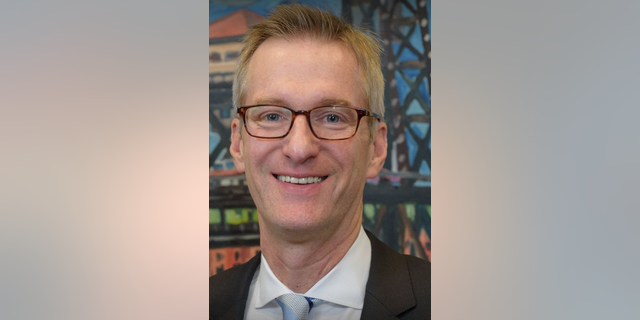
Portland, Ore., Mayor Ted Wheeler seemed to shun responsibility for allowing Antifa to freely roam the streets and commit violence in the city, insisting he always orders the police to “enforce the law.” Wheeler,
who’s been in office since January 2017, has been under fire for the
rise of Antifa in his city, particularly after a June 29 protest that
led to the violent assault of conservative journalist Andy Ngo.
Portland, Ore., Mayor Ted Wheeler. (Facebook)
“The game plan we've been using up to this point is no longer effective,” Wheeler told Oregon's FOX 12 about the violence on the streets.
“The game plan we've been using up to this point is no longer effective.” — Ted Wheeler, Portland, Ore., mayor
Ngo
was seen being kicked and doused with a milkshake during a clash
between Antifa and members of the conservative group Proud Boys during
the protest. As a result of the attack, Ngo said he suffered a brain
hemorrhage. Portland Police Association President Daryl Turner
released a statement following the violent protest, blaming Wheeler for
lack of enforcement and saying the mayor must “remove the handcuffs from
our officers and let them stop the violence through strong and swift
enforcement action.” Sen. Ted Cruz of Texas, meanwhile, called for
a federal investigation into Wheeler and his actions that may have
allowed “domestic terrorists” to attack on Americans on the streets. But
Wheeler, who also serves as police commissioner as part of the mayor’s
office, denies he was responsible for lack of policing at the protest. “I
thought it was beneath a United States senator,” Wheeler told the
outlet. “The truth is, I wasn't even here. I wasn't even in the United
States. I was with my family in Ecuador on a wildlife tour.” “One
of the things I would like the public to know, is there is a unified
incident command center that's engaged during these demonstrations,” he
continued. “There is an incident commander, certainly the police chief.”
“The truth is, I wasn't even here. I wasn't even in the United States. I was with my family in Ecuador on a wildlife tour.” — Ted Wheeler
He added: “I have never made a tactical decision and I most certainly did not on June 29th.” Wheeler
also claims that he never told Portland police not to enforce certain
laws, on the contrary, he claims he explicitly asked to curb violence
during protests. “Enforce the law, don't let people commit acts of
violence, don't let people shut down regional transit,” Wheeler said
were among the directives. “Keep the city active and moving. Don't let
people get onto the highways and do anything stupid.”
Wednesday, during his testimony in front of the House Judiciary Committee, Robert Mueller made major headlines following this interaction with Rep. Ken Buck, a Colorado Republican: Buck: "Could you charge the president with a crime after he left office?" Mueller: "Yes" Buck:
"You believe that he committed -- you could charge the president of the
United States with obstruction of justice after he left office?" Mueller: "Yes" Mueller has been clear and consistent about two things since releasing his report. First, his investigation did not exonerate President Trump, despite his claims. Second,
he never considered prosecuting the president because of the Justice
Department’s controversial policy stating a sitting president cannot be
indicted. But, as Mueller testified on Wednesday, Trump could very well
be prosecuted once he leaves office. There’s no doubt that is something Trump and his legal advisers have had in mind all this time. The
longer Trump is in office, the better his chances are of staying out of
prison, and if he is reelected, he could very well go untouched. The
statute of limitations for federal obstruction of justice is five years
from the time the crime was committed. If President Trump is re-elected
in 2020, his second term would conclude well after the statute of
limitations has run out. If he loses, however, he could be in a world of
hurt. So, while every president is motivated to win reelection,
for Trump the stakes are higher. Maybe that’s why he is working so
hard, raising more than $100 million and peddling $15 straws with his
name on them. Trump knows what he did and knows he can only be held
accountable if he loses next year.
Imagine for a moment if this president was a Democrat, Republicans would be the first to call for investigations.
While
he tells us America’s future is on the line, maybe what he’s really
worried about is his own freedom – and he’s doing everything he can to
salvage it. For Trump, it has always been about looking out for
Number One. He’s ramping up his message of fear and hatred, telling
members of congress, whom the people elected, to go back to where they
came from (three out of four of them were born in America) and attacking
law enforcement including Mueller and the FBI, intelligence officials
and judges, the very people sworn to protect our citizenry and our
democracy. He’s behaving this way because he knows fear and
division drive his base, and he needs them more than ever because he has
lost moderate Democrats and the majority of independent voters. While
any potential remaining legal action will have to wait, Congress must
not. As Mueller said in the press conference he held in May, it is
Congress’ job to investigate and take action, if necessary, against a
sitting president. So, as much as Republican hacks will continue
to whine, kick, and scream, Congress must continue to investigate
Trump’s actions during the 2016 campaign. Imagine for a moment if this president was a Democrat, Republicans would be the first to call for investigations. Opening
an impeachment inquiry is the best way for the American people to get
the facts they need to decide for themselves whether to remove the
president from office (we know the Republican Senate will not) in 2020. Frankly,
the president and his allies in Congress should welcome any effort that
could potentially clear his name. But they oppose it because they know
they facts, and those facts are not in the president’s favor. I believe in the American people and, unlike our president, I believe in the American system of justice. The
2020 election will not only determine the future of our nation and
whether we want four more years of a failing reality show, the outcome
and the actions that follow will answer the question burning in the
minds of many Americans: Is the president of the United States above the
law?
Former Special Counsel Robert Mueller's
mythic profile -- built over a period of two years by Trump detractors
hoping his investigation and later his testimony would pave the way for
the president's removal from office -- took a hit Wednesday as the
veteran lawman was seen stumbling through questions and at times unclear
about the contents of his own report. Now, some of President
Trump’s biggest critics are turning their ire toward the legend himself,
panning his performance at this high-stakes forum, even though Mueller
repeatedly made clear he did not wish to testify in the first place. “Much
as I hate to say it, this morning’s hearing was a disaster,” Harvard
Law Professor Laurence Tribe tweeted, in reference to Mueller’s
testimony before the House Judiciary Committee. Tribe is an outspoken
critic of Trump who often calls for his impeachment and indictment. He
noted Mueller’s appearance failed to provide the made-for-TV moment that
Democrats could rally behind in their efforts to bring down the
president. “Far from breathing life into his damning report, the tired Robert Mueller sucked the life out of it.” Left-wing
documentarian Michael Moore had even harsher words about Mueller, and
all the “pundits and moderates and lame Dems” who thought he would
deliver. Democrats did get Mueller to make certain statements that
were clearly damaging to the president, including refuting Trump's
claim that he was exonerated by the investigation. But Mueller largely
was retreading ground already covered in the report. And his critical
comments were undermined by his stumbling in the face of Republican questioning, and confusion over key details. Several on the left readily acknowledged this was not the home run for which they hoped. CNN legal analyst Jeffrey Toobin scored it as a win for President Trump. “Look at who’s winning now, it certainly seems like Donald Trump is winning between the two of them,” Toobin said Wednesday. NBC’s Chuck Todd noted that while Mueller did deliver some substance that benefitted Democrats, “on optics, this was a disaster.” Rep.
Al Green, D-Texas, who just a week earlier introduced a resolution to
impeach Trump, recognized that even though Mueller “met my
expectations,” others may have been disappointed. “Some persons
were hoping for a seminal moment. A ‘wow’ moment. It didn’t happen,”
Green said. Green tweeted Thursday morning that this was because the
report and Trump’s actions had been already been discussed “ad nauseum.” David Axelrod, former senior adviser to President Obama, was far more critical as the morning hearing drew to a close. “This is very, very painful,” Axelrod said Trump’s legal team reacted to the testimony by stating that this should be the end of the discussion. “The
American people understand that this issue is over. They also
understand that the case is closed,” attorney Jay Sekulow said in a
statement. Trump’s
other attorney Rudy Giuliani called the testimony "disastrous." He said
that with Mueller’s testimony out of the way, it is time to “move on”
to other issues surrounding the origin of the investigation and how it
was conducted. Republicans grilled Mueller over details of what led to
the probe, but the former special counsel refused to answer, citing
ongoing investigation of the matter. The Justice Department
Inspector General also is examining the FBI’s use of the Foreign
Intelligence Surveillance Act (FISA) to conduct surveillance of former
Trump campaign adviser Carter Page. A report is expected to be released
this summer. Attorney General Bill Barr also has Connecticut U.S.
Attorney John Durham investigating the origins of the investigation. Fox News' John Roberts and Ellison Barber contributed to this report.