Union officials say both sides are far apart in the talks, while GM says it has made significant offers.
UAW represents workers at 33 manufacturing sites and 22 parts warehouses across the country.
On Sunday, President Trump tweeted for the two sides to make a deal.
A
person briefed on the bargaining told the Associated Press that General
Motors has offered the UAW new products for two assembly plants that it
had planned to close.
General Motors says it
presented what it believes was a strong offer including improved wages
and benefits and investments in eight facilities in four states.
The strike will affect GM plants in Michigan, Ohio, Tennessee, Kentucky, New York, Texas and elsewhere in the U.S.
Beto O’Rourke
launched an expletive-fueled defense of his call Sunday to ban
assault-style weapons and impose mandatory buybacks of AR-15s and AK-47s
while also pushing back at critics -- including fellow 2020 Democrat Pete Buttigieg.
During last Thursday’s presidential debate,
the former Texas congressman said, “Hell yes, we’re going to take your
AR-15, your AK-47, and we’re not going to allow it to be used against
your fellow Americans anymore.” Three days later, O’Rourke appeared on
NBC News’ “Meet the Press,” where host Chuck Todd pointed out that there
was “a lot of hand-wringing” about the presidential contender’s
full-throated call on national TV for confiscating such rifles.
As
O’Rourke had put the issue of gun violence at the center of his
campaign effort, some fellow Democrats chastised him and were concerned
that his statements may have made things harder for gun control
supporters as they negotiate with President Trump on legislation to
respond to this summer’s mass shootings.
After
Todd pointed out that some Democrats were hesitant to support such
bans, O’Rourke responded, “I think this just shows you how screwed up
the priorities in Washington, D.C. are.”
He then brought up the 22 people were killed in a Walmart in his hometown of El Paso last month.
“Talking
to those doctors and trauma room surgeons who treated those victims in
El Paso, they said these are wounds of war—that high-impact,
high-velocity round, when it hit their systems, just shredded everything
inside of them,” O’Rourke said on Sunday. “I refuse to accept that, and
I refuse to even acknowledge the politics, or the polling, or the fear
of the NRA that has purchased the complicity and silence of members of
Congress and this weak response to a real tragedy in America.”
Buttigieg,
the mayor of South Bend, Indiana, appeared on CNN’s “State of the
Union” and agreed with Sen. Chris Coons, D-Del., saying the clip of the
former O’Rourke’s statement about AR-15s and AK-47s “will be played for
years at Second Amendment rallies with organizations that try to scare
people by saying Democrats are coming for your guns.”
Buttigieg said,
“Look, right now we have an amazing moment on our hands. We have
agreement among the American people not just for universal backgrounds
checks, but we have a majority in favor of red-flag laws, high-capacity
magazines, banning the new sale of assault weapons. This is a golden
moment to finally do something.”
Buttigieg went on to say, “When
even this president and even [Senate Majority Leader] Mitch McConnell
are at least are pretending to be open to reforms, we know that we have a
moment on our hand. Let’s make the most of it and get these things
done.”
O’Rourke pushed back in a tweet: “Leaving
millions of weapons of war on the streets because Trump and McConnell
are ‘at least pretending to be open to reforms’? That calculation and
fear is what got us here in the first place. Let’s have the courage to
say what we believe and fight for it.”
He later tweeted,
“When candidates say, 'At least Donald Trump and Mitch McConnell are
pretending to be interested,' sh--, that is not enough. Neither is
poll-testing your message. Gun violence is a life or death issue—and we
have to represent the bold ideas of people all over the country.”
As O’Rourke made his call to take back the rifles on Thursday night, Trump warned at a Republican retreat in Baltimore,
“Democrats want to confiscate guns from law-abiding Americans, so they
are totally defenseless when somebody walks into their house.”
Trump promised that his party “will forever uphold the fundamental right to keep and bear arms,” which received loud applause.
Trump
and White House aides have discussed several gun control measures with
members of Congress, including steps to go after fraudulent buyers and
boost mental health assistance. A formal announcement on Trump’s plan is
expected as soon as this week. Fox News' Ben Florance and The Associated Press contributed to this report.
The devastating attack Saturday against a major oil facility in Saudi Arabia
dramatically illustrates why the Iran nuclear deal that was accepted by
the Obama administration and rejected by President Trump failed to end
the Iranian threat to peace and stability in the Middle East.
While the nuclear deal put temporary restrictions on the Iranian nuclear program, it did absolutely nothing to stop Iran’s
aggressive conventional and asymmetric military actions against its
neighbors and threats against Israel. This is partly why President Trump
ultimately withdrew from this deeply flawed agreement.
In fact,
the nuclear deal aided Iranian military aggression and support of
terrorist groups by lifting international economic sanctions against
Iran and freeing up Iranian funds frozen by foreign banks. Iran has
supported several terrorist groups in the region, including Houthi
rebels in Yemen, Hezbollah based in Lebanon, the Palestinian group Hamas
that rules the Gaza Strip, and the brutal regime of Syrian dictator
Bashar Assad.
The
attack Saturday on Saudi oil facilities – which temporarily cut Saudi
oil production in half – was carried out by either drones or cruise
missiles (or a combination of the two), according to news reports. About
5.7 million barrels of crude oil production were interrupted by the
Saturday attack, amounting to more than 5 percent of the world’s daily
oil supply.
Opinion
Secretary
of State Mike Pompeo said in a tweet Saturday that “Tehran is behind
nearly 100 attacks on Saudi Arabia … Iran has now launched an
unprecedented attack on the energy supply. There is no evidence the
attacks came from Yemen.”
And President Trump tweeted Sunday
night: “Saudi Arabia oil supply was attacked. There is reason to believe
that we know the culprit, are locked and loaded depending on
verification, but are waiting to hear from the Kingdom as to who they
believe was the cause of this attack, and under what terms we would
proceed!”
The president notably refrained from saying who the U.S.
government believes is responsible for the attack on Saudi Arabia, but
U.S. officials previously pointed to Iran.
The Islamic Republic of
Iran is playing a game of three-dimensional chess against the U.S. and
its regional partners – a game aiming to induce weakness and
irresolution in the face of the Iranian challenge.
Yemen’s Houthi
rebels are claiming credit for the strike against the Saudi oil
facilities. However, satellite photos released by the U.S. government
showed at least “17 points of impact” that officials said indicated the attack came from the direction of Iran or Iraq rather than the Houthi’s home base of Yemen.
Iranian officials denied their government was responsible for the strikes against Saudi Arabia.
In
late 2014, the Houthis burst forth from their stronghold in northern
Yemen, conquered the capital city of Sanaa, and plunged the Arab world’s
poorest country into deep chaos. Since then, humanitarian suffering
caused by the Houthi insurgency has mushroomed across the nation on a
medieval scale.
Since 2015, Saudi Arabia has led a multinational
military coalition to restore the U.N.-backed government in Yemen. The
Saudis prosecution of the war has made their nation the primary target
of international criticism – even as Saudi bases, cities, airports and
oil installations come under attack from Houthi rockets, missiles and
drones.
Other foreign belligerents have mostly escaped blame.
Iran’s involvement in Yemen is more nefarious. Tehran seeks to co-opt the Houthi insurgency into a tool with which to bleed and bludgeon its regional rival, Saudi Arabia. This competition
between Iran and Saudi Arabia is a struggle for both the sacred and
profane: for leadership of the Muslim world, for individual Muslim
hearts and minds, for the Middle East regional balance, and for oil.
Iran has provided the Houthis with anti-tank missiles, ballistic missiles of varying ranges, cruise missiles, and suicide drones
– which can function as cruise missiles. As a result, Iran has been
able to grow the long-arm of Houthi military capabilities, and at a low
cost to Iran.
Iranian-supplied weapons allow the Houthi insurgents
to strike at the Saudi heartland from a distance and respond to
battlefield developments at a time and place of their own choosing.
In additions to the tweets from Pompeo and Trump,
There is no evidence the attacks came from Yemen.elsewhere on Twitter, there has been increased chatter about, and even video alleging, that the strikes on Saudi Arabia originated in Iraq. If that were the case, Iran-backed Shiite militias in Iraq, which are part of Tehran’s broad proxy network across the Middle East, would be to blame rather than the Houthis.
Should
the thesis of Iraqi involvement hold, it would be a measure of the
Houthis’ deference to Iran that they claimed credit for an attack they
did not carry out.
It would also be an indicator of Tehran’s
tolerance for risk and retaliation in places like Yemen – which is far
away, unlike Iraq, which is right next door to Iran.
Conversely,
should Iran have launched cruise missiles from its own territory – which
is less likely – it would mean Tehran is confident that its adversaries
would not respond using military force against the origin of the
strikes.
While Iran is known
as a ballistic missile powerhouse in the region, copies of its cruise
missiles are increasingly winding up in the hands of terrorist groups,
be they anti-ship variants with Hezbollah in Lebanon or land-attack cruise missiles with the Houthis in Yemen.
Either
way, the launching of cruise missiles and/or drones at a vital artery
of the international economy conveys a broader strategic point: Iran’s
threats to oil shipping are not limited to the Strait of Hormuz, where
over one-fifth of seaborne traded oil passes daily. This signifies that
the regime is comfortable broadening the scope of its harassment from
oil tankers at sea to oil installations on land. Consider this an
attempt to make good on old threats.
With the blaze of Saudi oil facilities in hindsight, the priority for Washington should not be to covet a high-level meeting with the Islamic Republic on the sidelines of the United Nations General Assembly
in New York City in the coming days. It must be how better to contest
Iran’s asymmetric military capabilities, as well as those of its proxies
and partners in the region.
Since May, Washington has been
hardening and growing its military footprint in the region through
enhanced deployments. This process, as well as tough sanctions, should
continue.
Slowing
economic pressure, recalling assets – or worse, talking to Tehran only
about the nuclear issue – would replicate the mistakes that got the U.S.
into the flawed 2015 nuclear deal, which in turn underwrote the
expansion of Iran’s regional threat network.
The Trump
administration should not make the same mistake as the Obama
administration, and should instead continue to hold Iran accountable for
its latest hostile actions.
The New York Times suddenly made a major revision to a supposed bombshell piece late
Sunday concerning a resurfaced allegation of sexual assault by Supreme
Court Justice Brett Kavanaugh -- hours after virtually all 2020
Democratic presidential candidates had cited the original article as a
reason to impeach Kavanaugh.
The update included
the significant detail that several friends of the alleged victim said
she did not recall the supposed sexual assault in question at all. The
Times also stated for the first time that the alleged victim refused to
be interviewed, and has made no comment about the episode.
The
only first-hand statement concerning the supposed attack in the original
piece, which was published on Saturday, came from a Clinton-connected lawyer who claimed to have witnessed it.
The
Times' revision says: "Editors' Note: An earlier version of this
article, which was adapted from a forthcoming book, did not include one
element of the book's account regarding an assertion by a Yale classmate
that friends of Brett Kavanaugh pushed his penis into the hand of a
female student at a drunken dorm party. The book reports that the female
student declined to be interviewed and friends say that she does not
recall the incident. That information has been added to the article."
The update came only after The Federalist's Mollie Hemingway, who reviewed an advance copy of the book, first flagged the article's omission on Twitter -- prompting other commentators to press the issue.
The Times did not immediately respond to an email from Fox News seeking comment.
The paper's editors' note, meanwhile, did little to stem a torrent of criticism late Sunday.
"Should I be surprised at this point that the NYT would make such an unforgivable oversight?" — Mark Hemingway
"Should I be surprised at this point that the NYT would make such an unforgivable oversight?" asked RealClearInvestigations' Mark Hemingway.
Wrote
the Washington Examiner's Jerry Dunleavy: "Crazy how the 'one element'
that wasn’t included in the original article was the part where the
alleged victim’s friends said she doesn’t remember it happening."
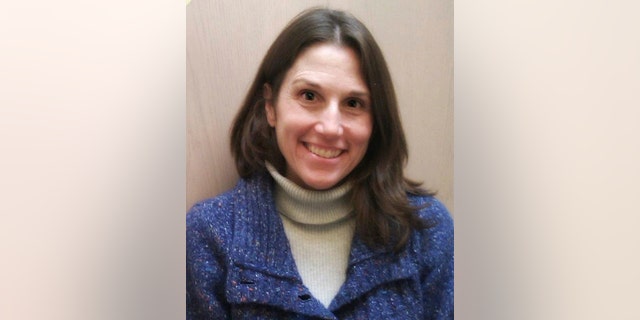
This undated photo shows Deborah Ramirez. Her uncorroborated
allegations that Kavanaugh had exposed himself to her in college --
which came after she admitted to classmates that she was unsure
Kavanaugh was the culprit, and after she spent several days talking to a
lawyer -- were reported Sept. 23, 2018, by The New Yorker magazine.
(Safehouse Progressive Alliance for Nonviolence via AP)
"It’s important to point out that this correction almost certainly would have never occurred if conservative media folks like @MZHemingway
and others hadn’t obtained the copy of the actual book itself the same
day the excerpt/article was released," author James Hasson said.
Throughout the day on Sunday, Kamala Harris, Elizabeth Warren, Bernie Sanders, Beto O'Rourke, Cory Booker and Julian Castro, among others, declared that Kavanaugh "must be impeached," citing the allegation.
The revitalized, longshot push to get Kavanaugh removed from the high court came as Democrats' apparent effort to impeach President Trump has largely stalled. Trump, for his part, suggested Sunday that Kavanaugh should sue for defamation.
The Times piece by Robin Pogrebin and Kate Kelly, adapted from their forthcoming book, asserted that a Kavanaugh classmate, Clinton-connected nonprofit CEO Max Stier,
"saw Mr. Kavanaugh with his pants down at a different drunken dorm
party, where friends pushed his penis into the hand of a female
student."
The Times did not mention Stier's work as a Clinton defense attorney, or Stier's legal battles with Kavanaugh during the Whitewater investigation, and simply called him a "respected thought leader."
According
to the Times, Stier "notified senators and the FBI about this account"
last year during the Kavanaugh hearings, "but the FBI did not
investigate and Mr. Stier has declined to discuss it publicly."
However,
the Times' article also conspicuously did not mention that Pogrebin and
Kelly's book found that the female student in question had denied any
knowledge of the alleged episode.
"The book notes, quietly, that
the woman Max Stier named as having been supposedly victimized by
Kavanaugh and friends denies any memory of the alleged event," observed
Mollie Hemingway. "Seems, I don’t know, significant."
The book reads: "[Tracy]
Harmon, whose surname is now Harmon Joyce, has also refused to discuss
the incident, though several of her friends said she does not recall
it."
"Omitting these facts from the @nytimes
story is one of worst cases of journalistic malpractice that I can
recall," wrote the National Review's Washington correspondent, John
McCormack, on Twitter.
McCormack wrote separately:
"If Kavanaugh’s 'friends pushed his penis,' then isn’t it an allegation
of wrongdoing against Kavanaugh’s 'friends,' not Kavanaugh himself?
Surely even a modern liberal Yalie who’s been to one of those weird non-sexual 'naked parties' would
recognize both the female student and Kavanaugh are both alleged
victims in this alleged incident, barring an additional allegation that a
college-aged Kavanaugh asked his 'friends' to 'push his penis.'"
The
Times went on to note in the article that it had "corroborated the
story with two officials who have communicated with Mr. Stier," but the
article apparently meant only that the Times had corroborated that Stier
made his claim to the FBI. No first-hand corroboration of the alleged
episode was apparently obtained.
Nevertheless, Democrats announced
a new effort to topple Kavanaugh. Hawaii Democratic Sen. Mazie Hirono
-- who infamously said last year that Kavanaugh did not deserve a fair hearing because he might be pro-life -- said the Senate Judiciary Committee should begin an impeachment inquiry to determine whether Kavanaugh lied to Congress.
Impeaching
Kavanaugh would require a majority vote in the Democratic-controlled
House, and a highly unlikely two-thirds vote in the GOP-majority Senate
would then be needed to remove him from the bench. No Supreme Court
justice or president has ever been convicted by the Senate, although
eight lower-level federal judges have been.
The long odds didn't stop 2020 Democratic presidential hopefuls from joining in on the effort.
"I
sat through those hearings," Harris wrote on Twitter. "Brett Kavanaugh
lied to the U.S. Senate and most importantly to the American people. He
was put on the Court through a sham process and his place on the Court
is an insult to the pursuit of truth and justice. He must be impeached."
During the hearings, Harris strongly implied
that she knew Kavanaugh had improperly discussed Special Counsel Robert
Mueller's then-ongoing probe with a Trump-connected lawyer.
Harris provided no evidence for the bombshell insinuation, which went viral on social media and sent the hearing room into stunned silence, even as she directly accused Kavanaugh of lying under oath.
Castro and Warren echoed that sentiment and said Kavanaugh had committed perjury.
"It’s
more clear than ever that Brett Kavanaugh lied under oath," Castro
wrote. "He should be impeached. And Congress should review the failure
of the Department of Justice to properly investigate the matter."
Warren wrote:
"Last year the Kavanaugh nomination was rammed through the Senate
without a thorough examination of the allegations against him.
Confirmation is not exoneration, and these newest revelations are
disturbing. Like the man who appointed him, Kavanaugh should be
impeached."
O'Rourke claimed to "know" that Kavanaugh had lied
under oath, and falsely said that the new accuser was not known to
Senate Democrats or the FBI last year.
"Yesterday, we learned of
another accusation against Brett Kavanaugh—one we didn't find out about
before he was confirmed because the Senate forced the F.B.I. to rush its
investigation to save his nomination," O'Rourke said. "We know he lied
under oath. He should be impeached."
Sen. Cory Booker, D-N.J., tweeted
in part, "This new allegation and additional corroborating evidence
adds to a long list of reasons why Brett Kavanaugh should not be a
Supreme Court justice. I stand with survivors and countless other
Americans in calling for impeachment proceedings to begin."
Amy
Klobuchar stopped short of calling for impeachment, and instead posted a
picture of Kavanaugh accuser Christine Blasey Ford with the words, "Let
us never forget what courage looks like."
Bernie
Sanders, meanwhile, said he backed getting rid of Kavanaugh by any
legal means available: "The revelations today confirm what we already
knew: During his hearing, Kavanaugh faced credible accusations and
likely lied to Congress. I support any appropriate constitutional
mechanism to hold him accountable."
As the calls mounted, Senate Majority Leader Mitch McConnell, R-Ky., shot back Sunday afternoon on Twitter -- and made clear that Kavanaugh wasn't going anywhere.
"The
far left’s willingness to seize on completely uncorroborated and
unsubstantiated allegations during last year’s confirmation process was a
dark and embarrassing chapter for the Senate," McConnell wrote.
He
added: "Fortunately a majority of Senators and the American people
rallied behind timeless principles such as due process and the
presumption of innocence. I look forward to many years of service to
come from Justice Kavanaugh."
The Times' piece also stated that
well before Kavanaugh became a federal judge, "at least seven people"
had heard about how he allegedly exposed himself to Deborah Ramirez at a
party.
Ramirez had called classmates at Yale seeking
corroboration for her story, and even told some of her classmates that
she could not remember the culprit in the alleged episode -- before
changing her mind and publicly blaming Kavanaugh "after six days of
carefully assessing her memories and consulting with her attorney," the New Yorker reported last year in a widely derided piece.
The Senate Judiciary Committee, then led by Chuck Grassley, R-Iowa, wrote in an executive summary of its investigation that
it contacted Ramirez’s counsel "seven times seeking evidence to support
claims made in the New Yorker," but that "Ms. Ramirez produced nothing
in response and refused a Committee request for an interview."
Late Sunday, Grassley's office called out the Times for omitting key details in the story published this weekend.
"@NYTimes
did not contact Sen. Grassley’s office for this story. If they had, we
would've reminded them of a few key public facts they omitted,"
Grassley's team wrote. "Despite 7 attempts by staff, Ms. Ramirez'
lawyers declined to provide documentary evidence referenced in the
article/witness accounts to support the claims. They also declined
invitations for Ms. Ramirez to speak with committee investigators or to
provide a written statement."
Additionally, the FBI separately
reached out to nearly a dozen individuals to corroborate the allegations
by Ford and Ramirez, and ultimately spoke to ten individuals and two
eyewitnesses, but apparently found no corroboration.
The
agency's investigation began after then-Sen. Jeff Flake, R-Ariz., called
for a one-week delay in Kavanaugh's confirmation hearings so an
independent agency could look into the claims against him. Flake said
the FBI's probe needed to be limited in length to avoid derailing the proceedings with endless claims and probes going back to Kavanaugh's high school years.
Kavanaugh,
predicted by Democrats during his confirmation process to be a hardline
conservative, often sided with liberal justices during the Supreme
Court's last term.
The president, meanwhile, accused the media of
trying to influence Kavanaugh. He also went on to say that Kavanaugh
should go on the offensive and take on the media for false statements.
"Brett
Kavanaugh should start suing people for libel, or the Justice
Department should come to his rescue. The lies being told about him are
unbelievable. False Accusations without recrimination. When does it
stop? They are trying to influence his opinions. Can’t let that happen!"
he tweeted.
Grassley sent several criminal referrals to
the Justice Department related to alleged lies submitted to Senate
investigators during Kavanaugh's confirmation process -- which could be
what the president meant when he wrote Sunday that the DOJ "should come
to [Kavanuagh's] rescue."
One of those referrals was for now-disgraced attorney Michael Avenatti and
one of his clients, Julie Swetnick, regarding a potential "conspiracy"
to provide false statements to Congress and obstruct its investigation. Swetnick's credibility took a hit as
she changed her story about Kavanaugh's purported gang-rape trains, and
her ex-boyfriend went public to say she was known for "exaggerating
everything."
Swetnick and Ramirez were just two of several women
who had accused Kavanaugh of sexual misconduct during his confirmation
process. Christine Blasey Ford notably testified that Kavanaugh
attempted to sexually assault her at a party when they were teens, and dubiously asserted that the memory was "indelible" in her "hippocampus" -- although no witnesses could corroborate her ever-changing story -- even her close lifelong friend, Leland Keyser, who Ford said had attended the party.
Keyser, according to the Times reporters' new book, did not believe Ford's story -- and refused to change her mind, despite pressure from progressive activists and Ford's friends.
"It
just didn't make any sense," Keyser said, referring to Ford's
explanation of how she was assaulted at a party that Keyser attended,
but could not recall how she got home.
Ford's attorney, Debra Katz,
was quoted in a new book as saying that Ford was motivated to come
forward in part by a desire to tag Kavanaugh's reputation with an
"asterisk" before he could start ruling on abortion-related cases.
"In
the aftermath of these hearings, I believe that Christine’s testimony
brought about more good than the harm misogynist Republicans caused by
allowing Kavanaugh on the court," Katz said. "He will always have an
asterisk next to his name. When he takes a scalpel to Roe v. Wade, we
will know who he is, we know his character, and we know what motivates
him, and that is important.
"It is important that we know, and that is part of what motivated Christine."
The Federalist reported last week that Ford's father privately supported Kavanaugh's confirmation, and approached Ed Kavanaugh on a golf course to make his support clear.
Some
claims that surfaced during Kavanaugh's confirmation fell apart within
days. For example, Sen. Sheldon Whitehouse, D-R.I., received a call from
an anonymous constituent who claimed that in 1985, two "heavily
inebriated men" referred to as "Brett and Mark" had sexually assaulted a
friend of hers on a boat.
The Twitter account belonging to the accuser apparently advocated for a military coup against the Trump administration. The constituent recanted the sexual assault claim on the social media site days later. Fox News' Andrew Craft in Plano, Texas, Chad Pergram, and Ronn Blitzer contributed to this report.
DETROIT
(AP) — The four-year contract between General Motors and the United
Auto Workers has expired as negotiations on a new deal continue.
Union
officials told GM they would let the contract lapse just before
midnight Saturday, increasing the risk of a strike as early as Sunday
night. Union members working Sunday were to report as scheduled.
But
there was a wrinkle. About 850 UAW-represented janitors who work for
Aramark, a separate company, went on strike Sunday after working under
an extended contract since March of 2018, the union said.
The
strike covered eight GM facilities in Ohio and Michigan. Although UAW
workers at GM are supposed to work, it wasn’t clear early Sunday whether
the rank-and-file would cross their own union’s picket lines. GM said
in a statement that it has contingency plans for any disruptions from
the Aramark strike.
UAW
Vice President Terry Dittes said in a letter to members that, after
months of bargaining, both the union and GM are far apart on issues such
as wages, health care, temporary employees, job security and
profit-sharing.
The union’s executive
leaders and a larger group of plant-level officials will meet Sunday
morning to decide the union’s next steps.
The letter to members and another one to GM were aimed at turning up the pressure on GM negotiators.
“While
we are fighting for better wages, affordable quality health care, and
job security, GM refuses to put hard working Americans ahead of their
record profits,” Dittes, the union’s chief bargainer with GM, said in a
statement Saturday night.
Kristin Dziczek,
vice president of the Center for Automotive Research, an industry think
tank, said the union could strike at GM after the contract expires.
“If they’re not extending the agreement, then that would leave them open to strike,” she said.
But GM, in a statement Saturday night, still held out hope for an agreement, saying it continues to work on solutions.
“We
are prepared to negotiate around the clock because there are thousands
of GM families and their communities - and many thousands more at our
dealerships and suppliers - counting on us for their livelihood. Our
goal remains on building a strong future for our employees and our
business,” the GM statement said.
A strike
by 49,200 union workers would bring to a halt GM’s U.S. production, and
would likely stop the company from making vehicles in Canada and Mexico
as well. That would mean fewer vehicles for consumers to choose from on
dealer lots, and it would make it impossible to build specially ordered
cars and trucks.
The
union’s executive board was to meet early Sunday to talk about the
union’s next steps, followed by a meeting in Detroit of plant-level
union leaders from all over the country. An announcement was scheduled
for after the meetings end.
If there is a strike, it would be the union’s first since a two-day work stoppage at GM in 2007.
The
move by the union also comes as it faces an internal struggle over a
federal corruption investigation that has touched its president, Gary
Jones. Some union members are calling for Jones to step down while the
investigation continues. But Friday night, union leaders did not remove
Jones.
Union officials surely will face
questions about the expanding investigation that snared a top official
on Thursday. Vance Pearson, head of a regional office based near St.
Louis, was charged with corruption in an alleged scheme to embezzle
union money and spend cash on premium booze, golf clubs, cigars and
swanky stays in California. It’s the same region that Jones led before
taking the union’s top office last year. Jones has not been charged.
On
Friday, union leaders extended contracts with Ford and Fiat Chrysler
indefinitely, but the pact with General Motors was still set to expire
Saturday night.
The union has picked GM,
which is more profitable than Ford and Fiat Chrysler, as the target
company, meaning it’s the focus of bargaining and would be the first
company to face a walkout. Picket line schedules already have been
posted near the entrance to one local UAW office in Detroit.
Talks
between the union and GM were tense from the start, largely because GM
plans to close four U.S. factories. The union has promised to fight the
closures.
Here are the main areas of disagreement:
—
GM is making big money, $8 billion last year alone, and workers want a
bigger slice. The union wants annual pay raises to guard against an
economic downturn, but the company wants to pay lump sums tied to
earnings. Automakers don’t want higher fixed costs.
—
The union also wants new products for the four factories GM wants to
close. The factory plans have irked some workers, although most of those
who were laid off will get jobs at other GM factories. GM currently has
too much U.S. factory capacity.
— The
companies want to close the labor cost gap with workers at plants run by
foreign automakers. GM’s gap is the largest at $13 per hour, followed
by Ford at $11 and Fiat Chrysler at $5, according to figures from the
Center for Automotive Research. GM pays $63 per hour in wages and
benefits compared with $50 at the foreign-owned factories.
—
Union members have great health insurance plans but workers pay about
4% of the cost. Employees of large firms nationwide pay about 34%,
according to the Kaiser Family Foundation. The companies would like to
cut costs.
YUMA, Ariz. (AP) — On a dirt road past rows of
date trees, just feet from a dry section of Colorado River, a small
construction crew is putting up a towering border wall that the
government hopes will reduce — for good — the flow of immigrants who
cross the U.S.-Mexico border illegally.
Cicadas
buzz and heavy equipment rumbles and beeps before it lowers
30-foot-tall (9-meters-tall) sections of fence into the dirt. “AhÃ
está!” — “There it is!” — a Spanish-speaking member of the crew says as
the men straighten the sections into the ground. Nearby, workers pull
dates from palm trees, not far from the cotton fields that cars pass on
the drive to the border.
South
of Yuma, Arizona, the tall brown bollards rising against a cloudless
desert sky will replace much shorter barriers that are meant to keep out
cars, but not people.
This 5-mile
(8-kilometer) section of fencing is where President Donald Trump’s most
salient campaign promise — to build a wall along the entire southern
border — is taking shape.
The president and
his administration said this week that they plan on building between 450
and 500 miles (724 and 806 kilometers) of fencing along the nearly
2,000-mile (3,218-kilometer) border by the end of 2020, an ambitious
undertaking funded by billions of defense dollars that had been
earmarked for things like military base schools, target ranges and
maintenance facilities.
Two other Pentagon-funded construction projects
in New Mexico and Arizona are underway, but some are skeptical that so
many miles of wall can be built in such a short amount of time. The
government is up against last-minute construction hiccups, funding
issues and legal challenges from environmentalists and property owners
whose land sits on the border.
The Trump
administration says the wall — along with more surveillance technology,
agents and lighting — is key to keeping out people who cross illegally.
Critics
say a wall is useless when most of those apprehended turn themselves in
to Border Patrol agents in the hope they can be eventually released
while their cases play out in immigration court.
In Yuma, the defense-funded section of tall fencing is replacing shorter barriers that U.S. officials say are less efficient.
It
comes amid a steep increase since last year in the number of migrant
families who cross the border illegally in the Yuma area, often turning
themselves in to Border Patrol agents. Many are fleeing extreme poverty
and violence, and some are seeking asylum.
So
far this year, Border Patrol agents in the Yuma sector have apprehended
over 51,000 family units. That’s compared with just over 14,500 the
year before — about a 250% increase.
The
Yuma sector is the third busiest along the southern border, with
officials building a temporary, 500-person tent facility in the parking
lot of the Border Patrol’s Yuma headquarters in June.
It
spent just under $15 million for the setup and services for four
months, including meals, laundry and security, but officials are
evaluating whether to keep it running past next month as the number of
arrivals in Yuma and across the southern border have fallen sharply in recent months.
The
drop is largely due to the Mexican government’s efforts to stop
migrants from heading north after Trump threatened tariffs earlier this
year to force Mexico to act.
The number of
people apprehended along the southern border fell by 61 percent between
this year’s high point in May and the end of August. In Yuma, it fell by
86 percent, according to government figures. Most people apprehended
are either traveling as families or are unaccompanied children.
“Historically
this has been a huge crossing point for both vehicles as well as family
units and unaccompanied alien children during the crisis that we’ve
seen in the past couple of months,” Border Patrol spokesman Jose Garibay
said. “They’ve just been pouring over the border due to the fact that
we’ve only ever had vehicle bollards and barriers that by design only
stop vehicles.”
Victor Manjarrez Jr., a
former Border Patrol chief who’s now a professor at the University of
Texas, El Paso, was an agent when the government put up the first
stretch of barriers along the southern border — in San Diego.
He’s
seen barriers evolve from easily collapsible landing mats installed by
agents and the National Guard to the sophisticated, multibillion-dollar
projects now being done by private contractors.
Manjarrez
says tall border fencing is crucial in some areas and less helpful in
others, like remote stretches of desert where shorter barriers and more
technology like ground sensors would suffice.
“One
form doesn’t fit in all areas, and so the fence itself is not the one
solution. It’s a combination of many things,” Manjarrez said.
The
ease of construction varies by place and depends on things like water,
Manjarrez said, adding that just because a plot of land is flat “doesn’t
mean it’s not complex.”
He said building
450 to 500 miles (724 and 806 kilometers) of fence by the end of next
year would be tough if that figure doesn’t include sections of the wall
that have been built recently.
“As it stands
now, contractors are building pretty fast,” Manjarrez said. The real
question is whether the government needs to build that much fencing, he
said.
The Trump administration may face
those issues along with lawsuits from landowners who aren’t giving up
their property so easily and environmentalists who say the barriers stop
animals from migrating and can cut off water resources.
The
Tohono O’odham tribe in Arizona also has expressed opposition to more
border fencing on its land, which stretches for nearly 75 miles (120
kilometers) along the border with Mexico.
Near
Yuma, the Cocopah Indian Tribe’s reservation is near the latest fencing
project, and leaders are concerned it will block the view to its sacred
sites, spokesman Jonathan Athens said.
___
This story has been corrected to say that the section of fence installed near Yuma, Arizona, is 30 feet, or 9 meters, tall.
ROSH HAAYIN, Israel (AP) — As former army chief
of staff Benny Gantz campaigns to be Israel’s next leader, he is
relying less on policy specifics than on the archetypal image of a
military man who can rise above the political fray and defend a country
that feels perpetually under siege.
With
piercing blue eyes and the reserved manner of a lifelong soldier, Gantz
has vowed to unify the country and restore national institutions after
Prime Minister Benjamin Netanyahu’s decade-long rule, which has deepened
Israel’s religious and political divides and been roiled by corruption
allegations.
Gantz
failed to unseat Netanyahu in April’s elections, but will have another
shot in Tuesday’s unprecedented do-over, which was prompted by
Netanyahu’s inability to form a government.
In
contrast to Netanyahu, whose political career spans three decades, the
60-year-old Gantz is a newcomer who only burst onto the scene over the
last year. The towering former general heads the Blue and White, a
centrist coalition that includes the popular politician Yair Lapid as
well as other former senior military officers.
While
Netanyahu’s campaign has been marked by dramatic announcements on
everything from alleged Iranian nuclear sites to promises to annex parts
of the occupied West Bank, Gantz has offered a low-key alternative,
betting that voters are hungry for change. He may also hope to tap into
nostalgia for past generals-turned-statesmen, like Moshe Dayan, Yitzhak
Rabin and Ariel Sharon.
Gantz slammed the prime minister’s announcement
about an alleged Iranian nuclear weapons site, saying “Netanyahu’s use
of sensitive security information for the purposes of his campaign
attests to bad judgment.”
“Even in his last days as prime minister, Netanyahu is only looking out for Netanyahu,” he added.
When Netanyahu called for activists to be allowed to film polling stations
in Arab districts — alleging fraud without providing any evidence —
Gantz charged him with laying the groundwork for rejecting the election
results. When Netanyahu announced his intention to annex the heart of the West Bank if re-elected, Gantz dismissed it as a political stunt.
Gantz
has promised to take a much harsher stance toward Palestinian rocket
fire from the Gaza Strip, accusing Netanyahu of appeasing Hamas, the
Islamic militant group that rules the coastal territory. He has drawn on
his time as army chief, when he oversaw the 2014 Gaza war. Before
April’s elections, his campaign boasted about the number of militants
that were killed, saying parts of Gaza were sent back to the “stone
age,” but he has been more muted this time around.
He
has also hinted at reviving the peace process with the Palestinians,
but he has provided few details, apparently wary of alienating Israel’s
increasingly nationalist voters.
Oded
Balilty, a Pulitzer Prize-winning photographer for The Associated Press,
was recently granted exclusive access to photograph Gantz at his home
in Rosh Haayin, in central Israel, and his party headquarters in Tel
Aviv.
DUBAI,
United Arab Emirates (AP) — Iran denied on Sunday it was involved in
Yemen rebel drone attacks the previous day that hit the world’s biggest
oil processing facility and an oil field in Saudi Arabia, just hours
after America’s top diplomat alleged that Tehran was behind the
“unprecedented attack on the world’s energy supply.”
The
attacks Saturday claimed by Yemen’s Houthi rebels resulted in “the
temporary suspension of production operations” at the Abqaiq processing
facility and the Khurais oil field, Riyadh said.
That
led to the interruption of an estimated 5.7 million barrels in crude
supplies, authorities said while pledging the kingdom’s stockpiles would
make up the difference. The amount Saudi Arabia is cutting back is
equivalent to over 5% of the world’s daily production.
While
markets remained closed Sunday, the attack could shock world energy
prices. They also increased overall tensions in the region amid an
escalating crisis between the U.S. and Iran over Tehran’s unraveling
nuclear deal with world powers.
Late
Saturday, U.S. Secretary of State Mike Pompeo directly blamed Iran for
the attack on Twitter, without offering evidence to support his claim.
“Amid
all the calls for de-escalation, Iran has now launched an unprecedented
attack on the world’s energy supply,” Pompeo wrote. “There is no
evidence the attacks came from Yemen.”
The
U.S., Western nations, their Gulf Arab allies and U.N. experts say Iran
supplies the Houthis with weapons and drones — a charge that Tehran
denies.
U.S. officials previously alleged at
least one recent drone attack on Saudi Arabia came from Iraq, where
Iran backs Shiite militias. Those militias in recent weeks have been
targeted themselves by mysterious airstrikes, with at least one believed
to have been carried out by Israel.
Iranian Foreign Ministry spokesman Abbas Mousavi on Sunday dismissed Pompeo’s remarks as “blind and futile comments.”
“The
Americans adopted the ‘maximum pressure’ policy against Iran, which,
due to its failure, is leaning towards ‘maximum lies’,” Mousavi said in a
statement.
Separately, Iraqi Prime Minister
Adel Abdul-Mahdi’s office issued a statement on Sunday denying the
drone attack came from there.
Iraq “abides
by its constitutions that prevents the use of its lands to launch
aggressions against neighboring countries,” the statement said.
First
word of Saturday’s assault came in online videos of giant fires at the
Abqaiq facility, some 330 kilometers (205 miles) northeast of the Saudi
capital, Riyadh.
Machine-gun fire could be
heard in several clips alongside the day’s first Muslim call to prayers,
suggesting security forces tried to bring down the drones just before
dawn. In daylight, Saudi state television aired a segment with its local
correspondent near a police checkpoint, a thick plume of smoke visible
behind him.
President Donald Trump called
Saudi Arabia’s Crown Prince Mohammed bin Salman to offer his support for
the kingdom’s defense, the White House said. The crown prince assured
Trump that Saudi Arabia is “willing and able to confront and deal with
this terrorist aggression,” according to a news release from the Saudi
Embassy in Washington.
Saudi Aramco describes its Abqaiq oil processing facility in Buqyaq as “the largest crude oil stabilization plant in the world.”
The
facility processes sour crude oil into sweet crude, then transports it
onto transshipment points on the Persian Gulf and the Red Sea or to
refineries for local production. Estimates suggest it can process up to 7
million barrels of crude oil a day. By comparison, Saudi Arabia
produced 9.65 million barrels of crude oil a day in July.
The
Khurais oil field is believed to produce over 1 million barrels of
crude oil a day. It has estimated reserves of over 20 billion barrels of
oil, according to Aramco.
There was no
immediate impact on global oil prices as markets were closed for the
weekend. Benchmark Brent crude had been trading at just above $60 a
barrel.
___
Associated
Press writers Amir Vahdat in Tehran, Iran, Aya Batrawy in Dubai, United
Arab Emirates, and Bassem Mroue in Beirut contributed to this report.