Monday, December 16, 2019
Turbulence shakes Democrats going into final debate of 2019

CLINTON,
Iowa (AP) — Seven Democratic presidential candidates will stand on
stage this week in Los Angeles, a pool of survivors who have withstood
almost a year on the campaign trail, sustained attacks from rivals in
both parties, and five rounds of high-pressure debates.
And
while the field has been effectively cut down from more than 20 in the
span of six months, a deepening sense of volatility is settling over the
Democratic primary on the eve of the sixth and final debate of 2019.
The remaining candidates, those in the debate and some trying to compete
from outside, are grappling with unprecedented distraction from
Washington, questions about their core principles and new signs that the
party’s energized factions are turning against each other.
Lest
there be any doubt about the level of turbulence in the race, it’s
unclear whether Thursday’s debate will happen at all given an unsettled
labor union dispute that might require participants to cross a picket
line. All seven candidates have said they would not do so.
The
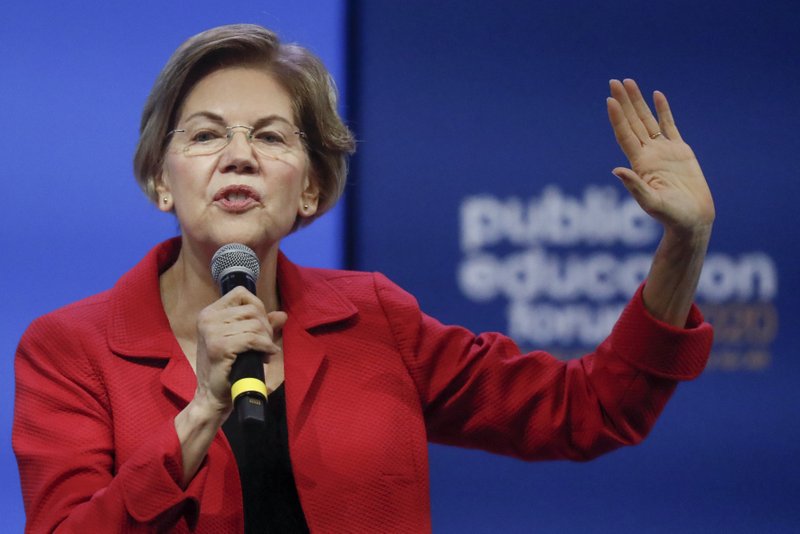
Democratic dilemma is perhaps best personified by Elizabeth Warren,
whose progressive campaign surged through the late summer and fall but
is suddenly struggling under the weight of nagging questions about her
health care plan, her ability to compete against President Donald Trump
and her very authenticity as a candidate.
Boyd
Brown, a South Carolina-based Democratic strategist who recently
decided to back Joe Biden only after his preferred candidate, Beto
O’Rourke, was forced from the race, likened Warren’s position to that of
someone falling down a mountain grasping for anything to slow her
descent.
“She’s got real problems,” Brown said.
Warren
has avoided conflict with her Democratic rivals for much of the year,
but she has emerged as the chief antagonist of the leading candidates in
the so-called moderate lane, former Vice President Joe Biden and Mayor
Pete Buttigieg of South Bend, Indiana. Seven weeks before Iowa’s Feb. 3
caucus, the Massachusetts senator is attacking both men with increasing
frequency for being too willing to embrace Republican ideas and too cozy
with wealthy donors.
Those
close to Warren hope the strategy will allow her to shift the
conversation away from her own health care struggles back to her
signature wealth tax and focus on corruption. Yet she could not escape
questions about her evolving position on Medicare for All as she
campaigned in Iowa over the weekend.
When
asked about health care, Warren told a crowd of roughly 180 people in
the Mississippi River town of Clinton, Iowa, about a plan to expand
insurance coverage without immediately moving to a universal,
government-run system. She promised that those who wanted government
health insurance could buy it before finally concluding, “At the end of
my first term, we’ll vote on Medicare for All.”
The next question came from a man who said he was on Medicare and mostly happy about it, but had lingering issues.
“You call it Medicare for All and it’s better. Can’t you change the name?” he asked of her proposal.
“I
like your suggestion,” Warren responded, in a tone suggesting she
wasn’t entirely joking. “Let’s call it health care for everybody.” She
later added, “Let’s call it better than Medicare for All. I’m in.”
Even
entertaining a name change seemed to mark yet another shift for Warren,
who first co-sponsored Medicare for All in 2017, but began pivoting
away from the proposal after experts questioned the plan she released in
October to pay for it without raising middle-class taxes. She
subsequently released a “transition plan” promising to get Medicare for
All approved by Congress by the end of her third year as president while
relying on existing insurance plans, including those established by
Obamacare, to expand health coverage in the interim.
Warren’s
Democratic critics suggest her evolution on the issue has stalled her
momentum because it goes beyond a policy dispute and raises broader
questions about what may be the most important personal quality in
politics: authenticity.
Indeed,
Buttigieg, Biden and other rivals have seized on her shifts. Even
Bernie Sanders, Warren’s progressive ally and Medicare for All’s author,
seemed to pile on by promising to send a full bill to Congress
implementing the measure during the first week of his administration.
Without
naming any of his rivals, Biden adviser Symone Sanders said candidates
would not succeed in shifting the conversation away from health care
this week even if they wanted to. She said to expect another “robust
exchange” on the issue, which “is not going away and for good reason,
because it is an issue that in 2018 Democrats ran on and won.”
Tough questions for Warren haven’t just come from her rivals.
Since
Thanksgiving, she’s shortened her typically 30-minute and more stump
speech to around 10 minutes and used the extra time to take more
audience questions — only to be forced further on the defensive about
health care.
Barton
Wright, a 69-year-old technical writer, pressed Warren on Medicare for
All at a recent event in Rochester, New Hampshire, noting after the
event that he wants a deeper explanation.
“It
just sounds awful,” Wright said. “It sounds ‘like Hemlock for All’ for
people who don’t like Medicare. And that’s a lot of people.”
Even after questioning Warren, however, Wright said he was helping her campaign and still plans to vote for her.
Meanwhile,
Buttigieg, the surprise member of the top-tier, is grappling with
issues of his own that expose another fissure between the moderate and
progressive wings of the party.
Protesters
aligned with Warren and Sanders tracked him across New York City last
week banging pots and pans and calling him “Wall Street Pete” as he
continued his aggressive courtship of wealthy donors. The 37-year-old
seemed genuinely confused by the protests, which he was forced to
acknowledge during at least one Manhattan fundraiser because the noise
outside was so loud.
As
he faced supporters in Seattle over the weekend, Buttigieg acknowledged
that the intra-party attacks will almost certainly continue, although
he tried to downplay the intensity of the infighting.
“There’s
gonna have to be some fighting,” Buttigieg said, “but I’m never gonna
let us get to where it feels like the fight is the point.”
The
fighting is almost certain to be on display at Thursday night’s debate,
especially among the four candidates in the top-tier: Biden, Buttigieg,
Sanders and Warren. The three others on stage — Minnesota Sen. Amy
Klobuchar, billionaire activist Tom Steyer and entrepreneur Andrew Yang —
only narrowly hit the polling threshold needed to qualify and have an
obvious incentive to make waves of their own as well.
Voters don’t want a public fight, even if they sense one is coming.
Steve
Wehling, a 43-year-old University of Iowa employee, said he doesn’t
like Democrats feuding with each other, but he won’t hold it against
Warren or anyone else. He said he understands that, with the caucuses
looming, “all of the campaigns are really starting to put the squeeze
on.”
“Voters
turn on the debates and still see 10 people on stage and I think a lot
would of them would like to see the field narrowed down,” said Wehling,
who plans to vote for Sanders and says Warren is his second choice. “The
pressure is really on.”
___
Peoples reported in New York. Associated Press writer Hunter Woodall in Rochester, New Hampshire, contributed to this report.
AP Exclusive: Thousands of Ohio absentee applications denied

FILE
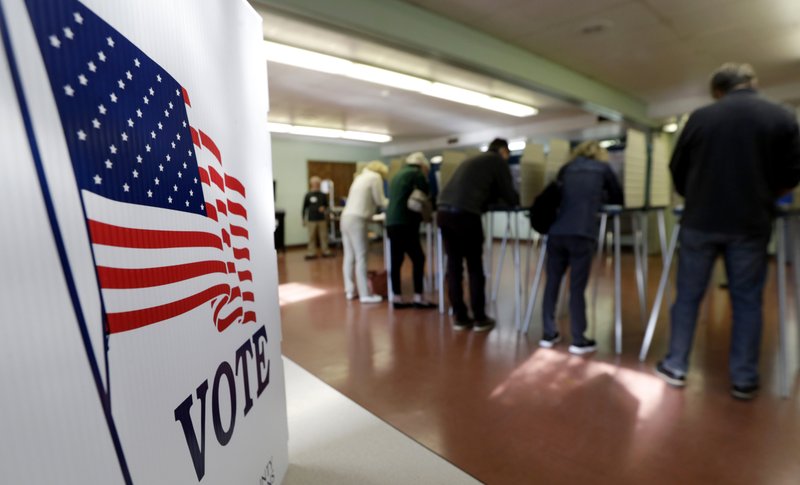
- In this Nov. 6, 2018, file photo, voters cast their ballots, in Gates
Mills, Ohio. An Associated Press review has found that thousands of
Ohio voters were held up or stymied in their efforts to get absentee
ballots by mail in 2018's general election because of a missing or
mismatched signature on their ballot application. (AP Photo/Tony Dejak,
File)
COLUMBUS,
Ohio (AP) — Thousands of Ohio voters were held up or stymied in their
efforts to get absentee ballots for last year’s general election because
of missing or mismatched signatures on their ballot applications, an
Associated Press review has found.
The
signature requirement on such applications is a largely overlooked and
spottily tracked step in Ohio’s voting process, which has shifted
increasingly to mail-in ballots since early, no-fault absentee voting
was instituted in 2005.
To
supporters, the requirement is a useful form of protection against
voter fraud and provides an extra layer of security necessary for
absentee balloting.
To
detractors, it’s a recipe for disenfranchisement — a cumbersome
addition to an already stringent voter identification system.
Susan
Barnard, of Dayton in Montgomery County, said her 78-year-old husband,
Leslie, who has cancer, missed a chance to vote last year because of a
delay related to the signature requirement.
“We
had planned a cruise last fall to give him something to look forward
to,” said Barnard, 73. “It fell at the time of the election, and we were
going to vote the absentee ballot. We got right down to the wire and we
didn’t have one for him, and so he did not vote because of that.”
She
said he had hoped to vote in the election, which included races for
governor, state Supreme Court and Congress. Barnard suspects her husband
simply forgot to sign his ballot application.
Figures
provided to the AP through public information requests to Ohio’s 88
county boards of elections show 21 counties rejected more than 6,500
absentee ballot applications because a signature was either missing or
didn’t match what was on file. That requirement is not for the ballot
itself, which faces a different battery of requirements, but merely for
an application requesting one. Another five counties reported rejecting
about 850 applications combined, for various reasons that the boards
didn’t specify.
The
few counties that tracked what happened to applications after they were
rejected said issues were largely addressed before or on Election
Day.
Twelve
responding counties recorded encountering no signature issues with the
absentee applications. The remaining responding counties said they
didn’t track how many applications they rejected.
It’s
a statistic conspicuously absent from all the official data collected
by the state, making it all but impossible to compare the issue across
years or multiple states.
Signatures
and other verification requirements are there to safeguard Ohio’s
elections, said state Rep. John Becker, a southwestern Ohio Republican.
He said if a voter fails to sign the application form, “that’s on them.”
Ï’m
a big believer in personal responsibility,” Becker said. “You’ve got
the form in front of you. If you forget to sign it, there are
consequences.”
But
Jen Miller, executive director of the League of Women Voters of Ohio,
said the AP analysis highlights a largely unexamined step in a process
her organization already views as inefficient and subject to uneven
enforcement.
“So
a person can register to vote online, but if you go online to request
an absentee ballot, a form is mailed to you that you have to mail back,”
Miller said. Her organization supports allowing people to request
absentee ballots online.
About 1.4 million of Ohio’s roughly 8 million registered voters cast absentee ballots last year.
Republican
Secretary of State Frank LaRose advocated as a state lawmaker for Ohio
to allow voters to apply for absentee ballots online. A version of
legislation he first proposed in 2013 is now before Ohio’s Legislature.
“While
Ohio has long been a national leader in early voting, there is
certainly more that can be done to prevent issues like these from
occurring,” LaRose said. “Election integrity and voter access can
certainly coexist, so let’s work together to modernize the process so we
can improve the antiquated system currently in place.”
LaRose’s predecessor mailed absentee ballot applications to 6.6 million of Ohio’s 8 million registered voters in 2018. And state law
actually says a request for an absentee ballot “need not be in any
particular form” — meaning it could conceivably arrive on a cocktail
napkin or the back of an envelope.
Still,
the signature requirement is one of eight or nine pieces of
information, depending on the type of election, that a successful
request must contain.
According
to the National Conference of State Legislatures, three states —
Oregon, Washington and Colorado — conduct all-mail elections,
eliminating the ballot application process by automatically mailing a
ballot to every registered voter before Election Day.
Miller
said Ohio has not shown the political will to move in this direction,
but her organization is pushing establishment of a permanent absentee
list for those voters who meet certain criteria that require help, such
as illness, permanent disability or illiteracy. Seven states and the
District of Columbia have just such a system.
Judiciary Committee’s minority blasts articles of impeachment report, ‘anemic case’
The
House Judiciary Committee's minority blasted the committee's rush to
impeach President Trump and wrote that history will not look kindly on
how exculpatory evidence was ignored to meet a "self-imposed December
deadline," according to the full articles of impeachment report released early Monday.
The minority, which is comprised of Republicans, blasted the Democrat-led majority for not making the case for impeachment and simply employing "holdover" arguments from other investigations to make their case. Despite the divide, Rep. Jerrold Nadler, D-N.Y., the chairman of the committee, wrote for the majority that Trump is a threat to the Constitution and should be removed from office.
The committee released a 658-page report on the impeachment resolution that lays out the case against Trump. Democrats have raised two articles of impeachable offenses, including abuse of power by soliciting Ukraine to interfere in the 2020 election and then obstructing Congress during its investigation.
The minority wrote that both articles are supported by assumptions and hearsay. The minority, headed by Rep. Doug Collins, R-Ga., the ranking member of the committee, wrote that the majority decided to “pursue impeachment first and build a case second.”
The majority ignored exculpatory evidence but proclaimed the "facts are uncontested,” the minority wrote.
"The facts are contested, and, in many areas, the majority's claims are directly contradicted by the evidence," the minority wrote. They continued that "not one of the criminal accusations leveled at the president over the past year—including bribery, extortion, collusion/conspiracy with foreign enemies, or obstruction of justice—has found a place in the articles. Some of these arguments are just holdovers from an earlier disingenuous attempt by the majority to weaponized the Russia collusion investigation for political gain."
The majority's actions were "unprecedented, unjustifiable, and will only dilute the significance of the dire recourse that is impeachment," they wrote.
The minority also claimed procedural missteps by the majority by not allowing a "minority day of hearings," despite several requests to Nadler. They called the denial “blatant” and “intentional.” They claim Nadler also refused a request to subpoena witnesses. They wrote that there was a complete absence of “fact witnesses” and the case rested with the testimony from four academics and another with a panel of Congressional staffers.
The majority claimed that they were transparent. The majority wrote that the minority wanted to hear testimony from the whistleblower, but the majority stressed the importance of protecting the person’s identity. The minority's request to hear from Hunter Biden—the son of Joe Biden—was "well outside the scope of the inquiry," the majority wrote.
At the heart of the first charge, is Trump’s July 25 phone call with Ukrainian President Volodymyr Zelensky. Democrats have relied on a whistleblower’s complaint that claimed that there was at least an implied quid pro quo during the phone conversation. Trump was also accused of using agents "within and outside" the U.S. government to compel Kiev to investigate the Bidens and their business dealings in the country. The claim is that Trump withheld $391 million in essential military funds to pressure Kiev on the investigations.
Both Trump and Zelensky deny there was ever any implied or explicit quid pro quo.
The newly released report also claims that Trump directed key players in the inquiry from participating.
Trump "interposed the powers of the Presidency against the lawful subpoenas of the House of Representatives, and assumed to himself functions and judgments necessary to the exercise of the ‘‘sole Power of Impeachment’’ vested by the Constitution in the House of Representatives,” the report said.
The report listed John “Mick” Mulvaney, Trump’s acting chief of staff, and Robert B. Blair, a senior adviser to Mulvaney, as officials who have denied subpoenas.
Sen. Chuck Schumer, D-N.Y., on Sunday proposed in a letter to Senate Majority Leader Mitch McConnell, R-Ky., that Mulvaney be subpoenaed to testify in an impeachment trial. McConnell told Fox News last week that the chances of Trump being removed from office are zero.
Republicans say Democrats are impeaching the president because they can’t beat him in 2020. Democrats warn Americans can’t wait for the next election because they worry what Trump will try next.
The House is expected to vote on the articles next week, in the days before Christmas. That would send the impeachment effort to the Senate for a 2020 trial.
The majority claimed that the impeachment inquiry was performed in a fair manner and pointed out that the purpose of the inquiry was to determine if Trump “may have committed an impeachable offense.” Trump was offered the opportunity to participate, but he declined, the majority wrote. The president has refused to participate in the proceedings.
At about the time the impeachment report was being released, Trump was on Twitter touting his record and slamming the allegations. He wrote that despite the impeachment and "obstruction," he had one of the most successful presidencies in history.
The Associated Press and Bradford Betz contributed to this report
The minority, which is comprised of Republicans, blasted the Democrat-led majority for not making the case for impeachment and simply employing "holdover" arguments from other investigations to make their case. Despite the divide, Rep. Jerrold Nadler, D-N.Y., the chairman of the committee, wrote for the majority that Trump is a threat to the Constitution and should be removed from office.
The committee released a 658-page report on the impeachment resolution that lays out the case against Trump. Democrats have raised two articles of impeachable offenses, including abuse of power by soliciting Ukraine to interfere in the 2020 election and then obstructing Congress during its investigation.
The minority wrote that both articles are supported by assumptions and hearsay. The minority, headed by Rep. Doug Collins, R-Ga., the ranking member of the committee, wrote that the majority decided to “pursue impeachment first and build a case second.”
The majority ignored exculpatory evidence but proclaimed the "facts are uncontested,” the minority wrote.
"The facts are contested, and, in many areas, the majority's claims are directly contradicted by the evidence," the minority wrote. They continued that "not one of the criminal accusations leveled at the president over the past year—including bribery, extortion, collusion/conspiracy with foreign enemies, or obstruction of justice—has found a place in the articles. Some of these arguments are just holdovers from an earlier disingenuous attempt by the majority to weaponized the Russia collusion investigation for political gain."
The majority's actions were "unprecedented, unjustifiable, and will only dilute the significance of the dire recourse that is impeachment," they wrote.
The minority also claimed procedural missteps by the majority by not allowing a "minority day of hearings," despite several requests to Nadler. They called the denial “blatant” and “intentional.” They claim Nadler also refused a request to subpoena witnesses. They wrote that there was a complete absence of “fact witnesses” and the case rested with the testimony from four academics and another with a panel of Congressional staffers.
The majority claimed that they were transparent. The majority wrote that the minority wanted to hear testimony from the whistleblower, but the majority stressed the importance of protecting the person’s identity. The minority's request to hear from Hunter Biden—the son of Joe Biden—was "well outside the scope of the inquiry," the majority wrote.
At the heart of the first charge, is Trump’s July 25 phone call with Ukrainian President Volodymyr Zelensky. Democrats have relied on a whistleblower’s complaint that claimed that there was at least an implied quid pro quo during the phone conversation. Trump was also accused of using agents "within and outside" the U.S. government to compel Kiev to investigate the Bidens and their business dealings in the country. The claim is that Trump withheld $391 million in essential military funds to pressure Kiev on the investigations.
Both Trump and Zelensky deny there was ever any implied or explicit quid pro quo.
The newly released report also claims that Trump directed key players in the inquiry from participating.
Trump "interposed the powers of the Presidency against the lawful subpoenas of the House of Representatives, and assumed to himself functions and judgments necessary to the exercise of the ‘‘sole Power of Impeachment’’ vested by the Constitution in the House of Representatives,” the report said.
The report listed John “Mick” Mulvaney, Trump’s acting chief of staff, and Robert B. Blair, a senior adviser to Mulvaney, as officials who have denied subpoenas.
Sen. Chuck Schumer, D-N.Y., on Sunday proposed in a letter to Senate Majority Leader Mitch McConnell, R-Ky., that Mulvaney be subpoenaed to testify in an impeachment trial. McConnell told Fox News last week that the chances of Trump being removed from office are zero.
Republicans say Democrats are impeaching the president because they can’t beat him in 2020. Democrats warn Americans can’t wait for the next election because they worry what Trump will try next.
The House is expected to vote on the articles next week, in the days before Christmas. That would send the impeachment effort to the Senate for a 2020 trial.
The majority claimed that the impeachment inquiry was performed in a fair manner and pointed out that the purpose of the inquiry was to determine if Trump “may have committed an impeachable offense.” Trump was offered the opportunity to participate, but he declined, the majority wrote. The president has refused to participate in the proceedings.
At about the time the impeachment report was being released, Trump was on Twitter touting his record and slamming the allegations. He wrote that despite the impeachment and "obstruction," he had one of the most successful presidencies in history.
The Associated Press and Bradford Betz contributed to this report
Nadler calls for Trump's removal in committee's 658-page report on articles of impeachment
Rep. Jerrold Nadler, the chairman of the House Judiciary Committee, wrote that President Trump is a threat to the Constitution and should be removed from office, according to the committee's 658-page report on the articles of impeachment resolution against Trump that was submitted early Monday.
The majority wrote that President Trump abused his office by soliciting the interference of Ukraine in the 2020 election and then obstructed the impeachment inquiry into his conduct.
The report was released at 12:30 a.m. ET., and included a dissent from the committee's minority that called the case for impeachment "not only weak but dangerously lowers the bar for future impeachments."
Trump is accused, in the first article, of abusing his presidential power by asking Ukraine to investigate his 2020 rival Joe Biden while holding military aid as leverage, and, in the second, of obstructing Congress by blocking the House’s efforts to probe his actions.
The president insists he did nothing wrong and blasts the Democrats’ effort daily as a sham and harmful to America.
Nadler wrote that Trump should be removed and "disqualification to hold and enjoy any office of honor, trust, or profit under the United States.”
No Republicans have so far signaled that they will support the articles of impeachment, but a small handful of Democrats who represent GOP-leaning districts have said they may join Republicans in voting against them.
Sunday, December 15, 2019
AP source: NJ Dem lawmaker plans to become a Republican

FILE
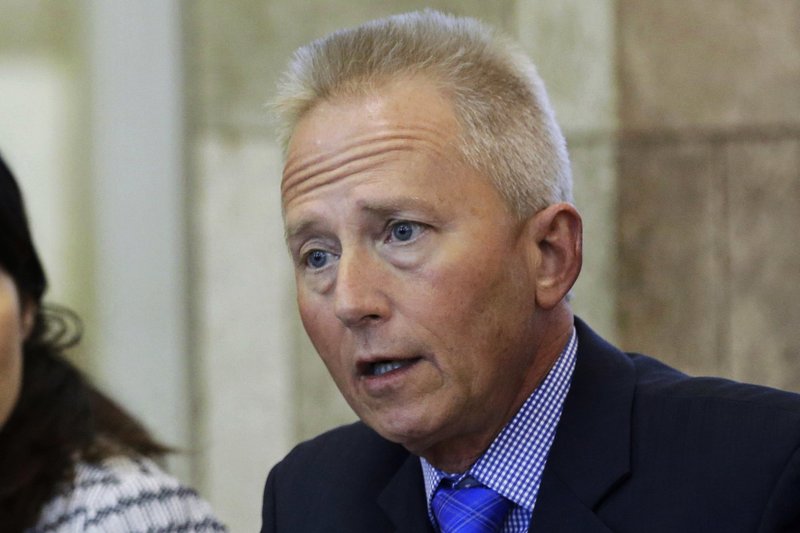
- In this Jan. 14, 2016, file photo, then state Sen. Jeff Van Drew,
D-Cape May Court House, speaks at a Senate Budget and Appropriations
Committee meeting in Trenton, N.J. Drew, who has long opposed House
Democrats' impeachment effort, discussed switching parties in a meeting
with President Donald Trump, an administration official said Saturday,
Dec. 14, 2019. (AP Photo/Mel Evans, File)
WASHINGTON
(AP) — A House freshman from New Jersey who was planning to break with
his party and vote against impeaching President Donald Trump will become
a Republican, a GOP official said Saturday.
Top
House Republicans have been told of Rep. Jeff Van Drew’s decision,
according to a GOP official familiar with the conversations. The
lawmaker had discussed switching parties in a meeting with Trump at the
White House on Friday, an administration official said Saturday.
Van
Drew’s decision underscores the pressures facing moderate Democrats
from Trump-leaning districts as next week’s impeachment vote approaches.
Van Drew won his southern New Jersey district by 8 percentage points
last year, but Trump carried it by 5 points in 2016 and Van Drew was
considered one of the more vulnerable House Democrats going into next
November’s congressional elections.
There
are 31 House Democrats who represent districts Trump carried in the
2016 election, and many of them have been nervous about the political
repercussions they would face by voting to impeach Trump. The House
Republican campaign committee has already run ads targeting many of
them, but most are expected to support Trump’s impeachment.
A
senior Democratic aide said Van Drew had not notified House Democratic
leaders about his decision. All the aides spoke on condition of
anonymity to describe private conversations.
The
senior Democratic aide provided what was described as a poll conducted
earlier this month by Van Drew’s campaign showing that by more than a
2-1 margin, people in his district would prefer a different candidate
than Van Drew in the Democratic primary and general election.
Rumors
surfaced last week that Van Drew might switch parties, and he
repeatedly denied them to reporters. But he reaffirmed his plan to
oppose impeachment, barring new evidence.
``It
doesn’t mean that I agree with everything the president may have said
or done. It means that I don’t believe that these are impeachable
offenses,`` he said in an interview Thursday.
Van Drew and a spokesperson did not answer their cellphones or return text messages on Saturday.
Trump put out a congratulatory tweet early Sunday. “Thank you for your
honesty Jeff. All of the Democrats know you are right, but unlike you,
they don’t have the “guts” to say so!”
Even
with his defection, there remains no doubt that the
Democratic-controlled House will vote to impeach Trump on a near
party-line vote.
Democrats
will still control the chamber by 232-198, plus an independent and four
vacancies. Until now, Van Drew and Rep. Collin Peterson of Minnesota
were the only Democrats expected to vote against impeachment, with
perhaps a small handful of others joining them. House Republicans seem
on track to oppose impeachment unanimously.
Van
Drew was a longtime state senator. His congressional district had been
under Republican control for nearly two decades before he was elected.
The
House is set to approve two articles of impeachment against Trump this
coming week. Democrats, who hold the majority, expect support from all
but a few of their members. No Republicans are expected to join them.
The Republican-controlled Senate is then all but certain to acquit Trump after a trial in January.
Van
Drew has argued that the process is likely just to further divide the
country and it would be better to let voters decide Trump’s fate in next
year’s election.
In
the first article of impeachment, Trump is accused of abusing his
presidential power by asking Ukraine to investigate his 2020 rival Joe
Biden while holding military aid as leverage. In the second article,
he’s accused of obstructing Congress by blocking the House’s efforts to
investigate his actions.
___
Associated Press writer Jonathan Lemire contributed to this story.
China delays tariffs on US autos, other goods in trade deal

FILE
- In this April 25, 2018, file photo, attendees visit the Ford booth
during Auto China 2018 show held in Beijing, China. China’s government
says it will postpone planned punitive tariffs on U.S.-made automobiles
and other goods following an interim trade deal with Washington.
Sunday, Dec. 15, 2019’s announcement came after Washington agreed to
postpone a planned tariff hike on $160 billion of Chinese goods and to
cut in half penalties that already were imposed. (AP Photo/Ng Han Guan,
File)
BEIJING
(AP) — China’s government says it will postpone planned punitive
tariffs on U.S.-made automobiles and other goods following an interim
trade deal with Washington.
Sunday’s
announcement came after Washington agreed to postpone a planned tariff
hike on $160 billion of Chinese goods and to cut in half penalties that
already were imposed.
“China
hopes to work with the United States on the basis of equality and
mutual respect to properly address each other’s core concerns and
promote the stable development of Chinese-U.S. economic and trade
relations,” said a Cabinet statement.
U.S.
Trade Representative Robert Lighthizer said that under Friday’s
agreement, China committed to buy $40 billion of American farm products
over the next two years. He said China also promised to end its
long-standing practice of pressuring companies to hand over their
technology as a condition of market access.
Beijing
had planned to impose 25% duties on American-made autos on Sunday,
which would have raised the total charge to 40%. Hardest hit were
Germany’s BMW AG and Daimler AG’s Mercedes unit, which ship U.S.-made
SUVs and other cars to China.
Other goods were targeted for 10% and 5% penalties.
Under pressure, Hallmark pulls gay-themed wedding ads

This
image made from undated video provided by Zola shows a scene of its
advertisement. Under pressure from a conservative advocacy group, The
Hallmark Channel has pulled the ads for wedding-planning website Zola
that featured same-sex couples, including two brides kissing. The
family-friendly network, which is in the midst of its heavily watched
holiday programming, removed the ads because the controversy was a
distraction, a spokesperson said in an interview on Saturday, Dec. 14,
2019. (Zola via AP)
NEW
YORK (AP) — Under pressure from a conservative advocacy group, The
Hallmark Channel has pulled ads for a wedding-planning website that
featured two brides kissing at the altar.
The family-friendly network, which is in the midst of its heavily watched holiday programming, removed the ads because the controversy was a distraction, a spokesperson said in an interview Saturday.
“The
debate surrounding these commercials on all sides was distracting from
the purpose of our network, which is to provide entertainment value,”
said a statement provided by Molly Biwer, senior vice president for
public affairs and communications at Hallmark.
In
an interview, she added: “The Hallmark brand is never going to be
divisive. We don’t want to generate controversy, we’ve tried very hard
to stay out of it ... we just felt it was in the best interest of the
brand to pull them and not continue to generate controversy.”
There
was immediate criticism on Twitter. Ellen DeGeneres asked Hallmark:
“Isn’t it almost 2020? What are you thinking? Please explain. We’re all
ears.”
Biwer
confirmed that a conservative group, One Million Moms, part of the
American Family Association, had complained about the ads to Bill
Abbott, CEO of Crown Media Family Networks, Hallmark’s parent company.
A
post on the group’s website said that Abbott “reported the
advertisement aired in error.” The group also wrote: “The call to our
office gave us the opportunity to confirm the Hallmark Channel will
continue to be a safe and family-friendly network.”
Zola
had submitted six ads, and four had a lesbian couple. After Hallmark
pulled those ads, but not two featuring only opposite-sex couples, Zola
pulled its remaining ads, the company said.
“The
only difference between the commercials that were flagged and the ones
that were approved was that the commercials that did not meet Hallmark’s
standards included a lesbian couple kissing,” said Mike Chi, Zola’s
chief marketing officer, in a statement sent to the AP. ”Hallmark
approved a commercial where a heterosexual couple kissed.
“All kisses, couples and marriages are equal celebrations of love and we will no longer be advertising on Hallmark,” Chi said.
In one of the pulled ads,
two brides stand at the altar and wonder aloud whether their wedding
would be going more smoothly if they had used a wedding planning site
like Zola. The lighthearted ad ends with the two brides sharing a quick
kiss on the altar.
Actress
Sandra Bernhard, who played one of the first openly bisexual characters
on network TV in “Roseanne,” also criticized Hallmark’s decision.
“All
the groovy gay ladies i know won’t be watching your Christmas schlock,”
she wrote on Twitter, addressing Hallmark. “They’ll be out celebrating
with their ’families’ wives, children, friends on & on & getting
married in chic ensembles. Didn’t you all get the memo? Family is all
inclusive.”
The developments came as Hallmark appeared to be considering more same-sex themed content.
Asked
about the possibility of holiday movies based on same-sex
relationships, Abbott was quoted in The Hollywood Reporter in
mid-November as saying on its TV podcast: “We’re open to really any type
of movie of any type of relationship.”
Trump supporter grabs spotlight at Sanders event with a message for the president
A Trump supporter took center stage at an Iowa campaign event for 2020 presidential candidate Sen. Bernie Sanders, I-Vt., on Saturday, where he stood up and delivered a message to President Trump.
Sanders sensed trouble from the beginning when he saw the young man approach the microphone and said, "Oh, he's looking at his phone. I'm in trouble."
After being given the mic to ask Sanders a question, the man addressed the commander in chief directly, offering him words of encouragement.
"Mr. Trump, keep going man. You're doing a good job," he said. "You know what, I'm a liberal."
The man was then briefly cut off by boos from the crowd before Sanders urged them to let him finish. The man said he voted for Sanders during the 2016 Democratic primary but is now fully behind the president.
"I don't agree with anything you say. I used to. I voted for you in 2016," he said. "And I've been to Vietnam and seen what socialism has done. It's destroyed the lives [of many]."
The crowd mockingly laughed at his claims before he hit back, and reiterated the failures of socialism.
"You can laugh all you want," he shouted. "Donald Trump is helping our country. All right? He's a good man... Socialism does not work."
Bernie and the unidentified man continued to shout over one another until the man was escorted out of the room by what appeared to be law enforcement.
Fox News' Andrew Craft contributed to this report.

Sanders sensed trouble from the beginning when he saw the young man approach the microphone and said, "Oh, he's looking at his phone. I'm in trouble."
After being given the mic to ask Sanders a question, the man addressed the commander in chief directly, offering him words of encouragement.
"Mr. Trump, keep going man. You're doing a good job," he said. "You know what, I'm a liberal."
The man was then briefly cut off by boos from the crowd before Sanders urged them to let him finish. The man said he voted for Sanders during the 2016 Democratic primary but is now fully behind the president.
"I don't agree with anything you say. I used to. I voted for you in 2016," he said. "And I've been to Vietnam and seen what socialism has done. It's destroyed the lives [of many]."
The crowd mockingly laughed at his claims before he hit back, and reiterated the failures of socialism.
"You can laugh all you want," he shouted. "Donald Trump is helping our country. All right? He's a good man... Socialism does not work."
Bernie and the unidentified man continued to shout over one another until the man was escorted out of the room by what appeared to be law enforcement.
Fox News' Andrew Craft contributed to this report.
Subscribe to:
Comments (Atom)
-
How many times do we need to say this? If you’re here illegally and get caught, you’re going back. It’s the la...
-
The problem with the courts is the same as the problem with many of our other institutions. Called the Skins...
-
CNN’s Scott Jennings once again took liberals to the cleaners on the Abrego Garcia case, the ‘Maryland man...