Presumptuous Politics

Thursday, December 26, 2019

Trump warns Newsom: If California homeless crisis persists, feds 'will get involved'


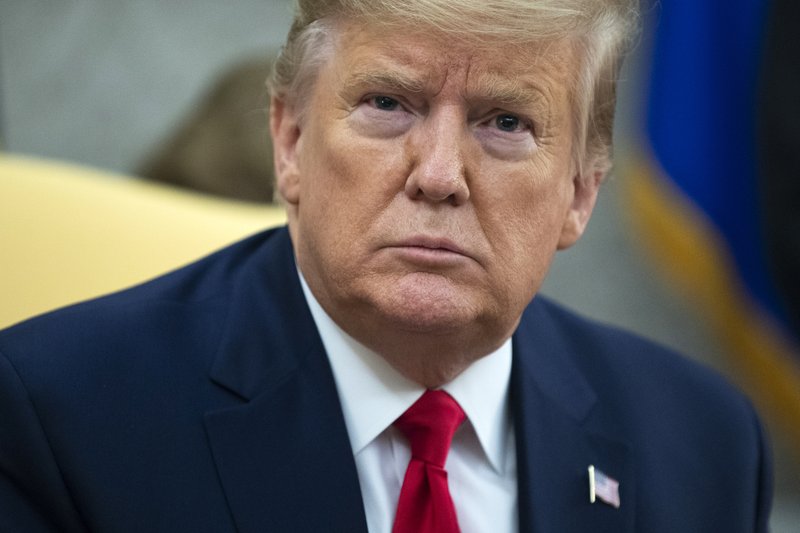
President Trump issued a warning to California Gov. Gavin Newsom on Wednesday, threatening federal intervention if Newsom is unable to solve his state's homeless crisis.
"Governor Gavin N has done a really bad job on taking care of the homeless population in California. If he can’t fix the problem, the Federal Govt. will get involved!" Trump tweeted.
The Golden State has led the nation in the number of homeless people with an estimated total of over 129,972 in January 2018, according to a Department of Housing and Urban Development [HUD] report. Just over 68 percent of the homeless population in California, the most populous U.S. state, is also categorized as unsheltered.
Earlier this month, Newsom blamed the Trump administration over rising homelessness in cities like Los Angeles and San Francisco, saying the White House was taking no action on "Housing First," the governor's approach to solving homelessness. The proposal would involve getting people in homes first, and potentially adding job-skills training or addiction services later.
"They're not serious about this issue," Newsom said. "They're playing politics with it... expect nothing but division coming from the folks at HUD and the Trump administration."
On Christmas day, Trump retweeted Fox Nation host Tomi Lahren who responded to Newsom's earlier comment, blasting him for his lack of accountability.
"Take accountability, Gavin," Lahren wrote. "This is your state and you and your democratic cohorts created this mess. You can’t blame @realDonaldTrump forever. Step away from the hair gel and get to work!!!"
Trump's latest criticism of the governor came a month after he attacked Newsom for doing a "terrible job of forest management" as wildfires raged across California.
He also put pressure on Newsom by suggesting there won't be any more federal funding to battle the wildfires unless the state improved its forest management system.

Tuesday, December 24, 2019

Christmas 2019 Cartoons


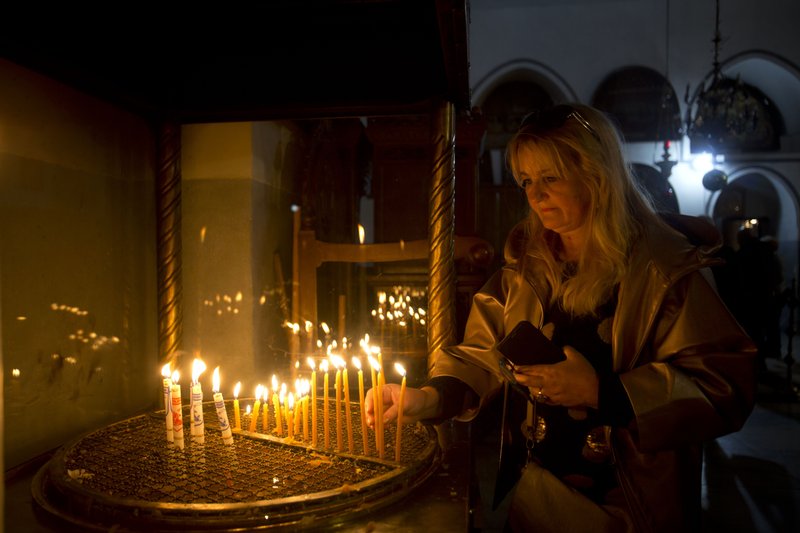
Christmas festivities begin in West Bank town of Bethlehem


BETHLEHEM, West Bank (AP) — Thousands of Christian pilgrims descended on the West Bank town of Bethlehem, the traditional birthplace of Jesus, ahead of Tuesday’s annual Christmas Eve celebrations.
The Church of the Nativity, where Christians believe Jesus was born, was set to host Palestinian dignitaries and pilgrims from around the world for a midnight Mass.
Uniformed Palestinian scouts wearing yellow and gold capes paraded past assembled visitors in Manger Square, bedecked with a large Christmas tree, playing drums and bagpipes.
Archbishop Pierbattista Pizzaballa, the head Catholic cleric in the Holy Land, crossed an Israeli army checkpoint from Jerusalem to Bethlehem ahead of the holiday prayers, where he was greeted by prominent members of Bethlehem’s Christian community.
Pizzaballa said that he draws hope from the “desire, especially in the youth, to do something for their societies, families.”
“This is my hope, is that these people can make Christmas not just today, but everyday, because that’s what we need,” he said.
Christmas festivities are typically a boost for Bethlehem’s flagging economy and for the Holy Land’s dwindling Christian population, which has shrunk over the decades compared to the general population.
Palestinian Tourism Minister Rula Maaya said the number of foreign tourists visiting the West Bank rose to 3.5 million in 2019, from 3 million the previous year. At least 15,000 pilgrims were staying overnight in Bethlehem for Christmas, she said.
“All hotels in the city are full today,” said Maaya, including hotels newly completed this year.
Most of Bethlehem is in the Palestinian-controlled area of the West Bank, but Israel’s imposing separation barrier runs through part of the city and is a constant reminder of the complex political reality.

No Christmas at Notre Dame, as fire forces Mass into exile


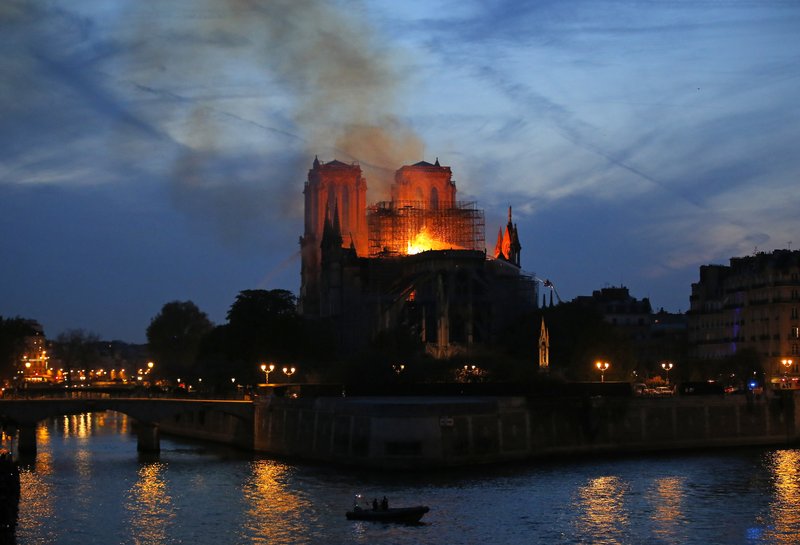
PARIS (AP) — Notre Dame Cathedral is unable to host Christmas services for the first time since the French Revolution, because the Paris landmark was too deeply damaged by this year’s fire.
So its exiled clergy, choir and congregation are celebrating the holiday in another Gothic church next to the Louvre Museum instead.
The accidental April blaze consumed the medieval monument’s roof and collapsed its spire, and reconstruction is expected to take several years. Officials say the structure is too fragile to let visitors inside, and there’s still a risk of poisoning from the tons of lead dust released with the flames.
Christmas Eve and Christmas Day services will be held in the Saint-Germain l’Auxerrois church, once used for French royalty. Notre Dame’s rector, Monsignor Patrick Chauvet, will celebrate Mass there Wednesday for Notre Dame’s faithful, accompanied by song from some of Notre Dame’s now-itinerant choir.
A wooden liturgical platform was constructed in the Saint-Germain church to resemble Notre Dame’s own. The cathedral’s iconic 14th century sculpture “The Virgin of Paris,” which survived the fire, is also on display.
The world-renowned cathedral has seen plenty of upheaval since its first stone was laid in 1163. It halted services after revolutionaries overthrew the monarchy and declared Notre Dame “a temple of reason,” but resumed religious activities under Napoleon in 1803, according to cathedral officials.
It kept going during two world wars, and Nazi occupation. Soldiers guarded its Christmas Mass in 2015, weeks after France’s deadliest-ever terror attacks.
Today, Notre Dame’s twin towers still look over the Ile de la Cite island at the heart of Paris, attracting tourists taking selfies along the surrounding quays. But this holiday season, its facade is shielded by scaffolding instead of the huge Christmas tree that normally graces its esplanade.

LBJ-era immigration changes skewed political power toward Dems, away from GOP: study


U.S. legal and illegal immigration levels will create a markedly different House of Representatives -- and post-2020 electoral college votes -- than would have existed otherwise, a new study claims.
The study, conducted by the Center for Immigration Studies (CIS), claims to offer insight into how immigration reforms during the era of Democratic President Lyndon Johnson affected the distribution of American political power.
"Our findings indicate that, over time, immigration profoundly redistributes political power at the federal level by changing the apportionment of House seats and votes in the Electoral College," the study's authors wrote.
CIS analyzed Census data to determine that immigrants, and their U.S.-born children, will redistribute at least 26 House seats after 2020. Of those 26 lost seats, 24 will come from states that voted for President Trump in the 2016 election. Meanwhile, solidly Democratic states -- California, New Jersey, and New York -- will collectively gain 19 additional seats, CIS said Thursday.
In total, California will have nearly a dozen more seats than it otherwise would have without the presence of immigrants and their children. New York and Texas will each have four additional seats.
The study touches on many conservatives' claims that Democrats are effectively importing new voters to support them in future elections. In particular, conservative author Ann Coulter has repeatedly argued the Johnson-era reforms significantly altered legal immigration in a way that would benefit the party. Johnson served as president from November 1963, following the assassination of President John F. Kennedy, until January 1969, when Republican Richard Nixon took office. (Johnson had declined to seek a second term after being elected in 1964.)
CIS similarly said the reforms had a wide-reaching impact.
"Immigration laws were changed significantly in 1965, spurring a new 'Great Wave' of immigration as the number of immigrants grew roughly four-and-a-half fold between 1965 and 2019."
Each state's electoral vote is composed of the number of seats it holds in the House and Senate, meaning the CIS findings could shed light on the 2022 and 2024 elections as well. Congress will reapportion seats after the U.S. completes the 2020 Census, but that reapportionment won't take effect until after the 2020 election.
Trump was able to pick up electoral votes in the swing states of Ohio, Pennsylvania, Michigan, North Carolina, and Wisconsin -- states that will each lose at least one seat, according to CIS. Ohio, perhaps the most-watched state beside Florida, will lose three more seats than it otherwise would have.
Florida, however, would gain three additional seats while New Jersey would gain two and Illinois and Massachusetts will gain one additional seat. Each of those last three supported former Democratic presidential nominee Hillary Clinton.
"Apportionment is a zero-sum system; by adding more population to some states rather than others, immigration will continue to significantly redistribute political power in Washington," the study reads.
Just illegal immigrants and their U.S.-born children will result in key swing states losing seats as well.
"Illegal immigrants and their U.S.-born minor children will redistribute five seats in 2020, with Ohio, Michigan, Alabama, Minnesota, and West Virginia each losing one seat in 2020 that they otherwise would have had," the authors wrote. "California and Texas will each have two additional seats, and New York will have one additional seat."
Republicans also criticized 2020 Democratic candidates for offering public services, like free health care, to illegal immigrants. Democrats typically contend that immigrants boost the U.S. economy, don't replace domestic labor, and add diversity to the country's civic culture.
Prior polling has shown that immigrants tend to support Democrats and a 2016 study seemed to confirm the threat that Republicans faced from growing immigration.
"The impact of immigration on Republican votes in the House is negative when the share of naturalized migrants in the voting population increases," the National Bureau of Economic Research study concluded.
It added that its results were "consistent with naturalized migrants being less likely to vote for the Republican Party than native voters and with native voters' political preferences moving towards the Republican Party because of high immigration of non-citizens."
The CIS favors lower immigration levels and has been called a hate group by the Southern Poverty Law Center (SPLC) -- an accusation that prompted CIS to sue the SPLC in January.

Republicans fume over Dem threat of new impeachment articles: ‘Time to cut them off’


Republicans ratcheted up their accusations that Democrats are overplaying their impeachment hand after court filings from the House Judiciary Committee indicated the two articles of impeachment adopted last week may only be the beginning.
GOP lawmakers already were fuming at Speaker Nancy Pelosi over her surprise decision to delay transmitting the articles to the Senate in a bid to extract favorable terms for President Trump's trial. But in the latest twist, the Democrat-led Judiciary panel referenced the possibility of yet additional impeachment articles in briefs filed Monday related to their quest for testimony from former White House Counsel Don McGahn and secret grand jury material from former Special Counsel Robert Mueller's investigation.
If the court allows them to obtain the information they seek, their attorney wrote, "new articles of impeachment" could be considered based on the evidence. GOP lawmakers reacted with stunned disbelief.
"Democrats are treating impeachment as an open bar tab," Sen. Lindsey Graham, R-S.C., tweeted Monday afternoon. "Time to cut them off, take their car keys away (put GOP in control of the House), and end this insanity."
Rep. Matt Gaetz, R-Fla., who sits on the House Judiciary Committee that filed the briefs, reacted by saying, "You've got to be kidding."
He added: "It’s gone from the Kangaroo Court Impeachment... ...to the Keystone Cops Impeachment(s).. Will Pelosi send the Articles from the last Impeachment before drafting the next ones?!"
The notion of new articles of impeachment was floated as the committee justified their need to have McGahn testify and acquire Mueller's secret grand jury information. Previously, they had argued that their ongoing impeachment investigation presented an urgent need for both -- but with the House already voting to impeach Trump, the D.C. Circuit Court of Appeals gave them until Monday afternoon to explain why the case was still relevant and should not be dismissed as moot.
"If this material reveals new evidence supporting the conclusion that President Trump committed impeachable offenses that are not covered by the Articles adopted by the House, the Committee will proceed accordingly--including, if necessary, by considering whether to recommend new articles of impeachment," committee attorney Douglas Letter wrote in the grand jury material case.
Letter used nearly identical language pertaining to McGahn's testimony in his brief in that case.
Trump last week was impeached on accusations of abuse of power and obstruction of Congress, related to his efforts to pressure Ukraine to launch politically beneficial investigations, all while withholding military aid (though Trump has maintained there was no "quid pro quo").
The latest filings did not detail what potential additional articles could be considered. Regardless, the briefs stated that even if McGahn’s testimony or the grand jury material do not lead to new articles of impeachment, they could be used in an upcoming Senate trial in relation to the obstruction of Congress allegations that Trump is currently facing.

Monday, December 23, 2019

Pelosi Cartoons


Image result for Pelosi Cartoons

White House predicts Pelosi will yield on impeachment delay


WASHINGTON (AP) — The White House is projecting confidence that it will prevail in a constitutional spat with Democrats over the nature of the Senate’s impeachment trial, which threatens to deprive President Donald Trump of the swift acquittal he seeks.
The House voted Wednesday to impeach Trump, who became only the third president in U.S. history to be formally charged with “high crimes and misdemeanors.” But Speaker Nancy Pelosi has delayed sending the articles of impeachment to the Senate until Republicans provide details on witnesses and testimony in hopes of shaping the upcoming trial. Democratic and Republican leaders in the chamber remain at an impasse over the question of whether witnesses will be called, but the White House believes Pelosi won’t be able to hold out much longer.
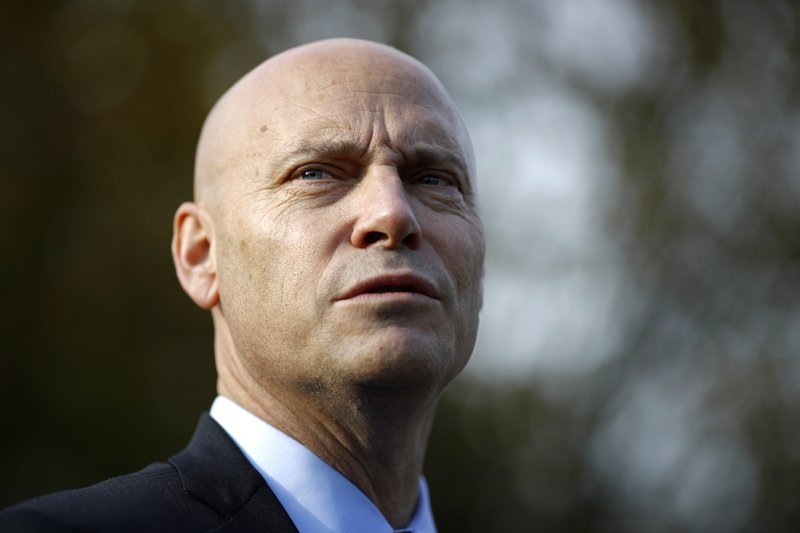
“She will yield. There’s no way she can hold this position,” Marc Short, the chief of staff to Vice President Mike Pence, said Sunday. “We think her case is going nowhere.’’
Senate Majority Leader Mitch McConnell, R-Ky., and Senate Minority Leader Chuck Schumer, D-N.Y., have been at an impasse over the issue of new testimony, leaving open the possibility of a protracted delay until the articles are delivered. Trump complained Saturday that the holdup was “unfair” and claimed that Democrats were violating the Constitution, as the delay threatened to prolong the pain of impeachment and cast uncertainty on the timing of the vote Trump is set to claim as vindication.
Schumer told reporters in New York that “the Senate is yearning to give President Trump due process, which means that documents and witnesses should come forward. What is a trial with no witnesses and no documents. It’s a sham trial.”
Short called Pelosi’s delay unacceptable, saying she’s “trampling” Trump’s rights to “rush this through, and now we’re going to hold it up to demand a longer process in the Senate with more witnesses.”
“If her case is so air-tight ... why does she need more witnesses to make her case?’’ Short said.
White House officials have highlighted Democrats’ arguments that removing Trump was an “urgent” matter before the House impeachment vote, as they seek to put pressure on Pelosi to send the articles of impeachment to the Senate.
McConnell has all but promised an easy acquittal of the president, and he appears to have secured Republican support for his plans to impose a framework drawn from the 1999 impeachment trial of President Bill Clinton. That trial featured a 100-0 vote on arrangements that established two weeks of presentations and argument before a partisan tally in which then-minority Republicans called a limited number of witnesses.
That has sparked a fight with Pelosi and Schumer, who are demanding trial witnesses who refused to appear during House committee hearings, including acting White House chief of staff Mick Mulvaney and former national security adviser John Bolton.
A close Trump ally, Sen. Lindsey Graham, R-S.C., said Pelosi would fail in her quest “to get Mitch McConnell to bend to her will to shape the trial.’’ Graham is chairman of the Senate Judiciary Committee and was a House manager, comparable to a prosecutor, during the Senate’s impeachment trial of Clinton.
“She’ll eventually send the articles because public opinion will crush the Democrats,″ said Graham. Asked whether he expected witnesses in the Senate, he replied: : “No, I don’t.”
At one point, Trump had demanded the testimony of witnesses of his own, like Democrats Joe Biden and his son Hunter, and the intelligence community whistleblower whose summer complaint sparked the impeachment probe. But he has since relented after concerted lobbying by McConnell and other Senate Republicans who pushed him to accept the swift acquittal from the Senate and not to risk injecting uncertainty into the process by calling witnesses.
The Senate’s second-ranking Democrat, Dick Durbin of Illinois, said his party is looking for a signal from McConnell that he hasn’t ruled out new witnesses and documents. But Durbin acknowledged that Democrats may not have much leverage in pushing a deal.
He criticized both Republican and Democratic senators who have already announced how they will vote in the trial, saying the Constitution requires senators to act as impartial jurors. Republicans hold a 53-vote majority in the Senate.
“The leverage is our hope that four Republican senators will stand up, as 20 years ago, we saw in the impeachment of Bill Clinton, and say, this is much bigger than our current political squabbles,” Durbin said.
The Constitution requires a two-thirds majority in the Senate to convict in an impeachment trial — and Republicans have expressed confidence that they have more than enough votes to keep Trump in office.
Short spoke on “Fox News Sunday,” Durbin appeared on CNN’s “State of the Union,” and Graham was on Fox News Channel’s “Sunday Morning Futures.”
__
AP Radio Correspondent Julie Walker in New York contributed to this report.

GOP governors grapple with whether to accept refugees or not


LINCOLN, Neb. (AP) — An executive order by President Donald Trump giving states the right to refuse to take refugees is putting Republican governors in an uncomfortable position.
They’re caught between immigration hardliners who want to shut the door and some Christian evangelicals who believe helping refugees is a moral obligation. Others say refugees are vital to fill jobs and keep rural communities afloat.
More than 30 governors have agreed to accept refugees, but about a dozen Republican governors have stayed silent as they face a decision that must be made by Jan. 21 so resettlement agencies can secure federal funding in time to plan where to place refugees.
Trump’s executive order requires governors to publicly say they will accept refugees. They cannot automatically come to their states, even if cities and counties welcome them. So far, no one has opted to shut out refugees.
A North Dakota county voted this month to accept no more than 25 refugees next year, after initially signaling it would be the first to ban them.
Trump issued the order in September after slashing the number of refugees allowed into the United States in 2020 to a historic low of 18,000. The reduction is part of the administration’s efforts to reduce both legal and illegal immigration.
With his order, Trump again thrust states and local governments into immigration policy, willingly or not. It has caused heated debates and raucous meetings in several states, including North Dakota to Wisconsin.
Trump says his administration acted to respect communities that believe they do not have enough jobs to support refugees. Refugees can move anywhere in the U.S. after their initial resettlement at their own expense.
Republican governors in Nebraska, West Virginia, Tennessee, Ohio, Indiana, North Dakota, South Dakota, Utah, Massachusetts, New Hampshire, Arizona, Iowa and Oklahoma have consented to accepting refugees in 2020. Vermont’s Republican governor said he intends to accepts refugees.
Others have not taken a public stance. They include the Republican governors of Georgia and Missouri, along with Gov. Greg Abbott of Texas, the state that took in the largest number of refugees this year.
Democratic Gov. Gavin Newsom of California, the nation’s most populous state that resettles many refugees, also has not consented yet, but his office said he plans to do so.
In 2015, governors from 31 states — nearly all with Republican governors, including Abbott — tried to shut out Syrians, citing terrorism fears. But they didn’t have the legal authority at the time.
Now that they do, some governors have struggled with the decision.
Faith-based groups have led an aggressive campaign urging them to keep accepting refugees, while immigration hardliners have criticized Republicans who have not used their new authority to put the brakes on refugees coming into their states.
Nebraska Gov. Pete Ricketts, who tried to turn away Syrians in 2015, spent weeks reviewing his options.
He gave his consent Thursday in an open letter to Trump co-signed by Iowa Gov. Kim Reynolds and South Dakota Gov. Kristi Noem, praising the president for strengthening the vetting process.
“Thanks to your leadership, Americans can be confident once again in the screening process for refugees entering the United States,” the governors said in the letter.
Hatim Ido, a former U.S. Army translator and member of the persecuted Yazidi community who fled Iraq, was relieved to know Nebraska’s doors are still open. Ido hopes his two sisters in Iraq will be able to join him someday in Lincoln.
“I’m really concerned about them,” said Ido, a graduate student who became a U.S. citizen last year. “I understand (government officials) need to be very careful. I just wish there was a process in place so we could bring them here.”
Administration officials say refugee applicants are subject to the strictest, most comprehensive background checks for any group seeking to come to the U.S.
Fraud detection and national security officers now come overseas with U.S. Citizenship and Immigration Services teams who are processing refugees.
Indiana Gov. Eric Holcomb made the distinction that opening the door to refugees does not mean he’s going soft on illegal immigration.
A federal judge last year permanently blocked Indiana from trying to turn away Syrians under an order that Vice President Mike Pence championed as governor.
“These are NOT illegal or unlawful immigrants but individuals who have gone through all the proper channels,” Holcomb wrote in his consent letter.
Arizona Gov. Doug Ducey announced his consent the same day this month that 300 evangelicals signed a letter urging him to keep letting refugees resettle “as an exercise of our Christian faith.”
Oklahoma Gov. Kevin Stitt said faith leaders reached out to him, too.
“I appreciate Oklahoma churches who have assisted these individuals,” he wrote in his consent letter.
Tennessee’s consent did not sit well with legislative leaders who sued the federal government over the resettlement program.
“Our personal preference would have been to exercise the option to hit the pause button on accepting additional refugees in our state,” House Speaker Cameron Sexton and Lt. Gov. Randy McNally said in a joint statement.
Gov. Bill Lee, who talks often about his Christian faith, said he had to follow his heart.
“My commitment to these ideals is based on my faith, personally visiting refugee camps on multiple continents, and my years of experience ministering to refugees here in Tennessee,” he wrote in his consent letter.
More than 80 local governments have written letters welcoming refugees. Many are rural towns in conservative states that have come to rely on young refugees to revitalize their economies.
“We need workers, big time,” said Nebraska Sen. John McCollister, a Republican who is sometimes at odds with his party. Refugees “bring a lot of enthusiasm, and they’re some of our best entrepreneurs. They add a lot to the economy of Nebraska.”
Utah Gov. Gary Herbert asked for more refugees in a letter to Trump last month. The Republican said Utah has the resources and space and that welcoming refugees is part of the culture in a state where members of The Church of Jesus Christ of Latter-day Saints found refuge generations ago.
“It’s been striking to see the breadth of bipartisan support for refugee resettlement in the states, with a number of governors writing very strong letters of support,” said Mark Greenberg, a senior fellow at the Migration Policy Institute and a former official in the U.S. Health and Human Services Department, which includes refugee resettlement. He left in 2017.
Holly Johnson, who coordinates the Tennessee Office for Refugees within the Catholic Charities, is not surprised. Employers are “chasing down resettlement agencies because they know refugees work hard,” she said.
Three resettlement groups have sued to block Trump’s order.
Wyoming Republican Gov. Mark Gordon does not plan to weigh in for now, his spokesman Michael Pearlman said, noting the state has not had a refugee resettlement program for decades.
GOP Gov. Asa Hutchinson said Arkansas is determining which communities may be interested in accepting refugees, looking at financial costs and verifying security checks but that no final decision has been made.
“I am committed to ensure that refugees brought to Arkansas have a real chance to settle and become self-sufficient,” he said.
___
Watson reported from San Diego. Anita Snow in Phoenix; Jonathan Mattise in Nashville, Tennessee; Mead Gruver in Cheyenne, Wyoming; Sean Murphy in Oklahoma City; Lindsay Whitehurst in Salt Lake City; David Lieb in Jefferson City, Missouri; Andrew DeMillo in Little Rock, Arkansas; Ben Nadler in Atlanta; Anthony Izaguirre in Charleston, West Virginia; Paul Weber in Austin, Texas; and Don Thompson in Sacramento, California, contributed to this report.

Evangelical tussling over anti-Trump editorial escalates

FILE - In this Tuesday, Dec. 17, 2019, file photo, President Donald Trump listens to a question during a meeting in the Oval Office of the White House, in Washington. As the political clamor caused by a top Christian magazine’s call to remove Trump from office continues to reverberate, more than 100 conservative evangelicals closed ranks further around Trump on Sunday, Dec. 22, 2019. (AP Photo/ Evan Vucci, File))

As the political clamor caused by a top Christian magazine’s call to remove President Donald Trump from office continues to reverberate, more than 100 conservative evangelicals closed ranks further around Trump on Sunday.
In a letter to the president of Christianity Today magazine, the group of evangelicals chided Editor-in-Chief Mark Galli for penning an anti-Trump editorial, published Thursday, that they portrayed as a dig at their characters as well as the president’s.
“Your editorial offensively questioned the spiritual integrity and Christian witness of tens-of-millions of believers who take seriously their civic and moral obligations,” the evangelicals wrote to the magazine’s president, Timothy Dalrymple.
The new offensive from the group of prominent evangelicals, including multiple members of Trump’s evangelical advisory board, signals a lingering awareness by the president’s backers that any meaningful crack in his longtime support from that segment of the Christian community could prove perilous for his reelection hopes. Though no groundswell of new anti-Trump sentiment emerged among evangelicals in the wake of Christianity Today’s editorial, the president fired off scathing tweets Friday accusing the establishment magazine – founded by the late Rev. Billy Graham in 1956 -- of becoming a captive of the left.
The letter to the magazine’s president sent on Sunday also included a veiled warning that Christianity Today could lose readership or advertising revenue as a result of the editorial, which cites Trump’s impeachment last week.
Citing Galli’s past characterization of himself as an “elite” evangelical, the letter’s authors told Dalrymple that “it’s up to your publication to decide whether or not your magazine intends to be a voice of evangelicals like those represented by the signatories below, and it is up to us and those Evangelicals like us to decide if we should subscribe to, advertise in and read your publication online and in print, but historically, we have been your readers.”
Among the signatories of the letter are George Wood, chairman of the World Assemblies of God Fellowship; Rev. Tim Hill of the Church of God; former Arkansas governor and GOP presidential hopeful Mike Huckabee; and former Minnesota GOP Rep. Michele Bachmann.
Galli told CBS’ “Face the Nation” on Sunday that he views the chances of Trump leaving office, either through a reelection loss or post-impeachment conviction by the Senate, as “probably fairly slim at this point.” The editor-in-chief defended his editorial as less of a “political judgment” than a call for fellow evangelicals to examine their tolerance of Trump’s “moral character” in exchange for his embrace of conservative policies high on their agenda.
“We’re not looking for saints. We do have private sins, ongoing patterns of behavior that reveal themselves in our private life that we’re all trying to work on,” Galli said Sunday. “But a president has certain responsibilities as a public figure to display a certain level of public character and public morality.”
Galli referred comment on Sunday’s evangelical letter to Dalrymple, who on Sunday published his own strongly worded defense of the magazine’s anti-Trump commentary.
Countering Trump’s suggestion that the magazine had shifted to favor liberals, Dalrymple wrote that the publication is in fact “theologically conservative” and “does not endorse candidates.”
“Out of love for Jesus and his church, not for political partisanship or intellectual elitism, this is why we feel compelled to say that the alliance of American evangelicalism with this presidency has wrought enormous damage to Christian witness,” Dalrymple wrote.
Asked about the editorial’s indictment of Trump by “Fox News Sunday,” Marc Short – chief of staff to Vice President Mike Pence, himself a prominent evangelical Christian – cited some of the policy positions that have helped endear the president to many in that voting bloc.
“For a lot of us who are celebrating the birth of our Savior this week, the way that we look at it is that this president has helped to save thousands of similar unplanned pregnancies,” Short said Sunday, adding that “no president has been a greater ally to Israel than this president.”
Roughly 8 in 10 white evangelical Protestants say they approve of the way Trump is handling his job, according to a December poll from The AP-NORC Center.
The Trump campaign is planning a Jan. 3 event in Miami called “Evangelicals for Trump.”
___
Associated Press religion coverage receives support from the Lilly Endowment through the Religion News Foundation. The AP is solely responsible for this content.
__
This story has been corrected by deleting a reference to Samuel Rodriguez as among those who signed a letter Sunday, which he was not.

CartoonDems