Presumptuous Politics

Friday, December 27, 2019

Homelessness crisis: From houseboats to boulders, unconventional methods used to tackle problem in 2019


Fox News Digital embarked on an ambitious project to chronicle the toll progressive policies have had on the homeless crisis in four west coast cities: Seattle, San Francisco, Los Angeles and Portland, Ore. In each city, we saw a lack of safety, sanitation, and civility. 
Outrage. Frustration. Fear. Those are some of the words residents used in 2019 to describe the growing homelessness problem across the United States. There were numerous cases of harassment, rampant drug use and disturbing displays of mental illness that shined a light on the harsh reality that America's once-containable homeless problem had morphed into a modern-day crisis.
In Los Angeles, Heidi Van Tassell said a homeless man pulled her out of her car, dragged her into the middle of the street and dumped a bucket of feces on her head.
In Oakland, the soaring stats are still affecting the way retailers like Mika McCants operate their small businesses. Things soured so much in Seattle that Father Michael Ryan of St. James Cathedral sent a letter to congregants asking that they pray the city and church finds "the balance we need in order to not only be a welcoming place, but a safe place." The letter was in response to a homeless man storming the church and smashing a 200-year-old wood carving of Mary with a large rock. It wasn't an isolated incident and the church now has a uniformed police officer present during all weekend Masses. Sadly, there have been similar complaints popping up across the nation.
Fox News spoke with more than 100 homeless men and women, advocates and residents who said that they'd lost faith in their elected officials' ability to solve the crisis especially after most cities and states had spent hundreds of millions of dollars to address the problem only to watch it get worse.
Fed up, residents started taking matters into their own hands and have tried everything from dumping car-sized logs in front of businesses to pitching plans to pack party buses with the homeless, handing them some cash, driving them across the border and abandoning them. While some suggestions have their foot firmly planted in fantasy, other proposals could actually work.
Here are some of the unconventional ways people came up with in 2019 to help curb the current homelessness crisis.
CRUISE SHIPS
The homeless situation in Oakland, Calif., is pretty grim. The city has seen a 47 percent increase in homelessness in the past two years and elected leaders like Councilman Noel Gallo say the situation is only getting worse.
Currently, city council members are considering a proposal that would house 1,000 homeless people living in the Bay Area on a cruise ship. The idea was introduced by City Council President Rebecca Kaplan who said her plan "could be a great way to house a lot of people quickly" and added that "cruise ships have been used for emergency housing after natural disasters and for extra housing for things like the Olympics."
Kaplan is expected to present her full proposal to the council in January and claims her plan will be at "no or low" cost to the city because the people on aboard would pay for their rooms based on their income. Kaplan said she's been contacted by numerous cruise ship companies about providing a vessel for emergency housing.
HOUSEBOATS
Jonathan Warmund believes the Bay Area needs a "property option" that can help address the growing number of homeless men and women who are battling drug addiction and mental health issues.
He believes that barges or houseboats could be set up quickly and adds that the "vessels can support the critical wraparound services necessary to assist with these complex issues, along with many other unique property features."
Getting it done, though, could be an uphill battle. Warmund said he's tried reaching out to nonprofits and local government officials but hasn't had much luck.
"I suspect there's fatigue with what appears to be an intractable situation but I'm sensing or speculating that there may also be resistance to new ideas from current folks on the frontlines," he told Fox News.
PARTY BUSES
Gene Gorelik knows a thing or two about pushback from local officials. He angered a lot of people when he suggested Oakland's homeless should be put on party buses stocked with alcohol, driven over the border and stranded in Mexico.
He has other ideas that make the Mexico one look conservative. Gorelik told Fox News he thinks the city should pay homeless drug addicts $100 to fill potholes and says "filling potholes needs to be more profitable than robbing cars. Two birds. One stone. Done."
Gorelik also tried unsuccessfully in 2019 to bribe the homeless to leave Oakland.
LARGE LOGS 
Someone in Oakland started putting car-sized logs in front of businesses this year In an effort to deter transients from parking their RVs or dilapidated vehicles in front of businesses. While the motive was clear, no one person or group has come forward to say they are behind the long line of logs.
Sean Maher, a spokesman for Oakland's Public Works Department, said he considers the logs an "intentional obstruction of the public right of way," but admits the department hasn't reached out to local businesses to get to the bottom of the mystery.
BOULDERS
In September, a group of neighbors in San Francisco's Clinton Park caused quite a commotion after paying to place two dozen large boulders along the sidewalk to keep homeless people from setting up tents in the area.
There was an immediate backlash and neighbors said they were threatened and harassed by activists who pushed the rocks off the sidewalks. The tug-of-war continued and public works employees were called by residents three times in one week to put the boulders back.
Ultimately, though, the neighbors backed down after they said they received death threats from people online sympathetic to the homeless.
PLYWOOD WALL
In October, a resident in San Francisco's Ingleside neighborhood erected a plywood wall in an alleyway to keep drug dealers and the homeless out. The neighbor told local media the city had approved the plywood wall but about three days after it went up, other neighbors complained and it came down.
"I did not agree with the blockade at all," Miles Escobedo, vice-chair of the Ocean Avenue Association, told ABC7. "That was a very nuclear decision and that was the big issue. Why board it up? That's a circumstance of fear, which is almost worse. We should not be scared. We should be able to contact our local authorities."
FENCES AND PLANTERS
Los Angeles has been struggling for years to clear encampments and get a handle on its homeless problem. It hasn't worked. In fact, it's gotten worse. The number of homeless in Los Angeles County has risen for the third time in four years. The most recent count released in June by the Los Angeles County Homeless Services Authority shows that there are nearly 60,000 homeless people living without permanent shelter on any given night.
Ticked off by the uptick in numbers, residents and business owners have been using their own methods to manage the problem. In South L.A., business owners built chain-link fences around buildings while others planted thorny rosebushes and pointy cacti to keep unwanted visitors out. In Venice, large planters were installed to discourage the homeless from sleeping on the sidewalks. Advocates protested and in August the planters were removed.

Jason Riley: GOP Sen. Murkowski using 'Democratic talking points' on Trump impeachment trial


Alaska Republican Sen. Lisa Murkowski wrongly used "Democratic talking points" when she criticized Senate Majority Leader Mitch McConnell's comments about how he would run President Trump's pending impeachment trial, Fox News contributor Jason Riley said Thursday.
Murkowski took exception to comments McConnell, R-Ky., made during an interview with Fox News host Sean Hannity earlier this month, in which he promised to be in "coordination" with the White House, should House Speaker Nancy Pelosi, D-Calif., submit the two articles of impeachment to the Senate.
"When I heard that, I was disturbed,” Murkowski told KTUU in an interview that aired Tuesday evening. “To me, it means that we have to take that step back from being hand in glove with the defense. And so, I heard what Leader McConnell had said, I happened to think that that has further confused the process."
Riley, a Wall Street Journal editorial board member, said on "Special Report" that Murkowski indeed has been known for her "independent streak" as a more-moderate GOP senator.
"Murkowski is not up for reelection. She is quirky, she does have an independent streak. We saw that in the Brett Kavanaugh hearings, we saw that in the ObamaCare repeal vote," he said. Murkowski bucked her party to oppose Kavanaugh for the Supreme Court last year.
Riley continued, "I do wish she would stop using Democratic talking points to make the argument that she is making. The fact of the matter here is that the House's job is done and this idea that they should have any say in how the Senate conducts this trial just is not supported by what is written in black-and-white in the Constitution."
Riley pointed to the fact that no House Republicans voted with Democrats to impeach Trump, not even retiring lawmakers such as Reps. Will Hurd, R-Texas, and James Sensenbrenner, R-Wis., who he said had "nothing to lose" if they broke with their party.
"The idea that Mitch McConnell isn't going to be bipartisan enough or objective enough, that is not his job. I expect him to be as bipartisan as Nancy Pelosi was and as Adam Schiff and Jerry Nadler were," he added, referring to the speaker and the two committee chairmen who presided over impeachment hearings in a manner widely criticized on the right.
In other remarks, Murkowski said she was "totally good" with being viewed as someone who wasn't a Republican "rubber stamp."
"For me to prejudge and say there's nothing there or on the other hand, he should be impeached yesterday, that's wrong, in my view, that's wrong," she said. "If it means that I am viewed as one who looks openly and critically at every issue in front of me, rather than acting as a rubber stamp for my party or my president, I'm totally good with that."
However, Murkowski also criticized top Democrats for their rushed schedule, which she said appeared to be aimed at impeaching Trump before the holiday break. "Speaker Pelosi was very clear, very direct that her goal was to get this done before Christmas," Murkowski said.
Ultimately, she added, "How we will deal with witnesses remains to be seen."
On "Special Report," Charlie Hurt also reacted, saying Murkowski's comments wouldn't mean much in the big picture, and that the Democrats will still target her seat during her presumptive reelection bid in 2022.
Hurt called the Alaska lawmaker a GOP "outlier" but predicted her state will vote resoundingly to reelect Trump in 2020.
Fox News' Bret Baier and Ronn Blitzer contributed to this report.

Thursday, December 26, 2019

Gavin Newsom Cartoons


China’s November soybean imports rise after US trade deal


BEIJING (AP) — China’s imports of soybeans surged in November following the announcement of an interim trade deal with the United States.
Imports rose 53.7% over a year earlier to 5.4 million tons, according to customs data.
Imports of U.S. soybeans more than doubled from the previous month to 2.6 million tons, according to AWeb.com, a news website that serves the Chinese farming industry.
China cut off purchases of American soybeans, the country’s biggest import from the United States, after President Donald Trump raised import duties on Chinese goods in a dispute over Beijing’s technology ambitions and trade surplus.
The two governments announced an interim “Phase 1” agreement in October but have yet to release details. U.S. officials say it might be signed as early as January.
U.S. officials said as part of that deal, Beijing will buy more American farm exports. Chinese officials have yet to confirm the possible scale of purchases.
Chinese government spokespeople said in September importers were placing orders for American soybeans but no details of purchases have been announced.
Chinese buyers use soybeans as animal feed and to crush for cooking oil.
Beijing bought more Brazilian soybeans, but no other supplier could fully replace the large scale of American supplies. That added to the strain on Chinese pig farmers who are struggling with an outbreak of African swine fever that has devastated herds.

Liz Cheney undecided, Lummis dominates Wyoming Senate race

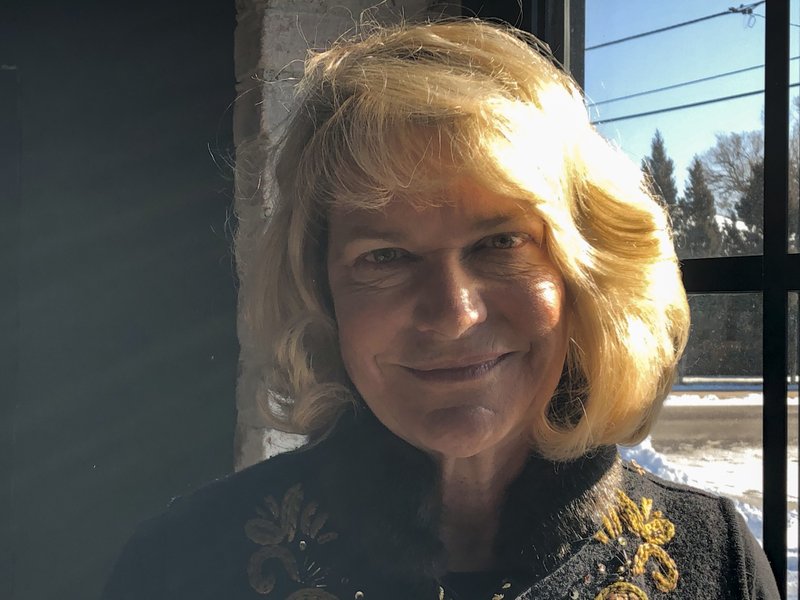
In this Dec. 16, 2019, photo, former Republican U.S. Rep. Cynthia Lummis poses for a picture in Cheyenne, Wyo. She is so far the only major candidate to replace retiring Republican Sen. Mike Enzi, of Wyoming. U.S. Rep. Liz Cheney, of Wyoming, plans to announce in early 2020 whether she will run for the Senate seat. Cheney succeeded Lummis in Congress after Lummis stepped down in 2017. (AP Photo/Mead Gruver)
CHEYENNE, Wyo. (AP)

While Liz Cheney considers whether to run for an open U.S. Senate seat, the race so far has only one well-known candidate: Cynthia Lummis, a fellow Republican and one of only three women to hold Wyoming’s lone U.S. House seat.
The 1976 Miss Frontier — who used horse-riding skills to become a top ambassador for the famous Cheyenne Frontier Days rodeo — Lummis went on to a political career that included 14 years in the Wyoming Legislature, two terms as state treasurer and four terms as congresswoman.
Recently she’s had the ear of President Donald Trump, discussing best livestock-grazing practices on public lands in the U.S. West while interviewing in person, twice, for Interior secretary, a job she didn’t get.
“I raised the issue of how important it is, that grazing is a very, very important enhancement to plant and soil quality,” Lummis said in a recent Associated Press interview. “What’s fun is, he let me explain it to him. And he seemed interested.”
She marveled at how a girl nervous about showing cattle in 4-H competitions would grow up to talk to the president in the Oval Office.
Few would try to beat Lummis, 65, and her long political experience, but those who might include Cheney, who plans to announce in early 2020 whether she will run for Senate.
Cheney has risen quickly to the third-highest GOP leadership position in the U.S. House since her election to Wyoming’s lone House seat in 2016, 38 years after her father, former Vice President Dick Cheney, got that job.
Barbara Cubin became Wyoming’s first congresswoman in 1995. No woman has been elected to the U.S. Senate in Wyoming.
It was Lummis who cleared Liz Cheney’s way to office by stepping down from Congress to attend to her family’s ranching and other businesses interests following her husband’s death in 2014.
“There was a lot — a lot — of unfinished business I was trying to attend to in Washington during my last term,” Lummis said. “It was a challenge. It was also exhausting.”
Four-term Republican Sen. Mike Enzi announced his retirement a few weeks before her father, Doran Lummis, died in May at 91.
Her father encouraged her to run for the open seat, she said.
“He said, ‘You’ve got to do this. You’ve got to run for that Senate seat,’” Lummis said. “I looked at it carefully, and decided the timing was right.”
A former member of the fiscally conservative Freedom Caucus in the House, Lummis said another big motivation is to try to reduce the federal deficit.
“I was a fiscal hawk. I will be a fiscal hawk, in an environment where fiscal hawks are getting fewer and fewer, quite frankly,” Lummis said.
She said she would also advocate for more state and local involvement in decisions affecting public lands in the West and promote energy development on those lands.
Lummis announced her campaign in July. So far, the only other candidates are geologist Mark Armstrong and Wyoming Army National Guard veteran Joshua Wheeler, both little-known Republicans.
Lummis said she’s enjoyed the past several months of low-pressure campaigning. She’s taken time to catch up with old friends from the Wyoming Legislature, soak in hot springs in the resort town of Thermopolis and visit her farm in western Wyoming’s Star Valley.
While Cheney could be the favorite due to her profile, Lummis too will have a solid base of supporters in Wyoming, said University of Wyoming political science professor Jim King.
“With Lummis, we already have a big name in there,” King said Thursday.
Other potential big-name Republican candidates include investor and national GOP donor Foster Friess, who said in a recent email he overcame scant name recognition in 2018 to finish a strong second in a six-way gubernatorial primary.
“Last time around, we entered the race with 119 days to go — so it wouldn’t surprise anyone if my decision comes later,” Friess wrote.
Former Gov. Matt Mead, a Republican who left office in early 2019, won’t be in the mix, saying he’s content with looking after his southeastern Wyoming ranch.
Lummis seemed undaunted by potentially facing Friess or Cheney, noting she has beaten better-funded opponents before. She added she would concentrate less on State Department and national defense issues than Cheney does.
“My focus is very much more Wyoming and domestic American focus — natural resource-oriented, of course. Those are the issues I know and love,” Lummis said.
Cheney declined to even hint at her future plans in a recent news conference, but spokesman Jeremy Adler said in an email Wyomingites are “deeply patriotic” and want to strengthen national defense, support U.S. troops and care for veterans.
“Our delegation in Washington is small, and anyone who can’t — or won’t — handle national security and foreign policy issues won’t be able to effectively represent the people of Wyoming in the House or Senate,” Adler wrote.

Election officials learn military mindset ahead of 2020 vote


SPRINGFIELD, Va. (AP) — Inside a hotel ballroom near the nation’s capital, a U.S. Army officer with battlefield experience told 120 state and local election officials that they may have more in common with the military strategists than they might think.
These government officials are on the front lines of a different kind of high-stakes battlefield — one in which they are helping to defend American democracy by ensuring free and fair elections.
“Everyone in this room is part of a bigger effort, and it’s only together are we going to get through this,” the officer said.
That officer and other past and present national security leaders had a critical message to convey to officials from 24 states gathered for a recent training held by a Harvard-affiliated democracy project: They are the linchpins in efforts to defend U.S. elections from an attack by Russia, China or other foreign threats, and developing a military mindset will help them protect the integrity of the vote.
The need for such training reflects how elections security worries have heightened in the aftermath of the 2016 election, when Russian military agents targeted voting systems across the country as part of a multi-pronged effort to influence the presidential election. Until then, the job of local election officials could had been described as something akin to a wedding planner who keeps track of who will be showing up on Election Day and ensures all the equipment and supplies are in place and ready to go.
Now, these officials are on the front lines. The federal government will be on high alert, gathering intelligence and scanning systems for suspicious cyber activity as they look to defend the nation’s elections. Meanwhile, it will be the state and county officials who will be on the ground charged with identifying and dealing with any hostile acts.
“It’s another level of war,” said Jesse Salinas, the chief elections official in Yolo County, California, who attended the training. “You only attack things that you feel are a threat to you, and our democracy is a threat to a lot of these nation-states that are getting involved trying to undermine it. We have to fight back, and we have to prepare.”
Salinas brought four of his employees with him to the training, which was part of the Defending Digital Democracy project based at the Belfer Center for Science and International Affairs at the Harvard Kennedy School. The group has been working actively with former and current military, national security, political and communications experts — many of whom dedicate their time after work and on weekends — to develop training and manuals for state and local election officials. Those involved with leading the training asked for anonymity because of their sensitive positions.
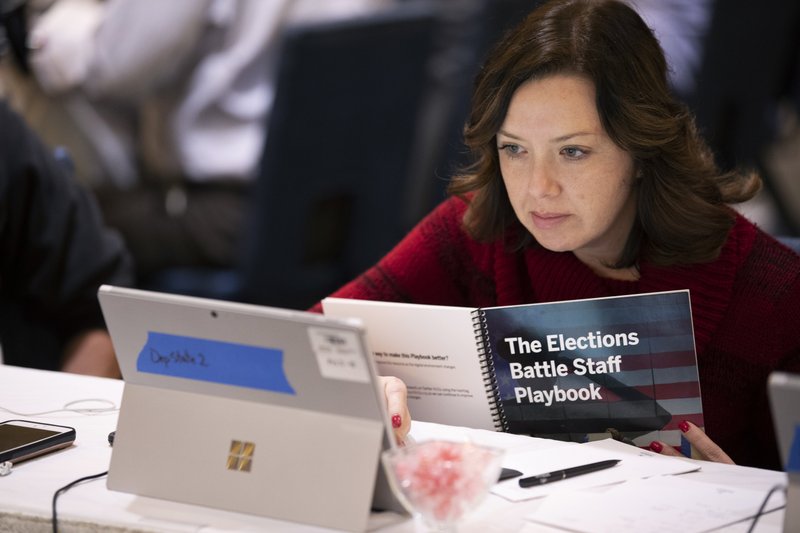
The project’s latest playbook focuses on bringing military best practices to running Election Day operations, encouraging state and local election officials to adopt a “battle staff” command structure with clear roles and responsibilities and standard operating procedures for dealing with minor issues. The project is also providing officials with a free state-of-the-art incident tracking system.
Eric Rosenbach, co-director of the Belfer Center and a former U.S. Army intelligence officer who served as chief of staff to Defense Secretary Ash Carter in the Obama administration, told the group gathered for the training that it “shouldn’t be lost on you that this is a very military-like model.”
“Let’s be honest about it,” Rosenbach said. “If democracy is under attack and you guys are the ones at the pointy end of the spear, why shouldn’t we train that way? Why shouldn’t we try to give you the help that comes with that model and try to build you up and do all we can?”
Instructors stressed the need for election officials to be on the lookout for efforts to disrupt the vote and ensure that communications are flowing up from counties to the state, down from states to the counties, as well a s up and down to the federal government and across states.
Piecing together seemingly disparate actions happening in real-time across geographical locations will allow the nation to defend itself, said Robby Mook, Democratic presidential nominee Hillary Clinton’s campaign manager in 2016. Mook co-founded the Defending Digital Democracy project with Matt Rhoades, Republican nominee Mitt Romney’s 2012 campaign manager.
“Find a way to input data in a consistent, efficient and reliable way to ensure you know what is going on and prevents things from falling through the cracks,” Mook told the election officials. “You got to rise above just putting out fires.”
At the training were officials from California, Colorado, Georgia, North Carolina, Oregon, Tennessee, West Virginia and other states. In one exercise, election officials were paired up as either a state or county under an Election Day scenario, charged with logging incidents and trying to piece together what turned out to be four different coordinated campaigns to disrupt voting.
“One of the big takeaways was just how the lack of one piece of information moving up from the counties to the state or moving from the states to counties, if either of those things don’t happen, it can have a significant impact,” said Stephen Trout, elections director for Oregon.
Trout said he would move quickly to acquire, customize and implement the incident tracking system, which would be an upgrade from the paper process currently in use. Dave Tackett, chief information officer for the West Virginia Secretary of State’s Office, said he will recommend some structuring changes at his state operations center, including bringing key personnel into the room and incorporating elements of the incident tracking system like mapping and the ability to assign individuals to specific incidents.
“Events like today are helping us zero in on how to structure ourselves better, how to really think in a different mindset so that we can carry out all the different tasks that have to be done with elections,” said Karen Brinson Bell, executive director of the North Carolina Board of Elections. “(It’s) the importance of communications, the importance of having standard operating procedures in place so all the i’s are dotted and the t’s crossed ahead of time and you are prepared for the unknown.”

Trump warns Newsom: If California homeless crisis persists, feds 'will get involved'


President Trump issued a warning to California Gov. Gavin Newsom on Wednesday, threatening federal intervention if Newsom is unable to solve his state's homeless crisis.
"Governor Gavin N has done a really bad job on taking care of the homeless population in California. If he can’t fix the problem, the Federal Govt. will get involved!" Trump tweeted.
The Golden State has led the nation in the number of homeless people with an estimated total of over 129,972 in January 2018, according to a Department of Housing and Urban Development [HUD] report. Just over 68 percent of the homeless population in California, the most populous U.S. state, is also categorized as unsheltered.
Earlier this month, Newsom blamed the Trump administration over rising homelessness in cities like Los Angeles and San Francisco, saying the White House was taking no action on "Housing First," the governor's approach to solving homelessness. The proposal would involve getting people in homes first, and potentially adding job-skills training or addiction services later.
"They're not serious about this issue," Newsom said. "They're playing politics with it... expect nothing but division coming from the folks at HUD and the Trump administration."
On Christmas day, Trump retweeted Fox Nation host Tomi Lahren who responded to Newsom's earlier comment, blasting him for his lack of accountability.
"Take accountability, Gavin," Lahren wrote. "This is your state and you and your democratic cohorts created this mess. You can’t blame @realDonaldTrump forever. Step away from the hair gel and get to work!!!"
Trump's latest criticism of the governor came a month after he attacked Newsom for doing a "terrible job of forest management" as wildfires raged across California.
He also put pressure on Newsom by suggesting there won't be any more federal funding to battle the wildfires unless the state improved its forest management system.

Tuesday, December 24, 2019

Christmas 2019 Cartoons


Christmas festivities begin in West Bank town of Bethlehem


BETHLEHEM, West Bank (AP) — Thousands of Christian pilgrims descended on the West Bank town of Bethlehem, the traditional birthplace of Jesus, ahead of Tuesday’s annual Christmas Eve celebrations.
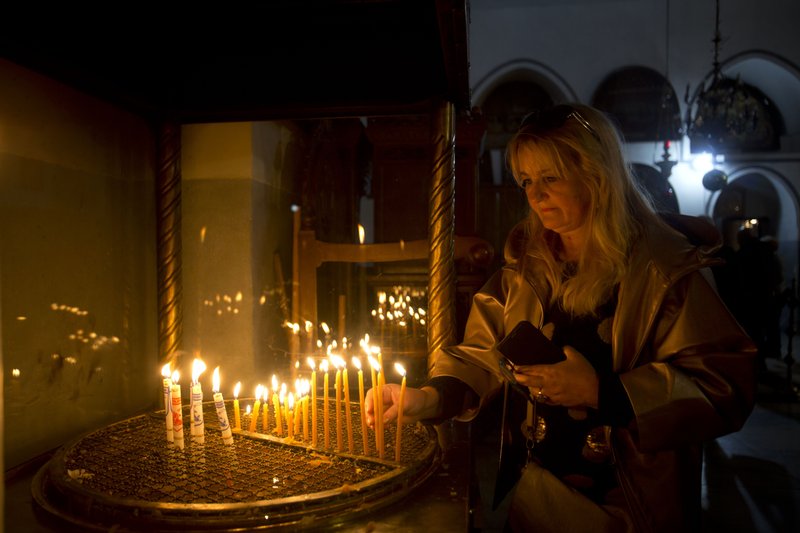
The Church of the Nativity, where Christians believe Jesus was born, was set to host Palestinian dignitaries and pilgrims from around the world for a midnight Mass.
Uniformed Palestinian scouts wearing yellow and gold capes paraded past assembled visitors in Manger Square, bedecked with a large Christmas tree, playing drums and bagpipes.
Archbishop Pierbattista Pizzaballa, the head Catholic cleric in the Holy Land, crossed an Israeli army checkpoint from Jerusalem to Bethlehem ahead of the holiday prayers, where he was greeted by prominent members of Bethlehem’s Christian community.
Pizzaballa said that he draws hope from the “desire, especially in the youth, to do something for their societies, families.”
“This is my hope, is that these people can make Christmas not just today, but everyday, because that’s what we need,” he said.
Christmas festivities are typically a boost for Bethlehem’s flagging economy and for the Holy Land’s dwindling Christian population, which has shrunk over the decades compared to the general population.
Palestinian Tourism Minister Rula Maaya said the number of foreign tourists visiting the West Bank rose to 3.5 million in 2019, from 3 million the previous year. At least 15,000 pilgrims were staying overnight in Bethlehem for Christmas, she said.
“All hotels in the city are full today,” said Maaya, including hotels newly completed this year.
Most of Bethlehem is in the Palestinian-controlled area of the West Bank, but Israel’s imposing separation barrier runs through part of the city and is a constant reminder of the complex political reality.

No Christmas at Notre Dame, as fire forces Mass into exile


PARIS (AP) — Notre Dame Cathedral is unable to host Christmas services for the first time since the French Revolution, because the Paris landmark was too deeply damaged by this year’s fire.
So its exiled clergy, choir and congregation are celebrating the holiday in another Gothic church next to the Louvre Museum instead.
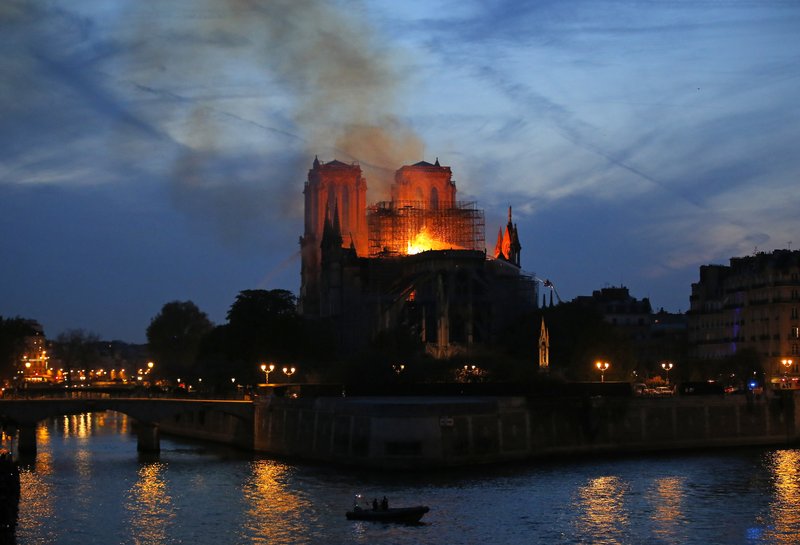
The accidental April blaze consumed the medieval monument’s roof and collapsed its spire, and reconstruction is expected to take several years. Officials say the structure is too fragile to let visitors inside, and there’s still a risk of poisoning from the tons of lead dust released with the flames.
Christmas Eve and Christmas Day services will be held in the Saint-Germain l’Auxerrois church, once used for French royalty. Notre Dame’s rector, Monsignor Patrick Chauvet, will celebrate Mass there Wednesday for Notre Dame’s faithful, accompanied by song from some of Notre Dame’s now-itinerant choir.
A wooden liturgical platform was constructed in the Saint-Germain church to resemble Notre Dame’s own. The cathedral’s iconic 14th century sculpture “The Virgin of Paris,” which survived the fire, is also on display.
The world-renowned cathedral has seen plenty of upheaval since its first stone was laid in 1163. It halted services after revolutionaries overthrew the monarchy and declared Notre Dame “a temple of reason,” but resumed religious activities under Napoleon in 1803, according to cathedral officials.
It kept going during two world wars, and Nazi occupation. Soldiers guarded its Christmas Mass in 2015, weeks after France’s deadliest-ever terror attacks.
Today, Notre Dame’s twin towers still look over the Ile de la Cite island at the heart of Paris, attracting tourists taking selfies along the surrounding quays. But this holiday season, its facade is shielded by scaffolding instead of the huge Christmas tree that normally graces its esplanade.