Iran
emerged as a major power broker in Iraq after the American invasion in
2003, supporting Shiite Islamist parties and militias that have
dominated the country ever since.
Worries
are increasing that the militias could drag Iraq into the growing proxy
war between the U.S. and Iran in the Middle East. The United States and
its ally, Israel, are targeting pro-Iranian militias across Lebanon,
Syria and Iraq with economic sanctions and airstrikes hitting their
bases and other infrastructure.
Iran
also supports many of the militias that mobilized in 2014 to battle the
Islamic State group, gaining outsized influence as militiamen joined
security forces and U.S. troops to defeat the extremists. Those
state-sanctioned, mainly Shiite militias, known as the Popular
Mobilization Forces, have grown into a powerful political faction
estimated to have the most seats in the Iraqi parliament.
Iraq
has long struggled to balance its ties with the U.S. and Iran, both
allies of the Iraqi government but regional archenemies. The Iraqi
government angrily condemned the U.S. airstrikes this week against an
Iran-backed militia, Kataeb Hezbollah, which is part of the Popular
Mobilization Forces. The U.S. blames Kataeb for a string of unclaimed
attacks targeting U.S. bases in Iraq, including one that killed an
American contractor this week. The apparent decision by Iraqi security
forces not to prevent supporters of the militia from breaking into the
U.S. Embassy compound in retaliation signaled a sharp deterioration of
U.S.-Iraq relations.
The
Popular Mobilization Forces is an umbrella group for a number of
Iran-backed militias that include the Imam Ali Brigades and Sayed
al-Shuhada. The PMF is practically run by Abu Mahdi al-Muhandis, a
military commander who has been designated a terrorist by Washington.
The
Badr Organization is one of the largest groups within the PMF. Its
chief, Hadi al-Amiri, also leads the the powerful Fatah bloc in
parliament. The other main parliamentary bloc is led by populist Shiite
cleric Muqtada al-Sadr, who has aimed to realign himself with recent
anti-government protests opposing Iranian influence in Iraq.
Qais
al-Khizali, who is on a U.S. terror list, heads the Iranian-backed
Shiite militia, Asaib Ahl al-Haq, or League of the Righteous. He rose to
prominence as a leader in the Shiite insurgency after the 2003 U.S.-led
invasion. He has called for U.S. troops to leave Iraq now that the
Islamic State group has been largely defeated.
Asaib
Ahl al-Haq, which owns its own TV station, made significant gains in
last year’s elections, and al-Khazali is now represented by a 15-member
bloc in parliament. Al-Khazali’s forces fought in Syria alongside
President Bashar Assad’s troops.
The
Iran-backed groups have also become the target of popular anger in
Iraq. Anti-government protests that began in October have swept the
country’s largely Shiite south, with demonstrators demanding an end to
Iranian influence in Iraqi affairs.
WASHINGTON
(AP) — The attack on the U.S. Embassy compound in Baghdad by
Iran-supported militiamen Tuesday is a stark demonstration that Iran can
still strike at American interests despite President Donald Trump’s
economic pressure campaign. Trump said Iran would be held “fully
responsible” for the attack, but it was unclear whether that meant
military retaliation.
“They
will pay a very BIG PRICE! This is not a Warning, it is a Threat. Happy
New Year!” Trump tweeted later in the afternoon. He also thanked top
Iraqi government leaders for their “rapid response upon request.”
Defense
Secretary Mark Esper later announced that “in response to recent
events” in Iraq, and at Trump’s direction, he authorized the immediate
deployment of an infantry battalion of about 750 soldiers from the
Army’s 82nd Airborne Division at Fort Bragg, North Carolina, to the
Middle East. He did not specify their destination, but a U.S. official
familiar with the decision said they will go to Kuwait.
Esper
said additional soldiers from the 82nd Airborne’s quick-deployment
brigade, known officially as its Immediate Response Force, are prepared
to deploy over the next several days. The U.S. official, who provided
unreleased details on condition of anonymity, said the full brigade of
about 4,000 soldiers may deploy.
“This
deployment is an appropriate and precautionary action taken in response
to increased threat levels against U.S. personnel and facilities, such
as we witnessed in Baghdad today,” Esper said in a written statement.
The
750 soldiers deploying immediately are in addition to 14,000 U.S.
troops who have deployed to the Gulf region since May in response to
concerns about Iranian aggression, including its alleged sabotage of
commercial shipping in the Persian Gulf.
Tuesday’s
breach of the embassy compound in Baghdad, which caused no known U.S.
casualties or evacuations, revealed growing strains between Washington
and Baghdad, raising questions about the future of the U.S. military
mission there. The U.S. has about 5,200 troops in Iraq, mainly to train
Iraqi forces and help them combat Islamic State extremists.
The
breach followed American airstrikes Sunday that killed 25 fighters of
an Iran-backed militia in Iraq, the Kataeb Hezbollah. The U.S. said
those strikes were in retaliation for last week’s killing of an American
contractor and the wounding of American and Iraqi troops in a rocket
attack on an Iraqi military base that the U.S. blamed on the militia.
The American strikes angered the Iraqi government, which called them an
unjustified violation of its sovereignty.
Trump
blamed Iran for the embassy breach and called on Iraq to protect the
diplomatic mission even as the U.S. reinforced the compound with Marines
from Kuwait.
“Iran
killed an American contractor, wounding many,” he tweeted from his
estate in Florida. “We strongly responded, and always will. Now Iran is
orchestrating an attack on the U.S. Embassy in Iraq. They will be held
fully responsible. In addition, we expect Iraq to use its forces to
protect the Embassy, and so notified!”
Even
as Trump has argued for removing U.S. troops from Mideast conflicts, he
also has singled out Iran as a malign influence in the region. After
withdrawing the U.S. in 2018 from an international agreement that
exchanged an easing of sanctions for curbs on Iran’s nuclear program,
Trump ratcheted up sanctions.
Those
economic penalties, including a virtual shut-off of Iranian oil
exports, are aimed at forcing Iran to negotiate a broader nuclear deal.
But critics say that pressure has pushed Iranian leaders into countering
with a variety of military attacks in the Gulf.
Until
Sunday’s U.S. airstrikes, Trump had been measured in his response to
Iranian provocations. In June, he abruptly called off U.S. military
strikes on Iranian targets in retaliation for the downing of an American
drone.
Robert
Ford, a retired U.S. diplomat who served five years in Baghdad and then
became ambassador in Syria, said Iran’s allies in the Iraqi parliament
may be able to harness any surge in anger among Iraqis toward the United
States to force U.S. troops to leave the country. Ford said Trump
miscalculated by approving Sunday’s airstrikes on Kataeb Hezbollah
positions in Iraq and Syria — strikes that drew a public rebuke from the
Iraqi government and seem to have triggered Tuesday’s embassy attack.
“The
Americans fell into the Iranian trap,” Ford said, with airstrikes that
turned some Iraqi anger toward the U.S. and away from Iran and the
increasingly unpopular Iranian-backed Shiite militias.
The tense situation in Baghdad appeared to upset Trump’s vacation routine in Florida, where he is spending the holidays.
Trump
spent just under an hour at his private golf club in West Palm Beach
before returning to his Mar-a-Lago resort in nearby Palm Beach. He had
spent nearly six hours at his golf club on each of the previous two
days. Trump spoke with Iraqi Prime Minister Adel Abdul-Mahdi and
emphasized the need for Iraq to protect Americans and their facilities
in the country, said White House spokesman Hogan Gidley.
Trump
is under pressure from some in Congress to take a hard-line approach to
Iranian aggression, which the United States says included an
unprecedented drone and missile attack on the heart of Saudi Arabia’s
oil industry in September. More recently, Iran-backed militias in Iraq
have conducted numerous rocket attacks on bases hosting U.S. forces.
Sen.
Tom Cotton, an Arkansas Republican and supporter of Trump’s Iran
policy, called the embassy breach “yet another reckless escalation” by
Iran.
Tuesday’s
attack was carried out by members of the Iran-supported Kataeb
Hezbollah militia. Dozens of militiamen and their supporters smashed a
main door to the compound and set fire to a reception area, but they did
not enter the main buildings.
Sen.
Bob Menendez of New Jersey, senior Democrat on the Senate Foreign
Relations Committee, blamed Iran for the episode and faulted Trump for
his “maximum pressure” campaign against Iran.
“The
results so far have been more threats against international commerce,
emboldened and more violent proxy attacks across the Middle East, and
now, the death of an American citizen in Iraq,” Menendez said, referring
to the rocket attack last week.
By
early evening Tuesday, the mob had retreated from the compound but set
up several tents outside for an intended sit-in. Dozens of yellow flags
belonging to Iran-backed Shiite militias fluttered atop the reception
area and were plastered along the embassy’s concrete wall along with
anti-U.S. graffiti. American Apache helicopters flew overhead and
dropped flares over the area in what the U.S. military called a “show of
force.”
The U.S. also was sending 100 or more additional Marines to the embassy compound to support its defenses.
The
embassy breach was seen by some analysts as affirming their view that
it is folly for the U.S. to keep forces in Iraq after having eliminated
the Islamic State group’s territorial hold in the country.
A
U.S. withdrawal from Iraq is also a long-term hope of Iran, noted Paul
Salem, president of the Washington-based Middle East Institute.
And
it’s always possible Trump would “wake up one morning and make that
decision” to pull U.S. forces out of Iraq, as he announced earlier with
the U.S. military presence in neighboring Syria, Salem said. Trump’s
Syria decision triggered the resignation of his first defense secretary,
retired Gen. Jim Mattis, but the president later amended his decision
and about 1,200 U.S. troops remain in Syria.
Trump’s
best weapon with Iran is the one he’s already using — the sanctions,
said Salem. He and Ford said Trump would do best to keep resisting
Iran’s attempt to turn the Iran-U.S. conflict into a full-blown military
one. The administration should also make a point of working with the
Iraqi government to deal with the militias, Ford said.
For
the president, Iran’s attacks — directly and now through proxies in
Iraq — have “been working that nerve,” Salem said. “Now they really have
Trump’s attention.”
___
Associated Press writers Matthew Lee, Darlene Superville and Sagar Meghani contributed to this report.
WASHINGTON
(AP) — Charging that Iran was “fully responsible” for an attack on the
U.S. Embassy in Iraq, President Donald Trump ordered about 750 U.S.
soldiers deployed to the Middle East as about 3,000 more prepared for
possible deployment in the next several days.
No U.S. casualties or evacuations were reported after the attack Tuesday by dozens of Iran-supported militiamen. U.S. Marines were sent from Kuwait to reinforce the compound.
Defense
Secretary Mark Esper said Tuesday night that “in response to recent
events” in Iraq, and at Trump’s direction, he authorized the immediate
deployment of the infantry battalion from the Army’s 82nd Airborne
Division at Fort Bragg, North Carolina. He did not specify the soldiers’
destination, but a U.S. official familiar with the decision said they
will go to Kuwait.
“This
deployment is an appropriate and precautionary action taken in response
to increased threat levels against U.S. personnel and facilities, such
as we witnessed in Baghdad today,” Esper said in a written statement.
Additional
soldiers from the 82nd Airborne’s quick-deployment brigade, known
officially as its Immediate Response Force, were prepared to deploy,
Esper said. The U.S. official, who provided unreleased details on
condition of anonymity, said the full brigade of about 4,000 soldiers
may deploy.
The
750 soldiers deploying immediately were in addition to 14,000 U.S.
troops who had deployed to the Gulf region since May in response to
concerns about Iranian aggression, including its alleged sabotage of
commercial shipping in the Persian Gulf. At the time of the attack the
U.S. had about 5,200 troops in Iraq, mainly to train Iraqi forces and
help them combat Islamic State extremists.
The
breach of the U.S. Embassy compound in Baghdad on Tuesday was a stark
demonstration that Iran can still strike at American interests despite
Trump’s economic pressure campaign. It also revealed growing strains
between Washington and Baghdad, raising questions about the future of
the U.S. military mission there.
“They
will pay a very BIG PRICE! This is not a Warning, it is a Threat. Happy
New Year!” Trump tweeted Tuesday afternoon, though it was unclear
whether his “threat” meant military retaliation. He thanked top Iraqi
government leaders for their “rapid response upon request.”
American
airstrikes on Sunday killed 25 fighters of an Iran-backed militia in
Iraq, the Kataeb Hezbollah. The U.S. said those strikes were in
retaliation for last week’s killing of an American contractor and the
wounding of American and Iraqi troops in a rocket attack on an Iraqi
military base that the U.S. blamed on the militia. The American strikes
angered the Iraqi government, which called them an unjustified violation
of its sovereignty.
While blaming Iran for the embassy breach, Trump also called on Iraq to protect the diplomatic mission.
“Iran
killed an American contractor, wounding many,” he tweeted from his
estate in Florida. “We strongly responded, and always will. Now Iran is
orchestrating an attack on the U.S. Embassy in Iraq. They will be held
fully responsible. In addition, we expect Iraq to use its forces to
protect the Embassy, and so notified!”
Even
as Trump has argued for removing U.S. troops from Mideast conflicts, he
also has singled out Iran as a malign influence in the region. After
withdrawing the U.S. in 2018 from an international agreement that
exchanged an easing of sanctions for curbs on Iran’s nuclear program,
Trump ratcheted up sanctions.
Those
economic penalties, including a virtual shut-off of Iranian oil
exports, are aimed at forcing Iran to negotiate a broader nuclear deal.
But critics say that pressure has pushed Iranian leaders into countering
with a variety of military attacks in the Gulf.
Until
Sunday’s U.S. airstrikes, Trump had been measured in his response to
Iranian provocations. In June, he abruptly called off U.S. military
strikes on Iranian targets in retaliation for the downing of an American
drone.
Robert
Ford, a retired U.S. diplomat who served five years in Baghdad and then
became ambassador in Syria, said Iran’s allies in the Iraqi parliament
may be able to harness any surge in anger among Iraqis toward the United
States to force U.S. troops to leave the country. Ford said Trump
miscalculated by approving Sunday’s airstrikes on Kataeb Hezbollah
positions in Iraq and Syria — strikes that drew a public rebuke from the
Iraqi government and seem to have triggered Tuesday’s embassy attack.
“The
Americans fell into the Iranian trap,” Ford said, with airstrikes that
turned some Iraqi anger toward the U.S. and away from Iran and the
increasingly unpopular Iranian-backed Shiite militias.
The tense situation in Baghdad appeared to upset Trump’s vacation routine in Florida, where he is spending the holidays.
Trump
spent just under an hour at his private golf club in West Palm Beach
before returning to his Mar-a-Lago resort in nearby Palm Beach. He had
spent nearly six hours at his golf club on each of the previous two
days. Trump spoke with Iraqi Prime Minister Adel Abdul-Mahdi and
emphasized the need for Iraq to protect Americans and their facilities
in the country, said White House spokesman Hogan Gidley.
Trump
is under pressure from some in Congress to take a hard-line approach to
Iranian aggression, which the United States says included an
unprecedented drone and missile attack on the heart of Saudi Arabia’s
oil industry in September. More recently, Iran-backed militias in Iraq
have conducted numerous rocket attacks on bases hosting U.S. forces.
Sen.
Tom Cotton, an Arkansas Republican and supporter of Trump’s Iran
policy, called the embassy breach “yet another reckless escalation” by
Iran.
Tuesday’s
attack was carried out by members of the Iran-supported Kataeb
Hezbollah militia. Dozens of militiamen and their supporters smashed a
main door to the compound and set fire to a reception area, but they did
not enter the main buildings.
Sen.
Bob Menendez of New Jersey, senior Democrat on the Senate Foreign
Relations Committee, blamed Iran for the episode and faulted Trump for
his “maximum pressure” campaign against Iran.
“The
results so far have been more threats against international commerce,
emboldened and more violent proxy attacks across the Middle East, and
now, the death of an American citizen in Iraq,” Menendez said, referring
to the rocket attack last week.
By
early evening Tuesday, the mob had retreated from the compound but set
up several tents outside for an intended sit-in. Dozens of yellow flags
belonging to Iran-backed Shiite militias fluttered atop the reception
area and were plastered along the embassy’s concrete wall along with
anti-U.S. graffiti. American Apache helicopters flew overhead and
dropped flares over the area in what the U.S. military called a “show of
force.”
The
embassy breach was seen by some analysts as affirming their view that it
is folly for the U.S. to keep forces in Iraq after having eliminated
the Islamic State group’s territorial hold in the country.
A
U.S. withdrawal from Iraq is also a long-term hope of Iran, noted Paul
Salem, president of the Washington-based Middle East Institute.
And
it’s always possible Trump would “wake up one morning and make that
decision” to pull U.S. forces out of Iraq, as he announced earlier with
the U.S. military presence in neighboring Syria, Salem said. Trump’s
Syria decision triggered the resignation of his first defense secretary,
retired Gen. Jim Mattis, but the president later amended his decision
and about 1,200 U.S. troops remain in Syria.
Trump’s
best weapon with Iran is the one he’s already using — the sanctions,
said Salem. He and Ford said Trump would do best to keep resisting
Iran’s attempt to turn the Iran-U.S. conflict into a full-blown military
one. The administration should also make a point of working with the
Iraqi government to deal with the militias, Ford said.
For
the president, Iran’s attacks — directly and now through proxies in
Iraq — have “been working that nerve,” Salem said. “Now they really have
Trump’s attention.”
___
Associated Press writers Matthew Lee, Darlene Superville and Sagar Meghani contributed to this report.
Congress
faces a lengthy to-do list in the new year, as an already divided
Washington heats up amid a potential Senate impeachment trial and the
upcoming presidential primary races.
House Democrats
went into the holiday break touting a long list of legislative
achievements they passed in their first year as majority, while
Republicans complained the toxic impeachment fight halted important legislation.
What's
clear is that much work still remains. Once back in Washington, the top
policy issue for Republicans is finalizing the new U.S.-Mexico-Canada
Agreement (USMCA) in the Senate. After House Democrats spent months
securing greater enforcement of labor standards in Mexico and earning
the support of the influential AFL-CIO union federation, the new pact
passed the House 385-41 in December — a day after Democrats impeached
Trump.
The first hearing in the Senate is expected on Jan. 7.
Republicans accused Speaker Nancy Pelosi of dragging her feet for a year on the NAFTA replacement.
“It
should have been passed months ago and it’s had a toll on our economy,”
said Rep. Steve Scalise, R-La. “It sat on a shelf in the House because
Pelosi was fixated with impeachment. So those jobs didn’t get created.”
President
Trump initially announced the new trade deal with Mexico and Canada on
Nov. 30, 2018, but it has yet to be ratified because of the prolonged
negotiations with Congress that Pelosi defended as necessary to improve
the pact.
Meanwhile, Democrats touted the more than 400 bills they
passed despite impeachment and panned the Senate “graveyard” for
failing to take up any of their priorities. In 2020, they want Senate
action on their bills, including expanding gun background checks, adding
LGBTQ protections, reforming the government, lowering health care costs
and addressing the gender pay gap.
“This has been the most
productive House of Representatives in my memory,” said Rep. Jim
McGovern, D-Mass. “Unfortunately, everything we pass sits on Mitch
McConnell's desk and goes to the graveyard we call the Senate.”
In
a letter to Democratic colleagues in December, Pelosi said, "When we
return in the New Year, House Democrats will continue to accelerate a
drumbeat to make our legislation 'too hot to handle' until Senator
McConnell, the Grim Reaper, takes up our bills, which are alive and well
with the American people."
Several House Democrats interviewed
by Fox News said in the new year they'd like a bipartisan spending bill
with the White House to fix the country’s crumbling roads and bridges.
“I’m really hopeful next year we start out with a good infrastructure package," said Rep. Josh Gottheimer, D-N.J.
Rep. Max Rose, a freshman Democrat from the Staten Island, N.Y. district that Trump won, wants to overturn Trump’s controversial executive order banning travel from several countries, including several that are majority Muslim.
"The
fact that we have not yet taken a vote to overturn the Muslim ban is a
f--king disgrace,” Rose said. “To go home for the holidays without
showing the American people that this wrong enough for us to vote to
overturn it is disgraceful, and despicable and disgusting. We should
take a vote on that.”
After USMCA, House Republicans point to bipartisan health care legislation
that passed unanimously out of the Energy and Commerce Committee to
help lower prescription drug costs, but has yet to get a vote on the
House floor.
Instead, the House successfully passed a different
prescription drug bill – the Elijah E. Cummings Lower Drug Costs Now Act
– that the GOP panned as too partisan and having no chance of becoming
law. Some lawmakers remain hopeful there's a chance for bipartisan drug
reforms despite the bitter impeachment divide.
“I think the biggest issue – even bigger than USMCA – is prescription drug prices,” said Rep. Mark Meadows, R-N.C.
Here’s a look at what did, and did not, get done in 2019.
All told, the new Democratic-led House passed 434 bills and joint resolutions this year, but 349 of them, or 80 percent, saw no Senate action.
Despite impeachment, the amount of legislation the House passed its first year was high.
In the last 20 years, there’s only been two other times when the House topped 400 measures in its first year — in 2017,
when the House GOP passed 461 bills and joint resolutions just after
Republicans won a clean sweep of the White House, the Senate and the
House; and in 2007 when Pelosi last held the gavel and passed 524 bills and joint resolutions in her first year, records show.
Some pieces of legislation the House
passed include raising the minimum wage to $15 an hour by 2025, the
Voting Rights Advancement Act and the Violence Against Women
Reauthorization Act.
The GOP-led Senate passed 131 Senate bills and joint resolutions this year and 95 of them, almost 73 percent, sit waiting in the House.
A huge accomplishment for Senate Majority Leader Mitch McConnell was his steady pace of judicial confirmations, billed as a “historic transformation of the courts.”
Just
this year alone, the Senate confirmed 20 of Trump’s circuit court
nominees and 80 of his district court nominees. Since Trump’s
presidency, McConnell has ushered through 187 of his GOP-backed court
nominees, including two Supreme Court justices.
As of Dec. 24, 101 pieces of legislation have passed both chambers and have been signed into law by the president.
Among
the marquee laws are the Sept. 11 Victims Compensation Fund to help
first responders and other victims of the 2001 terrorist attacks, and
the National Defense Authorization Act that gave federal workers 12
weeks of paid parental leave, boosted the pay for troops 3.1 percent and
created Trump’s Space Force as a new branch of the military.
Trump
also signed into law the SECURE Act, which strengthens retirement
savings, and legislation that raised the age to buy tobacco and
e-cigarettes to 21.
The House and Senate passed spending bills to
avoid another government shutdown. They also found common ground on
legislation to crack down on annoying robocalls, which Trump is also expected to sign.
WHITE SETTLEMENT,
Texas (AP) — Alarms went off in Jack Wilson’s head the moment a man
wearing a fake beard, a wig, a hat and a long coat walked into a Texas
church for Sunday services.
By
the time the man approached a communion server and pulled out a
shotgun, Wilson and another security volunteer were already reaching for
their own guns.
The
attacker shot the other volunteer, Richard White, and then the server,
Anton “Tony” Wallace, sending congregants scrambling for cover. The
gunman was heading toward the front of the sanctuary as Wilson searched
for a clear line of fire.
“I
didn’t have a clear window,” he said, referring to church members who
“were jumping, going chaotic.” Wilson, a 71-year-old firearms instructor
who has also been a reserve sheriff’s deputy, said: “They were standing
up. I had to wait about half a second, or a second, to get my shot. I
fired one round. The subject went down.”
Wilson’s
single shot quickly ended the attack that killed Wallace, 64, and
White, 67, at the West Freeway Church of Christ in the Fort Worth-area
town of White Settlement. He said the entire confrontation was over in
no more than six seconds. More than 240 congregants were in the church
at the time.
“The
only clear shot I had was his head because I still had people in the
pews that were not all the way down as low as they could. That was my
one shot,” Wilson said Monday from his home in nearby Granbury.
As
Wilson approached the fallen attacker, he noticed five or six other
members of the volunteer security team he had trained with their guns
drawn. Wilson said they had their eyes on the man since he arrived.
During the service, White and Wilson had stationed themselves at the
back of the church, watching him.
The
Texas Department of Public Safety on Monday identified the attacker as
Keith Thomas Kinnunen, 43. His motive is under investigation.
Speaking
outside the church Monday, Texas Attorney General Ken Paxton said
authorities “can’t prevent mental illness from occurring, and we can’t
prevent every crazy person from pulling a gun. But we can be prepared
like this church was.”
Britt Farmer, senior minister of the church, said Sunday, “We lost two great men today, but it could have been a lot worse.”
Wilson
described the attacker’s gun as a short-barreled 12-gauge shotgun with a
pistol grip. Shotguns with barrels less than 18 inches long are
restricted under federal law and can be legally owned in Texas only if
they are registered with the Bureau of Alcohol, Tobacco, Firearms and
Explosives.
After the shooting, Texas officials hailed the state’s gun laws, including a measure enacted this year that affirmed the right of licensed handgun holders to carry a weapon in places of worship, unless the facility bans them.
That
law was passed in the aftermath of the deadliest mass shooting in Texas
history, which was also at a church. In the 2017 massacre at First
Baptist Church of Sutherland Springs, a man who opened fire on a Sunday morning congregation killed more than two dozen people. He later killed himself.
President Donald Trump also tweeted
his appreciation for state’s gun legislation Monday night, saying,
“Lives were saved by these heroes, and Texas laws allowing them to carry
arms!”
Isabel Arreola told the Fort Worth Star-Telegram
that she sat near the gunman in White Settlement and that she had never
seen him before. She said he was wearing what appeared to be a disguise
and made her uncomfortable.
“I was so surprised because I did not know that so many in the church were armed,” she said.
Sunday’s shooting was the second attack on a religious gathering in the U.S. in less than 24 hours. On Saturday night, a man stabbed five people as they celebrated Hanukkah in an Orthodox Jewish community north of New York City.
Wallace’s daughter, Tiffany Wallace, told Dallas TV station KXAS that her father was a deacon at the church.
“I
ran toward my dad, and the last thing I remember is him asking for
oxygen. And I was just holding him, telling him I loved him and that he
was going to make it,” Wallace said.
“You just wonder why? How can someone so evil, the devil, step into the church and do this,” she said.
White’s
daughter-in-law, Misty York White, called him a hero on Facebook: “You
stood up against evil and sacrificed your life. Many lives were saved
because of your actions. You have always been a hero to us but the whole
world is seeing you as a hero now. We love you, we miss you, we are
heartbroken.”
Matthew
DeSarno, the agent in charge of the FBI’s Dallas office, said the
assailant was “relatively transient” but had roots in the area.
Paxton
said Monday that the shooter appeared to be “more of a loner.” “I don’t
think he had a lot of connections to very many people,” he said.
Investigators
searched Kinnunen’s home in nearby River Oaks, a small city where
police said his department’s only contact with the gunman was a couple
of traffic citations. But Kinnunen appeared to have more serious brushes
in other jurisdictions. He was arrested in 2009 on charges of
aggravated assault with a deadly weapon in Fort Worth and in 2013 for
theft, according to Tarrant County court records.
He
was arrested in 2016 in New Jersey after police found him with 12-gauge
shotgun and rounds wrapped in plastic in the area of an oil refinery,
according to the Herald News Tribune in East Brunswick. It was not immediately clear how those charges were resolved.
In
a 2009 affidavit requesting a court-appointed attorney, Kinnunen listed
having a wife and said he was living with four children, according to
court records. He told the court he was self-employed in landscaping and
irrigation work.
Kinnunen’s extensive criminal record also included assault charges in Oklahoma and Arizona.
Court records from Grady County, Oklahoma, obtained by Dallas television station KXAS,
show that Kinnunen’s ex-wife sought a protective order in 2012 in which
Cindy Glasgow-Voegel described her husband as a “violent, paranoid
person with a long line of assault and batteries with and without
firearms. He is a religious fanatic, says he’s battling a demon.”
Church
officials held a closed meeting and prayer vigil just for church
members Monday evening. Farmer told the crowd that he had encountered
Kinnunen in the past.
“I had seen him. I had visited with him. I had given him food,” Farmer said.
White
Settlement’s website says it was named by local Native Americans in the
1800s for white families then settling in the area. City leaders who
worried that the name detracted from the city’s image proposed renaming
it in 2005, but voters overwhelmingly rejected the idea.
Wilson
said the church started the security team about 18 months ago after
moving to a new building and becoming concerned about crime in the area.
Wilson has been a firearms instructor since 1995, spent six years in
the Army National Guard and was a Hood County reserve deputy. He said
some of the security team members he trained were at first afraid to
touch a gun.
“I don’t feel like I killed a human, I killed an evil,” Wilson said. “That’s how I’m coping with the situation.”
___
Associated
Press writers Paul J. Weber in Austin, Jamie Stengle in Dallas, Jill
Bleed in Little Rock, Arkansas, and news researcher Rhonda Shafner in
New York contributed to this report.
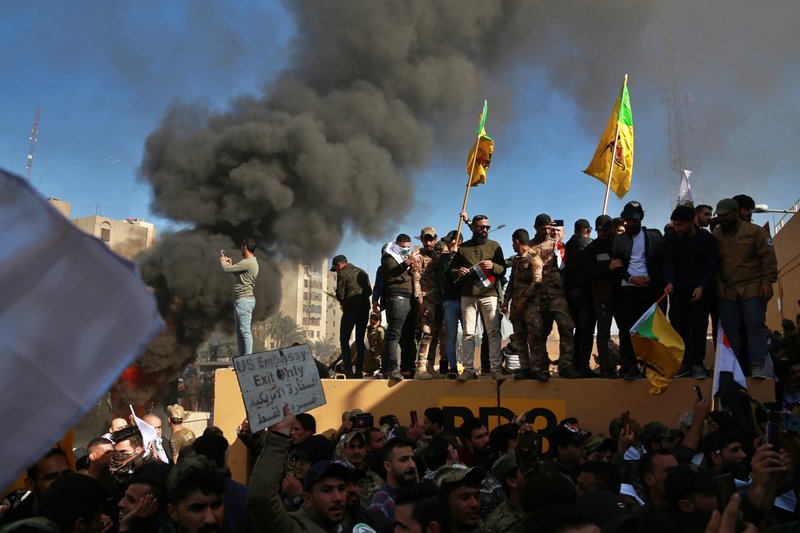
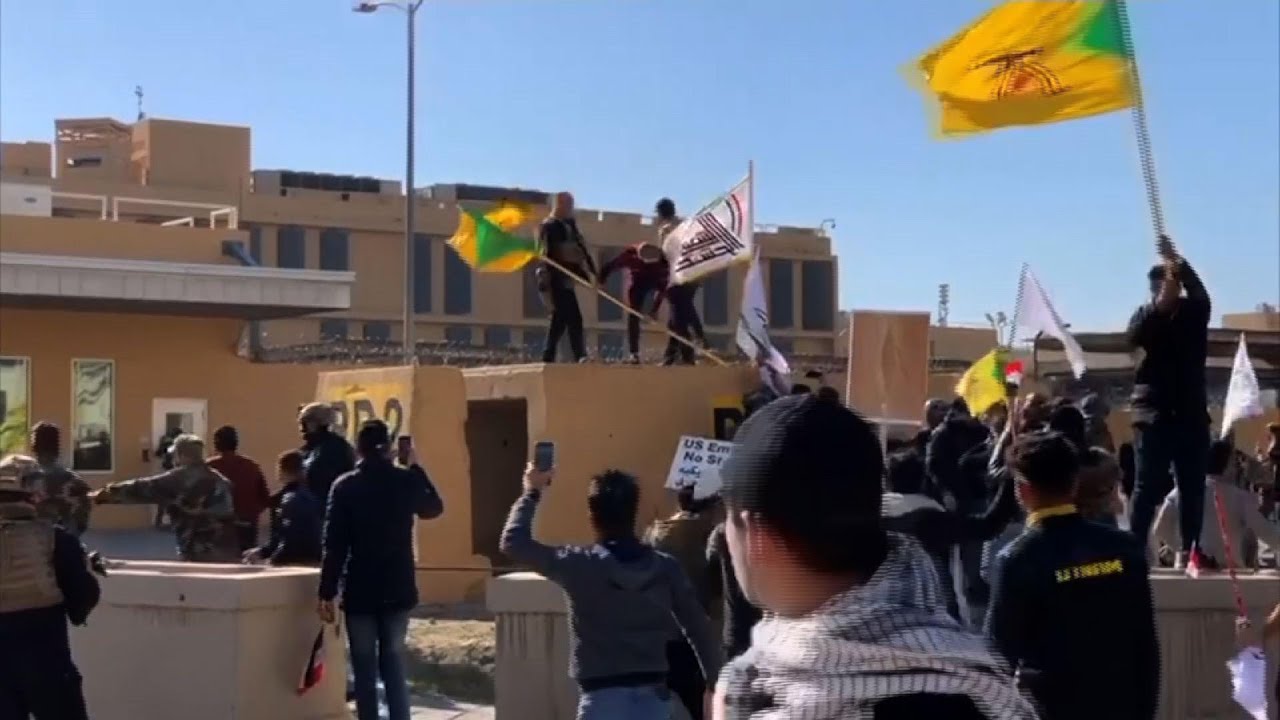
Hundreds of Iraqis attempted to storm the U.S. Embassy in Baghdad on Tuesday after holding funerals for the25 fighters from an Iran-backed Shiite militia killed in U.S. airstrikes earlier this week, the Associated Press reported.
Reporters for the AP described a chaotic scene on the ground and reported that the crowd shouted, “Down, down USA!”
Security
guards were seen retreating to the inside of the embassy as the
protesters hurled water bottles and smashed security cameras outside the
embassies, the report said.
The U.S. military carried out airstrikes in Iraq and Syria on Sunday — days after a U.S. defense contractor was killed in a rocket attack.
Military jet fighters conducted "precision defensive strikes" on five sites of Kataeb Hezbollah, Jonathan Hoffman, a spokesperson for the Pentagon told Fox News. Two defense officials added that Air Force F-15 jet fighters carried out the strikes.
U.S.
Secretary of State Mike Pompeo said the strikes send the message that
the U.S. will not tolerate actions by Iran that jeopardize American
lives. Fox News' Nicole Darrah and the Associated Press contributed to this report
Hunter Biden's attorneys fired back Monday after a private investigation firm again attempted to stage a highly unusual intervention in
his ongoing child-custody dispute in Arkansas, this time claiming its
investigators have lawfully obtained access to Biden's bank account
records and confirmed his involvement in a massive, $156 million
"counterfeiting scheme."
In a motion to strike,
Biden's legal team unconditionally denied the unverified claims, and
called the effort by the Florida-based D&A Investigations another
obviously bogus "scheme by a non-party simply to make scandalous
allegations in the pending suit to gain media attention without any
material or pertinent material."
D&A claimed in its most recent filing Dec.
27 with the court in Independence County, Ark., that it has provided
attorneys for Lunden Alexis Roberts, who was seeking custody over the
child she said Hunter Biden fathered, "access to [Hunter Biden's] bank
account records subject of known felonies including fraud and
counterfeiting." D&A was seeking to be added as a party to the case,
claiming it could support Roberts' accusations and prove that Biden was
involved in illegal activity while dodging discovery quests.
D&A
alleged that the "bank account records bear exhibit identifier(s) known
by [Hunter Biden] as the subject of criminal investigation(s) both
adjudicated and ongoing, of which he is a party to." The firm also
claimed the bank records "provide the source and destination bank
account numbers of Burisma Holdings Limited, PrivatBank, Bank of China,
[Hunter Biden's] business partners, Rosement Seneca Bohai," and others.
Speaking
to Fox News late Monday, D&A claimed the FBI and Justice Department
have been investigating PrivatBank, the Ukrainian natural gas company
Burisma, Biden and others since April 2019 -- and that the investigation
remained open. The FBI did not return a request for comment from Fox
News.
The
bank records "verify the counterfeiting scheme accumulating
$156,073,944.24 with an average account value (monthly balance) in the
amount of $6,785,823.66." Burisma, the filing claimed, financed
"Atlantic Council (Ukraine) and associated rogue operatives from the
[U.S. State Department], FVEY, and CrowdStrike in Ukraine, suing
PrivatBank."
Hunter Biden held a lucrative role on the board of
Burisma while his father oversaw Ukraine policy as vice president,
prompting even career State Department officials to flag a possible conflict of interest. CrowdStrike
is a cybersecurity company that Trump said possessed the Democratic
National Committee (DNC) server that was hacked during the 2016 campaign
-- a claim that fact-checkers repeatedly have said was wholly invented.
Biden's
attorneys did not immediately respond to Fox News' requests for comment
late Monday. But, the lawyers told the court that D&A's motion to
intervene was riddled with falsehoods and clearly procedurally improper,
and that Arkansas law required that intervening parties share some
common issue with the existing case.
D&A had not even
attempted to explain how its latest filing complied with the law,
Biden's team said, noting that the latest motion to intervene simply
outlined a series of accusations with no legal or factual support.
The
court has not yet ruled on Biden's latest motion to strike. Shortly
after Biden's team filed, an individual in Jerusalem, Joel Caplan, filed his own bizarre motion to intervene,
saying he has lost money in the "China hustle." After saying his
investments were "basically robbed" overseas, Caplan ended his motion by
telling the court, "Thank you for your time!"
This photo obtained exclusively by Fox News showed Devon Archer,
far left, with former Vice President Joe Biden and his son Hunter, far
right, in 2014. Joe Biden has denied ever discussing his son's overseas
business dealings; Archer served with Hunter Biden on the board of
Ukraine-based Burisma Holdings.
D&A was the same firm that worked with the
defense team of Casey Anthony, a Florida woman acquitted of murdering
her child in a highly publicized trial in 2011. Anthony later accused the private investigator of smearing her for media attention.
And, D&A's website is full of head-turning and unsubstantiated claims,
including that CNN anchor Jake Tapper was a "propaganda actor" for
Netflix. The website also called Democrats' impeachment efforts against
Trump a "sham."
The legal saga began last week. D&A asserted in a Dec. 23 "Notice of Fraud and Counterfeiting and Production of Evidence" filed
with the Arkansas court that the 49-year-old Biden was the subject of
multiple criminal probes and "established bank and financial accounts
with Morgan Stanley et al" for Burisma for a "money laundering scheme."
The court quickly struck that filing, saying it had violated state procedural rules which required that intervening parties raise a claim that shared a "question of law or fact in common" with the existing case.
Then,
the firm told Fox News to expect another filing soon -- and asserted
its investigators have found that the intelligence community
whistleblower at the center of the Democrats' impeachment of President
Trump accompanied Joe Biden when he traveled to Ukraine in early 2016 and, by his own admission, pressured the country's government to fire its top prosecutor by threatening to withhold $1 billion in U.S. aid.
The whistleblower's attorney, Mark Zaid, did not respond to Fox News' request for comment on D&A's claims, which Fox News has not independently verified. Zaid previously has acknowledged that
the whistleblower had "contact" with presidential candidates of both
parties, amid reports that he had a "professional working relationship"
with one of the Democrats seeking the White House in 2020.
Zaid openly declared that a "coup has started" against the administration all the way back in 2017, and promised that impeachment would result.
D&A's
incendiary claims highlighted some unanswered questions that could
arise in a possible GOP-led impeachment trial in the Senate. Most
notably, after leaving the vice presidency, Joe Biden attended a
conference at which he discussed a previously unreported meeting in
Ukraine for the first time.
"I said, 'I’m telling you, you’re not getting the billion dollars,'" Biden boasted at the conference.
"I said, 'You’re not getting the billion. I’m going to be leaving here
in --,' I think it was about six hours. I looked at them and said, 'I’m
leaving in six hours. If the prosecutor is not fired, you’re not getting
the money.' Well, son of a b----. He got fired, and they put in place
someone who was solid at the time."
The prosecutor, Viktor Shokin,
was fired in March 2016, and had widely been accused of corruption
himself. However, publicly available records showed that Joe Biden did not officially travel to Ukraine in 2016.
Meanwhile,
in her filing in the case, the 28-year-old Roberts claimed Hunter Biden
has "had no involvement in the child's life since the child's birth,
never interacted with the child, never parented the child," and "could
not identify the child out of a photo lineup."
DNA tests allegedly confirmed "with scientific certainty" that Hunter Biden was the biological father of Roberts' baby, according to court documents filed in November.
Joe Biden tangled with a Fox News reporter when asked about that development.
"I'm
wondering if you have a comment on this report, and court filing, out
of Arkansas, that your son Hunter just made you a grandfather again,"
Fox News’ Peter Doocy asked.
"No, that’s a private matter and I have no comment," Biden fired back before attacking the reporte
"Only you would ask that," Biden said. "You're a good man. You're a good man. Classy."
Hunter Biden reportedly is expecting a child with his wife Melissa Cohen Biden, whom he married this past May. Fox News' Brian Flood contributed to this report.
Sen. Chuck Schumer on Monday took up his push to have the Senate issue subpoenas that
demand testimony from top Trump administration officials during the
Senate impeachment trial after a new report claims to detail what
occurred inside the administration during the decision to freeze aid to
Ukraine.
The New York Democrat sent a letter last week
to fellow senators that cited records including an email sent by the
Office of Management and Budget Associate Director Michael Duffey to
Defense Department officials roughly an hour-and-a-half after Trump's
controversial July 25 phone call with Ukrainian President Volodymyr Zelensky.
The
email showed a push to place aid on hold after Trump made his request
for Ukraine's help in political investigations. The House voted to impeach Trump earlier this month on obstruction of Congress and abuse of power.
Schumer on Monday pointed to a New York Times report
published Sunday that claimed that Trump went forward with freezing the
aid despite warnings from his top staffers, including Secretary of
State Mike Pompeo and his former adviser John Bolton.
Schumer called the new revelations a "game-changer."
"This
shows all four witnesses we requested—[acting White House chief of
staff] Mulvaney, Bolton, Duffey, [White House aide Robert] Blair—were
intimately involved & had direct knowledge of Pres. Trump’s decision
to cut off aid to benefit himself," Schumer tweeted.
Schumer
was likely referring to the report that said Mulvaney wrote an email to
Blair on June 27 inquiring about "the money for Ukraine and whether we
can hold it back?" Blair reportedly responded that it was possible but
warned him to "expect Congress to become unhinged," and further the
narrative that the president was pro-Russia, the report said.
Trump
has insisted he did nothing wrong regarding Ukraine and said his
intention was to determine whether of not Keiv was making good on its
promise to crackdown on corruption. He called the entire process a
"hoax." Fox News' Ronn Blitzer contributed to this report