Thursday, January 2, 2020
Year-end violence highlights danger of worshipping

NEW YORK (AP) — When a machete-wielding attacker walked into a rabbi’s home in Monsey, New York, during Hanukkah and a gunman fired on worshippers at a Texas church
14 hours later, the two congregations in different regions of the
country joined a growing list of faith communities that have come under
attack in the U.S.
It
is a group that crosses denominations and geography and has companions
around the world. The frequency of attacks has faith leaders and law
enforcement grappling with how to protect people when they are at their
most vulnerable.
FBI
hate crime statistics show that incidents in churches, synagogues,
temples and mosques increased 34.8% between 2014 and 2018, the last year
for which FBI data is available.
“For
a person bent on hate crime against a particular religion or race, you
go to a place where you know a lot of people in that group will be
congregating — and vulnerable,” said James Alan Fox, a criminologist at
Boston’s Northeastern University. “One place you can go to find people
of a certain religion is where they worship.” Most congregations, he
said, do not have security.
Three
of the deadliest attacks on congregation members have occurred since
June 2015, when a gunman killed nine people at Emanuel African Methodist
Episcopal Church in Charleston, South Carolina,
according to a database compiled by The Associated Press, USA TODAY and
Northeastern University. The database includes attacks where four or
more victims are killed.
However,
the database wouldn’t include the most recent attacks that have
refocused attention on the security vulnerabilities at religious
institutions.
The FBI’s hate crime highlights list
a number of crimes, including a Colorado plot to blow up a synagogue,
an Oregon man sentenced to federal prison for targeting a Catholic
Church and two guilty pleas in the bombing of an Islamic Center in
Minnesota where congregants were worshipping in the mosque.
A five-year compilation of AP reports showed the frequency of attacks countrywide.
Recent stories included the stabbing of an Orthodox Jewish man as he approached the driveway of his synagogue in Monsey in November, as well as a Las Vegas incident where a suspect torched a Buddhist temple, then shot toward at least one monk fleeing the fire.
The data is definitive enough that the FBI invited faith leaders
to its Washington, D.C., headquarters last June to discuss how to
protect themselves and their congregants from bias-based attacks.
Mark
Whitlock Jr., pastor of Reid Temple AME Church in Glenn Dale, Maryland,
said his own staff and volunteers have met five times in the last month
to discuss safety.
“Our
first responsibility is to make sure our congregants have faith in God
and second, that they are safe,” Whitlock said. “We must not create an
environment of fear but we also must not fail to recognize things do
happen and evil is present.”
Reid
has a paid security staff of about 20 who wear uniforms and are armed.
There are volunteers as well, made up of former and current federal
agents, law enforcement officers and military who also provide security,
Whitlock said.
Even
with the protection, he is watchful. On Sunday, he was in the pulpit
and saw the security force reacting to something. They explained later
it was a stranger they wanted to identify.
“When
you’re looking at thousands of people and you see your security force
walking around, your mind begins to wonder,” he said.
The
new spate of anti-Semitic attacks has added to the sense of urgency
that’s been felt by Jewish security experts since the 2018 massacre at Pittsburgh’s Tree of Life synagogue, where 11 people were killed.
“The
greatest adversary we truly face is not an external threat, it’s a
sense of denial,” said Michael Masters, national director of the Secure
Community Network. It was formed by leading Jewish organizations in 2004
to coordinate a response to security threats.
“The
conversation prior to Pittsburgh was whether safety and security was
necessary,” Masters said. “Now it’s a question of how do we effectuate
that — there’s now a reality that these events can happen anywhere.”
Sunday’s
attack in White Settlement, Texas, in which the gunman was shot dead by
a highly trained leader of the church’s security team, came barely two
years after more than two dozen people were killed at a church in Sutherland Springs, Texas. That remains the deadliest shooting at a house of worship in the U.S. in modern times.
The
two Texas attacks have heightened worries among churchgoers in
neighboring Oklahoma, said the Rev. Derrek Belase, a former police
officer turned pastor who coordinates security training for the more
than 480 United Methodist churches in Oklahoma.
“Texas is close to home for us,” Belase said. “People see it on the news and think, ‘That could be us.’”
Under
Oklahoma law, houses of worship are among the places where adults are
allowed to carry firearms, whether concealed or openly. Churches may ask
worshippers not to bring guns with them, but Belase says that’s not a
common request.
When
Belase is advising churches on security, his core recommendations are
to work in tandem with local law enforcement, be wary of for-profit
security consultants, and be sure that members of any church security
team are thoroughly trained.
The security team leader in White Settlement “wasn’t just a guy with a gun,” Belase said. “He was trained to do that.”
Pardeep
Singh Kaleka, executive director of the Interfaith Conference of
Greater Milwaukee, said his own Sikh temple has armed guards and an
evacuation plan, the result of a 2012 attack in Oak Creek, Wisconsin,
that killed six worshippers, including his father. He said the
conference members talk regularly about how to prevent the next tragedy.
“All faiths want to remain open, Buddhists, Sikhs, Muslims, Jews,
Christians, but you also have to be vigilant and institute safety
protocols.”
___
Associated Press researcher Rhonda Shafner in New York contributed to this report.
___
Associated
Press religion coverage receives support from the Lilly Endowment
through the Religion News Foundation. The AP is solely responsible for
this content.
Anti-Semitism grows in Jewish communities in NYC suburbs

MONSEY,
N.Y. (AP) — F or years, ultra-Orthodox Jewish families pushed out of
increasingly expensive Brooklyn neighborhoods have been turning to the
suburbs, where they have taken advantage of open space and cheaper
housing to establish modern-day versions of the European shtetls where
their ancestors lived for centuries before the Holocaust.
The
expansion of Hasidic communities in New York’s Hudson Valley, the
Catskills and northern New Jersey has led to predictable sparring over
new housing development and local political control. It has also led to
flare-ups of rhetoric seen by some as anti-Semitic.
Now, a pair of violent attacks on such communities, just weeks apart, worry many that intolerance is boiling over.
On
Dec. 10, a man and woman killed a police officer and then stormed into a
kosher grocery in Jersey City, fatally shooting three people inside
before dying in an hourslong gunfight with police. The slayings happened
in a neighborhood where Hasidic families had recently been relocating,
amid pushback from some local officials who complained about
representatives of the community going door to door, offering to buy
homes at Brooklyn prices.
And
on Saturday, a man rushed into a rabbi’s home in Monsey, New York,
during a Hanukkah celebration, hacking at people with a machete. Five
people were wounded, including one who remained hospitalized Tuesday.
Federal prosecutors said the man charged in the attack, Grafton Thomas,
had handwritten journals containing anti-Semitic comments and a swastika
and had researched Hitler’s hatred of Jews online.
At
a meeting Monday hosted by U.S. Sen. Kirsten Gillibrand in Rockland
County, where Monsey is, some Jewish leaders blamed inflammatory
rhetoric on social media and from local elected officials for the rising
threat of anti-Semitic violence.
Days
after the killings in Jersey City, a local school board member there,
Joan Terrell-Paige, assailed Jews as “brutes” on Facebook, saying she
believed the killers were trying to send a message with the slaughter.
“Are we brave enough to explore the answer to their message?” she asked.
A
widely condemned political ad last summer created by a local Republican
group claimed that an Orthodox Jewish county legislator was “plotting a
takeover” that threatens “our way of life.”
“In
the last few years in Rockland County I have seen a rise in hate
rhetoric, and I was able to foresee it would end in violence,” said Aron
Wieder, the legislator targeted in the video ad. “You have seen on
social media where the Orthodox community has been called a cancer,
leeches, people who don’t pay taxes. It has become normal and accepted
to say derogatory and hateful things about Jewish people.”
Swastikas
have been scrawled around the county, and frightened parents are asking
law enforcement for more visible security at synagogues and schools,
Wieder said.
Bigoted
messages have gone unchecked for years, said Rabbi Yisroel Kahan,
administrative director of the Oizrim Jewish Council. He pointed to
hateful comments on social media and false online rumors that have
spilled over into everyday life.
“It has been tolerated for far too long,” he said.
Hasidic
families began migrating from New York City to suburban communities in
the 1970s, hoping to create the sort of cohesive community some recalled
from Europe.
Rockland
County, 15 miles (24 kilometers) northwest of Manhattan, now has the
largest Jewish population per capita of any U.S. county, with 31%, or
90,000 residents, being Jewish. The ultra-Orthodox population is highly
visible in small towns like Monsey, where bearded Hasidic men in black
overcoats and fedoras converse in Yiddish along the sidewalks and
Orthodox women wear modest black skirts and head scarves as they go
about their daily errands.
In
small towns everywhere, resentment against newcomers and “outsiders”
isn’t uncommon. Proposals for multi-family housing complexes in sleepy
communities of single-family homes often trigger fervent opposition
complete with lawn signs and rowdy town board meeting crowds.
Yet the tone of the debates over growth in some areas where Hasidic families have been moving has been more intense.
In
East Ramapo, there were legal fights after Hasidic voters, who
generally do not send their children to public schools, elected a
majority of members of the local school board.
Some towns have enacted zoning changes forbidding new houses of worship.
In
the small town of Chester, 60 miles north of New York City in Orange
County, New York Attorney General Letitia James recently announced
action to fight housing rules that she said were being used to
improperly prevent an influx of Hasidic Jews. Local officials have
denied anti-Semitism was behind opposition to plans to build over 400
homes in the town of 12,000 residents.
Rockland
County Executive Ed Day said the arguments over housing density involve
legitimate policy issues and are the biggest challenge when it comes to
accommodating he growing Orthodox Jewish community.
The
Orthodox community has special needs, he said, like housing for large
families and residences within walking distance to a synagogue. That
creates “demands that are counter to many of the communities they’re
residing in,” Day said.
Questionable zoning decisions, he said, lead to resentment.
“Now the words start. Now the worst words continue. And this is where you have the problem,” Day said.
Whether any of that heated rhetoric was a factor in the recent violence is unclear.
Authorities
haven’t offered an explanation yet for what they think motivated the
Jersey City attackers or Thomas to select their targets.
Thomas’
lawyer and family have said he has struggled for years with mental
illness and hadn’t previously shown any animosity to Jews. He had grown
up in New York City but was living with his mother in a small town about
a 30 minute drive from Monsey.
Rabbi
David Niederman, executive director of the Brooklyn-based United Jewish
Organizations of Williamsburg, said he is offended by references to
tensions over housing and population growth in discussions about the
Monsey and the Jersey City attacks.
“If
you have tensions, what you do is you sit down at a table; that’s how
you deal with tensions,” Niederman said. “You don’t go out and murder
people. You don’t go out with a butcher knife and almost kill a whole
congregation.”
Those violent attacks, he said, were motivated by “pure hatred.”
___
Esch reported from Albany and Carolyn Thompson in Buffalo contributed to this report.
Militiamen withdraw from US Embassy but Iraq tensions linger

BAGHDAD
(AP) — Iran-backed militiamen withdrew from the U.S. Embassy compound
in Baghdad on Wednesday after two days of clashes with American security
forces, but U.S.-Iran tensions remain high and could spill over into
further violence.
The
withdrawal followed calls from the government and senior militia
leaders. It ended a two-day crisis marked by the breach of the largest
and one of the most heavily fortified U.S. diplomatic missions in the
world.
The
attack and its volatile aftermath prompted the Pentagon to send
hundreds of additional troops to the Middle East an d U.S. Secretary of
State Mike Pompeo to delay a European and Central Asian trip.
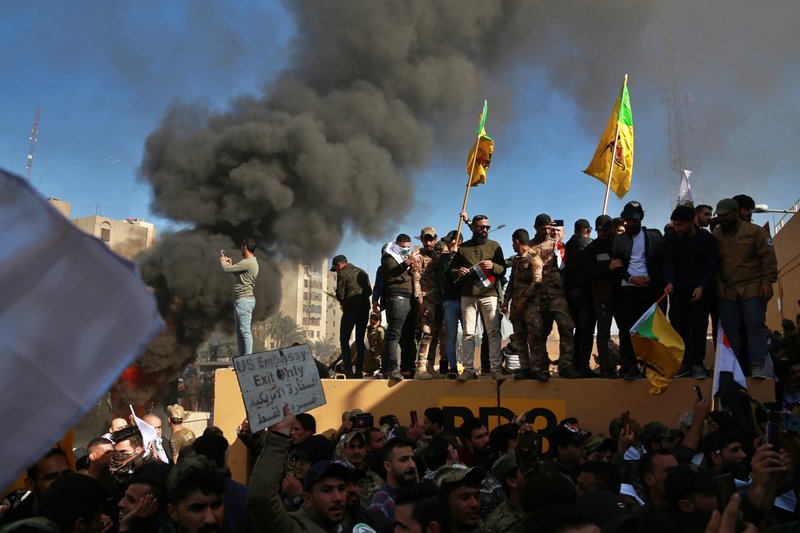
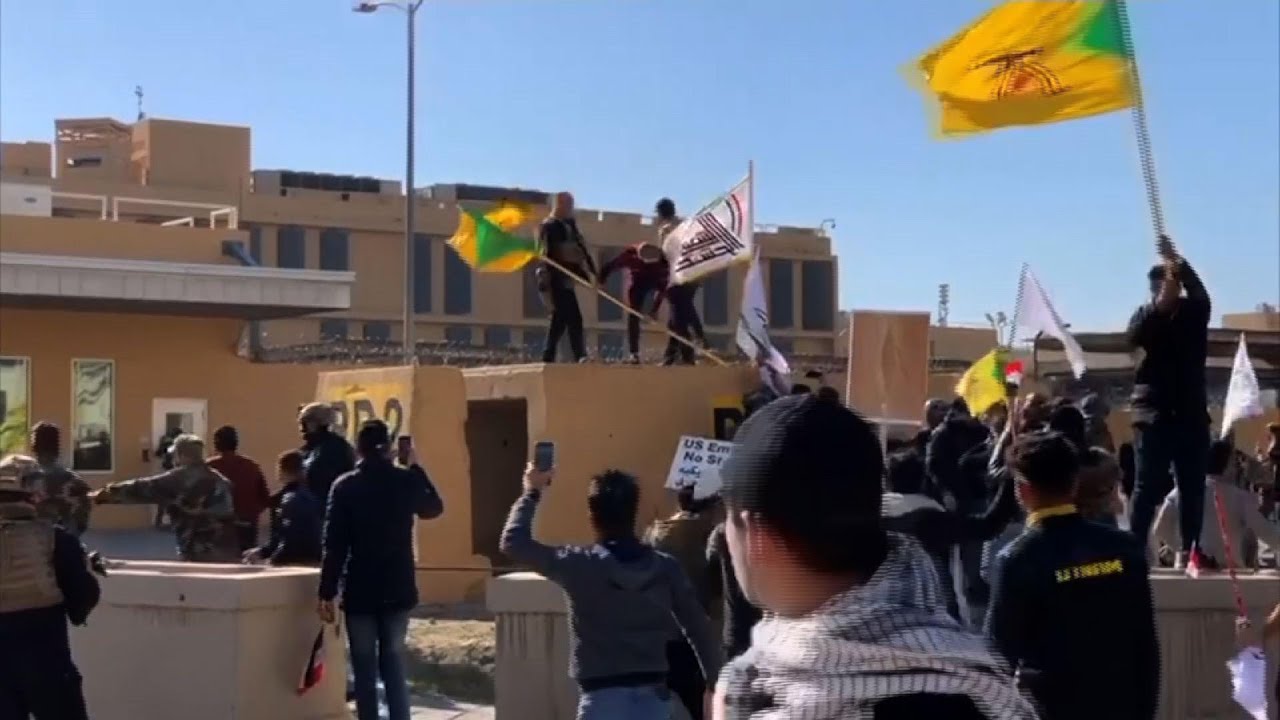
In
an orchestrated assault, hundreds of militiamen and their supporters
broke into the embassy compound, destroying a reception area, smashing
windows and spraying graffiti on walls to protest U.S. airstrikes
against an Iran-backed militia over the weekend that killed 25 fighters.
The
U.S. blamed the militia for a rocket attack on an Iraqi military base
in the northern city of Kirkuk last week that killed a U.S. contractor.
The
protesters set up a tent camp overnight and on Wednesday set fire to
the reception area and hurled stones at U.S. Marines guarding the
compound, who responded with tear gas. There were no injuries on either
side and no American staff were evacuated from the compound.

The Popular Mobilization Forces, an umbrella group of state-allied militias
— many backed by Iran — called on its supporters to withdraw in
response to an appeal by the Iraqi government, saying “your message has
been received.”
By
late afternoon the tents had been taken down and the protesters
relocated to the opposite side of the Tigris River, outside the
so-called Green Zone housing government offices and foreign embassies.
U.S. Apache helicopters circled overhead.
“After
achieving the intended aim, we pulled out from this place
triumphantly,” said Fadhil al-Gezzi, a militia supporter. “We rubbed
America’s nose in the dirt.” Trump has vowed to exact a “big price” for
an attack he blamed squarely on Iran.
Kataeb
Hezbollah, the Iran-backed militia targeted by the U.S. airstrikes,
initially refused to leave but later bowed to demands to disperse. The
militia is separate from the Hezbollah militant group in Lebanon, though
both are backed by Iran.
“We
don’t care about these planes that are flying over the heads of the
picketers. Neither do we care about the news that America will bring
Marines,” said Mohammed Mohy, a spokesman for Kataeb Hezbollah. “On the
contrary, this shows a psychological defeat and a big mental breakdown
that the American administration is suffering from,” he said, before
withdrawing from the area.
The violence came as Iran and its allies across the region have faced unprecedented mass protests in recent months and heavy U.S. sanctions have cratered Iran’s economy.
Iraq
has been gripped by anti-government protests since October fueled by
anger at widespread corruption and economic mismanagement, as well as
Iran’s heavy influence over the country’s affairs. Those protesters were
not involved in the embassy attack.
The
Pentagon sent an infantry battalion of about 750 soldiers to the Middle
East. A U.S. official familiar with the decision said they would go to
Kuwait. Pompeo postponed a trip that was scheduled to start in Ukraine
late Thursday so that he can monitor developments in Iraq and “ensure
the safety and security of Americans in the Middle East,” said State
Department spokeswoman Morgan Ortagus.
Iran
denied involvement in the attack on the embassy. Supreme Leader
Ayatollah Ali Khamenei was quoted by media as saying that “if the
Islamic Republic makes a decision to confront any country, it will do it
directly.”
Iran
later summoned the Swiss charge d’affaires, who represents American
interests in Tehran, to protest what it said was war-mongering by U.S.
officials.
Public consular operations at the embassy were suspended and future appointments cancelled, it said in a statement.
Tensions
have steadily risen since Trump withdrew the U.S. from Iran’s 2015
nuclear deal with world powers and embarked on a campaign of maximum
pressure through economic sanctions. Iran has responded by abandoning
some of its commitments under the deal.
U.S.
officials have blamed Iran for the sabotage of oil tankers in the
Persian Gulf and a drone attack on Saudi oil facilities in September
that caused a spike in world oil prices. But the Trump administration
has not responded with direct military action, apparently fearing a
wider conflict.
The
U.S. has sent more than 14,000 additional troops to the Gulf region
since May in response to concerns about Iranian aggression. At the time
of the attack, the U.S. had about 5,200 troops in Iraq, mainly to train
Iraqi forces and help them combat Islamic State extremists.
The
U.S. and Iran have vied for influence over Iraq since the 2003 U.S.-led
invasion that toppled Saddam Hussein. Iran has close ties to Iraq’s
Shiite majority and major political factions, and its influence has
steadily grown since then.
Iran
helped to mobilize tens of thousands of mostly Shiite militiamen to
battle the Islamic State group when it stormed across northern and
western Iraq in 2014 as the armed forces collapsed. The U.S. and Iran
both provided vital aid to Iraqi forces, who eventually declared victory
over the extremists in December 2017.
The
political influence of the Popular Mobilization Forces has risen in
recent years, and their allies dominate the parliament and the
government. That has made them the target of the anti-government
protesters, who have attacked Iranian diplomatic missions and the local
headquarters of parties affiliated with the militias across southern
Iraq.
They have
also set up a sprawling protest camp in central Baghdad, and for weeks
have been trying to enter the Green Zone. Iraqi security forces have
beaten them back with tear gas and live ammunition, killing hundreds.
The
militiamen and their supporters, however, were able to quickly enter
the Green Zone and mass in front of the embassy, with little if any
resistance from authorities.
Iraq’s
government vehemently condemned the airstrikes on the militia, saying
it violated national sovereignty. But Iran and its allies might have
also seen the attack as a way of diverting attention from the
anti-government protests.
“Iran
has been trying to provoke the U.S. into helping it solve its Iraq
problem,” said the Crisis Group, an international think tank. “The Trump
administration, by responding to the attacks in Kirkuk and elsewhere
with airstrikes, has obliged.”
___
Krauss
reported from Ramallah, West Bank. Associated Press writers Amir Vahdat
in Tehran, Iran, Bassem Mroue in Beirut and Robert Burns in Washington
contributed.
Judge in Hunter Biden's Arkansas paternity case abruptly recuses himself
The circuit court judge overseeing Hunter Biden's
paternity case, Don McSpadden, recused himself without reason on
Tuesday, just days after a private investigation firm sought to
intercede in the case.
D&A Investigations, based in Florida, filed a "Notice of Fraud and Counterfeiting and Production of Evidence." with the court on Dec. 23, claiming Hunter Biden "established bank and financial accounts with Morgan Stanley et al" for Burisma Holdings -- where he served as a former board member -- to satisfy a "money laundering scheme."
McSpadden had the request stricken from the record, on grounds that it violated state procedural rules, which required the intervening party to raise a claim that shared a "question of law or fact in common" with the existing case. Biden's legal team had told the court that D&A's filing was riddled with falsehoods and clearly procedurally improper.
In another court filing from Dec. 27, D&A claimed it had provided attorneys for Lunden Alexis Roberts, the plaintiff, "access to [Hunter Biden's] bank account records" that show proof of "fraud and counterfeiting." D&A sought to be officially added as a party to the case, in an effort to support Roberts' claim and provide proof of Biden's alleged criminal activity.
McSpadden recused himself before he could rule on the second motion.
Roberts' attorney, Brent M. Langdon, was not seeking D&A's assistance and called its efforts "a scheme by a non-party simply to make scandalous allegations," the Arkansas Democrat-Gazette reported.
In the recusal document, obtained by The Gazette, McSpadden didn't provide specific details about his departure, and only deferred to the "Administrative Plan of the Sixteenth Judicial Circuit."
According to the administrative plan, the case will now go to Circuit Judge Holly Meyer.
McSpadden reportedly ordered all income records from Biden and Roberts over the past five years. He also ordered that the financial information be kept under seal and only be available to the attorneys involved in the case.
DNA tests allegedly confirmed, "with scientific certainty," that Hunter Biden was the biological father of Roberts' baby, according to court documents filed in November.
A separate motion said Hunter Biden will not be contesting paternity in the case, The Gazette reported.
Fox News' Gregg Re contributed to this report
D&A Investigations, based in Florida, filed a "Notice of Fraud and Counterfeiting and Production of Evidence." with the court on Dec. 23, claiming Hunter Biden "established bank and financial accounts with Morgan Stanley et al" for Burisma Holdings -- where he served as a former board member -- to satisfy a "money laundering scheme."
McSpadden had the request stricken from the record, on grounds that it violated state procedural rules, which required the intervening party to raise a claim that shared a "question of law or fact in common" with the existing case. Biden's legal team had told the court that D&A's filing was riddled with falsehoods and clearly procedurally improper.
In another court filing from Dec. 27, D&A claimed it had provided attorneys for Lunden Alexis Roberts, the plaintiff, "access to [Hunter Biden's] bank account records" that show proof of "fraud and counterfeiting." D&A sought to be officially added as a party to the case, in an effort to support Roberts' claim and provide proof of Biden's alleged criminal activity.
McSpadden recused himself before he could rule on the second motion.
Roberts' attorney, Brent M. Langdon, was not seeking D&A's assistance and called its efforts "a scheme by a non-party simply to make scandalous allegations," the Arkansas Democrat-Gazette reported.
In the recusal document, obtained by The Gazette, McSpadden didn't provide specific details about his departure, and only deferred to the "Administrative Plan of the Sixteenth Judicial Circuit."
According to the administrative plan, the case will now go to Circuit Judge Holly Meyer.
McSpadden reportedly ordered all income records from Biden and Roberts over the past five years. He also ordered that the financial information be kept under seal and only be available to the attorneys involved in the case.
DNA tests allegedly confirmed, "with scientific certainty," that Hunter Biden was the biological father of Roberts' baby, according to court documents filed in November.
A separate motion said Hunter Biden will not be contesting paternity in the case, The Gazette reported.
Fox News' Gregg Re contributed to this report
Wednesday, January 1, 2020
AP Explains: Who are Iraq’s Iran-backed militias?

Iran
emerged as a major power broker in Iraq after the American invasion in
2003, supporting Shiite Islamist parties and militias that have
dominated the country ever since.
Worries
are increasing that the militias could drag Iraq into the growing proxy
war between the U.S. and Iran in the Middle East. The United States and
its ally, Israel, are targeting pro-Iranian militias across Lebanon,
Syria and Iraq with economic sanctions and airstrikes hitting their
bases and other infrastructure.
Iran
also supports many of the militias that mobilized in 2014 to battle the
Islamic State group, gaining outsized influence as militiamen joined
security forces and U.S. troops to defeat the extremists. Those
state-sanctioned, mainly Shiite militias, known as the Popular
Mobilization Forces, have grown into a powerful political faction
estimated to have the most seats in the Iraqi parliament.
Iraq
has long struggled to balance its ties with the U.S. and Iran, both
allies of the Iraqi government but regional archenemies. The Iraqi
government angrily condemned the U.S. airstrikes this week against an
Iran-backed militia, Kataeb Hezbollah, which is part of the Popular
Mobilization Forces. The U.S. blames Kataeb for a string of unclaimed
attacks targeting U.S. bases in Iraq, including one that killed an
American contractor this week. The apparent decision by Iraqi security
forces not to prevent supporters of the militia from breaking into the
U.S. Embassy compound in retaliation signaled a sharp deterioration of
U.S.-Iraq relations.
The
Popular Mobilization Forces is an umbrella group for a number of
Iran-backed militias that include the Imam Ali Brigades and Sayed
al-Shuhada. The PMF is practically run by Abu Mahdi al-Muhandis, a
military commander who has been designated a terrorist by Washington.
The
Badr Organization is one of the largest groups within the PMF. Its
chief, Hadi al-Amiri, also leads the the powerful Fatah bloc in
parliament. The other main parliamentary bloc is led by populist Shiite
cleric Muqtada al-Sadr, who has aimed to realign himself with recent
anti-government protests opposing Iranian influence in Iraq.
Qais
al-Khizali, who is on a U.S. terror list, heads the Iranian-backed
Shiite militia, Asaib Ahl al-Haq, or League of the Righteous. He rose to
prominence as a leader in the Shiite insurgency after the 2003 U.S.-led
invasion. He has called for U.S. troops to leave Iraq now that the
Islamic State group has been largely defeated.
Asaib
Ahl al-Haq, which owns its own TV station, made significant gains in
last year’s elections, and al-Khazali is now represented by a 15-member
bloc in parliament. Al-Khazali’s forces fought in Syria alongside
President Bashar Assad’s troops.
The
Iran-backed groups have also become the target of popular anger in
Iraq. Anti-government protests that began in October have swept the
country’s largely Shiite south, with demonstrators demanding an end to
Iranian influence in Iraqi affairs.
Attack on US Embassy in Iraq shows stark choices for Trump

WASHINGTON
(AP) — The attack on the U.S. Embassy compound in Baghdad by
Iran-supported militiamen Tuesday is a stark demonstration that Iran can
still strike at American interests despite President Donald Trump’s
economic pressure campaign. Trump said Iran would be held “fully
responsible” for the attack, but it was unclear whether that meant
military retaliation.
“They
will pay a very BIG PRICE! This is not a Warning, it is a Threat. Happy
New Year!” Trump tweeted later in the afternoon. He also thanked top
Iraqi government leaders for their “rapid response upon request.”
Defense
Secretary Mark Esper later announced that “in response to recent
events” in Iraq, and at Trump’s direction, he authorized the immediate
deployment of an infantry battalion of about 750 soldiers from the
Army’s 82nd Airborne Division at Fort Bragg, North Carolina, to the
Middle East. He did not specify their destination, but a U.S. official
familiar with the decision said they will go to Kuwait.
Esper
said additional soldiers from the 82nd Airborne’s quick-deployment
brigade, known officially as its Immediate Response Force, are prepared
to deploy over the next several days. The U.S. official, who provided
unreleased details on condition of anonymity, said the full brigade of
about 4,000 soldiers may deploy.

“This
deployment is an appropriate and precautionary action taken in response
to increased threat levels against U.S. personnel and facilities, such
as we witnessed in Baghdad today,” Esper said in a written statement.
The
750 soldiers deploying immediately are in addition to 14,000 U.S.
troops who have deployed to the Gulf region since May in response to
concerns about Iranian aggression, including its alleged sabotage of
commercial shipping in the Persian Gulf.
Tuesday’s
breach of the embassy compound in Baghdad, which caused no known U.S.
casualties or evacuations, revealed growing strains between Washington
and Baghdad, raising questions about the future of the U.S. military
mission there. The U.S. has about 5,200 troops in Iraq, mainly to train
Iraqi forces and help them combat Islamic State extremists.
The
breach followed American airstrikes Sunday that killed 25 fighters of
an Iran-backed militia in Iraq, the Kataeb Hezbollah. The U.S. said
those strikes were in retaliation for last week’s killing of an American
contractor and the wounding of American and Iraqi troops in a rocket
attack on an Iraqi military base that the U.S. blamed on the militia.
The American strikes angered the Iraqi government, which called them an
unjustified violation of its sovereignty.
Trump
blamed Iran for the embassy breach and called on Iraq to protect the
diplomatic mission even as the U.S. reinforced the compound with Marines
from Kuwait.
“Iran
killed an American contractor, wounding many,” he tweeted from his
estate in Florida. “We strongly responded, and always will. Now Iran is
orchestrating an attack on the U.S. Embassy in Iraq. They will be held
fully responsible. In addition, we expect Iraq to use its forces to
protect the Embassy, and so notified!”
Even
as Trump has argued for removing U.S. troops from Mideast conflicts, he
also has singled out Iran as a malign influence in the region. After
withdrawing the U.S. in 2018 from an international agreement that
exchanged an easing of sanctions for curbs on Iran’s nuclear program,
Trump ratcheted up sanctions.
Those
economic penalties, including a virtual shut-off of Iranian oil
exports, are aimed at forcing Iran to negotiate a broader nuclear deal.
But critics say that pressure has pushed Iranian leaders into countering
with a variety of military attacks in the Gulf.
Until
Sunday’s U.S. airstrikes, Trump had been measured in his response to
Iranian provocations. In June, he abruptly called off U.S. military
strikes on Iranian targets in retaliation for the downing of an American
drone.
Robert
Ford, a retired U.S. diplomat who served five years in Baghdad and then
became ambassador in Syria, said Iran’s allies in the Iraqi parliament
may be able to harness any surge in anger among Iraqis toward the United
States to force U.S. troops to leave the country. Ford said Trump
miscalculated by approving Sunday’s airstrikes on Kataeb Hezbollah
positions in Iraq and Syria — strikes that drew a public rebuke from the
Iraqi government and seem to have triggered Tuesday’s embassy attack.
“The
Americans fell into the Iranian trap,” Ford said, with airstrikes that
turned some Iraqi anger toward the U.S. and away from Iran and the
increasingly unpopular Iranian-backed Shiite militias.
The tense situation in Baghdad appeared to upset Trump’s vacation routine in Florida, where he is spending the holidays.
Trump
spent just under an hour at his private golf club in West Palm Beach
before returning to his Mar-a-Lago resort in nearby Palm Beach. He had
spent nearly six hours at his golf club on each of the previous two
days. Trump spoke with Iraqi Prime Minister Adel Abdul-Mahdi and
emphasized the need for Iraq to protect Americans and their facilities
in the country, said White House spokesman Hogan Gidley.
Trump
is under pressure from some in Congress to take a hard-line approach to
Iranian aggression, which the United States says included an
unprecedented drone and missile attack on the heart of Saudi Arabia’s
oil industry in September. More recently, Iran-backed militias in Iraq
have conducted numerous rocket attacks on bases hosting U.S. forces.
Sen.
Tom Cotton, an Arkansas Republican and supporter of Trump’s Iran
policy, called the embassy breach “yet another reckless escalation” by
Iran.
Tuesday’s
attack was carried out by members of the Iran-supported Kataeb
Hezbollah militia. Dozens of militiamen and their supporters smashed a
main door to the compound and set fire to a reception area, but they did
not enter the main buildings.
Sen.
Bob Menendez of New Jersey, senior Democrat on the Senate Foreign
Relations Committee, blamed Iran for the episode and faulted Trump for
his “maximum pressure” campaign against Iran.
“The
results so far have been more threats against international commerce,
emboldened and more violent proxy attacks across the Middle East, and
now, the death of an American citizen in Iraq,” Menendez said, referring
to the rocket attack last week.
By
early evening Tuesday, the mob had retreated from the compound but set
up several tents outside for an intended sit-in. Dozens of yellow flags
belonging to Iran-backed Shiite militias fluttered atop the reception
area and were plastered along the embassy’s concrete wall along with
anti-U.S. graffiti. American Apache helicopters flew overhead and
dropped flares over the area in what the U.S. military called a “show of
force.”
The U.S. also was sending 100 or more additional Marines to the embassy compound to support its defenses.
The
embassy breach was seen by some analysts as affirming their view that
it is folly for the U.S. to keep forces in Iraq after having eliminated
the Islamic State group’s territorial hold in the country.
A
U.S. withdrawal from Iraq is also a long-term hope of Iran, noted Paul
Salem, president of the Washington-based Middle East Institute.
And
it’s always possible Trump would “wake up one morning and make that
decision” to pull U.S. forces out of Iraq, as he announced earlier with
the U.S. military presence in neighboring Syria, Salem said. Trump’s
Syria decision triggered the resignation of his first defense secretary,
retired Gen. Jim Mattis, but the president later amended his decision
and about 1,200 U.S. troops remain in Syria.
Trump’s
best weapon with Iran is the one he’s already using — the sanctions,
said Salem. He and Ford said Trump would do best to keep resisting
Iran’s attempt to turn the Iran-U.S. conflict into a full-blown military
one. The administration should also make a point of working with the
Iraqi government to deal with the militias, Ford said.
For
the president, Iran’s attacks — directly and now through proxies in
Iraq — have “been working that nerve,” Salem said. “Now they really have
Trump’s attention.”
___
Associated Press writers Matthew Lee, Darlene Superville and Sagar Meghani contributed to this report.
Trump deploys more troops to Mideast after US embassy attack

WASHINGTON
(AP) — Charging that Iran was “fully responsible” for an attack on the
U.S. Embassy in Iraq, President Donald Trump ordered about 750 U.S.
soldiers deployed to the Middle East as about 3,000 more prepared for
possible deployment in the next several days.
No U.S. casualties or evacuations were reported after the attack Tuesday by dozens of Iran-supported militiamen. U.S. Marines were sent from Kuwait to reinforce the compound.
Defense
Secretary Mark Esper said Tuesday night that “in response to recent
events” in Iraq, and at Trump’s direction, he authorized the immediate
deployment of the infantry battalion from the Army’s 82nd Airborne
Division at Fort Bragg, North Carolina. He did not specify the soldiers’
destination, but a U.S. official familiar with the decision said they
will go to Kuwait.
“This
deployment is an appropriate and precautionary action taken in response
to increased threat levels against U.S. personnel and facilities, such
as we witnessed in Baghdad today,” Esper said in a written statement.
Additional
soldiers from the 82nd Airborne’s quick-deployment brigade, known
officially as its Immediate Response Force, were prepared to deploy,
Esper said. The U.S. official, who provided unreleased details on
condition of anonymity, said the full brigade of about 4,000 soldiers
may deploy.

The
750 soldiers deploying immediately were in addition to 14,000 U.S.
troops who had deployed to the Gulf region since May in response to
concerns about Iranian aggression, including its alleged sabotage of
commercial shipping in the Persian Gulf. At the time of the attack the
U.S. had about 5,200 troops in Iraq, mainly to train Iraqi forces and
help them combat Islamic State extremists.
The
breach of the U.S. Embassy compound in Baghdad on Tuesday was a stark
demonstration that Iran can still strike at American interests despite
Trump’s economic pressure campaign. It also revealed growing strains
between Washington and Baghdad, raising questions about the future of
the U.S. military mission there.
“They
will pay a very BIG PRICE! This is not a Warning, it is a Threat. Happy
New Year!” Trump tweeted Tuesday afternoon, though it was unclear
whether his “threat” meant military retaliation. He thanked top Iraqi
government leaders for their “rapid response upon request.”
American
airstrikes on Sunday killed 25 fighters of an Iran-backed militia in
Iraq, the Kataeb Hezbollah. The U.S. said those strikes were in
retaliation for last week’s killing of an American contractor and the
wounding of American and Iraqi troops in a rocket attack on an Iraqi
military base that the U.S. blamed on the militia. The American strikes
angered the Iraqi government, which called them an unjustified violation
of its sovereignty.
While blaming Iran for the embassy breach, Trump also called on Iraq to protect the diplomatic mission.
“Iran
killed an American contractor, wounding many,” he tweeted from his
estate in Florida. “We strongly responded, and always will. Now Iran is
orchestrating an attack on the U.S. Embassy in Iraq. They will be held
fully responsible. In addition, we expect Iraq to use its forces to
protect the Embassy, and so notified!”
Even
as Trump has argued for removing U.S. troops from Mideast conflicts, he
also has singled out Iran as a malign influence in the region. After
withdrawing the U.S. in 2018 from an international agreement that
exchanged an easing of sanctions for curbs on Iran’s nuclear program,
Trump ratcheted up sanctions.
Those
economic penalties, including a virtual shut-off of Iranian oil
exports, are aimed at forcing Iran to negotiate a broader nuclear deal.
But critics say that pressure has pushed Iranian leaders into countering
with a variety of military attacks in the Gulf.
Until
Sunday’s U.S. airstrikes, Trump had been measured in his response to
Iranian provocations. In June, he abruptly called off U.S. military
strikes on Iranian targets in retaliation for the downing of an American
drone.
Robert
Ford, a retired U.S. diplomat who served five years in Baghdad and then
became ambassador in Syria, said Iran’s allies in the Iraqi parliament
may be able to harness any surge in anger among Iraqis toward the United
States to force U.S. troops to leave the country. Ford said Trump
miscalculated by approving Sunday’s airstrikes on Kataeb Hezbollah
positions in Iraq and Syria — strikes that drew a public rebuke from the
Iraqi government and seem to have triggered Tuesday’s embassy attack.
“The
Americans fell into the Iranian trap,” Ford said, with airstrikes that
turned some Iraqi anger toward the U.S. and away from Iran and the
increasingly unpopular Iranian-backed Shiite militias.
The tense situation in Baghdad appeared to upset Trump’s vacation routine in Florida, where he is spending the holidays.
Trump
spent just under an hour at his private golf club in West Palm Beach
before returning to his Mar-a-Lago resort in nearby Palm Beach. He had
spent nearly six hours at his golf club on each of the previous two
days. Trump spoke with Iraqi Prime Minister Adel Abdul-Mahdi and
emphasized the need for Iraq to protect Americans and their facilities
in the country, said White House spokesman Hogan Gidley.
Trump
is under pressure from some in Congress to take a hard-line approach to
Iranian aggression, which the United States says included an
unprecedented drone and missile attack on the heart of Saudi Arabia’s
oil industry in September. More recently, Iran-backed militias in Iraq
have conducted numerous rocket attacks on bases hosting U.S. forces.
Sen.
Tom Cotton, an Arkansas Republican and supporter of Trump’s Iran
policy, called the embassy breach “yet another reckless escalation” by
Iran.
Tuesday’s
attack was carried out by members of the Iran-supported Kataeb
Hezbollah militia. Dozens of militiamen and their supporters smashed a
main door to the compound and set fire to a reception area, but they did
not enter the main buildings.
Sen.
Bob Menendez of New Jersey, senior Democrat on the Senate Foreign
Relations Committee, blamed Iran for the episode and faulted Trump for
his “maximum pressure” campaign against Iran.
“The
results so far have been more threats against international commerce,
emboldened and more violent proxy attacks across the Middle East, and
now, the death of an American citizen in Iraq,” Menendez said, referring
to the rocket attack last week.
By
early evening Tuesday, the mob had retreated from the compound but set
up several tents outside for an intended sit-in. Dozens of yellow flags
belonging to Iran-backed Shiite militias fluttered atop the reception
area and were plastered along the embassy’s concrete wall along with
anti-U.S. graffiti. American Apache helicopters flew overhead and
dropped flares over the area in what the U.S. military called a “show of
force.”
The
embassy breach was seen by some analysts as affirming their view that it
is folly for the U.S. to keep forces in Iraq after having eliminated
the Islamic State group’s territorial hold in the country.
A
U.S. withdrawal from Iraq is also a long-term hope of Iran, noted Paul
Salem, president of the Washington-based Middle East Institute.
And
it’s always possible Trump would “wake up one morning and make that
decision” to pull U.S. forces out of Iraq, as he announced earlier with
the U.S. military presence in neighboring Syria, Salem said. Trump’s
Syria decision triggered the resignation of his first defense secretary,
retired Gen. Jim Mattis, but the president later amended his decision
and about 1,200 U.S. troops remain in Syria.
Trump’s
best weapon with Iran is the one he’s already using — the sanctions,
said Salem. He and Ford said Trump would do best to keep resisting
Iran’s attempt to turn the Iran-U.S. conflict into a full-blown military
one. The administration should also make a point of working with the
Iraqi government to deal with the militias, Ford said.
For
the president, Iran’s attacks — directly and now through proxies in
Iraq — have “been working that nerve,” Salem said. “Now they really have
Trump’s attention.”
___
Associated Press writers Matthew Lee, Darlene Superville and Sagar Meghani contributed to this report.
Toxic impeachment fight leaves unfinished business for Congress in 2020
Congress
faces a lengthy to-do list in the new year, as an already divided
Washington heats up amid a potential Senate impeachment trial and the
upcoming presidential primary races.
House Democrats went into the holiday break touting a long list of legislative achievements they passed in their first year as majority, while Republicans complained the toxic impeachment fight halted important legislation.
What's clear is that much work still remains. Once back in Washington, the top policy issue for Republicans is finalizing the new U.S.-Mexico-Canada Agreement (USMCA) in the Senate. After House Democrats spent months securing greater enforcement of labor standards in Mexico and earning the support of the influential AFL-CIO union federation, the new pact passed the House 385-41 in December — a day after Democrats impeached Trump.
The first hearing in the Senate is expected on Jan. 7.
Republicans accused Speaker Nancy Pelosi of dragging her feet for a year on the NAFTA replacement.
“It should have been passed months ago and it’s had a toll on our economy,” said Rep. Steve Scalise, R-La. “It sat on a shelf in the House because Pelosi was fixated with impeachment. So those jobs didn’t get created.”
President Trump initially announced the new trade deal with Mexico and Canada on Nov. 30, 2018, but it has yet to be ratified because of the prolonged negotiations with Congress that Pelosi defended as necessary to improve the pact.
Meanwhile, Democrats touted the more than 400 bills they passed despite impeachment and panned the Senate “graveyard” for failing to take up any of their priorities. In 2020, they want Senate action on their bills, including expanding gun background checks, adding LGBTQ protections, reforming the government, lowering health care costs and addressing the gender pay gap.
“This has been the most productive House of Representatives in my memory,” said Rep. Jim McGovern, D-Mass. “Unfortunately, everything we pass sits on Mitch McConnell's desk and goes to the graveyard we call the Senate.”
In a letter to Democratic colleagues in December, Pelosi said, "When we return in the New Year, House Democrats will continue to accelerate a drumbeat to make our legislation 'too hot to handle' until Senator McConnell, the Grim Reaper, takes up our bills, which are alive and well with the American people."
Several House Democrats interviewed by Fox News said in the new year they'd like a bipartisan spending bill with the White House to fix the country’s crumbling roads and bridges.
“I’m really hopeful next year we start out with a good infrastructure package," said Rep. Josh Gottheimer, D-N.J.
Rep. Max Rose, a freshman Democrat from the Staten Island, N.Y. district that Trump won, wants to overturn Trump’s controversial executive order banning travel from several countries, including several that are majority Muslim.
"The fact that we have not yet taken a vote to overturn the Muslim ban is a f--king disgrace,” Rose said. “To go home for the holidays without showing the American people that this wrong enough for us to vote to overturn it is disgraceful, and despicable and disgusting. We should take a vote on that.”
After USMCA, House Republicans point to bipartisan health care legislation that passed unanimously out of the Energy and Commerce Committee to help lower prescription drug costs, but has yet to get a vote on the House floor.
Instead, the House successfully passed a different prescription drug bill – the Elijah E. Cummings Lower Drug Costs Now Act – that the GOP panned as too partisan and having no chance of becoming law. Some lawmakers remain hopeful there's a chance for bipartisan drug reforms despite the bitter impeachment divide.
“I think the biggest issue – even bigger than USMCA – is prescription drug prices,” said Rep. Mark Meadows, R-N.C.
Here’s a look at what did, and did not, get done in 2019.
All told, the new Democratic-led House passed 434 bills and joint resolutions this year, but 349 of them, or 80 percent, saw no Senate action.
Despite impeachment, the amount of legislation the House passed its first year was high.
In the last 20 years, there’s only been two other times when the House topped 400 measures in its first year — in 2017, when the House GOP passed 461 bills and joint resolutions just after Republicans won a clean sweep of the White House, the Senate and the House; and in 2007 when Pelosi last held the gavel and passed 524 bills and joint resolutions in her first year, records show.
Some pieces of legislation the House passed include raising the minimum wage to $15 an hour by 2025, the Voting Rights Advancement Act and the Violence Against Women Reauthorization Act.
The GOP-led Senate passed 131 Senate bills and joint resolutions this year and 95 of them, almost 73 percent, sit waiting in the House.
A huge accomplishment for Senate Majority Leader Mitch McConnell was his steady pace of judicial confirmations, billed as a “historic transformation of the courts.”
Just this year alone, the Senate confirmed 20 of Trump’s circuit court nominees and 80 of his district court nominees. Since Trump’s presidency, McConnell has ushered through 187 of his GOP-backed court nominees, including two Supreme Court justices.
As of Dec. 24, 101 pieces of legislation have passed both chambers and have been signed into law by the president.
Among the marquee laws are the Sept. 11 Victims Compensation Fund to help first responders and other victims of the 2001 terrorist attacks, and the National Defense Authorization Act that gave federal workers 12 weeks of paid parental leave, boosted the pay for troops 3.1 percent and created Trump’s Space Force as a new branch of the military.
Trump also signed into law the SECURE Act, which strengthens retirement savings, and legislation that raised the age to buy tobacco and e-cigarettes to 21.
The House and Senate passed spending bills to avoid another government shutdown. They also found common ground on legislation to crack down on annoying robocalls, which Trump is also expected to sign.
House Democrats went into the holiday break touting a long list of legislative achievements they passed in their first year as majority, while Republicans complained the toxic impeachment fight halted important legislation.
What's clear is that much work still remains. Once back in Washington, the top policy issue for Republicans is finalizing the new U.S.-Mexico-Canada Agreement (USMCA) in the Senate. After House Democrats spent months securing greater enforcement of labor standards in Mexico and earning the support of the influential AFL-CIO union federation, the new pact passed the House 385-41 in December — a day after Democrats impeached Trump.
The first hearing in the Senate is expected on Jan. 7.
Republicans accused Speaker Nancy Pelosi of dragging her feet for a year on the NAFTA replacement.
“It should have been passed months ago and it’s had a toll on our economy,” said Rep. Steve Scalise, R-La. “It sat on a shelf in the House because Pelosi was fixated with impeachment. So those jobs didn’t get created.”
President Trump initially announced the new trade deal with Mexico and Canada on Nov. 30, 2018, but it has yet to be ratified because of the prolonged negotiations with Congress that Pelosi defended as necessary to improve the pact.
Meanwhile, Democrats touted the more than 400 bills they passed despite impeachment and panned the Senate “graveyard” for failing to take up any of their priorities. In 2020, they want Senate action on their bills, including expanding gun background checks, adding LGBTQ protections, reforming the government, lowering health care costs and addressing the gender pay gap.
“This has been the most productive House of Representatives in my memory,” said Rep. Jim McGovern, D-Mass. “Unfortunately, everything we pass sits on Mitch McConnell's desk and goes to the graveyard we call the Senate.”
In a letter to Democratic colleagues in December, Pelosi said, "When we return in the New Year, House Democrats will continue to accelerate a drumbeat to make our legislation 'too hot to handle' until Senator McConnell, the Grim Reaper, takes up our bills, which are alive and well with the American people."
Several House Democrats interviewed by Fox News said in the new year they'd like a bipartisan spending bill with the White House to fix the country’s crumbling roads and bridges.
“I’m really hopeful next year we start out with a good infrastructure package," said Rep. Josh Gottheimer, D-N.J.
Rep. Max Rose, a freshman Democrat from the Staten Island, N.Y. district that Trump won, wants to overturn Trump’s controversial executive order banning travel from several countries, including several that are majority Muslim.
"The fact that we have not yet taken a vote to overturn the Muslim ban is a f--king disgrace,” Rose said. “To go home for the holidays without showing the American people that this wrong enough for us to vote to overturn it is disgraceful, and despicable and disgusting. We should take a vote on that.”
After USMCA, House Republicans point to bipartisan health care legislation that passed unanimously out of the Energy and Commerce Committee to help lower prescription drug costs, but has yet to get a vote on the House floor.
Instead, the House successfully passed a different prescription drug bill – the Elijah E. Cummings Lower Drug Costs Now Act – that the GOP panned as too partisan and having no chance of becoming law. Some lawmakers remain hopeful there's a chance for bipartisan drug reforms despite the bitter impeachment divide.
“I think the biggest issue – even bigger than USMCA – is prescription drug prices,” said Rep. Mark Meadows, R-N.C.
Here’s a look at what did, and did not, get done in 2019.
All told, the new Democratic-led House passed 434 bills and joint resolutions this year, but 349 of them, or 80 percent, saw no Senate action.
Despite impeachment, the amount of legislation the House passed its first year was high.
In the last 20 years, there’s only been two other times when the House topped 400 measures in its first year — in 2017, when the House GOP passed 461 bills and joint resolutions just after Republicans won a clean sweep of the White House, the Senate and the House; and in 2007 when Pelosi last held the gavel and passed 524 bills and joint resolutions in her first year, records show.
Some pieces of legislation the House passed include raising the minimum wage to $15 an hour by 2025, the Voting Rights Advancement Act and the Violence Against Women Reauthorization Act.
The GOP-led Senate passed 131 Senate bills and joint resolutions this year and 95 of them, almost 73 percent, sit waiting in the House.
A huge accomplishment for Senate Majority Leader Mitch McConnell was his steady pace of judicial confirmations, billed as a “historic transformation of the courts.”
Just this year alone, the Senate confirmed 20 of Trump’s circuit court nominees and 80 of his district court nominees. Since Trump’s presidency, McConnell has ushered through 187 of his GOP-backed court nominees, including two Supreme Court justices.
As of Dec. 24, 101 pieces of legislation have passed both chambers and have been signed into law by the president.
Among the marquee laws are the Sept. 11 Victims Compensation Fund to help first responders and other victims of the 2001 terrorist attacks, and the National Defense Authorization Act that gave federal workers 12 weeks of paid parental leave, boosted the pay for troops 3.1 percent and created Trump’s Space Force as a new branch of the military.
Trump also signed into law the SECURE Act, which strengthens retirement savings, and legislation that raised the age to buy tobacco and e-cigarettes to 21.
The House and Senate passed spending bills to avoid another government shutdown. They also found common ground on legislation to crack down on annoying robocalls, which Trump is also expected to sign.
Subscribe to:
Comments (Atom)
-
How many times do we need to say this? If you’re here illegally and get caught, you’re going back. It’s the la...
-
The problem with the courts is the same as the problem with many of our other institutions. Called the Skins...
-
CNN’s Scott Jennings once again took liberals to the cleaners on the Abrego Garcia case, the ‘Maryland man...