FILE
- In this Feb. 1, 2017 file photo, National Security Adviser Michael
Flynn speaks during the daily news briefing at the White House, in
Washington. The Justice Department says it will not oppose probation for
former Trump administration national security adviser Michael Flynn.
(AP Photo/Carolyn Kaster)
WASHINGTON
(AP) — The Justice Department said Wednesday that it would not oppose
probation for former Trump administration national security adviser
Michael Flynn — a more lenient stance than prosecutors took earlier this
month, when they said he deserved prison time.
The
latest sentencing filing still seeks a sentence of up six months, but
unlike before, prosecutors explicitly state that probation would be a
“reasonable” punishment and that they would not oppose it.
It
was not clear why the Justice Department appeared to soften its
position, though prosecutors did suggest Flynn deserves credit for his
decades-long military service.
“There is no dispute that the defendant has an unusually strong record of public service,” prosecutors wrote.
As
part of special counsel Robert Mueller’s Russia investigation, Flynn
pleaded guilty in December 2017 to lying to the FBI about his
conversations with the then-Russian ambassador to the United States
during the presidential transition period. He cooperated extensively,
leading prosecutors to initially support a sentence of probation.
He
was to have been sentenced the following year, but after he was sharply
rebuked by the judge during the sentencing hearing, he abruptly asked
that it be postponed so that he could continue cooperating with the
government in hopes of getting additional credit for his behavior and
avoiding any prison time.
Since
then, though, he has fired his lawyers and replaced them with new ones
who have taken a sharply adversarial approach toward the prosecution.
They have raised allegations of government misconduct that a judge has
rejected. Earlier this month, they asked to withdraw his guilty plea — a
request that is still pending.
Prosecutors are expected to more fully respond to that request soon.
The
Justice Department says that though Flynn did provide assistance to
their investigation and that a judge may consider that in fashioning a
sentence, any claims of acceptance of responsibility are hard to
reconcile with his request to withdraw his guilty plea.
They also opted not to call him in the trial last year of a business associate after they said he had changed his account.
WASHINGTON
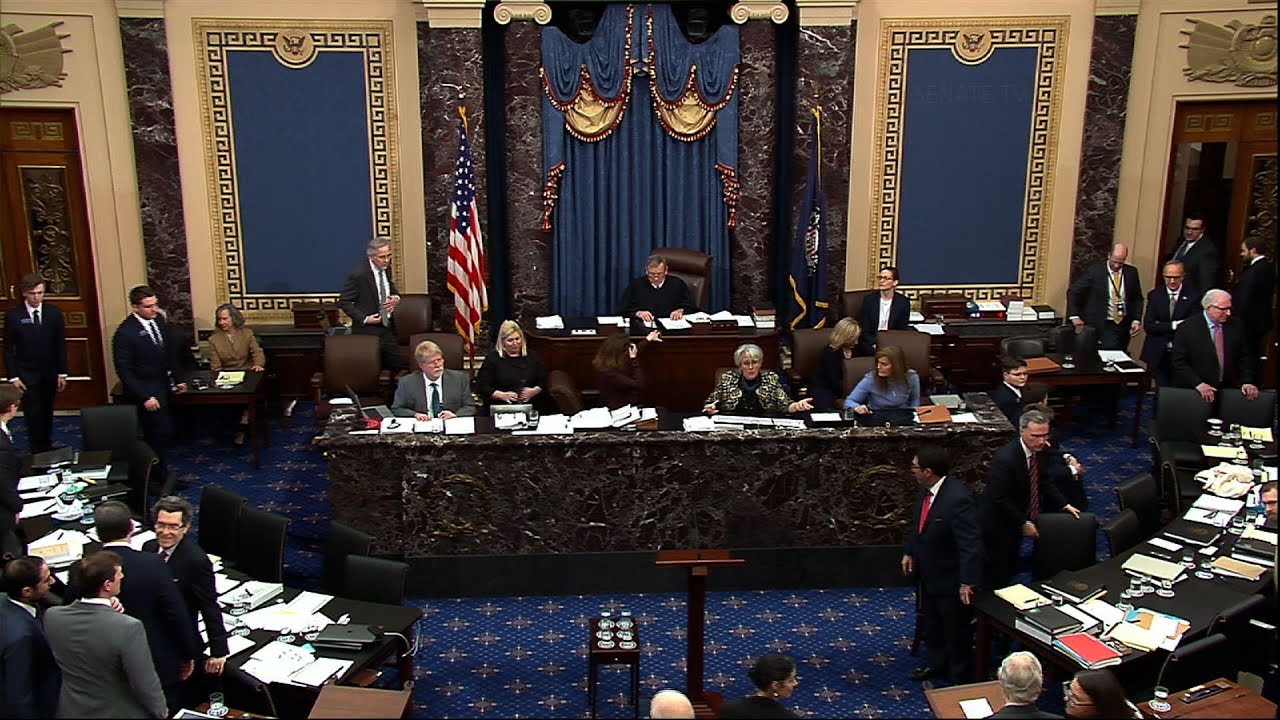
(AP) — The Senate narrowly rejected Democratic demands to summon
witnesses for President Donald Trump’s impeachment trial late Friday,
all but ensuring Trump’s acquittal in just the third trial to threaten a
president’s removal in U.S. history. But senators pushed off final
voting on his fate to next Wednesday.
The
delay in timing showed the weight of a historic vote bearing down on
senators, despite prodding by the president eager to have it all behind
him in an election year and ahead of his State of the Union speech
Tuesday night.
Trump
and Senate Majority Leader Mitch McConnell spoke by phone to lock in
the schedule during a tense night at the Capitol as rushed negotiations
proceeded on and off the Senate floor. The trial came to a standstill
for about an hour. A person unauthorized to discuss the call was granted
anonymity to describe it.
The
president wanted to arrive for his speech at the Capitol with acquittal
secured, but that will not happen. Instead, the trial will resume
Monday for final arguments, with time Monday and Tuesday for senators to
speak. The final voting is planned for 4 p.m. Wednesday, the day after
Trump’s speech.
Trump’s
acquittal is all but certain in the Senate, where his GOP allies hold
the majority and there’s nowhere near the two-thirds needed for
conviction and removal.
Nor will he face potentially damaging, open-Senate testimony from witnesses.
Despite
the Democrats’ singular focus on hearing new testimony, the Republican
majority brushed past those demands and will make this the first
impeachment trial without witnesses. Even new revelations Friday from
former national security adviser John Bolton did not sway GOP senators,
who said they’d heard enough.
That
means the eventual outcome for Trump will be an acquittal “in name
only,” said Rep. Val Demings, D-Fla., a House prosecutor, during final
debate.
Trump
was impeached by the House last month on charges that he abused power
and obstructed Congress as he tried to pressure Ukraine to investigate
Democratic rival Joe Biden, using military aid as leverage as the ally
fought Russia. He is charged with then blocking the congressional probe
of his actions.
Senators
rejected the Democrats’ effort to allow new witnesses, 51-49, a near
party-line vote. Republicans Susan Collins of Maine and Mitt Romney of
Utah voted with the Democrats, but that was not enough.
Senate
Democratic leader Chuck Schumer called that decision “a tragedy on a
very large scale.” Protesters’ chants reverberated against the walls of
the Capitol.
But Republicans said Trump’s acquittal was justified and inevitable.
“The sooner the better for the country,” said Sen. Lindsey Graham, a Trump confidant. “Let’s turn the page.”
The
next steps come in the heart of presidential campaign season before a
divided nation. Democratic caucus voting begins Monday in Iowa, and
Trump gives his State of the Union address the next night. Four
Democratic candidates have been chafing in the Senate chamber rather
than campaigning.
The
Democrats had badly wanted testimony from Bolton, whose forthcoming
book links Trump directly to the charges. But Bolton won’t be summoned,
and none of this appeared to affect the trial’s expected outcome.
Democrats forced a series of new procedural votes late Friday to call
Bolton and White House acting chief of staff Mick Mulvaney, among
others, but all were rejected.
In
an unpublished manuscript, Bolton has written that the president asked
him during an Oval Office meeting in early May to bolster his effort to
get Ukraine to investigate Democrats, according to a person who read the
passage and told The Associated Press. The person, who was not
authorized to disclose contents of the book, spoke only on condition of
anonymity.
In
the meeting, Bolton said the president asked him to call new Ukrainian
President Volodymyr Zelenskiy and persuade him to meet with Trump’s
personal lawyer, Rudy Giuliani, who was planning to go to Ukraine to
coax the Ukrainians to investigate the president’s political rivals.
Bolton writes that he never made the call to Zelenskiy after the
meeting, which included acting chief of staff Mick Mulvaney and White
House Counsel Pat Cipollone.
The
revelation adds more detail to allegations of when and how Trump first
sought to influence Ukraine to aid investigations of his rivals that are
central to the abuse of power charge in the first article of
impeachment.
The story was first reported Friday by The New York Times.
Trump issued a quick denial.
“I
never instructed John Bolton to set up a meeting for Rudy Giuliani, one
of the greatest corruption fighters in America and by far the greatest
mayor in the history of NYC, to meet with President Zelenskiy,” Trump
said. “That meeting never happened.”
Key
Republican senators said even if Trump committed the offenses as
charged by the House, they are not impeachable and the partisan
proceedings must end.
“I
didn’t need any more evidence because I thought it was proved that the
president did what he was charged with doing,” retiring GOP Sen. Lamar
Alexander of Tennessee, a late holdout, told reporters Friday at the
Capitol. “But that didn’t rise to the level of an impeachable offense.”
Republican
Sen. Lisa Murkowski of Alaska said she, too, would oppose more
testimony in the charged partisan atmosphere, having “come to the
conclusion that there will be no fair trial in the Senate.″ She said,
“The Congress has failed.”
Eager
for a conclusion, Trump’s allies nevertheless suggested the shift in
timing to extend the proceedings into next week, acknowledging the
significance of the moment for senators who want to give final speeches.
To
bring the trial toward a conclusion, Trump’s attorneys argued the House
had already heard from 17 witnesses and presented its 28,578-page
report to the Senate. They warned against prolonging it even further.
The House impeached Trump largely along party lines after less than
three months of formal proceedings, making it the quickest, most
partisan presidential impeachment in U.S. history.
Some senators pointed to the importance of the moment.
“What do you want your place in history to be?” asked one of the House managers, Rep. Jason Crow, D-Colo., a former Army Ranger.
To
hear more witnesses, it would have taken four Republicans to break with
the 53-seat majority and join with all Democrats in demanding more
testimony. But that effort fell short.
Chief
Justice John Roberts, in the rare role presiding over the impeachment
trial, could break a tie, but that seemed unlikely. Asked late Friday,
he told senators it would be “inappropriate.”
Murkowski noted in announcing her decision that she did not want to drag the chief justice into the partisan fray.
As protesters chanted outside the Capitol, some visitors watched from the Senate galleries.
Bolton’s
forthcoming book contends he personally heard Trump say he wanted
military aid withheld from Ukraine until it agreed to investigate the
Bidens. Trump denies saying such a thing.
The
White House has blocked its officials from testifying in the
proceedings and objected that there are “significant amounts of
classified information” in Bolton’s manuscript. Bolton resigned last
September — Trump says he was fired — and he and his attorney have
insisted the book does not contain any classified information.
___
Associated
Press writers Alan Fram, Andrew Taylor, Matthew Daly, Laurie Kellman,
Deb Riechmann and Padmananda Rama contributed to this report.
Sen. Ted Cruz, R-Texas, appeared to have some fun at the expense of Democrats, particularly House Speaker Nancy Pelosi, at the Senate impeachment trial of President Trump. In a 51-49 vote Friday, the GOP successfully blocked Democrats' efforts to add additional witnesses to the trial. It
was also determined that both the House impeachment managers and
Trump's defense team would make closing arguments Monday, with
the Senate likely to vote Wednesday to acquit the president of charges
of abuse of power and obstruction of Congress. However, during a recess, Cruz was seen talking to colleagues and making a particular hand gesture. The
clap overwhelmingly resembled the one Pelosi made at the 2019 State of
the Union Address, the first one since she regained her speakership. One
of the most viral moments from the address was when Pelosi
offered what was described as a "derogatory" or "condescending" clap
toward President Trump. Political strategist Caleb Hull put the two clips side-by-side and asked, "Who did it better?" The
impeachment trial has inspired several viral moments. On Thursday
night, Democrats generated excitement on social media when Rep. Jerrold Nadler, D-N.Y., appeared to steal the podium from leading House impeachment manager Rep. Adam Schiff, D-Calif., at the end of the second day of questioning by the Senate jurors. After Chief
Justice of the United States John Roberts read the last question for
the House managers, Nadler was seen jumping out of his chair and rushing
to the center podium, quickly getting the attention of Schiff, who also
leaped from his seat. "Jerry. Jerry. Jerry," Schiff is heard saying as he took a few steps toward Nadler, but failed to stop him from speaking. An awkward exchange between Senate Minority Leader Chuck Schumer, D-N.Y., and Sen. Kamala Harris, D-Calif., also became a viral sensation Friday. Schumer,
joined by Harris, Sen. Sherrod Brown, D-Ohio., and Sen. Patty Murray,
D-Wash., held a press conference on Friday as Democrats continued to
pressure Senate Republicans to allow additional witnesses to give their
testimony. But
as a reporter began questioning the lawmakers, Harris was seen having a
good chuckle with her Ohio colleague, prompting the minority leader to
halt Harris' laughter. Harris responded with a facial expression of her own.
Rep. Rashida Tlaib, D-Mich., couldn’t resist the urge to boo former Secretary of State Hillary Clinton when her name came up during a Sen. Bernie Sanders event in Iowa on Friday evening, three days before the Iowa caucuses. Moderator Dionna Langford mentioned that Clinton was quoted in an interview saying “nobody likes” Sanders, The Hill reported. "We're not gonna boo, we're not gonna boo. We're classy here,” Langford said as the crowd erupted. "No,
I'll boo. Boo!” Tlaib, who was seated onstage next to laughing Reps.
Pramila Jayapal, D-Wash., and Ilhan Omar, D-Minn., interrupted. “You all
know, I can't be quiet. No, we're going to boo. That's alright. The
haters will shut up on Monday when we win." A week after Sen. Elizabeth Warren clashed with Sanders at the last presidential debate
in Des Moines over whether he said a woman couldn’t win the presidency,
Clinton, in an interview with The Hollywood Reporter, said of her 2016
Democratic primary opponent, “Nobody likes him, nobody wants to work
with him, he got nothing done. He was a career politician. It's all just
baloney and I feel so bad that people got sucked into it." Clinton also blamed the “Bernie bro” culture around Sanders, who she said “particularly” attack women. The
2016 campaign became contentious between Sanders and Clinton supporters
after leaked emails seemed to show DNC staffers were favoring her over
him. Sanders
has a slight lead over former Vice President Joe Biden in the average
of the most recent Iowa polls, with former South Bend, Ind. Mayor Pete
Buttigieg and Warren in third and fourth.
President Trump spoke to Fox News in an exclusive interview Thursday evening from Iowa where he said he’d had a little time to watch the impeachment proceedings despite his lively campaign rally in Des Moines. “It’s
very boring to watch, I have to say that. It’s very boring. I call it
the impeachment hoax,” Trump told reporter Peter Doocy. “It should have
never taken place.” Trump added that he has “great confidence in Republican Senators and probably some Democrats" that he would be acquited. “It’s a ridiculous, partisan situation…I know they’re going to be fair,” he said of Republicans. Asked
if he had any concern about being one of just three U.S. presidents to
be impeached, Trump maintained he “shouldn’t be in this position,”
claiming that he has done more in his first three years in office than
any other president, specifically mentioning tax and regulation cuts,
fighting terrorism and rebuilding the military. The
president also dismissed claims that impeachment could stain him in
Iowa or in the election. “I’m leading everybody and in Iowa, I’m leading
them by a lot – every single Democrat,” he told Doocy. “Iowa’s doing
better than they’ve ever done and now they’re really going to start to
do well because of the new trade deals that we have.” “Now the farmers are going to do fantastically well. I say they have to go out and buy bigger tractors and more land,” he said. Trump
added that any polls showing Joe Biden beating him in Iowa and “old,”
adding, “We’re beating them all and Joe’s going down, I guess Bernie’s
surging.” Still, he said he didn’t know which Democrat would win Iowa. Trump also disputed claims made by Sanders that he would strip Medicare from participants. “I’m
the one that saved it,” Trump said. He added that he hadn't touched
Medicare in four years except to make it stronger. “Our country being
strong is what’s saving Social Security,” Trump said, saying Democrats
would be the ones to destroy it with their “crazy plans.” “Not only Social Security, they’re going destroy health care," he said. Doocy
asked if former New York Mayor Michael Bloomberg, who has been running
negative presidential campaign ads against Trump, gets under his skin. “Who
gets under my skin?” Trump shrugged. “You know how many times I’ve been
asked that question? Like everybody that runs they say, “is it true
that he’s under your skin?’” Trump added that Bloomberg’s poll numbers are bad despite the amount of money he’s spending on ads. Bloomberg
is skipping the early states because of his late entry in the race and
is reportedly focusing on the Super Tuesday states. Asked about
coronavirus, a fast-spreading virus that has infected more than 9,000
patients in China and killed more than 200 as of Thursday, Trump said
the U.S. is working “very closely” with China and other countries. “China’s
not in great shape right now unfortunately but they’re working very
hard, we’ll see what happens,” he said, adding they would be making some
coronavirus-related announcements within the next 48 hours. Six
patients have been diagnosed in the U.S. so far: two in Illinois, two in
California, one in Washington State and one in Arizona. On a
lighter note, Trump said he hoped it would be a “great Super Bowl” on
Sunday and he had a feeling who might come out on top, but chose to keep
that to himself. “I better not do that,” he laughed.
U.S. Secretary of State Mike Pompeo on Friday assured Ukraine that the U.S. would offer its full support if Kiev was ever confronted by Russian aggression, a report said. Reuters,
citing a statement from the Kiev’s foreign ministry, reported that
Pompeo made the comments while visiting the country. Pompeo’s
meetings in Kiev come as the Senate prepared to vote on whether to hear
witnesses who could shed further light on President Trump’s actions
toward Ukraine. Trump is accused of obstructing Congress and abuse of
office for withholding critical military aid to the country in exchange
for an investigation into Biden, a political rival, and his son, Hunter. Sen.
Lamar Alexander, R-Tenn., announced late Thursday night that he would
not support additional witnesses in President Trump's "shallow, hurried
and wholly partisan" Senate impeachment trial,
seemingly ending Democrats' hopes of hearing testimony from former
national security adviser John Bolton and paving the way for the
president's imminent acquittal as soon as Friday night. Pompeo
plans to stress the importance of the U.S.-Ukraine relationship, a
sentiment long shared by Republicans and Democrats who see the former
Soviet republic as a bulwark against Russian ambitions. Ukraine
has been a delicate subject for Pompeo, who last weekend lashed out at a
National Public Radio reporter for asking why he has not publicly
defended the former U.S. ambassador to Ukraine, Marie Yovanovitch. She
was removed from her post after unsubstantiated allegations were made
against her by Trump’s personal attorney, Rudolph Giuliani. Pompeo
has been criticized for not publicly supporting Yovanovitch, her
now-departed successor as chief of the Kiev embassy, William Taylor, and
other diplomats who testified before House impeachment investigators.
Yovanovitch and Taylor have been attacked by Trump supporters and, in
some cases, have been accused of disloyalty. Fox News' Gregg Re, Edmund DeMarche and the Associated Press contributed to this report
Chief Justice John Roberts seemed visibly irritated when Sen. Elizabeth Warren,
D-Mass., formally asked a question during President Trump's impeachment
trial Thursday that referenced him and questioned the legitimacy of the
Supreme Court and Constitution in relation to the proceedings. In
accordance with Senate rules, the chief justice of the United States
must read aloud the questions posed by senators to the impeachment
managers and the president's counsel. Roberts formally recognized
Warren, a Democratic presidential candidate, who then submitted her
written question to a clerk. Roberts read her question from the card -- which referenced him. "At
a time when large majorities of Americans have lost faith in
government, does the fact that the chief justice is presiding over an
impeachment trial in which Republican senators have thus far refused to
allow witnesses or evidence contribute to the loss of legitimacy of the
chief justice, the Supreme Court, and the Constitution?" Roberts read
from the card handed to him by the clerk. When
he finished reading the question -- explicitly posed to the House
Impeachment managers -- Roberts pursed his lips and shot a chagrined
look. After a moment, Rep. Adam Schiff, D-Calif., the lead
impeachment manager, appeared at the dais to answer the question --
standing mere feet in front of Roberts. Schiff appeared to try to
distance himself from Warren's question, offering a short answer to the
question before speaking at length about a tangential exchange. "I would
not say that it leads to a loss of confidence in the chief justice,"
Schiff said, adding that Roberts has thus far "presided admirably." He
then quickly pivoted to a criticism of President Trump and a
conversation he had about the impeachment trial with Rep. Tom
Malinowski, D-N.J. Schiff
said Ambassador Kurt Volker had spoken in September 2019 with Ukrainian
diplomat Andriy Yermak, and during the conversation he told him that
Ukrainian President Volodymyr Zelensky should not do a "political
investigation" of his predecessor, Petro Poroshenko. Yermak
replied, Schiff said, that Volker's remark was ironic because of "the
investigation [the U.S.] wants to do with the Clintons and the Bidens." "What is our answer to that," Schiff recalled asking Malinowski. "This [impeachment] proceeding is our answer," the freshman New Jersey lawmaker responded. Schiff
claimed the exchange with Malinowski proved that a "trial without
witnesses" doesn't reflect badly on Roberts -- but instead on Congress. Because
of the trial, Warren is in Washington, instead of campaigning in states
like Iowa, which is holding caucuses on Monday. Warren is seeking the
votes of progressives.
Sen.
Lamar Alexander, R-Tenn., announced late Thursday night that he would
not support additional witnesses in President Trump's "shallow, hurried
and wholly partisan" Senate impeachment trial,
seemingly ending Democrats' hopes of hearing testimony from former
national security adviser John Bolton and paving the way for the
president's imminent acquittal as soon as Friday night. "If this
shallow, hurried and wholly partisan impeachment were to succeed, it
would rip the country apart, pouring gasoline on the fire of cultural
divisions that already exist," Alexander said. "It would create the
weapon of perpetual impeachment to be used against future presidents
whenever the House of Representatives is of a different political
party." He added: “The framers believed that there should never,
ever be a partisan impeachment. That is why the Constitution requires a
2/3 vote of the Senate for conviction. Yet not one House Republican
voted for these articles." On Tuesday, Trump is set to address
Congress for the annual State of the Union address, which is
increasingly likely to resemble a cathartic victory lap following months
of quixotic Democratic calls for the president's removal from office. Republicans
have a 53-47 majority in the chamber, and can afford up to three
defections when the Senate considers whether to call additional
witnesses Friday -- a question that is considered by a simple majority
vote. In the event of a 50-50 tie, by rule, the vote on witnesses would
fail in the Senate. Chief Justice of the United States John Roberts
is likely to abstain rather than assert his debatable power to cast a tie-breaking vote. NADLER APPEARS TO STEAL PODIUM FROM SCHIFF IN VIRAL IMPEACHMENT MOMENT Should
the witness vote fail as expected, the Senate would likely then vote on
the articles of impeachment Friday night or sometime Saturday. An
extraordinarily unlikely two-thirds supermajority vote is needed to
convict and remove Trump; otherwise he will be acquitted.
'Long night' ahead
As
of midnight Friday, Sen. Susan Collins, R-Maine, has announced she
wants to hear from a "limited" number of additional witnesses; Sen. Mitt
Romney, R-Utah, has strongly signaled he wants to hear from Bolton; and
Sen. Lisa Murkowski, R-Alaska, told Fox News late Thursday she was
still weighing the issue and would decide in the morning. ("I’m gonna go
back to my office and put some eyedrops in so I can keep reading.
That’s gonna be my job," Murkowski told Fox News, adding that she
anticipated a "long night.")
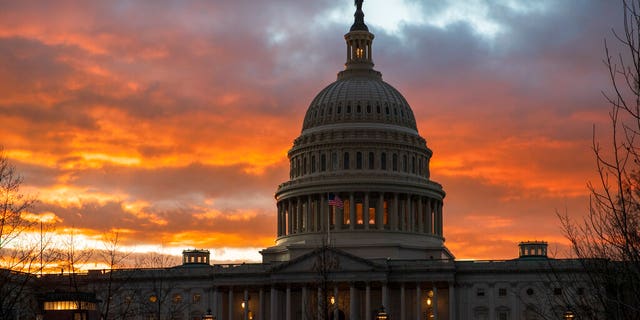
The U.S. Capitol is seen at sunset in Washington, Jan. 24,
2019. Senate Majority Leader Mitch McConnell, R-Ky., appears to have the
votes to end the trial against President Trump. (Associated Press)
But Alexander, in his dramatic late-night statement
that came at the close of the Senate's session Thursday, torpedoed
Democrats' hopes that he would be the fourth Republican defector they
need. Alexander flat-out dismissed Democrats' "obstruction of Congress"
article of impeachment as "frivolous," citing the longstanding principle
of executive privilege. "There is no need to consider further the
frivolous second article of impeachment that would remove the president
for asserting his constitutional prerogative to protect confidential
conversations with his close advisers," Alexander said. At the
same time, he said Democrats had easily proven their case on the "abuse
of power" count that "the president asked Ukraine to investigate Joe Biden
and his son, Hunter" and that "the president withheld United States
aid, at least in part, to pressure Ukraine to investigate the Bidens." However,
Alexander, who is retiring, asserted that Trump's conduct did not
justify the extraordinary remedy of his immediate removal by the Senate,
especially in an election year.
"Let the people decide.” — U.S. Sen. Lamar Alexander, R-Tenn.
"I
worked with other senators to make sure that we have the right to ask
for more documents and witnesses, but there is no need for more evidence
to prove something that has already been proven and that does not meet
the United States Constitution’s high bar for an impeachable offense,"
Alexander said. “There is no need for more evidence to prove that the president asked Ukraine
to investigate Joe Biden and his son, Hunter; he said this on
television on October 3, 2019, and during his July 25, 2019, telephone
call with the president of Ukraine," he continued. "There is no need for
more evidence to conclude that the president withheld United States
aid, at least in part, to pressure Ukraine to investigate the Bidens;
the House managers have proved this with what they call a ‘mountain of
overwhelming evidence.’ There is no need to consider further the
frivolous second article of impeachment that would remove the president
for asserting his constitutional prerogative to protect confidential
conversations with his close advisers. “It was inappropriate for
the president to ask a foreign leader to investigate his political
opponent and to withhold United States aid to encourage that
investigation," he continued. "When elected officials inappropriately
interfere with such investigations, it undermines the principle of equal
justice under the law. But the Constitution does not give the Senate
the power to remove the president from office and ban him from this
year’s ballot simply for actions that are inappropriate."
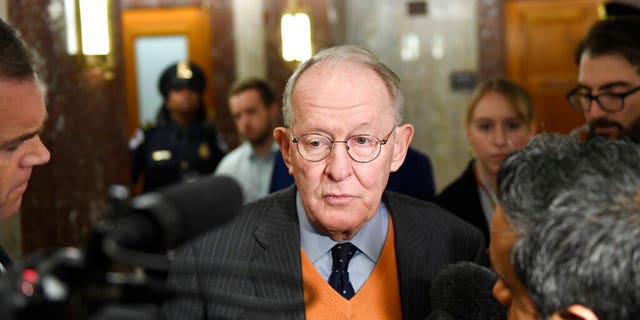
Sen. Lamar Alexander, R-Tenn., announced he would not support
additional witnesses in Trump's impeachment trial -- in a major win for
President Trump that likely ensures his imminent acquittal. (Associated
Press)
Indeed, Alexander said, “Our founding documents
provide for duly elected presidents who serve with ‘the consent of the
governed,’ not at the pleasure of the United States Congress. Let the
people decide.” “The question then is not whether the president
did it, but whether the United States Senate or the American people
should decide what to do about what he did," Alexander said. "I believe
that the Constitution provides that the people should make that decision
in the presidential election that begins in Iowa on Monday. The Senate
has spent nine long days considering this ‘mountain’ of evidence, the
arguments of the House managers and the president’s lawyers, their
answers to senators’ questions and the House record. Even if the House
charges were true, they do not meet the Constitution’s ‘treason,
bribery, or other high crimes and misdemeanors’ standard for an
impeachable offense."
The left reacts
Reaction
from the left was immediate and emotional. Mara Gay, a member of The
New York Times editorial board, lamented on MSNBC that the situation was
"really a capstone in a, just, total collapse of faith in American
institutions." Gay went on to say that her father grew up in the
Jim Crow-era South, and declared that Republicans' arguments were "quite
familiar" and reminded her of that time. "And you know, I have to
say, as somebody who grew up with a father who grew up in the Jim Crow
South, and in, uh, Jim Crow Detroit, a lot of what this has looked like
from the Republican side, the kind of a maddening and farcical nature of
this, the lack of good-faith argument, sounds very familiar to me. It's
actually very scary." Anchor Brian Williams, who notably lied repeatedly in order to embellish his time in Iraq, then said that Gay spoke for a "metric ton" of the network's viewers. The
Senate impeachment trial question-and-answer phase wrapped up Thursday
night after a total of 180 interrogatories, setting up the pivotal vote
Friday on whether to subpoena additional witnesses and documents, or to
hold a final vote on whether to impeach or acquit President Trump.
Dry January
Last
December, Senate Majority Leader Mitch McConnell, R-Ky., published the
Senate schedule for 2020. He only put 11 months on the calendar,
completely leaving out January, because no one quite knew what was in
store for the Senate with a possible impeachment trial. If the Senate
wraps up the trial Friday night, McConnell will have correctly predicted
how long it would take to acquit the president. Meanwhile, as
expected, Collins announced after the conclusion of questioning that she
supports hearing from a "limited" number of additional witnesses.
"I believe hearing from certain witnesses would give each side the
opportunity to more fully and fairly make their case, resolve any
ambiguities, and provide additional clarity," Collins said. "Therefore, I
will vote in support of the motion to allow witnesses and documents to
be subpoenaed. ... If this motion passes, I believe that the most
sensible way to proceed would be for the House Managers and the
President’s attorneys to attempt to agree on a limited and equal number
of witnesses for each side. If they can’t agree, then the Senate could
choose the number of witnesses.” Separately, though, Collins has
signaled reluctance about Democrats' case: On Wednesday, she was seen
shaking her head as Democrats attempted to explain why they felt
non-criminal conduct like "abuse of power" should be impeachable. GAME OVER': TRUMP DECLARES VICTORY AFTER BOLTON VIDEO EMERGES Trump
defense counsel Patrick Philbin said late Thursday that if Democrats
want to "go down the road" of adding more witnesses, then Trump's
team would push aggressively to learn more about the Ukraine whistleblower's contact with Democrats in the House prior to filing his complaint, as well as the whistleblower's own apparent partisan bias. Additionally,
Trump's defense team argued that Democrats contradicted themselves by
saying their case was "overwhelming" and that Trump was guilty beyond
"any doubt" -- even as they insist that they need to call more witnesses
and see more evidence. Momentum has been shifting away from a vote in favor of witnesses, ever since Trump tweeted a link Wednesday
to an interview of Bolton in August 2019 where he discusses Ukraine
policy. In the Radio Free Europe/Radio Liberty interview clip,
Bolton makes no mention of any illicit quid pro quo, and acknowledges,
as Republicans have claimed, that combating "corruption" in Ukraine was a
"high priority" for the Trump administration.
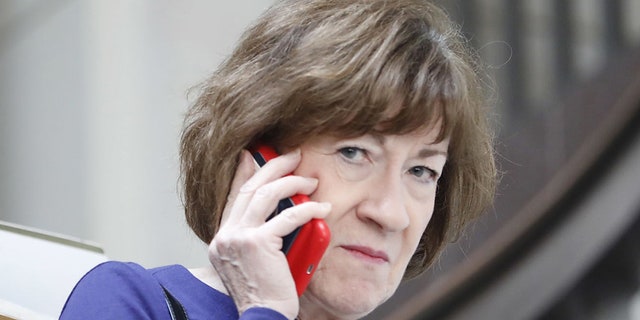
Sen. Susan Collins, R-Maine, announced she supported hearing from a
limited number of addiitonal witnesses. She is a key moderate swing
vote.
Bolton also called Trump's communications with
Ukrainian President Volodymyr Zelensky "warm and cordial," without
mentioning any misconduct. It seemingly contradicted reported assertions
in Bolton's forthcoming book alleging that Trump explicitly told him he
wanted to tie military aid to Ukraine to an investigation into Joe and
Hunter Biden. Trump captioned the video: "GAME OVER!"
Dems' headscratchers
House impeachment manager Rep. Hakeem Jeffries, D-N.Y., and presidential contender Sen. Elizabeth Warren, D-Mass., raised eyebrows during the proceedings Thursday -- including from Chief Justice Roberts. At
one point Thursday afternoon, Jeffries argued that the Steele dossier
-- written by a foreign ex-spy and dependent in part on Russian sources
-- did not constitute improper foreign election interference because the
Hillary Clinton campaign and Democratic National Committee (DNC) paid for the dossier, rather than receiving it at no cost. His
claim came in response to a question from Sen. Richard Burr, R-N.C.,
that was aimed at arguing how the Democrats wouldn't want to apply their
standards to their own candidates. "Hillary Clinton's campaign
and [the] Democratic National Committee hired a retired foreign spy to
work with Russian contacts to build a dossier of opposition research
against their political opponent, Donald Trump. Under the House
managers' standard, would the Steele dossier be considered foreign
interference in the U.S. election, a violation of the law, and/or an
impeachable offense?" Burr asked. Jeffries then rose and declared,
"The analogy is, uh, not applicable to the present situation because,
first, to the extent that opposition research was obtained, it was
opposition research that was purchased." He then accused Republicans of avoiding facts and trying to distract from Trump's conduct. Jeffries'
response drew mockery online from a slew of commentators -- "Cut a
check to Ukraine. We're done here," wrote one -- and an immediate rebuke
in the chamber from Trump attorney Jay Sekulow. "So, I guess you
can buy -- this is what it sounds like -- you can buy foreign
interference? You can purchase it? You can purchase their opposition
research and I guess it's OK?" he asked. WATCH THE FULL JEFFRIES MELTDOWN MOMENT HERE One
of the dossier's foreign sources was the former deputy foreign minister
for Russia, Vyacheslav Trubnikov -- a known Russian intelligence
officer. Much of the Steele dossier has been proved unsubstantiated,
including the dossier's claims that the Trump campaign was paying
hackers based out of a nonexistent Russian consulate in Miami or that
ex-Trump lawyer Michael Cohen traveled to Prague to conspire with
Russians. Former Special Counsel Robert Mueller
also was unable to substantiate the dossier's claims that Page had
received a large payment relating to the sale of a share of Rosneft, a
Russian oil giant, or that a lurid blackmail tape involving the
president existed. Nevertheless, the FBI
relied heavily on the dossier to obtain a secret surveillance warrant
to monitor a former member of the Trump campaign, Carter Page. News of
that warrant leaked, and together with the dossier's salacious
accusations, fueled months of unfounded speculation that the Trump
campaign had conspired with Russia. GRASSLEY: US INFORMANT MAY HAVE RECEIVED TAXPAYER FUNDS FOR COUNTER-INTEL OP ON TRUMP CAMPAIGN Separately,
at the Senate impeachment trial Thursday, Warren posed a question that,
by rule, was read aloud by Roberts -- and even Democrats in the chamber
appeared visibly puzzled by the interrogatory. "At a time when
large majorities of Americans have lost faith in government, does the
fact that the chief justice is presiding over an impeachment trial in
which Republican senators have thus far refused to allow witnesses or
evidence contribute to the loss of legitimacy of the chief justice, the
Supreme Court and the Constitution?" Roberts read from the card handed
to him by the clerk. When he finished reading the question --
explicitly posed to the House impeachment managers -- Roberts pursed his
lips and shot a chagrined look. After a moment, Rep. Adam Schiff, D-Calif., the lead impeachment manager, appeared at the dais to answer the question -- standing mere feet in front of Roberts. 'COUP HAS STARTED,' UKRAINE WHISTLEBLOWER'S ATTORNEY PROMISED IN 2017, VOWING TO IMPEACH AND 'GET RID OF' TRUMP Schiff
appeared to try to distance himself from Warren's question, offering a
short answer to the question before speaking at length about a
tangential exchange. "I would not say that it leads to a loss of
confidence in the chief justice," Schiff said, adding that Roberts has
thus far "presided admirably." He then quickly pivoted to a
criticism of President Trump and a conversation he had about the
impeachment trial with Rep. Tom Malinowski, D-N.J.
Whistleblower showdown
Justice Roberts shut down a question Thursday from Sen. Rand Paul, R-Ky., that mentioned the name of the alleged Ukraine whistleblower, prompting Paul to storm out of the impeachment trial and hold an impromptu news conference to read the question anyway. The clash came after the chief justice, who is presiding over the trial, similarly rebuffed Paul a day earlier. (Paul, according to reporter Niels Lesniewski,
was apparently fuming afterward, shouting to a staffer: "I don't want
to have to stand up to try and fight for recognition. ... If I have to
fight for recognition, I will.") JUSTICE ROBERTS BLOCKS SEN. PAUL FROM NAMING WHISTLEBLOWER, SOURCE SAYS – AND PAUL MAY FORCE THE ISSUE “As
you may have noticed, we had something slightly atypical downstairs. I
asked a question and the question was refused,” Paul told reporters
after exiting the Senate chamber and dashing upstairs to the Senate TV
studio. After seeing Paul’s question on a notecard, Roberts ruled
against presenting it in the trial: "The presiding officer declines to
read the question as submitted,” he said. Paul asserted that
Roberts' ruling was wrong because no one knows if the name of the person
on his question card is the whistleblower. “I think it was an incorrect finding," Paul said. Paul
wanted to ask whether Schiff, who chairs the House Intelligence
Committee, and the White House counsel were aware that an intel
committee staff member had a close relationship with the reported
whistleblower when they were on the National Security Council together. “How
do you respond to reports that [the whistleblower] may have worked
together to plot impeaching the president before there were formal House
impeachment proceedings?” Paul said he wrote on the card. He
added that his question “makes no reference to anybody who may or may
not be a whistleblower,” and that it was curious that Roberts apparently
assumed the individual he named was, in fact, the whistleblower. Schiff has made public inconsistent statements concerning the House Intelligence Committee's contacts with the whistleblower. He first denied that his panel had such contact, then reversed course and admitted that members of the committee had spoken to the whistleblower. Paul's question reportedly included the names of two individuals. Fox News has not confirmed the whistleblower's name. Federal law protects whistleblowers
only from retaliation in the workplace and does not ensure their
anonymity; Republicans have disputed whether this particular
whistleblower would even qualify for those limited protections, saying
his complaint concerns a policy dispute and does not allege criminal or
civil wrongdoing by the president. Eventually, Republicans were
allowed to ask essentially the same question Paul proposed, except
without the whistleblower's name in it. Schiff declined to respond,
calling it a smear. Specifically, Republicans asked Schiff, “Why
did your committee hire Sean Misko the day after the phone call between
President Trump and Zelensky?” According to unconfirmed reports,
Misko was overheard telling the alleged whistleblower, “We need to do
everything we can to take out the president," at a National Security
Council meeting. It could be, Republicans have asserted, that the
whistleblower coordinated his complaint with Schiff's panel for partisan
reasons -- a disclosure that, if true, would likely undermine the
credibility of the impeachment proceedings and possibly expose Schiff to
his own "abuse of power" allegations. Thus far, the impeachment effort
has arguably been elevated in importance from normal partisan bickering
in part by the gravitas afforded to the supposedly well-meaning
whistleblower at the center of the case. SCHIFF, IN REVERSAL, ADMITS HE SHOULD HAVE BEEN CLEAR ABOUT HIS OWN CONTACT WITH THE WHISTLEBLOWER Republicans have sought more information on the whistleblower ever since the intelligence community's internal watchdog found several indicators that the person might have a political bias. Fox News has previously reported that the whistleblower is a registered Democrat and had a prior work history with a senior Democrat running for president. Additionally, the whistleblower faces an Intelligence Community Inspector General (ICIG) complaint for
allegedly violating federal law by raising money ostensibly to pay for
his legal fees, including money that could be coming from foreign
sources. The whistleblower's attorney, Mark Zaid, openly admitted in
2017 that a "coup" had started against the president from within the
administration, and that CNN's coverage would play a "key role" in the
effort. On Wednesday, Schiff again denied knowing the identity of
the whistleblower, while Republicans accused him of deliberately lying.
Schiff repeatedly shut down GOP questions during the House impeachment
proceedings concerning White House leaks -- even though doing so at one
point seemingly demonstrated that Schiff likely knew the whistleblower's
identity. “Lieutenant Colonel [Alexander] Vindman, did you
discuss the July 25 phone call [between Trump and Ukraine's president]
with anyone outside the White House on July 25 or the 26 and if so, with
whom?” Rep. Devin Nunes, R-Calif., asked last year. GOP SEN ACCUSES DEM WITNESS OF CONSPIRING TO BRING DOWN TRUMP “Yes.
I did,” responded Vindman, who has also claimed not to know the
whistleblower's identity. He said he had spoken to Deputy Assistant
Secretary George Kent, but before he could mention the other person,
Schiff intervened and urgently blocked the questioning. “We
need to protect the whistleblower," Schiff interjected. "Please stop. I
want to make sure that there is no effort to out the whistleblower
through these proceedings. If the witness has a good faith belief that
this may reveal the identity of the whistleblower, that is not the
purpose that we’re here for. I want to advise the witness accordingly.”
Dershowitz faces off with Toobin
Harvard
Law Professor Alan Dershowitz, a member of Trump's defense team, wasn't
in the Senate chamber Thursday due to family obligations. But he did
post on Twitter and make a lengthy appearance on CNN, telling the
network that it should stop mischaracterizing his arguments on
impeachment. The moment was somewhat personal for Dershowitz, as
CNN's chief legal analyst Jeffrey Toobin is one of his former students
at Harvard. Multiple media outlets, including CNN,
misrepresented Dershowitz throughout the week as saying that presidents
can do "anything" as long as they can argue it's in the "public
interest." Additionally, several politicians, including Sen. Cory
Booker, D-N.J., falsely claimed that Dershowitz argued Trump's conduct
was "OK." In fact, Dershowitz maintained that criminal or
criminal-like conduct is impeachable, regardless of its motivation. And
he did not endorse Trump's behavior. Instead, Dershowitz asserted the
Senate should not be in the business of removing elected presidents
based on nebulous and unconstitutional "abuse of power" or "obstruction
of Congress" charges that the framers expressly rejected. "I have
never said that a president can do anything if he believes that his
election is in the public interest to get reelected," Dershowitz told
Toobin and CNN anchor Wolf Blitzer. "That's simply false. I started my
speech in the Senate by saying I completely support the impeachment of
[Richard] Nixon, who everything he did, he did because he wanted to get
reelected. And clearly he thought his reelection was in the public
interest." He added: "I never said, never suggested -- and it was a
total distortion, not a misunderstanding, distortion of my point --
that I think a president can do anything ... It's nonsense. And your
network should never have said that." "What's wrong with looking
at whether a president has a corrupt intent in his actions?" Toobin
responded. "I mean, that seems to be the heart that is the issue here." "It's
not, it's not," Dershowitz said. "The question is how you define
corrupt, and my argument was there's a big difference between taking a
bribe -- I gave an example right on the floor of the Senate. If the
president said, 'I'm not giving you your money, I'm withholding the
money unless you let me build a hotel and have my name on it or give me a
million-dollar kickback.' That's corrupt. That's clear." Dershowitz
went on to say it would be a "dangerous" principle to say that a
president can be impeached if he acts, in part, due to personal
political motivation, because "it will allow impeachment of any
president who look to his own reelectability as even a small factor." To
demonstrate that point in the Senate on Wednesday, Dershowitz made
thinly veiled references to former President Barack Obama's refusal to
send military aid to Ukraine, as well as his failed, unenforced "red
line" warning for Syria not to use chemical weapons. Obama was also caught on a hot microphone promising Russia's president he would have "more flexibility" on missile defense issues after the 2012 election. "Let's
consider a hypothetical," Dershowitz said. "Let's assume that President
Obama had been told by his advisers that it really is important to send
lethal weapons to the Ukraine. But then he gets a call from his
pollster and his political adviser, who says we know it's in the
national interest to send lethal weapons to the Ukraine, but we're
telling you that the left-wing of your party is really going to give you
a hard time if you start selling lethal weapons and potentially get
into a lethal war with Russia. Would anybody here suggest that is
impeachable?" WATCH: DERSHOWITZ TURNS TO HOUSE DEMS, UNLOADS CONSTITUTIONAL ARGUMENT IN DRAMATIC MOMENT AT IMPEACHMENT TRIAL He
continued: "Or let's assume President Obama said, 'I promise to bomb
Syria if they had chemical weapons. But I'm now told by my pollster that
bombing Syria would hurt my electoral chances.' Simply not impeachable
at all." Earlier in the day, also on CNN, Harvard Law School
professor Nikolas Bowie disputed Dershowitz as to whether
"maladministration" -- a term the framers rejected as a viable grounds
for impeachment -- was essentially the same as "abuse of power," one of
the Democrats' charges against Trump. Bowie called Dershowitz's
interpretation a "joke," in a slam that was especially notable because
Dershowitz had cited Bowie's scholarship on the Senate floor. Dershowitz
was simply wrong, Bowie argued, that maladministration is synonymous
with abuse of power. The former is equivalent to doing your best but
turning in poor work product, he argued; the latter is fundamentally
criminal, even if it's not defined anywhere in a statute.
What's ahead
The
impeachment trial reconvenes at 1 p.m. ET Friday. The Senate will
immediately go to up to four hours of arguments by the Democratic
impeachment managers and the defense counsel. There could also be
deliberation by senators, which might involve a closed session or even
debate among the senators themselves on the floor. Regardless,
once that’s done, the Senate will debate a proposal to subpoena
documents or witnesses. That could consume up to two hours on the floor –
and will not unfold until the evening. After that’s complete, the
Senate will take what is termed the “gateway” vote as to whether or not
to open the door to subpoenaing witnesses or documents. If,
contrary to expectations, senators vote to open up the gateway to
witnesses or documents, a multitude of proposals could follow over
several hours from McConnell and Senate Minority Leader Chuck Schumer,
D-N.Y. These would likely be various slates of witness proposals.
Democrats would like to get Republicans on the record opposing certain
witnesses. Democrats would then try to boomerang that vote on vulnerable
Republicans this fall and argue that McConnell tilted the playing field
in the trial toward the president.
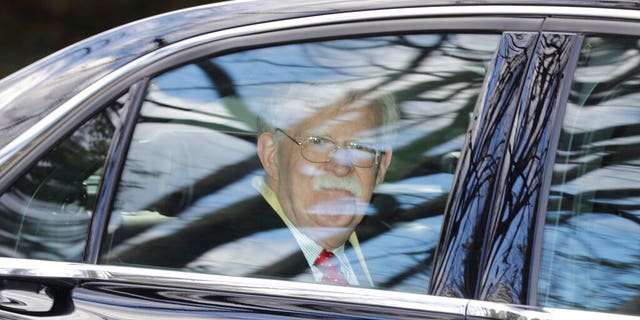
Former National security adviser John Bolton leaves his home in
Bethesda, Md. Tuesday, Jan. 28, 2020. President Donald Trump's legal
team is raising a broad-based attack on the impeachment case against him
even as it mostly brushes past allegations in a new book that could
undercut a key defense argument at the Senate trial. (Associated Press)
SOURCE TELL FOX NEWS: GOP DEVELOPS WITNESS 'PLAN B' POISON PILL PACAKGE, FLOATS CALLING HUNTER BIDEN, ADAM SCHIFF If
for some reason the Senate votes in favor of an individual witness,
then the trial is far from done. The Senate trial rules require senators
to depose the witness in private. That could come in days or weeks, but
in the meantime, the trial on the floor would go dark. (However, the
Senate could consider other business during this period. The Senate
would eventually have to vote to summon a given witness to the floor.) If
the Senate rejects the gateway vote, the impeachment trial is likely on
a glide path to conclusion. There could be additional debate after
that; the Senate could consider a motion to dismiss the articles;
or there could be final verdict votes on both articles of impeachment. WHOOPS: BIDEN CAMPAIGN TOUTS UKRAINE ACTIVIST WHO CALLED HUNTER BIDEN'S ACTIONS 'VERY BAD' It
remains possible the Senate could take final votes on each article of
impeachment -- there will be separate, distinct votes on abuse of power
and obstruction of Congress -- late Friday evening, in the wee hours of
Saturday morning or later in the day Saturday. Several Democratic
senators have privately signaled they want the trial to wrap up quickly
-- partially out of exhaustion, but also because Sens. Amy Klobuchar and
Elizabeth Warren urgently want to get back to Iowa to campaign ahead of
next week's critical caucuses. Fox News' Chad Pergram, Mike Emanuel, Marisa Schultz and Charles Crietz contributed to this report.