Presumptuous Politics

Monday, February 10, 2020

Trump budget would cut $4.4T in spending, boosting defense while slashing safety nets, foreign aid


The White House on Sunday unveiled a $4.8 trillion budget proposal that would slash spending dramatically on foreign aid and social safety nets, while including $2 billion for a southern border wall and substantially boosting funding to NASA, the Department of Veterans Affairs and the Department of Homeland Security.
Fox News has confirmed the details of the budget, which The Wall Street Journal first reported. The package, set to be formally announced on Monday, as-is stood little chance of passage in the House of Representatives, which the Democrats have controlled. Still, it served as a signal of the president's priorities as Republicans have aimed to retake the chamber in the 2020 elections.
The plan aims to eliminate the federal deficit -- or the difference between spending and revenue that is slated to exceed $1 trillion this year -- by 2035. In all, the White House is seeking to cut $4.4 trillion in federal spending over the next 10 years, including reductions in spending on food stamps and federal disability benefits through more stringent work and eligibility requirements.
Total cuts to "non-defense discretionary programs,” which do not include Medicare or Social Security, amount to $2 trillion in savings under the plan. The budget additionally calls for renewing the Trump administration's tax cuts for individuals and families that would otherwise expire in 2025. Modifications in Medicare prescription-drug pricing would account for $130 billion in savings.
"Working together, the Congress can reduce drug prices substantially from current levels," Trump said during last week's State of the Union address. "I have been speaking to Senator Chuck Grassley of Iowa and others in the Congress in order to get something on drug pricing done, and done properly. I am calling for bipartisan legislation that achieves the goal of dramatically lowering prescription drug prices. Get a bill to my desk, and I will sign it into law without delay."
House Speaker Nancy Pelosi, D-Calif., bashed the plan Sunday night. "The budget is a statement of values and once again the president is showing just how little he values the good health, financial security and well-being of hard-working American families."
Foreign aid would be reduced by 21 percent, in keeping with the president's push to have other countries pay what he calls their "fair share" for their own defense. Trump's temporary suspension of aid to Ukraine helped trigger impeachment proceedings; one of Republicans' defenses was that the president has long sought to suspend or reduce U.S. financial commitments overseas -- especially to notoriously corrupt countries.
The Environmental Protection Agency (EPA) would face a massive 26-percent reduction in funding. The Trump administration has rolled back Obama-era EPA regulations and oversight, saying they have hurt the economy for little benefit.
The proposal also would cut the Department of Housing and Urban Development's budget by 15 percent, while incorporating $2.8 billion for grants to help combat homelessness. And, The Centers for Disease Control and Prevention would see a 9 percent cut, although its $4.3 billion allocation for fighting infectious disease would remain amid the coronavirus spread.
Homeland Security's budget would grow by 3 percent; the National Nuclear Security Administration's by 19 percent; and the Department of Veterans Affairs' by 13 percent.
The Fiscal Year 2021 budget further aims to increase military spending 0.3 percent to $740.5 billion. It doubles spending on artificial intelligence from $973 million to nearly $2 billion by 2020, including a focus on quantum computing.
Fox News reported this weekend on the budget's 12-percent hike in NASA funding, with the goal of returning astronauts to the moon. No one has been to the moon since 1972 under NASA's now-shuttered Apollo program.
Since taking office, Trump has made space exploration one of its top priorities, and his administration has set a target of 2024 for the next lunar landing.
NASA's new space program named Artemis, for the Greek goddess of the moon and sister to Apollo, has aimed to put the first woman on the moon. Long-term, NASA has wanted to establish a sustainable human presence on the moon with the goal of sending humans to Mars in the 2030s.
Trump’s budget specifically would increase NASA spending from about $22.6 billion to $25.2 billion in fiscal 2021, one of the biggest spending increases requested since the 1990s. $3 billion will go toward new funding to develop human landers.
The big lunar budget request was in addition to Trump's other astronomical project: the Space Force. Trump signed an Oval Office directive last February to make the Space Force the sixth branch of the military, with a mission to patrol the orbit and protect the U.S. from attacks.
"Just weeks ago, for the first time since President Truman established the Air Force more than 70 years earlier, we created a brand-new branch of the U.S. armed forces," Trump said at the State of the Union. "It is called the Space Force. Very important."
Fox News' Chad Pergram, John Roberts and Marisa Schultz contributed to this report.

Manchin hits back after Trump calls him 'weak,' 'corrupt' over impeachment vote


Sen. Joe Manchin, D-W.Va., on Saturday defended his vote to convict President Trump on two charges of impeachment, even as Trump mocked him on Twitter, dubbing him "Joe Munchkin."
Manchin, who has represented a state Trump carried by 40 percentage points in 2016, previously voted against his own party on some issues; among them, he was the only Democrat who voted to confirm Supreme Court Justice Brett Kavanaugh in 2018. Manchin seemed on the fence about whether to acquit Trump in the days leading up to last Wednesday's vote but said he ultimately voted with his party because Trump's defense team refused to introduce key witnesses and produce relevant documents necessary to prove the president's innocence.
MANCHIN DEFENDS IMPEACHMENT TRIAL VOTE TO OUST TRUMP, SAYS HE WANTED MORE EVIDENCE TO ACQUIT
Trump goaded Manchin, telling him to "read the transcript" of the July 25, 2019 phone call. Democrats had alleged Trump attempted to strongarm the president of Ukraine into opening an investigation into 2020 presidential candidate Joe Biden in exchange for military aid; Trump and the White House have denied he did anything wrong.
"I’ve read the transcripts thoroughly & listened to the witnesses under oath. Where I come from a person accused defends themselves with witnesses and evidence," Manchin responded on Twitter.
In the days since his acquittal, Trump has attacked the probe, calling it a "hoax" and lambasting the Democrats and lone GOP senator, Mitt Romney of Utah, who voted to convict him.
Trump called Manchin a "puppet Democrat Senator" and claimed his constituents were "furious" with Manchin's vote.
"The people of West Virginia will no longer look at weak & pathetic Joe Manchin the same (I got the Pension Bill approved, Manchin couldn't do it)," Trump tweeted. "The wonderful people of Utah will never look at "grandstander" Mitt Romney with anything but contempt & disgust!"
Manchin fired back, accusing Trump of taking credit for key legislation that raised the minimum pension for state employees, including teachers.
"Pres. Trump - no Democrat has worked harder in a bipartisan way in the hopes that you would succeed. The people of WV know exactly who has worked day & night for the last 5 years to secure their healthcare & pensions & it wasn’t you," Manchin tweeted.

Reporter's Notebook: Trump's impeachment trial and the power of prayer


Humorist Will Rogers may have summed it up best.
“All I can say for the United States Senate is that it opens with a prayer and closes with an investigation,” he said.
Support it or not, the Senate just completed a rancorous impeachment trial. Now, President Trump has been contesting whether House Speaker Nancy Pelosi, D-Calif., truly prayed for him, as she often has intimated at her weekly news conferences.
Harvard professor Arthur Brooks delivered the keynote speech at the National Prayer Breakfast in Washington the day after the trial concluded. Brooks asserted Washington was gripped by a “crisis of contempt and polarization.” He urged those in attendance to “love your enemies.”
But, speaking at the same breakfast, Trump was having none of it.
“I don’t know if I agree with you,” the president told Brooks and those assembled at the prayer breakfast.
First, Trump couldn’t contain his enmity for Sen. Mitt Romney, R-Utah, the sole Republican senator who voted to convict him on one article of impeachment.
In his floor speech announcing he’d vote to convict the president, Romney observed that at the outset of the trial, senators “swore an oath before God to exercise impartial justice. I am profoundly religious. My faith is at the heart of who I am. I take an oath before God as enormously consequential.”
Romney added that his “promise was before God.” He wasn’t beholden to Trump or the rest of the Senate Republican Conference – despite efforts by colleagues to persuade the Utah Republican to acquit Trump.
Yet, there at the National Prayer Breakfast, the president hectored Romney for speaking about his faith when deciding how to cast his votes in the trial.
“I don’t like people who use their faith as justification for doing what they know is wrong,” Trump said.
Pelosi was seated a few spots away from the president.
“Nor do I like people who say ‘I pray for you’ when you know that is not so,’” Trump added, referring to the speaker’s intercessions on his behalf.
Back at the Capitol that same morning, Pelosi railed against Trump for contesting how Romney and the speaker both said they turned to faith.
“Whatever he said, it was just so completely inappropriate,” Pelosi said of Trump, “especially at a prayer breakfast.”
But then, it was Pelosi who called into question whether “the president understands prayer or people who do pray.”
She reiterated that she prayed “hard for him, because he is so off the track of our Constitution, our values, our country.”
The California Democrat noted she would continue to “pray for him, and I do so sincerely and without anguish.”
And, just as Trump challenged the sincerity of the speaker, Pelosi wondered about the president, too.
“He’s talking about things he knows little about: faith and prayer,” Pelosi said.
Someone who has known something about faith and prayer: Senate Chaplain Barry Black. Prayer permeated Trump’s impeachment trial on a daily basis. Many TV networks took in the daily invocations delivered by Black, live on the air. In his nearly two decades as Senate Chaplain, Black has been known for infusing daily prayers, which have opened Senate sessions, with devotionals related to the business at hand on the floor.
On the day the Senate received the articles of impeachment from the House, Black prayed that the Lord would “strengthen our lawmakers for their journey. Prepare them for the ravages of the valley and the chill of the mountain summits.” The next day, Black prayed that God would guide “our lawmakers to make right choices in challenging times.” On the first formal day of arguments at the trial, Black prayed that God would grant “wisdom to the distinguished Chief Justice John Roberts as he presides.” He noted that since senators had “become jurors, remind them of Your admonition in 1 Corinthians 10:31, that whatever they do should be done for Your Glory. Help them remember that patriots reside on both sides, of the aisle. That words have consequences.”
Black also prayed for “civility” during the trial.
On January 24, Black prayed that senators would “respect the right of the opposing side to differ regarding convictions and conclusions. Give them the wisdom to distinguish between facts and opinions without lambasting the messengers.” In the lone Saturday session of the Senate trial, Black prayed that “we trust the power of Your prevailing providence to bring this impeachment trial to the conclusion You desire.”
On the following Monday, Black had two nuggets for senators. He observed the death of Kobe Bryant and his daughter Gianna, and, later, noted that it was the birthday of Roberts.
“As this impeachment process unfolds, give our senators the desire to make the most of their time on Earth,” Black said.
Black also prayed for God to “guard us from those who smile but plan evil in their hearts.”
As the trial moved tilted toward its final stages, Black reminded senators that “they alone are accountable to You for their conduct,” adding “we always reap what we sow.” Black also prayed that God would “guide our lawmakers. May they strive to permit justice to roll down like waters and righteousness like a mighty stream.”
There’s always been a fine line for House and Senate chaplains to walk when tangling with political business in their prayers – yet refraining from delivering a vanilla, indistinctive message which doesn’t resonate.
The late Senate Chaplain Richard Halverson raised eyebrows in 1994, when he prayed for O.J. Simpson on the Senate floor following the arrest of the football star after the nationally televised car chase.
“Our nation has been traumatized by the fall of a great hero,” prayed Halverson. “May he be comforted by the sense of the presence of the God who loves him.”
The Senate wrestled with a sweeping telecommunications policy bill in 1995. One question in the legislation was how to deal with obscene material -- which Senate Chaplain Lloyd Ogilvie noted was “littering this information superhighway.” Opening the Senate one morning in the middle of the telecommunications debate, Ogilvie prayed that God would “guide the senators as they consider how to control computer pollution.”
Sen. Patrick Leahy, D-Vt., took issue with Ogilvie’s prayer. Leahy argued that Ogilvie went too far and “it seemed he was part of the debate.” Leahy suggested that Ogilvie should leave the legislating to the senators.
“Perhaps he should allow us to debate these issues,” said Leahy of Ogilvie.
Such is the power of prayer now in the nation’s capital.
Perhaps Washington doesn’t have a prayer now... at least one to which everyone can agree.

Sunday, February 9, 2020

Democratic Party 2020 Cartoons


Doubts persist for Dem voters about female nominee in 2020


PLYMOUTH, N.H. (AP) — In a perfect world, Susan Stepp, a 73-year-old retiree, would be voting vote for Massachusetts Sen. Elizabeth Warren in New Hampshire’s Democratic presidential primary Tuesday, she says. But that won’t be happening.
“I am not sure a woman is the best candidate to go up against Trump,” Stepp said recently as she stood in the back of a conference room listening to tech entrepreneur Andrew Yang as part of her hunt for the best candidate to challenge the Republican incumbent.
Stepp’s concern has coursed through the Democratic primary for months, registering in polling, interviews and, now, the first votes cast. In Iowa’s caucuses last Monday, many Democrats did not prioritize breaking the gender barrier to the Oval Office and they viewed being a woman as a hindrance rather than an advantage in the race.
Only about one-third of Iowa caucusgoers backed a female candidate. Topping the caucus field were two men, former South Bend, Indiana, mayor Pete Buttigieg and Vermont Sen. Bernie Sanders,. Women were only slightly more likely than men to back one of the three women in the race, according to AP VoteCast, a survey of more than 3,000 Iowa voters.
Most Iowa Democrats said it was important for a woman to be president in their lifetimes. But many voters, including about half of all women, said a female nominee would have a harder time beating Donald Trump in November.
“He will just use that against her, like he did Hillary,” Stepp said, looking back to Trump’s 2016 race against Hillary Clinton in 2016. “He doesn’t debate. He just insults. I don’t think he would have that same effect if he went up against a strong man.” Stepp said she plans to vote for Sanders.
Those perceptions present an undeniable headwind for the women in the race, who have spent months making the case that a woman can win. As they seek success in New Hampshire, both Warren and Minnesota Sen. Amy Klobuchar must work to energize voters about the chance to make history and persuade them it is possible this year, in this race against this president.
“In 2020, we can and should have a woman for president,” Warren said at a CNN town hall this past week, days after taking third in Iowa. Klobuchar came in fifth. The Associated Press has not called a winner in the Iowa caucus because the race is too close to call.
Iowans appeared open to that message. Most Democratic voters in the state, 72%, said they thought it is important for the U.S. to elect a woman president in their lifetimes, and that included roughly two-thirds of men.
But most were resolved to put it off for another election. That was true of men and women. The survey found 34% of women voted for Warren, Klobuchar or the longshot candidacy of Hawaii Rep. Tulsi Gabbard, compared with 28% of men.
Overall, many Democratic voters thought it would be harder for a woman to beat Trump. About half of women said they thought a female nominee would have a harder time, compared with about 4 in 10 men. Men who harbored that concern were significantly less likely to vote for a woman than a man.
Experts say the findings are in line with traditional patterns in voting by gender — women usually don’t coalesce around one of their own. “Nobody’s going to win an election by unifying women because women are not a unified bloc,” said Kathy Dolan, a political scientist at the University of Wisconsin-Milwaukee. “There’s no evidence that suggests for us that women candidates vote much more for women candidates than men.”
Analysts say it’s no surprise that women express more anxiety about a woman defeating Trump, given that through personal experience, they’re familiar with the barriers of sexism.
“Women are more likely to have experienced or observed gender discrimination or sexism,” said Jill Lawless, a political scientist at the University of Virginia.
Notably, experts said, there’s no data showing that women underperform or outperform men in general elections. But Lawless noted that having to fight that perception that a woman cannot win may actually work against the female candidates in this race.
“Anytime they’re trying to convince voters that a woman can beat Donald Trump, they’re not talking about health care or foreign affairs,” she said.
Warren spent months trying to avoid the gender issue, seeing questions about pervasive sexism in politics as a lose-lose proposition. Either she acknowledged that being a woman created all kinds of challenges because of inherent bias, and appeared to be whining about it, or she said it wasn’t a problem and would therefore seem out of touch, she told aides.
But, since the New Year, Warren has shifted her strategy dramatically, taking the issue head on. She raised it directly in asserting that Sanders had suggested a woman couldn’t win the White House, and, after they clashed about it during a debate in Iowa, refused to shake his hand on national television.
In the final days before Iowa, Warren began talking about a woman’s electability. She now repeats at every campaign stop that women have performed better in recent elections than men, underscoring the role of female candidates who helped Democrats retake control of the House in 2018.
“The world has changed since 2016,” Warren said during a rally this past week in Keene, New Hampshire. “Women have been outperforming men in competitive races. Can women win? You bet women can win.”
Pushpa Mudan, a 68-year-old retired physician, is one of those anxious women who’s sticking to her guns. She attended a Warren rally on Wednesday at a community college in Nashua, New Hampshire.
She said she’s seen Warren three times in recent months, and also attended a recent Klobuchar rally, and is still deciding between the two, though she’ll likely pick Warren in the primary. Mudan said electing a woman as president is a top issue for her, but she’s afraid that none will be able to compete with Trump.
“I think this country, for considering itself an advanced country, is very far behind the rest of the world by not having a woman at the highest position,” she said. “Places like Pakistan, Turkey have had a female president. Not here. But the way Trump puts them down, it is hard for any to make it, I think. It’s going to be very hard.”
__
Associated Press writers Will Weissert and Kathleen Ronayne in Manchester, New Hampshire, contributed to this report.

US says 2 soldiers killed, 6 wounded in Afghanistan attack

FILE - In this Aug. 19, 2019, file photo, a man waves an Afghan flag during Independence Day celebrations in Kabul, Afghanistan. An Afghan official Sunday, Feb. 9, 2020, said multiple U.S. military deaths have been reported in Afghanistan's Nangarhar province after an insider attack by a man wearing an Afghan army uniform. (AP Photo/Rafiq Maqbool, File)

KABUL, Afghanistan (AP) — Two U.S. soldiers were killed and six wounded in a so-called insider attack in eastern Afghanistan’s Nangarhar province late Saturday when an Afghan dressed in an Afghan army uniform opened fire, the U.S. military said.
A member of Nangarhar’s provincial council, Ajmal Omer, told The Associated Press that the gunman was killed. There have been numerous attacks by Afghan national army soldiers on their allied partners during 18 years of America’s protracted war in Afghanistan.
Six U.S. service members have been killed in Afghanistan since the start of 2020, including Saturday’s casualties. Last year, 22 U.S. service personnel died in combat there.
An Afghan defense ministry official, who was not identified because he was not authorized to speak to the media, said the shooter was an Afghan soldier who had argued with the U.S. forces before opening fire. He was not a Taliban infiltrator, the official said.
In a statement, the U.S. military said “an individual in an Afghan uniform opened fire on the combined U.S. and Afghan force with a machine gun. We are still collecting information and the cause or motive behind the attack is unknown at this time.”
Omer, the provincial council member, is from Nangarhar province’s Sherzad district, where he said the incident took place. An Afghan soldier was also wounded, Omer said.
The U.S. military said American and Afghan military personnel were fired on while conducting an operation in Nangarhar province.
Last July, two U.S. service members were killed by an Afghan soldier in the southern Kandahar province. The shooter was wounded and arrested. In September, three U.S. military personnel were wounded when an member of the Afghan Civil Order Police fired on a military convoy, also in Kandahar.
The incident came as Washington has sought to find an end to the war in Afghanistan.
Washington’s peace envoy Zalmay Khalilzad has been meeting with Taliban representatives in the Middle Eastern state of Qatar in recent weeks. He’s seeking an agreement to reduce hostilities to get a peace deal signed that would start negotiations among Afghans on both sides of the conflict.
In his State of the Union Address on Tuesday, President Donald Trump referenced the peace talks, saying U.S. soldiers were not meant to serve as “law enforcement agencies” for other nations.
“In Afghanistan, the determination and valor of our war fighters has allowed us to make tremendous progress, and peace talks are now underway,” he said.
___
Gannon contributed from Islamabad. Associated Press writer Lolita C. Baldor in Washington contributed to this report.

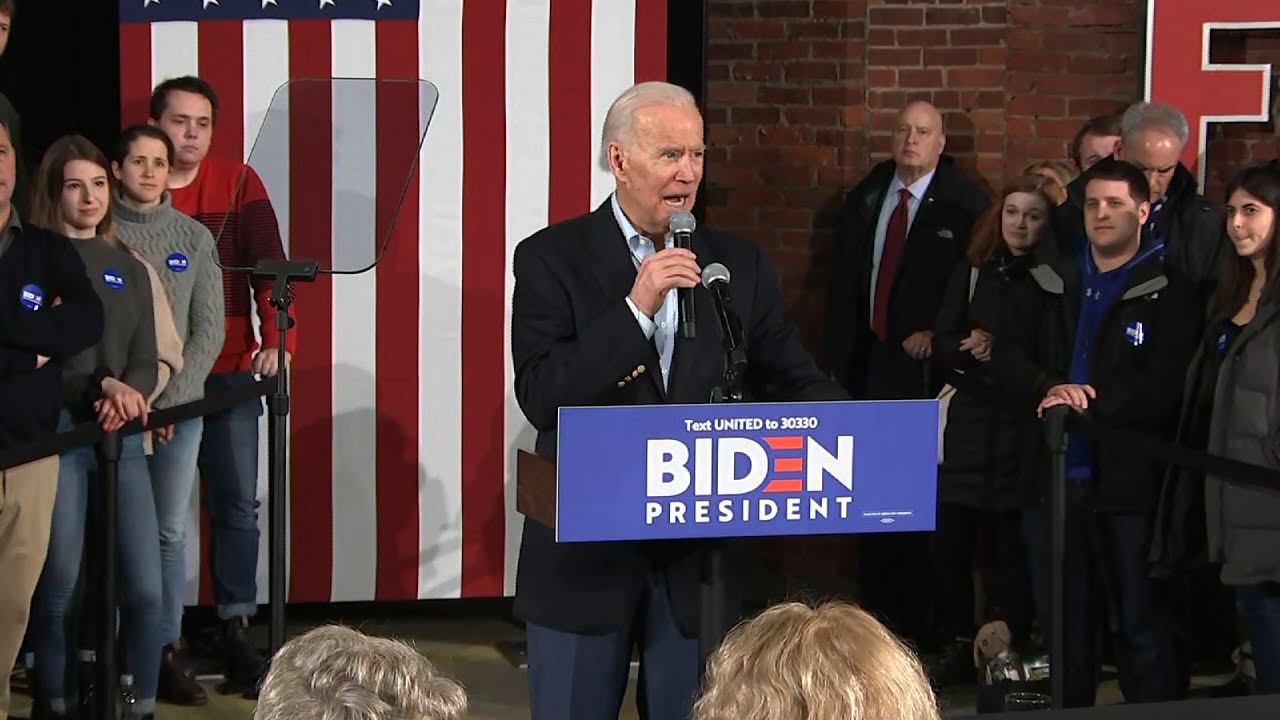
Biden tells NH Democrats that Buttigieg ‘not a Barack Obama’


MANCHESTER, N.H. (AP) — Scrambling to salvage his presidential campaign, Joe Biden escalated his criticism of Pete Buttigieg on Saturday, mocking Buttigieg’s experience as a small city mayor and cutting down the comparisons Buttigieg has drawn to the last Democratic president, declaring: “This guy’s not a Barack Obama.”
Biden’s biting attacks on Buttigieg’s relatively thin resume mark a new, more aggressive attempt to slow the momentum of the youngest candidate in the Democratic field. The 38-year-old emerged from Iowa in an effective tie with Sen. Bernie Sanders, but faces questions about whether his eight years as mayor of South Bend, Indiana — a city of about 100,000 people — prepared him for the presidency.
“I do not believe we’re a party at risk if I’m the nominee,” Biden told voters in Manchester. “I do believe we’re a party at risk if we nominate someone who has never held a higher office than the mayor of South Bend, Indiana.”
Buttigieg also faced criticism from Sanders, who said he had billionaires “by the dozens” contributing to his campaign.
“If you’re serious about political change in America, change is not going to be coming from somebody who gets a lot of money from the CEOs of the pharmaceutical industry,” Sanders said.
Both Sanders and Buttigieg appear in strong position in New Hampshire ahead of Tuesday’s primary, while Biden has conceded he expects to take a “hit” in the state.
ratio
Youtube video thumbnail

Biden’s campaign is urgently trying to recalibrate, shaking up its senior leadership and signaling that the former vice president won’t go down without a fight. On Saturday morning, the campaign posted an online video attacking Buttigieg that was one of the harshest intraparty broadsides of the Democratic primary.
The 90-second video compares Biden’s record as vice president with Buttigieg’s service as mayor. While Biden helped President Barack Obama pass sweeping health care legislation and orchestrate a bailout of the auto industry, the ad says, Buttigieg was installing decorative lights on bridges and repairing sidewalks.
Buttigieg’s inexperience is among his chief vulnerabilities as he pitches voters on his preparedness for the Oval Office. He’s argued that his tenure as mayor, particularly of a Rust Belt city, gives him a better feel for the concerns of voters Democrats need to win back in 2020. But he has not yet had to defend the substance of his record against the kind of specific attack Biden launched.
His campaign accused Biden of trivializing the work that goes on in small cities across the country, and of political desperation. The campaign also highlighted criticism from other mayors around the country who said Biden was denigrating the importance of small cities.
Buttigieg himself also issued a sharp retort Saturday night at a Democratic Party dinner in Manchester: “Americans in small rural towns in industrial communities and in pockets of our country’s biggest cities are tired of being reduced to a punchline by Washington politicians and ready for somebody to take their voice to the American capital.”
Buttigieg’s calls for generational change and his criticism of Washington has irked some of his rivals, including Biden, who has accused the former mayor of undercutting the work of the Obama administration.
Buttigieg has argued that while the Obama administration had successes, the country is in a different place than it was four years ago and requires new leadership. He’s also tried to draw comparisons to Obama, highlighting his ability to overcome questions about his own inexperience during the 2008 campaign.
The former vice president made clear on Saturday that he sees the comparison as ill-fitting.
“This guy’s not a Barack Obama,” he told reporters. “Barack Obama had laid out a clear vision of what he thought the international society should look like and what the order should be. Barack Obama had laid out in detail what he thought should happen with regard to the economy.”
Biden’s advisers are well-aware that two weak performances will chip away at Biden’s core argument: that he’s the most electable candidate in a general election faceoff against President Donald Trump. The former vice president hopes to stay viable through South Carolina, which votes at the end of the month and is the first state on the primary calendar with a large black population. Biden has polled significantly better than his rivals with black voters throughout the campaign.
Buttigieg, meanwhile, has struggled to build support with black voters, raising questions about whether his early momentum will be blunted when the campaign heads south.
“This is a diverse party,” Biden said. “It’s the reason why we’re strong. Our nominee has to reflect that strength.”
It’s not just Buttigieg who is blocking Biden’s path. Sanders also appears poised for a strong showing in New Hampshire, a state he won by more than 20 percentage points in 2016.
Sanders, a self-described democratic socialist, still faces questions from some Democrats about whether he would damage the party in the general election. Biden and Minnesota Sen. Amy Klobuchar have led that charge, with Klobuchar being the only candidate to raise a hand in Friday’s debate when moderators asked if anyone was worried about having Sanders at the top of the ticket.
“People know I’m straightforward and I tell them the truth,” Klobuchar said of the moment on Saturday. She also announced to voters that her campaign had raised $1.5 million since the debate.
Sen. Elizabeth Warren, who represents neighboring Massachusetts in the Senate, also needs a strong finish in New Hampshire to prove her campaign viability in the primary. As she spoke to supporters before they headed out to knock on doors, she noted that it had been three years since Senate Majority Leader Mitch McConnell, R-Ky., admonished her on the Senate floor with the phrase “nevertheless, she persisted” — an expression that Warren has turned into a motto for her campaign.
“I’ve been winning unwinnable fights pretty much all my life,” she said.
___
Associated Press writers Holly Ramer in Durham, New Hampshire; Kathleen Ronayne in Manchester; and Will Weissert in Rochester, New Hampshire, contributed to this report.

Where did they go? Millions left city before quarantine


SHANGHAI (AP) — For weeks after the first reports of a mysterious new virus in Wuhan, millions of people poured out of the central Chinese city, cramming onto buses, trains and planes as the first wave of China’s great Lunar New Year migration broke across the nation. Some carried with them the new virus that has since claimed over 800 lives and sickened more than 37,000 people.
Officials finally began to seal the borders on Jan. 23. But it was too late. Speaking to reporters a few days after the the city was put under quarantine, the mayor estimated that 5 million people had already left.
Where did they go?
An Associated Press analysis of domestic travel patterns using map location data from Chinese tech giant Baidu shows that in the two weeks before Wuhan’s lockdown, nearly 70% of trips out of the central Chinese city were within Hubei province. Baidu has a map app that is similar to Google Maps, which is blocked in China.
Another 14% of the trips went to the neighboring provinces of Henan, Hunan, Anhui and Jiangxi. Nearly 2% slipped down to Guangdong province, the coastal manufacturing powerhouse across from Hong Kong, and the rest fanned out across China. The cities outside Hubei province that were top destinations for trips from Wuhan between Jan. 10 and Jan. 24 were Chongqing, a municipality next to Hubei province, Beijing and Shanghai.
The travel patterns broadly track with the early spread of the virus. The majority of confirmed cases and deaths have occurred in China, within Hubei province, followed by high numbers of cases in central China, with pockets of infections in Chongqing, Shanghai and Beijing as well.
“It’s definitely too late,” said Jin Dong-Yan, a molecular virologist at Hong Kong University’s School of Biomedical Sciences. “Five million out. That’s a big challenge. Many of them may not come back to Wuhan but hang around somewhere else. To control this outbreak, we have to deal with this. On one hand, we need to identify them. On the other hand, we need to address the issue of stigma and discrimination.”
He added that the initial spread of travelers to provinces in central China with large pools of migrant workers and relatively weaker health care systems “puts a big burden on the hospitals ... of these resource-limited provinces.”
Baidu gathers travel data based on more than 120 billion daily location requests from its map app and other apps that use Baidu’s location services. Only data from users who agree to share their location is recorded and the company says data is masked to protect privacy. Baidu’s publicly available data shows proportional travel, not absolute numbers of recorded trips, and does not include trips by people who don’t use mobile phones or apps that rely on Baidu’s popular location services.
Public health officials and academics have been using this kind of mapping data for years to track the potential spread of disease.
A group of researchers from Southampton University’s WorldPop research group, which studies population dynamics, used 2013-2015 data from Baidu’s location services and international flight itineraries to make a predictive global risk map for the likely spread of the virus from Wuhan.
It’s important to understand the population movements out of Wuhan before the city’s lock down, said Lai Shengjie, a WorldPop researcher who used to work at China’s Center for Disease Control and Prevention.
“Maybe they hadn’t developed symptoms but could transmit the virus. We need to look at destinations across China and the world and focus on the main destinations and try to prepare for disease control and prevention,” he said.
The last trains left Wuhan the morning of Jan. 23, cutting off a surge of outbound travel that had begun three days earlier, Baidu data shows. Nearby cities rushed to impose travel restrictions of their own. From Jan. 23 to Jan. 26, the 15 cities that Baidu data shows received the most travelers from Wuhan — a combined 70% — all imposed some level of travel restrictions.
Other nations soon followed suit, including the United States, Australia, Singapore, New Zealand and the Philippines, all of which have sharply restricted entry for people coming from China. Others, like Italy and Indonesia, have barred flights.
WorldPop researchers found that travel out of Wuhan has historically ramped up in the weeks before Lunar New Year’s Day. Based on historical travel patterns, they identified 18 high-risk cities within China that received the most travelers from Wuhan during this period. They then used 2018 flight itineraries from the International Air Transport Association to map the global connectivity of those cities.
They note that travel patterns after restrictions started rolling out on Jan. 23 will not match historical norms and that the cities they identified are initial ports of landing; travelers could have subsequently moved elsewhere.
The top 10 global destinations for travelers from high-risk Chinese cities around Lunar New Year, according to their analysis, were Thailand, Japan, Hong Kong, Taiwan, South Korea, the United States, Malaysia, Singapore, Vietnam and Australia.
In Africa, Egypt, South Africa, Ethiopia, Mauritius, Morocco, Nigeria and Kenya topped the list.
The African continent is particularly vulnerable because of the weaker health infrastructure in many countries, and the longer cases go undetected, the more likely they are to spread.
“Capacity is quite weak in many African health services,” Dr. Michel Yao, emergency operations manager for the World Health Organization in Africa, told the AP. This new virus “could overwhelm health systems we have in Africa.”
The Africa Centers for Disease Control, formed three years ago in response to the Ebola crisis in West Africa, said screening has been stepped up at ports of entry across Africa. Egypt began screening passengers from affected areas in China on Jan. 16. Over the next eight days, Nigeria, Ethiopia, South Africa, Mauritius and Kenya all put screening systems in place. No confirmed cases have been reported.
Lai and his colleagues said they found a “high correlation” between the early spread of coronavirus cases and the geographical risk patterns they identified.
The first case of the virus outside China was reported on Jan. 13 in Thailand, followed two days later by Japan, the countries with the highest connectivity risk, according to WorldPop’s analysis. Within 10 days of Wuhan’s quarantine, the virus had spread to more than two dozen countries; nine of the 10 countries with the most flight connections to at-risk mainland cities also had the highest numbers of confirmed cases, mostly afflicting people who had been in China.
The pattern isn’t perfect; Zhejiang province, for example, was not a top destination from Wuhan this year, according to Baidu data, but now has among the highest numbers of confirmed cases.
“Our aim was to help guide some of the surveillance and thinking around the control measures,” said Andrew Tatem, the director of WorldPop, adding that his group plans to update their analysis.
“There was a huge amount of movement out of the Wuhan region before the controls came into place,” he said. “Now we’re getting to stage of having data from multiple places on the scale of outbreaks elsewhere.”
Scientists have identified the new virus as a coronavirus, a family of viruses that includes ones that can cause the common cold, as well as others that cause more serious illnesses, like SARS, or severe acute respiratory syndrome.
Many are now focused on what will happen after the second wave of the Lunar New Year rush as people once again crowd onto trains, buses and planes to head back to work. The Chinese government extended the holiday, which was supposed to end on Jan. 30, to Feb. 2. Shanghai, Beijing and several Chinese provinces ordered businesses to remain shut through Sunday, leaving the nation’s great megalopolises feeling like ghost towns.
“It’s in cities where people interact much more,” Tatem said. “That’s potentially the worry of lots of people coming back in. A few people seeding that could result in a bigger problem.”
___
Associated Press writers Cara Anna in Johannesburg and Samy Magdy in Cairo contributed to this report.

Saturday, February 8, 2020

Gordon Sondland Cartoons + Mitt


And last but not least.

Payback: Trump ousts officials who testified on impeachment


WASHINGTON (AP) — Exacting swift punishment against those who crossed him, an emboldened President Donald Trump ousted two government officials who had delivered damaging testimony against him during his impeachment hearings. The president took retribution just two days after his acquittal by the Senate.
First came news Friday that Trump had ousted Lt. Col. Alexander Vindman, the decorated soldier and national security aide who played a central role in the Democrats’ impeachment case. Vindman’s lawyer said his client was escorted out of the White House complex Friday, told to leave in retaliation for “telling the truth.”
“The truth has cost Lt. Col. Alexander Vindman his job, his career, and his privacy,” attorney David Pressman said in a statement. Vindman’s twin brother, Lt. Col. Yevgeny Vindman, also was asked to leave his job as a White House lawyer on Friday, the Army said in a statement. Both men were reassigned to the Army.
Next came word that Gordon Sondland, Trump’s ambassador to the European Union, also was out.
“I was advised today that the President intends to recall me effective immediately as United States Ambassador to the European Union,” Sondland said in a statement.
The White House had not been coy about whether Trump would retaliate against those he viewed as foes in the impeachment drama. White House press secretary Stephanie Grisham said Thursday that Trump was glad it was over and “maybe people should pay for that.”
House Speaker Nancy Pelosi said in a statement that Vindman’s ouster was “a clear and brazen act of retaliation that showcases the President’s fear of the truth. The President’s vindictiveness is precisely what led Republican Senators to be accomplices to his cover-up.”
Rep. Jackie Speier, D-Calif., called it “the Friday Night Massacre,” likening the situation to President Richard Nixon’s so-called Saturday night massacre, when top Justice Department officials resigned after refusing to do his bidding by firing a special prosecutor investigating the Watergate scandal. (The prosecutor himself was fired anyway.)
Speier added in her tweet, “I’m sure Trump is fuming that he can’t fire Pelosi.”
Senate Republicans, who just two days prior acquitted Trump of charges he abused his office, were silent Friday evening. Many of them had reacted with indignation during the Senate trial when Democratic Rep. Adam Schiff, the lead prosecutor, suggested Trump would be out for revenge against the lawmakers who crossed him during impeachment.
Since his acquittal, Trump has held nothing back in lashing out at his critics, including Sen. Mitt Romney of Utah, the only Republican to vote against him. On Friday, he also took after Sen. Joe Manchin, a moderate Democrat from West Virginia whom Trump had hoped would vote with the Republicans for his acquittal but who ended up voting to convict.
Trump tweeted that he was “very surprised & disappointed” with Manchin’s votes, claiming no president had done more for his state. He added that Manchin was “just a puppet” for the Democratic leaders in the House and Senate.
It was Alexander Vindman who first told the House that in America “right matters” — a phrase repeated in the impeachment trial by lead prosecutor Schiff.
Sondland, too, was a crucial witness in the House impeachment inquiry, telling investigators that “Everyone was in the loop” on Trump’s desire to press Ukraine for politically charged investigations. He told lawmakers how he came to understand that there was a “quid pro quo” connecting a desired White House visit for Ukraine’s leader and an announcement that the country would conduct the investigations the president wanted.
Sondland “chose to be terminated rather than resign,” according to a U.S. official who spoke on condition of anonymity because they had not been authorized to discuss the matter publicly.
Alexander Vindman’s lawyer issued a one-page statement that accused Trump of taking revenge on his client.
“He did what any member of our military is charged with doing every day: he followed orders, he obeyed his oath, and he served his country, even when doing so was fraught with danger and personal peril,” Pressman said. “And for that, the most powerful man in the world — buoyed by the silent, the pliable, and the complicit — has decided to exact revenge.”
The White House did not respond to Pressman’s accusation. “We do not comment on personnel matters,” said John Ullyot, spokesman for the National Security Council, the foreign policy arm of the White House where Vindman was an expert on Ukraine.
The Democrats angling to replace Trump took notice of Vindman’s ouster during their evening debate in Manchester, New Hampshire. Former Vice President Joe Biden asked the audience to stand and applaud the lieutenant colonel.
Vindman’s status had been uncertain since he testified that he didn’t think it was “proper” for Trump to “demand that a foreign government investigate” former Vice President Joe Biden and his son’s dealings with the energy company Burisma in Ukraine. Vindman’s ouster, however, seemed imminent after Trump mocked him Thursday during his post-acquittal celebration with Republican supporters in the East Room and said Friday that he was not happy with him.
“You think I’m supposed to be happy with him?” Trump told reporters on the South Lawn of the White House. “I’m not. ... They are going to be making that decision.”
Vindman, a 20-year Army veteran, wore his uniform full of medals, including a purple heart, when he appeared late last year for what turned out to be a testy televised impeachment hearing. Trump supporters raised questions about the immigrant’s allegiance to the United States — his parents fled the Soviet Union when he was a child —and noted that he had received offers to work for the government of Ukraine, offers Vindman said he swiftly dismissed.
In gripping testimony, Vindman told the House of his family’s story, his father bringing them to the U.S. some 40 years ago.
“Dad, my sitting here today in the U.S. Capitol, talking to our elected officials, is proof that you made the right decision 40 years ago to leave the Soviet Union and come here to United States of America in search of a better life for our family,” he testified. “Do not worry, I will be fine for telling the truth.”’
Hillary Clinton, the 2016 Democratic presidential nominee, recalled Vindman’s testimony that he would be fine and tweeted, “It’s appalling that this administration may prove him wrong.”
Some of Trump’s backers cheered Vindman’s removal.
Rep. Lee Zeldin, R-N.Y., tweeted that Vindman “should not be inside the National Security Council any longer. It’s not about retaliation. It’s because he cannot be trusted, he disagrees with the President’s policies, & his term there is coming to an end regardless.”
News that both Vindman twins had been ousted led Rep. Paul Gosar, R-Ariz., to tweet, “The White House is running a two for one special today on deep state leakers.”
Defense Secretary Mark Esper was asked what the Pentagon would do to ensure that Vindman faces no retribution. “We protect all of our service members from retribution or anything like that,” Esper said. “We’ve already addressed that in policy and other means.”
Alexander Vindman is scheduled to enter a military college in Washington, D.C., this summer, and his brother is to be assigned to the Army General Counsel’s Office, according to two officials who were not authorized to discuss the matter publicly and so spoke on condition of anonymity.
___
AP writers Lisa Mascaro, Matthew Lee, Zeke Miller, Eric Tucker and Bob Burns contributed to this report.
CartoonDems