Presumptuous Politics

Thursday, February 20, 2020

Buttigieg Cartoons


Buttigieg's brother-in-law: 'Everything Pete is pushing' is 'anti-God'


Democratic presidential candidate Pete Buttigieg's brother-in-law, Pastor Rhyan Glezman, slammed the Democratic hopeful for his comments Tuesday night, when the candidate claimed he doesn't see "any compatibility" between supporting President Trump and the teachings in Scripture after declaring that God "does not belong to a political party."
"Yeah, in the height of intellectual dishonesty for Pete to make claims that there's no compatibility with being a Christian and voting for Trump, [when] Pete, in fact, is the one who is pushing agendas and rhetoric that is against, clearly against Scripture," Glezman said on "Tucker Carlson Tonight" on Wednesday.
"Just everything that Pete is pushing is, it's anti-God. I'm just gonna be honest with you," Glezman said. "Nothing lines up with Scripture for him to make cases like to say that you cannot be a Christian and vote for Trump. He's the one that is openly contradicting God's word over and over."
"Do you think that it's impossible to be a Christian and support Trump?" CNN host Erin Burnett had asked Buttigieg during a town hall.
"I'm not going to tell other Christians how to be Christian," Buttigieg said, "but I will say I cannot find any compatibility between the way this president conducts himself and anything I find in Scripture."
Glezman also reacted to a clip of Buttigieg on "The View" addressing partial-birth abortion, in which co-host Meghan McCain asked the candidate about the topic, saying Democrats -- including pro-life Democrats -- want to know where his "line is."
"But my point is that it shouldn't be up to a government official to draw the line," Buttigieg said on the segment. "It should be up to the woman who's confronted."
"I'm just in a state of lament when you hear that we have someone running for commander in chief who can't make a moral decision on whether to keep a child after it's already been born or to have it killed," Glezman told Tucker on Wednesday. "What kind of moral suggestions is he going to be given if he can't come to an understanding of that? It's just, it's alarming."
Fox News' Joseph A. Wulfsohn contributed to this report.

Andy Puzder: Debating Dems ignore strong Trump economy – have no plans to boost wages, job growth


The presidential candidate debate Wednesday night showed that Democrats simply have no idea how to defeat President Trump in the November election – and their frustration was on full display.
Not one of the six Democrats on stage in Las Vegas even claimed to have a plan to increase economic growth, create jobs and grow wages – areas in which President Trump has had great success and benefitted the American people.
Democratic socialist Sen. Bernie Sanders of Vermont; former New York City Mayor Mike Bloomberg; former Vice President Joe Biden; Sen. Elizabeth Warren of Massachusetts; former South Bend, Ind., Mayor Pete Buttigieg; and Sen. Amy Klobuchar of Minnesota all focused on taxing Americans who have been successful and redistributing that wealth through massive government-controlled welfare programs.
What separates the candidates is the degree to which they want taxes and government to grow, and how many job-killing restrictions they want to put on the private sector.
But even the so-called “moderate” candidates are advocating programs so massive that their most aggressive tax plans would be wholly insufficient to fund them.
The candidates might as well have told potential voters that they intend to tax employers to the point where they are unable to invest in their businesses, create jobs or raise workers’ wages. That’s hardly an effective campaign slogan.
If you listened closely, you also heard what I believe will cost the Democrats the election: their refusal to acknowledge the obvious fact that the U.S. economy – and working-class Americans in particular – are doing quite well. Rather, the candidates fell all over themselves trying to outdo each other on claims that Americans are suffering.

More from Opinion

Yet, more people are working than at any time in our nation’s history, the unemployment rate is near a 50-year low, and wages are rising for all workers at rates not seen in a decade – higher for low earners than for high earners. Income inequality is declining and we still have 1 million more job openings than people unemployed. If you have a job or want one, life is good.
Contrary to what the Democrats on the debate stage at least claim to believe, the economic future of our country looks very bright and Americans know it – even if the Democrats running for president don’t.
According to Fidelity Investments’ 2020 New Year Financial Resolutions Study, 78 percent of Americans believe they will be better off in 2020 than they were in 2019.
A December CNN poll conducted by SSRS found that 68 percent of Americans expect our economy to be in good shape a year from now – the best showing in CNN’s polling since December 2003.
In a December poll from Quinnipiac University, 79 percent of Americans said “they are optimistic about their own financial future.”
Finally, a Gallup poll released earlier this month found that “74% of Americans say they will be better off financially in a year.”
Those are really tremendous numbers. And how Americans feel about the economy is a huge indicator of how they will vote in the presidential election.
A December Gallup found that 84 percent of Americans believe the economy is an "extremely" or "very" important issue in the upcoming election. That’s a huge number and was higher than for any other issue. You would think a presidential debate would spend some significant time discussing it.
The poll found the least important issues were wealth distribution, climate change and LGBT rights. You sure wouldn’t know that if you listened to the Democratic debate.
It’s hard to win an election when you’re unable to figure out how to address the issue that’s most important to voters. That’s where the Democrats find themselves and that’s why they will lose in November.

Mark Meadows says Democrats' debate had 1 winner: President Trump


Who won the Democratic debate Wednesday night? That's easy, says U.S. Rep. Mark Meadows, R-N.C.: President Trump.
“We now know why they've spent so much time on impeachment because they don't have a message that will resonate with the American people,” Meadows said on "Fox News @ Night."
He added that former New York City Mayor Michael Bloomberg seemed unprepared for the barrage of attacks by his fellow candidates. “He was just really just blown away,” he said.
Meadows said Sen. Bernie Sanders, I-Vt., a self-proclaimed democratic socialist who leads in the polls, is “closer to Karl Marx than he is Carl Icahn.”
BLOOMBERG UNDER SIEGE AT CHAOTIC DEBATE DEBUT, AS WARREN ATTACKS FIELD IN BID TO REVIVE CAMPAIGN
Sanders’ message, according to Meadows, is, “Let us make sure that we take everybody else's money and distribute it to those who don't have it. The only person who's not distributing his money is Bernie Sanders.”
“There were a lot of blows that were given and a lot of shots taken. But actually, Bernie Sanders seemed to come away unscathed," he added.
Meadows said he doesn’t think Sanders is unstoppable but he is the candidate to beat.
“He's the one with the most momentum,” he told Fox News' Mike Emanuel. “And as we see that Michael Bloomberg is not the one that's going to take him on. Maybe somebody else on that debate stage tonight. But it just shows that a billion dollars doesn't make you prepared for primetime because obviously Michael Bloomberg was not prepared tonight for even the simplest questions that he should have anticipated.”
"A billion dollars doesn't make you prepared for primetime because obviously Michael Bloomberg was not prepared tonight for even the simplest questions."
— Rep. Mark Meadows, R-N.C.
He added that the last couple of weeks have been good for the president “with a debacle that started in Iowa in the acquittal on impeachment.”
“He's feeling really good. He's feeling positive, mainly because he's delivering on the promises that he made,” he said. “And he's going to continue to do that not only for the next nine months but for the next five years.”

Mary Anne Marsh: In fierce Democratic presidential debate, 1 winner and 5 losers


Multibillionaire Michael Bloomberg landed in Las Vegas like a highly anticipated show on the Strip. But when he took to the stage with five competitors for the Democratic presidential nomination Wednesday night, their debate immediately became an Ultimate Fighting Championship match.
Sen. Elizabeth Warren, D-Mass., landed the most blows and won the night. Warren would not be ignored or denied.
Warren flattened Bloomberg out of the gate using his own words against the former New York City mayor and he never recovered. As a result, voters got to see the real Warren, who was the front-runner last fall. And they saw the real Bloomberg, not the filtered one seen on paid TV ads and in social media.
Warren’s strong performance helped her at a time when she needs it most and hurt Bloomberg so badly that he may not recover.
If you are a presidential candidate at this stage of the campaign and you aren’t helping yourself then you’re hurting yourself and losing ground. The other candidates on stage didn’t help themselves – and that means they hurt their prospects.

More from Opinion

There was one winner and five losers at the end of the debate – Sen. Bernie Sanders of Vermont; former Vice President Joe Biden; Sen. Amy Klobuchar of Minnesota; former South Bend, Ind., Mayor Pete Buttigieg; and Bloomberg, who turned out to be the biggest loser of all.
BIGGEST WINNER: Sen. Elizabeth Warren
With Bloomberg standing to her right Warren landed a left to the jaw with a shattering exchange using his own words about women against him. She then used his nondisclosure agreements, the stop-and-frisk tactic employed by police primarily against minorities when he was mayor, and his vast fortune estimated at more than $60 billion against him too.
Warren continued to hit Bloomberg by using his record as a weapon while she highlighting her own in stark contrast. Bloomberg was unable to respond effectively and his poor performance can’t be fixed by the hundreds of millions of dollars in ads he is buying.

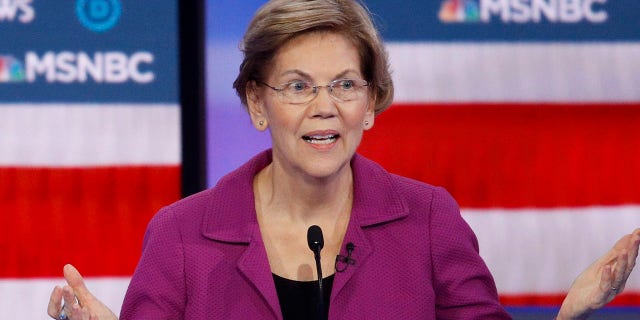
Democratic presidential candidate Sen. Elizabeth Warren, D-Mass., speaks as during a Democratic presidential primary debate Wednesday, Feb. 19, 2020, in Las Vegas. (Associated Press)

But, that was just the start for Warren. She was determined to be heard and make her mark and she did just that.
Warren spent the debate drawing a sharp contrast with her opponents, making the case for herself for all to see, and laying out her plans. Most of all, Warren demonstrated once again that she could take on Trump and that may be the thing that helped her the most. That fiery Elizabeth Warren has been missing in debates and on the campaign trail of late and she came roaring back Wednesday night.
Warren comes out of this debate with a lot of momentum. If she can capitalize upon it then the results of three big contests from this Saturday to Super Tuesday will reflect it – and will put her back in race as the progressive capitalist.
 
BIGGEST LOSER: Former Mayor Michael Bloomberg
Bloomberg’s performance was a disaster. He was not the Bloomberg of his ads in this debate – and that’s now a big problem for him. Spending hundreds of millions of dollars on ads has bought Bloomberg name recognition, good poll numbers and a pole position in the debate – but no amount of money can guarantee a great debate performance.
And that was the case Wednesday night. Voters will see clips of this performance on TV and read about it for days, and it will seriously hurt Bloomberg’s standing in the presidential nomination race.

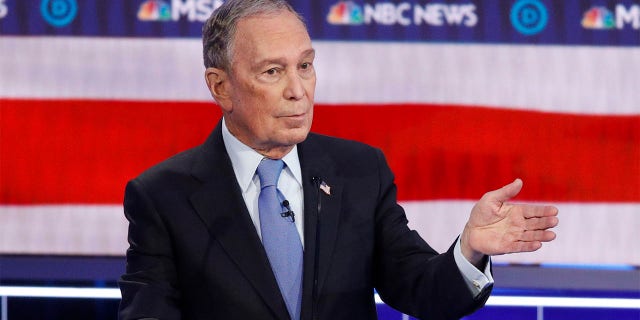
Democratic presidential candidate, former New York City Mayor Michael Bloomberg speaks during a Democratic presidential primary debate Wednesday, Feb. 19, 2020, in Las Vegas. (Associated Press)

Warren exposed the real Michael Bloomberg and it was not a pretty picture. It was Warren’s relentless challenge to Bloomberg on a host of issues – including his treatment of women who worked for him and his refusal to release them from nondisclosure agreements – as well as his treatment of people of color with his stop-and-frisk policy.
Bloomberg’s attempts to apologize and explain only made the situation worse. His apology came off as more about convenience than sincerity – and that will register with voters too.
Finally, Bloomberg also sounded a lot like President Trump when asked about releasing his tax returns, raising issues about his lack of transparency. Bloomberg leaned on the fact that he entered the presidential nominating race late, after a deliberate decision to skip the first four contests that require retail politics and the vetting he was experiencing during the televised debate.
By the time Bloomberg releases his tax returns, it will likely be after the Super Tuesday primaries March 3, after a big chunk of primary votes will have been cast. When you add the issue of his taxes to his treatment of women and people of color, Bloomberg will seem a lot more like Trump than the guy who can beat Trump to a lot of voters following his weak debate performance.
LOSER: Sen. Bernie Sanders
Sanders is the front-runner in the polls and in a close second place in the competition for delegates following the Iowa caucuses and the New Hampshire primary, but he missed the chance to put this race away with a strong performance Wednesday night.
Instead, the self-described democratic socialist who represents Vermont was repeatedly questioned about his lack of transparency regarding his medical records, his recent heart attack and the cost of his “Medicare-for-all” plan. All this could hurt him.
Clearly, Sanders has decided it is better to take the heat than release his complete medical records in addition to letters he has provided from doctors. But the issue of transparency could hamper Sanders in the remainder of this race.

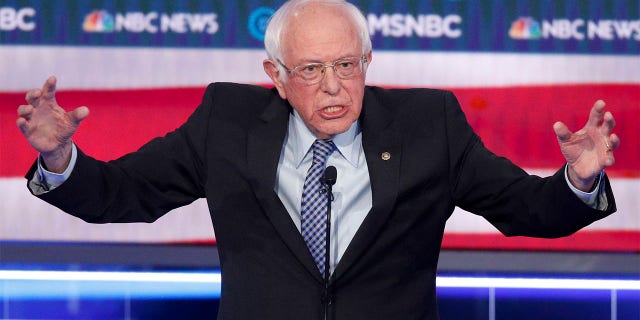
Democratic presidential candidate Sen. Bernie Sanders, I-Vt., speaks during a Democratic presidential primary debate Wednesday, Feb. 19, 2020, in Las Vegas. (Associated Press)

It wasn’t a bad performance by Sanders. He hit Buttigieg early in the debate – a smart move since Buttigieg is cutting into Sanders’ support among young voters.
Sanders also hit Bloomberg at points in the second hour of the debate. But that didn’t make up for the hits Sanders took early in the night.
The question is whether the lack of transparency by Sanders on several fronts takes hold and hurts him in future contests. We will find out in the next two weeks. If not, then Sanders could continue to add to his delegate count and that could give him an insurmountable lead when the results come in on Super Tuesday.
LOSER: Former Mayor Pete Buttigieg
Buttigieg is the leader in delegates at this early stage from his strong finish in Iowa and New Hampshire. He used the debate to land a few blows on Sanders, with whom he’s locked in a delegate fight. The former mayor also hit Klobuchar, who he is competing with for moderate voters.

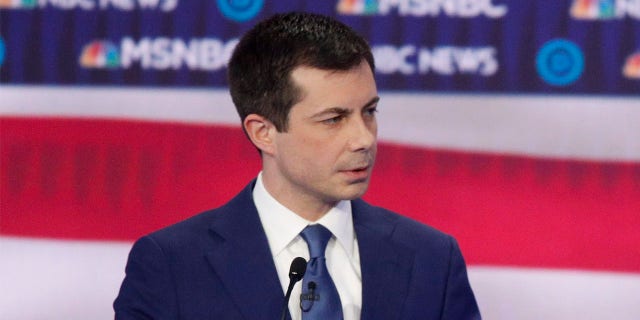
Democratic presidential candidate Pete Buttigieg looks on during a Democratic presidential primary debate Wednesday, Feb. 19, 2020, in Las Vegas. (Associated Press)

While Buttigieg didn’t hurt himself that also means he didn’t help himself. We will see how that factors into the results of the Nevada caucuses Saturday, but the debate was a missed opportunity for him to solidify his status as the early front-runner in the delegate count.
In addition, Buttigieg and Klobuchar had a number of exchanges in their fight for moderate voters. In fact, Klobuchar cost Buttigieg a win in New Hampshire and that dynamic is unlikely to change after Wednesday night’s debate. It was a good but subtle strategy on a night that called for stronger performance by Buttigieg to accelerate his momentum in this race.
CLICK HERE TO SIGN UP FOR OUR OPINION NEWSLETTER
LOSER: Sen. Amy Klobuchar
Klobuchar’s last strong debate performance helped her raise $12 million in badly needed campaign contributions and go from the back of the pack to win third place in the New Hampshire primary.
But the senator from Minnesota didn’t deliver that kind of performance Wednesday night. Instead, we saw the Klobuchar of previous debates rather than the star performer of the last debate that gave her the momentum and most undecided voters in the last 72 hours of the New Hampshire primary campaign.

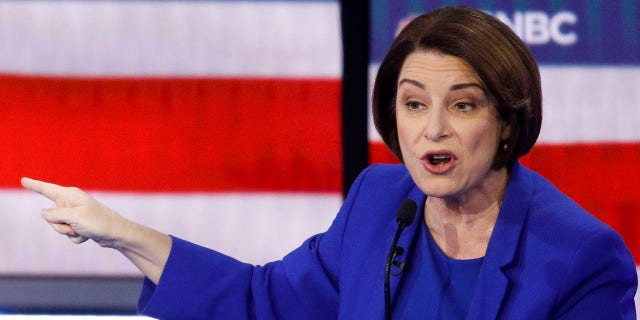
Democratic presidential candidate Sen. Amy Klobuchar, D-Minn., speaks during a Democratic presidential primary debate Wednesday, Feb. 19, 2020, in Las Vegas. (Associated Press)

Klobuchar’s challenge will be to convince Nevada voters and a national audience that her performance wasn’t a one-hit-wonder.
LOSER: Former Vice President Joe Biden
Biden’s sights may be set on the Feb. 29 South Carolina primary – where he is counting on strong support from the large number of African-American voters – but he needed to roll the dice to deliver a strong performance Wednesday night to look like a winner.

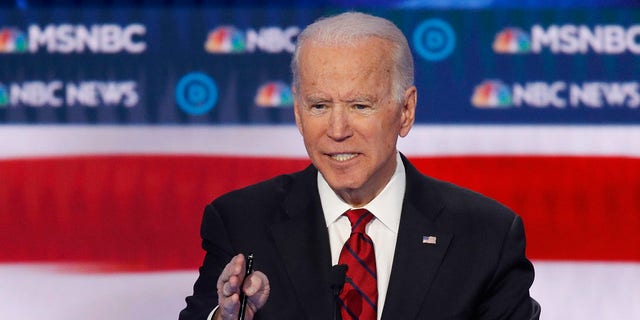
Democratic presidential candidate, former Vice President Joe Biden speaks during a Democratic presidential primary debate Wednesday, Feb. 19, 2020, in Las Vegas. (Associated Press)

Instead, Biden did nothing to help himself. He looked like a tourist in Las Vegas rather than someone who should own the stage. Biden did little if anything to reassure voters he’s the best one to take on Trump or stem his slide in the polls. And that’s more bad news for Biden in this race.
Nevada voters began early caucusing this week and when we see results of their caucuses Saturday we will have a stronger indication of where the Democratic nomination battle is headed.

Wednesday, February 19, 2020

Deep State Judge Amy Berman Jackson Cartoons


Who is Judge Amy Berman Jackson?


Former Trump adviser Roger Stone is expected to be sentenced Thursday by U.S. District Judge Amy Berman Jackson, who has been involved in several high-profile cases since being appointed to the federal bench in 2011 by former President Barack Obama.
In recent years the 65-year-old Baltimore native and Harvard Law School graduate has presided over cases involving Stone, former Trump campaign chairman Paul Manafort and former Democratic U.S. Rep. Jesse Jackson Jr. -- as well as one involving Hillary Clinton's Benghazi-related emails.
Jackson said Tuesday during a pre-sentence hearing that she will move ahead with the sentencing of Stone this week -- rejecting requests by the defense to delay or request a new trial.
She has been described by some as tough, fair and always prepared.
Here are more details about cases over which Judge Jackson has presided.

Roger Stone case

Jackson is presiding over the Roger Stone case, in which a jury found him guilty on all seven counts of obstruction, witness tampering and making false statements to Congress in connection with former Special Counsel Robert Mueller's Russia investigation.
Stone was charged with providing false statements to the House Intelligence Committee about communication involving WikiLeaks, obstructing a congressional investigation of Russian interference during the 2016 U.S. presidential election and witness tampering.
During the trial, Jackson barred Stone from speaking publically about the ongoing prosecution after a picture of her appeared on his Instagram with what appeared to be crosshairs on the background.
Stone blamed the decision -- which he reviewed -- on an unnamed volunteer and apologized, to which Jackson replied last February, "I have serious doubts about whether you learned anything at all."

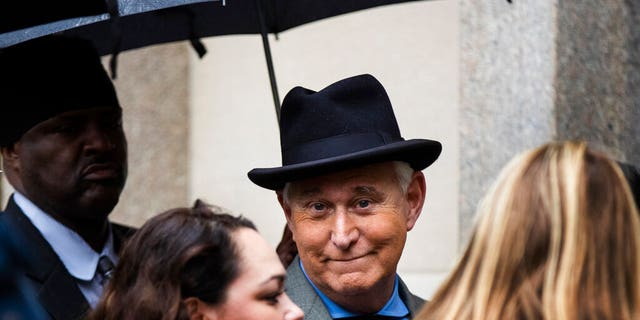
​​​​​​​Roger Stone, a longtime Republican provocateur and former confidant of President Donald Trump, waits in line at the federal court in Washington, Nov. 12, 2019. (Associated Press)

"From this moment on, the defendant may not speak publicly about this case -- period," Jackson said. "No statements about the case on TV, radio, print reporters, or [the] internet. No posts on social media. [You] may not comment on the case through surrogates. You may send out emails about donating to the Roger Stone defense fund."
"This is not baseball. There will be no third chance. If you cannot abide by this, I will be forced to change your surroundings so you have no temptations," she added.
"This is not baseball. There will be no third chance. If you cannot abide by this, I will be forced to change your surroundings so you have no temptations."
— Judge Jackson to Roger Stone
Ahead of Thursday's scheduled hearing, Jackson was attacked by President Trump in a Feb 11 tweet. He also criticized prosecutors' recommendation that Stone should face seven to nine years in prison.
"Is this the Judge that put Paul Manafort in SOLITARY CONFINEMENT, something that not even mobster Al Capone had to endure? How did she treat Crooked Hillary Clinton? Just asking!" Trump wrote.
After his tweets, the Justice Department announced in a surprising decision it was revising the federal sentencing guidelines of term length. Several prosecutors quit and Trump was accused of interfering in the process, which he denied.
Fox News contributor Andrew McCarthy said Jackson can impose whatever sentence she feels is appropriate, regardless of how Trump or Attorney General Bill Barr feel about the case. But McCarthy wrote recently that "the Stone prosecution is more politics than law enforcement. It was the Mueller probe’s last gasp at pretending there might be something to the Russia-collusion narrative."

Paul Manafort case

Jackson sentenced former Trump campaign chairman Paul Manafort to nearly seven years in prison last March in connection with his guilty plea related to foreign lobbying and witness tampering. She ordered a term of 73 months to be added to a 47-month sentence given earlier on bank and tax fraud charges in a separate case by Virginia Judge T.S. Ellis.
In December, Manafort's state mortgage fraud charges were dismissed citing double jeopardy laws.
“This defendant is not public enemy number one, but he is not a victim either,” Jackson said last March during Manafort's sentencing and prior to his charges being dismissed. “The question of whether there was any collusion with Russia ... was not presented in this case, period, therefore it was not resolved by this case.”
In 2018, Manafort agreed to cooperate with prosecutors, pleading guilty to two felony conspiracy charges in relation to his lobbying work with Ukraine.
Last February, Jackson ruled Manafort intentionally breached his guilty plea agreement by lying to investigators on Mueller's team.
"The Office of Special Counsel (OSC) made its determination that the defendant made false statements and thereby breached the plea agreement in good faith," Jackson wrote. "Therefore, the Office of Special Counsel is no longer bound by its obligations under the plea agreement, including its promise to support a reduction of the offense level in the calculation of the U.S. Sentencing Guidelines for acceptance of responsibility."

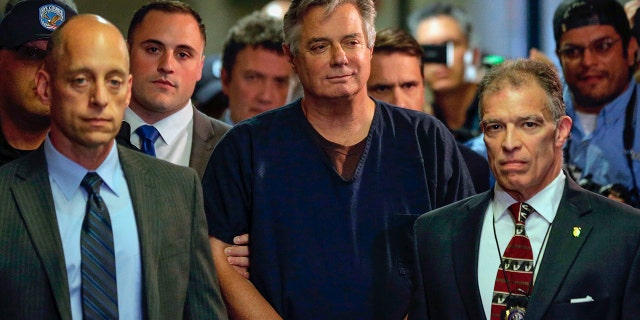
​​​​​​​Paul Manafort arrives in court in New York, June 27, 2019 after a judge threw out his New York mortgage fraud case on double jeopardy grounds. (Associated Press)

Jackson grilled Mueller's team during the probe on whether Manafort lied to investigators before her eventual ruling.
"So, I'm trying to figure out what the importance is of his ongoing work for a potential candidate in the Ukraine at that time is, and the importance of any lies about that, or lies about Konstantin Kilimnik's [who has ties to Russian intelligence] knowledge about that," Jackson said.
She appreciated Manafort's attendance in court last February after denying his attempt to skip the hearing due to what he described were health reasons.
"I believe it was very helpful, very useful and very important for you to have been here, Mr. Manafort," Jackson said. "I know that we've had hearings where counsel sought to minimize the burden on you and not have you be here, but this is about you, it's not about them. And I think it's very important that they have you available to ask questions to."

Jesse Jackson Jr. case

The judge sentenced former Rep. Jesse Jackson Jr. to 2-1/2 years in prison back in 2013 after he was convicted of spending $750,000 in campaign funds on personal items -- such as a gold watch, cigars and mounted elk heads.
Jessie Jackson Jr. is the son of civil rights leader the Rev. Jesse Jackson.

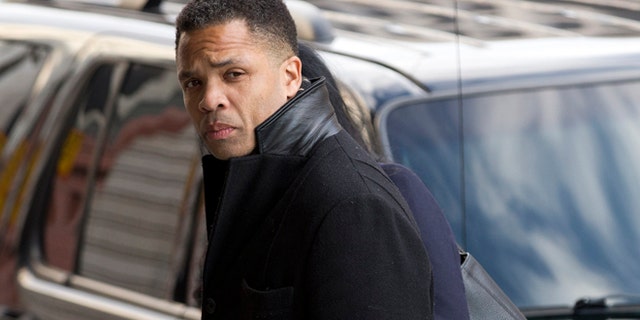
Former U.S. Rep. Jesse Jackson Jr., D-Ill., arrives at the E. Barrett Prettyman Federal Courthouse in Washington, Feb. 20, 2013. (Associated Press)

During the case, she said that if she had given him no prison time it would have suggested there was one system for the well-connected and one for everyone else.
"I cannot do it. I will not do it," she said, adding that as a public official, Jackson Jr. was expected to "live up to a higher standard of ethics and integrity."

Clinton Benghazi email case

Jackson tossed out a wrongful-death lawsuit against Hillary Clinton in 2017 by the parents of two Americans who were among those killed in a terror attack against a diplomatic compound in Benghazi, Libya. The lawsuit alleged that Clinton's use of the private email server caused their deaths.
The ruling was based on the Westfall Act, which gives federal employees immunity from tort claims arising out of acts made during the course of their official duties.
“Her actions – communicating with other State Department personnel and advisers about the official business of the department – fall squarely within the scope of her duty to run the Department and conduct the foreign affairs of the nation as Secretary of State,” Jackson wrote.
Jackson ruled the parents didn't sufficiency challenge that Clinton wasn't acting in her official capacity when she used the email server.
"The untimely death of plaintiffs' sons is tragic, and the Court does not mean to minimize the unspeakable loss that plaintiffs have suffered in any way," Jackson wrote in a 29-page opinion.
Fox News' Brooke Singman, Gregg Re and the Associated Press contributed to this report.

Laura Ingraham: Virginia's Second Amendment advocates score a win over Democrats Northam, Bloomberg


Gun-rights activists scored a Second Amendment victory in Virginia this week over the state's Democrat governor and legislature -- and gun-control financier and Democrat presidential candidate Michael Bloomberg, Laura Ingraham reported Tuesday.
"Just a few months ago, anti-gun Democrats in Virginia thought they could easily ram through a new ban on so-called assault weapons and high-capacity magazines," Ingraham said Tuesday night on "The Ingraham Angle," "and Gov. Ralph Northam was supporting this bill, of course, with a phony argument that rolling back the gun rights of law-abiding Virginians would make all Virginians safer."
"But Northam wasn't ready for the pushback, was he?" Ingraham said. "The opposition made sure that their voices were gonna be heard -- and boy, were they heard."
The bill backed by Gov. Ralph Northam would have banned the sale of assault-style weapons in Virginia. It failed on a committee vote Monday morning, setting back one of the biggest priorities for the newly minted Democrat-controlled government in the state.
Ingraham celebrated the victory in Virginia with lawmakers losing out on their anti-Second Amendment push and noted Bloomberg's involvement.
"It's important to note that this grassroots uprising was successful despite the millions that have been pumped into the Commonwealth from out-of-staters like Democrat presidential candidate Michael Bloomberg," Ingraham said. "Through his group, Every Town for Gun Safety, he funneled 2.5 million into Virginia last year to elect anti-Second Amendment Democrats."
"But it turns out there's still a lot of Jeffersonian spirit left in Virginia," Ingraham said. "Their Second Amendment rights aren't for sale."
"It turns out there's still a lot of Jeffersonian spirit left in Virginia. Their Second Amendment rights aren't for sale."
— Laura Ingraham
The host warned that future anti-gun pushes will continue and asked viewers to imagine what Bloomberg would do as president.
"But Bloomberg and the rest of the anti-gun forces in America won't let this defeat stop them," Ingraham said. "But what happened in Virginia yesterday shows that when we the people argue the facts and we stand united for a noble cause, we can overcome the corrupting influence of money and leftist ideology."
"A Bloomberg nomination is guaranteed to do at least two things," Ingraham said. "One, motivate the Republican base and two, drive up the price of Smith & Wesson stock."
Fox News' Tyler Olson contributed to this report.

Hillary Clinton denies she could be Bloomberg's running mate: 'Oh no!'


Former Secretary of State Hillary Clinton on Tuesday reportedly shut down rumors that she might consider serving as Michael Bloomberg’s running mate if he were to win the Democratic presidential nomination.
"Oh no! I'm just waiting and watching as this plays out. I will support whoever the nominee is,” she told the moderator while in Puerto Rico for a Clinton Global Initiative event.
Last week, the 2016 Democratic nominee played down the idea that she could be a vice presidential pick, telling Ellen DeGeneres on her show, "Well, that's not going to happen, but no.”
In the interview last Thursday she clarified, “I never say never because I do believe in serving my country -- but it's not going to happen,” citing when former President Obama asked her to be his secretary of state after their hard-fought primary race in 2008.
Clinton, who lost the 2016 general election to Republican Donald Trump, posited during the interview that Trump's behavior as president underscores the double standard female candidates face.
"We've got one of the most emotionally acting-out people ever in the history of our country in the White House and I don't hear anybody saying, 'He's just too emotional,'” Clinton said, referring to a common critique of female politicians.
Last November, she told the BBC that “many, many, many people” were pressuring her to think about running for president again, but added, “I, as I say, never, never, never say never. ... But as of this moment, sitting here in this studio talking to you, that is absolutely not in my plans."
If she did enter the race as a presidential candidate, she would face an uphill battle, having already missed primary voting in several states and the deadline to be on the Democratic ballot in most others.

DOJ pushes back at reports Barr considered quitting over Trump tweets


The Justice Department pushed back Tuesday night at multiple reports claiming Attorney General William Barr told people close to him he's considering stepping down over President Trump's tweets, days after Barr admitted that Trump's tweeting made it "'impossible for me to do my job."
"Addressing Beltway rumors: The Attorney General has no plans to resign," DOJ spokeswoman Kerri Kupec tweeted.
Barr "has his limits," one person familiar with Barr’s thinking told The Washington Post. Its report suggested that Barr wanted Trump to "get the message" to stop weighing in publicly in ongoing criminal cases. An administration official gave a similar admission on Barr to The Associated Press.
Barr, speaking to ABC News last week, also denied ever acting on improper influence from Trump or the White House. White House officials told the Post that the president had no plans to stop tweeting about Justice Department cases. He insisted he had a "legal right" to make his voice heard on criminal cases.
The White House did not immediately comment on the Tuesday night reports.
Trump tweeted Tuesday he's considering suing those involved in former Special Counsel Robert Mueller's Russia investigation and said his confidant Roger Stone deserved a new trial after being convicted of witness tampering, obstruction and lying to Congress during the Mueller probe. Hours later, a Justice Department official revealed prosecutors had filed a sealed motion in court arguing the opposite, and that they had Barr's approval to do so.
Last week, Trump, in a late-night tweet, criticized a federal prosecutor's earlier recommendation that that Stone should be sentenced to seven to nine years in prison. Soon afterward, DOJ leaders adjusted the sentencing recommendation downward, saying it was clearly excessive given Stone's obstruction-related offenses. All four prosecutors on the case stepped down within hours.
Barr asserted his independence in the Justice Department's decision to intervene. "I'm not going to be bullied or influenced by anybody... whether it's Congress, a newspaper editorial board, or the president.”
Over the weekend, more than 2,000 former department employees signed a public letter urging Barr to resign over his handling of the Stone case. Senate Majority Leader Mitch McConnell, R-Ky., Senate Judiciary Committee Chairman Lindsey Graham, R-S.C., and House Minority Leader Kevin McCarthy, R-Calif., came to Barr's defense on Tuesday. The top Republicans insisted Barr had the "highest character and unquestionable integrity" and Democrats' efforts to "intimidate" him would fail spectacularly.
Trump, too, assured reporters he stood behind his attorney general, despite the criticisms. "I have total confidence in my attorney general," Trump told reporters earlier Tuesday. "I do make his job harder. I do agree on that. ... We have a great attorney general and he's working very hard."
Stone has been a friend and adviser to the president for decades and was a key figure in his 2016 campaign, working to discover damaging information about the Clinton campaign.
Stone's defense has asked for a sentence of probation, citing his age, 67, and lack of criminal history.
Fox News' Mike Arroyo contributed to this report.

CartoonDems