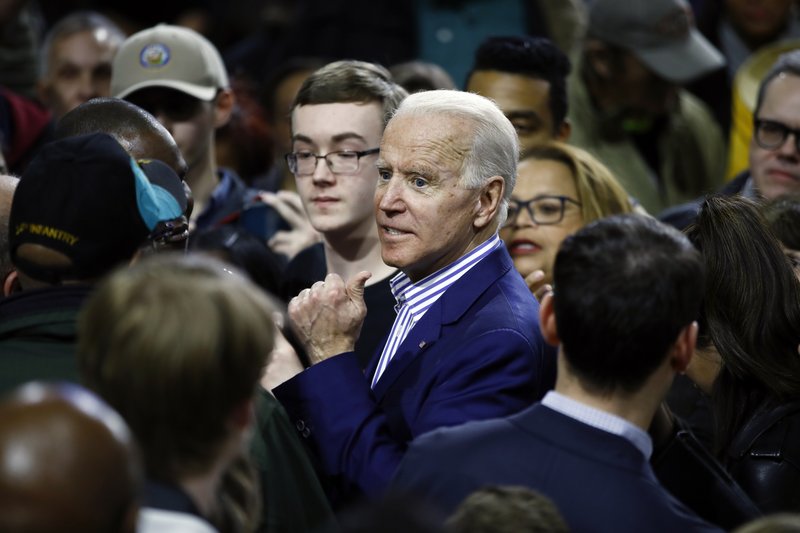
COLUMBIA, S.C. -- A euphoric Joe Biden thanked South Carolina for a landslide primary victory on Saturday that boosted his flagging presidential campaign. The former vice president – pointing to next week, when 14 states across the country hold primaries on Super Tuesday. “This is the moment to choose the path forward for our party,” Biden said. Biden also took aim at rival Sen. Bernie Sanders’ calls for a political revolution. "Most Americans don’t want [the] promise of revolution. More than promises, they want results,” he said. Biden
– speaking in front of a large and enthusiastic crowd at his victory
celebration in South Carolina’s capital city – took to the podium to
celebrate his first victory in the presidential nomination calendar. After
poor fourth- and fifth-place finishes in Iowa’s caucuses and New
Hampshire’s primary, followed by a distant second-place showing last
weekend in Nevada’s caucuses behind Sanders, Biden won – and won big in
South Carolina.
With most precincts reporting, Biden held a nearly
30-percentage-point lead over Sanders, the populist senator from Vermont
who’s making his second straight White House run. Biden was
fighting for his political life in South Carolina, where a loss likely
would have meant the end of his third bid for the presidency. “For
all of those of you who’ve been knocked down, counted out, left behind,
this is your campaign,” Biden told the crowd. “Just days ago the press
and the pundits declared this candidacy dead. Now, thanks to all of you,
the heart of the Democratic Party, we just won and we won big. We are
very much alive.” Biden and his campaign are hoping the strong
finish in South Carolina will give him momentum going into Super
Tuesday, when a third of all Democratic presidential nomination
delegates are up for grabs. “As we celebrate tonight here in
Columbia, I want to talk to Democrats across the country, especially
those who will be voting on Super Tuesday. This is the moment to choose
the path forward for our party. This is the moment and it’s arrived,”
Biden highlighted. “The decisions Democrats make in the next few days
will determine what this party stands for, what we believe and what
we’ll get done.” He added, “if Democrats nominate me, I believe we
can beat Donald Trump, keep Nancy Pelosi in the House of
Representatives as speaker and take back the United States Senate.” Taking
aim at Sanders – who was the clear front-runner heading into Saturday’s
contest, thanks to a virtual tie with former South Bend, Ind., Mayor
Pete Buttigieg in Iowa, an outright victory in New Hampshire, and a
shellacking of his rivals in Nevada – Biden said: “Democrats want to
nominate someone who will build on ObamaCare and not scrap it.” That was a jab at Sanders, who wants to create a government-run single-payer "Medicare-for-all" health care system. And
knocking Sanders – an independent who calls himself a democratic
socialist – the man who served as vice president under President Barack
Obama for eight years declared to thunderous applause that “Democrats
want a nominee who’s a Democrat, a proud Democrat, a Obama-Biden
Democrat.” Biden
had long looked to the Palmetto State – where black voters made up 55
percent of the Democratic presidential primary electorate, according to
exit polls – as his firewall. Thanks to his eight years as Obama’s
right-hand man, Biden remains very popular with African-American voters.
Biden also thanked the man standing next to him on the podium --
longtime Rep. Jim Clyburn of South Carolina – the most senior black
House Democrat, whose endorsement Wednesday gave Biden a big boost.
Speaking to Clyburn and to the army of his supporters in the crowd
-- many of whom were black -- Biden stressed he and his family “will
never forget what you’ve done for us.” Moses Brown, a black voter and a native of Columbia, was at the Biden South Carolina celebration event. “I’m
kind of surprised they called it at 7 p.m, but I’m not surprised that
he won and won big. I thought that he would do well here,” Brown told
Fox News. “I’ve been a Joe Biden guy from the beginning. I was a big fan
of Barack Obama.” Columbia resident Patricia McGovern, also in
the crowd, said: “I’m surprised by the margin. I was hoping he was going
to win. I’m grateful for the margin of victory. It’s great.” Pointing
to Biden’s resounding win, McGovern noted that when it comes to
Democratic Party politics, “South Carolina’s traditionally a
conservative Democratic state and I don’t think people believe Bernie’s
going to win it.” Biden’s victory in South Carolina was already paying immediate dividends in at least one Super Tuesday state. Minutes
after he was projected the winner, former Virginia Gov. Terry McAuliffe
-- who was co-chairman of Hillary Clinton's 2008 presidential run --
endorsed Biden. “It’s time to unite behind the candidate who can beat Trump. @joebiden has the experience, character, and broad appeal to win Virginia and the White House in 2020,” McAuliffe tweeted. McAuliffe’s
backing comes a day after Sen. Tim Kaine of Virginia -- who was Hillary
Clinton's running mate in 2016 -- also endorsed Biden. Virginia
is the fourth-biggest of the Super Tuesday states and the latest live
telephone operator poll of likely Democratic primary voters there
indicates Biden in the lead, with a 5-percentage-point advantage over
Sanders and 9 points ahead of former New York City Mayor Mike Bloomberg,
a fellow moderate candidate. Fox News' Madeleine Rivera contributed to this report.
COLUMBIA,
S.C. (AP) — The Democrats’ 2020 nominating fight turned to South
Carolina on Saturday for the first-in-the-South primary, with Joe Biden
confident that his popularity with black voters will seal him a victory
and help blunt some of front-runner Bernie Sanders’ momentum.
The
primary stands as the first marker on a critical four-day stretch that
will help determine whether the party rallies behind Sanders or embraces
a longer and uglier slog that could carry on until the national
convention.
“Only two things are going to happen: either Bernie or brokered,” said James Carville, a veteran Democratic strategist.
Carville
is uncomfortable with a Sanders nomination but fears that a brokered
convention — in which party bosses or delegates in floor fights and
negotiations decide the nominee after no candidate amasses enough
delegates in the primary — would inflict serious damage on the party, as
well. “It’s just hard for me to see beyond the two options,” he said.
In
Saturday’s primary, Biden and his establishment allies hope to slow
Sanders’ rise — and change the trajectory of the race — with a
convincing victory demonstrating his strength among African Americans.
But just three days later, Sanders believes he’s positioned to seize a
major delegate advantage when 14 states and one U.S. territory vote on
“Super Tuesday.”
After two consecutive victories and a tie for the lead in Iowa, the 78-year-old Vermont senator’s confidence is surging.
Sanders
will spend the lead-up to Super Tuesday campaigning in the home states
of two major Democratic rivals, betting he can score a double knockout
blow — or at least limit the size of their victories.
In
a power play, Sanders will host a midday rally Saturday in downtown
Boston, campaigning in the heart of progressive ally Elizabeth Warren’s
political turf. And on the eve of Super Tuesday, Sanders will host a
concert in Minnesota, where home-state Sen. Amy Klobuchar is looking for
her first win.
Senior
adviser Jeff Weaver said Sanders is aggressively hunting for delegates,
noting that their campaign’s experience during the 2016 primary against
Hillary Clinton taught them that any candidate who finishes Super
Tuesday with a significant delegate advantage will be difficult to
catch.
“I’m
confident we’re going to do very, very well across the country,” Weaver
said of the coming four days. He also sought to downplay the importance
of South Carolina, where “Biden is expected to win.”
“Expectations
can be broken,” Weaver added. ”But for the vice president, he needs an
extraordinarily large win in South Carolina in order to convince folks
he’s going to be able to go the distance.”
At
a rally in North Charleston on Friday, Trump asked the crowd whether
Biden or Sanders would be the better Democratic opponent for him.
“I think Bernie’s easier to beat,” Trump said.
The
audience seemed to agree, cheering the mention of Sanders and booing
the mention of Biden. Some state GOP leaders have even urged Republican
voters to participate in Saturday’s Democratic primary and vote for
Sanders.
Yet the Democrats’ 2020 primary election is far from a two-person race.
In
South Carolina, billionaire activist Tom Steyer has spent more than $19
million on television advertising — more than all the other candidates
combined — in his quest for his first top finish in four contests. Not
ceding anything, Pete Buttigieg is fighting to prove he can build a
multiracial coalition. And with the help of super PACs, Warren and
Klobuchar have vowed to keep pushing forward no matter how they finish
on Saturday.
New
York billionaire Mike Bloomberg is not competing in South Carolina, yet
he has shattered spending records after investing hundreds of millions
of dollars in Super Tuesday advertising backed by a horde of paid staff
in virtually every state in the nation. He could emerge as the strongest
Sanders alternative in the coming days, or he could unintentionally
help Sanders by splitting up the anti-Sanders vote.
Still, Saturday marks Biden’s last, best chance to shine.
The
former vice president’s campaign began the week cautiously optimistic,
even as he predicted victory and began lashing out at Sanders more
aggressively.
“This
nation isn’t looking for a revolution like some folks are talking
about,” Biden said Friday in Sumter, slapping at Sanders’ signature call
to action. “They’re looking for progress. They’re looking for results.”
After a solid
debate performance on Tuesday, the 77-year-old Democrat was more
buoyant on the campaign trail and his aides grew more confident backed
by new support from elected officials.
Biden
has racked up far more endorsements than his rivals have throughout the
year, and he added another big name from a Super Tuesday state,
Virginia Sen. Tim Kaine, on Friday. That came two days after he earned
the endorsement of South Carolina Rep. James Clyburn.
Summing
up the mood, senior Biden adviser Symone Sanders shifted away from
calling South Carolina Biden’s “firewall” and instead called it a
“springboard,” on par with how the state boosted the presidential
aspirations of Barack Obama in 2008 and Clinton in 2016.
Indeed, South Carolina represents much more than the fourth state on the Democrats’ monthslong primary calendar.
It
serves as the first major test of the candidates’ strength with African
American voters, who will play a critical role in both the general
election and the rest of the primary season.
Roughly 3 in 10 people of voting age in South Carolina are black, according to census data.
“South
Carolina speaks in a way that these other states have not been able to
in terms of who is voting and the diversity of our vote,” said James
Smith, South Carolina’s 2018 Democratic nominee for governor.
In
the short term, Super Tuesday features a handful of Southern states,
like Alabama, Arkansas and North Carolina, where the African American
vote will be decisive. And longer term, the ultimate Democratic nominee
will struggle to defeat Trump unless he or she generates more enthusiasm
among black voters than Clinton did four years ago.
While
voting technology was a concern in two of the last three primary
contests, South Carolina uses a wide array of voting technology that
presents unique challenges.
Saturday’s
election in South Carolina marks the first statewide test of its new
fleet of electronic voting machines, a $50 million upgrade from an old
and vulnerable system that lacked any paper record of individual votes.
The new machines produce a paper record that can be verified by the
voter and checked after the election to detect any malfunction or
manipulation.
Meanwhile,
some leading Democrats in South Carolina were concerned that the
intensity of the anti-Sanders movement within their own party would
undermine their quest to deny Trump a second term.
Gilda
Cobb-Hunter, a South Carolina state representative and president of the
National Black Caucus of State Legislators, warned Democrats who
vehemently oppose Sanders to “stop being stupid.” While she’s on
Steyer’s payroll, she said she would “of course” support Sanders if he
emerged as the nominee.
Peoples
reported from New York. Associated Press writers Will Weissert in
Washington and Thomas Beaumont in Charleston, S.C., contributed to this
report.
SAN
DIEGO (AP) — A 9th U.S. Circuit Court of Appeals panel voted
unanimously Friday to suspend an order it issued earlier in the day to
block a central pillar of the Trump administration’s policy requiring
asylum seekers to wait in Mexico while their cases wind through U.S.
courts.
The
three-judge panel told the government to file written arguments by the
end of Monday and for the plaintiffs to respond by the end of Tuesday.
The
Justice Department said at least 25,000 asylum seekers subject to the
policy are currently waiting in Mexico and expressed “massive and
irreparable national-security of public-safety concerns.”
Government
attorneys said immigration lawyers had begun demanding that asylum
seekers be allowed in the United States, with one insisting that 1,000
people be allowed to enter at one location.
“The
Court’s reinstatement of the injunction causes the United States public
and the government significant and irreparable harms — to border
security, public safety, public health, and diplomatic relations,”
Justice Department attorneys wrote.
Customs and Border Protection had already begun to stop processing people under the policy.
ACLU attorney Judy Rabinovitz called the suspension of Friday’s order “a temporary step.”
“We will continue working to permanently end this unspeakably cruel policy,” she said.
The
government’s setback earlier Friday from the three-judge panel of the
9th U.S. Circuit Court of Appeals may prove temporary if President
Donald Trump’s administration appeals to the U.S. Supreme Court, which
has consistently sided with Trump on immigration and border security
policies. Chad Wolf, the acting Homeland Security secretary, said he was
working with the Justice Department to “expeditiously appeal this
inexplicable decision.”
The
“Remain in Mexico” policy, known officially as “Migrant Protection
Protocols,” took effect in January 2019 in San Diego and gradually
spread across the southern border. About 60,000 people have been sent
back to wait for hearings, and officials believe it is a big reason why
illegal border crossings plummeted about 80% from a 13-year high in May.
Christopher
Landau, the U.S. ambassador to Mexico, said in a court filing that
halting the policy creates “substantial risk of immediate chaos on the
border.”
The
ambassador said the policy is critical to deterring “uncontrolled of
third-country migrants through Mexico to the United States” and that
halting it would encourage more asylum-seekers to come and “obliterate
the substantial progress that both countries have made over the last
year.”
Reaction to the decision
blocking the policy was swift among immigration lawyers and advocates
who have spent months fighting with the administration over a program
they see as a humanitarian disaster, subjecting hundreds of migrants to
violence, kidnapping and extortion in dangerous Mexican border cities.
Hundreds more have been living in squalid encampments just across the border, as they wait for their next court date.
Advocates
planned to have immigrants immediately cross the border and present the
court decision to authorities Friday, with group Human Rights First
hand-delivering a copy to U.S. Customs and Border Protection officers at
a bridge connecting Laredo, Texas, and Nuevo Laredo, Mexico. Lawyers
were hoping to get their clients before U.S. immigration court judges.
The
decision interrupted some court cases. Immigration Judge Philip Law in
San Diego delayed a final hearing on a Honduran man’s asylum case to
April 17 after a government attorney couldn’t answer his questions about
the effect of ruling, which temporarily halts the policy during legal
challenges. The government attorney said she asked her supervisor how to
address the ruling and that he didn’t know what to do either.
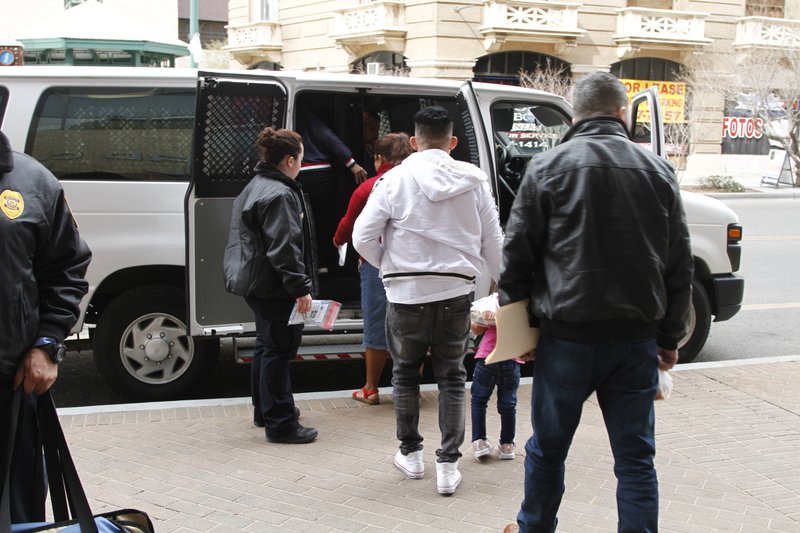
In
El Paso, an administrator came to tell a judge of the ruling as he
heard the case of a Central American mother and her partner. The couple
cried when they learned they could get into the U.S. with restrictions.
The couple and their two young children will be put into government
detention to wait and they won’t have to return to Ciudad Juarez,
Mexico.
“Do
you guys understand that?” Herbert asked through an interpreter. “There
was a pretty significant change in the law in the middle of your
testimony.”
The
Justice Department sharply criticized the ruling, saying it “not only
ignores the constitutional authority of Congress and the administration
for a policy in effect for over a year, but also extends relief beyond
the parties before the court.” Wolf, the acting Homeland Security
secretary, called the decision “grave and reckless.”
Judge
William Fletcher, writing the majority, sided with the American Civil
Liberties Union and other advocacy groups who argued the policy violates
international treaty obligations against sending people back to a
country where they are likely to be persecuted or tortured on the
grounds of race, religion, ethnicity, political beliefs or membership in
a particular social group.
Fletcher
agreed the government set the bar too high for asylum-seekers to
persuade officers that they should be exempt from the policy and didn’t
provide enough time for them to prepare for interviews or consult
lawyers. The judges said the government also erred by requiring
asylum-seekers to express fear of returning to Mexico to be considered
for an exemption, instead of asking them unprompted.
Fletcher
quoted at length asylum-seekers who reported being assaulted and
victimized in Mexico, saying it was “enough — indeed, far more than
enough” to undercut the government’s arguments.
Fletcher
was joined by Judge Richard Paez, who were both appointed to the bench
by President Bill Clinton. Judge Ferdinand Fernandez, an appointee of
President George H.W. Bush, dissented.
“The
court forcefully rejected the Trump administration’s assertion that it
could strand asylum-seekers in Mexico and subject them to grave
danger,“Rabinovitz, the ACLU attorney, said. “It’s time for the
administration to follow the law and stop putting asylum-seekers in
harm’s way.”
Rabinovitz
said Justice Department officials informed the ACLU that they will ask
the Supreme Court to reinstate the policy and that the nation’s highest
court could step in “very soon.” Until then, she said, no one can be
returned to Mexico under the policy. It was unclear when those in Mexico
with pending cases may return to the U.S. but it may be when they cross
for their next hearings.
The appeals court in San Francisco also decided to keep another major Trump policy on hold, one that denies asylum to anyone who enters the U.S. illegally from Mexico.
The Supreme Court, however, has allowed Trump to divert Defense Department money to border wall construction, backed rules disqualifying more people from green cards if they use government benefits and upheld a travel ban affecting several Muslim-majority countries.
The
ruling’s impact will also be at least partially blunted by other
policies introduced in response to unprecedented surge of asylum-seeking
families that peaked last year, many of them from Guatemala, Honduras
and El Salvador.
In November, the administration began sending asylum-seekers from Honduras and El Salvador to Guatemala,
denying them a chance to seek refuge in the U.S. and instead inviting
them to apply in the strife-torn Central American nation. Similar
agreements with Honduras and El Salvador are set to take effect soon.
Another
policy leads Mexicans and Central Americans who fail an initial
screening to be rapidly deported without leaving Border Patrol stations.
The screening interview is designed to take place in one day and any
appeals to an immigration judge within 10 days. Asylum-seekers are given
up to 90 minutes to contact a lawyer.
The
other measure with far-reaching consequences denies asylum to anyone
who passes through another country on the way to the U.S.-Mexico border
without seeking protection there first. It took effect in September and
is being challenged in a separate lawsuit.
Supporters
of the “Remain in Mexico” policy note it has prevented asylum-seekers
from being released in the United States with notices to appear in
court, which they consider a major incentive for people to come.
Mexicans and unaccompanied children are exempt.
Asylum
has been granted in less than 1% of the roughly 35,000 Remain in Mexico
cases that have been decided. Only 5% are represented by attorneys,
many of whom are reluctant to visit clients in Mexico.
___
This
story has been corrected to show that Judge Ferdinand Fernandez was
appointed by President George H.W. Bush, not President Ronald Reagan.
President Trump accused his Democratic critics of "politicizing" the coronavirus outbreak Friday as he rallied supporters in North Charleston a day before the Democratic primary in South Carolina. Speaking
at the North Charleston Coliseum for more than an hour, Trump dismissed
the complaints from Democrats about his handling of the virus as “their
new hoax” and insisted “we are totally prepared.” He also mocked the
party for its chaotic efforts to determine the result of this month's
Iowa caucuses. “Now the Democrats are politicizing the coronavirus,” Trump said, adding: “They can’t even count their votes.” Speaking
at length about the virus, Trump said it “starts in China, bleeds its
way into various countries around the world, doesn’t spread widely at
all in the United States because of the early actions” of his
administration. But still, Trump argued, the Democrats are claiming that
“it’s Donald Trump’s fault.” Turning to the 2020 race, Trump took
an informal poll of the crowd of who they would prefer he run against
in November. The president argued that despite the many candidates still
in the race, the fight for the Democratic nomination is really a
two-man race between Vice President Joe Biden and Vermont Sen. Bernie
Sanders. "Who the hell is easier to beat?” Trump asked the crowd,
going on to use nicknames "Crazy Bernie" for Sanders and "Sleepy Joe”
for Biden. "I don't know, I think Crazy Bernie has it," he said. As
he left the White House on Friday afternoon, the president said of the
Democratic contest: “It’ll be very interesting to see what
happens tomorrow.” Trump then referenced the Super Tuesday contests on
March 3, saying: "On Tuesday, you have a very big day." While en route to South Carolina, Trump tweeted an announcement that he is nominating Texas Rep. John Ratcliffe
to serve as Director of National Intelligence (DNI), months after the
Republican lawmaker abruptly withdrew his name from consideration for
the post. Trump has held rallies in each of the four early voting
states for the presidential nomination. He went to Nevada last week,
even though Republicans had canceled their presidential caucus to show
allegiance to the president. Likewise, South Carolina GOP officials
opted not to hold a primary this year. But that's not stopping Trump, who has reveled in poking his challengers in the run-up to their contests. "Some people say I'm trolling the Democrats and maybe I am," Trump said at the White House. Unlike
the three earlier voting states, South Carolina is not considered a
swing state. Trump defeated Hillary Clinton by more than 14 percentage
points there in 2016. Following Saturday's contest, more than a dozen states vote in the Super Tuesday contests. Trump
arrived in South Carolina following a brutal week for the stock market.
Stocks dropped another 357 points Friday, extending a rout that handed
the market its worst week since October 2008, at the height of the
financial crisis. Analysts worry that the stock swoon could cause
consumer spending to contract. Such spending makes up some 70 percent of
the economy and has played a huge role in keeping the U.S. economic
expansion going. Trump has linked his presidency to the markets
through tweets and speeches, often taking credit for each new high in
the indices. Now, Trump is trying to reassure Americans that the economy
is still strong while also theorizing that the Democratic candidates'
debate performances have spooked investors. The Associated Press contributed to this report.
An elementary school in Oregon will remain closed through Wednesday after an employee became the first presumptive case of coronavirus in the state, the Lake Oswego School District confirmed on its website. The
district said its 430-student Forest Hills Elementary School in Lake
Oswego, just south of Portland, will be closed so it can be deep-cleaned
and so students and staff, who the Oregon Health Authority said may
have been exposed to the virus, can be contacted by school officials,
FOX 12 of Oregon reported. "I was honestly both alarmed and
surprised. I mean, you hear things like that on the news, but you don’t
expect it to just plop right down, essentially on your doorstep," Sam
Sewright, a former student of the school, told the station. "I live like
five blocks away."
"You hear things like that on the news, but you don’t expect it to just plop right down, essentially on your doorstep." — Sam Sewright, former student of closed Oregon school
The
patient apparently contracted the virus through community transmission,
meaning the patient hadn’t traveled to any other country known to have
coronavirus cases and was not in contact with anyone with a confirmed
case, Oregon Live reported. The
patient’s symptoms started Feb. 19, although those with the virus can
be contagious before they exhibit symptoms, FOX 12 reported. The patient
on Friday night was in isolation at Kaiser Permanente Westside Medical
Center in Hillsboro, Ore., health officials told the station. The district said Friday that all weekend activities for its schools would be canceled out of an abundance of caution. "We anticipate all schools to be open on Monday, March 1, except Forest Hills,” the district said in a statement, according to FOX 12. Forest Hills will remain closed through Wednesday, March 3," according to a district statement. A
second “community-spread” coronavirus case was confirmed in California
on Friday and later Washington state officials announced two new cases
of the virus, including one of unknown origin. Cases are presumptive until the Centers for Disease Control and Prevention confirm a positive test result.
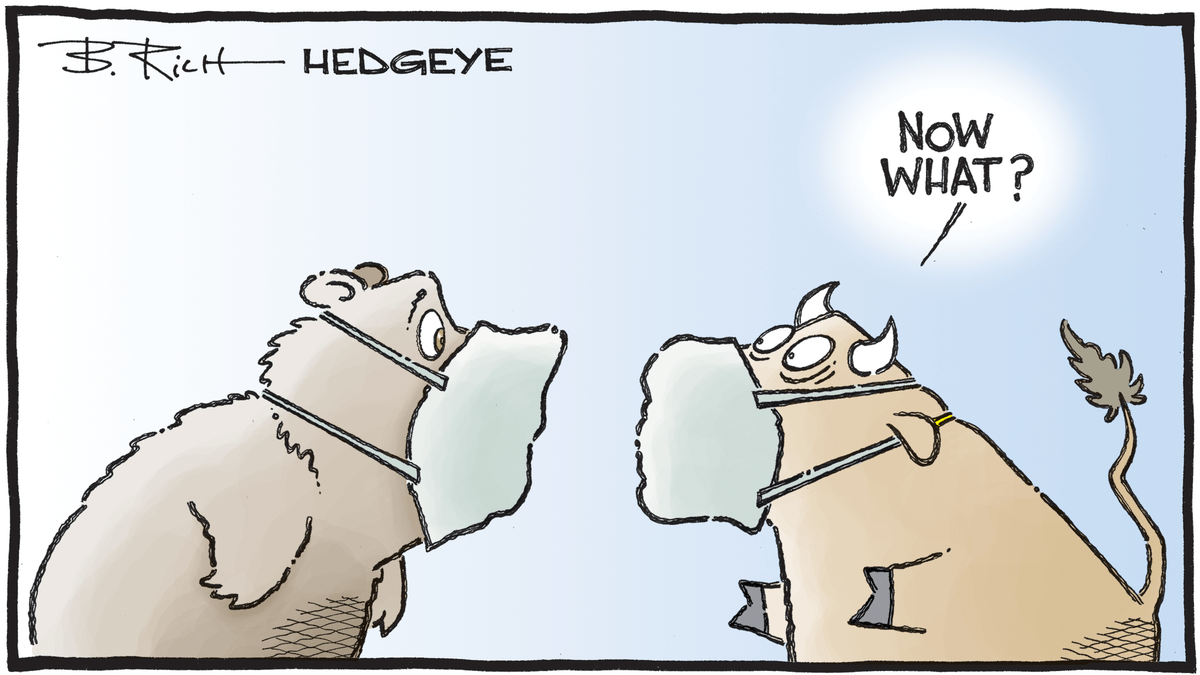
Global
stock markets plunged further Friday on spreading virus fears,
deepening a global rout after Wall Street endured its biggest one-day
drop in nine years.
Germany’s
DAX skidded more than 5%, Tokyo and Shanghai closed 3.7% lower and New
York markets looked set for more losses with the futures for the Dow
Jones Industrial Average and S&P 500 down 2.3%.
Investors
had been growing confident the disease that emerged in China in
December might be under control. But outbreaks in Italy, South Korea,
Japan and Iran have fueled fears the virus is turning into a global
threat that might derail trade and industry.
Anxiety
intensified Thursday when the United States reported its first virus
case in someone who hadn’t traveled abroad or been in contact with
anyone who had.
Virus
fears “have become full-blown across the globe as cases outside China
climb,” Chang Wei Liang and Eugene Leow of DBS said in a report.
In
early trading, London’s FTSE 100 sank 2.8% to 6,602.24 and Frankfurt’s
DAX tumbled 5% to 11,750.10. France’s CAC 40 lost 3.9% to 5,274.32.
Markets
in China and Hong Kong had been doing relatively well despite virus
fears. Mainland markets were flooded with credit by authorities to shore
up prices after trading resumed following an extended Lunar New Year
holiday. Chinese investor sentiment also has been buoyed by promises of
lower interest rates, tax breaks and other aid to help revive
manufacturing and other industries.
But
now, major companies are issuing profit warnings, saying factory
shutdowns in China are disrupting supply chains. They say travel bans
and other anti-disease measures are hurting sales in China, an
increasingly vital consumer market.
In
Asian trading on Friday, the Nikkei 225 in Tokyo tumbled 3.7% to
21,142.96 and the Shanghai Composite Index also fell 3.7%, to 2,880.30.
Hong Kong’s Hang Seng lost 2.5% to 26,129.93.
The
Kospi in Seoul fell 3.3% to 1,987.01 and Sydney’s S&P-ASX 200 sank
3.2% to 6,441.2. India’s Sensex skidded 3.6% to 38,331.87. New Zealand
and Southeast Asian markets also retreated.
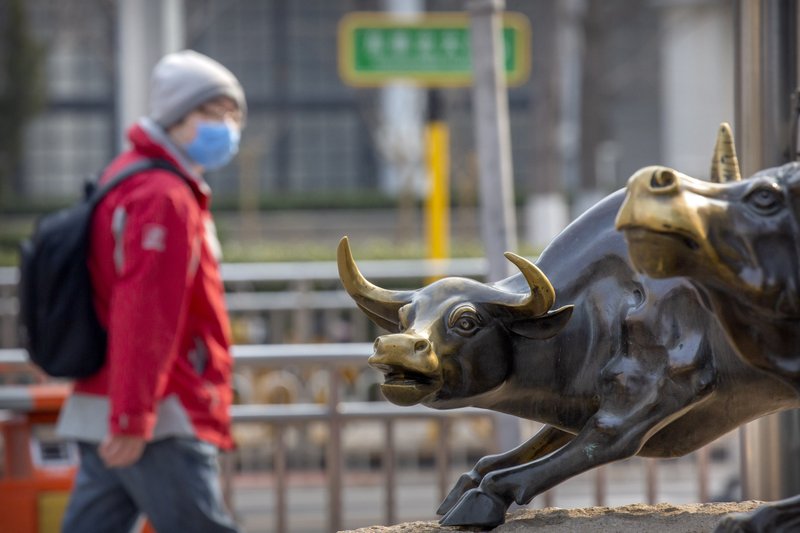
On
Thursday, the S&P 500 fell 4.4% to 2,978.76. The index is down 12%
from its all-time high a week ago, putting the market into what traders
call a correction.
Some
analysts have said that was overdue in a record-setting bull market,
though Mizuho Bank noted hitting that status in just six days was “the
fastest correction since the Great Depression” in the 1930s.
Investors
came into 2020 feeling confident the Federal Reserve would keep
interest rates at low levels and the U.S.-China trade war posed less of a
threat to company profits after the two sides signed a truce in
January.
The
market’s sharp drop this week partly reflects increasing fears among
many economists that the U.S. and global economies could take a bigger
hit from the coronavirus than previously thought, weakening consumer
confidence and depressing spending.
The
Dow shed 1,190.95 points on Thursday, its largest one-day point drop in
history, bringing its loss for the week to 3,225.77 points, or 11.1%.
To put that in perspective, the Dow’s 508-point loss on Oct. 19, 1987,
was equal to 22.6%.
“It
is a race to the bottom for U.S. indices,” Jingyi Pan of IG said in a
report. “It may still be too early to call a bottom given the
uncertainty around the matter of the coronavirus impact.”
U.S.
bond prices soared Thursday as investors fled to safe investments. The
yield on the benchmark 10-year Treasury note, or the difference between
the market price and what an investor will be paid if the bond is held
to maturity, fell to a record low of 1.16%.
A
shrinking yield caused by investors shifting money into the relative
safety of bonds and pushing up their market price is a sign of weakening
confidence in the economy.
Most
access to the city of Wuhan, a manufacturing hub of 11 million people
at the center of the outbreak, was suspended Jan. 23. The Lunar New Year
holiday was extended to keep factories and offices closed. The
government told the public to stay home.
China
has begun trying to reopen factories and other businesses in areas with
low risk after shutting down much of its economy to stem the spread of
the infection. Travel controls remain in effect in many areas and
elsewhere governments are tightening anti-disease controls as new cases
mount.
Japan
is preparing to close schools nationwide and officials on the northern
island of Hokkaido, where there are more than 60 confirmed cases of the
virus, declared a state of emergency and asked residents to stay home
over the weekend if possible. Saudi Arabia has banned foreign pilgrims
from entering the kingdom to visit Islam’s holiest sites. Italy has
become the center of the outbreak in Europe.
“The
more countries that are faced with fighting a pandemic, the wider the
potential for economic disruption and potential for increased
recessionary risks,” said Tai Hui of J.P. Morgan Asset Management in a
report.
In
energy markets Friday, benchmark U.S. crude fell $2.09 to $45.00 per
barrel in electronic trading on the New York Mercantile Exchange. The
contract lost $1.64 on Thursday to settle at $47.09. Brent crude oil,
used to price international oils, sank $2.05 to $49.68 per barrel in
London. It declined $1.25 the previous session to $52.18 a barrel.
The dollar declined to 108.57 yen from Thursday’s 109.58 yen. The euro gained to $1.1054 from $1.0998.
While U.S. Rep. Adam Schiff has been trying to impeach President Trump, the homeless crisis in his California congressional district has remained unaddressed, a candidate looking to replace Schiff said this week. Eric
Early, a Republican hoping to represent the state’s 28th Congressional
District in the next Congress, talked about the area’s problems while
touring the district with a reporter from FOX 11 of Los Angeles. The challenger accused Schiff – who drew national media attention last year as the face of House
Democrats’ efforts to remove Trump from office – of being too focused
on Capitol Hill politics instead of the daily wellbeing of people he was
elected to represent. “He’s
spent too much time in Washington seeking the limelight,” Early, a Los
Angeles-area attorney, said of Schiff. “It’s time for a congressman to
be here who actually cares about our district.”
“He’s
spent too much time in Washington seeking the limelight. It’s time for a
congressman to be here who actually cares about our district.” — Eric Early, GOP candidate for Adam Schiff's U.S. House seat
Some have accused Schiff of trying to position himself to eventually run for the U.S. Senate seat currently occupied by Democrat Dianne Feinstein, who will turn 87 in June. During
the tour of streets north of downtown L.A., Early showed FOX 11
examples of drug use, mental health problems and other social ills that
Schiff’s constituents grapple with every day. One homeless man
told Early he couldn’t afford to pay for colon cancer treatment, while a
young woman said her mother was fighting drug addiction and her father
was in prison. “It’s a mess out here, it’s terrible,” Early said, accusing Schiff of being unresponsive to the community’s needs. “He’s done nothing, or virtually nothing, for our district,” Early said. “Certainly not a darn thing for homelessness.” With
a University of Southern California poll showing the homelessness issue
to be the No. 1 concern of the district’s voters, Early said he plans
to draw attention to the problem as he works to block Schiff’s
reelection. Schiff’s team pushed back against Early’s accusations,
however. They noted that the longtime congressman – a native of
Massachusetts who later lived in Arizona before moving to California --
recently participated in a roundtable discussion on affordable housing
for the district and has introduced bills in Congress to address
homelessness.
The Schiff campaign characterized Early as someone
who was an operative of the Trump administration, taking on one of the
president’s most vocal critics. “These attacks from Eric Early,
who is from out of the district and knows little of our community, are
characteristic of someone who once described himself as Trump’s biggest
supporter in California,” Schiff’s campaign wrote to FOX 11. “They may please Trump, but do not impress our constituents.” Early,
however, countered that he believed more voters would support him
because he thinks most of the district’s residents are eager to see the
homelessness problem fixed. He said he would improve the current system
for dealing with the mentally ill, and support legislation to remove the
homeless from the streets if they refuse to accept help. “We need
somebody strong enough to fight and say we are going to forcibly move
these people off the streets if they don’t come voluntarily,” Early told
FOX 11. “That may not look quote-unquote compassionate but I believe
it’s much more compassionate than leaving these folks out here to die.”
Investigators in Ukraine have launched a probe into former U.S. Vice President Joe Biden over allegations that he pressured Ukrainian officials to fire the country’s top prosecutor in 2016, according to a report. The
Ukrainian probe was launched in response to a court order, after the
ousted prosecutor, Viktor Shokin, made an appeal for action in the
matter, Shokin’s attorney, Oleksandr Teleshetsky, told The Washington
Post. “They need to investigate this. They have no other
alternative,” Teleshetsky told the Post. “They are required to do this
by the decision of the court. If they don't, then they violate a whole
string of procedural norms.”
“They
need to investigate this. They have no other alternative. They are
required to do this by the decision of the court. If they don't, then
they violate a whole string of procedural norms.” — Oleksandr Teleshetsky, attorney for ousted Ukrainian prosecutor
Ukraine’s State Bureau of Investigations confirmed a probe was underway, the Post reported. Shokin has long objected to his removal, claiming Biden – who’s now running for president
-- pushed for his firing because the prosecutor tried to investigate
Burisma Holdings, the Ukrainian gas company where Biden’s son, Hunter Biden, was a highly paid board member, reportedly receiving $83,000 per month. Both
Bidens have repeatedly denied any wrongdoing in connection with
Ukraine. Hunter Biden pledged last year to avoid business deals with
foreign entities if his father becomes president. In a video from a
Council on Foreign Relations event in 2018, Biden is heard bragging
about using his influence to get Shokin fired, including threatening to
call back a $1 billion loan from the U.S. government to Ukraine if the
firing didn’t happen. “I said, ‘You’re not getting the billion.’
I’m going to be leaving here in, I think it was about six hours. I
looked at them and said: ‘I’m leaving in six hours. If the prosecutor is
not fired, you’re not getting the money,’” Biden says in the video,
referring to a conversation with then-Ukraine President Petro
Poroshenko. “Well, son of a b----, he got fired,” Biden adds. “And they put in place someone who was solid at the time.” Shokin’s
removal during the Obama era was done in coordination with the U.S.
State Department, the European Union and the International Monetary
Fund, the Post reported. Last summer, President Trump asked
Ukraine’s current president, Volodymyr Zelensky, to launch an
investigation into the Bidens regarding their dealings in the country – a
request that House Democrats said amounted to a “quid pro quo”
arrangement, alleging that Trump had threatened to withhold U.S. aid if
Ukraine did not comply with the president’s wishes. The House Democrats’ allegations became the basis of their impeachment of Trump,
on charges of abuse of power and obstruction of Congress, in a
party-line vote Dec. 18. But the Senate ultimately acquitted the
president Feb. 5, again mostly along party lines. Shokin mentioned
Joe Biden by name while making his request for an investigation but
case documents prepared by the State Bureau of Investigations refer only
to an unnamed U.S. citizen, Teleshetsky told the Post.