TOKYO
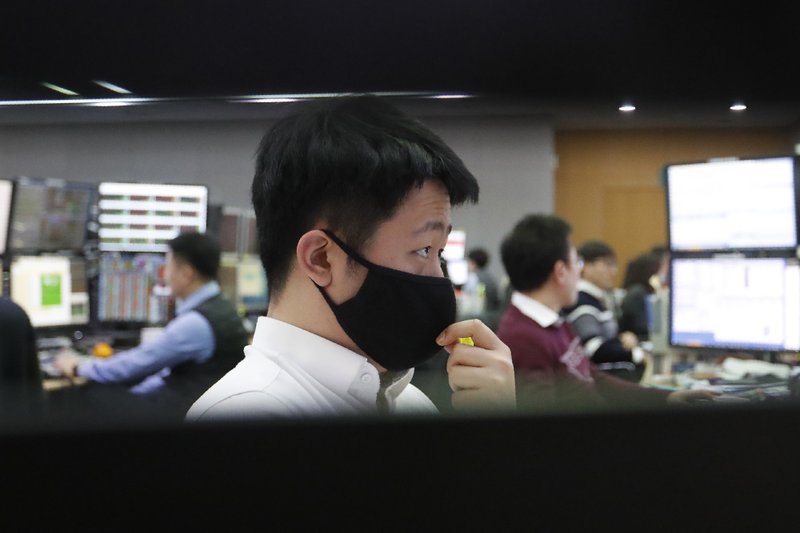
(AP) — Shares in Europe and Asia advanced Thursday, tracking an
overnight surge on Wall Street as governments and central banks take
more aggressive measures to fight the virus outbreak and its effects on
the economy.
Benchmarks rose in almost every market, though U.S. futures pointed to a weak open.
France’s
CAC 40 added 0.5% in early trading to 5,490.52, while Germany’s DAX was
up nearly 0.6% to 12,194.33. Britain’s FTSE 100 inched up 0.2% to
6,830.92.
U.S. shares were set to drift lower with Dow futures dipping 0.9% to 26,731. S&P 500 futures were down 0.9% at 3,085.70.
The
gains on Wall Street more than recouped big losses from a day earlier
as wild, virus-fueled swings around the world’s markets extend into a
third week. Health care stocks led gains after former Vice President Joe
Biden solidified his contender status for the Democratic presidential
nomination. Investors see him as more business-friendly than Senator
Bernie Sanders.
The
rally’s momentum accelerated around midday after House and Senate
leadership reached a deal on a bipartisan $8.3 billion bill to battle
the coronavirus outbreak. The measure’s funds would go toward research
into a vaccine, improved tests and drugs to treat infected people.
The
upward momentum carried into Asian trading, where Japan’s benchmark
Nikkei 225 rose 1.1% to finish at 21,329.12. Australia’s S&P/ASX 200
added 1.1% to 6,395.70. South Korea’s Kospi gained 1.3% to 2,085.26.
Hong Kong’s Hang Seng added 2.1% to 26,762.43, while the Shanghai
Composite jumped 2.0% to 3,071.68. India’s Sensex climbed 0.5% to
38,593.25.
Shares were also higher in Taiwan and Southeast Asia.
Shares
in Chinese blue chips rose Thursday in Hong Kong, suggesting
“investors’ confidence was restored by the surge in U.S. markets. We
don’t have the panic selling evident last week when the market fell
sharply,” said Francis Lun, a stock analyst in Hong Kong.
“Despite
the specter of coronavirus lurking over the world’s economy, all
appears well with the world, judging by Wall Street’s overnight
performance,” Jeffrey Halley of Oanda said in a commentary. “China’s
rate of new infections has plunged, even as coronavirus makes its
presence felt in the far-flung corners of the globe.”
Investors
expect other central banks will follow up on the Federal Reserve’s
surprise move Tuesday of slashing interest rates by half a percentage
point in hopes of protecting the economy from the economic fallout of
the new coronavirus.
Even
though many investors say they know lower interest rates will not halt
the spread of the virus, they want to see central banks and other
authorities do what they can to lessen the damage.
The
Bank of England has a meeting on March 26 on interest rates. The
European Central Bank and others have already cut rates below zero,
meanwhile, which limits their monetary policy firepower. But economists
say they could make other moves, such as freeing up banks to lend more.
ENERGY:
Benchmark crude oil rose 19 cents to $46.97 per barrel in electronic
trading on the New York Mercantile Exchange. It fell 40 cents to settle
at $46.78 a barrel. Brent crude oil, the international standard, gained
25 cents to $51.38 a barrel.
CURRENCIES: The dollar fell to 107.27 Japanese yen from 107.55 yen on Wednesday. The euro fell to $1.1127 from $1.1131.
The American Bar Association said on Wednesday that it is "deeply troubled" by a comment made by Senate Minority Leader Chuck Schumer, D-N.Y., outside the Supreme Court that many said was a direct threat to two sitting justices. Schumer
was at a rally over a high-profile abortion case while the case played
out inside. Schumer named Associate Justices Neil Gorsuch and Brett
Kavanaugh and, in an impassioned speech, said, "You have released the
whirlwind, and you will pay the price. You will not know what hit you
if you go forward with these awful decisions." Justin Goodman, a
Schumer spokesman, responded after Chief Justice John Roberts issued a
statement on what he called "threatening" comments. Goodman said that
Schumer was addressing Republican lawmakers when he said a "price" would
be paid. Goodman noted that the chief justice remained quiet in
recent weeks when President Trump questioned the impartiality of
Justices Ruth Bader Ginsburg and Sonia Sotomayor. "Personal
attacks on judges by any elected officials, including the president, are
simply inappropriate," the ABA’s statement read. "Such comments
challenge the reputation of the third, co-equal branch of our
government; the independence of the judiciary; and the personal safety
of judicial officers. They are never acceptable." Trump himself
weighed in on Schumer's comments, tweeting, “If a Republican did this,
he or she would be arrested, or impeached. Serious action MUST be taken
NOW!” Mark Levin, the “Life, Liberty, & Levin” host, said he wants Schumer
to be “sanctioned by the Bar, admonished by the Senate, investigated by
the Senate ethics committee, and even reviewed” by the Department of
Justice. "No
individual, let alone the Senate Democrat leader, who is also a lawyer,
should escape accountability for his loathsome conduct," Levin said. Fox News' Gregg Re, Joseph A. Wulfshon and the Associated Press contributed to this report
FBI officials involved
in the wiretapping of former Trump campaign adviser Carter Page have
been blocked, at least temporarily, from appearing before the Foreign
Intelligence Surveillance Court (FISC) in regard to other cases, in
rebuke that exceeded the remedial recommendations made by the independent monitor recently appointed by the court. The
decision by James E. Boasberg, chief judge of the secretive court
created under the Foreign Intelligence Surveillance Act (FISA), comes as
Congress faces a March 15 deadline on whether to renew three FBI national-security surveillance and investigative tools that were enacted after 9/11. "FBI
personnel under disciplinary review in relation to their work on FISA
applications accordingly should not participate in drafting, verifying,
reviewing, or submitting such applications to the Court while the review
is pending," Boasberg wrote. "The same prohibition applies to any DOJ
attorney under disciplinary review, as well as any DOJ or FBI personnel
who are the subject of a criminal referral related to their work on FISA
applications." In a 19-page ruling that can be read here,
Boasberg also largely approved revisions that the FBI said it would
make to its process for seeking wiretaps – in reaction to a damning
report from DOJ Inspector General Michael Horowitz that detailed errors
and omissions in applications to conduct surveillance on Page in 2016
and 2017. Among the problems, Boasberg noted, were that the FBI
had "omitted or mischaracterized" various "information bearing on
[former British spy Christopher] Steele's personal credibility and
professional judgment." It was Steele's unsubstantiated and
largely debunked dossier that played a key role in the FBI's warrants
to surveil Page, but the FBI did not advise the FISC of
"inconsistencies" in claims made by Steele's sub-source and assertions
made by Steele himself. The bureau also did not clearly disclose that
the dossier was paid for by the Hillary Clinton campaign and Democratic
National Committee (DNC).
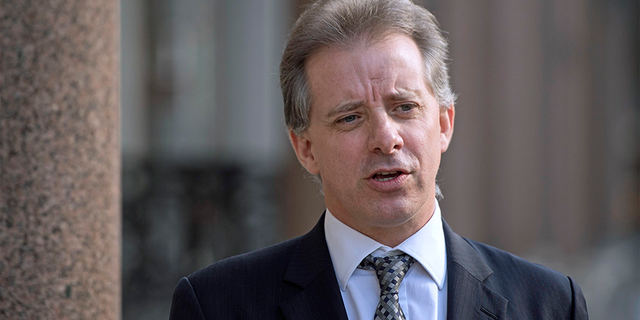
Former British spy Christopher Steele sat for a four-hour videotaped deposition last month.
Special Counsel Robert Mueller found no evidence to
support a slew of Steele dossier claims, including that ex-Trump lawyer
Michael Cohen traveled to Prague as part of a conspiracy with Russian
hackers, that Page had received a large payment relating to the sale of a
share of a Russian oil giant, that Russia was running a disinformation
campaign through a nonexistent consulate in Miami, or that Russians
possessed lurid blackmail material on the president. "Omissions of
material fact were the most prevalent and among the most serious
problems with the Page applications," Boasberg wrote. The judge pointed
out that the inspector general had found that the FBI did not disclose
to the court that it knew Page had a prior relationship with another
intelligence agency from 2008 to 2013 -- a period in which Page had
voluntarily told the agency that he had contacts with Russians. Instead,
the FBI's FISA application made Page's Russian contacts seem furtive
and undisclosed, even though Page had reported them. Most
egregiously, Boasberg noted, "when pressed by the FBI declarant about
the possibility of a prior relationship between Page and the other
agency during the preparation of the final application in June 2017, the
FBI OGC [Office of General Counsel] attorney added text to an email
from the other agency stating that Page was not a source." That
apparently deliberate falsification of the FISA warrant evidence is
believed to be among the subjects under review by Connecticut U.S.
Attorney John Durham, who is analyzing all stages of the Page FISA and
other matters in an ongoing criminal inquiry. Moreover, the goverment also did disclose that it had "learned that Steele had been the direct source" of information in a September 2016 Yahoo News article,
Boasberg said. That information could have "shed further light on his
motivations," even though the FBI did not expressly use the Yahoo News
article to corroborate Steele's claims. The Justice Department acknowledged in January that
at least some of the Page warrant applications had fallen short of the
legal standard required to continue surveilling him, known as the
"probable cause standard." Horowitz earlier found
that without the Steele dossier's claims, there would have been
insufficient evidence to pursue a FISA warrant for Page. ("We determined
that the [FBI] Crossfire Hurricane team’s receipt of Steele’s election
reporting on September 19, 2016 played a central and essential role in
the FBI’s and Department’s decision to seek the FISA order," Horowitz wrote.) Also in January, David Kris, who has been appointed by the FISC to oversee the FBI's proposed surveillance reforms, alerted the court that the bureau's proposals were "insufficient" and must be dramatically "expanded"
-- even declaring that FBI Director Christopher Wray needs to discuss
the importance of accuracy and transparency before the FISC every time
he "visits a field office in 2020." But, Kris had not expressly
called for the banishment of relevant FBI agents, and the DOJ had also
declined to make such a recommendation. Last month, Attorney General William Barr told Senate Republicans he would be taking action to clean up the errors and omissions cited by Horowitz and the DOJ. “I think he's going to take a lot of what Horowitz did and add his own stamp on it," Sen. Lindsey Graham, R-S.C., said after a lunch meeting with Barr at the time. Graham,
chairman of the Senate Judiciary Committee who has been concerned with
FISA warrant abuse, said Barr's executive changes were "pretty
comprehensive [and] very impressive.”
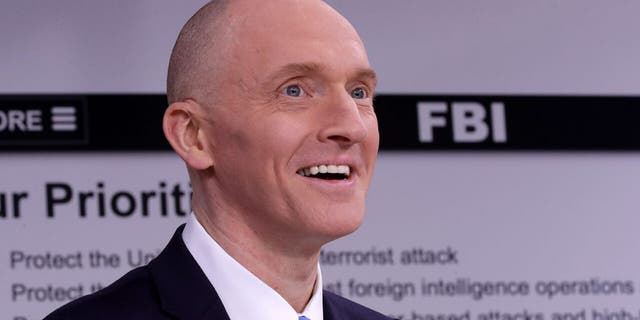
Former Trump adviser Carter Page. (Getty Images)
In his December report,
Horowitz said four applications submitted to the FISA court, requesting
approval to conduct surveillance on Page, presented an incomplete and
inaccurate account of the evidence arguing for the surveillance – such
as omissions of details that would have raised questions about FBI
claims that Page was a Russian agent. Horowitz found multiple
instances in which the FBI did not follow its so-called "Woods
Procedures" to independently verify facts presented by a third party.
Instead, those facts were simply included in the FISA applications to
monitor page. Meanwhile, Joe Pientka -- an FBI agent who Horowitz
found was deeply involved in the Page FISA application process, as well
as the bureau's fateful interview with former national security adviser
Michael Flynn -- has been transferred to San Francisco and his name removed from the FBI's website. Graham has recently sought to question Pientka, among others. While
many in the intelligence community call the FISA program vital for
national security in the post-9/11 world, some in Washington have raised questions about potential encroachments on civil liberties and personal privacy. President
Trump met with Republicans on Tuesday night regarding changes that
could be included in revised FISA legislation that Trump could sign into
law if approved by Congress this month, the Times reported. House Minority Leader Kevin McCarthy, R-Calif., then discussed the proposals on Wednesday with House Speaker Nancy Pelosi, D-Calif., according to the paper. “McCarthy
said that he thought he and Nancy Pelosi might come up with a package,”
Sen. Graham told reporters Wednesday, according to the Times. “Well, if
that happens, that’s a big breakthrough.” Fox News' Marisa Schultz and Chad Pergram contributed to this story.
Chief
Justice of the United States John Roberts on Wednesday issued a highly
unusual and forceful rebuke to Senate Minority Leader Chuck Schumer,
D-N.Y., calling his threatening remarks directed
at Associate Justices Neil Gorsuch and Brett Kavanaugh "irresponsible"
and "dangerous" -- prompting Schumer's office to slam Roberts and accuse
him of bias. The extraordinary back-and-forth began hours earlier at a pro-choice rally hosted by the Center for Reproductive Rights,
when Schumer ominously singled out President Trump's two Supreme Court
picks: "I want to tell you, Gorsuch. I want to tell you, Kavanaugh. You
have released the whirlwind and you will pay the price!" Schumer warned.
"You won’t know what hit you if you go forward with these awful
decisions." Roberts replied in his remarkable written statement,
obtained by Fox News: "This morning, Senator Schumer spoke at a rally in
front of the Supreme Court while a case was being argued inside.
Senator Schumer referred to two Members of the Court by name and said he
wanted to tell them that 'You have released the whirlwind, and you will
pay the price. You will not know what hit you if you go forward with
these awful decisions.'" Roberts continued: "Justices know that
criticism comes with the territory, but threatening statements of this
sort from the highest levels of government are not only inappropriate,
they are dangerous. All Members of the Court will continue to do their
job, without fear or favor, from whatever quarter." Schumer
spokesman Justin Goodman quickly responded by accusing Roberts of bias,
further escalating the confrontation. Goodman insisted that Schumer was
addressing Republican lawmakers when he said a "price" would be paid --
even though Schumer had explicitly named Kavanaugh and Gorsuch. READ ROBERTS' STATEMENT “Women’s
health care rights are at stake and Americans from every corner of the
country are in anguish about what the court might do to them," Goodman
said in a statement to Fox News. “Sen. Schumer’s comments were a
reference to the political price Senate Republicans will pay for putting
these justices on the court, and a warning that the justices will
unleash a major grassroots movement on the issue of reproductive rights
against the decision." He added: “For Justice Roberts to follow
the right wing’s deliberate misinterpretation of what Sen. Schumer said,
while remaining silent when President Trump attacked Justices [Sonia]
Sotomayor and [Ruth Bader] Ginsberg last week, shows Justice Roberts
does not just call balls and strikes.” That was an apparent reference to Trump's call for those liberal justices to recuse themselves from
some cases due to alleged bias. ("I just don’t know how they cannot
recuse themselves to anything having to do with Trump or Trump-related,"
Trump said. Ginsburg, who has publicly defended Kavanaugh and Gorsuch as "very decent" and "very smart," previously called Trump a "faker," and Sotomayor sharply criticized the administration in a recent dissent.) Video
of Schumer's remarks had quickly circulated on social media, with
Republicans and prominent liberals casting the comments as a clear
threat against two sitting Supreme Court justices. Schumer, they said,
had gone far beyond merely requesting that justices recuse themselves as
he stood in front of the Supreme Court Building. Late Wednesday, Trump used Schumer's own words to condemn him. "There
can be few things worse in a civilized, law abiding nation, than a
United States Senator openly, and for all to see and hear, threatening
the Supreme Court or its Justices," Trump wrote on Twitter. "This is
what Chuck Schumer just did. He must pay a severe price for this!" Trump
also tweeted: "This is a direct & dangerous threat to the U.S.
Supreme Court by Schumer. If a Republican did this, he or she would be
arrested, or impeached. Serious action MUST be taken NOW!" Sen. Josh Hawley, R-Mo., said he would introduce a resolution to censure Schumer. "I would call on Schumer to apologize, but we all know he has no shame," Hawley wrote. "So tomorrow I will introduce a motion to censure Schumer for his pathetic attempt at intimidation of #SupremeCourt." Even left-wing Harvard Law School professor Laurence Tribe tweeted: "These remarks by @SenSchumer
were inexcusable. Chief Justice Roberts was right to call him on his
comments. I hope the Senator, whom I’ve long admired and consider a
friend, apologizes and takes back his implicit threat. It’s beneath him
and his office." "The American Bar Association is deeply troubled
by today’s statements from the Senate Minority Leader threatening two
sitting justices of the U.S. Supreme Court over their upcoming votes in a
pending case," the ABA said in a statement. "Whatever one thinks about
the merits of an issue before a court, there is no place for threats --
whether real or allegorical. Personal attacks on judges by any elected
officials, including the President, are simply inappropriate. Such
comments challenge the reputation of the third, co-equal branch of our
government; the independence of the judiciary; and the personal safety
of judicial officers. They are never acceptable." During Kavanaugh's contentious confirmation battle in late 2018, a mob of left-wing protesters banged on the doors of the Supreme Court Building, many of them complaining about his possible future abortion rulings. Schumer
noted at the rally that an upcoming Supreme Court case, June Medical
Services LLC v. Russo, is the first "major" abortion case since
President Trump's court picks have been on the bench. The dispute, dealing
with restrictions over who can perform abortions, involves a Louisiana
law similar to one in Texas that the court ruled unconstitutional in
2016, before either Trump justice was on the Supreme Court and before
conservatives held a 5-4 majority. Schumer did not specifically
explain what "price" the justices would face. During the rally, however,
Schumer did go on to describe how Republican lawmakers could be
impacted politically. "We will tell President Trump and Senate
Republicans who have stacked the court with right-wing ideologues that
you’re gonna be gone in November, and you will never be able to do what
you’re trying to do now ever, ever again!” he said. Earlier in his
address, Schumer had accused Republican legislatures of "waging a war on
women" and said reproductive rights are "under attack in a way we
haven't seen in modern history." The case before the court is part
of a larger effort by red states to pass laws regulating abortion to
test how supportive the new justices will be of precedents such as Roe
v. Wade and Planned Parenthood v. Casey, which formed the basis for
abortion being legal. The law in question requires abortion
doctors in Louisiana to have admitting privileges at a nearby hospital
in case a patient experiences complications during or after a
procedure. Those backing the law argue that it regulates abortion
providers similarly to how other medical providers are regulated by the
state while also ensuring doctors are competent. Opponents say that it
is targeted at abortion providers with the goal of shutting them down,
citing a 2016 case out of Texas in which the Supreme Court invalidated a
very similar law. The
court's opinion in the 2016 case, Whole Women's Health v. Hellerstedt,
said the law placed an undue burden on women seeking abortions because
it would significantly reduce the number of available facilities in the
state. During Wednesday's oral arguments,
Kavanaugh and Roberts questioned whether Lousiana might be different
from Texas in terms of the practical effect the law would have. "Assume
all the doctors who currently perform abortions can obtain admitting
privileges, could you say that the law still imposes an undue burden,
even if there were no effect?" Kavanaugh asked. Roberts suggested other states may have different standards that might be constitutional. Gorsuch did not speak during the arguments. Wednesday's
statement was not the first time Roberts has felt compelled to issue an
unusual public rebuke of a sitting officeholder, and he has
demonstrated his willingness to take on Republicans and Democrats alike.
In 2018, Roberts defended the judiciary after Trump railed against what
he called an "Obama judge." “We do not have Obama judges or Trump
judges, Bush judges or Clinton judges,” Roberts said at the time, in a
statement also released by the court’s public information office. “What
we have is an extraordinary group of dedicated judges doing their level
best to do equal right to those appearing before them.” Roberts, writing on the eve of Thanksgiving, concluded: “That independent judiciary is something we should all be thankful for.” Trump
quickly shot back: "Sorry Chief Justice John Roberts, but you do indeed
have ‘Obama judges,' and they have a much different point of view than
the people who are charged with the safety of our country.” Fox News' Bill Mears, Shannon Bream, Tyler Olson, and Ronn Blitzer contributed to this report.
Attorney General William Barr lunched
with Senate Republicans at the Capitol last week. According to Senate
Majority Leader Mitch McConnell, R-Ky., there was nary a syllable of
conversation about a cloud of issues hovering over the Department of
Justice. McConnell said there was nothing about perceived duress
inside the Justice Department. No questions about how prosecutors
handled high-profile cases. Silence regarding alleged pressure from
President Trump. Whether or not the president’s Twitter feed undercut
Barr’s independence. Pardons. Reticence about if Barr would resign. “He enjoys overwhelming support in our conference,” boasted McConnell of Barr. “We all think he’s doing an outstanding job.” Instead,
Barr and Senate Republicans discussed FISA – the Foreign Intelligence
Intelligence Surveillance Act. The program dates back to the mid-1970s.
The measure allows the government to wiretap and electronically skim
information between foreign entities and those inside the U.S. in order
to combat terrorism. Congress approved the Patriot Act after 9/11,
substantially amending the FISA program. But now, FISA is up for
renewal on March 15. Republicans and the Trump administration have a
challenge in front of them. They routinely express concern about FISA
and domestic intelligence after the process ran amuck during the 2016
presidential campaign. Yet many lawmakers from both parties are worried
about renewing the program to protect the nation. Civil libertarians and
privacy advocates contend FISA awards too much power to the government.
A report late last year by Justice Department Inspector General Michael
Horowitz bore that out. Horowitz explored how a broad FISA warrant
focused on former Trump campaign aide Carter Page. Barr and FBI Director
Christopher Wray argue the FISA program wasn’t designed to target
someone like Page – but did. That’s why Barr faces the unenviable task of selling the merits of the program when he met with some skeptical Senate GOPers. “His
reason for coming up today was that we have these expiring intelligence
provisions. Some of them have generated some degree of bipartisan
controversy in the past. The attorney general just wanted to underscore,
again, the importance of these provisions that were enacted in the wake
of the 9/11 attack,” said McConnell. Many
in the intelligence community argue the nation is vulnerable to a
9/11-style terrorist attack if the program ends. Yet there are
reservations about FISA. A coalition of libertarian-minded Democrats and
Republicans nearly killed the USA Freedom Act in 2015. There were
concerns about bulk collection of data, phone records and “mass
surveillance” authorized under both FISA and the Patriot Act. That made
it tough to assemble the right cocktail of Democrats and Republicans to
re-up those programs five years ago. The Trump administration
could have a tough task selling the merits of FISA to skeptical
lawmakers, especially with the lack of a permanent, Senate-confirmed
Director of National Intelligence to make the case. Trump just announced
he was again tapping Rep. John Ratcliffe, R-Texas, to become DNI. But
the Senate certainly won’t confirm Ratcliffe that quickly. And,
administration officials may find the hardest sell of all isn’t to
members of Congress. It’s to President Trump himself. This comes
as Congress is preparing a $7.5-8 billion supplemental spending bill to
combat the coronavirus. The plan is to advance the package through the
House and Senate this week. But there was chatter last week about the
urgency to approve the FISA renewal – and perhaps latch it to the
emergency spending package. After all, that’s the train leaving the
station. In fact, House Speaker Nancy Pelosi, D-Calif., notes that the
true deadline for FISA is March 12 – a Thursday. March 15 is a Sunday.
Congress would disappear for the weekend on the 12th. A senior Republican leadership source suggested that mixing the two was not tenable. When
asked about hooking an interim FISA extension to the coronavirus
measure, Sen. Patrick Leahy, D-Vt., the top Democrat on the Senate
Appropriations panel, exclaimed “Oh, God, no!” Leahy noted he wanted a
“clean” coronavirus bill. “The people who want to do FISA could have finished it last year,” added Leahy. But
Senate Appropriations Committee Chairman Richard Shelby, R-Ala., on
Monday didn’t close the door on the idea of attaching a FISA renewal to
the coronavirus spending bill, saying it wouldn’t be a poison pill. “It’s not a poison pill if it moves,” he said. As
Leahy spoke just outside the doors leading to the Senate chamber, Sen.
Mike Lee, R-Utah, one of the most libertarian-minded lawmakers on either
side of the Capitol, passed by a clutch of reporters and briefly
chanted “Kill FISA! Kill FISA!” A Republican source with ties to
the White House dismissed the concept of linking a must-pass piece of
legislation, the coronavirus supplemental bill, with FISA. “If they do that, we’ll blow it up,” said the source. When
asked if he was in favor of attaching a FISA extension to the
coronavirus measure, House Judiciary Committee Chairman Jerry Nadler,
D-N.Y., replied, “We shouldn’t.” Nadler’s panel canceled a markup
session to prepare a new FISA bill last week over disagreements about
amendments. Nadler wouldn’t commit to when he would reschedule the
markup, but added, “It’s got to be soon.” Nadler was still
confident that Congress could tackle an overall FISA reauthorization
plan – and not just a stopgap – before the mid-March deadline. “I do not want to do an extension,” said Nadler. “We need major reforms” Nadler
says they shouldn’t be “trying to tie anything to the coronavirus”
supplemental spending bill, such as an interim extension of FISA. When asked if he was concerned that the House could be jammed by the Senate with a FISA reform bill, Nadler replied “yep.” Senate Judiciary Committee Chairman Lindsey Graham, R-S.C., said he would speak to Trump about FISA this weekend. “I don’t see us being able to do it before March 15,” said Graham. Republicans
and some Democrats on both sides of the Capitol advocate major reforms
to FISA after alleged abuses of the program in the 2016 campaign for
warrants and, generally, other surveillance concerns. “Metadata
will be out,” said House Majority Leader Steny Hoyer, D-Md., referring
to the practice which sweeps up the records of virtually every phone
call ever made. Hoyer is working with House Minority Leader Kevin
McCarthy, R-Calif., to forge a FISA reform package palatable to both
sides. But some Republicans believe Democrats simply want to renew FISA
the way it is. “They want a cover-up,” said one senior House Republican who asked they not be identified. “They don’t want any changes.” Republicans, disturbed by how the government used FISA in the 2016 campaign, are seeking three main reforms: 1) A mandate that the government generate a transcript of all super-secret FISA court hearings. 2) Criminal penalties for those who are convicted of abusing the FISA process for political reasons. 3) The authorization of an “advocate” who would work alongside those facing surveillance in a FISA court. In short, this is why Senate Republicans didn’t discuss anything except FISA with Barr last week. “That's
what dominated the discussion of the lengthy discussion,” said
McConnell, “Because there are some of our members who have a different
point of view about this.” And there may be so many different points of view that could stymie Congress from meeting the mid-month deadline.
A Los Angeles County judge Tuesday evening denied an emergency motion filed by Sen. Bernie Sanders’ campaign to keep polling locations open an extra two hours in the county, in a state he is projected to easily win. LA County Registrar Dean Logan said any voters in line when polls close at 8 p.m. would get to vote, FOX LA reported. "My
commitment is we will serve you tonight and make sure you have the
opportunity to cast your ballot and that ballot will be included in the
final returns for this election," he said. Sanders’
motion stated they wanted to ensure Los Angeles County voters “can
exercise their constitutional right to vote,” citing the county is using
a new voting system this year and some of the technology used in the
primary has resulted in “problems because of check-in stations not
working and machine failures, with insufficient or overwhelmed tech
support.” The motion added that a denial of the extra two hours
would “immediately and irreparably” harm “County voters' right to
participate in our democracy.” It was filed after several
complaints came in over hours-long wait times at several polling
locations in the county, reports of errors in the new electronic voting
system, voting machines not working and paper shortages, FOX LA reported. Any voter in Califonria may vote by mail instead of going to a polling location. By
Tuesday night, Sanders' had a roughly 10 point lead over former Vice
Presient Joe Biden in the state as votes continue to be counted.
No
one won the GOP nomination outright for the Alabama Senate, which means
voters will head back to the polls for a runoff election later this
month to determine whether former Sen. Jeff Sessions can mount a political comeback. With 80 percent of the votes counted, Sessions had 32 percent of the vote to reclaim his old senate seat, just behind Tommy Tuberville, the former Auburn University football coach, who had 33 percent of the Republican primary votes on Super Tuesday. “Tonight,
it looks like a great night for us and a bad night for the swamp,"
Tuberville told cheering supporters. "We’re going to overtime and I know
somebody that knows how to win in overtime."
Alabama U.S. Senate candidate Tommy Tuberville, right, watches
election returns and works on his speech in the main house at Auburn
Oaks Farm, the site of his election party, Tuesday, March 3, 2020.
Tuberville is in a tight race with seven competitors for the Senate
seat. (Joe Songer/The Birmingham News via AP)
As the top two finishers, Sessions and Tuberville
will face off again in the March 31 runoff election. The winner will
become Republicans' best bet to pick off an accidental blue seat held by
Democrat Sen. Doug Jones. Coming up short was Bradley Byrne, a
Republican congressman, who had 25 percent of the vote and failed to
advance to the runoff. Roy Moore, former chief justice of the Supreme
Court of Alabama, was a distant fourth place with 7 percent of the vote. Sessions
is seeking to reclaim the Senate seat he had for 20 years and gave up
to become President Trump's attorney general. He's been running on his
record of being close to Trump, despite the president repeatedly
knocking him. The state's Democrat senator, Doug Jones, squeaked
out a victory in the red state in the 2017 special election over Moore,
who was widely disavowed for allegations of past sexual misconduct with
minors but had retained Trump’s endorsement. In
his election night speech, Sessions accused Tuberville of being a
"tourist" from Florida unfamiliar with the people of Alabama and
unequipped to execute Trump's agenda in Washington. "Where was he
when President Trump needed him," Sessions said. "What did he do for
Trump? Never said a kind word about him that I can find. Never gave
a single penny of his millions to the Trump campaign. So one thing is
clear. There is no doubt where I stand on the issues [and] no doubt of
my support for Donald Trump and his agenda." Sessions was the
first senator to endorse Trump for his 2016 presidential bid and was
rewarded with the attorney general position, a job he called the most meaningful of his life. But
Trump soured on Sessions when he recused himself from the FBI Russia
probe that gave way to the appointment of Special Counsel Robert
Mueller; Trump called Sessions the “biggest mistake” of his presidency.
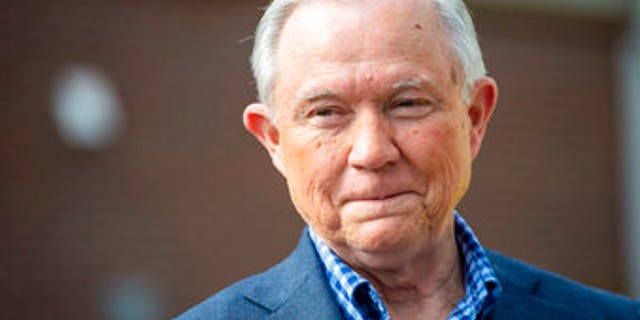
Jeff Sessions talks with the media after voting in Alabama's
primary election, Tuesday, March 3, 2020, in Mobile, Ala. The former
Attorney General is part of a seven person field in the state's
Republican Senate primary, along with former Auburn University football
coach Tommy Tuberville, U.S. Rep. Bradley Byrne and former Alabama Chief
Justice Roy Moore, jockeying for the GOP nomination and the right to
challenge Democratic Sen. Doug Jones in November. (AP Photo/Vasha Hunt)
Sessions resigned at Trump’s request in November
2018. He launched his political comeback a year later in a campaign ad
that was mocked as a hostage video as Sessions stressed he didn’t write a
“tell-all book” or say a “cross word” about Trump since he was ousted. Meanwhile,
Tuberville put Trump's name on the back of his campaign bus and
said “God sent us Donald Trump” in his television ad. He's campaigned as
an outsider who will stand with Trump on building a border wall,
cracking down on illegal immigration and draining the Washington swamp. Tuberville
accused Sessions of abandoning Trump when times got tough in the Russia
probe. In his Super Tuesday speech, he ripped Sessions for his untimely
exit from Trump's cabinet. “We’re going to finish what President
Trump started when he looked at Jeff Sessions from across the table and
said, ‘You’re fired," Tuberville said. Byrne came out with a tough
ad in the final days of the campaign mocking both Sessions and
Tuberville for getting "fired" from their past jobs. Tuberville was asked to resign as coach of Auburn after a rough 2008 season. "And Hillary [Clinton] still ain't in jail," the ad says of Sessions. Tuberville
also coached at the University of Mississippi, Texas Tech and
the University of Cincinnati. He won SEC coach of the year twice -- at
Auburn and Ole Miss. The big wildcard will be whether Trump
endorses in the head-to-head matchup between Sessions and Tuberville.
The winner will face Jones in November. Fox News' Jayla Whitfield contributed to this report.
Marianne
Williamson, the spiritual guru and bestselling author who ended her
campaign for president earlier this year, deleted a tweet late Tuesday
calling Joe Biden’s Super Tuesday success the result of a "coup." FOX NEWS VOTER ANALYSIS: BIDEN, SANDERS EMERGE FROM PACK Williamson,
a Sanders supporter, called out Mayor Pete Buttigieg and Sen. Amy
Klobuchar a day earlier for consolidating their support behind Biden.
She suggested that there must have been something in it for them
and tweeted that they probably read President Trump’s book, "The Art of
the Deal." But on Tuesday, her criticism was more pointed.
Screengrabs circulated online that showed a deleted tweet that
downplayed Biden's post-South Carolina surge and Super Tuesday success. "This
was not a resurrection; it was a coup. Russiagate was not a coup.
Mueller was not a coup. Impeachment was not a coup. What happened
yesterday was a coup. And we will push back," she tweeted. The tweet
was later deleted. Biden carried contests across the South and
beyond, while Sanders, I-Vt., won in delegate-prize California. The
second-biggest contest, in Texas with 228 pledged delegates, is
currently too close to call as election officials continue to report
results. Williamson is not the only Sanders supporter who’s framed
2020 as Sanders against the Democrat Machine. These supporters also say
that Sanders is also taking on the Mainstream Media. Juan Gonzalez, a Democracy Now! co-host, said any mention of Sanders has been "about the movement to stop" him and not "what he stands for." [It's]
far different in terms of Sanders' surge than from the way the media
dealt with Donald Trump, which was just to turn on the cameras and let
him speak at his rallies and let him talk directly to the American
people in 2016," Gonzalez said. Fox News' Gregg Re and Joseph A. Wulfshon contributed to this report