Presumptuous Politics

Wednesday, March 11, 2020

Biden's 'Joe-mentum' grows as Dem front-runner sweeps Midwest contests, eyes Sanders knockout


History didn’t repeat itself in Michigan for Bernie Sanders.
And because of that, the populist U.S. senator from Vermont had an extremely disappointing evening on "Super Tuesday II" -- and now faces daunting delegate math that leaves him slipping swiftly out of reach of the Democratic presidential nomination.
Just four years ago, it was in Michigan where Sanders pulled off a historic upset over eventual nominee Hillary Clinton. At the time, the victory kept his White House bid alive.
Fast forward four years later and Sanders – down in the public opinion polls by double digits once again in the Great Lake State – was convincingly defeated by former Vice President Joe Biden.
Four years ago Sanders nearly topped Clinton in Missouri. This time around he lost the state by a nearly 2-to-1 margin to Biden. And the former vice president trounced Sanders in Mississippi and won in Idaho as well.
Sanders – who won a landslide victory in the 2016 Washington state caucuses – was neck and neck with Biden in the state’s 2020 primary with just over two-thirds of the vote counted. Biden initially had the slight edge in Idaho – with more than three-quarters of the vote counted -- and was eventually declared the winner.
Sanders was up in North Dakota’s caucuses, where only 14 delegates were up for grabs.

Undisputed front-runner

Biden’s blockbuster performance boosted his lead in the all-important race for presidential convention delegates and further cemented his status as the undisputed front-runner for the Democratic nomination. And Biden's strong performance presented Sanders with a difficult choice to make on whether to continue his White House bid.
In a remarkable and uncharacteristic move, Sanders opted not to deliver a primary night address, passing on the opportunity to speak to a national audience.
Biden, speaking near his national campaign headquarters in Philadelphia on Tuesday night after canceling a rally in Cleveland due to coronavirus concerns – and after an ugly clash with an auto worker in Michigan earlier in the day -- reached out to Sanders and his legions of supporters with an olive branch.
“I want to thank Bernie Sanders and his supporters for their tireless energy and their passion. We share a common goal and together we’ll defeat Donald Trump. We’ll defeat him together,” Biden said.
“I want to thank Bernie Sanders and his supporters for their tireless energy and their passion. We share a common goal and together we’ll defeat Donald Trump. We’ll defeat him together.”
— Joe Biden
And Biden spotlighted how many of his former rivals, as well as much of the Democratic Party’s establishment, have coalesced around his campaign in the week and a half since his landslide victory in the South Carolina primary – which was followed three days later by his sweeping victories the first Super Tuesday, March 3.
“In just the past week, so many of my incredibly capable competitors have endorsed me. Mayor Pete Buttigieg, Amy Klobuchar, Beto O’Rourke, Mike Bloomberg, Cory Booker and Kamala Harris,” Biden noted. “Together we’re bringing this party together. That’s what we have to do.”
Sanders flew home to Burlington, Vt., after also canceling a primary night campaign rally in Cleveland due to coronavirus concerns. Huddling with his advisers, the senator now faces a primary calendar that doesn’t get any easier.
The four major states that hold primaries next week – Florida, Illinois, Ohio, and Arizona – were states that Sanders lost to Clinton four years ago.

Coalition comes together

Sanders spent most of his time the past week stumping in Michigan. But there and in the other larger states that held contests Tuesday, Sanders wasn’t able to expand on his base. Biden – meanwhile – once again assembled a large coalition of votes – solidly winning among African-Americans, women and suburban voters.
A Fox News voter analysis in Michigan indicated Biden topped Sanders by more than 20 points among white voters without a college degree. Sanders cleaned up with white working class voters in the primary four years ago. That foreshadowed Clinton’s narrow loss to Donald Trump in the November 2016 general election in Michigan. Trump’s victory with working-class white voters in the state, as well as similar narrow wins in two other crucial Rust Belt states – Pennsylvania and Wisconsin – propelled him to the White House.
“The entire electability argument of the Sanders campaign has been that he can, one, win a broad coalition, and two, he can grow turnout. Based on actual vote totals to date, he has not been able to do either. Joe Biden has,” said Mo Elleithee, the founding executive director of Georgetown University's Institute of Politics and Public Service and a Fox News contributor.
“And that is the story of this primary season so far. We saw that in South Carolina, we saw it on Super Tuesday, and we saw it again tonight. And it’s given Biden a near insurmountable lead in delegates,” added Elleithee, a senior spokesman for Hillary Clinton’s 2008 presidential campaign who later served as communications director for the Democratic National Committee.

Tuesday, March 10, 2020

Bernie Sanders Communist Cartoons


Sanders fights for another rust belt upset to regain momentum against Biden

78 years
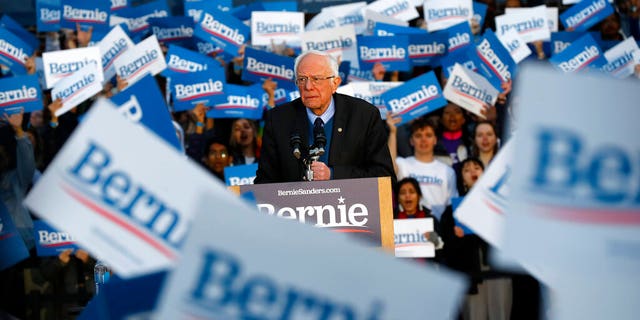
Underscoring what’s at stake for his White House bid when Michigan and five other states hold Democratic presidential nomination contests on Tuesday, Sen. Bernie Sanders emphasizes that “this is a very, very important day in Michigan.”
Speaking in front of more than 10,000 people at a rally at the University of Michigan in Ann Arbor, the populist senator from Vermont on Sunday spotlighted that Michigan’s “the most important state” to hold a contest on March 10, which is being dubbed ‘mini Super Tuesday’ or ‘Super Tuesday 2.0.’

Democratic presidential candidate U.S. Sen. Bernie Sanders, I-Vt., speaks during a campaign rally at the University of Michigan in Ann Arbor, Mich., Sunday, March 8, 2020. (AP Photo/Paul Sancya)

With 125 pledged delegates at stake, Michigan is the biggest prize among the six states holding contests on Tuesday. The others are Missouri, Mississippi, Washington state, Idaho and North Dakota.
Sanders, a populist senator who’s making his second-straight presidential run, defeated eventual nominee Hillary Clinton in 2016's primary in Michigan, in what was considered a major upset victory. That foreshadowed Clinton’s narrow loss to Donald Trump in the November 2016 general election in Michigan. Trump’s victory with working-class white voters in the state, as well as similar narrow wins in two other crucial Rust Belt states – Pennsylvania and Wisconsin – propelled him to the White House.
The pre-Michigan primary polls in 2016 got it all wrong – as they indicated Clinton with a double-digit lead over Sanders.
“The 2016 Michigan Democratic primary is considered to be the biggest polling miss of that cycle. Polls released in the week before the state primary showed Hillary Clinton with anywhere from a 10 to 27 point lead," noted Monmouth University pollster Patrick Murray.
Fast forward four years and former Vice President Joe Biden’s now the clear front-runner in Michigan with the final polls released on primary eve indicating the former vice president with a double-digit lead over Sanders.
But Sanders is holding out hope for a repeat performance that would stave off elimination and instead boost the senator back into a massive battle with Biden for the nomination.
An optimistic Sanders predicted on Fox News Sunday “I think we're gonna do well on Tuesday, and we're gonna beat Biden.”
While a loss would be considered a setback, Sanders doesn’t see such a prospect as fatal.
“I certainly would not consider dropping out,” he stressed.
Sanders was the front-runner for the Democratic nomination after winning the Feb. 11 New Hampshire primary and then shellacking the field a week and a half later at the Nevada caucuses. But thanks to his landslide victory in South Carolina a week and a half ago – and a strong performance during last week’s Super Tuesday when he swept 10 of the 14 states holding primaries on Super Tuesday and took the lead over Sanders in the all-important race for Democratic nomination convention delegates – Biden’s moved closer to locking up the nomination.
Because of its general election political symbolism and the large delegate cache, Michigan’s capturing the lion’s share of media attention among this week’s round of contests.
Biden - very cognizant of the polling debacle in 2016 – stressed on Monday that “I’m kind of superstitious, I see all these polls...I remember Hillary was up by 23 points...I don’t take anything for granted.”
Biden, with an eye on November’s general election, emphasized during a rally Monday in Flint that “Michigan is an important contest not just for the Democratic primary, because the outcome of Michigan in November may determine who the next person United States is going to be.”
The former vice president’s enjoyed a tidal wave of endorsements from current and former members of Congress and governors the past 10 days - as the party establishment and other moderates all coalesced around Biden to prevent Sanders – a self-described democratic socialist – from becoming the party’s standard-bearer in November’s general election.
And many of his former rivals for the Democratic presidential nomination have endorsed his White House bid. Two of those one-time rivals – Sens. Cory Booker of New Jersey and Kamala Harris of California – joined Biden on the campaign trail in Michigan on Monday after backing him just in the past 24 hours.
Sanders, fighting for survival, has increased his jabs at Biden in the wake of Super Tuesday.
At a Fox News town hall on primary eve in Detroit, Sanders charged that Biden had "bailed out the crooks on Wall Street who nearly destroyed our economy 12 years ago."
But he failed to mention that $700 billion rescue plan also had the support of then-presidential candidates Barack Obama and John McCain.
A day earlier in Ann Arbor, Sanders slammed the former vice president  - saying “here we are a few days before a major primary here in Michigan. And we are taking on, in this campaign, not just Joe Biden….We're taking on the 60 billionaires who are funding his campaign.
Biden, in a much more comfortable position, has refrained from blasting Sanders. Instead, on Monday he gently jabbed his rival, saying “we’re not looking for a revolution.” The push for a political revolution has long been a staple of Sanders stump speech.
But the former vice president’s aiming for what he hopes will a be a near knockout punch to Sanders.
Democratic strategist Michael Ceraso – a veteran of the 2016 Sanders campaign and the 2020 White House bid by former South Bend, Indiana Mayor Pete Buttigieg – stressed that a Biden victory in Michigan coupled with likely wins in Missouri and Mississippi will “put a huge hurdle in front of Sanders to get the delegates he needs to win.”

Trump to pitch Congress on payroll tax cut, relief for small business amid coronavirus crisis


President Trump said Monday evening that he will be meeting with congressional leaders on Tuesday to press them about what can be done to help the economy as it struggles amid the coronavirus outbreak.
Trump said that he plans to meet with Senate leadership on Wednesday to discuss a payroll tax cut, small business aid and help for hourly workers who might become sick.
“They’ll be very dramatic,” Trump said of the proposed economic measures during an evening briefing at the White House. “This blindsided the world and I think we handled it very well.”
Trump told reporters that the administration was seeking “very substantial relief." Treasury Secretary Steve Mnuchin and Director of the National Economic Council Larry Kudlow were expected to make the request of Senate Republicans on Tuesday afternoon.
The markets appeared to react positively to Trump's announcement, with futures on all three major indices surging by more than two percent.
The president, who was joined in the White House briefing room by Vice President Mike Pence and the rest of the coronavirus task force, praised his administration’s work in combatting the virus – including prohibiting entry into the U.S. from certain countries and coordinating with state governors – and reiterated that the spread of the virus was not caused by mismanagement within Washington.
“This is not our country’s fault, this was something that was thrown at us,” Trump said. “The main thing is we’re taking care of the American public.”
Before his press conference, Trump met Mnuchin, Kudlow and other aides about a range of economic actions he could take. He also invited Wall Street executives to the White House on Wednesday to discuss the economic fallout of the epidemic.
Kudlow told reporters Friday that the administration is not looking at a “massive” federal relief plan. Rather, any federal aid package would be “timely and targeted and micro.”
Lawmakers on Capitol Hill had barely started to contemplate the economic implications of the spread of the virus and what might be needed to stimulate the economy as people cancel vacations and business trips and stay away from stores. Senate Finance Committee Chairman Chuck Grassley, R-Iowa, told reporters that “everything’s on the table."
But members of the Senate Republican leadership, including Sen. John Cornyn, R-Texas, played down the need for an economic stimulus package of any kind, be it tax cuts or aid for workers. “It’s premature to be talking about that,” Cornyn told reporters. “I usually love tax cuts but I think it’s a little premature.”
Democrats have indicated they preferred other responses, like passing legislation requiring employers to give their workers paid sick leave — a longtime policy priority of Democrats — and additional help for those with lower incomes.
Pence, who is heading the task force combatting the outbreak of coronavirus, noted once again that the chances of Americans contracting the virus remain low – and of becoming seriously ill even lower – but warned that the precautions outlined by the Centers of Disease Control and Prevention (CDC) should still be followed.
While intent on projecting calm, Trump earlier in the day lashed out about the plunging stock market and convened a meeting of his top economic advisers to address what to do about it. Meanwhile, the number of Republican lawmakers who announced they were isolating themselves because of possible exposure to the virus grew to five.
As Trump grappled with an epidemic whose consequences he has repeatedly played down, the White House asserted it was conducting “business as usual.” But the day's business was anything but normal. Lawmakers pressed for details on how the Capitol could be made secure, a Pentagon meeting was broken into sub-groups to minimize the number of people in the same room and the Army commander in Europe placed himself in a precautionary quarantine.
The president dove into handshakes with supporters Monday morning when arriving to headline a fundraiser in Longwood, Fla., that raised approximately $4 million for his reelection campaign and the Republican Party. He ignored shouted questions about the sinking stock market as he boarded Air Force One for the flight back to Washington.
On that flight was Rep. Matt Gaetz, R-Fla., who later went into a voluntary quarantine. He was one of several GOP lawmakers who were exposed to a person at last month's Conservative Political Action Conference (CPAC) who later tested positive for the virus.
Trump did not respond to shouted questions by reporters if he had been tested for the coronavirus following his flight with Gaetz. Pence said he did not know if the president had been tested but told reporters he had not himself received a test for the virus.
Late Monday evening, White House press secretary Stephanie Grisham issued a statement saying that Trump had not received testing for coronavirus because "he has neither had prolonged close contact with any known confirmed COVID-19 patients, nor does he have any symptoms"
"President Trump remains in excellent health, and his physician will continue to closely monitor him," Grisham said.
On Monday, Rep. Doug Collins, R-Ga., and Gaetz put themselves in voluntary quarantine because of their contacts with the infected person at CPAC.
Both said they did not have any symptoms but would wait out the remainder of the 14 days since the contact at home. Gaetz last week wore a gas mask to the House vote on the emergency funding bill for the virus response and said he wanted to highlight how Congress could become a “petri dish” for the virus.
Collins met Trump on Tuesday night at the White House and shook hands with him Friday when the president visited the Centers for Disease Control and Prevention's Atlanta headquarters.
“The president of the United States, as we all know, is quite a hand-washer," press secretary Stephanie Grisham told Fox News earlier Monday. "He uses hand sanitizer all the time. So he's not concerned about this at all.”
The Associated Press contributed to this report.

Trump camp fires back after Twitter labels Biden video 'manipulated'


EXCLUSIVE: The Trump campaign has sent a scathing letter to Twitter's leadership after the platform took the unprecedented step of labeling one of its videos "manipulated media," saying that under the social media giant's new standard, Joe Biden's team has uploaded its own "doctored and deceptively edited" video as recently as last week.
“The Biden campaign is scared as hell that voters will see the flood of unedited and embarrassing verbal stumbles that will continue go viral if ‘Status Quo Joe’ is the nominee," Trump campaign rapid response director Andrew Clark told Fox News. "Twitter shouldn’t be an enforcement arm of Joe Biden’s campaign strategy, but if they choose to police every video clip they must hold his own campaign to the same standard.”
The confrontation began this the weekend when Trump communications director Dan Scavino tweeted an edited version of a Biden speech in which the former vice president appears to deliver a muddled and inadvertent endorsement of Trump. Scavino's clip, which the president later reposted, did not alter any of Biden's words, but it cut off before the conclusion of Biden's sentence at a rally in St. Louis. Conservatives called the video an obvious attempt to highlight Biden's verbal gaffes, and argued that no one would reasonably mistake it for a genuine Biden endorsement.
"Understandably, the Biden campaign has a strategic interest in intimidating social media companies into suppressing true and embarrassing video evidence of Joe Biden’s continued inability to communicate coherently—a sad truth that has been publicly noted by Democrats and media figures alike," Trump campaign chief operating officer Michael Glassner wrote in the missive to Twitter CEO Jack Dorsey, general counsel Vijaya Gadde, and public policy director Carlos Monje.
"Still, it appears that many people employed by Big Tech corporations in Silicon Valley are assisting the Biden campaign by instituting a special ‘Biden protection rule’ that effectively censors and silences legitimate political speech Biden’s campaign and its supporters do not like," he added in the letter, obtained by Fox News.
Glassner said he was "formally requesting that Twitter apply its new 'manipulated media' label to a doctored and deceptively edited video tweeted by the Biden campaign less than a week ago."
That was a reference to a March 3 video uploaded by the Biden campaign that contains a slew of clips that are taken out of context, and "manipulates audio and video of President Trump in order to mislead Americans and give a false impression," Glassner wrote.
The video, Glassner points out, contains two clips "spliced together to fabricate a quote and give viewers the false impression that he called the coronavirus a 'hoax,'" a claim that the non-partisan International Fact-Checking Network has previously debunked. The president in fact called Democrats' response to the coronavirus "their new hoax."
Additionally, the Biden video effectively repeats a false claim the former vice president himself made in his campaign launch video, asserting through selective editing that the president called white supremacists in Charlottesville, Va. "very fine people." That assertion, although widely made in progressive circles, is untrue; the president was referring to protesters on both sides of the issue of whether Confederate statues should be removed from public places as "very fine people."
"In fact, 49 seconds after President Trump said those words, he said, 'and I’m not talking about the neo-Nazis and the white nationalists, because they should be condemned totally,'" Glassner wrote. "As one CNN anchor said, 'he’s not saying that the neo-Nazis and white supremacists are very fine people[.]'".
"If Twitter is not seeking to protect Joe Biden, we urge it to correct its apparent oversight and apply its standards equally across the board."
— Trump campaign COO Michael Glassner
Third, the Biden video contains a 2016 clip in which then-candidate Trump declares "the American Dream is dead" -- but leaves out the second part of Trump's sentence, in which he says, "but if I get elected president I will bring it back bigger and better and stronger than ever before, and we will make America great again.”
READ THE TRUMP CAMPAIGN'S LETTER TO TWITTER CEO
"Of course, this is not the first time the Biden campaign has used editing tricks to manipulate video and feed misinformation to the American people," Glassner wrote. "If Twitter is not seeking to protect Joe Biden, we urge it to correct its apparent oversight and apply its standards equally across the board."
Fox News has identified several other videos posted to Biden's Twitter account that contain similar misleading clips. An October 2019 post on Biden's campaign account, for example, states that Trump "has asked foreign governments to interfere in our elections," and is accompanied by a video of a White House interview that omits Trump's full remarks.
In the full interview, Trump says, "I think maybe you do both," referring to notifying the FBI as well as listening to an offer of political help from a foreign entity; but in the Biden clip, Trump says only that he would "listen" to the proposal from a foreign entity.
Glassner made clear that the Trump campaign was not backing off its original video of Biden, saying the clip was "a 100 percent real, 100 percent authentic, 100 percent unedited video of Joe Biden saying, 'We cannot win this re-election. Excuse me. We can only re-elect Donald Trump[.]'"
In order for American elections to remain "free and fair," Glassner wrote, "it is critical that the Biden campaign be held to the same standard it is demanding apply to others."
In the post uploaded by Scavino, Biden seemingly endorses the president after stammering over some words.
"Turn this primary from a campaign that's about negative attacks into one about what we're for, because we cannot get -- re-elect -- we cannot win this re-election -- excuse me. We can only re-elect Donald Trump," Biden says in the edited clip. In the full speech, Biden went on to add," -- if, in fact, we get engaged in this circular firing squad here. Gotta be a positive campaign, so join us."
Twitter quickly labeled the tweet "misinformation," in the social media giant's first-ever use of its new policy, which is ostensibly designed to combat the spread of false news. The so-called Synthetic and Manipulated Media policy states that "you may not deceptively share synthetic or manipulated media that are likely to cause harm."
The policy went into effect Mar. 5 after a campaign video from Mike Bloomberg's team added crickets and a long silence when Bloomberg asked his rivals if any of them had started a business. Facebook has said that the Trump video would not meet its platform for deceptive editing.
Currently, no misinformation flag appears on the video for some users when it is directly clicked, although a warning does appear if the video shows up in a user's feed. Twitter has said it is working to apply the warning whenever the clip is accessed.
BILLIONAIRE REPUBLICAN BUYS MAJOR STAKE IN TWITTER, COULD OUST CEO SOON
The broader issue of Biden's potential competency issues looms large over the 2020 presidential race. Also in St. Louis, Biden bizarrely described himself as an "O'Biden Bama" Democrat, transposing his name and the name of his old boss.
Trump suggested at a Fox News Town Hall last week that Biden isn't fit for office.
"I'm all set for Bernie, communist," Trump began. "And then we have this crazy thing that happened on Tuesday, which he [Biden] thought was Thursday. But he also said 150 million people were killed with guns, and that he was running for the U.S. Senate -- there's something going on there."

Mark Meadows, Trump’s incoming chief of staff, to self-quarantine over coronavirus fears


Mark Meadows, President Trump’s incoming White House chief of staff, may have come in contact with the Conservative Political Action Conference attendee who was diagnosed with the coronavirus and "out of an abundance of caution" will self-quarantine over the next two weeks.
His office said the North Carolina Republican tested negative for COVID-19 and has zero symptoms. He joins fellow Republican lawmakers—including Reps. Doug Collins of Georgia and Matt Gaetz of Florida—who said they were in contact with the individual at CPAC. None are experiencing any symptoms.
Gaetz was spotted riding on Air Force One last week as he learned the news. White House officials said when Gaetz learned he was in proximity to the man with coronavirus at CPAC, he sat by himself in a section of the president's plane.
He told the Washington Post that by the end of the flight, Trump "coaxed" him to the front of the plane. Gaetz told the paper that Trump didn't seem "hyper-cautious about being in the same space that I was in."
Trump and Vice President Mike Pence spoke at CPAC, but the White House said there was no indication that either had met or been in “close proximity” to the infected attendee.
The number of individuals who were in contact with the individual has raised concerns about whether the president was exposed.
Stephanie Grisham, the White House spokeswoman, said Trump has not taken a COVID-19 test because he did not have prolonged, close contact with any patients. She also said that he has no symptoms, but will be closely monitored by his physician.
Trump made a surprise announcement last week when he named Meadows as his replacement for Mick Mulvaney. Mulvaney will become the U.S. special envoy for Northern Ireland.
In a statement, Meadows said it was an "honor" to selected by Trump.
Fox News' Brooke Singman and Alex Pappas contributed to this report

Monday, March 9, 2020

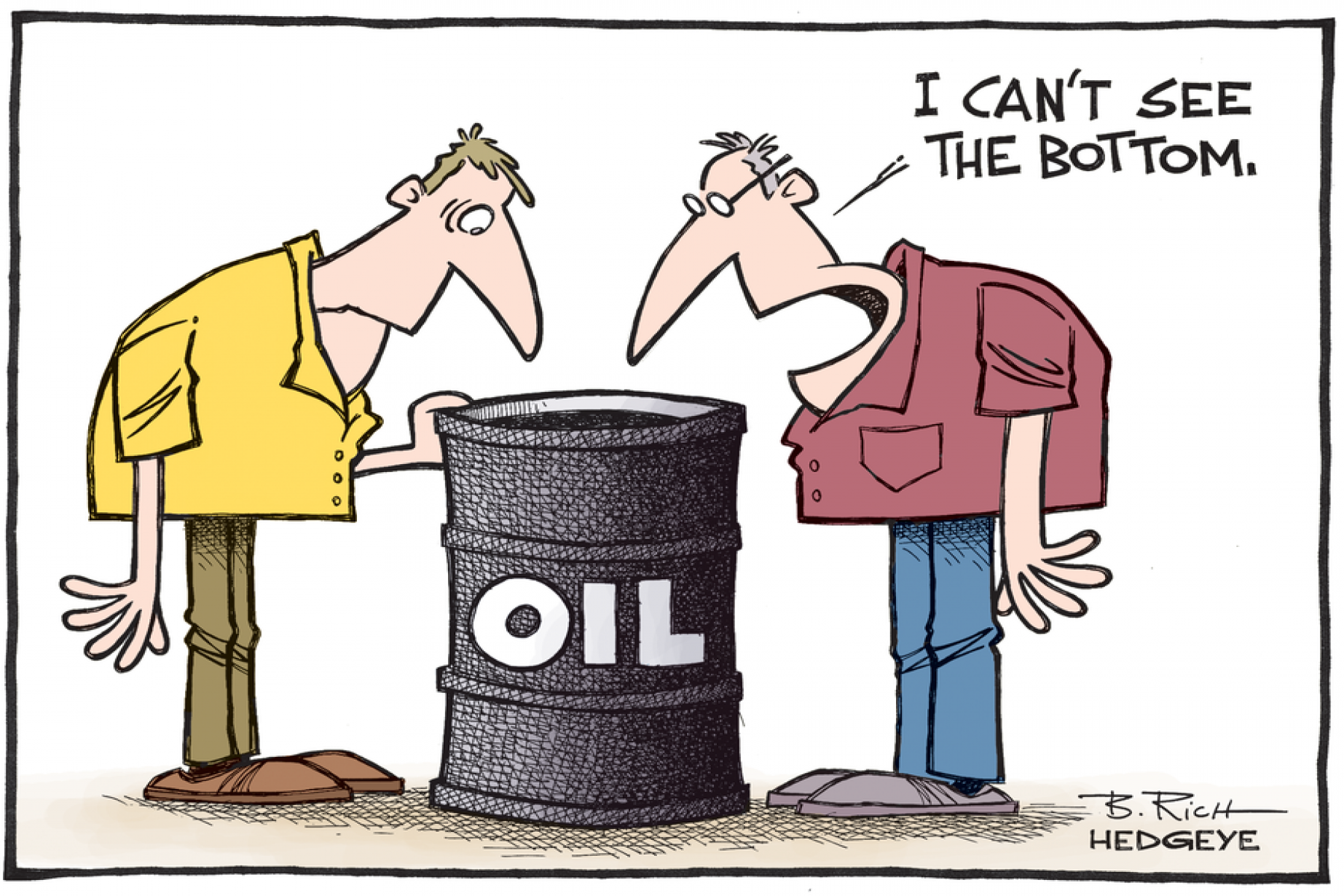
Global Oil Cartoons


Image result for Global Oil Cartoons

Trump to skip St. Patrick’s Day Hill luncheon, blames Pelosi

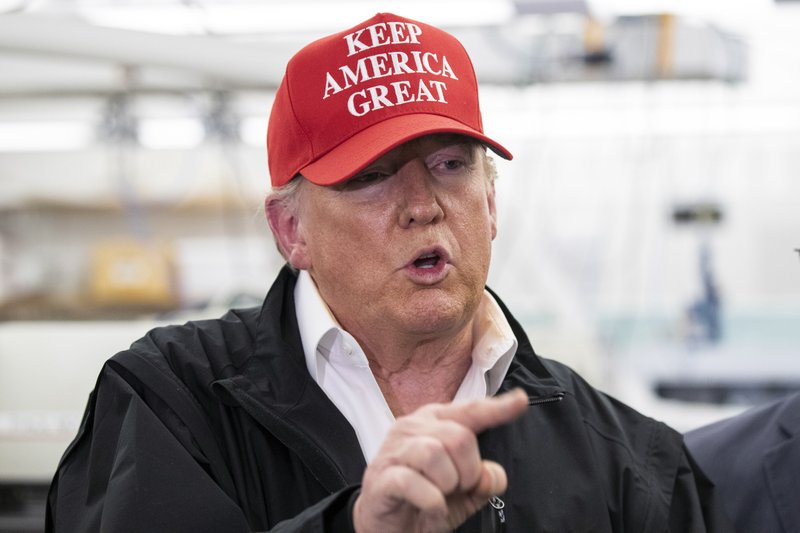
President Donald Trump speaks during a meeting about the coronavirus at the Centers for Disease Control and Prevention, Friday, March 6, 2020, in Atlanta. (AP Photo/Alex Brandon)

WEST PALM BEACH, Fla. (AP) — Irish eyes at the U.S. Capitol will not smile on President Donald Trump on St. Patrick’s Day.
Trump is skipping an annual bipartisan luncheon with House and Senate lawmakers celebrating the ties that bind the U.S. and Ireland, a White House spokesman said.
Trump blamed House Speaker Nancy Pelosi.
“Since the speaker has chosen to tear this nation apart with her actions and her rhetoric, the president will not participate in moments where she so often chooses to drive discord and disunity,” spokesman Judd Deere said in an emailed statement.
The House speaker traditionally hosts the luncheon.
Trump instead will celebrate with Irish Prime Minister Leo Varadkar at the White House on Thursday — five days before St. Patrick’s Day.
Drew Hammill, a spokesman for Pelosi, said congressional support for the U.S.-Ireland relationship has never been stronger.
“One would think that the White House could set petty, partisan politics aside for this historic occasion,” Hammill said in an email.
Trump attended the luncheon in 2017 and 2018 when Rep. Paul Ryan, R-Wis., was speaker, and in 2019, after Pelosi, D-Calif, won back the gavel.
Trump remains incensed at Pelosi for leading the Democratic-controlled House in December to impeach him after he asked Ukraine’s leader to investigate Democratic presidential rival Joe Biden while delaying delivery of military aid Congress had approved to help the country defend against Russian aggression. The Senate’s Republican majority voted in February to acquit Trump.
Speaker Thomas P. “Tip” O’Neill, D-Mass., hosted the first St. Patrick’s Day lunch in 1983. President Ronald Reagan and other House and Senate lawmakers attended the gathering, which had been arranged to ease tension between the two Irish-American leaders, according to the House.
The lunch became an annual event on Capitol Hill in 1987, missed by presidents just four times since then. Bill Clinton sent regrets after having knee surgery two days before St. Patrick’s Day in 1997. George W. Bush passed on the 2003 lunch, held days before the U.S. invasion of Iraq.
Last year, Pelosi said the lunch is “a tradition where we dispense with our differences, whether they’re political or whether they’re competitive in any other way.”
Politico first reported Trump’s decision.

California governor reports $1.2 million income in 2018


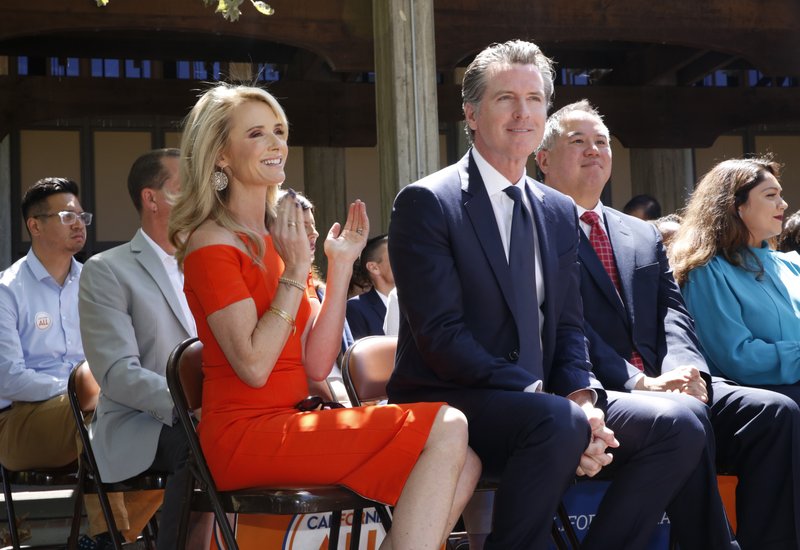
SACRAMENTO, Calif. (AP) — California Gov. Gavin Newsom and his wife reported more than $1.2 million in income during his final year as the state’s lieutenant governor, the majority of it from outside business interests.
Newsom made good on a campaign promise by allowing reporters to review his 2018 income tax filing on Friday. He also plans to release returns every year he’s governor. Newsom has not yet filed his 2019 taxes.
Last year Newsom, a Democrat, signed a first-in-the-nation law that would have required President Donald Trump to release his returns if he was to appear on the state primary ballot. The California Supreme Court ultimately rejected it as unconstitutional.
Newsom’s 2018 return showed nearly $394,000 in wages, of which about $151,000 was his state salary. His wife, Jennifer Siebel Newsom, is a filmmaker and actress with her own outside income, though the couple filed jointly.
Their $1.2 million in total income was reduced to about $973,000 in taxable income through various business and other deductions, including $25,683 in unspecified charitable contributions and declaring his four young children as dependents.
The family’s tax filing seems “pretty straightforward,” said Arthur “Kip” Dellinger, a certified public accountant and senior tax partner with Cooper, Moss, Resnick, Klein & Co.
Newsom donated about 2% to charity, which Dellinger said isn’t “demonstrably low” given his significant expenses including the four children. Newsom paid more than $87,500 in household employment taxes, which his office said was for four staff who provided child care and other help around their home.
He reported additional net income of more than $775,000 under a listing for rental real estate, royalties, partnerships, trusts and other business interests.
Newsom founded The PlumpJack Group in 1992, which owns a hotel, four Napa Valley wineries, and bars, restaurants, and wine and liquor stores.
Airelle Wines Inc., which includes his Napa wineries, provided a net income of about $580,000. Falstaff Management Group Inc. provided more than $84,000.
The couple reported smaller amounts of other outside income including from a blind trust owned by Siebel Newsom.
Newsom reported more than $57,000 in dividends and interest, but only $2,600 of that was tax-exempt interest.
“That (interest and dividend income) is not a lot of money, it’s not money that we would compare to wealthy people, really wealthy people. He’s probably not invested in a bunch of hedge funds, which sometimes get politicians in trouble,” Dellinger said. “Certainly with those kind of numbers there are no tax shelters that are involved in this.”
Newsom promised, after he was elected governor, that he would give up control and bar state agencies from doing business with his firms to avoid conflicts of interest.
Ethics experts said selling the assets and putting the proceeds into a blind trust would be one way to avoid conflicts. Newsom transferred them to a blind trust, but said he couldn’t bear to sell businesses he’s cultivated for decades.
Former Gov. Arnold Schwarzenegger also put his assets in a blind trust. Both governors’ trusts were managed by family friends. Their decisions contrast with Trump, who has faced criticism and lawsuits for refusing to divest from his business holdings.
Newsom released six years of tax returns during his gubernatorial campaign, after two straight cycles in which neither major party nominee released theirs. His office said he is the first California governor who will release his tax returns every year in office.
As he did during the campaign, Newsom allowed reporters 45 minutes to review his inch-thick tax return but not make photocopies. Aides couldn’t say when he will make available this year’s tax filing.
It showed he owed federal taxes of nearly $360,000 and more than $121,000 in state taxes.
The Newsoms’ income places them solidly in the upper class. Census figures show the median household income in California was about $72,000 in 2017.
Newsom is far from the richest governor. He’s eclipsed by a number of others, including two billionaires: Hyatt hotels heir J.B. Pritzker in Illinois and businessman Jim Justice of West Virginia.

Dems look to Michigan primary as testing ground for November


DETROIT (AP) — Ask Arlene Williams about President Donald Trump’s promises to bring back auto industry jobs that have evaporated across Michigan and she’ll point with irony to the Chevy Blazer.
General Motors is now remaking the iconic American SUV after a lengthy hiatus — but building parts of it in Mexico and elsewhere overseas.
“These are some of the staple brands and yes, they’re back,” said Williams, 49, who works at a GM plant in Romulus, Michigan, southwest of Detroit. “They’re just not being made in the U.S.”
The largest of six states voting Tuesday, Michigan could redefine a Democratic primary that has become a showdown between former Vice President Joe Biden and Vermont Sen. Bernie Sanders. But many voters are already looking ahead to November and whether Trump can again win in the state that perhaps more than any other catapulted him into the White House in 2016.
For Sanders, the stakes could hardly be higher. He defeated Hillary Clinton in Michigan in 2016, emboldening his argument that he could win with a diverse coalition that drew well from young voters, working-class whites and African Americans. But it is the kind of victory he has not been able to replicate this time, and if he does not on Tuesday, any chances at the Democratic nomination may be greatly diminished.
Biden has been emphasizing the Obama administration’s bailout of the auto industry, which provided an economic lifeline for GM and Ford, likely saving thousands of jobs. He is also counting on continued strong support among African American voters.
How Michigan votes will also be clarifying for November. Some see Sanders’ sweeping promises to cancel student debt and provide health care for all potentially energizing young voters but not older ones wary of his democratic socialist ideology. Centrist and safe, Biden could do exactly the opposite, though.
Others worry that both candidates are taking black Democrats for granted. All that may add up to neither being able to carry the state against Trump.
“There’s not a lot of energy, not enough energy, I would say, even for the primary,” said Michigan state Rep. Sherry Gay-Dagnogo, whose district includes a large swath of northwest Detroit. She said the Democratic Party continues to use the same playbook of waiting until the last minute to do intensive community outreach — which crippled it in 2016.
Indeed, major party turnout in Wayne County, which encompasses Detroit and is strongly African American, fell by more than 64,000 votes in 2016 as compared to 2012. That’s especially important since Trump leveled the Democrats’ famed “blue wall” with narrow wins in states that were supposed to comfortably go to Hillary Clinton: Pennsylvania, Wisconsin and Michigan, which he won by just 10,704 votes out more than 4.8 million cast.
Tuesday will be the first test of Democrats’ ability to take them back.
They already can point to hopeful signs. Gov. Gretchen Whitmer, who has endorsed Biden and been mentioned as a possible vice presidential pick, won in 2018, as fellow Democrat and Sen. Debbie Stabenow was cruising to re-election.
Veteran Michigan pollster Bernie Porn said the president remains unpopular with independents and Republican women, especially in the suburbs — though he said Trump’s standing has recovered some in the wake of impeachment.
“I think Trump is in trouble,” Porn said.
Flipping the state back could be built on gains in places like Grand Rapids, childhood home of Gerald Ford and long the epitome of country club Republicans, often most interested in fiscal conservatism but also closely watching social issues. It has begun moving to the left amid an influx of jobs bringing new residents from other parts of the state and the country, Porn said.
Sanders staged a rally Sunday in Grand Rapids and — vowing to grow the Democratic electorate by winning over young, minority and working-class voters — hit the University of Michigan and blue-collar Flint and Dearborn, home to a large concentration of Arab Americans. It is a promise he has made in other states during the primaries, but so far has largely failed to deliver.
“I am more than aware that Trump in 2016 won the state of Michigan by a small vote,” Sanders said. “I do believe the people of Michigan aren’t going to make that mistake again.”
Sanders canceled a planned trip to Mississippi to spend more time in the state this past weekend. But he has struggled to broaden his appeal with black voters, as evidenced by Biden’s wipe-out win in South Carolina and across many other Southern states on Super Tuesday.
Activist Monica Lewis-Patrick, president and CEO of We the People Detroit, said the eventual nominee will need a strong ground game in Detroit to prevent the same mistakes the party made in 2016, when the black community felt largely unseen and ignored. She has endorsed Sanders.
Citing the ongoing water crisis in Flint and Detroit’s aggressive water shutoff campaign that has disrupted service for 100,000-plus residential accounts across the city since 2014, Lewis-Patrick said the party needs to speak to issues that are impacting lives on a daily basis.
“We’ve told every candidate before we got down to the final two that we noticed in the debates when they came to Detroit that was missing from the conversation,” she said, referring to when the city hosted Democratic presidential debates last summer. “What we’re seeing is that many campaigns are treating black and brown communities as sort of a drive-by vote.”
Sanders has spoken to Flint’s water problems and the shutoff issue, asking with exasperation, “How is it possible” that people in parts of the state “don’t have water coming out of the tap?”
In an attempt to shore up its position no matter who wins the nomination, the Michigan Democratic Party has had staff on the ground since 2017 in “pivot” counties that supported Obama in 2012 but went to Trump last presidential cycle. It also has led campaigns highlighting Trump’s “broken promises” when it comes to issues like restoring lost manufacturing jobs.
Still, Gay-Dagnogo said that, though the state Democratic Party opened 15 offices around Michigan, ”it’s no secret” Trump’s reelection campaign has stood up its own operations in the same areas.
“I think sometimes we just wait for something magical to happen, opposed to making sure that there are financial resources in the community to get people out,” she said.
Trump, meanwhile, has visited Michigan several times as president and points to a strong national economy as proof he kept his kept his promises to restore the state’s lost jobs.
Manufacturing jobs in Michigan grew from 616,800 when Trump took office to 628,900 last December, according to the Bureau of Labor Statistics. But some counties that Trump won have experienced job losses, and the state faces the prospect of further downturns as coronavirus reverberates through the economy.
While top union leaders have lined up to support either Biden or Sanders, many of their rank-and-file members continue to back Trump because of his views on social issues like guns and abortion.
“A number of union households who voted for Trump and voted against their own economic interests, I think, may do that again,” said Matt Vitiote, Democratic Party chairman in Monroe County near the Michigan-Ohio border, which twice supported Obama but voted for Trump in 2016.
Williams, who noted the Chevy Blazer’s international flavor, is backing Sanders and his promise to strengthen union membership nationwide. She concedes that Michigan’s economy has grown under Trump but hopes it won’t be enough for him to win the state again.
“I don’t see that there has been real growth in higher-paying jobs,” Williams said. “There have been jobs created, but they’re low-paying jobs and you’ve got to have two or three of them in order to raise your family.”
___
Associated Press writer David Eggert in Lansing, Mich., contributed to this report.

CartoonDems