Presumptuous Politics

Saturday, March 14, 2020

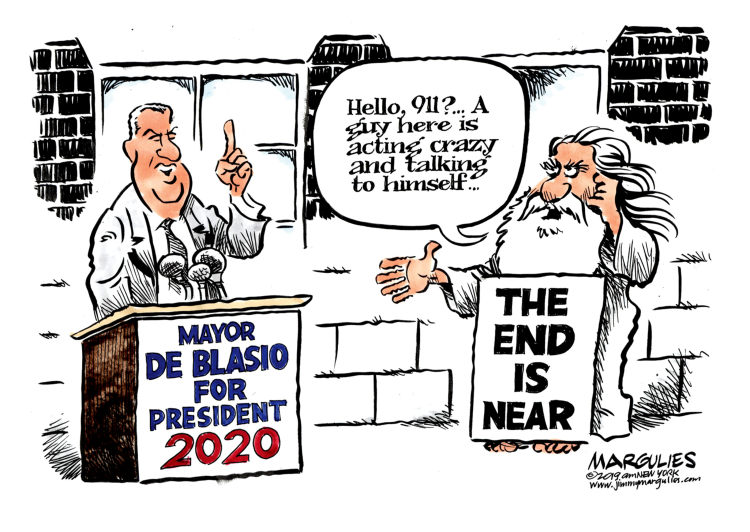
NYC De Blasio Cartoons

Image result for NYC De Blasio CartoonsImage result for NYC De Blasio CartoonsImage result for NYC De Blasio CartoonsImage result for NYC De Blasio CartoonsImage result for NYC De Blasio CartoonsImage result for NYC De Blasio CartoonsImage result for NYC De Blasio CartoonsImage result for NYC De Blasio Cartoons

NYC keeping schools open, defying coronavirus trend


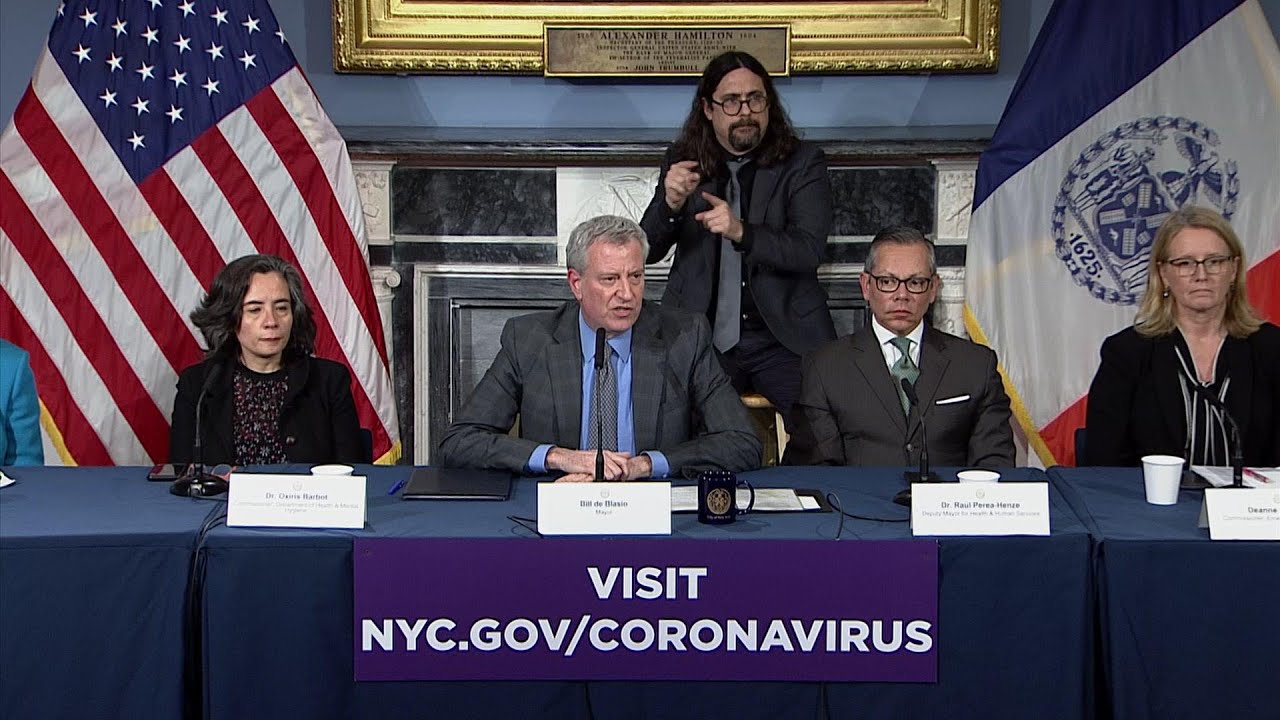
NEW YORK (AP) — The nation’s largest public school system is staying open during the coronavirus crisis, New York City’s mayor said Friday, defying mounting pressure to close as he raised concerns about the unintended consequences of leaving more than 1.1 million students with no place to go.
Mayor Bill de Blasio’s decision leaves the Big Apple as an outlier among a growing list of cities and states, from Pennsylvania to Oregon, that are closing schools for a week or more as part of a nationwide attempt to limit the spread of what’s known as COVID-19.
The disease has already turned the lights out on Broadway and shuttered big New York gathering spots from art museums to Carnegie Hall, but de Blasio said shuttering schools could hamper the city’s ability to respond to the crisis by forcing parents who are first responders and healthcare workers to scramble childcare or stay home.
“Many, many parents want us to keep schools open,” the Democratic mayor said. “Depend on it. Need it. Don’t have another option.”
New York teachers unions and a number of local politicians disagreed, worried about the risk of teachers and students being exposed to the disease. City Council Speaker Corey Johnson, a Democrat, argued that “teaching and learning can not take place under these circumstances.” Student attendance plummeted on Friday to 68% from 85% the day before, the city said.

Youtube video thumbnail
Good old Liberals come through again:-)

De Blasio said the city’s public schools would make adjustments to put more space between students in what is known as “social distancing,” such as moving meals into classrooms to avoid cafeteria crowding and moving gym classes outside when weather permits.
The mayor said that as of Friday morning, there was one confirmed case of a student with coronavirus, on Staten Island. A teacher who works at a school for “medically fragile” students in Brooklyn has also tested positive, he said.
The city is temporarily closing individual schools where people have tested positive or are suspected of having coronavirus, but de Blasio said “it is a very high bar to shut down” the entire system.
Still, he said that could happen if conditions change.
“I think there is an illusion out there that you can shut down schools temporarily in the midst of a growing crisis,” de Blasio added. He said a shutdown could end up lasting the rest of the school year, or even the calendar year, once “momentum is lost.”
As officials deliberated the schools conundrum on Friday, restaurants, subway cars and sidewalks were noticeably emptier as people telecommuted to work and avoided public places — and some were closed.
Gatherings with more than 500 people were temporarily banned in the state as of 5 p.m. Friday, though Broadway shows were called off a day sooner. Many smaller gathering spaces, such as bars and restaurants, now must cut capacity in half. The restrictions don’t apply to schools, hospitals, nursing homes, shopping malls and mass transit, and there were exceptions for other types of businesses, such as casino floors.
Courts across the state curtailed operations, halting selection of new juries and encouraging proceedings to be done by video. Store shelves were wiped clean of basic necessities, such as toilet paper and tissues, and products like hand sanitizer and wipes.
Restaurants and nightspots are reporting drop-offs of 20%-80% over the past week, particularly around touristy Times Square, said Andrew Rigie, executive director of the NYC Hospitality Alliance.
“People are scared to come outside,” Central Park tour guide Justin Rahim said. He said several of his pedicab drivers — reliant on tourists for their living — quit Thursday to drive for Uber’s food delivery service. “It’s crazy. How am I going to survive this?”
De Blasio encouraged people to continuing working and living their lives, albeit with extra care.
The virus, as of Friday afternoon, had been confirmed in more than 420 people in New York state, including over 150 in the city, and had caused one death in the metropolitan area, in neighboring New Jersey. About 50 New York patients are hospitalized.
The number of illnesses may be higher because of a shortage of test kits.
The state on Friday opened a drive-through testing center in New Rochelle, and Gov. Andrew Cuomo said New York had gotten federal permission to work with 28 laboratories to amp up testing. He said he hoped the statewide capacity could hit 6,000 tests a day next week — compared to about 3,200 tests done, in total, to date.
The governor revealed that one of his three daughters had been in a precautionary quarantine after coming into contact with someone who had traveled to a coronavirus hotspot. Her precautionary seclusion has now ended, he said.
For most people, the new coronavirus causes only mild or moderate symptoms, such as fever and cough. For some, especially older adults and people with existing health problems, it can cause more severe illness, including pneumonia. The vast majority of people recover.
Recent data from China suggests children are at similar risk of infection as the general population, though less likely to have severe symptoms. Evidence from China also suggests that even if mildly affected, children can spread the virus to others.
Still, without school to occupy their days, kids would become restless and go find their friends, bringing the same potential for transmitting coronavirus as they’d have in a classroom, de Blasio said.
“What do you think would happen if you let a bunch of New York City school kids out for not a day, not a week, but three months?” he said. “You think they’re going to stay in isolation in their apartment?”
___
Associated Press writers Marina Villeneuve in Albany, New York, and Karen Matthews, Deepti Hajela, Adam Geller and Jim Mustian in New York contributed to this report.
___
The Associated Press receives support for health and science coverage from the Howard Hughes Medical Institute’s Department of Science Education. The AP is solely responsible for all content. Follow AP coverage of the virus outbreak at https://apnews.com/VirusOutbreak and https://apnews.com/UnderstandingtheOutbreak

Bernie Sanders says lack of rallies ‘hurting’ his campaign

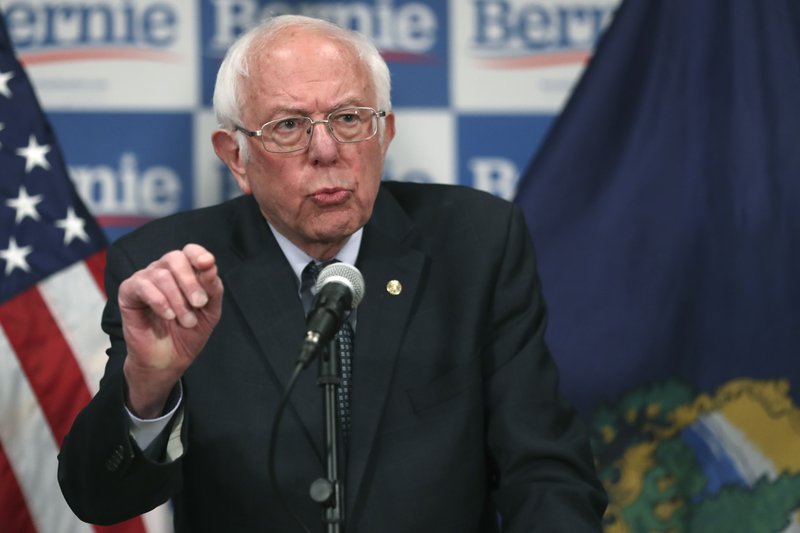
Democratic presidential candidate, Sen. Bernie Sanders, I-Vt., speaks to reporters about coronavirus Thursday March 12, 2020, in Burlington, Vt. (AP Photo/Charles Krupa)

BURLINGTON, Vt. (AP) — Bernie Sanders acknowledged Friday that fears about the spread of coronavirus have damaged his ability to leverage large rallies into support at the polls, and suggested that future Democratic presidential primary voting should be delayed if health officials deem doing so appropriate.
“We do more rallies than anybody else, and (they’re) often very well attended. I love to do them,” the senator told reporters at a hotel in his home state of Vermont. “This coronavirus has obviously impacted our ability to communicate with people in the traditional way that we do. That’s hurting.”
Thousands of people gathering to hear him speak has defined Sanders since he first sought the White House in 2016. But the practice has been curtailed as health officials attempt to slow the virus’ spread. Instead, Sanders has convened the media three straight days to blast the Trump administration for what he calls its inadequate response and warn of dire upcoming health and economic effects.
“If this isn’t a red flag for the current dysfunctional and wasteful health care system, frankly I don’t know what is,” Sanders said, advocating for his signature “Medicare for All” plan that would provide, universal, government-funded health care.
Despite conceding that he’s badly trailing Joe Biden in amassing the number of delegates needed to secure their party’s presidential nomination, Sanders has given no indication he’ll drop out of the presidential race. He’s vowed to grill the former vice president on issues like expanding health coverage, combating climate change, reducing college debt and overhauling a biased criminal justice system during a debate Sunday night.
In the meantime, though, the race could be shifting around both candidates. Louisiana Gov. John Bel Edwards was planning to delay his state’s April 4 primary until June 20.
Even though the four states set to vote in the next round of primaries on Tuesday — Arizona, Florida, Illinois and Ohio — all said they have no plans for postponement, Sanders was asked about more disruptions and didn’t dismiss the idea.
He called elections “the bedrock of our democracy” and said they shouldn’t be delayed “on a wily-nilly basis.” But he also noted that everything from the NBA season to Broadway musicals had been disrupted to avoid large crowds coming together, adding, “I don’t think there’s anybody out there, no matter what your political view may be, who wants to see people become infected because they are voting.”
“Rescheduling elections is not something we do lightly or should do lightly,” Sanders said, adding that state health and elected officials would have to balance that with the fact that it’s “also important to make sure that everybody who wants to vote has the right to vote, and that may not be the case now.”
Biden, who has also canceled scheduled events amid the coronavirus outbreak, is holding a virtual town hall via Facebook on Friday. Sanders said, in lieu of rallies, he plans to communicate with supporters via social media and internet livestream, like he did when addressing reporters Friday.
“We are figuring out a way as to how we can best communicate with people,” Sanders said “which will certainly, in a very strong way, utilize our social media capabilities.”
___
Eds: Weissert reported from Washington.

AP Exclusive: Immigration hearings delayed, 1 court shut

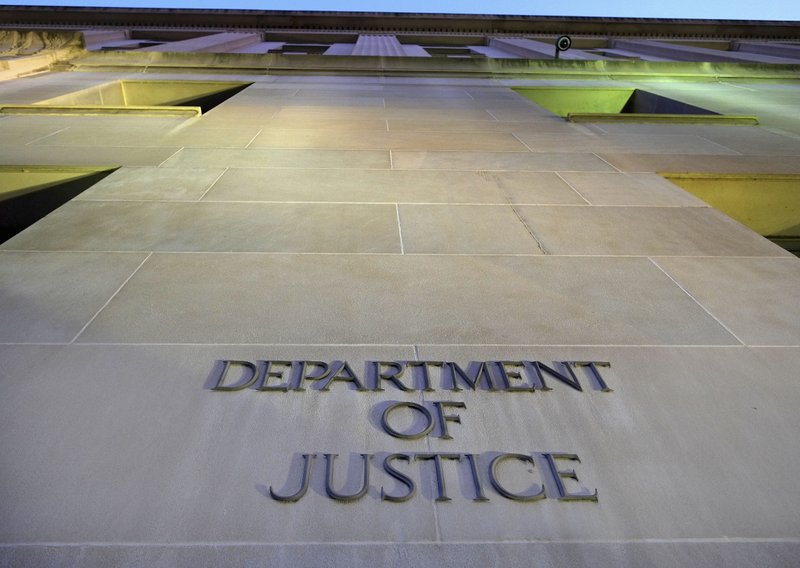
FILE - In this May 14, 2013, file photo, the Department of Justice headquarters building in Washington is photographed early in the morning. The Executive Office for Immigration Review is the arm of the Justice Department that oversees deportation proceedings _ whether immigrants are allowed stay in the U.S. or whether they are turned back to their countries. (AP Photo/J. David Ake, File)

WASHINGTON (AP) — Seattle’s immigration court will close down as the nation continues to grapple with managing the coronavirus pandemic, and several other large immigration courts will postpone certain hearings for immigrants who are not detained that often involve large groups.
The court in Seattle was temporarily shut down earlier this week over a report of a second-hand exposure to the virus and will remain shut until April 10. Seattle is among the areas hardest hit so far, with a cluster of deaths and dozens sickened. The number of cases in the U.S. was put at around 1,700 Friday, with about 50 deaths. But by some estimates, at least 14,000 people might be infected.
According to a statement obtained by The Associated Press from the Executive Office for Immigration Review, which manages the immigration court system, other courts will remain open where the virus has struck, including Boston, Los Angeles, New York City, San Francisco, Newark, New Jersey, and Sacramento, California. But “master calendar” dates for those who are not detained will be postponed. Those hearings can include dozens of people in a single courtroom.
“The agency continues to evaluate the dynamic situation nationwide and will make decisions for each location as more information becomes available,” according to the statement from EOIR, which is a division of the U.S. Department of Justice.
There are 68 immigration courts nationwide; the others will operate as scheduled but officials with EOIR said they are evaluating and will adjust as needed.
The U.S. immigration courts are dealing with a massive backlog of 1 million cases. There have been some delays of trials among the nation’s criminal courts, and some states have closed courtrooms as the virus spreads.
There have been no confirmed cases of COVID-19 within the immigration system, but it’s not clear how frequently tests are being performed, if at all. There is often movement between detention facilities at the border, where some migrants enter the U.S. sick, and throughout the immigration system that has put employees on edge.
A union representing immigration judges has called for a temporary halt to the “master calendar” hearings. On Thursday, Judge Ashley Tabaddor, the head of the union, wrote to the leadership of EOIR asking for more measures be put in place to protect judges and employees.
“In the absence of uniform guidance, some immigration judges have attempted to implement their own risk mitigation strategies,” she wrote. “However, these efforts have been frustrated by a time-consuming bureaucratic process that is simply not sufficient in the current circumstances.”
Tabbador also called the postponements in six cities “wholly inadequate to address the public health risk” and called on EOIR “to shut down all of these large group hearings in all immigration courts across the country.”
In El Paso, Texas, some guards work shifts at both the long-term detention center and the public courts where people are not detained. On Friday, guards were seen interacting with two dozen migrants for a mass hearing in the non-detained court, which sits on the 7th floor of a building that also has public offices for the IRS and other federal agencies.
The migrants have been required to live in Mexico while they apply for asylum. They sleep in a network of shelters in Ciudad Juarez, along with migrants from other countries and other continents.
Separately on Friday, Immigration and Customs Enforcement said it would temporarily suspend social visits at all of its detention facilities across the U.S. Officials said there were no detainees in ICE custody who had confirmed cases of COVID-19 and said canceling visitation was precautionary to “further safeguard those in our care.”
ICE holds more than 37,888 immigrants in more than 130 facilities, including local jails and prisons. But unlike other detention centers, have wide discretion on who can be released while their cases wind through the courts.
The federal Bureau of Prisons also shut down visitation; inmates at all 122 federal correctional facilities across the country will no longer be allowed visits from family, friends or attorneys for the next 30 days.
___
Associated Press Writer Cedar Attanasio contributed to this report from El Paso, Texas.

House passes aid bill after Trump declares virus emergency


WASHINGTON (AP) — The House approved legislation early Saturday to provide direct relief to Americans suffering physically, financially and emotionally from the coronavirus pandemic.
President Donald Trump on Friday declared the outbreak a national emergency, freeing up money and resources to fight it, then threw his support behind the congressional aid package.
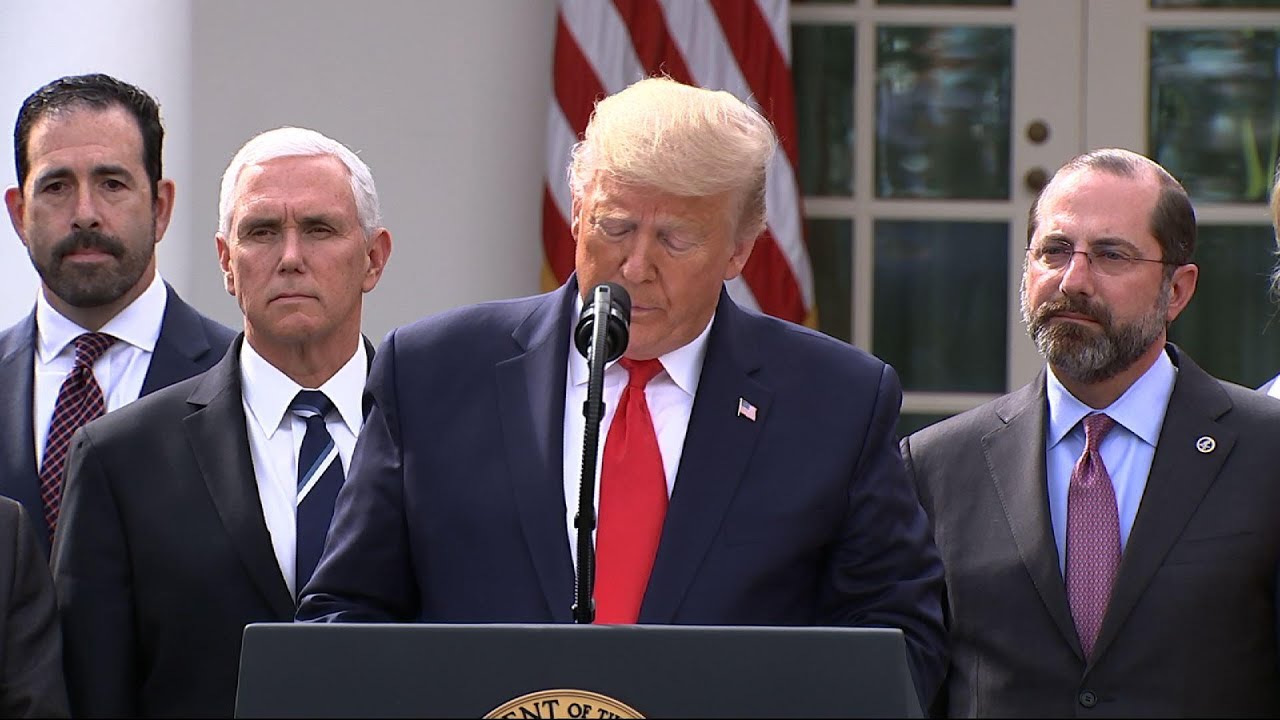
From the Rose Garden, Trump said, “I am officially declaring a national emergency,” unleashing as much as $50 billion for state and local governments to respond to the crisis.
Trump also announced a range of executive actions, including a new public-private partnership to expand coronavirus testing capabilities with drive-through locations, as Washington tries to subdue the new virus whose spread is roiling markets, shuttering institutions and disrupting the lives of everyday Americans.
But he denied any responsibility for delays in making testing available as his administration has come under criticism for being too slow to respond.
Trump said, “I don’t take responsibility at all” for the slow rollout of testing.
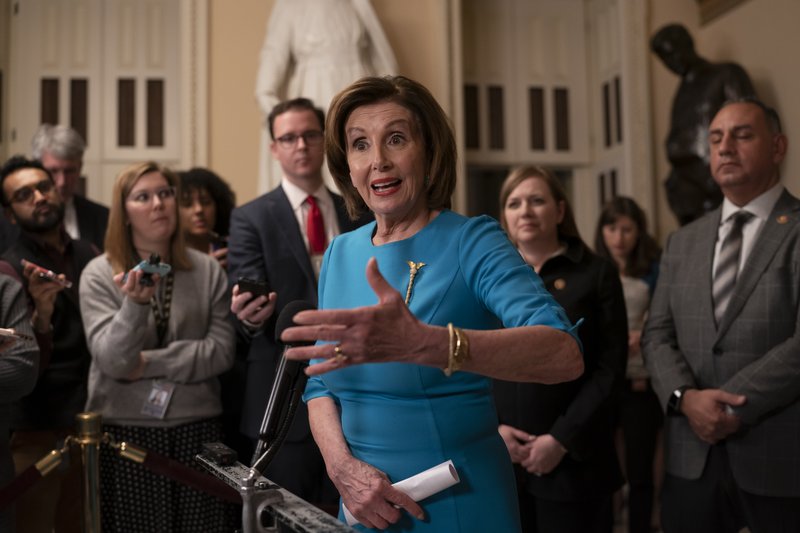
As the House prepared to vote late Friday, Speaker Nancy Pelosi trumpeted the hard-fought package that will provide free testing, sick pay for workers, enhanced unemployment benefits and bolstered food programs.

Youtube video thumbnail

“We did what we said we were going to do: Put families first,” said Pelosi, flanked by Democratic lawmakers, including many freshmen. The House passed the bill after midnight on a bipartisan vote, 363-40. It now goes to the Senate.
Trump’s tweet of approval instilled fresh energy in the package, all but ensuring that wary Republicans would join with a robust vote.
“I encourage all Republicans and Democrats to come together and VOTE YES!” Trump wrote, “Look forward to signing the final Bill, ASAP!”
The crush of late-day activity capped a tumultuous week in Washington as the fast-moving virus left ordinary Americans suddenly navigating self-quarantines, school closures and a changed way of life.
The White House was under enormous pressure, dealing with the crisis on multiple fronts as it encroached ever closer on the president.
Trump has been known to flout public health advice — and was eagerly shaking hands during the more than hour-long afternoon event — but acknowledged he “most likely” will be tested soon after exposures to individuals who have tested positive for the virus. The White House physician indicated later his interactions were low-risk and testing is not necessary.
Still, Trump said officials don’t want people taking the test unless they have certain symptoms. “We don’t want people without symptoms to go and do that test,” Trump said, adding, “It’s totally unnecessary.”
Additionally, Trump took a number of other actions to bolster energy markets, ease the financial burden for Americans with student loans and give medical professionals additional “flexibility” in treating patients during the public health crisis.
“Through a very collective action and shared sacrifice, national determination, we will overcome the threat of the virus,” Trump said.
Central to the aid package from Congress, which builds on an emergency $8.3 billion measure approved last week, are the free testing, sick pay and family leave provisions.
Providing sick pay for workers is a crucial element of federal efforts to stop the rapid spread of the infection. Officials warn that the nation’s healthcare system could quickly become overwhelmed with gravely sick patients, as suddenly happened in Italy, one of the countries hardest hit by the virus.
The ability to ensure paychecks will keep flowing — for people self-quarantining or caring for others — can help assure Americans they will not fall into financial hardship. The legislation also offers three months of paid family and medical leave. Small and mid-sized employers will be reimbursed through tax credits.
Pelosi negotiated the deal with Treasury Secretary Steven Mnuchin in days of around-the-clock negotiations with cross-town phone calls, even as Trump was speaking at the White House.
Voting in the Senate is not yet set, with senators out of town for the weekend. But Senate Leader Mitch McConnell canceled a plan recess week and senators were scheduled to return Monday. He said he expects most senators will want to “act swiftly.”
Both Mnuchin and Pelosi, who said she did not speak directly to Trump during the negotiations, promised a third coronavirus package will follow soon, with more aggressive steps to boost the U.S. economy, which economists fear has already slipped into recession.
The financial markets closed on an upswing after one of the worst nosedives since the 1987 downturn.
For most people, the new coronavirus causes only mild or moderate symptoms, such as fever and cough. For some, especially older adults and people with existing health problems, it can cause more severe illness, including pneumonia.
The vast majority of people recover. According to the World Health Organization, people with mild illness recover in about two weeks, while those with more severe illness may take three to six weeks to be over it.
Trump said he was gratified that Brazilian President Jair Bolsonaro tested negative for the virus, after the pair sat next to each other for an extended period of time last weekend at Trump’s Mar-a-Lago club. A senior aide to Bolsonaro tested positive.
The White House physician said in a memo late Friday that Trump was also exposed to a second guest at the club dinner, “sharing the table with the president,” who has since tested positive for the virus. Still despite the incidents, the physician said Trump had only “LOW risk” interactions and testing “is not currently indicated.”
Trump’s daugher, Ivanka Trump, worked from home Friday after meeting with Australian Home Affairs Minister Peter Dutton, now in isolation at a hospital after testing positive for the coronavirus. White House spokesman Judd Deere said she was evaluated by the White House Medical Unit.
Attorney General William Barr, who also met with the Australian official, stayed home Friday, though he “felt great and wasn’t showing any symptoms,” according to his spokeswoman Kerri Kupec.
Several lawmakers, including some close to Trump, have also been exposed to people who tested positive for the virus, and are self-isolating.
Among them are Republican Sens. Lindsey Graham and Rick Scott, who were at Trump’s club on the weekend. Graham announced Friday that he also met with the Australian official who has now tested positive. And GOP Sen. Ted Cruz of Texas, who had previously isolated himself after a potential exposure at a conservative conference in Washington, said Friday he met with a Spanish official and is now self-quarantining.
Hospitals welcomed Trump’s emergency declaration, which they and lawmakers in Congress had been requesting. It allows the Health and Human Services Department to temporarily waive certain federal rules that can make it harder for hospitals and other health care facilities to respond to an emergency.
The American Medical Association said the emergency declaration would help ensure America’s health care system has sufficient resources to properly respond to the ongoing outbreak.
Dr. Anthony Fauci, infectious disease chief at the National Institutes of Health, said more tests would be available over the next week, but warned, “We still have a long way to go.”
___
Associated Press writers Aamer Madhani, Alan Fram, Ricardo Alonso-Zaldivar, Lauran Neergaard, Martin Crutsinger, Laurie Kellman, Michael Balsamo and Kevin Freking in Washington contributed to this report.
___
The Associated Press receives support for health and science coverage from the Howard Hughes Medical Institute’s Department of Science Education. The AP is solely responsible for all content.

Friday, March 13, 2020

San Francisco, a Sanctuary City and Coronavirus


San Francisco, a Sanctuary City in a Sanctuary State, declared in a terrifying crescendo, the Coronavirus is an emergency, a potential catastrophe.  Never mind the population is not suffering from a broad general infection…yet.  It is was what might happen that has them scared.
The uncontrolled flow of migrants, most of whom are economic migrants destined for the public welfare rolls, free health care, free education, free housing, free food, and on, are eligible for broad-based benefits that American citizens can’t get. The uncontrolled flow of migrants across American borders is not a concern or crisis until the risk is unfettered, entrance to potential Coronavirus infected people.
Blind admission of migrants, some of whom could be carrying disease, such as T.B., potentially to the good people of San Francisco, did not matter to the mother Sanctuary of Sanctuaries. But the Coronavirus…that has them scared.  There is no treatment for Coronavirus, unlike T.B. The Virus can and is spreading easily far and wide. The Bay Area City knows it.
Trump’s border wall, which Liberals have fought hard against, is slowing down the cross border flows the San Fran Liberals are suddenly terrified of. Trump, and any reasonable government intent on protecting its citizens from obvious risk, demanded a wall to stop unvetted migrations. Trump never wanted to stop immigration, only uncontrolled migrations.  The Wall requires migrants to go through defined entry points where they can be checked for diseases, like the fearful Coronavirus… before they are released into the American interior.
330,000,000 Americans will be at risk.
A Wall can stop biological terrorists sending Coronavirus infected suicide killers across the border into America.  The idea has certainly occurred to them.  It is cheap and effective. They may be trying it right now.
Is Trump still a racist for wanting to protect America first?  Is Trump a racist for wanting to keep out the sick coming for free medical care, free everything? What if the Virus turns into a pandemic, will the Sanctuary City and State have enough beds to care for Americans? Will Americans be turned away because the city and state is flooded by sick, infected migrants?
Jewish law mandates, before we save the world, we must save our families and our communities – first.
The silence of Liberals, as the unrestricted migrants streaming across America’s borders flood continues, is deafeningly, hypocritically, brain dead. That is until it is their families that are impacted.
Perhaps it is Liberalism that needs to be examined for mental Coronavirus, not Trumpism.
Israel is closing its borders to migrants, tourists, anyone from Coronavirus infected areas.  Is Israel racist? Those who hate Israel insist Israel is racist.  Bernie Sanders and his supporters affirm that loudly.
Common sense to the obvious is not racism.

Toilet Paper Shortage Cartoons

Image result for Toilet Paper Shortage CartoonsImage result for Toilet Paper Shortage CartoonsImage result for Toilet Paper Shortage CartoonsImage result for Toilet Paper Shortage Cartoons

Kimberley Strassel: Adam Schiff's surveillance state


Lawmakers are debating ways to prevent the Federal Bureau of Investigation from abusing its surveillance authority again. While they’re at it, they have an obligation to address their own privacy transgressor, Rep. Adam Schiff.
That’s the gist of a pointed letter from Federal Communications Commissioner Brendan Carr, which landed Thursday at the House Intelligence Committee. Chairman Schiff spent months conducting secret impeachment hearings. His ensuing report revealed that he’d also set up his own surveillance state. Mr. Schiff issued secret subpoenas to phone carriers, to obtain and publish the call records of political rivals. Targets included Rudy Giuliani and another attorney of the president, the ranking Republican on the Intelligence Committee (Rep. Devin Nunes) and a journalist (John Solomon).
Impeachment is over, but Mr. Carr hasn’t forgotten this abuse of power, and his letter, which I obtained, calls for answers and reform. The FCC takes call privacy seriously, only recently having proposed some $200 million in fines on phone carriers for failing to protect customer data. Mr. Carr’s message to Mr. Schiff is that Congress doesn’t get a pass. It is not automatically entitled to “a secret and partisan process that deprives Americans of their legal right to maintain the privacy of this sensitive information.”
Mr. Carr doesn’t dispute that Congress may, “in at least some circumstances,” have the legal authority to obtain call records under the Communications Act. The offense, he writes, was denying his targets the right to fight the subpoenas: “Courts long ago established a process for Americans to seek judicial review before Congress obtains and then publishes documents in response to a congressional subpoena.”
As a lawyer and congressional lifer, Mr. Schiff knows this. It’s expected that Congress give notice of demands, as it did when it issued subpoenas to Deutsche Bank and Mazars for Donald Trump’s financial records. That notice allowed the president to file suit to block those institutions from responding. The Supreme Court in December issued stays, halting Deutsche Bank and Mazars compliance while it considers Mr. Trump’s appeal. Oral arguments are scheduled for March 31. Congress isn’t entitled to everything.
This history is what made Mr. Schiff’s subpoenas so devious and abusive. He issued them secretly. He didn’t notify his targets, and Republican committee members were barred from telling the public what they knew about the subpoenas.

Newsom executive order allows California to commandeer hotels, motels to house coronavirus patients

Another Government Power Grab?


Gov.  Gavin Newsom, the California Democrat, released an executive order on Thursday that includes the authority for Sacramento to take over hotels and motels for medical use for coronavirus patients, in a move he said will help the state of 40 million prepare for any widespread outbreak.
Some patients in the state have already been moved to hotels. The Desert Sun reported that a 120-room hotel in  San Carlos, which is near San Francisco, has been already tapped to house passengers from the Grand Princess cruise ship.
The first-term governor told reporters that besides hotels and motels, state officials are also scouting for potential lodging in "mothballed" facilities and state parks.
The executive order, according to the report, has been designed to allow the state’s Health and Human Services Agency and the Office of Emergency Services to commandeer private property for coronavirus treatment. It also offers economic relief for residents.
“This is where we need to go next, and to make sure we fully implement those procedures and protocols to slow down the spread to get through a peak and to get through the next few months, so we don’t overwhelm our healthcare delivery system,” Newsom said, according to the Los Angeles Times.
The report pointed out that there are 198 known cases of COVID -19 in the state of about 40 million.
State and local leaders were weighing short-term help for small businesses and individuals, with Newsom’s executive order eliminating a one-week waiting period for unemployment benefits. In Sacramento, the City Council planned to vote Friday on a $1 million economic relief package that could provide loans to restaurants and other businesses hurting due to coronavirus precautions.
In Los Angeles, Mayor Eric Garcetti closed City Hall to the public and banned all events or conferences on city-owned properties for more than 50 people. City board and commission meetings will be transitioned to publicly accessible phone or video conference sessions.
“We are entering a critical period,” Garcetti warned, urging residents to take steps to protect themselves, loved ones and neighbors. “These are common-sense measures.”
The Associated Press contributed to this report

House bill that would provide coronavirus sick leave, free tests in flux


Lawmakers were huddling Thursday evening to hash out the details of coronavirus legislation, in the hope of passing the relief package for families and workers later in the night, but House Speak  Nancy Pelosi said the vote was more likely to occur on Friday.
“It’s fair to say we are close to an agreement subject to an exchange of paper and hope to have an agreement tomorrow,” Pelosi said late Thursday, adding that the vote will occur on Friday “one way or another.”
She added that the passage of a bill would be a "confidence builder" and urged Americans to get "tested, tested, tested."
Sources told Fox News that the House will introduce the coronavirus bill as a suspension bill -- allowing the bill to move directly to the floor without having the Rules Committee meet prior to debate it.
The bill will require a two-thirds vote to pass, with significant Republican buy-ins on the package.
Pelosi and Treasury Secretary Steven Mnuchin were in talks throughout the day to update the bill to address the White House’s concerns. Pelosi expressed a sense of urgency to pass legislation to help families in need before the House leaves town for a one-week recess.
Meantime, Senate Majority Leader Mitch McConnell bashed the House's plan as an "ideological wish list" and said the Senate will return to work next week in Washington to deal with whatever the House sends over -- negating any chance for immediate action from Washington.
“The speaker is still negotiating with [Secretary] Mnuchin," fumed Sen. Chuck Schumer, D-N.Y. "The House hasn’t even sent a bill over and Leader McConnell sends everybody home during a crisis. That is so wrong.”
Pelosi unveiled the House Democrats' plan late Wednesday to provide free coronavirus testing, paid sick leave, expanded food assistance and more unemployment funding.
But the White House raised serious concerns and President Trump panned the legislation of being too chalked with "goodies" that Democrats have wanted for the last 25 years.
Trump had wanted a payroll tax cut that Pelosi didn't include. Republicans also raised concerns about the expansiveness of new paid sick leave programs and not including language to ban federal funds for abortion.
Determined to get something over the finish line to help workers deal with the economic hardships of the spreading pandemic, Pelosi continued to negotiate with Mnuchin to find some solutions.
Their first phone call took place at 8:24 a.m. and the two spoke for 16 minutes on language recommendations from the Trump administration, Pelosi spokesman Drew Hammill tweeted. Pelosi and Mnuchin spoke at least seven times Thursday, with follow-up calls at 9:12 a.m, 11:26 a.m.,  2:30 pm., 3:50 pm, 5:39 pm and 6:07 pm, Hammill said.
House Majority Leader Steny Hoyer advised House members to stay close as negotiations with the Trump Administration on the worker relief package was still ongoing.
"Votes are expected in the House today," Hoyer's office said in an email blast. "Further information regarding the exact timing of votes will be announced as soon as it becomes available."
The plan House Democrats introduced late Wednesday night would:
  • Ensure free coronavirus testing for everyone, including the uninsured. Requires private insurers, Medicaid, Medicare to pick up all the testing costs for their patients. 
  • Requires all employers to give workers up to 7 days of paid sick leave and provide an additional 14 days during a public health emergency. The legislation would reimburse small businesses – under 50 employees – for the costs of providing the 14-day leave for coronavirus emergencies.
  • Create a new federal emergency paid leave program through the Social Security Administration for workers absent for 14 days or more because they are infected or quarantined with the coronavirus. The monthly benefit is worth up to two-thirds of their monthly earnings up to $4,000 and would last for up to three months. Caregivers and parents home with children out of school/daycare could also qualify.
  • Provides $1 billion for emergency grants to states to administer unemployment compensation and authorizes full federal funding for extended unemployment benefits in states with unemployment that spikes past 10 percent.
  • Boosts food assistance funds to food banks, senior meal delivery programs and low-income pregnant women or mothers who are laid off due to the COVID-19 emergency.
  • Authorize emergency Supplemental Nutrition Assistance Program (SNAP) benefits to households with children who qualify for free or reduced-price school meals who are now home for coronavirus closures.
  • Loosen qualifications for SNAP food stamp benefits, including suspending the work and work training requirements, so more food is available during the public health emergency.
  • Calls for the development of occupational standards to protect frontline health workers from contracting the virus.
Fox News' Chad Pergram contributed to this report.

Democrat Power Struggle Ensues Over New FDNY Chief Before Mamdani Takes Over, and Musk Has Warning

The troubles just keep piling up for New York City's self-described Democratic Socialist Mayor-elect Zohran Mamdani e...