Presumptuous Politics

Saturday, March 21, 2020

Lockdowns multiply globally as virus strains health systems


BERLIN (AP) — Streets, squares and highways were deserted in large parts of the world Saturday as curfews and lockdowns multiplied in the face of a rapidly advancing virus that is severely straining many health systems.
Three American states with a combined population of 70 million are moving to restrict residents to their homes to prevent the spread of the new coronavirus. California started Friday and New York and Illinois were to follow this weekend. Connecticut and Oregon were preparing to do the same.
Once-bustling outdoor plazas fell quiet in Bavaria after it became the first German state to tell people to stay home, except to go to work, buy food, visit the doctor or exercise. Police reported fewer people breaching the curfew than in previous nights.
Colombia became the latest South American country to announce a lockdown, and Sri Lanka closed all expressways for a weekend curfew.
The number of confirmed cases of COVID-19 recorded in Africa rose above 1,000 Saturday, according to the Africa Centers for Disease Control and Prevention. At least 40 of Africa’s 54 countries now have cases.
More than 275,000 cases have been confirmed globally, including over 11,000 deaths, according to a running tally by Johns Hopkins University. At least 88,000 have recovered.
For most people, the new virus causes only mild or moderate symptoms, such as fever and cough. For some, especially older adults and people with existing health problems, it can cause more severe illness, including pneumonia. The vast majority recover.
But with hospitals already under pressure, officials in many countries are desperate to prevent — or at least limit — a repeat of what has happened in China and southern Europe. The coronavirus outbreak overwhelmed medical services in the central Chinese city of Wuhan earlier this year and now is pushing them to the limit in Italy and Spain.
Germany’s southwestern state of Baden-Wuerttemberg on Saturday offered to take in patients from the neighboring region of eastern France that’s struggling with a surge of infections overwhelming hospitals.
In Britain, which still lags behind Italy, Spain and France in the spread of the virus, the country’s overstretched health system is creaking. The state-funded National Health Service has about 4,000 critical-care beds and some 5,000 ventilators, and officials say that’s far fewer than will be needed as the number of cases spikes in the coming weeks. Britain has already asked 65,000 retired nurses and doctors to return to work.
Lisa Anderson, a consultant cardiologist at St George’s Hospital in London, sad “there is a lack of protection for us which extends to a lack of plan of how to segregate patients clean and dirty, how to protect us and keep us away from the public.”
“Doctors have no faith in what is going on,” she told the BBC.
Britain has recorded 3,983 confirmed cases of COVID-19 and 177 deaths.
China has been sending aid to several European countries, promoting its expertise and experience gained from fighting the outbreak at home. An Air China flight carrying 18 tons of medical supplies including hundreds of thousands of surgical and protection masks landed in the Greek capital, Athens, Saturday morning.
As the pandemic has eased in Asia, China and other parts of the region are now trying to avoid importing cases from Europe, the U.S. and elsewhere.
China reported Saturday that its mainland had no new home-grown cases of the disease for the third straight day, but 41 imported ones in the previous 24-hour period. That followed a surge in cases in the territory of Hong Kong on Friday, including 35 imported ones.
Restrictions on movement are being eased gradually in China as it tries to restart the economy without bringing back the disease.
Officials in Wuhan are permitting supermarkets, convenience stores and some other retail businesses to reopen from 9 a.m. to 6 p.m. if they are in areas with no confirmed or suspected cases. One person from each household is allowed to go out daily for a shopping trip of up to two hours.
The Beijing Zoo said its outdoor areas would reopen Monday, but visitors have to wear masks and make reservations at least one day in advance. Most major museums and attractions in China have been closed for nearly two months to stop the spread of the virus.
In the U.S., the restrictions on movement take effect Saturday in Illinois and Sunday in New York. All workers in nonessential businesses will be required to stay home and gatherings of any size are banned in New York. Exceptions will be made for important errands, such as buying groceries and medicine, and for exercise.
The lockdowns in California and other states sent stock markets tumbling again. Wall Street had its worst week since the 2008 financial crisis, with the Dow Jones Industrial Average falling more than 900 points and down 17% for the week.
Car maker BMW said it would shut down a huge manufacturing complex in South Carolina from April 3 to 19 and Nissan said it would suspend vehicle production at its two Mexican assembly plants from next Wednesday through April 14. Auto production has resumed in China, but only partially.
A member of Vice President Mike Pence’s staff has tested positive for the coronavirus, the White House said. A spokeswoman said the person did not have close contact with either Pence or President Donald Trump.
Colombian President Iván Duque announced Friday night that everyone would be required to isolate in their homes for three weeks starting Tuesday. The capital, Bogota, began its own lockdown Friday, leaving the city’s usually traffic-filled streets largely empty.
Colombia has 158 confirmed cases, and officials are hoping that drastic measures now will limit the number of new cases in the weeks ahead. Peru, Ecuador and Venezuela already are in lockdown.
Spain was approaching one week of tight restrictions on free moment and the closure of most shops Saturday, as hospitals and nursing homes buckled under the burden of the virus outbreak. Health authorities have acknowledged that some intensive care units in the hardest-hit areas, led by hospitals in Madrid, are reaching their limits.
By Friday, Spain had the third-highest number of infections worldwide, with nearly 20,000 confirmed cases, and 1,002 deaths. Some privately owned factories in the country have joined in the effort to combat the national emergency by converting their production lines to make much-needed masks, gloves and disinfectant gels for hospitals.
Spanish soldiers were deployed to disinfect airports and nursing homes, while police intensified their efforts to enforce confinement rules with fines and extra patrols to stop city-dwellers with second homes in the country from leaving town for the weekend.
But there was concern about the possible unwanted side-effects that extended curfews around the world might have, including increased instances of domestic violence.
“The authorities know or should know that confinement measures will also cause casualties, among women and children,” Agnes Callamard, a U.N. appointed human rights expert, said on Twitter.
“An emergency plan to protect them is needed.”
___
Moritsugu reported from Beijing. Associated Press reporters around the world contributed to this report.
___
The Associated Press receives support for health and science coverage from the Howard Hughes Medical Institute’s Department of Science Education. The AP is solely responsible for all content.

Lockdowns, stay-at-home policies multiply as coronavirus cases, deaths mount

Extremely light traffic moves along the 110 Harbor Freeway toward downtown mid afternoon, Friday, March 20, 2020, in Los Angeles. Traffic would normally be bumper-to-bumper during this time of day on a Friday. California Gov. Gavin Newsom is ordering the state's 40 million residents to stay at home indefinitely. His order restricts non-essential movements to control the spread of the coronavirus that threatens to overwhelm the state's medical system. He called up 500 National Guard troops Thursday to help with distributing food. (AP)

In the U.S. and across the globe, more people were under official lockdowns or stay-at-home policies early Saturday as coronavirus cases and fatalities mounted.
In New York City, coronavirus patients were dying at a rate of more than one an hour, with that rate expected to rise, the city’s health commissioner said Friday, according to The New York Post.
After California’s governor issued the nation’s strictest “stay at home” order Thursday night, taking effect at midnight Friday. The governors of New York, Illinois and Connecticut did likewise, with Oregon among the states expected to follow suit.
All told, the orders would confine around 75 million Americans to their homes – able to go out only for essential reasons, such as vital work duties or to gather food and supplies.
“This is not a permanent state, this is a moment in time,” California Gov. Gavin Newsom said, trying to assure the nation’s most populous state that the order would eventually lift.
In Los Angeles, the sight of nearly empty freeways was startling in a city long known for extensive traffic snarls.
New York, the state with the most COVID-19 cases in the nation, received a "major disaster" declaration Friday from the Federal Emergency Management Agency (FEMA), giving it access to a share of $42 billion in federal Disaster Relief Fund dollars.
Early Saturday, New York had more than 8,400 confirmed coronavirus cases and nearly 50 deaths, while the entire U.S. had more than 19,600 confirmed cases and about 250 deaths.
“No, this is not life as usual,” New York Gov. Andrew Cuomo said as the death toll in the U.S. topped 200, with at least 35 in his state. “Accept it and realize it and deal with it.”
Cuomo said that starting Sunday, all workers in nonessential businesses must stay home as much as possible, and all nonessential gatherings of any size for any reason will be banned in the state of over 19 million people.
"When I talk about the most drastic action we can take, this is the most drastic action we can take," Cuomo said.
After announcing the state's fourth fatality related to coronavirus, Connecticut Gov. Ned Lamont said of the lockdown: “It’s tough medicine. I think it’s the right medicine. What we’re trying to do is everything we can to improve the supply when it comes to what we can do for our health care system.”
Outside the U.S., Colombia’s president called for three weeks of home isolation, to begin Tuesday, with the capital Bogota already on lockdown Friday, The Associated Press reported.
Peru, Ecuador and Venezuela were already on lockdown.
Nations were hoping to avoid situations in China and Italy, where the most cases have occurred. China had more than 81,000 cases early Saturday while Italy had more than 47,000.
Worldwide, there were more than 275,000 coronavirus cases reported and 11,300 deaths.
The Associated Press contributed to this story.

Friday, March 20, 2020

Stock Market Panic Cartoons

Image result for Stock Market Panic and Poor People Cartoons
Image result for Stock Market Panic and Poor People CartoonsImage result for Stock Market Panic and Poor People CartoonsImage result for Stock Market Panic and Poor People CartoonsImage result for Stock Market Panic and Poor People CartoonsImage result for Stock Market Panic and Poor People CartoonsImage result for Stock Market Panic and Poor People CartoonsImage result for Stock Market Panic and Poor People Cartoons

Trump’s team, senators to negotiate $1T economic rescue deal


WASHINGTON (AP) — Members of President Donald Trump’s economic team convene Friday on Capitol Hill to launch negotiations with Senate Republicans and Democrats racing to draft a $1 trillion-plus economic rescue package amid the coronavirus outbreak.
It’s the biggest effort yet to shore up households and the U.S. economy as the pandemic and its nationwide shutdown hurtles the country toward a likely recession.
Senate Majority Leader Mitch McConnell unveiled the Republican opening offer to pump $1,200 direct checks to taxpayers, $300 billion for small businesses to keep idled workers on payroll and $208 billion in loans to airlines and other industries.
The GOP leader’s effort builds on Trump’s request for Congress to “go big.”
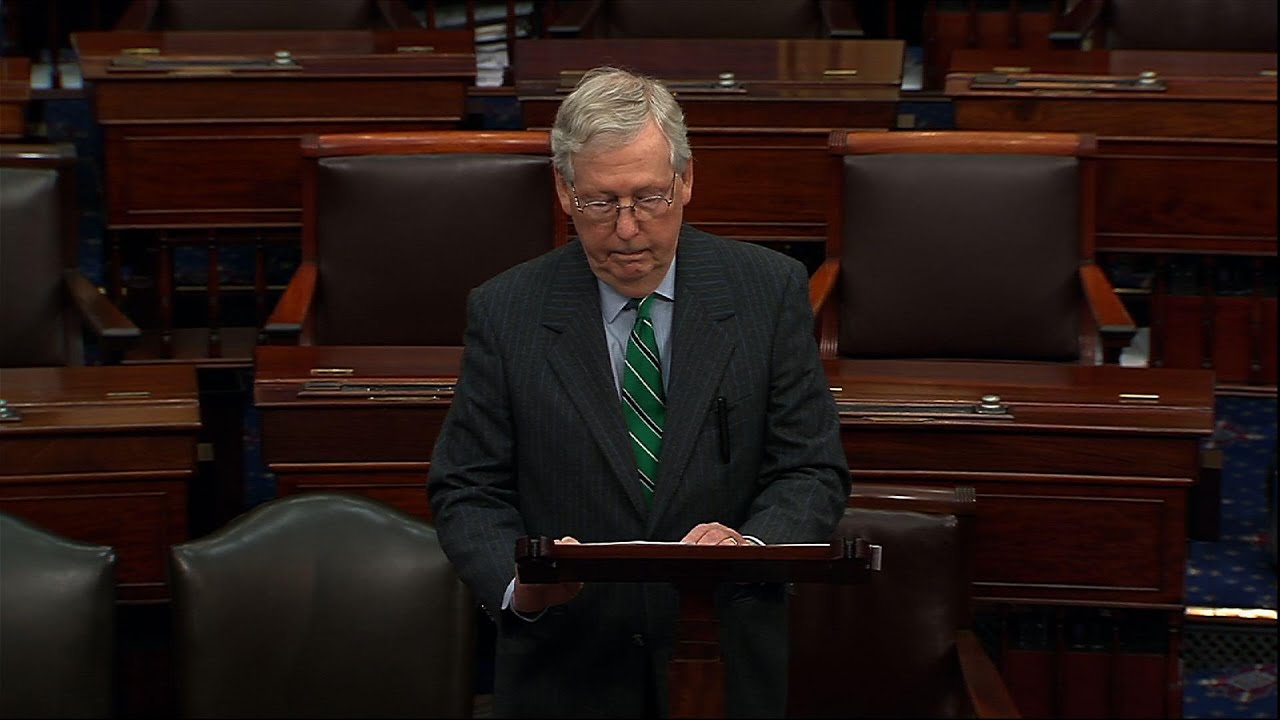
“We need to take bold and swift action as soon as possible,” McConnell said Thursday, announcing his plan on the Senate floor.
The 247-page McConnell CARES Act puts the leader’s imprint on opening talks with Democrats in Congress as lawmakers prepare to work through the weekend to fast-track perhaps the most urgent legislative undertaking since the 2008 financial crisis.
The negotiations are certain to encounter difficulties ahead, despite the pressure on Washington to act. Trump’s Treasury Secretary Steven Mnuchin and economic adviser Larry Kudlow will meet behind closed doors with Senate leaders. Democrats say the Republican plan does not go far enough and some Senate Republicans object to certain provisions. 

Youtube video thumbnail

“We are beginning to review Senator McConnell’s proposal and on first reading, it is not at all pro-worker and instead puts corporations way ahead of workers,” said a joint statement from House Speaker Nancy Pelosi and Senate Democratic Leader Chuck Schumer.
The GOP leader’s plan aims to shore up households, businesses and the healthcare industry, which is bracing for an expected onslaught of patients falling ill from the virus that causes COVID-19.
The one-time $1,200 stipends would be sent to individuals — $2,400 for couples — phased out at income thresholds of $75,000 for individuals and $150,000 per couple. Additionally, there would be $500 payments for each child.
Additionally, the McConnell bill would provide $300 billion to small businesses, with loans that would eventually be forgiven for employers who use them to meet payroll expenses.
To shore up industry, McConnell’s plan would provide $208 billion in loans and loan guarantees to distressed sectors, including $50 billion for commercial airlines, $8 billion for air cargo carriers and $150 billion for other eligible businesses, but those loans would have to be paid back.
Businesses would also be allowed to defer payment of the 6.2% employer payroll tax.
The proposal also includes a specific provision to allow the Treasury secretary to “participate in the gains,” through stock options or other financial instruments, of companies that receive federal aid.
At the same time, caring for the expected surge of sick Americans is a priority for Congress.
The McConnell proposal contains a raft of health care provisions — including permanent liability protection for the manufacturers of respirators and other desperately needed medical gear to handle the pandemic.
At the consumer level, McConnell’s bill would put into federal law the commitment from insurers that coronavirus tests will be cost-free to policy holders. Additionally, the bill requires coverage of coronavirus vaccines, at no cost to patients.
For the health care industry, the bill would establish a new Medicare payment for treating COVID-19 patients. It would suspend through the end of this year a 2% Medicare payment cut to providers under previously set budget restraints.
Pelosi and Schumer said in statement they looked forward to working with Republicans “in a bipartisan way to deliver for the American people as soon as humanly possible.”
The Democratic leaders said, however, their priority is to “make sure all workers are protected from the loss of a paycheck or that no family falls into financial ruin because of this pandemic.”
The Democratic leaders called on Trump to ramp up production of medical supplies and rapidly erect temporary field hospitals under new authorities he has invoked in the Defense Production Act.
Keeping paychecks flowing for idled workers as jobless claims skyrocket is a top priority for both Republican and Democratic plans emerging from Congress.
But how best to send direct payments to Americans — as one-time stipends, ongoing payroll support or unemployment checks — is a crucial debate.
Democrats have other ideas for ushering aid to Americans by pushing more money into the existing unemployment insurance system. Schumer called it “employment insurance” — which he characterized as “unemployment insurance on steroids.”
Some GOP senators panned the idea of direct one-time checks, preferring instead to use the federal dollars to keep workers who are asked to stay home on business payrolls.
“What I want is income, not one check,” said Sen. Lindsey Graham, R-S.C.
Meanwhile, industries of all kinds are lining up for help. The total price tag is sure to grow beyond $1 trillion, lawmakers said.
Trump has already signed into law a $100 billion-plus bill to boost testing for the coronavirus and guarantee paid sick leave for millions of workers hit by it. Earlier, Trump signed an initial $8.3 billion package from Congress.
For most people, the new coronavirus causes only mild or moderate symptoms, such as fever and cough. For some, especially older adults and people with existing health problems, it can cause more severe illness, including pneumonia.
The vast majority of people recover from the new virus. According to the World Health Organization, people with mild illness recover in about two weeks, while those with more severe illness may take three to six weeks to recover.
___
Associated Press writers Darlene Superville, Matthew Daly, Mary Clare Jalonick, Ricardo Alonso-Zaldivar and Padmananda Rama in Washington contributed to this report.
___
The Associated Press receives support for health and science coverage from the Howard Hughes Medical Institute’s Department of Science Education. The AP is solely responsible for all content.

Ex-FEMA boss bolts from MSNBC interview: 'I don't have time to listen to bull----, people'


The issue of how big a role federal agencies should play in the response to the coronavirus outbreak led to some fireworks on MSNBC on Thursday.
"I don't have time to listen to bull----, people," a fed-up Craig Fugate, a former administrator of the Federal Emergency Management Agency (FEMA), said, as he took off his earpiece and stormed out of the set during an interview with the network's Katy Tur.
He bolted after another guest, Andy Slavitt – a former acting administrator of the Centers for Medicare and Medicaid Services – claimed Fugate's comments weren't "helpful" in addressing the outbreak.
Fugate left while Slavitt was speaking.
The altercation started after Fugate said the federal government needed to get out of the way and allow state agencies to do their jobs.
Slavitt countered that the nation needed a central overseer, "someone looking through the entire system," to respond to the outbreak. He added there should be a partnership between the states and federal government.
Both guests worked for the Obama administration, with Fugate heading FEMA for eight years, and Slavitt serving as acting CMS administrator from 2015-2017.
Fugate, Slavitt and the host would later respond on Twitter following the clash, with the two guests acknowledging their emotions got the better of them during a tense time for the country.
"Dear @MSNBC, @KatyTurNBC At the point, I’m not helping, time to step back," Fugate wrote on Twitter. "Never was good at the talking head thing anyway. This is too critical of a time to let emotions get in the way. My apologies to you and your audience."
"Craig my sincere apologies for contributing this," Slavitt wrote in a response to Fugate. "Please keep informing people as you do. You’re a terrific public servant. We’re on the same team. Andy."
"We have always valued and appreciated @WCraigFugate’s time and expertise," said Tur. "Tensions are obviously very high. We hope to have him back. We need people who know how things work now more than ever."

Stock futures jump as tumultuous week comes to an end


U.S. equity futures may add to recent gains on hopes government and central bank action can shield the world economy from a looming recession caused by the coronavirus.
The major futures indexes are indicating gains of 4 percent, or about 700 Dow points, when Wall St. begins trading on Friday.
Investors were encouraged after seeing more steps by the Federal Reserve and other central banks and governments to support credit markets and the economy.
On Wall Street, the benchmark S&P 500 index rose 0.5 percent in a relatively modest change compared with violent price swings over the past week.
TickerSecurityLastChangeChange %
I:DJIDOW JONES AVERAGES20087.19+188.27+0.95%
SP500S&P 5002409.39+11.29+0.47%
I:COMPNASDAQ COMPOSITE INDEX7150.578097+160.73+2.30%
On Thursday, the European Central Bank launched a program to inject money into credit markets by purchasing up to $820 billion in bonds. The Bank of England cut its key interest rate to a record low of 0.1 percent.
They are trying to reduce the impact of a global recession that forecasters say looks increasingly likely as the United States and other governments tighten travel controls, close businesses and tell consumers and travelers to stay home.
In Asian markets, The Shanghai Composite Index rose 1.6 percent and Hong Kong's Hang Seng gained 5 percent. Japan's markets were closed for a holiday.
In Europe, London's FTSE added 2.9 percent, Germany's DAX jumpd 5.3 percent and France's CAC gained 5.6 percent.
Also Thursday, the U.S. Federal Reserve unveiled measures to support money-market funds and the borrowing of dollars as investors in markets worldwide hurry to build up dollars and cash as insurance against falling asset prices.
In the United States, the number of people who filed for unemployment benefits jumped by 70,000 last week, more than economists expected. Another weak manufacturing report, this time in the mid-Atlantic region, added to the worries.
The total number of known infections has topped 244,000 worldwide, including nearly 85,000 people who had recovered. The death toll has exceeded 10,000.
The Associated Press has contributed to this article.

Dianne Feinstein, 3 Senate colleagues sold off stocks before coronavirus crash: reports


Sen. Dianne Feinstein of California and three of her Senate colleagues sold off stocks worth millions of dollars in the days before the coronavirus outbreak crashed the market, according to reports.
The data is listed on a U.S. Senate website containing financial disclosures from Senate members.
Feinstein, who serves as ranking member of the Senate Judiciary Committee, and her husband sold between $1.5 million and $6 million in stock in California biotech company Allogene Therapeutics, between Jan. 31 and Feb. 18, The New York Times reported.
When questioned by the newspaper, a spokesman for the Democrat from San Francisco said Feinstein wasn’t directly involved in the sale.
“All of Senator Feinstein’s assets are in a blind trust,” the spokesman, Tom Mentzer, told the Times. “She has no involvement in her husband’s financial decisions.”
“All of Senator Feinstein’s assets are in a blind trust. She has no involvement in her husband’s financial decisions.”
— Tom Mentzer, Feinstein spokesman
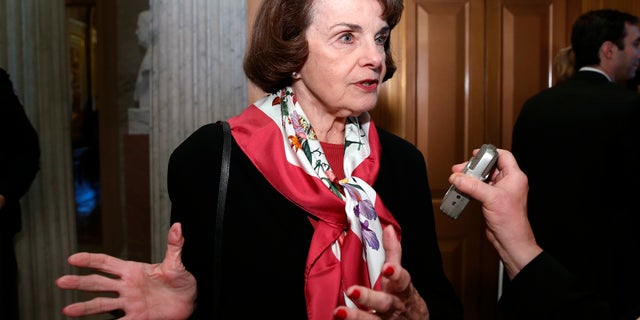
Sen. Dianne Feinstein, D-Calif., is seen in an undated photo. (Associated Press)

Reports identified the three other senators as Richard Burr of North Carolina, Kelly Loeffler of Georgia and James Inhofe of Oklahoma, all Republicans.
Burr, chairman of the Senate Intelligence Committee, used more than 30 transactions to dump between $628,000 and $1.72 million on Feb. 13, according to ProPublica.
The report said the transactions involved a significant percentage of the senator’s holdings and took place about a week before the impact of the virus outbreak sent stock prices plunging to the point where gains made during President Trump’s term in office were largely erased.
“Senator Burr filed a financial disclosure form for personal transactions made several weeks before the U.S. and financial markets showed signs of volatility due to the growing coronavirus outbreak,” a Burr spokesperson said. “As the situation continues to evolve daily, he has been deeply concerned by the steep and sudden toll this pandemic is taking on our economy.”
Burr was an author of the Pandemic and All-Hazards Preparedness Act, a law that helps determine the federal response to situations such as the coronavirus outbreak, ProPublica reported. Burr’s office would not comment on what kind of information Burr might have received about coronavirus prior to his stock sales, the outlet reported.
NPR reported that Burr made ominous comments about coronavirus behind closed doors last month.
“There’s one thing that I can tell you about this: It is much more aggressive in its transmission than anything that we have seen in recent history,” Burr said at a Feb. 27 meeting of business leaders in Washington. “It is probably more akin to the 1918 pandemic.”
Loeffler was appointed to the Senate in December by Georgia Gov. Brian Kemp after incumbent Sen. Johnny Isakson resigned because of health issues – despite allies of President Trump having urged Kemp to select Rep. Doug Collins instead.
Loeffler and her husband, Jeffrey Sprecher, chairman of the New York Stock Exchange, sold stock Jan. 24, the same day she sat in on a briefing from two members of Trump’s Coronavirus Task Force, The Daily Beast reported.
Between that day and Feb. 14, the couple sold stock worth a total between $1.2 million and $3.1 million, the report said. In addition to the sales, they also purchased stock in a maker of software that helps people work at home – just before millions of Americans were forced to leave their offices because of the outbreak, the report said.
Loeffler slammed the Daily Beast report as a "ridiculous and baseless attack" in a pair of late-night tweets.
"This is a ridiculous and baseless attack. I do not make investment decisions for my portfolio. Investment decisions are made by multiple third-party advisors without my or my husband's knowledge or involvement," Loeffler wrote. "As confirmed in the periodic transaction report to Senate Ethics, I was informed of these purchases and sales on February 16, 2020 — three weeks after they were made."
Inhofe sold as much as $400,000 in stock all on Jan. 27, in companies such as PayPal, Apple and real estate company Brookfield Asset Management, The New York Times reported.
The Senate financial disclosure data is available by clicking here.

Thursday, March 19, 2020

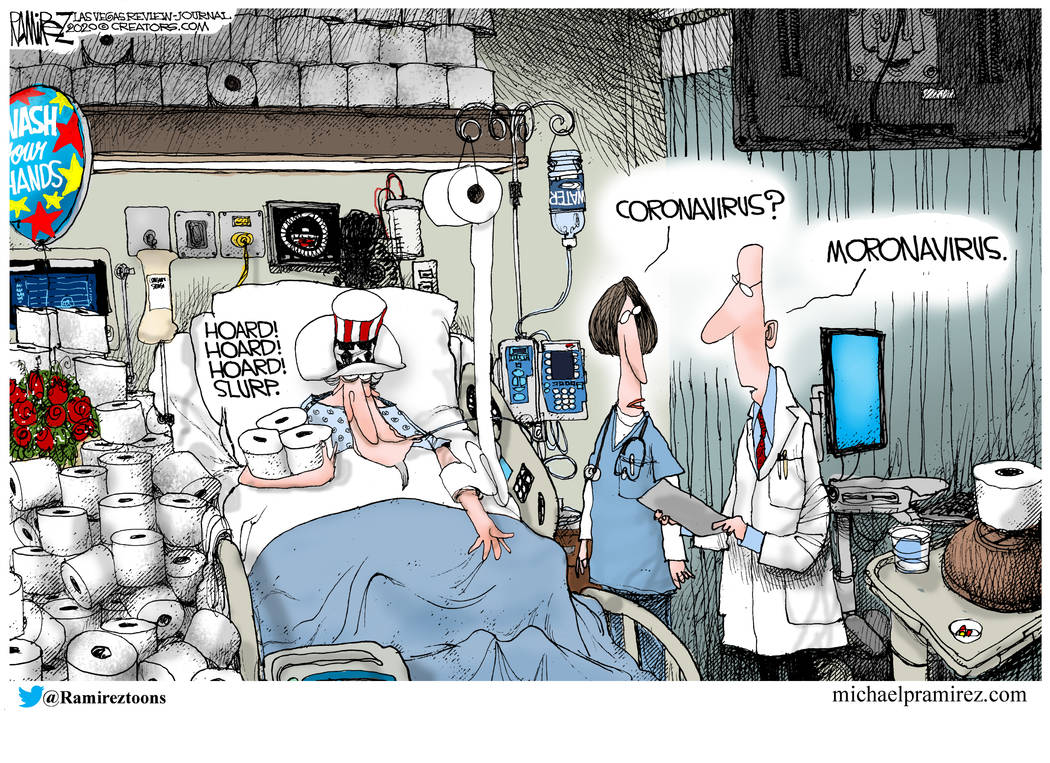
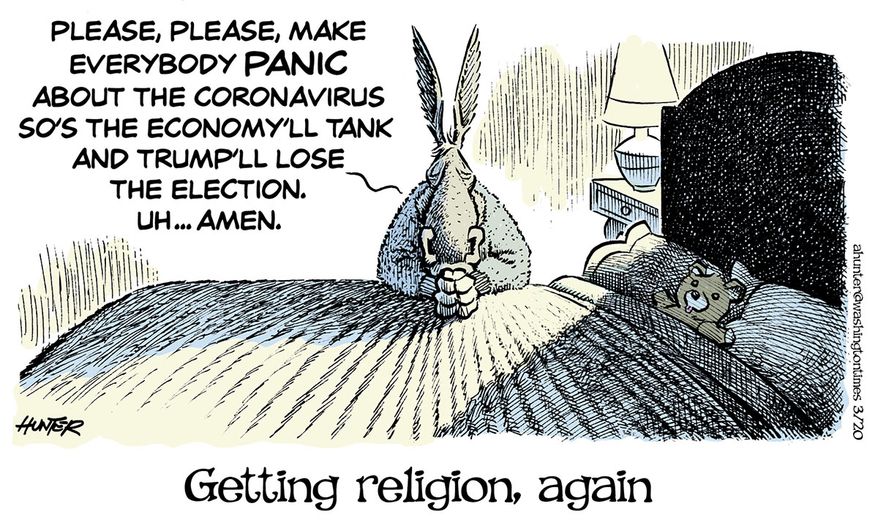
Cartoons March 2020


Celebrities get virus tests, raising concerns of inequality


WASHINGTON (AP) — Celebrities, politicians and professional athletes faced a backlash this week as many revealed that they had been tested for the coronavirus, even when they didn’t have a fever or other tell-tale symptoms.
That’s fueling a perception that the wealthy and famous have been able to jump to the head of the line to get tested while others have been turned away or met with long delays.
The concerns over preferential treatment underscores a fundamental truth about inequalities baked into the American health care system — those with the financial means can often receive a different level of service.
Asked about the issue Wednesday, President Donald Trump said the well-to-do and well-connected shouldn’t get priority for coronavirus tests. But the wealthy former reality star conceded that the rich and famous sometimes get perks.
“Perhaps that’s been the story of life,” Trump said during a briefing at the White House. “That does happen on occasion. And I’ve noticed where some people have been tested fairly quickly.”
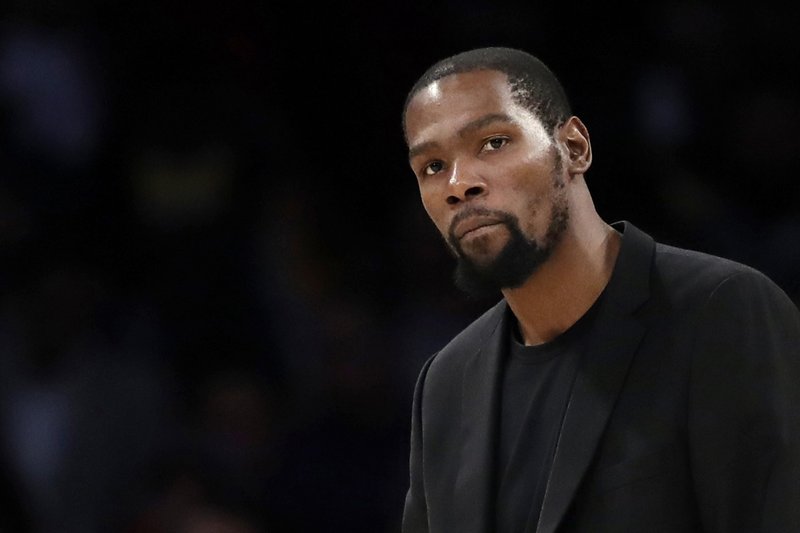
On Wednesday, the Brooklyn Nets professional basketball team announced the entire team was tested last week upon returning from San Francisco after a game against the Golden State Warriors. The team found a private lab to do the work, and on Tuesday announced that four of its players were positive for the virus, including perennial All-Star Kevin Durant.
Even though public health resources were not used, it raised the ire of many including New York Mayor Bill de Blasio, who turned to Twitter to voice his objections.
“We wish them a speedy recovery,” the mayor wrote. “But, with all due respect, an entire NBA team should NOT get tested for COVID-19 while there are critically ill patients waiting to be tested. Tests should not be for the wealthy, but for the sick.”
Like Robin Fraser.
The 30-year-old has fibromyalgia and an autoimmune disorder that put her at high risk for complications if she contracts the virus. She’s been running a fever and coughing since last week. Her doctor recommended she get tested at the emergency room, but there she was told there weren’t enough tests, so she can’t get one.
“That’s just not fair,” said Fraser, who lives in Victor, New York, near Rochester.
Fraser has seen celebrities and politicians getting tests, and that upsets her.
“Why are they getting in front of the line? People like me, average Joes, we get pushed to the back of the line. Why can Congress get it and we can’t?” she asked.
Public frustrations over the difficulties getting tested for the new virus have been building since the first U.S. case was confirmed Jan. 20. Early missteps with test kits developed by the Centers for Disease Control and Prevention, coupled with strict government criteria about who qualified for screening, have led to widespread reports of people struggling to get tested. Even those who manage to get successfully swabbed often report long delays in getting the results back amid lengthy backlogs at government-run labs.
Seeking to break the logjam, the federal Food and Drug Administration announced earlier this month it would allow major private diagnostic lab companies to begin rolling out new COVID-19 tests and relaxed regulations typically required before new tests can be brought to market.
Over the last two weeks, that has led to a surge in testing available from private doctors and labs not bound by CDC’s criteria for which patients should be prioritized for testing, such as those with fever and difficulty breathing who have recently traveled to affected countries overseas, or those who have had close contact with someone confirmed to have had the virus.
Quest Diagnostics, a major lab testing company, began providing COVID-19 test on March 9. LabCorp, another major national provider, followed suit on March 13.
In a statement, LabCorp said its COVID-19 test is available on the order of any physician or other authorized healthcare provider anywhere in the United States. The company said it expects to be performing more than 10,000 tests per day by the end of this week, ramping up to 20,000 tests per day by the end of this month.
By comparison, the CDC and other public health labs conducted about 30,000 tests in the eight weeks since the pandemic arrived in the U.S., according to data compiled by researchers at Johns Hopkins University.
The NBA suspended its season on March 11 after a Utah Jazz player tested positive for the coronavirus just before a game — eventually canceled — with the Oklahoma City Thunder. Oklahoma’s state epidemiologist confirmed last week that the Jazz, their traveling party and a number of Utah beat writers — 58 people in all — were tested after the cancellation of the game in Oklahoma City once it became known that All-Star center Rudy Gobert tested positive for the virus.
League officials have said that since its players have direct contact with each other and often interact very closely with fans, both physicians who work for teams and public health officials were concerned that they could accelerate the spread of the virus. NBA spokesman Mike Bass said that players getting tested — and in some cases, revealing their positive status — may have ultimately “drawn attention to the critical need for young people to follow CDC recommendations.”
Hollywood actor Idris Elba said he didn’t have any symptoms when he announced his positive test on Monday, prompting questions and criticism on social media about why he got a test when he was not symptomatic.
On Tuesday, Elba explained further in a follow-up video. He said it was because he learned on Friday that a person he was in contact with had tested positive. He said he was on location, about to start a film. It was not clear what country he was in or where he was tested.
“I was around a lot of people. And quite honestly, my job made me test immediately,” said Elba, an Englishman best known for his roles on the HBO series “The Wire” and as a detective on the BBC One series “Luther.”
“I had to test anyway, because it meant putting a lot of people at risk if I had been exposed, then the people I would be working with would also be exposed. So, we got a test immediately. We were really lucky to take the test very quickly, because of the shortages of tests.”
But Elba’s work situation isn’t unusual. Businesses across the country are shutting down to prevent employees from exposing themselves to the virus at work. Several cities, including New York, San Francisco and Washington, have ordered bars, restaurants, gyms, movie theaters and other businesses to close to slow the virus’ spread.
Ali Fedotowsky-Manno, former star of ABC’s “The Bachelorette,” found herself on the defensive after announcing in a post on Instagram Sunday that she had been tested at a clinic in Los Angeles after she said she had shortness of breath and an X-ray that showed white spots on her lungs, and what she said were “all the symptoms of the virus, except for a fever.”
She said she went to a clinic called Mend, which she said was “one of the only places that will do the test if you don’t have a fever.”
Fedotowsky-Manno said Wednesday in an interview with The Associated Press that she had seen commentary accusing her of special treatment. She denied the accusation, saying she chose the clinic closest to her house, She checked in under her married name and only heard the clinic would give tests to people without a fever from someone else in the waiting room, after she was already there.
“Nobody knew who I was at that urgent care. I went to urgent care like anybody could,” she said.
The CEO of Mend did not return emails seeking comment, but the clinic’s website says it charges $195 for a home visit to collect swabs for COVID-19 tests, with Quest then billing a patient’s insurance to process the samples.
“We would expect physicians to follow CDC clinical criteria,” said Wendy Bost, a spokeswoman for Quest. “Our materials about the test are clear on this point.”
The company declined to provide a figure for what it charges for its COVID-19 test.
Fedotowsky-Manno on Wednesday was still waiting for her results, five days after getting tested. She said she understands why people are upset over testing.
“I think it’s crazy that everybody can’t get tested,” she said. “It’s absolutely absurd.”
___
Smith reported from Providence, Rhode Island, and Reynolds from Miami.
___
Follow AP investigative reporter Michael Biesecker at http://twitter.com/mbieseck

Reps. Mario Diaz-Balart, Ben McAdams are first lawmakers to announce testing positive for coronavirus


Rep. Mario Diaz-Balart, R-Fla., on Wednesday became the first member of Congress to announce that he has tested positive for coronavirus, saying he had been stricken with a fever and headache this weekend.
Shortly afterward, Rep. Ben McAdams, D-Utah, said he too had tested positive after developing "mild cold-like symptoms" Sunday evening. The 45-year-old told constituents he first learned the test result Wednesday.
As the news broke, Republican whip Steve Scalise, R-La., issued a statement announcing he would go into quarantine, although he said he did not currently have any symptoms.
“I have just been informed that my colleague, Mario Diaz-Balart, tested positive for COVID-19. Since I had an extended meeting with him late last week, out of an abundance of caution, I have decided it would be best to self-quarantine based on the guidance of the Attending Physician of the United States Congress," Scalise said.
Rep. Ann Wagner, R-Mo., said she would also self-quarantine, although she had no symptoms, because last week she "participated in a small group meeting with a colleague who has since tested positive for COVID-19."
Fox News has obtained the letter sent from the Office of the Attending Physician at the Capitol to lawmakers late Wednesday. "It reflects the pace of the COVID-19 disease throughout the United States and its presence here in Washington, D.C. that it has touched the community of the U.S. Capitol," the letter, written by Dr. Brian Monahan, concludes.

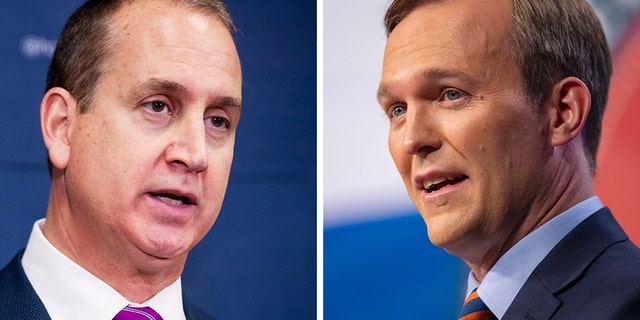
Rep. Mario Diaz-Balart, R-Fla., left, and Rep. Ben McAdams, D-Utah, right.

Rep. Mario Diaz-Balart, R-Fla., left, and Rep. Ben McAdams, D-Utah, right.
Monahan said his office "has taken appropriate actions to identify any individuals who require additional monitoring for periods of quarantine," and "has adopted a very conservative guideline to identify individuals who may have come into contact with the ill Members during the pre-symptomatic period of March 13th."
"The office has additionally reviewed possible exposures among staff members and has assessed other areas involving the calendars of the affected individuals," Monahan went on. "The Office of Attending Physician has identified the offices and locations that were found to be at risk and these have been treated by the Architect of the Capitol, using CDC approved cleaning methods to ensure there is no residual risk to others."
Other instances "where the affected Members may have briefly come into contact with other colleagues on the House Floor would be considered to be low risk exposures and no additional measures are required other than for them to report any illness should they become ill," he said.
The virus already had affected others on Capitol Hill, which has remained closed to visitors. At least two congressional staffers have been infected by the virus, and some prominent politicians have self-quarantined at both the state and federal levels.
"In an abundance of caution, after votes on Friday, March 13th, Congressman Mario Diaz-Balart decided to self-quarantine in Washington, D.C, and not return to South Florida because of his wife Tia’s pre-existing conditions that put her at exceptionally high risk," his office said in a statement. "On Saturday evening, Congressman Diaz-Balart developed symptoms, including a fever and a headache.  Just a short while ago, he was notified that he has tested positive for COVID-19. While in quarantine Diaz-Balart has been working from his apartment in Washington, D.C."
Diaz-Balart, 58, added that he's "feeling much better."
"However, it is important that everyone take this extremely seriously and follow CDC guidelines in order to avoid getting sick and mitigate the spread of this virus," Diaz-Balart said. "We must continue to work together to emerge stronger as a country during these trying times.”
McAdams, on Twitter, said wrote that he was "isolated" at home when he developed "a fever, a dry cough and labored breathing."
He added that he was conducting meetings by telephone and urged everyone to take the virus "seriously."
Lawmakers increasingly have practiced social distancing amid the outbreak. Earlier this month, Sen. Ted Cruz, R-Texas, Rep. Paul Gosar, R-Ariz., and several other members of Congress announced they would self-quarantine after they had possible exposure to the virus.
Miami Mayor Francis Suarez tested positive for coronavirus last week. Diaz-Balart has served in the U.S. House of Representatives since 2003.
Sen. Michael Bennet, D-Colo., indicated he would not self-quarantine on Wednesday even after coming in contact with an infected constituent. He was the third member of Congress from the state to be told he had met with a constituent who tested positive for the virus, The Denver Post's Justin Wingerter reported. The other two lawmakers voluntarily self-quarantined.
Also on Wednesday, RNC Chairwoman Ronna McDaniel tested negative for coronavirus. Trump himself recently tested negative, the White House said.
In Iran, the coronavirus has killed several lawmakers and senior political figures.

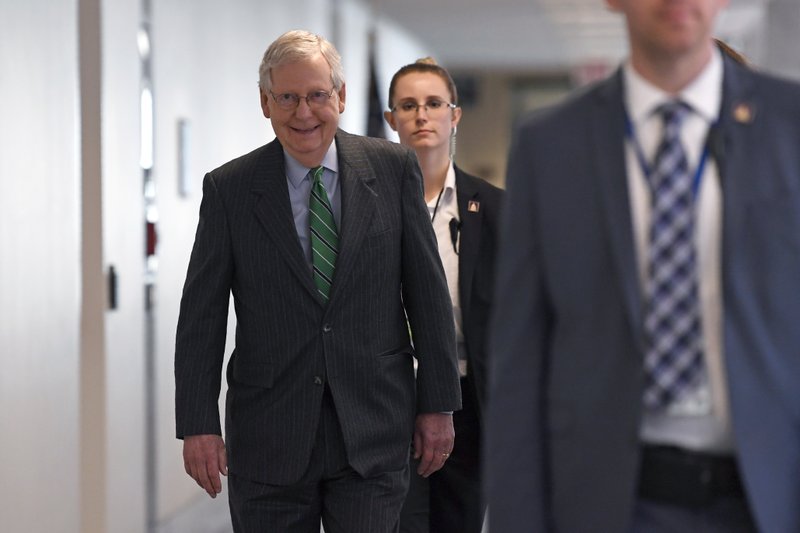
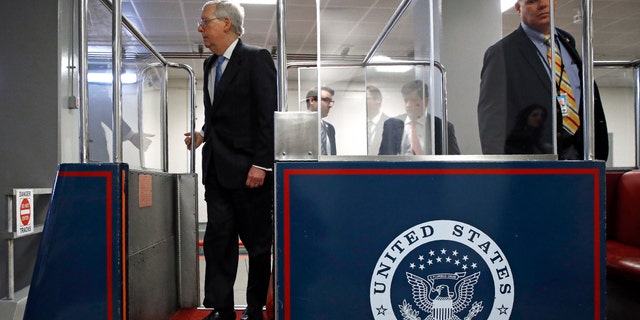
Senate Majority Leader Mitch McConnell of Ky., left, boarding a subway car on Capitol Hill in Washington before a vote on a coronavirus response bill Wednesday. (AP Photo/Patrick Semansky)

Hours earlier in the day, President Trump described himself as a “wartime president” fighting an invisible enemy and invoked rarely used emergency powers to marshal critical medical supplies against the coronavirus pandemic. The Senate, meanwhile, approved an aid package that will guarantee sick leave to workers who fall ill.
Trump tapped his authority under the 70-year-old Defense Production Act to give the government more power to steer production by private companies and try to overcome shortages in masks, ventilators and other supplies.
And, the Senate overwhelmingly passed a second coronavirus response bill, which Trump then enacted with his signature. The vote was a lopsided 90-8 despite worries by many Republicans about a temporary new employer mandate to provide sick leave to workers who get COVID-19. The measure is also aimed at making tests for the virus free.
Fox News' Chad Pergram and The Associated Press contributed to this report.

CartoonDems