Saturday, March 28, 2020
A walk through town: Families, coronavirus and togetherness

GLEN
ALLEN, Va. (AP) — In a quiet suburb just north of Richmond, Virginia, a
mother and her three children spend a weekday afternoon planting a
small garden of spinach, red cabbage and lettuce. Across town, a dad
teaches his kids how to play volleyball on an empty court. In a
sprawling park, a father shows his son and daughter the perfect flick of
the wrist to skip rocks in a stream.
Similar
scenes — idyllic, except for the context — are playing out in
communities around the United States. Stuck at home, thrust together,
parents and children are navigating the most unsettling of circumstances
and finding new ways to connect. This is one community’s story,
gathered this week from walks and observations of families keeping to
themselves yet still, somehow, managing to remain part of a larger
whole.
ADVERTISEMENT
With
its top-rated schools, bucolic parks and large collection of shops and
restaurants, Glen Allen is the kind of place built for families. The
once-rural area is now one of the most sought-after suburbs of Richmond,
11 miles (18 kilometers) northwest of the capital. Its population of
just under 15,000 gives it a not-too-big and not-too-small feel, and its
proximity to Richmond makes it a prime commuter community.
As
in so many other American towns, life here has changed since the
coronavirus began to spread. Large gatherings are banned. Schools have
closed through the rest of the academic year. Countless businesses are
shuttered, at least for the time being.
Neighborhoods
and parks that are normally deserted on weekdays are now filled with
parents and children, out for a walk, run or bike ride together —
carefully maintaining distance, but still clearly part of a community.
On Wintercreek Drive, families play games together in their own yards
and talk to neighbors over backyard fences, standing back at least 6
feet so as not to risk exposure. In Echo Lake Park, families walk their
dogs, smile and nod as they pass other dog walkers on a half-mile nature
trail.
In
Crump Park, an expansive recreation area with large open fields and an
1860 living history farm, families play together in small groups,
dotting the landscape with pods of people — each yards apart from the
other, observing social distancing guidelines in the age of coronavirus.
A father and his preteen son sit by a pond fishing. Two children ride
scooters as their dad walks behind them. A family of four spreads out a
blanket and has a picnic.
“All
their activities — swimming, basketball, volleyball — they’ve all been
canceled. That opens up a lot of free time,” says Dwayne Cook, a
52-year-old mortgage broker who has been taking breaks from working at
home to go to the park with his two children, Cameron, 14, and Corinne,
12.
ADVERTISEMENT
Cook
says he spent one trip teaching his kids how to skip rocks in a stream.
He and his son also had a pull-up contest on the playground.
“It’s nice to be outside, get some sun and leave the phones in the car,” he says.
Fifty
yards away, two kites bob high above a hill. Brett and Teresa Hobbs are
teaching their two daughters, ages 7 and 11, about the gift of a
perfect afternoon breeze.
“For our family, it’s given us more time to talk,” says Teresa Hobbs, a kindergarten teacher.
In
a cozy subdivision called Winterberry, Meg and Dan Tully have been
trying to come up with ways to balance working at home with schoolwork
and the need to keep their three active boys busy. With the school
running club shut down, they’ve been taking turns leading the boys on
their usual mile run.
Dan
Tully, a telecommunications engineering manager, still dresses in
business attire for video conferences while working at home. During
occasional breaks, he kicks a soccer ball around the yard with his kids.
On one recent day off, he and his wife took the boys to a nearly empty
Twin Hickory Park and taught them the finer points of spiking and
serving a volleyball.
A
quarter-mile away, Jamie and Joe Burton and their three children are
eating dinner together every night, once a rarity with their busy
schedules. Their daughters, 12 and 9, are competitive gymnasts who used
to practice five nights a week, while their son had weekly baseball
games and practices.
Jamie
Burton, a registered nurse, still must go to work. But because the kids
are home from school and their extracurricular activities have all been
canceled, the family’s lighter schedules have opened up new
opportunities for doing things together.
“My
oldest daughter said, ‘Mom, I know this is scary and a lot of things
are going on in the world. But the one positive I see immediately is
that we’re able to spend more family time together,’” Burton says.
Burton’s
neighbor Stephanie Owens, a pharmacist, has also continued her usual
work schedule. But the kids being home from school has created extra
pockets of time. Last week, she, her brother, mother and her three sons —
12, 8 and 3 — all planted a small garden in a corner of their backyard.
“It’s
nice to be able to have more time with them,” Owens says. “Usually,
it’s get up in the morning, get ready to go to school, do homework at
night and go to bed.”
This
is, it seems, a case of circumstances helping to double down on a trend
that already exists. Liana Sayer, director of the Time Use Laboratory
at the University of Maryland, says research shows that parents have
been spending more leisure time with their children since the 1970s. She
expects that trend to only accelerate as the coronavirus continues to
disrupt daily life.
“We
have a new set of constraints now — one that is forcing people to spend
time together, not keeping them apart in the way that work schedules
and school schedule and activities’ schedules did,” Sayer says.
All
of this togetherness and free time has been a silver lining in the
coronavirus outbreak for many middle-class and affluent families. But
it’s hardly universal. Jessica Calarco, a sociology professor at Indiana
University, says the crisis hasn’t provided the same opportunities for
many working-class families, hourly workers and single parents. They’re
wondering how they are going to pay for child care and worrying about
losing their jobs as more and more businesses close.
“They
don’t have the flexibility to work at home or take an hour out of the
middle of the day to take a walk with their kids because of the other
types of pressure they may be facing,” Calarco says. “I worry about the
inequalities that are resulting from this.”
___
Follow Denise Lavoie on Twitter at http://twitter.com/deniselavoie_ap
___
Check out AP coverage of the virus outbreak at https://apnews.com/VirusOutbreak and https://apnews.com/UnderstandingtheOutbreak.
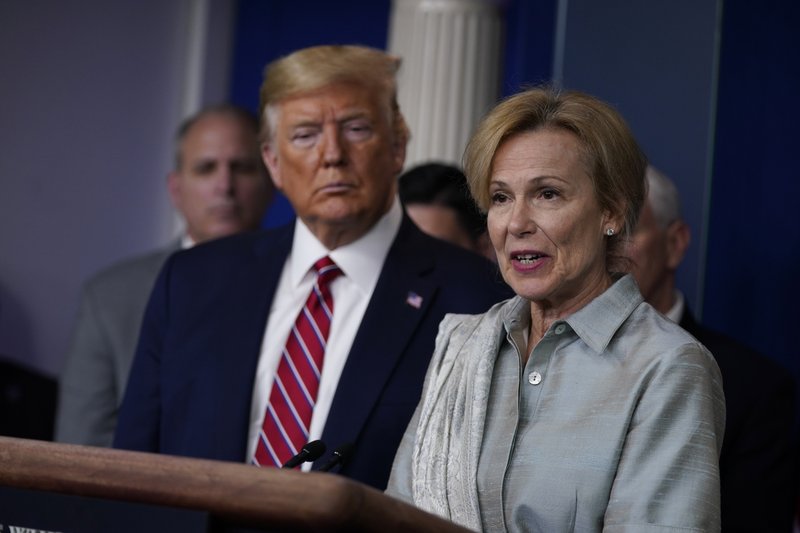
Virus coordinator Birx is Trump’s data-whisperer

WASHINGTON
(AP) — For many in the public health and political worlds, Dr. Deborah
Birx is the sober scientist advising an unpredictable president. She’s
the data whisperer who will help steer President Donald Trump as he
ponders how quickly to restart an economy that’s ground to a halt in the
coronavirus pandemic.
Others
worry that Birx, who stepped away from her job as the U.S. global AIDS
coordinator to help lead the White House coronavirus response, may be
offering Trump cover to follow some of his worst instincts as he
considers whether to have people packing the pews by Easter Sunday.
ADVERTISEMENT
In
coming days, immunologist Birx will be front and center in that debate
along with the U.S. government’s foremost infection disease expert, Dr.
Anthony Fauci, as well as Vice President Mike Pence. Birx will bring to
the discussion what she fondly refers to as her sheet music — data on
testing, mortality, demographics and much more.
“What the president has asked us to do is to assemble all the data and
give him our best medical recommendation based on all the data,” Birx
told reporters. “This is consistent with our mandate to really use every
piece of information that we can in order to give the president our
opinion that’s backed up by data.”
But will Trump listen?
The
president has sent mixed messages on that. He plans to meet with the
two doctors and Pence on Monday to review the latest data on the spread
of the disease. His administration’s original 15-day guidelines
promoting social distancing expire Tuesday.
Over
a matter of weeks, Trump has veered from playing down the virus threat
to warning Americans it could be summer before the pandemic is under
control. And in more recent days, he’s talked eagerly about having parts
of the country raring back by Easter in two weeks.
As
the president’s message has vacillated, Birx has emerged as one of the
most important voices laying out the administration’s pandemic response.
She has a way of spelling out the implications of the virus to
Americans in personal terms while offering reassurances that the
administration is approaching the pandemic with a data-driven mindset.
For
most people, the new coronavirus causes mild or moderate symptoms, such
as fever and cough that clear up in two to three weeks. For some,
especially older adults and people with existing health problems, it can
cause more severe illness, including pneumonia, and death.
Former
Health and Human Services Secretary Kathleen Sebelius, who helped
shepherd Birx’s ambassadorial nomination through the Senate in the Obama
administration, said it’s like Birx and Fauci have become a tag team
for science in the midst of calamity.
“I
can’t imagine how complicated it is to have a boss –- if you will — who
insists on saying things on a regular basis that are just not true and
aren’t based on any science,” Sebelius said.
ADVERTISEMENT
In
her public comments, Birx has taken pains to avoid publicly
contradicting Trump when he’s offered some decidedly unscientific riffs,
unlike Fauci, a professional mentor, who has been known to push back
pointedly.
Instead,
her messaging has toggled between providing digestible interpretations
of what the data is saying about the spread of the virus and offering
relatable pleas to the American public to practice social distancing to
help stem the disease.
In
recent days, Birx has received praise from Trump backers and pushback
from some fellow scientists after she minimized what she called “very
scary” statistical modeling by some infectious disease experts.
One
study, published this month by Harvard University epidemiologists,
found that the need to maintain social distancing remains crucial in the
weeks ahead to prevent the American healthcare system from becoming
overwhelmed by new cases.
“The
scenario Dr. Birx is ‘assuring’ us about is one in which we somehow
escape Italy’s problem of overloaded healthcare system despite the fact
that social distancing is not really happening in large parts of the
US,” Marc Lipsitch, a co-author of the study, wrote on Twitter.
Birx
also has drawn criticism for asserting that there are still beds in
intensive care units and a “significant” number of ventilators available
in hospitals around New York City -- the area hardest hit by virus.
That message doesn’t jibe with the dire warnings of city hospital
workers, who in recent days have said they’re ill-equipped and in danger
of being overwhelmed by patients stricken with the virus.
Birx’s
friends and colleagues say she is one of the adults in the room who is
providing the president with clear-headed advice and giving Americans
the information they need to stay safe.
“She’s
a tough cookie,” said Michael Weinstein, who heads the AIDS Healthcare
Foundation and got to know Birx professionally after she was named the
global AIDS coordinator in 2014. “She’s 100% about the data.”
In
the sea of men in dark suits who have been appearing with Trump for
daily briefings, the 63-year-old mother of two with a fondness for
colorful scarves stands out. Her seemingly endless scarf collection was
even fodder for comedian Paula Poundstone recently on the NPR quiz show
“Wait Wait...Don’t tell me!”
Birx’s
resume is impressive: She is a U.S. Army physician and recognized AIDS
researcher who rose to the rank of colonel, head of the global AIDS
program at the Centers for Disease Control and Prevention, and a rare
Obama administration holdover as the State Department’s
ambassador-at-large leading a U.S. taxpayer-funded worldwide campaign to
stop the spread of HIV/AIDS.
Birx
has also developed a reputation as a tough boss. Some who fall under
her watch at the global effort known as PEPFAR have complained that the
leadership of her office has been“dictatorial” and “autocratic,”
according to a State Department Office of Inspector General audit
released earlier this year.
“She
has somewhat of a reputation of being a hard task-master,” said John
Auerbach, head of the nonprofit Trust for America’s Health.. “She is
incredibly hard-working, someone who was driven and would drive other
people to work really hard and to do their best work.”
Birx
has also been perhaps the most outspoken in calling for Americans to be
mindful in how they are interacting with others. And she’s made the
case in personal terms.
The
doctor says she’s avoided visiting with her young grandchildren as she
practices social distancing, and she’s spoken in admiring tones of her
two millennial daughters when making the case that younger Americans’
actions will play a key role in determining how quickly the country can
contain the virus.
She
also has spoken of her grandmother living with a lifetime of guilt,
because she caught the flu at school as a girl and, in turn, infected
her mother — one of an estimated 50 million people worldwide who died in
the 1918 influenza epidemic.
“She
never forgot that she was the child that was in school that innocently
bought that flu home,” Birx said of her grandmother.
Birx,
who declined to be interviewed for this article, told a Christian TV
network popular with Trump’s evangelical base that she’s confident that
the president is, like her, a student of data.
“He’s
been so attentive to the scientific literature and the details and the
data,” Birx told CBN. “I think his ability to analyze and integrate data
that comes out of his long history in business has really been a real
benefit during these discussions about medical issues because in the
end, data is data.”
Virus infections top 600,000 worldwide, long fight ahead

BERLIN
(AP) — The number of confirmed coronavirus infections worldwide topped
600,000 on Saturday as new cases stacked up quickly in Europe and the
United States and officials dug in for a long fight against the
pandemic.
The
latest landmark came only two days after the world passed half a million
infections, according to a tally by John Hopkins University, showing
that much work remains to be done to slow the spread of the virus. It
showed more than 607,000 cases and a total of over 28,000 deaths.
While
the U.S. now leads the world in reported infections — with more than
104,000 cases — five countries exceed its roughly 1,700 deaths: Italy,
Spain, China, Iran and France.
ADVERTISEMENT
“We
cannot completely prevent infections at this stage, but we can and must
in the immediate future achieve fewer new infections per day, a slower
spread,” German Chancellor Angela Merkel, who is in quarantine at home
after her doctor tested positive for the virus, told her compatriots in
an audio message. “That will decide whether our health system can stand
up to the virus.”
The
virus already has put health systems in Italy, Spain and France under
extreme strain. Lockdowns of varying severity have been introduced
across Europe, nearly emptying streets in normally bustling cities,
including Paris where drone photos showed the city’s landmarks eerily
deserted.
Merkel’s
chief of staff, Helge Braun, said that Germany — where authorities
closed nonessential shops and banned gatherings of more than two in
public — won’t relax its restrictions before April 20.
Spain,
where stay-at-home restrictions have been in place for nearly two
weeks, reported 832 more deaths on Saturday, its highest daily total
yet, bringing its total to 5,690. Another 8,000 confirmed infections
pushed that count above 72,000.
Doctors,
nurses and ambulance drivers in its worst-hit regions are falling ill
at an alarming rate and working nonstop. More than 9,000 health workers
in the country have been infected.
“We
are completely overwhelmed,” said ambulance medic Pablo Rojo at
Barcelona’s Dos de Maig hospital. “Seven or eight (patients transported
today) and all with COVID-19. ... And the average age is decreasing.
They’re not 80 years old anymore, they are now 30 and 40 years old.”
“Sometimes
you become a bit paranoid, you don’t know any more when you pick up the
phone if you have cleaned your hands, if you’ve sanitized them or not.
You touch your face with your hands,” Rojo said.
Spain
has struggled to get coronavirus tests and protective gear for health
workers. The government has started flights to transport the supplies
directly from China to reduce waiting times.
As
the epicenter has shifted westward, the situation has calmed in China,
where some restrictions on people’s lives have now been lifted. Six
subway lines restored limited service in Wuhan, where the virus first
emerged in December, after the city had its official coronavirus risk
evaluation downgraded from high to medium on Friday. Five districts of
the city of 11 million people had other restrictions on travel loosened
after their risk factor was downgraded to low.
For
most people, the coronavirus causes mild or moderate symptoms, such as
fever and cough that clear up in two to three weeks. But for others,
especially older adults and people with existing health problems, the
virus can cause more severe illness, including pneumonia, and lead to
death.
More than 130,000 people have recovered, according to Johns Hopkins’ tally.
In one way or another, the effects of the COVID-19 outbreak have been felt by the powerful and the poor alike.
On
Friday, British Prime Minister Boris Johnson became the first leader of
a major country to test positive for the virus. He said he would
continue to work from self-quarantine.
ADVERTISEMENT
Countries
are still scrambling bring home some citizens stranded abroad by border
closures and a near-shutdown of flights. On Saturday, 174 foreign
tourists and four Nepali nationals on the foothills of Mount Everest
were flown out days after being stranded on the only airstrip serving
the world’s highest mountain.
In
neighboring India, authorities sent a fleet of buses to the outskirts
of the capital to meet an exodus of migrant workers desperately trying
to reach their home villages during the world’s largest lockdown.
Thousands
of people had fled their New Delhi homes after Prime Minister Narendra
Modi announced a 21-day lockdown that began on Wednesday and effectively
put millions of Indians who live off daily earnings out of work.
In
parts of Africa, virus prevention measures have taken a violent turn as
countries impose lockdowns and curfews or seal off major cities, with
police in Kenya firing tear gas and officers elsewhere captured in
mobile phone footage whacking people with batons.
In
the United States, New York remained the worst-hit city, but Americans
braced for worsening conditions elsewhere, with worrisome infection
numbers being reported in New Orleans, Chicago and Detroit.
New
Orleans’ sprawling Ernest N. Morial Convention Center, along the
Mississippi River, was being converted into a massive hospital as
officials prepared for thousands more patients than they could
accommodate.
In
New York, where there are more than 44,000 cases statewide, the number
of people hospitalized with COVID-19 passed 6,000 on Friday, double what
it had been three days earlier.
Gov.
Andrew Cuomo called for 4,000 more temporary beds across New York City,
where the Jacob K. Javits Convention Center has already been converted
into a hospital.
The
struggle to defeat the virus will take “weeks and weeks and weeks,”
Cuomo told members of the National Guard working at the Javits Center.
President
Donald Trump invoked the Defense Production Act on Friday, ordering
General Motors to begin manufacturing ventilators.
Trump
signed a $2.2 trillion stimulus package, after the House approved the
sweeping measure by voice vote. Lawmakers in both parties lined up
behind the law to send checks to millions of Americans, boost
unemployment benefits, help businesses and toss a life preserver to an
overwhelmed health care system.
Dr.
John Brooks of the U.S. Centers for Disease Control and Prevention
warned Americans remained “in the acceleration phase” of the pandemic
and that all corners of the country were at risk.
“There is no geographic part of the United States that is spared from this,” he said.
___
Sedensky reported from Philadelphia. Associated Press journalists around the world contributed to this report.
___
Follow AP coverage of the virus outbreak at https://apnews.com/VirusOutbreak and https://apnews.com/UnderstandingtheOutbreak
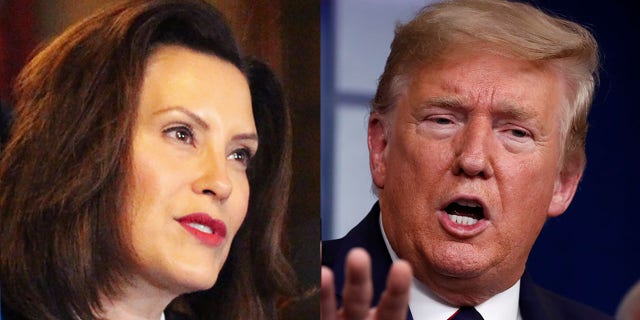
Trump fires back at Michigan’s Whitmer, claims Dem governor ‘doesn’t have a clue’
President Trump took aim at Michigan Gov. Gretchen Whitmer on Friday night, claiming in a Twitter message that the Democrat was “way in over her head” amid the coronavirus outbreak and “doesn’t have a clue.”
As of late Friday, Michigan had more than 2,200 confirmed cases of the virus, ranking fifth in the nation, and had seen at least 43 deaths.
“I love Michigan, one of the reasons we are doing such a GREAT job for them during this horrible Pandemic,” the president wrote. “Yet your Governor, Gretchen “Half” Whitmer is way in over her head, she doesn’t have a clue. Likes blaming everyone for her own ineptitude! #MAGA”
TRUMP SAYS GOVERNORS HAVE TO GET KEY MEDICAL GEAR THEMSELVES, BUT 'WE'RE HERE TO HELP THEM'
The Twitter message followed Whitmer’s accusations Friday that medical-supply vendors were being told “not to send stuff here to Michigan” – and her insinuation that the alleged orders were coming from the Trump administration.
It also followed the 48-year-old first-term governor's previous complaint that Michigan wasn’t receiving “clear directives and guidance” from Washington for handling the outbreak.
Earlier Friday, Trump told reporters during a White House news briefing that he advised Vice President Mike Pence – leader of the president’s Coronavirus Task Force – against communicating with Whitmer, claiming she was among a small group of governors who weren’t being “appreciative” of the Trump administration’s virus response efforts.
“I say, Mike … don’t call the woman in Michigan. I say, if they don’t treat you right, don’t call,” Trump told reporters.
The remark followed previous comments the president made Thursday during an interview with Fox News’ Sean Hannity.
“We've had a big problem with the young, a woman governor,” Trump said. “You know who I'm talking about, from Michigan. We don't like to see the complaints.”
That Thursday remark from Trump drew a Twitter response from Whitmer.
"Hi, my name is Gretchen Whitmer, and that governor is me," Whitmer wrote.
"I've asked repeatedly and respectfully for help. We need it. No more political attacks, just PPEs, ventilators, N95 masks, test kits. You said you stand with Michigan -- prove it."
Whitmer aired more concerns Friday during an interview with Detroit radio station WWJ-AM, according to Crain’s Detroit Business.
"When the federal government told us that we needed to go it ourselves, we started procuring every item we could get our hands on," Whitmer told WWJ. "What I've gotten back is that vendors with whom we had contracts are now being told not to send stuff here to Michigan. It's really concerning.”
Whitmer then doubled down on her claim during an appearance on CNN, Crain’s reported.
"We've entered into a number of contracts and as we are getting closer to the date when shipments are supposed to come in, they're getting canceled or they're getting delayed," Whitmer said. "We've been told they're going first to the federal government.”
Earlier in the week, Whitmer complained that Michigan wasn’t receiving “clear directives and guidance from the federal government” on how to handle the crisis.

The coronavirus outbreak has sparked tension between Michigan Gov. Gretchen Whitmer and President Trump.
Whitmer claimed that if the Trump administration had focused on the pandemic sooner, Michigan and the U.S. would "be in a stronger position right now."
"Lives will be lost because we weren't prepared," she said.
Also on Friday, President Trump signed a more than $2 trillion legislative package intended to provide extensive relief to workers and businesses as they deal with the coronavirus outbreak.
In addition, the president named his trade adviser, Peter Navarro, to direct implementation of the Defense Production Act, which gives the president the authority to direct manufacturers to produce medical supplies such as ventilators.
Friday, March 27, 2020
US cases now most in world, US capital sees more infections
![]() |
| A police officer chases a man who violated the lockdown downtown Johannesburg, South Africa |
TORONTO
(AP) — The United States’ caseload of coronavirus infections surged to
the most in the world and its capital reported more infections, as Italy
shut most of its industry and masses of Indian day laborers received
food rations after a lockdown put them out of work.
Increases
in the number of cases have been expected as testing becomes more
available. The U.S. passed China with more than 85,000 cases, and Italy
also exceeded 80,000, the three countries together accounting for almost
half of the world’s infections from the new virus.
Most
of China’s patients have recovered, while places where the virus
arrived later are now dealing with overwhelmed hospitals and supply
shortages and are rushing to convert public spaces for treating the
sick.
Washington,
D.C., confirmed 36 new cases Thursday, raising its total to 267. The
district is under a state of emergency, its major attractions like the
Smithsonian museums and National Zoo closed and White House and Capitol
tours cancelled. Police have blocked off streets, bridges and traffic
circles to prevent crowds coming to see Washington’s blooming cherry
blossom trees.
The
stay-home order for India’s 1.3 billion people threw out of work the
backbone of the nation’s economy — rickshaw drivers, fruit peddlers,
cleaners and others who buy food from whatever they can earn in a day.
The government announced a $22 billion stimulus to deliver monthly
rations to 800 million people.
In
some parts of India, people got rice rations or bank deposits from
local authorities, and aid groups were working to expand their reach.
The nation’s vital and massive train system was also halted, and jobless
workers are now attempting to walk hundreds of miles to their home
villages from India’s major cities.
Deaths
from COVID-19 have surpassed 24,000, more than a third of them in
Italy, according to a Johns Hopkins University tally. The U.S. had about
1,300 deaths, almost a quarter of them in New York City, where
hospitals are overwhelmed.
In
China, where the virus was first believed to have jumped from wild
animals to humans, the National Health Commission on Friday reported 55
new cases, including 54 it said were imported infections in recent
arrivals from overseas. Once again, there were no new cases reported in
Wuhan, the provincial capital where the coronavirus emerged in December.
China is barring most foreigners from entering as it tries to curb
imported cases.
The
economic damage of the pandemic was growing. Italy shut down most of
its industry, and a record-shattering 3.3 million Americans applied for
unemployment benefits in a single week.
Companies
in Europe are laying off workers at the fastest pace since 2009,
according to surveys of business managers. And the U.S. is bleeding jobs
as well: The number of Americans applying for unemployment benefits
last week was nearly five times the old record, set in 1982.
ADVERTISEMENT
Dann Dykas, 37, of Portland, Oregon, was laid off from his job helping design and set up displays for trade shows.
“Everything
is so surreal,” he said. “I can’t even get an interview for another
job, and we now have to worry more about being careful and taking care
of ourselves.”
Wall
Street rallied for the third straight day after an unprecedented $2.2
trillion economic rescue package to help businesses, hospitals and
ordinary Americans pull through the crisis won passage in the Senate.
The rescue plan, which is expected to be voted on in the House on
Friday, would dispense checks of $1,200 per adult and $500 per child.
Elsewhere
around the world, South Africa, with the most industrialized economy in
Africa, began a three-week lockdown Friday. The country is already in
recession, with an unemployment rate of 29%.
And
Britain unveiled another relief effort, this time aimed at the gig
economy, many of whose workers are facing financial ruin. The government
will give the self-employed grants equal to 80% of their average
profits, up to 2,500 pounds ($2,975) per month.
The outbreak has put huge pressure on foreign students, especially those at universities in North America and Europe.
Zoey
Wang recently returned home to the southwestern Chinese city of Chengdu
after her in-person classes and exams at the University of Toronto in
Canada were cancelled. Her parents’ desire to have her home and the
possibility of high medical costs if she became sick persuaded her to
make the arduous return trip, she said.
Some
on Chinese social media have attacked returning students for bringing
“poison” into the country after its months-long fight to contain the
virus, but Wang said that was unfair.
“It’s
not like everyone is deliberately returning because they were
infected,” Wang said. “People should remember that when the outbreak
happened in China, international students were sending masks and other
items.”
Wang
flew from Toronto to Taipei, Taiwan, then from Taipei to Chengdu. The
Chengdu leg was packed; everyone wore masks, most people donned goggles
and gloves, and a few were garbed in full-body protective suits.
When
she arrived in Chengdu, she was required to take a COVID-19 test and
stay in a hotel for two nights until her results came back negative.
Only then was she allowed to return to her own home for quarantine.
Every day, a government neighborhood committee worker comes to take her
temperature.
In other developments:
—
New York state’s death toll jumped by 100 in one day, pushing the
number to 385. Gov. Andrew Cuomo added that the number will increase as
critically ill patients who have been on ventilators for several days
succumb. “That is a situation where people just deteriorate over time,”
Cuomo said.
—
Saudi Arabia is locking down the capital, Riyadh, and Islam’s two
holiest cities, Mecca and Medina, in addition to a nationwide curfew. In
the United Arab Emirates, authorities announced an overnight weekend
lockdown and used drones to tell people to stay home.
—
The leaders of the Group of 20 major industrialized nations met in a
video summit and vowed to work together to confront the crisis but made
no specific commitments.
—
In Brazil, the country’s governors are defying President Jair Bolsonaro
over his call to reopen schools and businesses, dismissing his argument
that the “cure” of widespread shutdowns is worse than the disease. As
of Thursday, the country had more than 2,500 cases and 59 deaths.
— A U.S. soldier stationed at a camp near Seoul is the second case among U.S. service members in South Korea.
—
Singapore has begun penalizing people who refuse to adhere to social
distancing in the latest bid to curb the virus. Anyone not maintaining a
distance of 1 meter (3.3 feet) from another person in a public place
such as a shopping center or shopping mall can be jailed up to six
months or fined up to Singapore dollars 10,000 ($7,000) or both.
For
most people, the coronavirus causes mild or moderate symptoms, such as
fever and cough that clear up in two to three weeks. For some,
especially older adults and people with existing health problems, it can
cause more severe illness, including pneumonia and death.
Of the world’s 532,000 confirmed cases, more than 122,000 people have recovered, according to the Johns Hopkins tally.
___
Associated Press journalists around the world contributed to this report.
Pelosi 'jiu-jitsu' claim on coronavirus relief all wrong, McCarthy says: 'She held the bill up'
House Speaker Nancy Pelosi is being disingenuous about her role in crafting the $2 trillion coronavirus aid package, House Minority Leader Kevin McCarthy said Thursday night.
"I know it is her birthday, but it does not give her the right to lie," McCarthy, a California Republican, said on Fox News' "The Ingraham Angle" on the day that Pelosi, a San Francisco Democrat, turned 80 years old.
"Ninety-nine percent of this bill was already decided on Sunday -- she held the bill up," McCarthy added.
MCCONNELL ADMONISHES PELOSI OVER CORONAVIRUS AID BILL: 'I WISH SHE'D TURN OFF THOSE POLITICAL TALKING POINTS'
Pelosi claimed in earlier remarks that she and other House Democrats had "performed jiu-jitsu on" the bill, preventing Republicans from making it a piece of "corporate first" legislation.
She claimed Democrats succeeded in shifting the bill's direction toward a "democratic, workers-first legislation."
McCarthy added that nearly 3.3 million Americans filed jobless claims this week, while Democrats "held up" the bill, which was being crafted to provide relief.
He also slammed Pelosi for trying to insert provisions enacting parts of the Green New Deal, giving millions to Planned Parenthood, transforming election law, granting money to sanctuary cities, and giving a handout to the Kennedy Center for the Performing Arts in Washington.
"That is what she was requesting -- that is what we kept out," he said, adding that during bipartisan negotiations, the provision giving $24 million to the Kennedy Center remained in the bill.
"[The Kennedy Center funding] is her 'jiu-jitsu'," he said.
Trump downplays worst-case coronavirus scenarios: 'I don't believe you need 40,000 or 30,000 ventilators'
President Trump expressed skepticism Thursday night that the worst-case coronavirus pandemic scenarios would come to pass in the U.S., telling Fox News' "Hannity" that "I have a feeling that a lot of the numbers that are being said in some areas are just bigger than they're going to be."
"I don't believe you need 40,000 or 30,000 ventilators," Trump told host Sean Hannity, an apparent reference to New York Gov. Andrew Cuomo's recent claim that the state needed 30,000 ventilators. "You know, you go into major hospitals sometimes and they'll have two ventilators and now all of a sudden they're saying, 'Can we order 30,000 ventilators?'"
The president also hammered two Democratic governors after they criticized the federal government's response to the pandemic.
"The first line of attack is supposed to be the hospitals and the local government and the states -- the states themselves," Trump said. "We have people like [Washington state] Governor [Jay] Inslee -- he should be doing more."
Trump went on to mock Inslee as a "failed [2020] presidential candidate" who is "always complaining."
The Associated Press reported Thursday that Inslee implored Trump on a private conference call with governors from both parties to use executive authority to ramp up production of necessary medical equipment. But Trump said the federal government is merely the “backup.”
“I don’t want you to be the backup quarterback, we need you to be Tom Brady here,” Inslee reportedly replied, invoking the football star and Trump friend.
Trump also criticized Michigan Gov. Gretchen Whitmer, telling host Sean Hannity "she's not stepping up."
"I don't know if she knows what's going on but all she does is sit there and blame the federal government," Trump said. "She doesn't get it done and we send her a lot. Now she wants a declaration of emergency and we have to make a decision on that. But Michigan is a very important state."
Earlier this week, Whitmer demanded "clear directives and guidance from the federal government."
“Frankly, a patchwork strategy of each state doing what they can, we’re going to do it if we need to, but it would be nice to have a national strategy," she said, according to MLive.
Whitmer claimed that if the administration had focused on the pandemic earlier, Michigan and the U.S. would "be in a stronger position right now."
"Lives will be lost because we weren't prepared," she said.
Late Thursday, Whitmer tweeted in response to Trump, saying: "I've asked repeatedly and respectfully for help. We need it. No more political attacks, just PPEs, ventilators, N95 masks, test kits. You said you stand with Michigan - prove it."
Trump did praise New York's Cuomo in another regard, saying the two have had constructive talks and correspondence over the past few weeks.
He also discussed his hope that parts of the U.S. economy would begin returning to normal by Easter Sunday.
"The end result is, we've got to get back to work," Trump went on. "And I think we can start by opening up certain parts of the country ... certain parts of the Midwest, other places" where the outbreak has been less acute.
Trump also ruled out canceling the Republican National Convention, which is scheduled to take place in Charlotte, N.C. in August, telling Hannity "no way I'm going to cancel the convention."
In addition, the president dismissed criticism from his likely 2020 opponent, former Vice President Joe Biden, who called Trump racist earlier this year after the president issued an order halting the entry of foriegn nationals into the U.S. from China.
"I had Biden calling me xenophobic -- yet he can't define the word," Trump said, joking that Biden called the H1N1 epidemic during the Obama-Biden administration the "N1H1" plague.
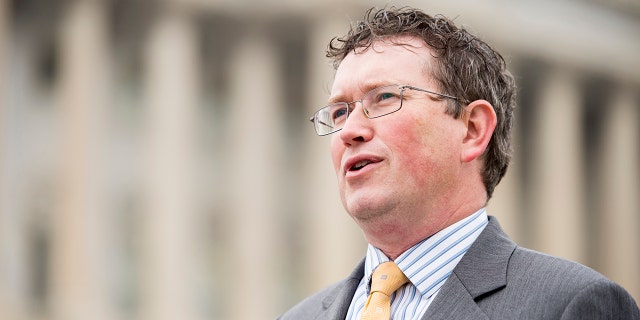
Ahead of coronavirus stimulus vote, House lawmakers concerned Rep. Massie may trigger delay
Furious lawmakers voiced serious concerns on Capitol Hill late Thursday that a Republican House member could “go rogue” and possibly scuttle a vote on the $2 trillion coronavirus stimulus package, and potentially endanger other House members in the process, Fox News has learned.
Fox News is told there is deep worry on both sides of the aisle that Rep. Thomas Massie, R-Ky., could try to sidetrack House plans to quickly approve the coronavirus bill via a “voice vote” -- a verbal exercise in which those in favor shout yea, and those opposed holler nay. The loudest side would prevail.
“It’s the Thomas Massie show,” said one senior Republican source who asked to not be identified.
“He is going to do it,” a senior Republican leadership source told Fox News, explaining that leadership had tried every type of arm twisting -- and it's not working. The source said he was actively calling members and telling them to get on planes in the morning to come back to Washington, so that a quorum of 216 members could be established if Massie or another member were to demand one.
The source explained that Massie got a very forceful call from a close confidant and member of the House Freedom Caucus urging him to allow the voice vote, but Massie won’t budge. “We have been riding [House Speaker Nancy] Pelosi for stalling things, and now this,” the source lamented.
Asked whether the House leadership was concerned about others besides Massie, another source replied, “There are others who are egging him on.”
“He had better not do that!” screamed one livid senior House Democratic aide into the phone when asked about such a scenario and Massie. “He’s going to make everyone in the building get [coronavirus].”
A senior administration source declined to comment to Fox News when asked if the Trump administration made efforts to curb any potential parliamentary mischief by Massie.
“A lot of members are pi--ed off,” one source said. “If we don’t have a quorum on tomorrow, we’ll definitely have one by Saturday.”
The 880-page coronavirus stimulus package would amount to the largest economic relief bill in the history of the U.S. for individuals, large corporations, and small businesses -- and its unanimous passage in the Senate came despite grave concerns on both sides about whether it involved too much spending, or not enough.
Massie did not respond to multiple requests for comment from Fox News late Thursday. It was unclear exactly why he may want to delay the bill, which some lawmakers have said contains too much wasteful spending -- including $25 million for the John F. Kennedy Center for the Performing Arts in Washington, D.C.

Amid the confusion, House Majority Leader Steny Hoyer, D-Md., distributed a floor schedule late Thursday saying the House will convene at 9 a.m. ET Friday, and there will be two hours of debate. "Members are advised that it is possible this measure will not pass by voice vote," the schedule reads.
"Members are encouraged to follow the guidance of their local and state health officials, however if they are able and willing to be in Washington D.C. by 10:00 a.m. tomorrow, Members are encouraged to do so with caution," Hoyer's schedule continues.
“You might have one grandstander,” President Trump warned at a coronavirus press conference earlier in the day. “It will pass. It will just take a little longer."
Also in the evening Thursday, Fox News spoke to a Republican member who was returning to Washington due to the potential Massie situation. The member expressed shock that there could be delays given that the Senate passed the stimulus bill by a 96-0 unanimous vote.
“I’m coming to D.C. to ensure the bill passes,” the GOP member told Fox News. “It’s frustrating having to be prepared for this scenario. ... I really wish members would put people first and just get this done. Heck, if 100 percent of senators can agree, it’s pretty clear this is going to pass. Only thing a member would be doing is holding it up at great risk to the American people. It’s very troublesome a member of Congress would engage in such a tactic.”
Top Democrats and Republicans have indicated they’d prefer a voice vote because it would not require as many members to return to the Capitol, and would speed a vote along.
However, after the voice vote, any member simply may call for “a recorded vote.” That automatically would trigger the roll call.
That’s where House members insert cards into electronic voting machines and vote either yes, no or present. The House then documents and records the ballot of each member.
"A lot of members are pi--ed off."In the event a roll-call vote were to be needed because Massie demands one, leadership could push to delay the vote until Saturday to give members time to travel back to D.C., according to the two congressional sources.
— Congressional source, concerning the possibility of a delayed vote
The plan for a roll-call vote is to divide the members into 16 groups of 30 members apiece to file into the chamber “to minimize the risks posed by placing too many individuals in one location,” according to an internal security memo obtained by Fox News.
A "State of the Union"-style extreme posture will be in effect on Capitol Hill on Friday, according to the memo, sent by Capitol Attending Physician Dr. Brian Monahan and House Sergeant-at-Arms Paul Irving to all House members ahead of Friday's coronavirus vote.
“A recorded vote could take five or six hours,” even once all necessary members are back in Washington, one House aide complained. That’s because the House would stretch out the vote, according to the memo, having only members enter the chamber to vote in small clusters to contain the coronavirus risk.
Most votes in the House have taken about 20 or so minutes. Votes are sometimes reduced to five or even two minutes if everyone is in the chamber. (The longest vote in House history came on Nov. 23, 2003, and ran 2 hours and 55 minutes. It started at 3 a.m. ET and ended just before 6 a.m. ET on a measure to expand Medicare.)
There could be a deeper problem than the logistics of taking a roll call vote, however. Article I, Section 5 of the Constitution notes that the House and Senate need “a Majority of each shall constitue a Quorum to do Business.”
Massie or any other member could make a point of order -- in which a member asserts that the House or Senate is not operating properly under its own rules -- that the House doesn’t have a quroum. Therefore, the House can't vote if it lacks a quorum. With 430 members, 216 constitutes a quorum.
House Rule XX dictates parameters for establishing quorums in the House of Representatives. Rule XX, Clause 5 (c)(1) deals with the House reducing the number required for a quorum “due to catastrophic circumstances.” But, that rule would eventually trigger the House declaring a number of seats vacant over a period of days, and therefore isn't an option.
In short, the House may have the votes by just a simple majority to pass the coronavirus bill. But if someone makes a point of order about the House lacking a quorum, then leaders will likely have to rustle up 216 members – be that Friday, over the weekend or next week – before the House could vote on the coronavirus bill.
On a conference call with Democrats today, Pelosi, D-Calif., told members the House will vote Friday “if there’s a quorum tomorrow.”
Separately, the security memo also indicated that limited personnel with no extra aides will be permitted at the Capitol. Only one or two persons will be allowed in the elevators at a time, and most will be encouraged to use the stairs, according to the memo.
"Access will be strictly limited to members of Congress, congressional staff who have an office located inside the Capitol and staff who have designated floor access. If a staff person does not have a Capitol office -- even if accompanied by a member -- they will not be permitted inside the Capitol," the memo stated. "Credentialed press will be permitted, as will official business visitors to the House wing."
The document called for members to remain in their offices until voting. The officials are discouraging those “who are ill with respiratory symptoms or fever” from attending.
Officials also are expected to eliminate two of the six lecterns in the House chamber from which members may speak. The officials are asking members to keep away from each other inside the House chamber, and to clean the lectern themselves after they speak.
On a GOP call Thursday afternoon, House Minority Leader Kevin McCarthy, R-Calif., informed Republicans that a GOP member was threatening to request a recorded vote, according to one Republican on the call. The member wasn’t identified.
Democrats are united in favor of a voice vote on the legislation Friday and there was no talk on a caucus call Thursday afternoon that Rep. Alexandria Ocasio-Cortez, D-N.Y., or any other Democrat would try to gum up the process and force a recorded vote, according to a source familiar with the call.
Behind the scenes, Capitol attending physicians, as well as party leaders in the House, have been working to discourage members from coming back to Washington to vote on the package, Fox News has learned.
The not-so-subtle messaging, intended to avoid the unnecessary spread of the contagion, came as the House closed the gym normally available to members.
“That’s to make it as uncomfortable as possible on them,” one source who asked not to be identified told Fox News. “Some of these members practically live out of the gym.”
“Having all of these guys on planes, flying in and then going back spells trouble,” another senior source said.
Fox News is told both sides have been trying to get a head count of how many members may actually show up. One source ventured a guess that it could range from “70 to 150.”
Fox News' Leland Vittert contributed to this report.

Subscribe to:
Comments (Atom)
-
How many times do we need to say this? If you’re here illegally and get caught, you’re going back. It’s the la...