Presumptuous Politics

Monday, April 27, 2020

AOC slammed by New York paper for voting against latest stimulus bill


Rep. Alexandria Ocasio-Cortez, D-N.Y., was criticized in an editorial Sunday that called her decision to vote against the $484 billion coronavirus relief package “terribly wrong.”
The New York Daily News’ editorial, “Enemy of the Good: Alexandria Ocasio-Cortez Makes the Wrong Choice,” pointed out that the rising star from New York’s 14th Congressional District was the sole Democrat who voted against the bill.
“Not the kind of distinction a rising star legislator should be proud of,” the paper wrote.
The editors took issue with her claim that the bill did not go far enough.
The progressive lawmaker said the bill left out any real aid for Americans struggling to pay rent or purchase necessities including food after being left jobless or stranded due to the virus.
"My concern is that we are giving away the farm," Ocasio-Cortez said. "I cannot go back to my communities and tell them to just wait for CARES four because we have now passed three, four pieces of legislation that's related to coronavirus. And every time it's the next one, the next one, the next one, and my constituents are dying."
The paper found the argument unsound.
“Yeah: The first aid bill didn’t go far enough,” the editorial read. “Nor did the second. Nor did the third. The fourth didn’t get there either, but the response to crises happen in steps. If everyone said no to each massive package because it didn’t go all the way, we’d all be even deader in the water.”

Jared Kushner on securing US supply chain amid coronavirus: We can never rely on foreign supplies again


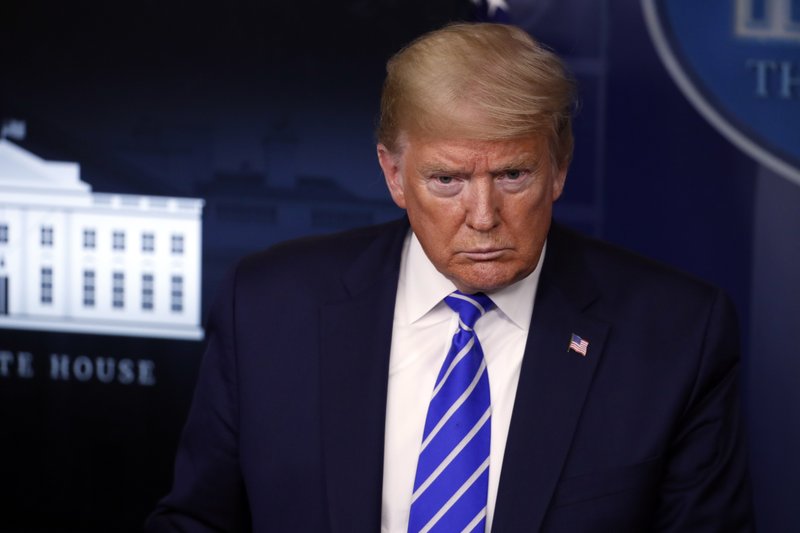
The coronavirus pandemic brought to light the critical importance of securing U.S. supply chains to eliminate the long-time reliance on foreign governments, White House senior advisor Jared Kushner said during a rare appearance on "The Next Revolution" Sunday.
"I think the campaign platform that President Trump ran on in 2016 which was basically 'you have to secure your borders and you have to control your own manufacturing as a national security issue.' I think those have been totally vindicated positions from the virus and I doubt it will be easy for people to argue against them in the future," Kushner said.
Kushner has been a key figure in the federal effort to manage the flow of U.S. supply chains and ensure hospitals in need are properly equipped with ventilators and other life-saving medical equipment.
"We can take all the learnings from this virus and figure out how we can be more prepared for the future."
— Jared Kushner, 'The Next Revolution'
His team, which has worked together with the coronavirus task force lead by Vice President Mike Pence, is now focussed on solving the issue of insufficient testing at the center of the coronavirus crisis in the U.S.
"We figured out how to really stimulate that supply," Kushner said. "We believe by the month of April we will have close to five million tests that will be performed. We're anticipating for the month of May, the number we were originally asked to do, we can exceed it...we think we can double that number and we should have more than ample amount of tests in the market for the month of May," he explained.
Kushner said the White House, in collaboration with the Department of Health and Human Services, has spent the weekend communicating with governors to effectively develop their own testing strategy on a local level.
At the end of the day, Kushner explained, "the limiting factor is not going to be swabs or reagents or transport media, it's going to be the different states' ability to collect the samples and do it in an efficient way."
"We feel really good," he added. "We’ve eliminated a lot of problems when it comes to testing and I think we will continue to see it do better and better over the coming weeks."
Kushner also announced a federal effort to supply nursing homes and other vulnerable communities with additional test kits and personal protective equipment.
"I don't want to get ahead of any specific announcements," he said, but Adm. John Polowczyk, supply chain task force lead at FEMA has "been focused very much on getting stuff to the different places that need it and nursing homes in different areas where people are vulnerable has been a place where we really tried to surge," Kushner explained.
Kusher said he is also focussed on "the inner cities and indigenous populations" and has "been working very hard to make sure they have adequate testing and PPE disproportionate to where vulnerable populations are to where there are less vulnerable populations."
As many parts of the country look towards a phased reopening, Kushner urged Americans to "take all the learnings from this virus and figure out how we can be more prepared for the future."
"Now, the goal is not to make this a political issue and figure out how we can come together to really onshore," he said. "What we've been doing at the federal government is figuring out how do we aggregate a lot of the different demand in different key industries that are critical for our national security. We're thinking of ways right now to redo our stockpile given the nature of the hospital system and the medical distribution system and figure out how we can take all the learnings from this virus and figure out how we can be more prepared for the future."
Kushner said he found a renewed desire in various industries who "want to move manufacturing onshore" amid the coronavirus and echoed President Trump's commitment to make the United States a "leader in advanced manufacturing."
"If you look at why it went overseas before, it's because people were a big cost of manufacturing. Now, it's really robots... the personnel component of manufacturing has actually gone down but we've lost a lot of the capability here in America to be the leader in advanced manufacturing and President Trump is very committed to making sure that over the next couple of years, America regains their ability to be the leading global advanced manufacturer."
"I think," Kushner predicted, "we will see a lot of that happening."
In his final remarks, the president's son-in-law imparted a message of hope as the country looks towards the future.
"By slowing the spread and flattening the curve, that has given us time to really develop search hospital capacity plans, we have enough ventilators, we have a ton of spare hospital capacity and in addition, we have a lot of PPE," Kushner said.
"We're onshoring a lot of these industries, working to make sure we're never reliant on foreign supplies again, and the doctors have learned more about how to treat this."
He concluded, "I would say the most important thing is the behavioral changes. People are washing their hands and wearing masks and I think we're learning how to live with this in a much better way which will enable us, at least the people who are not high-risk to start going back to work in a phased and responsible approach."

Sunday, April 26, 2020

Nancy Pelosi The Paper Ripper Cartoons


Out of pandemic crisis, what could a new New Deal look like?


WASHINGTON (AP) — The New Deal was really a series of new deals, spread out over more than six years during the Great Depression — a menu of nationally scaled projects that were one part make-work and many parts lasting impact. They delivered a broad-shouldered expression of presidential authority whose overall benefits were both economic and psychological.
Not all of them worked. Some failed badly. But it was a try-anything moment by Franklin D. Roosevelt at a time of national despair. And it remade the role of the federal government in American life.
Men were hired to plant trees in Oklahoma after the Dust Bowl and to build roads, bridges and schools. Writers and artists were dispatched to chronicle the hardship, employing authors like Saul Bellow and Ralph Ellison. In most every state, you can still see murals or read local histories or walk into enduring projects like LaGuardia Airport and Dealey Plaza in Dallas.
These programs were designed to provide get-by wages in exchange for work. But others were crafted to remake society. Social Security was instituted to save the elderly from poverty, federal insurance on banks to renew trust in the financial system, minimum wage and labor rights to redistribute the balance of power between employer and employee.
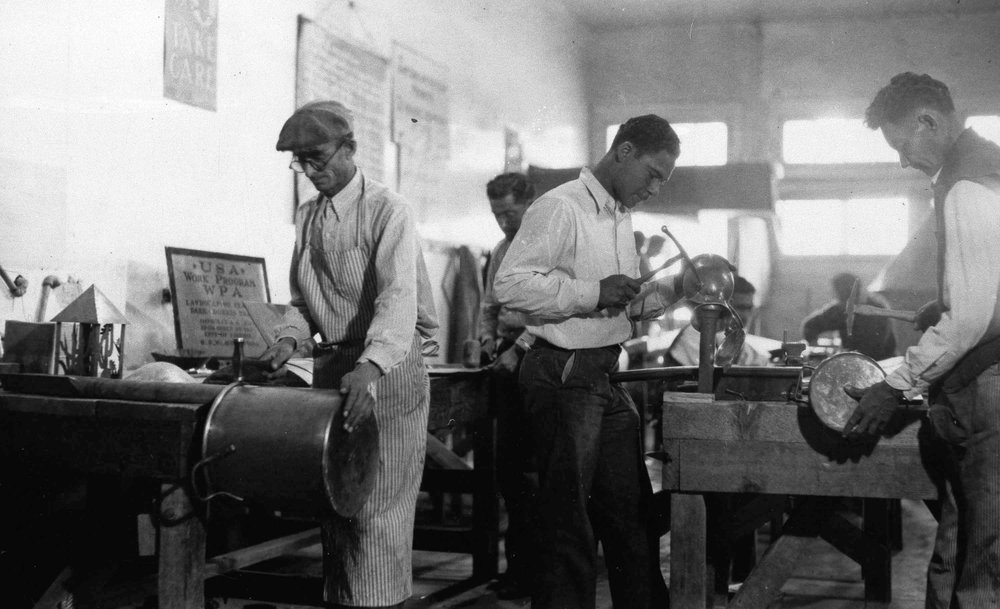
 
In this March 26, 1937, file photo, Works Progress Administration (WPA) workers make copper utensils for a hospital. (AP Photo, File)

Now, nearly 90 years later, the United States is fighting a disease that presents the country with wrenching life-and-death challenges. Yet at the same time, it has served up something else as well: a rare opportunity to galvanize Americans for change.
And as the U.S. confronts its most profound financial crisis since the Depression, brought on by the most deadly pandemic in a century, there are early soundings of a larger question: What would a “new” New Deal look like?
For the historian Doris Kearns Goodwin, whose latest book is “Leadership in Turbulent Times,” the very act of discussing such a possibility is productive in itself. “It at least allows you to think of something that could come out of this that could be positive.”
___
The New Deal’s legacy still provides support today. Unemployment insurance. Retirement and disability income. Transparency in the stock markets. Infrastructure that ensures a steady flow of electricity and supply of water.
Yet the coronavirus outbreak has also revealed how ill-equipped the government was to address the rapidly escalating fallout of 26 million job losses, overwhelmed hospitals and millions of shuttered businesses only weeks away from failure.
“We basically have a 21st-century economy wobbling on a 20th-century foundation,” said Rahm Emanuel, the former mayor of Chicago and chief of staff to President Barack Obama. “We need to upgrade the system to have a 21st-century economy in all respects.”
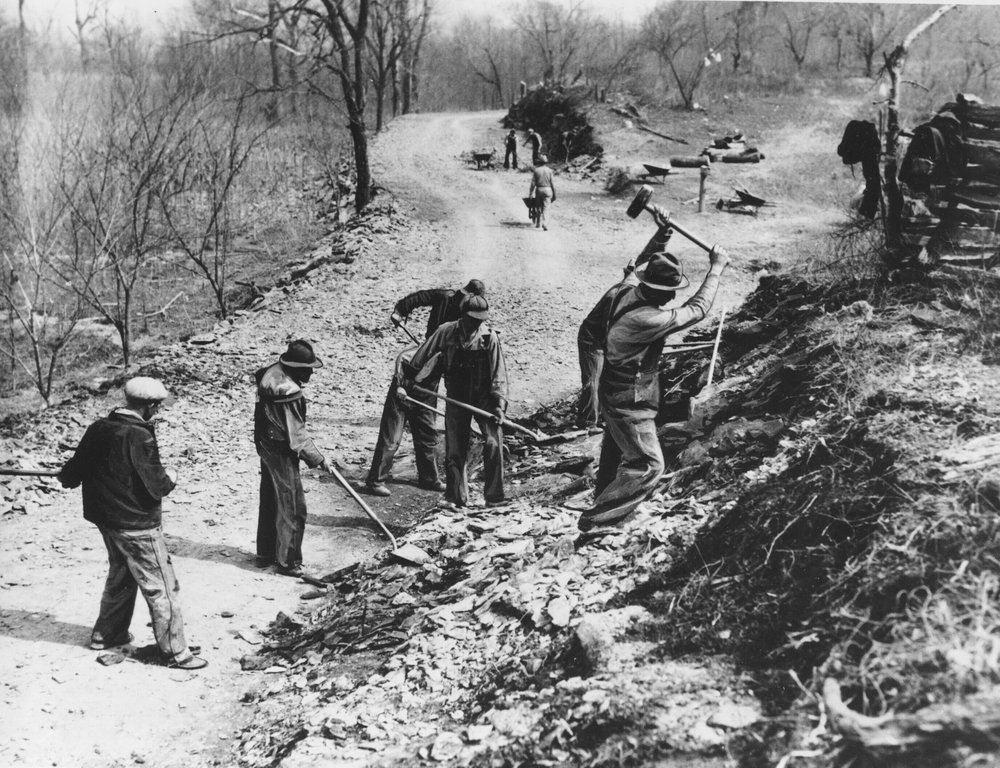
 
In this March 9, 1936, file photo Works Progress Administration (WPA) workers build a new farm-to-market road along Knob Creek in Tennessee. (AP Photo, File)

Among the questions at hand:
—How can Americans have greater access to savings for retirement and financial emergencies? There are fewer workers than a generation ago, and many face higher costs for housing and school.
—How can the government ensure greater resources for medical care in a crisis? This would mean that mission-critical workers, from nurses to grocery-store clerks, have stockpiles of equipment to stay safe. It would mean people could get tested and treated without crippling hospital bills. And it would mean researchers have incentives to develop vaccines and bring them to market faster.
President Donald Trump has talked up infrastructure programs and affordable healthcare but offered few details. Democratic lawmakers must work with a president their base of voters distrusts and despises. The likely consequence: Any mandate for change will come from the ballot boxes this November.
Just this past week, Sen. Kirsten Gillibrand (D-N.Y.) and Sen. Michael Bennet (D-Colo.), leaned hard on programs of the New Deal to offer legislation to create a federal “health force” to employ workers “for future public health care needs, and build skills for new workers to enter the public health and health care workforce.” It is unlikely the Republican-controlled Senate would consider such legislation, but it also shows what Democrats might have in mind as voters contemplate upcoming elections.
Both parties have an uneasy relationship with how states and the federal government should share their power, and any reprise of the New Deal would likely enhance Washington’s authority.
Trump has yet to offer a systemic solution to the crisis. though he has approved record levels of direct assistance to businesses and individuals. Joe Biden, the presumptive Democratic nominee, has talked more about combating the pandemic than he has about reimagining what kind of country might emerge from it.
So far, Congress has committed more than $2 trillion to sustaining the economy during the outbreak. But most economists see that unprecedented sum as relief, not recovery or reform — just one of the “three Rs” of the New Deal.
Any recovery will rely on government programs to catalyze the economy so that hiring and commerce can flow again. The public will also expect reforms that make the nation more resilient against future emergencies, so people feel comfortable enough to take the risks that lead to innovation and prosperity.
Investing in infrastructure holds bipartisan appeal. Trump has repeatedly called for upgrades to roads, bridges and pipelines. Democrats would like to ensure that internet connectivity, including next-generation 5G, exists in rural and poorer communities.
But other options have existed mainly in the white papers of think tanks, academics and advocacy groups. There is a newfound appetite for them, which could overpower even the highly polarized politics of this moment.
“The question people always ask is, what would it take to break through that extreme partisanship?” Goodwin said. “It takes a crisis. This is what happens during wars.”
After 9/11, much of the criticism of the federal government focused on a collective “failure of imagination.”
Nineteen years later, that phrase has a new context as Washington tries to fashion a response to the coronavirus. It’s a challenge at a scale the nation has not seen since 1932, when Roosevelt, a Democrat, defeated Republican President Herbert Hoover with a promise of better days ahead — a “new deal” for the “forgotten man.”
When New Deal programs were unveiled, no one definitively knew what had caused the U.S. economy to collapse, unlike now, when the culprit and the vulnerabilities are clearer.
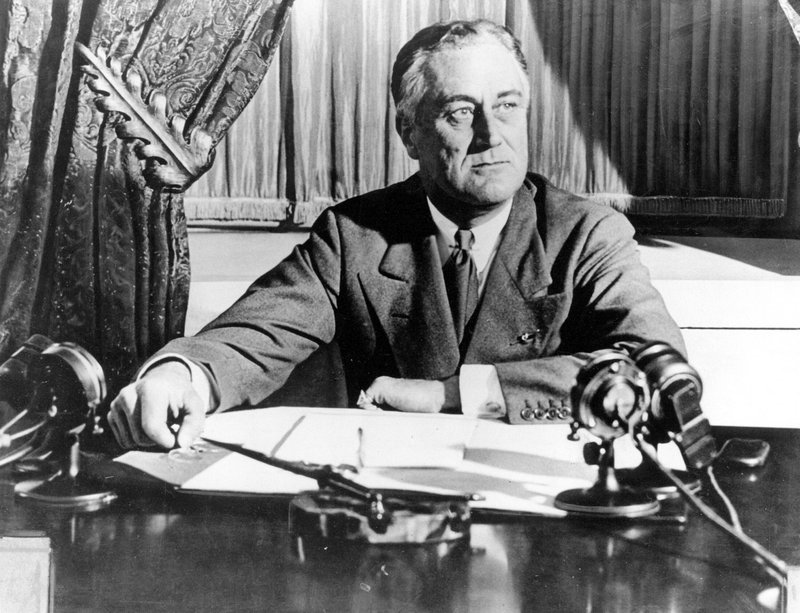
The political climate was fundamentally different then. Roosevelt, celebrated for his optimism and empathy, had muscular Democratic majorities in Congress. But he also sought to unite the country. His first radio “fireside chat” in 1933 was devoted to asking Americans to trust the banking system again. “He promised them that they could get their money back,” Goodwin said. The next fireside chat called for systemic change that Roosevelt argued would regulate capitalism’s extremes and provide a safety net.
“Roosevelt was very concerned with the idea of one body politic,” said Allan Winkler, a professor emeritus at Miami University of Ohio, who testified before Congress about the New Deal in 2009 during the height of the financial crisis. “I worry about that in the current situation, that we don’t have a willingness to work together.”
But the New Deal programs stemmed from bold visions that could be implemented by political leaders, he cautioned. “In our fragmented body politic, it would take an extraordinary politician to do what is necessary.”
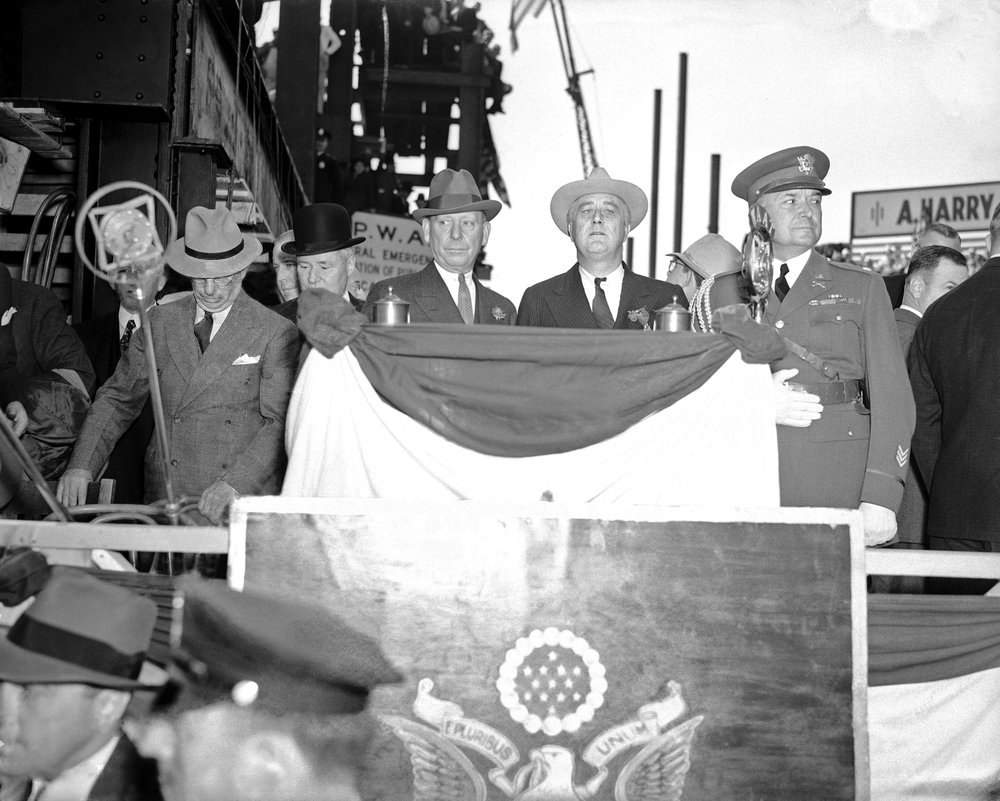
 
In this Oct. 2, 1936, file photo, President Franklin Roosevelt at the new 21-story medical unit which he dedicated in Jersey City, N.J., assuring the medical profession that the New Deal contemplated no action detrimental to it in carrying out the Social Security Act. (AP Photo, File)

This is why a debate is starting among policy thinkers about the components needed for recovery and reform: so that leaders can feel empowered to take action.
Emanuel sees two needed chapters — one to provide immediate aid and a second with more lasting change.
“We need another bill to jump start the economy,” Emanuel said. He says it should be followed by investments in infrastructure to improve online connectivity so that learning, medicine and work can get through stay-at-home orders.
The case for a major rebuilding may become clear if dire forecasts of a second-quarter decline in annual economic output ranging from 30% to 50% come true.
“I think we are going to see an epic lockup in the mortgage markets as people are going to be unable to make their payments,” said Louis Hyman, a historian at Cornell University.
This same cascade of defaults existed in the Great Depression. The New Deal swung to the rescue with the Home Owners’ Loan Corporation, which bought past-due mortgages with government bonds and blocked a wave of foreclosures. Government officials also developed what would become 30-year mortgages. The loan’s stable interest rates helped spur new construction.
But now, Hyman says, there’s a “painful truth”: The bulk of most people’s wealth is tied up in their homes — and inaccessible in a crisis.
“The policy that would undo that is to enable people to accumulate wealth in other ways,” he wrote in an email. Those include better pay, capital market investment incentives and, especially, “building lots of houses for the under-housed.”
Any attempt at updating a New Deal will reflect ideological differences between Democrats and Republicans.
Framing this divide is a simple choice: Is it better to establish a government firewall that can protect the economy during future downturns? Or should the tax code and regulations be re-engineered so that private companies and individuals can more easily adapt to pandemics?
Heather Boushey, president of the Washington Center for Equitable Growth, says allowing government aid to automatically increase as the economy began to fall would have been one of “our best defenses so that the coronavirus recession does not turn into a full-scale economic depression.”
“Responding to the crisis without also making our economy more resilient against future shocks would be a mistake,” she said. Automatic triggers for expanded jobless benefits, increased medical aid and new construction spending would ease the pain of a downturn and speed recovery.
More conservative economists believe adjustments to the tax code and regulations will improve growth and resilience.
“This is not one of those things where if you send checks you can jump-start the economy,” said Douglas Holtz-Eakin, a former Congressional Budget Office director and economic adviser to Republicans.
Price Fishback, an economist at the University of Arizona known for his work studying the Depression era, proposes another, more abstract notion as a key to fashioning a New Deal for the 21st century: humility.
Even New Deal programs that improved lives did not insulate the American people. There was stagflation in the 1970s. Untamed financial markets fueled a housing bubble during the 2000s. And at the end of 2019, no major economist forecasting this year envisioned that a pandemic would throw the world into turmoil.

 
This Aug. 26, 2010, file photo shows the Timberline Lodge in Timberline Lodge, Ore. The Lodge, a National Historic Landmark, was built as a Works Progress Administration (WPA) project during the Great Depression. (AP Photo/Rick Bowmer, File)

The United States would be stronger with improved internet connectivity, more housing, government programs that can cushion a downturn and a health care system that can handle crises and emergencies. Life would be better. But the nation would be far from impervious.
So stay humble, Fishback urges.
“Once we think we got it licked,” he says, “we get slammed in the face again.”
___
Michael Tackett is deputy Washington bureau chief for The Associated Press, and Josh Boak covers the U.S. economy and voters. Follow Tackett on Twitter at http://twitter.com/tackettDC and Boak at http://twitter.com/joshboak.
___

In Trump’s shadow, Congress-at-home eyes reboot during virus

Nancy the Joker.

WASHINGTON (AP) — They long for what’s being lost: the ability to publicly question officials at committee hearings, to chat across the aisle, to speak from the House and Senate floor for all of America, and history, to hear.
Congress wants its voice back.
With no real plan to reopen Capitol Hill any time soon, the coronavirus shutdown poses an existential crisis that’s pushing Congress ever so reluctantly toward the 21st century option of remote legislating from home.
“It’s the ability to be an equal branch of government,” said Rep. Katie Porter, a freshman Democrat from California.
Divisions are fierce, but so too is the sense of what is being lost. Every day lawmakers shelter at home, their public role is being visibly diminished. While they are approving record sums of virus aid, they are ceding authority to oversee the effort and tackle next steps.
It’s an imbalance of power for all to see: President Donald Trump’s daily public briefings without a robust response from Capitol Hill, though there have been discussions within the White House about changing the format of the briefings to curtail his role.

Youtube video thumbnail

“This is a time where oversight is really important,” said Rep. Derek Kilmer, D-Wash., a leader of the moderate New Democrats caucus.
The pandemic “begs for Congress’s engagement, virtual or otherwise,” he said.
Changing the rules to allow lawmakers to cast votes or hold hearings from home would be unprecedented in House and Senate history. The Constitution requires lawmakers be “present” for most action.
The simmering debate cuts across political fault lines. Some lawmakers want to stick with tradition; others are tech-savvy and ready for change. A vocal band of conservatives insists Congress must reopen now, despite public health warnings, echoing Trump’s push to end the shutdown. Others have no interest in returning to the crowded Capitol complex until it’s safe.
House Speaker Nancy Pelosi, D-Calif., shelved a proposal for proxy voting this past week after Republicans objected. Once resistant to what she called “Congress by Zoom” meeting, she tapped a bipartisan task force to present fresh ideas.
In the Senate, Majority Leader Mitch McConnell, R-Ky., rejected a GOP remote vote proposal. He expects Congress to return May 4, as planned.
The reluctance to change is leaving the legislative branch behind after even the tradition-bound Supreme Court announced it would hear oral arguments by teleconference as stay-home rules reorder civic life.
“It’s a huge can of worms,” said Sarah Binder, a professor at George Washington University.
She said the pandemic provokes a set of issues far beyond the logistics of working remotely. Among them: Is it safe to return to Capitol Hill? Can you be “present” if you appear on a computer screen?
But she said, “They need a solution if they’re not going to be able to come back.”
Lawmakers say they can only do so much on conference calls and virtual town hall meetings as they assess $3 trillion in coronavirus aid and consider annual spending, defense and other bills.
While the 100 senators can usually command attention on their own, the 435 rank-and-file House members have a harder time being heard.
One prime opportunity is time allotted to lawmakers at committee hearings.
It may be just five minutes on C-SPAN. But for members of Congress, the committee means everything. It’s their chance to make a difference.
Porter knows firsthand what’s being lost with Congress away.
As the pandemic emerged, she wrote a letter asking the Centers for Disease Control and Prevention to provide free virus testing as country scrambled to slow the spread of COVID-19.
“They blew us off,” she said.
But when CDC Director Dr. Robert Redfield appeared before the House Oversight and Reform Committee, Porter had her moment.
In a video that went viral, she grilled Redfield on whether he would commit to invoking authority under federal law to declare pandemic testing free.
He said yes.
“It wasn’t until we got Dr. Redfield in front on me, and I had my five minutes with the cameras on him, in front of the American people, that I was able to get an answer,” she said.
But under House rules, committees usually need members to be physically present to meet. While several committees have been conducting briefing calls with key administration officials, it’s mostly out of public view.
The House Small Business Committee confirmed a private call this past week with the head of the Small Business Administration running the coronavirus paycheck program. The Appropriations Committee held one with Agricultural Secretary Sonny Perdue. Treasury Secretary Steven Mnuchin has had calls with other committees.
The House Oversight and Reform Committee was set for a briefing with the Census Bureau’s director about curtailing the 2020 population count during the pandemic. It’s a crucial conversation with billions of federal dollars at stake. But the public could not watch.
Still, some say the only way for Congress to act is for lawmakers to return to Washington during the pandemic. Conservative House Freedom Caucus members rallied this past week to reopen the Capitol. Key GOP senators agree.
“If COVID-19 requires Congress to act, then it requires Congress to convene,” said Sen. Mike Lee, R-Utah, who self-quarantined last month after sitting near another GOP senator who tested positive for the virus.
As the House considers options, one advocate for remote legislating is Majority Leader Steny Hoyer, D-Md., who enjoys FaceTime with his grandkids and suggests Congress could do the same.
Opening committees is the priority, he told reporters after the task force met. “We need committees to act,” he said. “Even if they can’t come to Washington.”
Hoyer acknowledged how difficult it is for Congress to change. Even during the 1918 Spanish flu outbreak, the House convened to vote. But this is an “extraordinary circumstance,” he said. He expects an update this coming week.
Porter warns that without changes the 535-member legislative branch is being distilled to its most visible leaders — “a four person Congress,” she said.
“Technology is not disruptive to the Founders’ idea,” she said.
“It’s limiting the technology that is consolidating power in a small number of people,” she said, “which is what they were worried about when they created the House of Representatives.”

UK PM Boris Johnson returns to face growing virus divisions


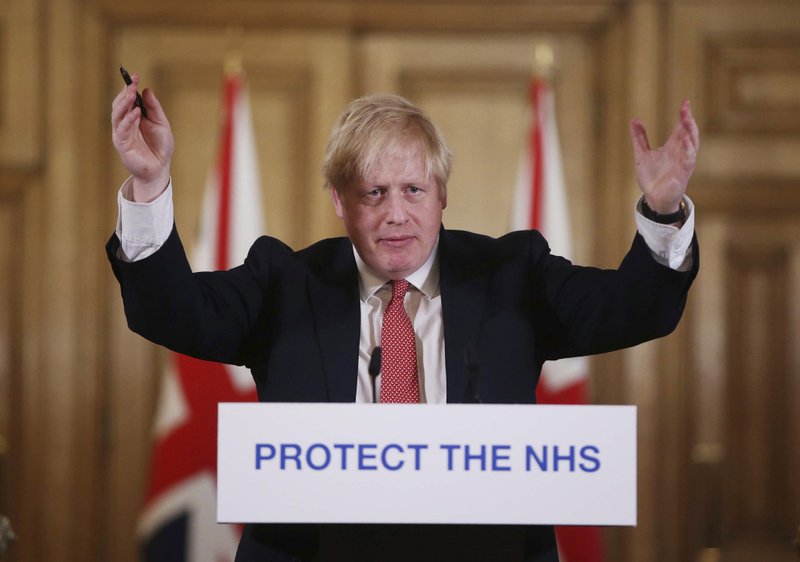
LONDON (AP) — British Prime Minister Boris Johnson is returning to work after recovering from a coronavirus infection that put him in intensive care, with his government facing growing criticism over the deaths and disruption the virus has caused.
Johnson’s office said he would be back at his desk in 10 Downing St. on Monday, two weeks after he was released from a London hospital. Foreign Secretary Dominic Raab, who has been standing in for the prime minister, said Sunday that Johnson was “raring to go.”
Britain has recorded more than 20,000 deaths among people hospitalized with COVID-19, the fifth country in the world to reach that total. Thousands more are thought to have died in nursing homes.
Johnson, 55, spent a week at St. Thomas’ Hospital, including three nights in intensive care, where he was given oxygen and watched around the clock by medical workers. After he was released on April 12, he recorded a video message thanking staff at the hospital for saving his life.
Johnson has not been seen in public since, as he recovered at Chequers, the prime minister’s country retreat outside London.
Opposition politicians say Britain’s coronavirus death toll could have been lower if Johnson’s Conservative government had imposed a nationwide lockdown sooner. They are also demanding to know when and how the government will ease the restrictions that were imposed March 23 and run to at least May 7.
“Decisions need to be taken quicker and communication with the public needs to be clearer,” opposition Labour Party leader Keir Starmer said in a letter to Johnson.
“The British public have made great sacrifices to make the lockdown work,” he wrote. “They deserve to be part of an adult conversation about what comes next.”
Despite the toll, which saw another 813 virus-related deaths announced Saturday, some in Britain are growing impatient with the restrictions, which have brought much of the economy and daily life to a halt. Road traffic has begun to creep up after plummeting when the lockdown first was imposed, and some businesses have begun to reopen after implementing social-distancing measures.
Scientists say the U.K. has reached the peak of the pandemic but is not yet out of danger. The number of people hospitalized with COVID-19 is declining and the number of daily deaths peaked on April 8.
But with hundreds of new deaths announced each day, some health experts say Britain could eventually have the highest virus death toll in Europe.
As fears recede that the health system will be overwhelmed, opponents are criticizing Johnson’s government over shortages of protective equipment for medical workers and a lack of testing for the virus. More than 100 infected medical workers have died so far.
The government has promised to conduct 100,000 coronavirus tests a day by the end of the month, but has yet to reach even 30,000 a day. Increasing testing, so that all people with the virus can be identified and their contacts traced and isolated, is key to loosening the lockdown.
The British government says all health care staff and other essential workers can be tested if they show symptoms. It is rolling out almost 100 mobile testing sites, staffed by soldiers, to conduct tests at nursing homes, police stations, prisons and other sites.
In the first two days of expanded testing, however, the online system handling daily demand for the tests had exceeded the supply by early morning.
___

Biden accuser Tara Reade 'lost total respect' for CNN's Anderson Cooper for not asking former VP about assault claim


The woman who has accused Joe Biden of a sexual assault in the early 1990s says she's disappointed that CNN anchor Anderson Cooper failed to ask the presumptive Democratic presidential nominee about the allegation when he had the chance -- not once, but twice.
Tara Reade, a former staffer for then-Sen. Biden, told her story about the former vice president over a month ago with progressive podcast host Katie Halper. Since then, Biden has done nearly a dozen TV interviews with news anchors including NBC News' Chuck Todd, ABC News' George Stephanopoulos, and twice with Cooper -- all of whom failed to ask Biden about her public claim.
"I think it's shocking that this much time has passed and that he is an actual nominee for president and they're not asking the questions," Reade told Fox News. "He's been on 'Anderson Cooper' at least twice where he was not asked."
"I guess my question is, if this were Donald Trump, would they treat it the same way? If this were Brett Kavanaugh, did they treat it the same way?" Reade said. "In other words, it's politics and political agenda playing a role in objective reporting and asking the question."
Reade believes that the news anchors who have interviewed Biden "don't want to ask him" about her assault allegation.
"There are two things happening at once. [Biden] is not making himself accessible to be asked the question. And when he does make himself accessible, they are not asking, those anchors. And so that tells there may be a political agenda behind that and that's gross. ... I'm a survivor and I would like the question asked."
Reade said her opinions of some journalists and media outlets have shifted in recent weeks based on their coverage of her claim.
"I really would look to [Cooper] for answers and I would never do that again. I've lost total respect," Reade said, adding that "as a civilian," it's difficult to know "what news source to trust" since shows like Cooper's have a "blatant bias."
On Friday evening, a clip from 1993 surfaced showing an anonymous California resident phoning in to CNN's "Larry King Live" asking the TV host and his panel about "problems" her daughter had with a "prominent senator."
Reade confirmed to Fox News that the woman heard in the clip was her late mother, Jeanette Altimus.
CNN waited until Saturday afternoon to issue a report on its website and briefly mentioned on-air, which was the first time the network has addressed the Biden assault claim since Reade came forward in March.
Reade's story first resurfaced in an article in The Intercept on March 24. Halper then interviewed Reade, who said that in 1993, a more senior member of Biden's staff asked her to bring the then-senator his gym bag near the U.S. Capitol building, which led to the encounter in question.
"He greeted me, he remembered my name, and then we were alone. It was the strangest thing," Reade told Halper. "There was no like, exchange really. He just had me up against the wall."
Reade said that she was wearing “a business skirt,” but “wasn’t wearing stockings — it was a hot day.”
She continued: “His hands were on me and underneath my clothes, and he went down my skirt and then up inside it and he penetrated me with his fingers and he was kissing me at the same time and he was saying some things to me.”
Reade claimed Biden first asked if she wanted “to go somewhere else.”
“I pulled away, he got finished doing what he was doing,” Reade said. “He said: ‘Come on, man. I heard you liked me.’”
Reade said she tried to share her story last year, but nobody listened to her. Earlier this month, she filed a criminal complaint against Biden with police in Washington, D.C.
Fox News reached out to the Biden campaign on Friday for comment. The campaign referred Fox News to a statement earlier this month from Biden Deputy Campaign Manager Kate Bedingfield that said: “What is clear about this claim: it is untrue. This absolutely did not happen."
"Vice President Biden has dedicated his public life to changing the culture and the laws around violence against women," Bedingfield said. "He authored and fought for the passage and reauthorization of the landmark Violence Against Women Act. He firmly believes that women have a right to be heard - and heard respectfully. Such claims should also be diligently reviewed by an independent press."
CNN did not immediately respond to Fox News' request for comment.

Saturday, April 25, 2020

Cartoons Gov Gretchen Whitmer


Trump signs $484 billion measure to aid employers, hospitals


WASHINGTON (AP) — President Donald Trump signed a $484 billion bill Friday to aid employers and hospitals under stress from the coronavirus pandemic that has killed more than 50,000 Americans and devastated broad swaths of the economy.
The bill is the latest effort by the federal government to help keep afloat businesses that have had to close or dramatically alter their operations as states try to slow the spread of the virus. Over the past five weeks, roughly 26 million people have filed for jobless aid, or about 1 in 6 U.S. workers.
ADVERTISEMENT
Trump thanked Congress for “answering my call” to provide the critical assistance and said it was “a tremendous victory.” But easy passage of this aid installment belies a potentially bumpier path ahead for future legislation to address the crisis.
Trump said most of the funding in the bill would flow to small business through the Paycheck Protection Program, which provides money to small businesses to keep workers on their payroll.
“Great for small businesses, great for the workers,” Trump said.
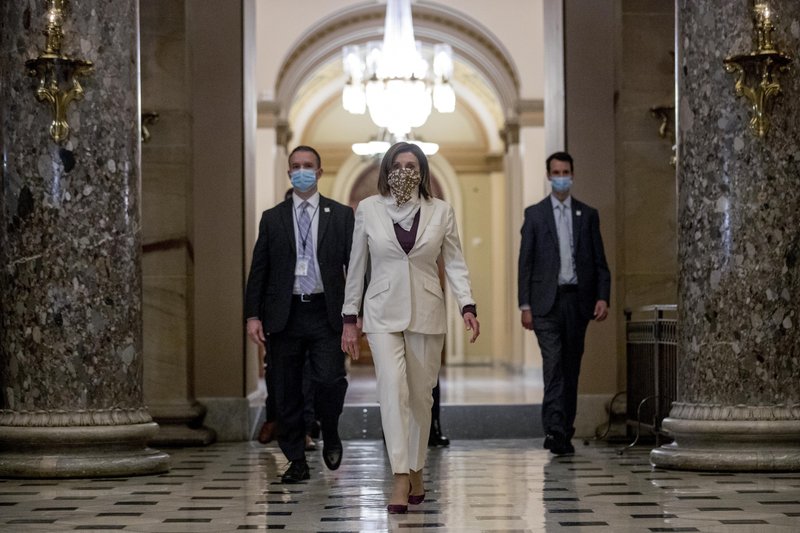
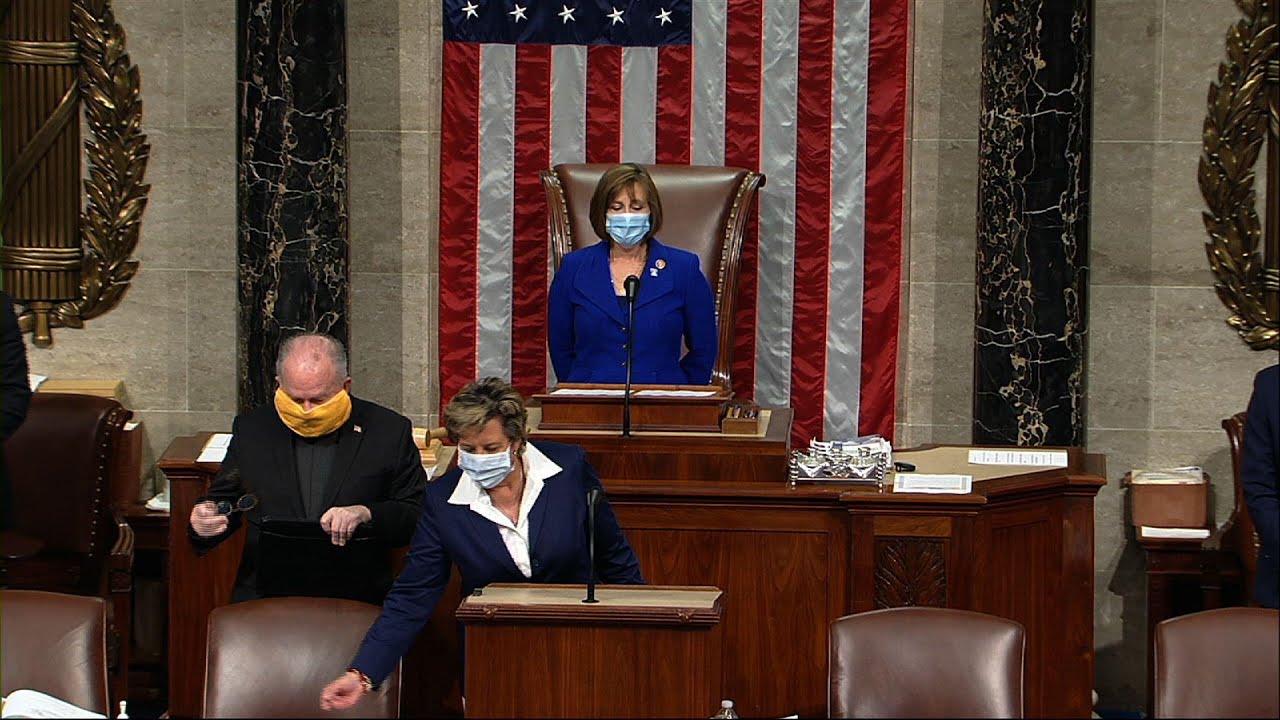
The measure passed Congress almost unanimously Thursday as lawmakers gathered in Washington as a group for the first time since March 27. They followed stricter social distancing rules while seeking to prove they can do their work despite the COVID-19 crisis.

Youtube video thumbnail

Lawmakers’ face masks and bandannas added a somber tone to their effort to aid a nation staggered by the health crisis and devastating economic costs of the pandemic.
Impact on the Economy:
“Millions of people out of work,” said House Speaker Nancy Pelosi, D-Calif. “This is really a very, very, very sad day. We come to the floor with nearly 50,000 deaths, a huge number of people impacted, and the uncertainty of it all.”
Anchoring the bill is the Trump administration’s $250 billion request to replenish a fund to help small- and medium-size businesses with payroll, rent and other expenses. This program provides forgivable loans so businesses can continue paying workers while forced to stay closed for social distancing and stay-at-home orders.
The legislation contains $100 billion demanded by Democrats for hospitals and a nationwide testing program, along with $60 billion for small banks and an alternative network of community development banks that focus on development in urban neighborhoods and rural areas ignored by many lenders. There’s also $60 billion for small-business loans and grants delivered through the Small Business Administration’s existing disaster aid program.
ADVERTISEMENT
Passage of more coronavirus relief is likely in the weeks ahead. Supporters are already warning that the business-backed Paycheck Protection Program will exhaust the new $250 billion almost immediately. Launched just weeks ago, the program quickly reached its lending limit after approving nearly 1.7 million loans. That left thousands of small businesses in limbo as they sought help.
Pelosi and allies said the next measure will distribute more relief to individuals, extend more generous jobless benefits into the fall, provide another round of direct payments to most people and help those who are laid off afford health insurance through COBRA.
Democrats tried to win another round of funding for state and local governments in Thursday’s bill but were rebuffed by Senate Majority Leader Mitch McConnell, R-Ky., who says he’s going to try pump the brakes on runaway deficit spending. McConnell says he doesn’t want to bail out Democratic-governed states for fiscal problems that predated the pandemic, but there’s plenty of demand for state fiscal relief among Republicans, too.
After the Senate passed the bill Tuesday, McConnell said Republicans would entertain no more coronavirus rescue legislation until the Senate returns to Washington in May. He promised rank-and-file Republicans greater say in the future legislation, rather than leaving it in the hands of bipartisan leaders.
Pelosi attacked McConnell for at first opposing adding any money to his original $250 billion package and saying cash-strapped states should be allowed to declare bankruptcy, a move that they currently cannot do and that would threaten a broad range of state services. McConnell’s comments provoked an outcry — including from GOP governors — and he later tempered his remarks.
The four coronavirus relief bills approved so far by Congress would deliver at least $2.4 trillion for business relief, testing and treatment, and direct payments to individuals and the unemployed, according to the Congressional Budget Office. The deficit is virtually certain to breach $3 trillion this year.
___
Associated Press writers Darlene Superville and Laurie Kellman contributed to this report.

Wisconsin saw no coronavirus infection-rate spike after April 7 election, study says

Democrat Voting.
A feared spike in Wisconsin’s coronavirus infection rate following its April 7 in-person presidential primary never materialized, although some new cases of the virus were possibly linked to the election, according to a report.
A team of doctors from Wisconsin and Florida plus a mathematician in Alabama examined data from the post-election period of April 12-21, meaning five to 14 days after election, when new cases of the virus from April 7 likely would have become apparent, the Wisconsin State Journal of Madison reported Friday.
Prior to the election, Wisconsin’s coronavirus infection rate was about one-third of the rate for the entire U.S. and dropped even lower compared to the U.S. after the election, the study said, according to the newspaper.
“Our study did not find any significant increase in the rate of new COVID-19 cases following the April 7, 2020, election post-incubation period, for the state of Wisconsin or its three major voting counties, as compared to the US,” the researchers wrote in their paper.
“A reduction in daily new case rates in Wisconsin was observed compared to what would have been expected if the rates in Wisconsin had followed the preelection ratios,” the researchers added. “Our initial hypothesis of an increase in COVID-19 activity following the live election was not supported.”
“Our initial hypothesis of an increase in COVID-19 activity following the live election was not supported.”
— Researchers studying Wisconsin coronavirus data 
A 5-4 U.S. Supreme Court decision April 6, the eve of the primary, clearing the way for Wisconsin’s election to proceed, was deemed controversial, as critics feared voters and election workers – including National Guard personnel who were deployed to assist at the polls – could become infected as people congregated at voting sites.
Prior to the court’s decision, Democratic Gov. Tony Evers twice attempted to postpone in-person voting in favor of voting by mail, or a rescheduled in-person vote in June – but state Republicans opposed the plans and the matter was debated in a federal district court before the case went to Washington.

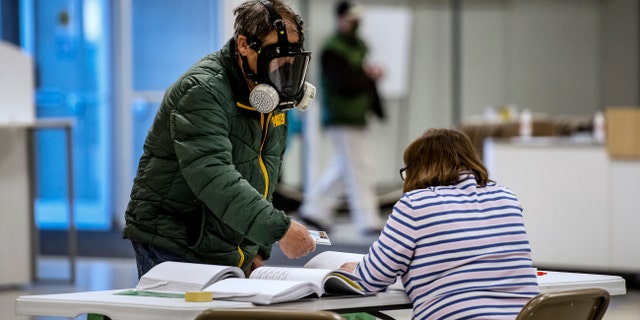
Robert Forrestal, left, wears a full face chemical shield to protect against the spread of coronavirus, as he votes Tuesday, April 7, 2020, at the Janesville Mall in Janesville, Wis. (Associated Press)

In an op-ed published Thursday, two officials from the Republican State Leadership Committee argued that Democrats attempted to take advantage of the coronavirus outbreak to “change the rules” of the Wisconsin election just weeks before the voting.
The Democrats’ lawsuit “was filed less than three weeks before Election Day, forcing judges to make decisions about things they don’t really know much about – such as administering elections in a fair and secure manner," RSLC president Austin Chambers and judicial fairness official Andrew Wynne wrote in The Hill. “Wisconsin voters were left confused by the legal whiplash.”
Following the election, at least 23 people who voted in person or worked at the polls tested positive for COVID-19, but many of them also reported other potential exposure points besides the election where their infection could have occurred, state Department of Health Services spokeswoman Jennifer Miller told the State Journal.
However, a professor of population health sciences at the University of Wisconsin at Madison claimed that the researchers’ findings didn’t appear to take into account the impact of the governor’s stay-at-home order, which was issued March 25.
The shutdown of social and business activities was likely the primary reason why the state’s infection rate didn’t rise after the election, Professor Thomas Oliver told the State Journal.
The newspaper identified the researchers as Dr. Bruce Berry, an internal medicine doctor at Froedtert Hospital near Milwaukee; his son, Dr. Andrew Berry, a gastroenterologist in South Miami, Fla; and Madhuri Mulekar, a professor of mathematics and statistics at the University of South Alabama.
About 450,000 Wisconsin voters took part in in-person voting April 7 with another 1.1 million voters submitting absentee ballots, the newspaper reported.
Final results of the election were delayed by nearly a week because the Supreme Court set a deadline of April 13 for absentee ballots postmarked by April 7 to be received. Former Vice President Joe Biden ultimately won the Democratic contest, not long after his last major rival, U.S. Sen. Bernie Sanders, I-Vt., ended his own candidacy and endorsed Biden.

CartoonDems