Presumptuous Politics

Tuesday, April 28, 2020

Lawmakers apprehensive about returning to Capitol: ‘People are still scared’


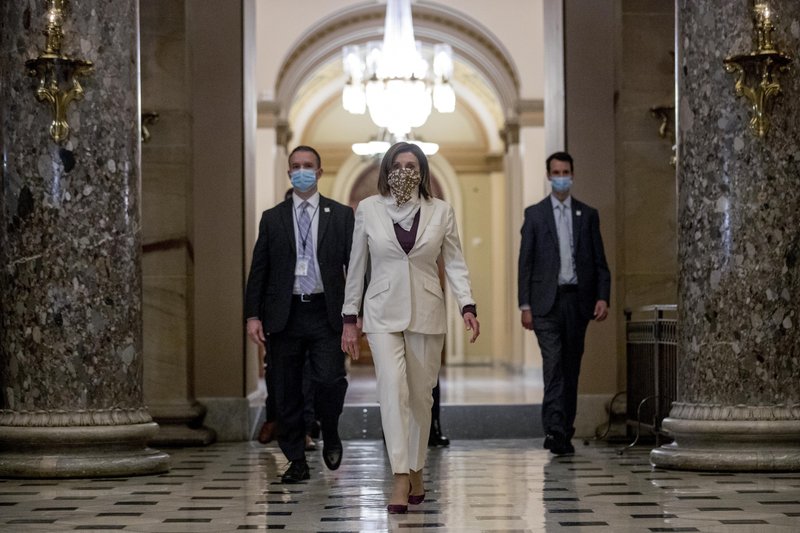
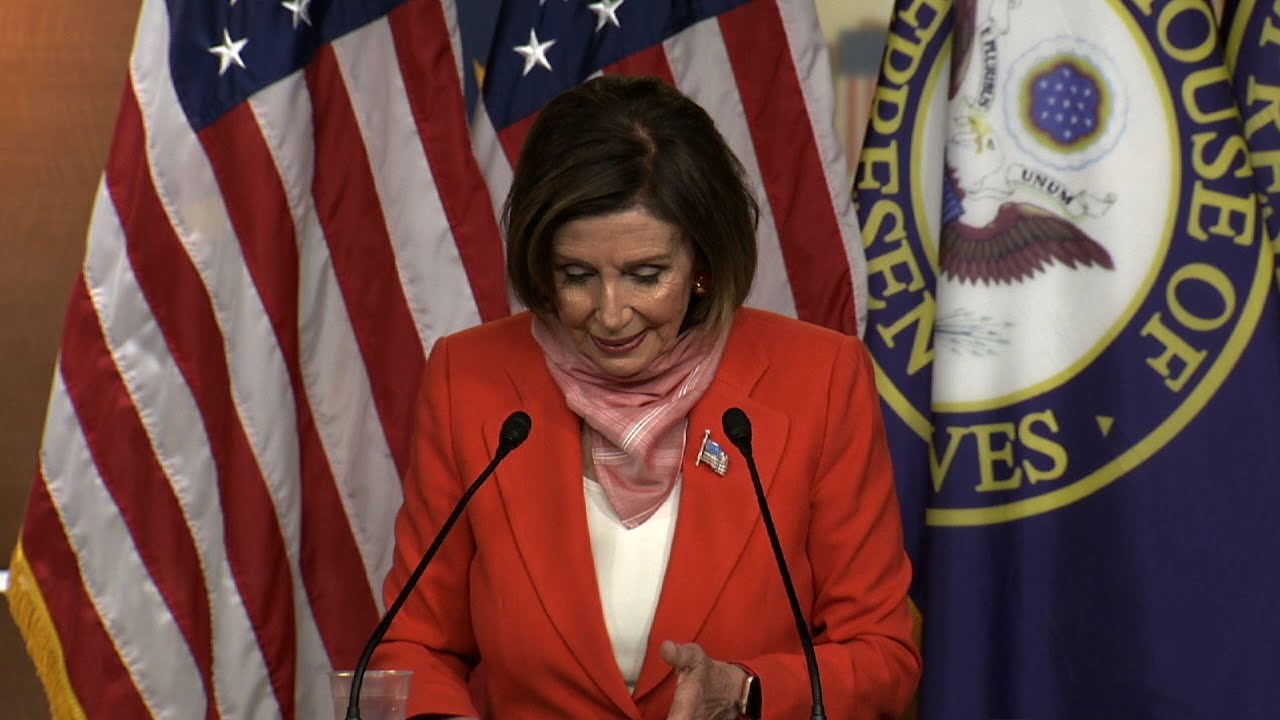
House Speaker Nancy Pelosi of Calif. walks to the House Chamber to vote on the nearly $500 billion Coronavirus relief bill on Capitol Hill, Thursday, April 23, 2020, in Washington. (AP Photo/Andrew Harnik)

Both the House and Senate are scheduled to return to session next Monday, as coronavirus stay-at-home orders remain for the District of Columbia, Virginia and Maryland.
And that’s not sitting well with some lawmakers.
“People are still scared,” said one senior congressional source about the return. “There is still apprehension among lawmakers about returning to the National Capital Region.”
As word trickled out from Capitol Hill on Monday about lawmakers returning in earnest, a number of senior aides from both sides of the aisle blasted the decision – if for no other reason that there was no master plan on how the reopening would work.
There are questions about exactly what Congress would “do” when it came back. The next “Phase 4” coronavirus bill is not ready yet. Many Senate Republicans argue that Congress must return to address coronavirus. But those same members are skittish of passing another bill, costing hundreds of billions of dollars, if not trillions – to combat coronavirus.
“We’re risking ourselves to vote on confirmation? A Commissioner for the Nuclear Regulatory Commission (NRC)?” asked one senator who asked to not be identified. “There are questions about the validity of this.”
The Senate’s vote on Monday is to confirm Robert Feitel to serve on the NRC.
Fox News is told the House is looking at conducting one “suspension” vote on Monday and then limited floor activity for the balance of next week. A senior source indicated that some House committees will met.
Besides that, no one has a semblance of a schedule. Are members going to require aides to come in? Congress is basically comprised of 535 CEOs. And, in this case, 535 public health commissioners. Every office is going to decide on their own if aides return to work – in notoriously cramped Capitol Hill offices.
“We’re talking about 20,000 people who work on Capitol Hill,” said John Lawrence, the former chief of staff to House Speaker Nancy Pelosi, D-Calif. “You’re talking about thousands and thousands of people who are traveling the country, being exposed to people from all over the country. They need a much higher level of health security that can really be provided in a Capitol Hill environment.”
It’s possible that Congress “returning to work” is really just a shadow play or window dressing. An effort to “look” like Congress is back – even though its members don’t have major legislative items teed up yet. After all, Capitol Hill is often about the optics. And the concerns are extensive about the collective wisdom of bringing the House and Senate back to session.
“I don’t know how many times the Office of the Attending Physician has sent out messages about masks. And yet not everybody is wearing them,” groused one senior Congressional staffer. “People don’t read what you send them to read.”
So what does Congress look like when it comes back? What safety precautions are in place? Or is it business as usual?
“Fear drives a lot of people,” said one Capitol Hill source. “It takes a while for a rational answer to sink in.”

Monday, April 27, 2020

Biden Cartoons


Timeline shows media, Dems' different approach to Tara Reade accusation after Kavanaugh free-for-all


When Christine Blasey Ford publicly accused Supreme Court Associate Justice Brett Kavanaugh of sexual assault in a September 2018 interview with The Washington Post, prominent Democrats and media organizations rushed to the story -- demanding answers and, in many cases, the end of Kavanaugh's career.
In the weeks after Tara Reade publicly charged in a podcast released March 25 that Joe Biden sexually assaulted her in 1993, however, those same politicians and outlets have become either silent or equivocal -- even as mounting video and testimonial evidence corroborates Reade's claim, where Ford presented no contemporaneous support for her allegations.
A Fox News chronology, beginning the day of each accusation, shows the extent to which Reade's claims have been handled differently from Ford's.
Fox News has reached out to Democratic lawmakers for comment about Reade, but has not heard back. Similarly, not a single Democratic senator responded when The Daily Caller gave each lawmaker 24 hours to provide comment on Reade's allegations.

Day 1

SEPT. 16, 2018 
Within minutes of The Washington Post's story outlining Ford's claim that Kavanaugh sexually assaulted her at a high school party more than three decades earlier, The New York Times immediately publishes a story stating that Kavanaugh's nomination was "in turmoil." Ford presents no independently verifiable evidence that she had ever met Kavanaugh.
CNN also reports the news immediately with an article. And another (likening the news to the Anita Hill testimony). And another (describing the White House as mounting an "intense" effort to squash the accusation.) And another (describing a senator's assessments of how Kavanaugh's nomination would go forward). And another (describing how Democrats would push for a delay in Kavanaugh's confirmation vote.)
Sen. Dianne Feinstein, D-Calif., announces her opposition to Kavanaugh. “Supreme Court justices should not be an extension of the Republican Party," she says. "They must also have unquestionable character and integrity, and serious questions remain about Judge Kavanaugh in this regard, as indicated in information I referred to the FBI.” (Feinstein had first received Ford's accusations weeks earlier, but chose not to release them until after Kavanaugh's initial confirmation hearings had concluded.)
Other Democratic lawmakers follow Feinstein's lead.
MARCH 25, 2020
“It happened all at once, and then … his hands were on me and underneath my clothes,” Reade tells podcast host Katie Halper. “He said ‘come on, man, I heard you liked me. For me, it was like, everything shattered … I wanted to be a senator; I didn’t want to sleep with one.” Reade was a Senate staffer for Biden at the time.
Reade says she told her brother, Collin Moulton, as well as her mother and a friend about the incident at the time. Both Moulton and the friend confirmed Reade's account in interviews with The Intercept. (Reade's mother has died, but footage has emerged showing her calling into CNN at the time with a story about her daughter's problems with a prominent senator.)
Meanwhile, CNN wonders, "Why is Bernie Sanders still running for president?"  The Reade claim is not mentioned on the network, either on-air or online.
The New York Times publishes a story explaining that Biden was growing "impatient" with the idea of more debates with Bernie Sanders. The Reade claim is not mentioned anywhere in the paper, which had slammed Republicans in August 2018 for "covering up" Kavanaugh's "past."
The Intercept reports that a darling of the "Me Too" movement, the Time's Up Legal Defense Fund, refused to help Reade with legal expenses, citing Biden's presidential run and its nonprofit status.

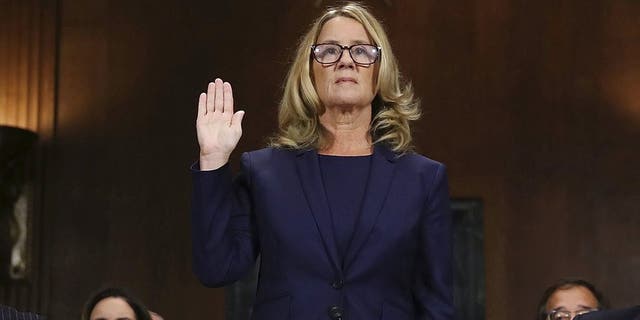
Christine Blasey Ford is sworn in before the Senate Judiciary Committee on Capitol Hill in Washington on Thursday, Sept. 27, 2018. (Win McNamee/Pool Photo via AP)

Christine Blasey Ford is sworn in before the Senate Judiciary Committee on Capitol Hill in Washington on Thursday, Sept. 27, 2018. (Win McNamee/Pool Photo via AP)

Day 2

SEPT. 17, 2018
Senate Minority Leader Chuck Schumer, D-N.Y., calls for an FBI background investigation into the claims against Kavanaugh. "We need the FBI to step forward to ensure that the Senate and American public have complete information about this troubling alleged incident before a hearing is held,” Schumer says.
CNN calls the Ford accusation a "watershed moment for the GOP."
The Huffington Post runs a story quoting Biden as saying, "Women’s Claims Of Sexual Assault Should Be Presumed To Be True." Biden remarks: "For a woman to come forward in the glaring lights of focus, nationally, you’ve got to start off with the presumption that at least the essence of what she’s talking about is real, whether or not she forgets facts, whether or not it’s been made worse or better over time. ... But nobody fails to understand that this is like jumping into a cauldron.”
MARCH 26, 2020 
Jimmy Kimmel interviews Biden, and the two discuss "Where's Waldo?" Kimmel does not ask Biden about Reade's accusation.
Schumer, speaking on the Senate floor, touts a "Green New Deal." He accuses Republicans of "refusing to admit" that "climate change is real."
CNN teases an upcoming CNN town hall with Joe Biden. The Reade accusations are not discussed on-air in the network's preview coverage.

Day 3

SEPT. 18, 2018
Kavanaugh's nomination officially "descends into chaos," CNN reports.
The New York Times publishes an op-ed from Anita Hill, who argues: "With the current heightened awareness of sexual violence comes heightened accountability for our representatives."
Sen. Mazie Hirono, D-Hawaii, tells all men to "shut up" -- and suggests Kavanaugh doesn't deserve due process because of rulings that she perceives as pro-life.
MARCH 27, 2020 
CNN's Anderson Cooper does not ask Biden about Reade's claims in a lengthy virtual town hall. In its writeup of the event, CNN assures readers, "Joe Biden: He's just like the rest of us."
"We sit on our back porch and they sit out on the lawn with two chairs," the network says of Biden and his wife Jill. "They talk through everything that's happened during their day now that they are home from school, who's driving who crazy."
The Huffington Post covers Reade's claim. The outlet notes, "Last April, Reade was one of eight women to accuse the former vice president of inappropriate touching." The articles goes on to observe, however, that when she first accused Biden of inappropriate touching, Reade was "accused of being politically motivated and called a Russian operative after a Medium post in which she praised Russia and its president Vladimir Putin resurfaced."
Reade has said she did not initially outline the full extent of Biden's alleged sexual assault, including digital penetration, out of embarrassment.

Day 4

SEPT. 19, 2018
The Guardian reports that Christine Ford's life has been "turned upside down" by her accusation, noting that she has received threats. The paper does not note that Kavanaugh and his family, as well as Republican senators, also had received threats to their lives.
MARCH 28, 2020 
The Guardian laments: "It hugely frustrating to see conservatives, who couldn’t give a damn about the multiple sexual assault allegations against Donald Trump, weaponize the accusations against Biden. However, it’s also frustrating to see so many liberals turning a blind eye. The accusations against the former vice-president are serious; why aren’t they being taken seriously?"

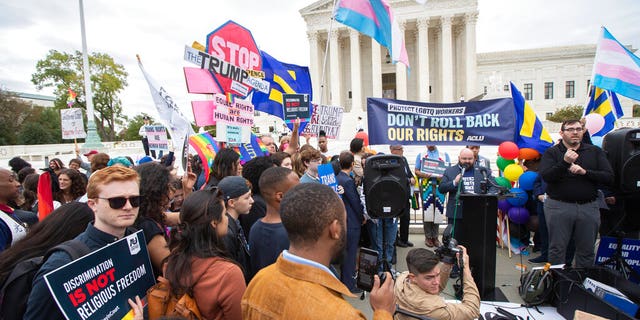
LGBT supporters gather in front of the U.S. Supreme Court, Tuesday, Oct. 8, 2019, in Washington. The Supreme Court is set to hear arguments in its first cases on LGBT rights since the retirement of Justice Anthony Kennedy. Kennedy was a voice for gay rights while his successor, Brett Kavanaugh, is regarded as more conservative. (AP Photo/Manuel Balce Ceneta)

LGBT supporters gather in front of the U.S. Supreme Court, Tuesday, Oct. 8, 2019, in Washington. The Supreme Court is set to hear arguments in its first cases on LGBT rights since the retirement of Justice Anthony Kennedy. Kennedy was a voice for gay rights while his successor, Brett Kavanaugh, is regarded as more conservative. (AP Photo/Manuel Balce Ceneta)

Day 12

SEPT. 27, 2018
South Carolina GOP Sen. Lindsey Graham erupts, accusing Democrats of orchestrating "the most unethical sham since I’ve been in politics."
“What you want to do is destroy this guy's life, hold this seat open, and hope you win in 2020,” Graham says, before turning to Kavanaugh.
"Are you a gang rapist?" Graham asks sarcastically, referring to an unsubstantiated accusation by Michael Avenatti client Julie Swetnick. 
The New York Times describes Kavanaugh and Graham's behavior as a typical display of "white male anger."
(Guy Benson, a Townhall.com political editor and Fox News contributor, tweeted this week that a "non-conservative" contact in the media had messaged him to belatedly praise Graham's comments. "I thought he was a loon" to say the Kavanaugh hearings were all about power, the source said. "In reality he was right all along.")
APRIL 5, 2020 
A self-described movie enthusiast posts a transcript of Reade's claims on a message board. CNN and The New York Times have not yet mentioned Reade's story.
Alyssa Milano suddenly embraces due process.

Day 16

OCT. 1, 2018
The New York Times embarks on a deep dive, reporting that Kavanaugh was once questioned by police after a bar fight in 1985. A police report even said Kavanaugh "threw ice at another patron."
Meanwhile, the ex-boyfriend of Julie Swetnick, the third woman to make uncorroborated, lurid allegations of sexual misconduct against Kavanaugh, tells Fox News exclusively that she had threatened to kill his unborn child and at times even bizarrely asked him to hit her. "Right after I broke up with her, she basically called me many times and at one point she basically said, 'You will never, ever see your unborn child alive,'" Richard Vinneccy says on "The Ingraham Angle."
According to Vinneccy, Swetnick told him at the time, 'I'm just going to go over there and kill you guys.'"
APRIL 9, 2020 
Reade files a criminal complaint with the Washington, D.C. police, alleging that she was sexually assaulted in 1993.

Day 18

OCT. 3, 2018
It is widely reported that Leland Keyser, Ford's lifelong friend and a supposed witness at the party in which Kavanaugh allegedly assaulted Ford, doesn't back Ford's account. Later, Keyser would say that much of Ford's account didn't make "any sense," including how Ford couldn't remember how she got home from the party. Keyser would also say she was pressured by Ford associates at the time to change her story to corroborate Ford's account.
“I was told behind the scenes that certain things could be spread about me if I didn’t comply,” Keyser told The New York Times. “I don’t have any confidence in the story."
With Keyser's statement, it becomes clear that no one can contemporaneously corrobotate Ford's story.
Meanwhile, protesters let out a collective "STOP KAVANAUGH" scream at a protest in Brooklyn.
House Speaker Nancy Pelosi, D-Calif, assures demonstrators in Washington: "This isn’t about politics or anything else."
A Democratic aide is arrested, and would later be convicted, in a scheme to dox Republican lawmakers who support Kavanaugh by revealing their personal information online.
APRIL 12, 2020 
The Times covers Reade's accusations, and makes sure to note that Reade could face criminal penalties if she filed a false police report. Attempting to explain why the Times waited so much longer to report on Reade's accusation, Times executive editor Dean Baquet claims that "Kavanaugh was already in a public forum in a large way" -- although he does not explain why that logic did not apply to Biden, who was sealing up the Democratic Party's nomination for president when Reade went public with her claim.
The Times piece focuses on unrelated sexual misconduct accusations against President Trump, and largely dismisses Reade's allegations as uncorroborated by her co-workers -- even though the Times notes later in its piece that Reade's claim was contemporaneously corroborated by two of Reade's friends.
Baquet would also admit the story was edited after publication at the request of the Biden campaign to remove a reference to Biden's past history of inappropriate touching. No notation in the story indicates that it was edited.
According to a copy of the Times' article saved by the Internet archive Wayback Machine, the Times originally reported: "No other allegation about sexual assault surfaced in the course of reporting, nor did any former Biden staff members corroborate any details of Ms. Reade’s allegation. The Times found no pattern of sexual misconduct by Mr. Biden, beyond the hugs, kisses and touching that women previously said made them uncomfortable."
After the Biden campaign's request, the paragraph now reads: "No other allegation about sexual assault surfaced in the course of reporting, nor did any former Biden staff members corroborate any details of Ms. Reade’s allegation. The Times found no pattern of sexual misconduct by Mr. Biden."
"Another good day not to be the NYT public editor," muses the paper's former public editor, Margaret Sullivan.
Later in the day, The Washington Post also covers Reade's claims for the first time. Both the Post and the Times mention accusations against President Trump.
Actress-turned-activist Rose McGowan quickly slams the Washington Post, saying its article was “not journalism” and constituted “victim shaming.”
ABC and CBS News, among other networks, mention Reade's claims shortly afterward, also for the first time.

Day 21

OCT. 6, 2018
Anti-Kavanaugh protesters bang on the walls of the Supreme Court to protest his confirmation.
APRIL 15, 2020 
The Washington Post openly struggles with Reade's claims: "What to make of former Joe Biden staffer Tara Reade’s allegations that the presumptive Democratic presidential nominee sexually assaulted her in 1993?" writes the paper's deputy editorial page editor, Ruth Marcus. "This is a difficult and important question — not least for those who were persuaded by Christine Blasey Ford’s assertion that then-Supreme Court nominee Brett M. Kavanaugh assaulted her when they were high school students in the 1980s."
Marcus goes on to admit that "we all suffer from the inclination, whether knowing or unknowing, to assess evidence through the lens of preexisting biases."
CNN, two days later, notes that Democrats were "grappling" with the Biden accusations -- a common framing seemingly employed by left-of-center outlets to avoid directly discussing the allegations.

Day 30

OCT. 15, 2018
The Guardian reports that witches are planning to hex Kavanaugh.
APRIL 24, 2020 
A resurfaced clip of "Larry King Live" from 1993 appears to include the mother of Tara Reade -- who has accused Joe Biden of past sexual assault while in the Senate -- alluding to “problems” her daughter faced while working as a staffer for the then-U.S. senator from Delaware.
But rather than CNN's team of investigative reporters, it was the Media Research Center’s NewsBusters, a conservative group that seeks to expose liberal bias, that exhumed the footage from its own vault. NewsBusters found the clip after The Intercept first reported on a transcript of the Larry King interview.
"I’m wondering what a staffer would do besides go to the press in Washington?" the caller begins. "My daughter has just left there, after working for a prominent senator, and could not get through with her problems at all, and the only thing she could have done was go to the press, and she chose not to do it out of respect for him."
In a telephone interview with Fox News, Reade confirms that her mother called in to the show -- and it is independently confirmed that the caller in the show had phoned in from the same California city where Reade's mother lived at the time. Biden's presidential campaign has adamantly denied Reade's allegations but the video could be cited as evidence supporting Reade’s allegation – even though her late mother, in the clip, does not specifically refer to a sexual assault claim.
CNN would not cover the clip until the following afternoon, well after most other media organizations.
The Intercept had reported earlier that Reade said her late mother once called into CNN’s “Larry King Live” to discuss her daughter’s “experience on Capitol Hill,” where the alleged encounter with Biden took place. Reade didn’t recall other information, such as the date or even year, and The Intercept managed to dig up a transcript of the call but not the video.
Meanwhile, aides to former 2020 hopeful Sen. Bernie Sanders express their anger.
"The video of Tara Reade's late mother calling into Larry King to blow the whistle about about [sic] Tara's sexual assault is being met with relative silence from a cadre of progressives right now and I want you all to know that I see you," former Sanders senior adviser Winnie Wong tweets. "We all do."
"Progressives didn't make this happen. Corporate Democrats chose Biden," Briahna Joy Gray, former Sanders press secretary, tweets.  Gray also added: "It's a good time to note that Bernie's on the ballot."
Shortly afterward, ex-Clinton adviser Peter Daou says Biden should withdraw his candidacy. He writes: "If #MeToo means anything, it CANNOT BE APPLIED ON A PARTISAN BASIS."

Day 32

OCT. 17, 2018
The Washington Post speculates about "two ways Democrats can remove Kavanaugh -- without impeaching him."
One of the approaches: A new president could "nominate and the Senate would confirm by majority vote a justice — in this case Kavanaugh — to a different post on an intermediate court of appeals (say the D.C. Circuit, where Kavanaugh formerly served). The justice would, in effect, be demoted."
The Post notes with regret that the move is "admittedly unprecedented at the Supreme Court level."
Another equally unprecedented but "optimal" option: the "creation of a new vehicle for judicial peer review ... [that would] create a nonpartisan, procedurally robust device for disciplining judges."
"If the political stars align, something good for our constitutional democracy might result from their efforts: a better way to discipline errant federal judges," opines the piece's since-disappointed author, University of Chicago law professor Aziz Huq.
APRIL 26, 2020 
The 1993 episode of CNN's "Larry King Live" apparently featuring Reade's mother is discovered missing from the Google Play store.
Twitter user J.L. Hamilton shares a screenshot showing the Aug. 11, 1993, broadcast of "Larry King Live" is no longer listed in the season three catalog of the iconic CNN talk show. Mysteriously, though, the Aug. 10 broadcast, which is listed as "Episode 154" is followed by the Aug. 12 broadcast, which is listed as "Episode 155," suggesting that episode and the ones that follow could be incorrectly listed and off by a number.
Fox News has verified the Aug. 11 episode is not listed on the streaming service. It is unclear when it was removed from the catalog.
Neither CNN nor Google immediately responded to Fox News' requests for comment. Fox News also reached out to the representation of Larry King and have not heard a response.
Fox News' Joseph Wulfson, Brian Flood, and Andrew O'Reilly contributed to this report.

IRS enhances 'Get My Payment' online application to help taxpayers


The Internal Revenue Service has made an update to its "Get My Payment" tool to help Americans track their coronavirus-prompted stimulus payments.
The enhancements, which started last week and continued through the weekend, adjusted several items related to the online tool, which debuted on April 15.
The changes were implemented to help millions of additional taxpayers with new or expanded information and access to adding direct deposit information.
“We delivered Get My Payment with new capabilities that did not exist during any similar relief program, including the ability to receive direct deposit information that accelerates payments to millions of people,” said IRS Commissioner Chuck Rettig. “These further enhancements will help even more taxpayers. We urge people who haven’t received a payment date yet to visit Get My Payment again for the latest information."
The IRS stimulus tool, which also allows people to provide their direct deposit information if necessary, has frustrated taxpayers with a “Payment Status Not Available” if “the application doesn’t yet have your data or you are not eligible for a payment.”
The error message could occur for other reasons, too, like if the IRS has not finished processing your 2019 return or you’re expecting a direct deposit but didn’t file a tax return.
The "Get My Payment" tool can be accessed through IRS.gov. Taxpayers need a few pieces of information to obtain the status of their payment and where needed, provide their bank account information. Having a copy of their most recent tax return can help speed the process.
As part of President Trump’s $2 million CARES Act to stimulate the economy, the IRS sent $1,200 payments to those with adjusted gross income below $75,000 and $2,400 to married couples filing taxes jointly who earn under $150,000.
FOX Business' Shawn M. Carter contributed to this article.

AOC slammed by New York paper for voting against latest stimulus bill


Rep. Alexandria Ocasio-Cortez, D-N.Y., was criticized in an editorial Sunday that called her decision to vote against the $484 billion coronavirus relief package “terribly wrong.”
The New York Daily News’ editorial, “Enemy of the Good: Alexandria Ocasio-Cortez Makes the Wrong Choice,” pointed out that the rising star from New York’s 14th Congressional District was the sole Democrat who voted against the bill.
“Not the kind of distinction a rising star legislator should be proud of,” the paper wrote.
The editors took issue with her claim that the bill did not go far enough.
The progressive lawmaker said the bill left out any real aid for Americans struggling to pay rent or purchase necessities including food after being left jobless or stranded due to the virus.
"My concern is that we are giving away the farm," Ocasio-Cortez said. "I cannot go back to my communities and tell them to just wait for CARES four because we have now passed three, four pieces of legislation that's related to coronavirus. And every time it's the next one, the next one, the next one, and my constituents are dying."
The paper found the argument unsound.
“Yeah: The first aid bill didn’t go far enough,” the editorial read. “Nor did the second. Nor did the third. The fourth didn’t get there either, but the response to crises happen in steps. If everyone said no to each massive package because it didn’t go all the way, we’d all be even deader in the water.”

Jared Kushner on securing US supply chain amid coronavirus: We can never rely on foreign supplies again


The coronavirus pandemic brought to light the critical importance of securing U.S. supply chains to eliminate the long-time reliance on foreign governments, White House senior advisor Jared Kushner said during a rare appearance on "The Next Revolution" Sunday.
"I think the campaign platform that President Trump ran on in 2016 which was basically 'you have to secure your borders and you have to control your own manufacturing as a national security issue.' I think those have been totally vindicated positions from the virus and I doubt it will be easy for people to argue against them in the future," Kushner said.
Kushner has been a key figure in the federal effort to manage the flow of U.S. supply chains and ensure hospitals in need are properly equipped with ventilators and other life-saving medical equipment.
"We can take all the learnings from this virus and figure out how we can be more prepared for the future."
— Jared Kushner, 'The Next Revolution'
His team, which has worked together with the coronavirus task force lead by Vice President Mike Pence, is now focussed on solving the issue of insufficient testing at the center of the coronavirus crisis in the U.S.
"We figured out how to really stimulate that supply," Kushner said. "We believe by the month of April we will have close to five million tests that will be performed. We're anticipating for the month of May, the number we were originally asked to do, we can exceed it...we think we can double that number and we should have more than ample amount of tests in the market for the month of May," he explained.
Kushner said the White House, in collaboration with the Department of Health and Human Services, has spent the weekend communicating with governors to effectively develop their own testing strategy on a local level.
At the end of the day, Kushner explained, "the limiting factor is not going to be swabs or reagents or transport media, it's going to be the different states' ability to collect the samples and do it in an efficient way."
"We feel really good," he added. "We’ve eliminated a lot of problems when it comes to testing and I think we will continue to see it do better and better over the coming weeks."
Kushner also announced a federal effort to supply nursing homes and other vulnerable communities with additional test kits and personal protective equipment.
"I don't want to get ahead of any specific announcements," he said, but Adm. John Polowczyk, supply chain task force lead at FEMA has "been focused very much on getting stuff to the different places that need it and nursing homes in different areas where people are vulnerable has been a place where we really tried to surge," Kushner explained.
Kusher said he is also focussed on "the inner cities and indigenous populations" and has "been working very hard to make sure they have adequate testing and PPE disproportionate to where vulnerable populations are to where there are less vulnerable populations."
As many parts of the country look towards a phased reopening, Kushner urged Americans to "take all the learnings from this virus and figure out how we can be more prepared for the future."
"Now, the goal is not to make this a political issue and figure out how we can come together to really onshore," he said. "What we've been doing at the federal government is figuring out how do we aggregate a lot of the different demand in different key industries that are critical for our national security. We're thinking of ways right now to redo our stockpile given the nature of the hospital system and the medical distribution system and figure out how we can take all the learnings from this virus and figure out how we can be more prepared for the future."
Kushner said he found a renewed desire in various industries who "want to move manufacturing onshore" amid the coronavirus and echoed President Trump's commitment to make the United States a "leader in advanced manufacturing."
"If you look at why it went overseas before, it's because people were a big cost of manufacturing. Now, it's really robots... the personnel component of manufacturing has actually gone down but we've lost a lot of the capability here in America to be the leader in advanced manufacturing and President Trump is very committed to making sure that over the next couple of years, America regains their ability to be the leading global advanced manufacturer."
"I think," Kushner predicted, "we will see a lot of that happening."
In his final remarks, the president's son-in-law imparted a message of hope as the country looks towards the future.
"By slowing the spread and flattening the curve, that has given us time to really develop search hospital capacity plans, we have enough ventilators, we have a ton of spare hospital capacity and in addition, we have a lot of PPE," Kushner said.
"We're onshoring a lot of these industries, working to make sure we're never reliant on foreign supplies again, and the doctors have learned more about how to treat this."
He concluded, "I would say the most important thing is the behavioral changes. People are washing their hands and wearing masks and I think we're learning how to live with this in a much better way which will enable us, at least the people who are not high-risk to start going back to work in a phased and responsible approach."

Sunday, April 26, 2020

Nancy Pelosi The Paper Ripper Cartoons


Out of pandemic crisis, what could a new New Deal look like?


WASHINGTON (AP) — The New Deal was really a series of new deals, spread out over more than six years during the Great Depression — a menu of nationally scaled projects that were one part make-work and many parts lasting impact. They delivered a broad-shouldered expression of presidential authority whose overall benefits were both economic and psychological.
Not all of them worked. Some failed badly. But it was a try-anything moment by Franklin D. Roosevelt at a time of national despair. And it remade the role of the federal government in American life.
Men were hired to plant trees in Oklahoma after the Dust Bowl and to build roads, bridges and schools. Writers and artists were dispatched to chronicle the hardship, employing authors like Saul Bellow and Ralph Ellison. In most every state, you can still see murals or read local histories or walk into enduring projects like LaGuardia Airport and Dealey Plaza in Dallas.
These programs were designed to provide get-by wages in exchange for work. But others were crafted to remake society. Social Security was instituted to save the elderly from poverty, federal insurance on banks to renew trust in the financial system, minimum wage and labor rights to redistribute the balance of power between employer and employee.

 
In this March 26, 1937, file photo, Works Progress Administration (WPA) workers make copper utensils for a hospital. (AP Photo, File)

Now, nearly 90 years later, the United States is fighting a disease that presents the country with wrenching life-and-death challenges. Yet at the same time, it has served up something else as well: a rare opportunity to galvanize Americans for change.
And as the U.S. confronts its most profound financial crisis since the Depression, brought on by the most deadly pandemic in a century, there are early soundings of a larger question: What would a “new” New Deal look like?
For the historian Doris Kearns Goodwin, whose latest book is “Leadership in Turbulent Times,” the very act of discussing such a possibility is productive in itself. “It at least allows you to think of something that could come out of this that could be positive.”
___
The New Deal’s legacy still provides support today. Unemployment insurance. Retirement and disability income. Transparency in the stock markets. Infrastructure that ensures a steady flow of electricity and supply of water.
Yet the coronavirus outbreak has also revealed how ill-equipped the government was to address the rapidly escalating fallout of 26 million job losses, overwhelmed hospitals and millions of shuttered businesses only weeks away from failure.
“We basically have a 21st-century economy wobbling on a 20th-century foundation,” said Rahm Emanuel, the former mayor of Chicago and chief of staff to President Barack Obama. “We need to upgrade the system to have a 21st-century economy in all respects.”

 
In this March 9, 1936, file photo Works Progress Administration (WPA) workers build a new farm-to-market road along Knob Creek in Tennessee. (AP Photo, File)

Among the questions at hand:
—How can Americans have greater access to savings for retirement and financial emergencies? There are fewer workers than a generation ago, and many face higher costs for housing and school.
—How can the government ensure greater resources for medical care in a crisis? This would mean that mission-critical workers, from nurses to grocery-store clerks, have stockpiles of equipment to stay safe. It would mean people could get tested and treated without crippling hospital bills. And it would mean researchers have incentives to develop vaccines and bring them to market faster.
President Donald Trump has talked up infrastructure programs and affordable healthcare but offered few details. Democratic lawmakers must work with a president their base of voters distrusts and despises. The likely consequence: Any mandate for change will come from the ballot boxes this November.
Just this past week, Sen. Kirsten Gillibrand (D-N.Y.) and Sen. Michael Bennet (D-Colo.), leaned hard on programs of the New Deal to offer legislation to create a federal “health force” to employ workers “for future public health care needs, and build skills for new workers to enter the public health and health care workforce.” It is unlikely the Republican-controlled Senate would consider such legislation, but it also shows what Democrats might have in mind as voters contemplate upcoming elections.
Both parties have an uneasy relationship with how states and the federal government should share their power, and any reprise of the New Deal would likely enhance Washington’s authority.
Trump has yet to offer a systemic solution to the crisis. though he has approved record levels of direct assistance to businesses and individuals. Joe Biden, the presumptive Democratic nominee, has talked more about combating the pandemic than he has about reimagining what kind of country might emerge from it.
So far, Congress has committed more than $2 trillion to sustaining the economy during the outbreak. But most economists see that unprecedented sum as relief, not recovery or reform — just one of the “three Rs” of the New Deal.
Any recovery will rely on government programs to catalyze the economy so that hiring and commerce can flow again. The public will also expect reforms that make the nation more resilient against future emergencies, so people feel comfortable enough to take the risks that lead to innovation and prosperity.
Investing in infrastructure holds bipartisan appeal. Trump has repeatedly called for upgrades to roads, bridges and pipelines. Democrats would like to ensure that internet connectivity, including next-generation 5G, exists in rural and poorer communities.
But other options have existed mainly in the white papers of think tanks, academics and advocacy groups. There is a newfound appetite for them, which could overpower even the highly polarized politics of this moment.
“The question people always ask is, what would it take to break through that extreme partisanship?” Goodwin said. “It takes a crisis. This is what happens during wars.”
After 9/11, much of the criticism of the federal government focused on a collective “failure of imagination.”
Nineteen years later, that phrase has a new context as Washington tries to fashion a response to the coronavirus. It’s a challenge at a scale the nation has not seen since 1932, when Roosevelt, a Democrat, defeated Republican President Herbert Hoover with a promise of better days ahead — a “new deal” for the “forgotten man.”
When New Deal programs were unveiled, no one definitively knew what had caused the U.S. economy to collapse, unlike now, when the culprit and the vulnerabilities are clearer.
The political climate was fundamentally different then. Roosevelt, celebrated for his optimism and empathy, had muscular Democratic majorities in Congress. But he also sought to unite the country. His first radio “fireside chat” in 1933 was devoted to asking Americans to trust the banking system again. “He promised them that they could get their money back,” Goodwin said. The next fireside chat called for systemic change that Roosevelt argued would regulate capitalism’s extremes and provide a safety net.
“Roosevelt was very concerned with the idea of one body politic,” said Allan Winkler, a professor emeritus at Miami University of Ohio, who testified before Congress about the New Deal in 2009 during the height of the financial crisis. “I worry about that in the current situation, that we don’t have a willingness to work together.”
But the New Deal programs stemmed from bold visions that could be implemented by political leaders, he cautioned. “In our fragmented body politic, it would take an extraordinary politician to do what is necessary.”

 
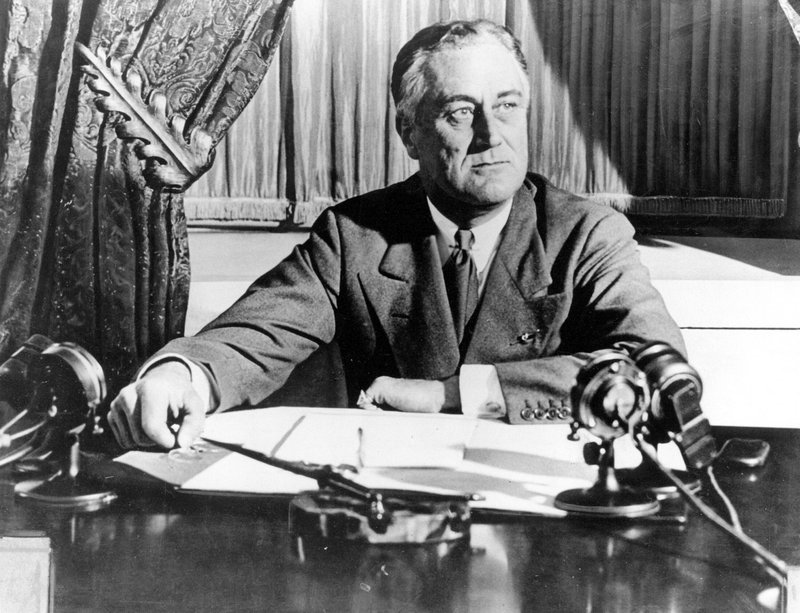
In this Oct. 2, 1936, file photo, President Franklin Roosevelt at the new 21-story medical unit which he dedicated in Jersey City, N.J., assuring the medical profession that the New Deal contemplated no action detrimental to it in carrying out the Social Security Act. (AP Photo, File)

This is why a debate is starting among policy thinkers about the components needed for recovery and reform: so that leaders can feel empowered to take action.
Emanuel sees two needed chapters — one to provide immediate aid and a second with more lasting change.
“We need another bill to jump start the economy,” Emanuel said. He says it should be followed by investments in infrastructure to improve online connectivity so that learning, medicine and work can get through stay-at-home orders.
The case for a major rebuilding may become clear if dire forecasts of a second-quarter decline in annual economic output ranging from 30% to 50% come true.
“I think we are going to see an epic lockup in the mortgage markets as people are going to be unable to make their payments,” said Louis Hyman, a historian at Cornell University.
This same cascade of defaults existed in the Great Depression. The New Deal swung to the rescue with the Home Owners’ Loan Corporation, which bought past-due mortgages with government bonds and blocked a wave of foreclosures. Government officials also developed what would become 30-year mortgages. The loan’s stable interest rates helped spur new construction.
But now, Hyman says, there’s a “painful truth”: The bulk of most people’s wealth is tied up in their homes — and inaccessible in a crisis.
“The policy that would undo that is to enable people to accumulate wealth in other ways,” he wrote in an email. Those include better pay, capital market investment incentives and, especially, “building lots of houses for the under-housed.”
Any attempt at updating a New Deal will reflect ideological differences between Democrats and Republicans.
Framing this divide is a simple choice: Is it better to establish a government firewall that can protect the economy during future downturns? Or should the tax code and regulations be re-engineered so that private companies and individuals can more easily adapt to pandemics?
Heather Boushey, president of the Washington Center for Equitable Growth, says allowing government aid to automatically increase as the economy began to fall would have been one of “our best defenses so that the coronavirus recession does not turn into a full-scale economic depression.”
“Responding to the crisis without also making our economy more resilient against future shocks would be a mistake,” she said. Automatic triggers for expanded jobless benefits, increased medical aid and new construction spending would ease the pain of a downturn and speed recovery.
More conservative economists believe adjustments to the tax code and regulations will improve growth and resilience.
“This is not one of those things where if you send checks you can jump-start the economy,” said Douglas Holtz-Eakin, a former Congressional Budget Office director and economic adviser to Republicans.
Price Fishback, an economist at the University of Arizona known for his work studying the Depression era, proposes another, more abstract notion as a key to fashioning a New Deal for the 21st century: humility.
Even New Deal programs that improved lives did not insulate the American people. There was stagflation in the 1970s. Untamed financial markets fueled a housing bubble during the 2000s. And at the end of 2019, no major economist forecasting this year envisioned that a pandemic would throw the world into turmoil.

 
This Aug. 26, 2010, file photo shows the Timberline Lodge in Timberline Lodge, Ore. The Lodge, a National Historic Landmark, was built as a Works Progress Administration (WPA) project during the Great Depression. (AP Photo/Rick Bowmer, File)

The United States would be stronger with improved internet connectivity, more housing, government programs that can cushion a downturn and a health care system that can handle crises and emergencies. Life would be better. But the nation would be far from impervious.
So stay humble, Fishback urges.
“Once we think we got it licked,” he says, “we get slammed in the face again.”
___
Michael Tackett is deputy Washington bureau chief for The Associated Press, and Josh Boak covers the U.S. economy and voters. Follow Tackett on Twitter at http://twitter.com/tackettDC and Boak at http://twitter.com/joshboak.
___

In Trump’s shadow, Congress-at-home eyes reboot during virus

Nancy the Joker.

WASHINGTON (AP) — They long for what’s being lost: the ability to publicly question officials at committee hearings, to chat across the aisle, to speak from the House and Senate floor for all of America, and history, to hear.
Congress wants its voice back.
With no real plan to reopen Capitol Hill any time soon, the coronavirus shutdown poses an existential crisis that’s pushing Congress ever so reluctantly toward the 21st century option of remote legislating from home.
“It’s the ability to be an equal branch of government,” said Rep. Katie Porter, a freshman Democrat from California.
Divisions are fierce, but so too is the sense of what is being lost. Every day lawmakers shelter at home, their public role is being visibly diminished. While they are approving record sums of virus aid, they are ceding authority to oversee the effort and tackle next steps.
It’s an imbalance of power for all to see: President Donald Trump’s daily public briefings without a robust response from Capitol Hill, though there have been discussions within the White House about changing the format of the briefings to curtail his role.

Youtube video thumbnail

“This is a time where oversight is really important,” said Rep. Derek Kilmer, D-Wash., a leader of the moderate New Democrats caucus.
The pandemic “begs for Congress’s engagement, virtual or otherwise,” he said.
Changing the rules to allow lawmakers to cast votes or hold hearings from home would be unprecedented in House and Senate history. The Constitution requires lawmakers be “present” for most action.
The simmering debate cuts across political fault lines. Some lawmakers want to stick with tradition; others are tech-savvy and ready for change. A vocal band of conservatives insists Congress must reopen now, despite public health warnings, echoing Trump’s push to end the shutdown. Others have no interest in returning to the crowded Capitol complex until it’s safe.
House Speaker Nancy Pelosi, D-Calif., shelved a proposal for proxy voting this past week after Republicans objected. Once resistant to what she called “Congress by Zoom” meeting, she tapped a bipartisan task force to present fresh ideas.
In the Senate, Majority Leader Mitch McConnell, R-Ky., rejected a GOP remote vote proposal. He expects Congress to return May 4, as planned.
The reluctance to change is leaving the legislative branch behind after even the tradition-bound Supreme Court announced it would hear oral arguments by teleconference as stay-home rules reorder civic life.
“It’s a huge can of worms,” said Sarah Binder, a professor at George Washington University.
She said the pandemic provokes a set of issues far beyond the logistics of working remotely. Among them: Is it safe to return to Capitol Hill? Can you be “present” if you appear on a computer screen?
But she said, “They need a solution if they’re not going to be able to come back.”
Lawmakers say they can only do so much on conference calls and virtual town hall meetings as they assess $3 trillion in coronavirus aid and consider annual spending, defense and other bills.
While the 100 senators can usually command attention on their own, the 435 rank-and-file House members have a harder time being heard.
One prime opportunity is time allotted to lawmakers at committee hearings.
It may be just five minutes on C-SPAN. But for members of Congress, the committee means everything. It’s their chance to make a difference.
Porter knows firsthand what’s being lost with Congress away.
As the pandemic emerged, she wrote a letter asking the Centers for Disease Control and Prevention to provide free virus testing as country scrambled to slow the spread of COVID-19.
“They blew us off,” she said.
But when CDC Director Dr. Robert Redfield appeared before the House Oversight and Reform Committee, Porter had her moment.
In a video that went viral, she grilled Redfield on whether he would commit to invoking authority under federal law to declare pandemic testing free.
He said yes.
“It wasn’t until we got Dr. Redfield in front on me, and I had my five minutes with the cameras on him, in front of the American people, that I was able to get an answer,” she said.
But under House rules, committees usually need members to be physically present to meet. While several committees have been conducting briefing calls with key administration officials, it’s mostly out of public view.
The House Small Business Committee confirmed a private call this past week with the head of the Small Business Administration running the coronavirus paycheck program. The Appropriations Committee held one with Agricultural Secretary Sonny Perdue. Treasury Secretary Steven Mnuchin has had calls with other committees.
The House Oversight and Reform Committee was set for a briefing with the Census Bureau’s director about curtailing the 2020 population count during the pandemic. It’s a crucial conversation with billions of federal dollars at stake. But the public could not watch.
Still, some say the only way for Congress to act is for lawmakers to return to Washington during the pandemic. Conservative House Freedom Caucus members rallied this past week to reopen the Capitol. Key GOP senators agree.
“If COVID-19 requires Congress to act, then it requires Congress to convene,” said Sen. Mike Lee, R-Utah, who self-quarantined last month after sitting near another GOP senator who tested positive for the virus.
As the House considers options, one advocate for remote legislating is Majority Leader Steny Hoyer, D-Md., who enjoys FaceTime with his grandkids and suggests Congress could do the same.
Opening committees is the priority, he told reporters after the task force met. “We need committees to act,” he said. “Even if they can’t come to Washington.”
Hoyer acknowledged how difficult it is for Congress to change. Even during the 1918 Spanish flu outbreak, the House convened to vote. But this is an “extraordinary circumstance,” he said. He expects an update this coming week.
Porter warns that without changes the 535-member legislative branch is being distilled to its most visible leaders — “a four person Congress,” she said.
“Technology is not disruptive to the Founders’ idea,” she said.
“It’s limiting the technology that is consolidating power in a small number of people,” she said, “which is what they were worried about when they created the House of Representatives.”

UK PM Boris Johnson returns to face growing virus divisions


LONDON (AP) — British Prime Minister Boris Johnson is returning to work after recovering from a coronavirus infection that put him in intensive care, with his government facing growing criticism over the deaths and disruption the virus has caused.
Johnson’s office said he would be back at his desk in 10 Downing St. on Monday, two weeks after he was released from a London hospital. Foreign Secretary Dominic Raab, who has been standing in for the prime minister, said Sunday that Johnson was “raring to go.”
Britain has recorded more than 20,000 deaths among people hospitalized with COVID-19, the fifth country in the world to reach that total. Thousands more are thought to have died in nursing homes.
Johnson, 55, spent a week at St. Thomas’ Hospital, including three nights in intensive care, where he was given oxygen and watched around the clock by medical workers. After he was released on April 12, he recorded a video message thanking staff at the hospital for saving his life.
Johnson has not been seen in public since, as he recovered at Chequers, the prime minister’s country retreat outside London.
Opposition politicians say Britain’s coronavirus death toll could have been lower if Johnson’s Conservative government had imposed a nationwide lockdown sooner. They are also demanding to know when and how the government will ease the restrictions that were imposed March 23 and run to at least May 7.
“Decisions need to be taken quicker and communication with the public needs to be clearer,” opposition Labour Party leader Keir Starmer said in a letter to Johnson.
“The British public have made great sacrifices to make the lockdown work,” he wrote. “They deserve to be part of an adult conversation about what comes next.”
Despite the toll, which saw another 813 virus-related deaths announced Saturday, some in Britain are growing impatient with the restrictions, which have brought much of the economy and daily life to a halt. Road traffic has begun to creep up after plummeting when the lockdown first was imposed, and some businesses have begun to reopen after implementing social-distancing measures.
Scientists say the U.K. has reached the peak of the pandemic but is not yet out of danger. The number of people hospitalized with COVID-19 is declining and the number of daily deaths peaked on April 8.
But with hundreds of new deaths announced each day, some health experts say Britain could eventually have the highest virus death toll in Europe.
As fears recede that the health system will be overwhelmed, opponents are criticizing Johnson’s government over shortages of protective equipment for medical workers and a lack of testing for the virus. More than 100 infected medical workers have died so far.
The government has promised to conduct 100,000 coronavirus tests a day by the end of the month, but has yet to reach even 30,000 a day. Increasing testing, so that all people with the virus can be identified and their contacts traced and isolated, is key to loosening the lockdown.
The British government says all health care staff and other essential workers can be tested if they show symptoms. It is rolling out almost 100 mobile testing sites, staffed by soldiers, to conduct tests at nursing homes, police stations, prisons and other sites.
In the first two days of expanded testing, however, the online system handling daily demand for the tests had exceeded the supply by early morning.
___

CartoonDems