Presumptuous Politics

Tuesday, May 12, 2020

Trump abruptly ends briefing after contentious exchanges


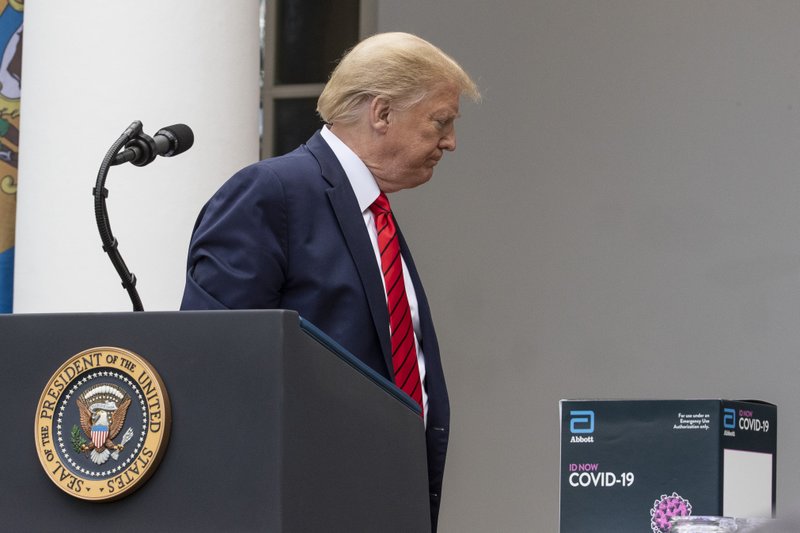
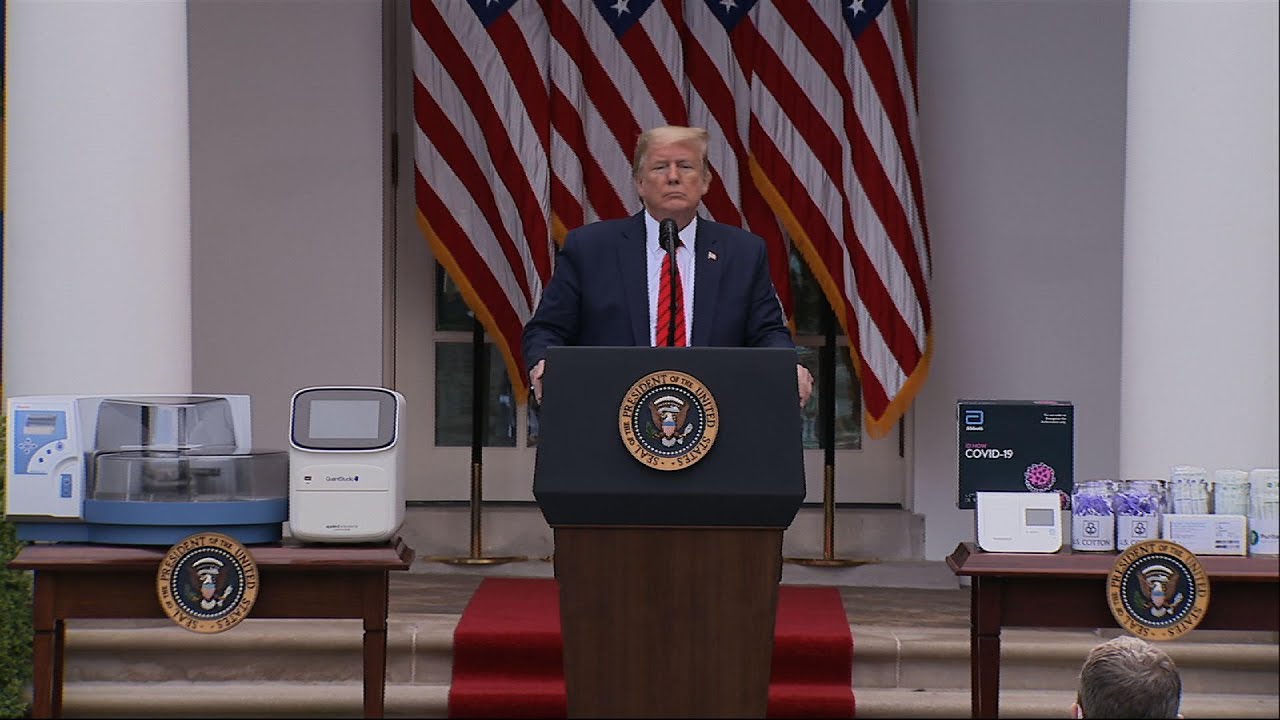
NEW YORK (AP) — President Donald Trump abruptly ended his White House news conference Monday following combative exchanges with reporters Weijia Jiang of CBS News and Kaitlan Collins of CNN.
Jiang asked Trump why he was putting so much emphasis on the amount of coronavirus tests that have been conducted in the United States.
“Why does that matter?” Jiang asked. “Why is this a global competition to you if everyday Americans are still losing their lives and we’re still seeing more cases every day?”
Trump replied that “they’re losing their lives everywhere in the world. And maybe that’s a question you should ask China. Don’t ask me. Ask China that question.”
He called for another question, and there was no immediate response.
“Sir, why are you saying that to me, specifically?” Jiang asked. Jiang, who has worked for CBS News since 2015, was born in Xiamen, China, and emigrated to the United States with her family at age 2.
Trump said he would say that to “anyone who asks a nasty question.”
“It’s not a nasty question,” Jiang said. “Why does that matter?”
Trump again asked for another question, then said, “Nah, that’s OK” and waved off CNN’s Collins when she approached the microphone.
“You pointed to me,” Collins said.
The president said, “I pointed to you and you didn’t respond.” Collins said she was giving Jiang the time to finish her questioning.

Youtube video thumbnail

“Can I ask a question?” Collins said.
With that, Trump called an end to the news conference, held in the White House Rose Garden, and walked away.
Jiang and Collins wore masks to the news conference, as did most reporters, following the recent reports that two White House employees — an aide to Vice President Mike Pence and a valet to the president — had tested positive for the coronavirus.

November trial run: California House fight centers on Trump

Republican Mike Garcia


LOS ANGELES (AP) — A swing U.S. House district north of Los Angeles is up for grabs Tuesday in a special election that has become an early test for President Donald Trump as he seeks a second term.
Trump has sought to bring his influence to the fight between Republican Mike Garcia and Democrat Christy Smith for California’s 25th District, which cuts through a hilly stretch of suburbs and small ranches that includes the Ronald Reagan Presidential Library.
The results are unlikely to be known for at least for several days, due in part to California’s unusual vote-counting rules.
The district was long in Republican hands before Democrat Katie Hill captured it in an upset in 2018; she resigned last year amid a House ethics probe.
When Hill won, it was the last Republican-held House seat anchored in Los Angeles County. It also includes a slice of Ventura County.
The race is widely considered a toss-up. The outcome will not affect the balance of power in the House but the race has taken on outsized importance as the only competitive House race in the country in the midst of the coronavirus crisis.
Another special election Tuesday is in a Wisconsin district considered safe GOP territory.
But in California, Republicans are hoping for a rare upset in the heavily Democratic state where the GOP hasn’t managed to seize a Democratic House seat in over two decades.
While the district has a Democratic registration edge, there are factors that could help Garcia’s chances. Hill resigned in scandal, and in an expected low-turnout election older, white Republicans tend to be among the state’s most reliable voters. Younger registered voters in the state who lean liberal are known to be frequent no-shows.
Virtually all voters were expected to mail in ballots because of the virus outbreak, though a sprinkling of polling places are available for those who want, or need, to vote in-person. That has made predicting turnout even more challenging than usual.
Early mail-in returns have been robust and leaning Republican: According to nonpartisan Political Data Inc., 29% of those ballots had been returned by Monday. Of that total, 40% were from Republicans, 27% Democrats and roughly 20% from independents, who tend to lean Democratic in California.
Garcia has been running as a Trump loyalist in a district the president lost in 2016. Trump remains widely unpopular in California outside his GOP base.
Most of the campaign was conducted online, without traditional rallies and door-knocking. And California’s stay-at-home orders apparently will thwart any effort by the campaigns to engage in so-called ballot harvesting, a legal practice in California in which operatives collect ballots from voters and deliver them to polling places.
Republicans pointed a finger at the practice after the Democratic rout in 2018 House races in the state, in which Democrats captured seven GOP seats. Republicans now hold just six of California’s 53 House seats.
The Los Angeles County Democratic Party said in a statement it “has no plans on participating in the collection of vote-by-mail ballots during the ... special election.” Republicans also said they will not collect ballots, citing health risks during the outbreak.
With the seat vacant, Smith and Garcia topped a crowded field of candidates in the state’s March 3 primary and advanced to separate elections: One, on Tuesday, to fill the remainder of Hill’s two-year term, and a second in November for the full, two-year term starting in 2021.
Garcia, a former Navy fighter pilot and defense industry executive, has depicted Smith as another vote for the Democratic status quo in California that he blames for soaring homelessness, heavy regulation and rising taxes.
Smith is a state Assembly member promising to work for improved health care who has been critical of the president and his administration.
Last weekend, Trump took to Twitter to attack a decision to add an in-person polling place in Lancaster, a part of Los Angeles County with a significant black population. “Rigged Election!” Trump wrote. However, it turned out the decision was supported by Lancaster’s Republican mayor.
With a national debate underway on mail-in voting, the race will also serve as a window into how the process works out, albeit on a small scale.
California will be looking to avoid the problems that plagued April’s Wisconsin presidential primary, where thousands of voters without protective gear were forced to wait for hours in long lines, while thousands more stayed home to avoid the potential health risks.
A win by Garcia in the special election next month would establish him as the incumbent and show Republicans can compete in a district where Trump was defeated by Hillary Clinton in 2016. However, November typically draws a large Democratic turnout in California, particularly in presidential election years, which would give Smith an edge in the rematch.

Trump-backed lawmaker faces school board head in Wisconsin


MADISON, Wis. (AP) — A special election in a rural Wisconsin district President Donald Trump carried by 20 points pits a Trump-aligned state senator against a school board president hoping to become the first Native American elected to Congress from the state.
Tuesday’s election will help measure the enthusiasm of Republicans in a deeply conservative part of Wisconsin just over a month after a liberal-backed Wisconsin Supreme Court candidate won a statewide race over a Trump-backed candidate.
The winner in Wisconsin’s deeply conservative 7th District will replace Republican Sean Duffy, a former star on MTV’s “Real World” who held the seat since 2011 and remains a vocal Trump backer.
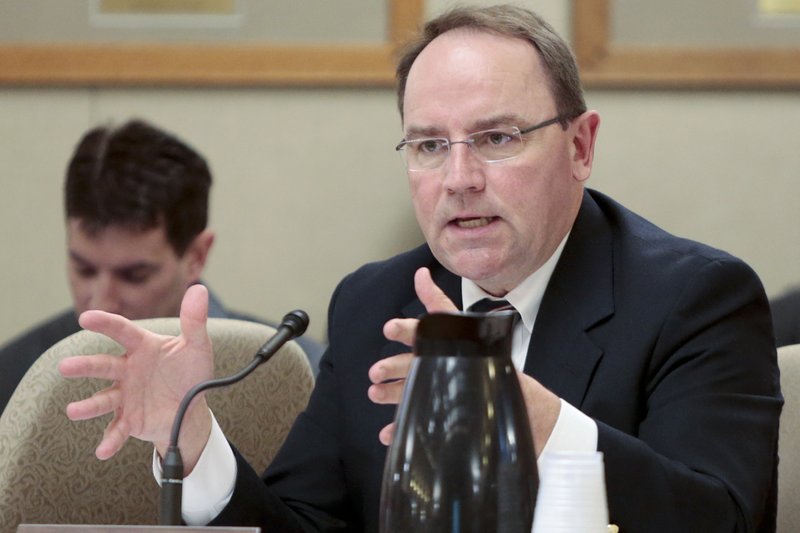
Republican state Sen. Tom Tiffany faced Democrat Tricia Zunker, the Wausau School Board chair. It’s the second time voters will leave their homes in five weeks to cast ballots in the middle of a stay-at-home order issued to slow the spread of the coronavirus pandemic. Wisconsin held its presidential primary election on April 7.
Unlike that election, there have been no widespread calls to delay or otherwise alter voting for Tuesday’s special election. For one thing, the massive 18,800-square-mile district is mostly rural and has very few confirmed cases of COVID-19. The district, which includes 21 counties and portions of five others, has fewer than 2% of all positive coronavirus cases i n the state and less than 2.5% of all deaths.
However, about 250 members of the Wisconsin National Guard were activated to help staff polls due to a shortage of willing workers. About 2,500 Guard members were activated for the April election.
Shery Weinkauf, clerk for the village of Weston, said voters felt safe in April and the same safeguards are being put in place for Tuesday’s election. Those include keeping voters at a 6-foot distance from one another, making hand sanitizer available and having all poll workers wear masks.
“I feel much more comfortable moving forward with this election than I did with the last election, because during the last election there were so many unknowns,” Weinkauf said. “I don’t think we all knew enough what was going on with the COVID-19. And so it was that it was maybe a little scary and stressful. I don’t feel that way anymore.”
ADVERTISEMENT
Democratic Gov. Tony Evers has repeatedly voiced confidence about the election being held safely, citing safety measures and experience gained from holding the April election.
Voting early by mail-in absentee balloting is also strong but behind the pace set in April’s statewide election. In that one, about 34% of registered voters cast ballots absentee. That amounted to about 71% of everyone who ended up voting in the election. As of Monday, just 19% of registered voters in the 7th Congressional District had returned an absentee ballot.
Tiffany, a state senator since 2011, had Trump’s endorsement, but the pandemic prevented the president from campaigning in the district. Zunker, an attorney, was endorsed by Massachusetts Sen. Elizabeth Warren and a host of liberal groups, including EMILY’s List and Planned Parenthood.
Tiffany, 62, was born on a dairy farm in the district and ran a tourist boat business for 20 years. Joining the Legislature in 2011, he was a close ally of then-Republican Gov. Scott Walker and voted to pass Act 10, the law that all but ended the union rights of most public employees. He also voted in favor of legalizing concealed carry and moving the state forestry division to northern Wisconsin. And he pushed to locate an open pit mine in northern Wisconsin that ultimately never came to the state.
Zunker, 39, is a justice on the Ho-Chunk Nation Supreme Court and a professor at three colleges, including one law school. Zunker is on leave from serving on the board of the American Civil Liberties Union of Wisconsin.
Zunker has less money and name recognition than Tiffany, but she’s focused her effort on her home base in voter-rich Wausau where she was raised and still lives. That’s at the southern edge of the 18,700-square-mile district that’s larger than New Jersey, Connecticut, Delaware and Rhode Island combined.
The winner will serve the remainder of the year but will have to stand for election again in November to serve a full two-year term.
___
Associated Press writer Carrie Antlfinger contributed to this report from Milwaukee.
___
Follow Scott Bauer on Twitter: https://twitter.com/sbauerAP

Object lesson on a fickle virus frames hearing on reopening

 
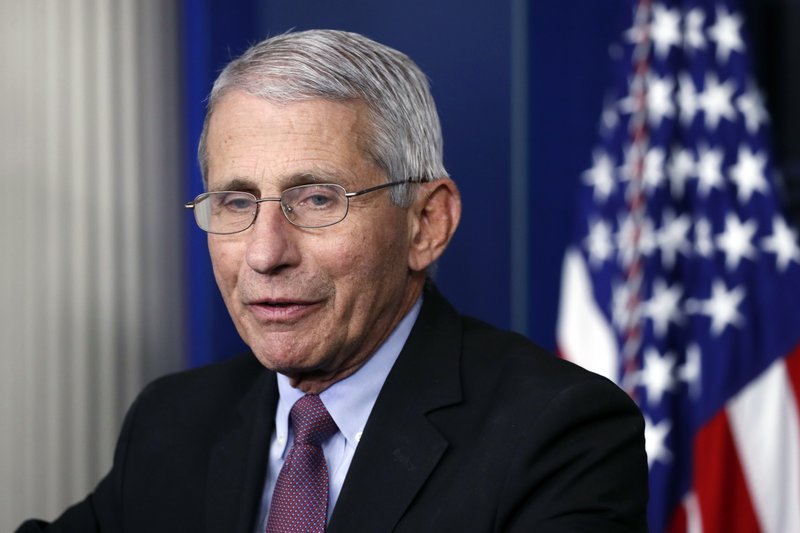
FILE - In this April 22, 2020, file photo, Dr. Anthony Fauci, director of the National Institute of Allergy and Infectious Diseases, speaks about the new coronavirus in the James Brady Press Briefing Room of the White House, in Washington. A Senate hearing on reopening workplaces and schools safely is turning into a teaching moment on the fickle nature of the coronavirus outbreak. Senior health officials, including Fauci, scheduled to testify in person before the Health, Education, Labor and Pensions committee on Tuesday, May 12 will instead appear via video link. (AP Photo/Alex Brandon, File)

WASHINGTON (AP) — Nobody planned it this way, but a Senate hearing on reopening workplaces and schools safely is turning into a teaching moment on the fickle nature of the coronavirus outbreak.
Senior health officials scheduled to testify in person before the Health, Education, Labor and Pensions committee on Tuesday will instead appear via video link after going into self-quarantine, following their exposure to a White House staffer who tested positive for COVID-19. The chairman of the committee, Republican Sen. Lamar Alexander of Tennessee, also put himself in quarantine after an aide tested positive. He’ll participate by video, too.
ADVERTISEMENT
Even before the gavel drops, the hearing offers two takeaways for the rest of the country, said John Auerbach, president of the nonprofit public health group Trust for America’s Health.
“One thing it tells you is that the virus can have an impact in any workplace setting or any community setting,” said Auerbach. “All businesses will find it very challenging to ensure safety when there are cases.”
Another lesson is that the public officials involved are taking the virus seriously by not appearing in person. “They are following the guidelines that they are recommending to others,” said Auerbach. “There is not a double standard.”
Appearing by video link before the committee will be Dr. Anthony Fauci of the National Institutes of Health, considered the government’s leading authority on infectious diseases, and FDA Commissioner Dr. Stephen Hahn and Dr. Robert Redfield, head of the Centers for Disease Control and Prevention. The three are in self-quarantine. They will be joined by Adm. Brett Giroir, the coronavirus “testing czar” at the Department of Health and Human Services.
The main questions for the administration experts revolve around the “Three T’s,” or testing, tracing and treatment. Without widespread testing, state and local officials will be basing decisions to reopen businesses and schools on incomplete data with blind spots lurking. Without the ability to do the painstaking work of tracing the contacts of people infected, unwitting transmission will continue. Without effective treatments, hospitals in a given community could be overwhelmed in a COVID-19 rebound. Ultimately, the goal is a vaccine that would offer widespread protection.
It’s all a colossal work in progress, moving in fits and starts.
The health committee hearing offers a very different setting from the White House coronavirus task force briefings the administration witnesses have all participated in. Senators on the panel are knowledgeable and some have working relationships that go back years with the agencies that the panelists are representing. Most significantly, President Donald Trump will not be controlling the agenda.
ADVERTISEMENT
Eyeing the November elections, Trump has been eager to restart the economy, urging on protesters who oppose their state governors’ stay-at-home orders and expressing his own confidence that the coronavrius will fade away as summer advances and Americans return to work and other pursuits.
The ranking Democrat on the health panel, Sen. Patty Murray of Washington state, doesn’t think the Trump administration is doing nearly enough to keep the virus under control as the economy reopens.
“President Trump is trying to ignore the facts, and ignore the experts who have been clear we are nowhere close to where we need to be to reopen safely,” she said in a statement. Murray will participate via video, but some senators are expected to attend in person.
Alexander is more nuanced about the nation’s readiness. He suggests there’s enough testing to move to reopen the economy, but worries that there won’t be enough to sustain a return to normality.
“It’s enough to do what we need to do today to reopen,” he said on NBC’s “Meet The Press” on Sunday. “But it’s not enough, for example, when 35,000 kids and faculty show up on the University of Tennessee campus in August.”
With more types of tests on the market from different manufacturers and providers, testing is an area that’s become particularly difficult for lay people to navigate.
Until now there has been only one kind of test to detect active infection. Called a PCR test, it detects the genetic material of the virus, and is still considered the most accurate.
Last weekend the FDA approved the first “antigen” test, which looks for protein traces of the virus instead, much like rapid tests for flu or strep throat. Antigen tests aren’t as accurate as PCR tests but promise to be faster and easier to use.
A third kind of test detects past infection, by spotting antibodies in people’s blood. But it’s not yet clear if having those antibodies means someone is immune from another bout of COVID-19.

Monday, May 11, 2020

townhall cartoons today


Coronavirus recovery could be quickest in these cities: report


Cities including Austin, Texas, and Durham, North Carolina, are best poised for a quick coronavirus recovery because of their levels of population density and educational attainment, according to a Moody's Analytics report cited by Yahoo Finance.
"The most dynamic recoveries may well bypass traditional powerhouses and take place instead in areas that [weren't] poised to lead the way in 2020 before everything changed," Adam Kamins, senior regional economist at Moody’s Analytics, wrote according to Yahoo Finance.
Moody's highlighted Austin and Durham as well as San Jose, California; Minneapolis, Minnesota, and Seattle, Washington, in the report looking at the top 100 metropolitan areas in the U.S.
"A key difference between this recovery and the last recovery is the population density," Kamins said, according to Yahoo Finance.

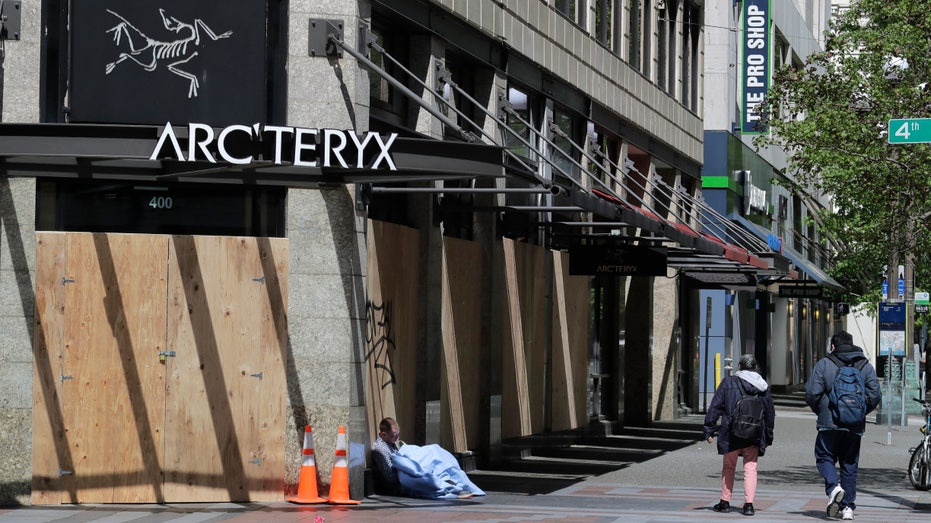
In this May 6, 2020 photo, a person sits near a boarded up and closed Arc'teryx outdoor clothing store in downtown Seattle. (AP Photo/Ted S. Warren)

The report predicted quick recoveries for Durham and Madison, Wisconsin, because of the cities' proximities to university hubs, plus Des Moines, Iowa, and Omaha, Nebraska, in part because their locations will allow for a more spread-out population.

NBC admits Chuck Todd's 'Meet the Press' deceptively edited Barr remarks on Flynn


NBC News' Chuck Todd aired a deceptively edited clip of Attorney General Bill Barr discussing the Michael Flynn case during his "Meet the Press" broadcast on Sunday, prompting the network to concede the mistake hours later -- but there is still no word on whether Todd will apologize on-air.
Asked by CBS News' Catherine Herridge how history would judge the DOJ's decision to move to dismiss the Flynn case, Barr initially responded, laughing: "Well, history is written by the winners, so it largely depends on who's writing the history."
After the brief clip aired, Todd remarked that he was "struck by the cynicism of the answer -- it's a correct answer, but he's the attorney general. He didn't make the case that he was upholding the rule of law. He was almost admitting that, yeah, this was a political job."
In the full clip, which the NBC show did not air, Barr immediately went on to state explicitly that, in fact, he felt the Flynn decision upheld the rule of law.
"I think a fair history would say it was a good decision because it upheld the rule of law," Barr said. "It upheld the standards of the Department of Justice, and it undid what was an injustice."
The Daily Caller's Greg Price had called out the edit earlier Sunday.
"Very disappointed by the deceptive editing/commentary by @ChuckTodd on @MeetThePress on AG Barr’s CBS interview," DOJ spokeswoman Kerri Kupec wrote. "Compare the two transcripts below. Not only did the AG make the case in the VERY answer Chuck says he didn’t, he also did so multiple times throughout the interview."
In response, the "Meet the Press" Twitter account posted: "You’re correct. Earlier today, we inadvertently and inaccurately cut short a video clip of an interview with AG Barr before offering commentary and analysis. The remaining clip included important remarks from the attorney general that we missed, and we regret the error."
"'Inadvertently strikes again!'" tweeted independent journalist Mike Cernovich.
But, the show did not say it would apologize on-air. NBC News did not respond to Fox News' request for information about an on-air apology, either.
"A tweet in no way covers the error," wrote The Federalist's Mollie Hemingway. "A lot of people are rightly angry at @chucktodd for willfully lying about AG Barr’s comments on rule of law — but @JoeNBC also did it days ago. These intentional lies in service of false narratives have gone on for years. Infuriating." (That was a reference, in part, to NBC's Joe Scarborough sharing a debunked, deceptively edited clip of Vice President Mike Pence handling boxes of PPE.)
Blogger Jim Treacher and journalist Tim Pool were among many other influential commentators explicitly seeking an on-air apology.
Late Sunday, President Trump tweeted that "Sleepy Eyes Chuck Todd" should be fired, saying he "knew exactly what he was doing."
On the recommendation of U.S. Attorney Jeff Jensen, who served as an FBI agent for more than a decade, the Justice Department on Thursday moved to drop its case against Flynn. The stunning development came after internal memos were released raising serious questions about the nature of the investigation that led to Flynn’s late 2017 guilty plea of lying to the FBI as his legal fees mounted.
One of the documents was a top official's handwritten memo debating whether the FBI's "goal" was "to get him to lie, so we can prosecute him or get him fired"; other materials showed efforts by anti-Trump FBI agent Peter Strzok to pursue Flynn on increasingly flimsy legal grounds.
The FBI possessed word-for-word transcripts of Flynn's December 2016 conversations with Russia's ambassador, and publicly admitted to reviewing those transcripts and clearing Flynn of any wrongdoing. The FBI's leak to The Washington Post that claimed the FBI cleared Flynn -- which was published just a day before the Flynn White House interview -- may have been an effort to lower his guard.
Both during and before the Jan. 24, 2017 White House interview that led to Flynn's prosecution for one count of lying to the FBI, the bureau acknowledged having those full transcripts, raising the question of why agents would need to ask Flynn about what he said during the calls with Kislyak, except potentially as a pretext to obtain a false statements charge.
Flynn was accused specifically of giving equivocal and evasive answers to FBI agents in the White House during a casual interview concerning those phone calls, but no transcript of the conversation existed. Instead, after-the-fact FBI notes of the interview with Strzok and Joe Pientka were the primary evidence.
Strzok later was removed from then-Special Counsel Robert Mueller's team when his anti-Trump text messages surfaced, and Pientka has been under scrutiny for his role in various Trump probes.
Pientka has been scrubbed from the FBI website after Fox News asked the bureau about him, and several Republican lawmakers have been seeking to question him.

Andy McCarthy: FBI targeted Flynn because they knew he'd uncover illegitimacy of Russia probe


Former federal prosecutor Andy McCarthy told "The Next Revolution" Sunday that the FBI feared former national security adviser Gen. Michael Flynn would uncover illegitimacies surrounding the origins of the Russia probe, and that they "needed to remove him if they wanted to continue this particular investigation."
"I think the best way to look at this is what the FBI and the Obama Administration wanted to do here was really audacious if you think about it in terms of the idea of trying to continue an investigation after a new president has come into power and is in a position to shut down the investigation -- when the president ultimately is the target of the investigation," McCarthy explained.
"In terms of Flynn, it's better to look at him as... something that was obstructing the bureau, rather than their objective in the investigation."
— Andy McCarthy, 'The Next Revolution'
"I think what happened specifically with General Flynn is that while the president brought in a lot of people into his original administration who had various types of expertise, he was kind of short on people with a lot of national security and foreign relations background. General Flynn was an exception," he continued.
The former national security adviser was a "savvy intelligence operator," who posed a threat to the FBI's handling of the investigation focussed on Russian interference in the 2016 election, explained McCarthy.
"He had been the head of the Defense Intelligence Agency, he knew how the FBI worked in conjunction with the intelligence community and it is inconceivable to me, if you wanted to continue an investigation of the president during the president's administration, that they could have pulled that off with a sophisticated intelligence actor being the national security advisor and being loyal to the president," McCarthy, a Fox News contributor explained.
The House Intelligence Committee on Thursday released dozens of transcripts of interviews from its Russia probe in 2017 and 2018 following demands by Republicans to make the records public -- after the content was cleared for release by the intelligence community.
The transcripts included testimony from many officials who said they were unaware of evidence showing coordination between the Trump campaign team and the Russians.
"He [Flynn] would necessarily have found out that they had investigated the Trump campaign, he would've found out for example that they were in the FISA court conducting surveillance on Trump campaign advisors," McCarthy added, "and he would've been able to figure out pretty easily that President Trump was the ultimate quarry that they had in connection with the investigation."
The Justice Department has moved to drop its case against Flynn last week after a series of bombshell documents were released exposing an alleged set-up in which top bureau officials indicated that their "goal" was to "to get him [Flynn] to lie, so we can prosecute him or get him fired."
"I think in terms of Flynn, it's better to look at him as kind of something that was obstructing the bureau rather than their objective in the investigation," McCarthy said. "They needed to remove him if they wanted to continue this particular investigation."

Trump increases attack against Obama with ‘Obamagate’ tweet


President Trump on Sunday intensified his criticism of former President Obama by tying him to the Michael Flynn investigation and blasting his predecessor's recent criticism aimed at his administration's coronavirus response.
Last week, Attorney General William Barr’s Justice Department dismissed the case against Flynn, Trump's first national  security adviser, which was seen as the key prosecution from Robert Mueller’s investigation into the Trump campaign.
Trump, along with other Republicans, seized on the decision and framed it as an example of a Democrat-manufactured plot to remove him from office.
Trump retweeted  Eli Lake, a columnist at  Bloomberg, who said he has been reviewing the interview transcripts that were recently released in the collusion investigation. Lake wrote, “It’s now clear why every Republican on [Rep. Adam Schiff’s] committee in 2019 called for his resignation. He knew the closed door witnesses didn’t support his innuendo and fakery on Russia collusion.”
Sidney Powell, one of Flynn’s lawyers, told Fox News’ “Sunday Morning Futures,” that FBI agents did their best to hide their investigation and attempted to entrap Flynn. She mentioned a meeting on Jan. 5, 2017 at the White House that included Obama, then-FBI Director James Comey, then-Director of  National Intelligence James Clapper and former CIA Director John Brennan.
Powell said the “whole thing was orchestrated and set up within the FBI, Clapper, Brennan and in the Oval Office meeting that day with President  Obama,” she told Maria Bartiromo, the anchor.
Bartiromo asked Powell if she believed the scandal reached up to Obama, and Powell responded, “Absolutely.”
Trump later tweeted, “OBAMAGATE,” indicating that he believes that Obama worked to undermine his presidency.
Obama on Friday told supporters that with regards to  Flynn's case, there “is no precedent that anybody can find for someone who has been charged with perjury just getting off scot-free. That’s the kind of stuff where you begin to get worried that basic — not just institutional norms — but our basic understanding of rule of law is at risk. And when you start moving in those directions, it can accelerate pretty quickly as we’ve seen in other places.”
Obama’s criticism of the DOJ has been echoed by fellow Democrats, who have called out what they see as Trump’s influence over Barr. Rep. Jerrold Nadler, the House Judiciary chairman, called the decision to drop the charges against Flynn “outrageous.”
“The evidence against General Flynn is s overwhelming. He pleaded guilty to lying to investigators. And now a politicized and thoroughly corrupt Department of Justice is going to let the president’s crony simply walk away,” he said in a statement.
Flynn pleaded guilty to lying to the FBI about two separate contacts he had with a former Russian Ambassador Sergey Kislyak.
Rep. Jim Jordan, the ranking member of the House Oversight Committee, told Fox News last week that  Comey displayed “arrogance” and “ego” with the way he spoke about the Flynn case. The department said its continued prosecution of Flynn would “not serve the interests of justice.”
Trump said that Flynn was innocent and was targeted in an attempt to take down his presidency. He told reporters that he was unaware that the DOJ was going to drop its case.
“I felt it was going to happen just by watching and seeing, like everybody else does. He was an innocent man. He is a great gentleman. He was targeted by the Obama administration and he was targeted in order to try and take down a president,” he said.
Trump continued, “What they’ve done is a disgrace and I hope a big price is going to be paid. A big price should be paid. There’s never been anything like this in the history of our country. What they did, what the Obama administration did, is unprecedented. It’s never happened. Never happened. A thing like this has never happened.”
Andrew McCarthy, a former federal prosecutor, told Fox News’ “The Next Revolution”  Sunday that the FBI likely feared that Flynn would uncover illegitimacies surrounding the origin of the Russia probe.
"I think the best way to look at this is what the FBI and the Obama Administration wanted to do here was really audacious if you think about it in terms of the idea of trying to continue an investigation after a new president has come into power and is in a position to shut down the investigation -- when the president ultimately is the target of the investigation," McCarthy said.
Obama told 3,000 members of the Obama Alumni Association that the Trump administration was woefully inept in dealing with the coronavirus outbreak.
“It would have been bad even with the best of governments. It has been an absolute chaotic disaster when that mindset — of ‘what’s in it for me’ and ‘to heck with everybody else’ — when that mindset is operationalized in our government,” he said.
Trump has insisted that his administration was correct in banning flights from China early on in the outbreak, despite being condemned in some segments of the media.
Larry Kudlow,  his national economic council director, told ABC News’ “This Week with George Stephanopolous” that he did not want to engage in a political back and forth with the former president,  but said Trump has worked well in incorporating the private sector and parts of the government in the response.
“I don’t understand what President Obama is saying. It just sounds so darn political to me. Look, what we have done may not be 100 percent perfect. These things happen once every 100 years,” Kudlow said.
Fox News' Joshua Nelson and the Associated Press contributed to this report

CartoonDems