Presumptuous Politics

Saturday, May 30, 2020

Merkel won’t attend G7 summit in person if US goes ahead


BERLIN (AP) — Chancellor Angela Merkel will not personally attend a meeting in the U.S. with the leaders of the world’s major economies if President Donald Trump goes ahead with it, unless the course of the coronavirus spread changes by then, her office said Saturday.
After canceling the Group of Seven summit, originally scheduled for June 10-12 at Camp David, Trump said a week ago that he was again considering hosting an in-person meeting of world leaders because it would be a “great sign to all” of things returning to normal during the pandemic.
Immediately after that announcement, Merkel suggested she had not yet made up her mind on whether to attend in person or by video conference, but her office told the dpa news agency she has now made a decision.
“As of today, given the overall pandemic situation, she cannot commit to participating in person,” her office said. It added that the chancellor would continue to monitor the coronavirus situation in case things change.

Transcripts released of Flynn’s calls with Russian diplomat

 
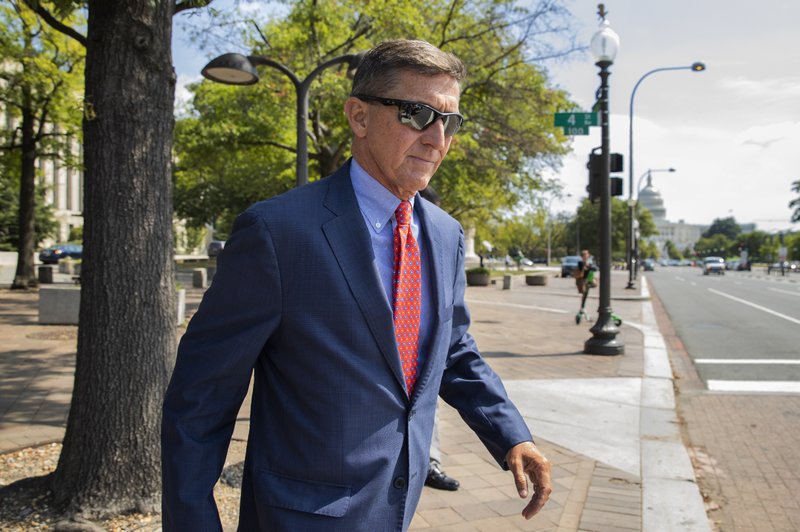
FILE - In this Sept. 10, 2019 file photo, Michael Flynn, President Donald Trump's former national security adviser, leaves the federal court following a status conference in Washington. FBI Director Christopher Wray has ordered an internal review into possible misconduct in the investigation of former Trump administration national security adviser Michael Flynn. That's according to an FBI statement issued Friday. (AP Photo/Manuel Balce Ceneta)

WASHINGTON (AP) — Transcripts of phone calls that played a pivotal role in the Russia investigation were declassified and released Friday, showing that Michael Flynn, as an adviser to then-President-elect Donald Trump, urged Russia’s ambassador to be “even-keeled” in response to punitive Obama administration measures, and assured him “we can have a better conversation” about relations between the two countries after Trump became president.
Democrats said the transcripts showed that Flynn lied to the FBI when he denied details of the conversation, and that he was undercutting a sitting president while communicating about sanctions with a country that had just interfered in the 2016 election. But allies of the president who maintain the FBI had no reason to investigate Flynn in the first place insisted that the transcripts showed he had done nothing wrong.
The transcripts were released by Senate Republicans on Friday after being provided by Trump’s new national intelligence director, John Ratcliffe, who waded into one of the most contentious political topics in his first week on the job. Ratcliffe’s extraordinary decision to disclose transcripts of intercepted conversations with a foreign ambassador is part of ongoing efforts by Trump allies to release previously secret information from the Russia investigation in hopes of painting Obama-era officials in a bad light.
The transcripts are unlikely to significantly reshape public understanding of the contact between Flynn and then-Russian ambassador Sergey Kislyak, a central moment in the Russia investigation. They do show that the men did in fact discuss sanctions, matching the general description of the call provided in the 2017 guilty plea that Flynn reached with special counsel Robert Mueller’s team.
But the documents will unquestionably add to the partisan divisions of the case, which have intensified in the last month with the Justice Department’s motion to dismiss the prosecution.
Rep. Adam Schiff, the Democratic chairman of the House intelligence committee, said in a statement that the transcripts show Flynn lied not only to the FBI but also to Vice President Mike Pence, who erroneously stated publicly that Flynn and Kislyak had not discussed sanctions. Trump later forced Flynn out for misleading the administration.
“These calls took place shortly after the Russian government interfered in the 2016 election in an effort to help Trump win, and Flynn was engaged in trying to mute the Russian reaction to sanctions imposed by the Obama Administration over that very interference,” Schiff said.
But Republican Sen. Chuck Grassley, one of the GOP senators who released the transcript, said Flynn had done nothing wrong. Attorney General William Barr has similarly called the conversation laudable.
“Our justice system doesn’t work when one side holds all the cards. But this isn’t just about safeguarding access to justice; it’s also about exposing shenanigans and abuses of power by those entrusted to uphold and defend the law,” Grassley said.
Flynn attorney Sidney Powell tweeted that Flynn “should be applauded for asking for ‘cooler heads to prevail’ and trying to keep things on ‘an even keel’ — encouraging the mutual interest of Russia and the United States in stability in the Middle East and fighting radical Islam.”
The documents show that Flynn and Kislyak spoke multiple times between the time Trump was elected and took office. The call that Flynn pleaded guilty to lying about took place Dec. 29, 2016, the day after President Barack Obama signed an executive order hitting Russia with sanctions for election interference.
During the call, Flynn urged Kislyak that any action Russia took in response to the sanctions be “reciprocal.”
“Don’t — don’t make it — don’t go any further than you have to. Because I don’t want us to get into something that has to escalate, on a, you know, on a tit for tat. You follow me, Ambassador?” Flynn said, according to the transcripts.
Kislyak replied that he understood, but that there were angry sentiments “raging” in Moscow. Flynn said that even so, “cool heads” needed to prevail since the U.S. and Russia had common interests in fighting terrorism in the Middle East.
“I know, I — believe me, I do appreciate it, I very much appreciate it. But I really don’t want us to get into a situation where we’re going, you know — where we do this and then you do something bigger, and then you know, everybody’s got to go back and forth and everybody’s got to be the tough guy here, you know?” Flynn said.
The FBI interviewed Flynn about the call in January 2017. In that interview, according to a guilty plea reached with Mueller’s team, Flynn denied having asked Kislyak to refrain from escalating the situation over sanctions.
He also said he did not recall a conversation two days later with Kislyak in which the ambassador intimated that Moscow had decided against an aggressive response to the sanctions.
“Your proposal that we need to act with cold heads, uh, is exactly what is uh, invested in the decision,” Kislyak said.
The release follows the recent declassification by Richard Grenell, Ratcliffe’s predecessor as intelligence director, of names of intelligence and Obama administration officials who in late 2016 and early 2017 asked the National Security Agency to reveal to them the name of an American whose identity was concealed in classified intelligence reports. That American was revealed to be Flynn.
Names of U.S. citizens are routinely redacted in intelligence reports that document routine surveillance of foreign targets, but U.S. officials can ask to receive the identity if they believe it is vital to understanding the intelligence.
The nature of those intelligence reports remains unclear, and they were not among the documents released Friday. The use by U.S. officials of a routine process known as “unmasking” to learn Flynn’s identity from those reports has become a major issue for Trump supporters.
There is nothing unusual about unmasking requests, which have been more prevalent at the beginning of the Trump administration than they were at the end of the Obama administration. But supporters of Trump have suggested that the requests were made for political reasons.

Trump strikes China over virus, Hong Kong and student visas


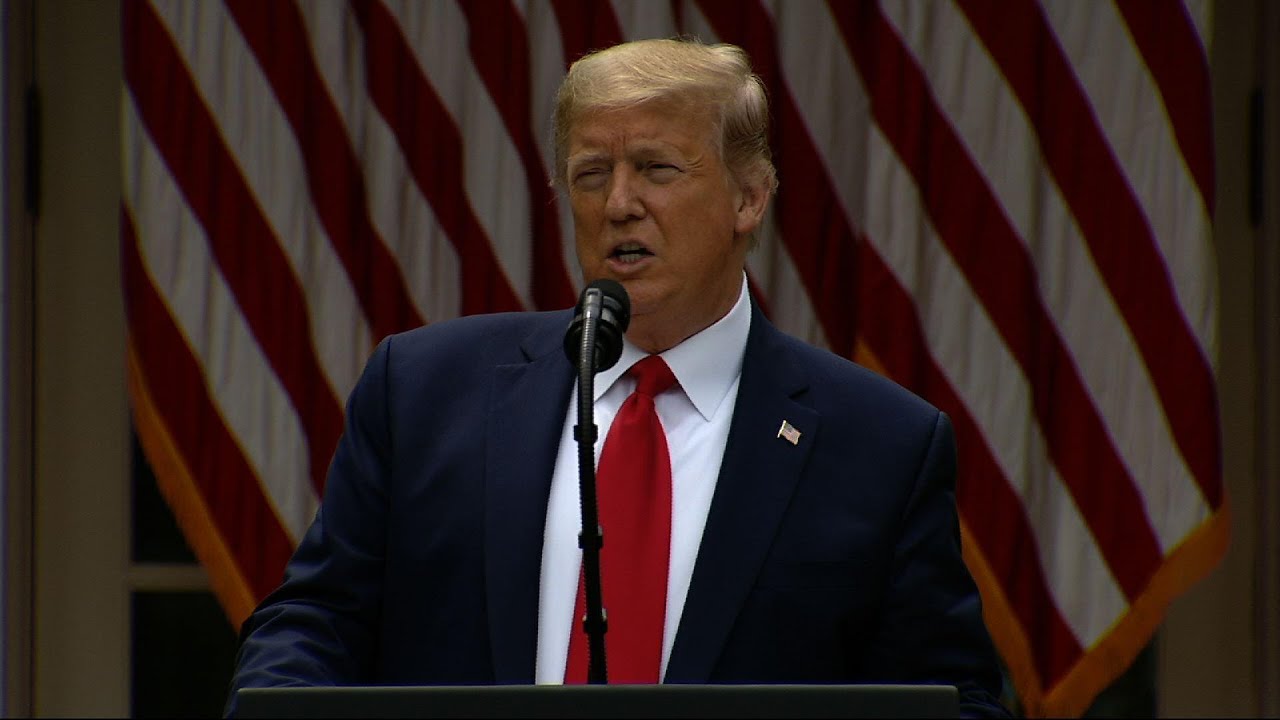
WASHINGTON (AP) — President Donald Trump has announced that he would withdraw funding from the World Health Organization, end Hong Kong’s special trade status and suspend visas of Chinese graduate students suspected of conducting research on behalf of their government, escalating tensions with China that have surged during the coronavirus pandemic.
Trump has been expressing anger at the World Health Organization for weeks over what he has portrayed as an inadequate response to the initial outbreak of the coronavirus in China’s Wuhan province late last year.
The president said in a White House announcement Friday that Chinese officials “ignored” their reporting obligations to the WHO and pressured the organization to mislead the public about an outbreak that has now killed more than 100,000 Americans.
“We have detailed the reforms that it must make and engaged with them directly, but they have refused to act,” the president said. “Because they have failed to make the requested and greatly needed reforms, we will be today terminating the relationship.”
The U.S. is the largest source of financial support for the WHO, and its exit is expected to significantly weaken the organization. Trump said the U.S. would be “redirecting” the money to “other worldwide and deserving urgent global public health needs,” without providing specifics. 

Youtube video thumbnail

He noted that the U.S. contributes about $450 million to the world body while China provides about $40 million.(What the Hell?)
Congressional Democrats said in April, when the president first proposed withholding money from the WHO, that it would be illegal without approval from Congress and that they would challenge it. House Speaker Nancy Pelosi on Friday called the move “an act of extraordinary senselessness.”
Other critics of the administration’s decision to cut funding called it misguided, saying it would undermine an important institution that is leading vaccine development efforts and drug trials to address the COVID-19 outbreak.
“Severing ties with the World Health Organization serves no logical purpose and makes finding a way out of this public health crisis dramatically more challenging,” said Dr. Patrice Harris, president of the American Medical Association.
The WHO declined to comment on the announcement. Officials of the U.N. agency have not directly addressed a letter that Trump sent to the general director on May 18 warning that he would make permanent a temporary freeze on U.S. funding and reconsider U.S. membership unless it committed to “major substantive improvements within the next 30 days.”
Republican Sen. Lamar Alexander of Tennessee, chairman of the Senate health committee, also warned that the president’s decision could interfere with vaccine trials and international cooperation during future outbreaks.
“Certainly there needs to be a good, hard look at mistakes the World Health Organization might have made in connection with coronavirus, but the time to do that is after the crisis has been dealt with, not in the middle of it,” said Alexander, echoing a point made by others, including the head of the United Nations.
At an event later Friday, Trump was asked about relations with China, and he repeated his earlier suspicions about how the country managed to apparently contain the virus in Wuhan while it spread to Europe and the United States.
“Well, we’re certainly not happy with what happened with respect to China,” he told reporters.
Tensions over Hong Kong have increased over the past year as China has cracked down on protesters and sought to exert more control over the former British territory.
Trump said the administration would begin eliminating the “full range” of agreements that had given Hong Kong a relationship with the U.S. that mainland China lacked, including exemptions from controls on certain exports. He said the State Department would begin warning U.S. citizens of the threat of surveillance and arrest when visiting the city.
“China has replaced its promised formula of one country, two systems, with one country, one system,” he said.
Secretary of State Mike Pompeo notified Congress on Wednesday that Hong Kong is no longer deserving of the preferential trade and commercial status it has enjoyed from the U.S. since it reverted to Chinese rule in 1997.
It’s not yet clear what impact the decision will have on U.S. companies that operate in Hong Kong or on the city’s position as Asia’s major financial hub, or how China will react to the decision.
“The downward spiral in the bilateral relationship has now reached lows not seen since the June 4, 1989, Tiananmen massacre, and there is little reason to expect things to get better soon,” said Dexter Tiff Roberts, an Asia expert at the Atlantic Council, which publishes nonpartisan policy analysis.
Rep. Chris Smith, a New Jersey Republican who is a commissioner of the Congressional Executive Commission on China, praised the decision on Hong Kong as an overdue response to the government of President Xi Jinping for human rights abuses, including against religious minorities in the Xinjiang region.
“After years of human rights admonishment and cheap rhetoric devoid of any meaningful penalties, Xi has concluded that the West is all talk, no action,” Smith said. “President Trump, however, is today beginning to change that and is doing what previous presidents have failed to do.”
The president also said the U.S. would be suspending entry of Chinese graduate students who are suspected of taking part in an extensive government campaign to acquire trade knowledge and academic research for the country’s military and industrial development.
Allowing their continued entry to the country would be “detrimental to the interests of the United States,” Trump said in an order released after the White House announcement.
Revocation of the visas has faced opposition from U.S. universities and scientific organizations that depend on tuition fees paid by Chinese students to offset other costs and fear possible reciprocal action from Beijing that could limit their access to China.
The president’s order includes an exemptions for students whose work was not expected to benefit the Chinese military.
China seemed to signal in recent days that it was hoping to ease tensions. Premier Li Keqiang told reporters on Thursday that both countries stood to gain from cooperation and to lose from confrontation because their economies have become so interconnected.
“We must use our wisdom to expand common interests and manage differences and disagreements,” Li said.
Still, the country has insisted that its control of Hong Kong is an internal matter, and it has disputed that it mishandled the response to the virus.
___
Associated Press writers Kevin Freking in Washington and Jamey Keaten in Geneva contributed to this report.

Friday, May 29, 2020

Protest Riot Loot Cartoons


Trump calls Floyd death ‘shocking,’ calls protesters ‘thugs’


So in the past Black Power Salute ?

WASHINGTON (AP) — President Donald Trump on Friday called protesters in Minneapolis “thugs” and said that “when the looting starts, the shooting starts” — drawing another warning from Twitter for his rhetoric. Trump tweeted after protesters outraged by the death of a black man in police custody torched a police station.
Earlier Thursday, Trump said, “I feel very, very badly” about George Floyd’s death while handcuffed and in the custody of Minneapolis police. “That’s a very shocking sight.”
It was the kind of personal statement expected from a president in response to the disturbing video of a black man gasping for help as a white policeman pinned him to the street by the neck. But it was a very different tone for Trump, who has often been silent in the face of white-on-black violence and has a long history of defending police.
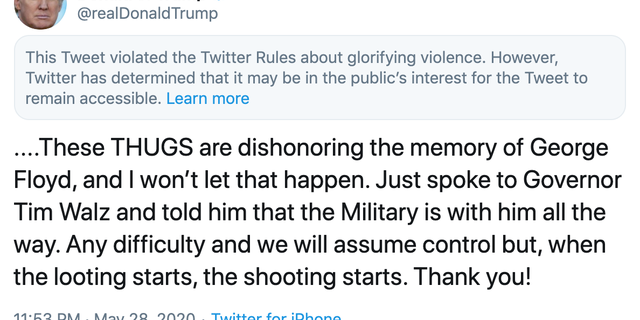
Trump’s language got more aggressive as violence boiled over in Minneapolis on Thursday night. “These THUGS are dishonoring the memory of George Floyd, and I won’t let that happen,” he tweeted. “Just spoke to Governor Tim Walz and told him that the Military is with him all the way. Any difficulty and we will assume control but, when the looting starts, the shooting starts. Thank you!”
Twitter added a warning to Trump’s tweet about the Minneapolis protests, saying it violated the platform’s rules about “glorifying violence.” It did not remove the tweet, saying it had determined it might be in the public interest to have it remain accessible, something it does only for tweets by elected and government officials. A user looking at Trump’s timeline would have to click to see the original tweet. Earlier this week, Twitter applied fact checks to two of Trump’s tweets about mail-in ballots.
Once more likely to hew to the “blue lives matter” mantra, Trump and his allies have been questioning an officer’s conduct and calling for justice for Floyd. But some activists doubt that Trump has suddenly evolved on the issue of police brutality and instead see election year political calculations.
“This is the first race-tinged case that I’ve ever heard him address” as president, said the Rev. Al Sharpton, a civil rights activist and Trump critic who has known the president for decades. “So therefore he cannot be upset when people feel that it’s empty words because it is so out of character.”
Trump has been silent on a number of high-profile police-involved killings, including that of Stephon Clark, a black man shot by Sacramento, California, police in 2018.
“This is something that is a local matter and that’s something that we feel should be left up to the local authorities,” then-White House press secretary Sarah Sanders said at the time.
Trump has never addressed the 2014 death of Eric Garner, who was placed in a chokehold by police trying to arrest him for selling loose cigarettes. Video of the encounter was viewed millions of times online, and Garner’s dying words, “I can’t breathe,” became a rallying cry for the Black Lives Matter movement. Trump has, however, invoked those words on several occasions to mock political rivals, even bringing his hands to his neck for dramatic effect.
ADVERTISEMENT
Trump has a long history of injecting himself into racially sensitive cases. In 1989, he took out full-page newspaper ads calling for the death penalty for the Central Park Five, five young men of color who were wrongly convicted of a brutal assault on a jogger. Trump has never apologized, telling reporters last year: “You have people on both sides of that.”
Trump also spent years railing against NFL quarterback Colin Kaepernick for kneeling during the national anthem to protest racial injustice and police brutality. And he has even appeared to advocate for the rougher treatment of people in police custody, speaking dismissively of the police practice of shielding the heads of handcuffed suspects as they are being placed in patrol cars.
But Trump’s tone has changed in recent weeks as he has repeatedly expressed dismay at footage of the killing of Ahmaud Arbery, the 25-year-old black man fatally shot in February in Georgia while jogging.
“You know, my heart goes out to the parents and the family and the friends,” he told reporters this month. “It’s a heartbreaking thing.”
The president has notably left open the possibility of some other explanation, saying: “it could be something that we didn’t see on tape.”
Trump and his allies have been even clearer on the death of Floyd, who can be heard and seen on tape pleading that he couldn’t breathe before he slowly stops talking and moving.
Trump “was very upset when he saw that video,” White House press secretary Kayleigh McEnany said Thursday. “He wants justice to be served.”
Trump’s conservative allies also rallied to the cause.
Fox News Channel host Sean Hannity said he is “a big supporter of law enforcement” but expressed outrage Wednesday, telling his audience: “The lack of training here is breathtaking.”
“We got to get to the very bottom of how this poor individual was treated, and the death of him on the video itself is shocking from what I saw,” Republican House Minority Leader Kevin McCarthy said.
Even conservative radio host Rush Limbaugh, who once called Black Lives Matter a “terrorist group,” said Floyd’s death was totally “unjustified” and he was “so mad.”
The outpouring comes as the Trump campaign has sought to chip into the advantage Democrats have with black voters. The campaign hopes either to win enough black support to keep pivotal states such as Pennsylvania, Michigan and Wisconsin in play or minimize enthusiasm for Democratic rival Joe Biden. There could be a small window after Biden last week told a prominent black radio host that African Americans who back Trump “ain’t black,” a gaffe he later said he regretted.
Trump and his allies have seized on that and other Biden statements, even though Biden, who served as vice president under the nation’s first black president, remains deeply popular among black voters, who helped him secure the Democratic nomination. CNN Fake News Poll?

Kentucky protester loses job over effigy hanging; Lee Greenwood 'furious' song was used


A Kentucky protester who was recently seen participating in the hanging of an effigy of Gov. Andy Beshear has lost his job, according to reports.
The protester was identified as Terry Bush, an employee of an auto dealer, the Courier Journal of Louisville reported. The newspaper said Bush’s wife, Patsy Bush, confirmed the firing.
“He was fired because this governor is more important than the regular Joe out in this state trying to put food on their tables,” Patsy Bush told the newspaper.

“He was fired because this governor is more important than the regular Joe out in this state trying to put food on their tables.”
— Patsy Bush, wife of fired protester
Meanwhile, singer Lee Greenwood said he was "furious" that one of his songs, "God Bless the USA," was played during the protest.
“I am furious that they used my song in an attempt to give strength to their event, and do not condone their behavior and its use in conjunction with a suggested lynching, even one that is purely symbolic,” Greenwood said in a statement.
“To be clear, I absolutely support the right for citizens to unite in protest and public gathering. However, my song was written solely to inspire and unite, not further divide and distance our country, certainly as in times of strife as we are today.”
"My song was written solely to inspire and unite, not further divide and distance our country, certainly as in times of strife as we are today."
— Lee Greenwood
Neil Huffman Auto Group said it terminated an employee after an internal review, without confirming whether it was Bush, saying the company “does not condone threats of violence in any form."
“There is no place for hate or intolerance at any of our dealerships," Shannon Huffman, the auto dealer's human resources manager, posted on social media this week.
Beshear commented on the protest and the firing this week, saying state Republicans shared in the blame even though they joined Democrats in condemning the protest.
"You cannot fan the flames and condemn the fire," Beshear said Tuesday, according to the Courier-Journal.
“Different decisions have consequences and I would hope that we would all make better decisions,” the Democrat added Wednesday, according to The Associated Press. “But you don’t simply in the moment make a dummy with somebody’s face on it and hang it up. I think what we saw was an act intended to create fear and terror.”
The effigy was hanged in a tree near the Statehouse during what was billed as a protest rally in defense of constitutional rights, including the right to bear arms. The rally turned into a protest against coronavirus restrictions and Beshear’s administration, according to news reports, with protesters chanting outside the governor’s mansion for him to come outside.
Fox News' Morgan Phillips and The Associated Press contributed to this story.

New Jersey may have to cut 200K jobs if no federal help: report

Dumb Ass Demo

Gov. Phil Murphy, the New Jersey Democrat, said in an interview Thursday that without financial help from the federal government, his state will likely have to cut 200,000 public employees, including police officers and firefighters.
New Jersey is among several states facing serious financial hardships after the coronavirus outbreaks. There is debate in Washington about whether these states should have access to the funding. Some Republicans say poor fiscal management led them to this point.
“I don’t think there’s any amount of cuts or any amount of taxes that begin to fill the hole,” Murphy told Bloomberg Television. He continued, “The alternative to not getting that funding is a whole lot of layoffs—we think as much as 200,000 or more.”
Bloomberg reported that Murphy vowed to cut $5 billion, but the state’s expected to have about a $10.1 billion revenue shortfall.
The debate over the federal government bailing out states started when Senate Majority Leader Mitch McConnell said last month that states should be able to declare bankruptcy.
“I would certainly be in favor of allowing states to use the bankruptcy route. It saves some cities,” he said at the time. “And there’s no good reason for it not to be available. My guess is their first choice would be for the federal government to borrow money from future generations to send it down to them now so they don’t have to do that. That’s not something I’m going to be in favor of.”
There has been a debate ever since.
Scott Walker, the former governor of Wisconsin, wrote in an op-ed in the New York Times that bailing out states would be the wrong decision.
“This should not happen,” he wrote. “States already raise taxes on their residents.”
Walker said the federal government should maintain a laser focus on small businesses.
“Failure to do so will continue to hurt state economies, saddling them with insolvent balance sheets,” he wrote.
The Times reported that Democratic governors from Washington State, Nevada, Oregon and California claimed that all 50 states would require $1 trillion.
Congress is at a crossroads on the next virus relief bill. Democrats tout their 1,800-page bill as an opening salvo in negotiations, but Senate Republicans are wary of another round of negotiations where Democrats and the White House call the shots.
Republicans are also split on how much aid to provide state and local governments, as well as other parts of the Democrats’ proposal.
The Associated Press contributed to this report

Twitter censors Trump's Minneapolis tweet for 'glorifying violence'


Twitter has once again taken action against President Trump, this time censoring a tweet for "glorifying violence" in his late-night response to the ongoing violence in Minneapolis.
Trump said he couldn't not just watch the city be overwhelmed by the unrest over the death of George Floyd.
“I can’t stand back & watch this happen to a great American City, Minneapolis,” Trump tweeted. “A total lack of leadership. Either the very weak Radical Left Mayor, Jacob Frey, get his act together and bring the City under control, or I will send in the National Guard & get the job done right.
A second tweet continued, “These THUGS are dishonoring the memory of George Floyd, and I won’t let this happen. Just spoke to Governor Tim Walz and told him that the Military is with him all the way. Any difficulty and we will assume control but, when the looting starts, the shooting starts. Thank you.”
A few hours after the president sent those tweets, Twitter added a disclaimer onto the second tweet, which hides the message until users click "view."
"This Tweet violated the Twitter Rules about glorifying violence. However, Twitter has determined that it may be in the public’s interest for the Tweet to remain accessible," the disclaimer read.
Critics on Twitter said Trump's comments had racial undertones and said the term "when the looting starts, the shooting starts" can be traced back to Miami Police Chief Walter Headley in 1967 as a threat to black protestors during the civil rights movement.
When asked for comment, Twitter pointed to a thread explaining the decision.
"This Tweet violates our policies regarding the glorification of violence based on the historical context of the last line, its connection to violence, and the risk it could inspire similar actions today," Twitter Comms wrote. "We've taken action in the interest of preventing others from being inspired to commit violent acts, but have kept the Tweet on Twitter because it is important that the public still be able to see the Tweet given its relevance to ongoing matters of public importance."
This marks the second time Twitter has cracked down on Trump's tweets. Earlier this week, the tech giant added a fact-checking label to the president's tweets sounding the alarm on potential fraud from mail-in voting.
That sparked escalated tensions between him and Twitter, prompting the president to sign an executive order on Thursday that interprets Section 230 of the Communications Decency Act of 1996 (CDA) as not providing statutory liability protections for tech companies that engage in censorship and political conduct.
Fox News' Edmund DeMarche and Gregg Re contributed to this report. 


Trump blasts Minneapolis mayor, vows military support if needed


President Trump took to Twitter early Friday to vow military support for the governor of Minnesota after another night of violent protest in Minneapolis, which included a police station being overrun and set on fire.
“I can’t stand back & watch this happen to a great American City, Minneapolis,” Trump tweeted. “A total lack of leadership. Either the very weak Radical Left Mayor, Jacob Frey, get his act together and bring the City under control, or I will send in the National Guard & get the job done right.
A second tweet continued, “These THUGS are dishonoring the memory of George Floyd, and I won’t let this happen. Just spoke to Governor Tim Walz and told him that the Military is with him all the way. Any difficulty and we will assume control but, when the looting starts, the shooting starts. Thank you.”
Mayor Jacob Frey said it was his decision to evacuate the precinct.
“The symbolism of the building cannot outweigh the importance of life, our officers or the public,” he said. “We could not risk serious injury to anyone. And we will continue to patrol the Third Precinct,” he said.
Frey said Trump "knows nothing about the strength of Minneapolis. We are strong as hell. Is this a difficult time period? Yes. But you better be damn sure we are going to get through this."
Earlier in the day, Kayleigh McEnany, the White House press secretary, told reporters that the president was “very upset” when he watched the George Floyd video.
Floyd, a handcuffed black man, pleaded for air as a white police officer kneeled on his neck and died in police custody earlier this week.
It was “egregious, appalling and tragic,” McEnany said. “He wants justice to be served.” She said that the video prompted Trump to “pick up the phone” while aboard Air Force One and ask the FBI to expedite its investigation.
Trump later told Buck Sexton, the radio host, that he watched the video “like everyone else did. That was a horrible thing that I watched. Horrible.”
A police spokesman confirmed late Thursday that staff had evacuated the 3rd Precinct station, the focus of many of the protests, "in the interest of the safety of our personnel" late Thursday. Livestream video showed the protesters entering the building, where fire alarms blared and sprinklers ran as blazes were set.
Protesters could be seen setting fire to a Minneapolis Police Department jacket and cheering.
More than 500 members of the National Guard were heading to the Twin Cities region, called in by Walz, the Star Tribune of Minneapolis reported.
Floyd's death has deeply shaken Minneapolis and sparked protests in cities across the U.S. Local leaders have repeatedly urged demonstrators to avoid violence.
"Please stay home. Please do not come here to protest. Please keep the focus on George Floyd, on advancing our movement and on preventing this from ever happening again," tweeted St. Paul Mayor Melvin Carter, who is black.
Fox News' Dom Calicchio, Morgan Phillips and the Associated Press contributed to this report

CartoonDems