Presumptuous Politics

Friday, June 12, 2020

Hitler Burns Books Cartoons (Destroying History)

Starting Again In America.
If you don't like the history just destroy it.

Historical figures reassessed around globe after Floyd death


The rapidly unfolding movement to pull down Confederate monuments around the U.S. in the wake of George Floyd’s death at the hands of police has extended to statues of slave traders, imperialists, conquerors and explorers around the world, including Christopher Columbus, Cecil Rhodes and Belgium’s King Leopold II.
Protests and, in some cases, acts of vandalism have taken place in such cities as Boston; New York; Paris; Brussels; and Oxford, England, in an intense re-examination of racial injustices over the centuries. Scholars are divided over whether the campaign amounts to erasing history or updating it.
New Zealand’s fourth-largest city removed a bronze statue of the British naval officer Capt. John Hamilton, the city’s namesake, on Friday, a day after a Maori tribe asked for the statue be taken down and one Maori elder threatened to tear it down himself. The city of Hamilton said it was clear the statue of the man accused of killing indigenous Maori people in the 1860s would be vandalized. The city has no plans to change its name.
At the University of Oxford, protesters have stepped up their longtime push to remove a statue of Rhodes, the Victorian imperialist who served as prime minister of the Cape Colony in southern Africa. He made a fortune from gold and diamonds on the backs of miners who labored in brutal conditions. 

Youtube video thumbnail

Oxford’s vice chancellor Louise Richardson, in an interview with the BBC, balked at the idea.
“We need to confront our past,” she said. “My own view on this is that hiding our history is not the route to enlightenment.”
Near Santa Fe, New Mexico, activists are calling for the removal of a statue of Don Juan de Oñate, a 16th-century Spanish conquistador revered as a Hispanic founding father and reviled for brutality against Native Americans, including an order to cut off the feet of two dozen people. Vandals sawed off the statue’s right foot in the 1990s.
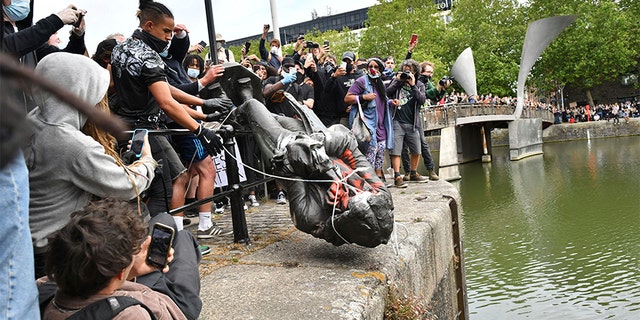
In Bristol, England, demonstrators over the weekend toppled a statue of 17th-century slave trader Edward Colston and threw it in the harbor. City authorities said it will be put in a museum.
Across Belgium, statues of Leopold II have been defaced in half a dozen cities because of the king’s brutal rule over the Congo, where more than a century ago he forced multitudes into slavery to extract rubber, ivory and other resources for his own profit. Experts say he left as many as 10 million dead.
“The Germans would not get it into their head to erect statues of Hitler and cheer them,” said Mireille-Tsheusi Robert, an activist in Congo who wants Leopold statues removed from Belgian cities. “For us, Leopold has committed a genocide.”
In the U.S., the May 25 death of Floyd, a black man who died after a white Minneapolis police officer pressed a knee to his neck, has led to an all-out effort to remove symbols of the Confederacy and slavery.
The Navy, the Marines and NASCAR have embraced bans on the display of the Confederate flag, and statues of rebel heroes across the South have been vandalized or taken down, either by protesters or local authorities.
On Wednesday night, protesters pulled down a century-old statue of Confederate President Jefferson Davis in Richmond, Virginia, the former capital of the Confederacy. The 8-foot (2.4-meter) bronze figure had already been targeted for removal by city leaders, but the crowd took matters into its own hands. No immediate arrests were made.
It stood a few blocks away from a towering, 61-foot-high (18.5-meter-high) equestrian statue of Gen. Robert E. Lee, the most revered of all Confederate leaders. Democratic Gov. Ralph Northam last week ordered its removal, but a judge blocked such action for now.
The spokesman for the Virginia division of the Sons of Confederate Veterans, B. Frank Earnest, condemned the toppling of “public works of art” and likened losing the Confederate statues to losing a family member.
Richmond Mayor Levar Stoney, who has proposed dismantling all Confederate statues in the city, asked protesters not to take matters into their own hands for their own safety. But he indicated the Davis statue is gone for good.
“He never deserved to be up on that pedestal,” Stoney said, calling Davis a “racist & traitor.”
Elsewhere around the South, authorities in Alabama got rid of a massive obelisk in Birmingham and a bronze likeness of a Confederate naval officer in Mobile. In Virginia, a slave auction block was removed in Fredericksburg, and protesters in Portsmouth knocked the heads off the statues of four Confederates.
The monument is believed to be located where a slave whipping post once stood, and removing it is a small step in the right direction, Portsmouth activist and organizer Rocky Hines said.
“It’s not a history that we as a nation should necessarily be proud of. For us, the history is a lot of history of slavery and hatred,” he said. “It’s bothered people for a long time.”
In Washington, House Speaker Nancy Pelosi said it is time to remove statues of Confederate figures from the U.S. Capitol and take their names off military bases such as Fort Bragg, Fort Benning and Fort Hood.
President Donald Trump on Wednesday rejected the idea of renaming bases. But Republicans in the Senate, at risk of losing their majority in the November elections, aren’t with Trump on this. A GOP-led Senate panel on Thursday approved a plan to take Confederate names off military installations.
Supporters of Confederate monuments have argued that they are important reminders of history; opponents contend they glorify those who went to war against the U.S. to preserve slavery.
The Davis monument and many others across the South were erected decades after the Civil War during the Jim Crow era, when states imposed tough new segregation laws, and during the Lost Cause movement, in which historians and others sought to recast the South’s rebellion as a noble undertaking, fought to defend not slavery but states’ rights.
For protesters mobilized by Floyd’s death, the targets have ranged far beyond the Confederacy. Statues of Columbus have been toppled or vandalized in cities such as Miami; Richmond; St. Paul, Minnesota; and Boston, where one was decapitated. The city of Camden, New Jersey, removed a statue of Columbus. Protesters have accused the Italian explorer of genocide and exploitation of native peoples.
New York Gov. Andrew Cuomo, who is Italian American, said he opposes removal of a statue of Columbus in Manhattan’s Columbus Circle.
“I understand the feelings about Christopher Columbus and some of his acts, which nobody would support,” he said. “But the statue has come to represent and signify appreciation for the Italian American contribution to New York. So for that reason I support it.”
Historians have differing views of the campaigns.
“How far is too far, in scrubbing away a history so that we won’t remember it wrong – or, indeed, have occasion to remember it at all?” asked Mark Summers, a University of Kentucky professor. “I’ve always felt that honor to the past shouldn’t be done by having fewer monuments and memorials, but more.”
Scott Sandage, a historian at Carnegie Mellon University, noted that Americans have a long tradition of arguing over monuments and memorials. He recalled the bitter debate over the now-beloved Vietnam Veterans’ Memorial in Washington when the design was unveiled.
“Removing a memorial doesn’t erase history. It makes new history,” Sandage said. “And that’s always happening, no matter whether statues go up, come down, or not.”
___
Rankin reported from Richmond, Virginia, and Crary reported from New York. Associated Press reporters around the United States and world contributed.

Cancel culture goes crazy, claiming classics, cartoons and the confederacy

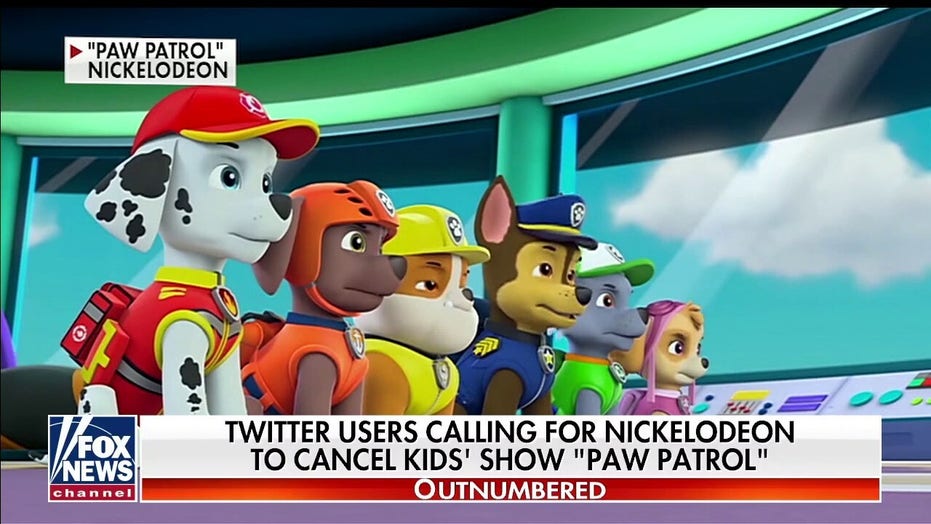
Charles Payne blasts ridiculous criticism of 'Paw Patrol' as pro-cop propaganda 

All right, this time they’ve gone too far.
placeholder
As part of a sweeping reassessment of all things either favorable to the police or upsetting to the black community, the latest target is “Paw Patrol.”
That’s right. No less an authority than the New York Times informs us that the Nick Jr. cartoon--featuring a squad of canines running around helping other creatures--is too positive toward the cops.
After the show tweeted an appeal for black voices to be heard, the commenters started growling: “Defund the paw patrol.” “Euthanize the police dog.” “All dogs go to heaven, except the class traitors in the Paw Patrol.”
If this sounds like all bark and no bite, guess again. The cancel culture is roaring across America and claiming new victims, while also prompting some overdue soul-searching.
The trigger seemed to be HBO Max’s decision to shelve “Gone With the Wind,” the classic 1939 film set in part on a plantation in Atlanta during and after the Civil War. Suddenly Clark Gable and Vivian Leigh were enemies of the state. The network said the movie was unacceptable because of “racist depictions” that “were wrong then and are wrong today.”
Instead, the Washington Post says, the movie will return and packaged with an African-American scholar who will presumably decry its awful elements.
placeholder
Sorry, but this is ludicrous. The film, eight decades old, is what it is. Are we now going to junk every book, play and song from the past because it no longer meets the woke standards of 2020? The debate has been going on since Mark Twain’s “Huckleberry Finn,” but has now taken on new urgency.
In similar fashion, Paramount has canceled “Cops,” once a Fox show, after 32 seasons, and A&E is dropping “Live P.D.” Sometimes television programs outlive their era, but I’m pretty sure these would remain on the air were it not for the national uproar over George Floyd’s killing.
As one wag tweeted, is the “Andy Griffith Show” next? Weren’t he and Don Knotts an all-white sheriff’s office?
And surely this backlash is out of control when Lego has to stop marketing the “Lego City Police Station” and “Police Highway Arrest” sets.
The decades-old battle over Confederate symbols is also being weaponized. NASCAR, which has just one fulltime black driver, has just banned Confederate flags from its events. The Marines have banned its troops from displaying the flag. Yet with public figures from David Petraeus to Nancy Pelosi calling for 10 military bases named for Confederate generals to be renamed, President Trump says he won’t even consider it.
And protesters are taking matters into their own hands. In Richmond, demonstrators forcibly removed a statue of Jefferson Davis, president of the confederacy. In Portsmouth, Va., protesters attacked a Confederate monument with spray paint and bolt cutters--as local officials and police looked on.
I’ve long heard the arguments that these statues, monuments and street names are merely a matter of southern pride and heritage. But the fact remains that they honor traitors who rebelled against the United States and fought to preserve an economic system rooted in slavery. That’s an increasingly difficult case to sustain.
placeholder
And yet the lines can get fuzzy: Should we remove George Washington and Thomas Jefferson from our currency because they owned slaves? (Just for good measure, statues of Christopher Columbus were also toppled in Richmond and other cities.)
But if this surging wave of national introspection has claimed victims both worthy and absurd, it has also triggered some accountability and apologies.
Adam Rapoport, editor of Conde Nast’s Bon Appetite, resigned after the surfacing of an old photo showing him dressed as a stereotypical Puerto Rican. He said he wanted “to reflect on the work that I need to do as a human being and allow Bon Appetit to get to a better place.”
And longtime Vogue editor Anna Wintour told staffers she takes full responsibility for “mistakes” in publishing stories and images that have been “hurtful and intolerant,” as reported by the New York Post:
“I want to start by acknowledging your feelings and expressing my empathy towards what so many of you are going through: sadness, hurt, and anger too. I want to say this especially to the Black members of our team...I also know that the hurt, and violence, and injustice we’re seeing and talking about have been around for a long time. Recognizing it and doing something about it is overdue.”
Perhaps it was a preemptive move. The cancel culture’s verdict can be so swift that New York Times editorial page editor James Bennet and Philadelphia Inquirer editor Stan Wischnowski were ousted for minor moves that ran afoul of their liberal newsrooms.
placeholder
But if everyone from journalists to entertainers to cartoon characters can be jettisoned simply because one group or another is offended, any sense of fairness will indeed be gone with the wind.

Democrats cheering 'Black Lives Matter' protests now say Trump rallies pose coronavirus risk

Democrats cheering 'Black Lives Matter' protests now say Trump ...

Top Democrats who cheered on "Black Lives Matter" crowds across the U.S. are now criticizing President Trump for planning to restart his campaign rallies, saying the events -- which are scheduled to kick off June 19 in Tulsa, Okla. -- could help spread the coronavirus.
placeholder
The apparent hypocrisy comes just weeks after big-city Democrats who once insisted on strict coronavirus lockdown measures had relented in the wake of George Floyd's in-custody death, and encouraged anti-police demonstrations.
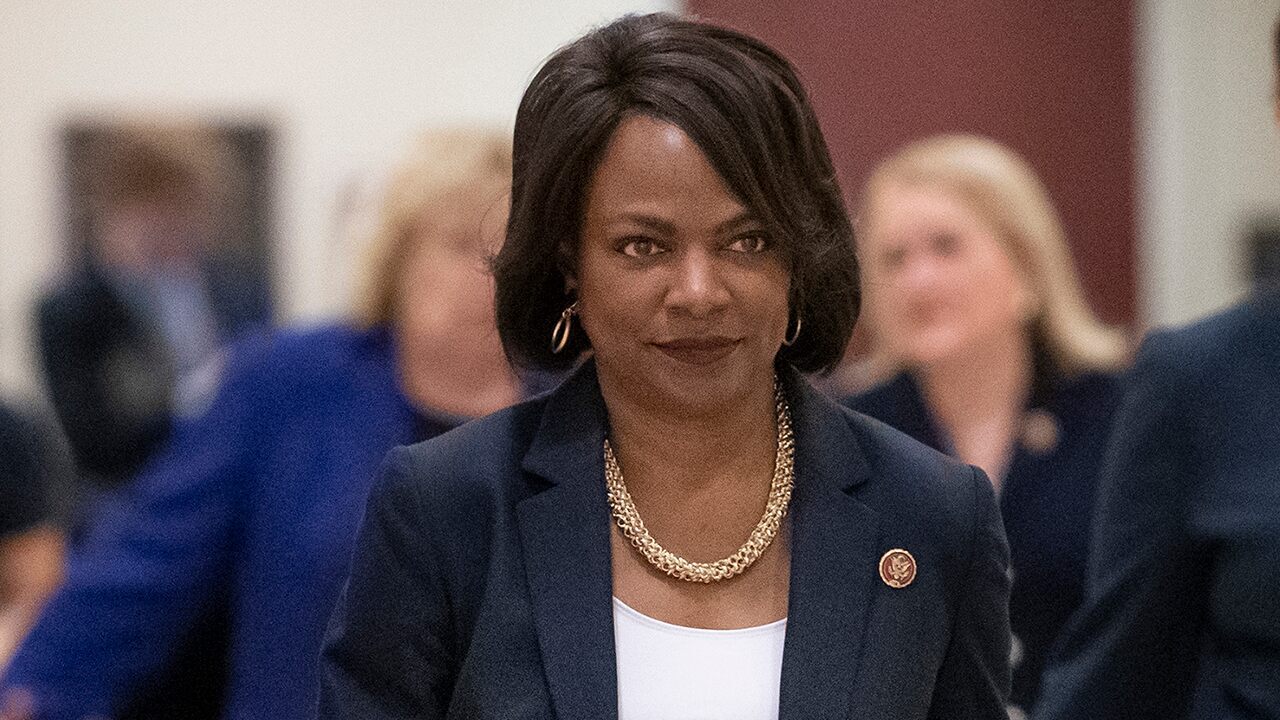
On Monday, U.S. Rep. Val Demings, D-Fla., told her Twitter followers she had joined a "Healing and Hope" rally "to speak with our community as America grieves."
By Thursday, Demings -- considered a possible running mate for Joe Biden -- had suddenly changed her tune on mass gatherings.
"The president’s plan to hold mass rallies in Florida and elsewhere as we experience a resurgence in COVID cases is irresponsible and selfish," Demings remarked, without any reference to her previous comments.
Demings was not alone. A week ago, U.S. Sen. Bernie Sanders of Vermont, an independent who sought the Democratic presidential nomination before suspending his campaign in April, tweeted: "Congratulations to all who are out on the streets today peacefully protesting. Together, we will end police brutality. Together, we will defeat Trump. Together, we will fight for a government based on justice and compassion, not greed and lies."
But by Thursday, Sanders, too, took a different approach to public safety.
placeholder
"Trump wants 15,000 delegates cheering him at his GOP convention in Florida," the former presidential candidate said, referring to the president's new convention site. "No social distancing. His rejection of medical advice endangers not only those there but those they come in contact with. Trump's a threat to the health and well-being of the country. He must be defeated."
The double standard from the anti-Trump crowd didn't go unnoticed.
"Don’t take anyone stressing 'social distance' seriously if they were silent on protesters nationwide violating stay at home orders and social distancing guidelines," The Daily Caller's Logan Hall commented.
As recently as late May, the coronavirus lockdown was seemingly down and out, as many Democrats in charge of big cities -- including several who once insisted on strict quarantine measures -- lined up to champion nationwide mass demonstrations.
New York Gov. Andrew Cuomo had previously lashed out at protesters calling to reopen the state, saying at a news conference, "you have no right to jeopardize my health ... and my children's health and your children's health." Cuomo's directives have been enforced throughout the state: A New York City tanning salon owner told Fox News he was fined $1,000 for reopening, calling the situation "insane" and saying he already was "broke."
Days later, though, Cuomo said he "stands" with those defying stay-at-home orders: "Nobody is sanctioning the arson, and the thuggery and the burglaries, but the protesters and the anger and the fear and the frustration? Yes. Yes, and the demand is for justice."
placeholder
In April, New York City Mayor Bill de Blasio told the Jewish community that "the time for warnings has passed" after he said a funeral gathering had violated social distancing guidelines. In May, the mayor asserted, "We have always honored non-violent protests."
And, Los Angeles Mayor Eric Garcetti threatened in March to cut power and water for businesses that reopened, saying he wanted to punish "irresponsible and selfish" behavior. In recent days, he has encouraged mass gatherings, even as he condemned violence.
"I will always protect Angelenos' right to make their voices heard — and we can lead the movement against racism without fear of violence or vandalism," he said.
The mayor of Washington D.C., Muriel Bowser, vowed $5,000 fines or 90 days in jail for anyone violating stay-at-home orders. After Floyd's death, though, Bowser defended the protests.
"We are grieving hundreds of years of institutional racism," she said. "People are tired, sad, angry and desperate for change."
Consultant Drew Holden pointed to other examples of protest hypocrisy in a lengthy Twitter thread, noting the media has covered the seizure of several blocks in Seattle very differently than it covered a 2014 standoff with right-wingers in Oregon.
placeholder
For Democrats, a newly resurfaced November 2015 memo from a senior Democratic Congressional Campaign Committee (DCCC) official has driven concerns that yet more hypocrisy may be afoot. The memo derides the Black Lives Matter movement as "radical," and offers Democratic House candidates suggestions for how to handle activists who attempt to approach their campaigns.
The secretive document, first leaked in 2016 by the hacker "Guccifer 2.0," was characterized as insensitive and condescending at the time. Now, as Democrats are confronted with a newly resurgent Black Lives Matter (BLM) movement that has led politicians to kneel in kente cloths and changed free speech norms across the country, the memo threatens to undermine their stated commitment to reform following the in-custody death of George Floyd.
"This document should not be emailed or handed to anyone outside of the building," the memo from Troy Perry, a top DCCC official, begins. "Please only give campaign staff these best practices in meetings or over the phone."

Protesters throw a statue of slave trader Edward Colston into Bristol harbor, during a Black Lives Matter protest rally in Bristol, England on Sunday. (AP/PA)

Protesters throw a statue of slave trader Edward Colston into Bristol harbor, during a Black Lives Matter protest rally in Bristol, England on Sunday. (AP/PA)

Perry, who is black, goes on to characterize Black Lives Matter as a "radical movement to end 'anti-black racism.'"
He notes that Black Lives Matter activists don't want their movement "co-opted by the Democratic Party."
Black Lives Matter advocates for a "collective ownership" economic model, reparations and the "immediate release" of everyone convicted of a drug offense, in addition to defunding police forces and other left-wing agenda items.
placeholder
If approached by Black Lives Matter activists, Perry advises in the memo that House candidates offer to meet with them -- but that they shouldn't "offer support for concrete policy positions."
Under no circumstances, Perry says, should Democrats "say 'all lives matter' nor mention 'black-on-black crime.'"
"These are all viewed as red herring attacks," the document reads. "This response will garner additional media scrutiny and only anger BLM activists. This is the worst response."

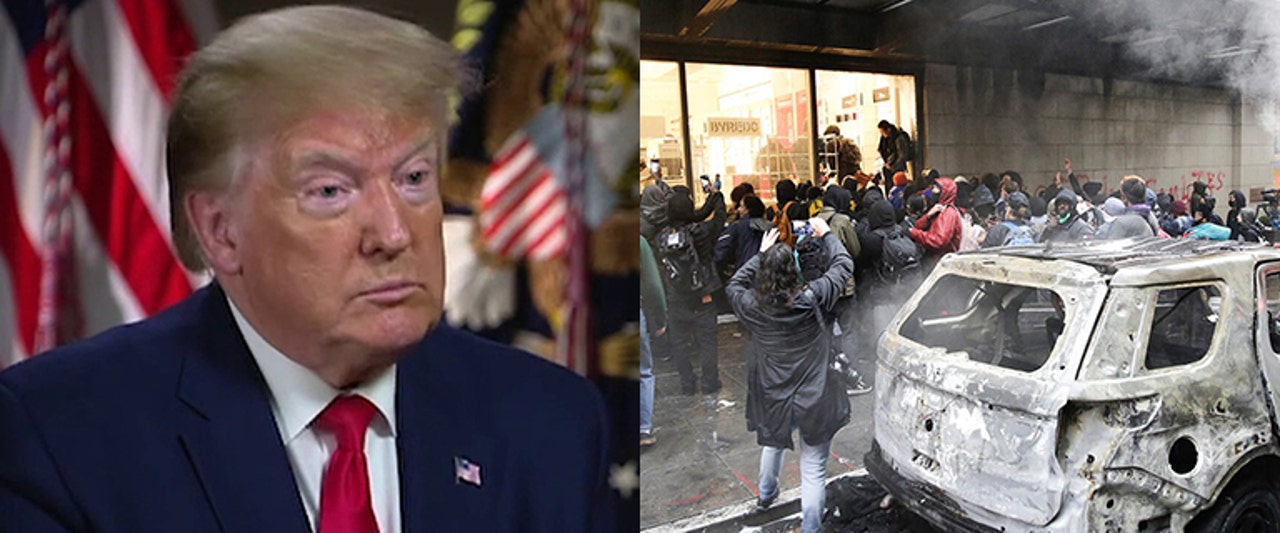
Trump vows he won't 'let Seattle be occupied by anarchists,' will 'straighten it out' if local leaders don't

Trump tells Fox News he won't 'let Seattle be occupied' by police-hating lawbreakers

President Trump told Fox News' Harris Faulkner in an exclusive interview Thursday that his administration is "not going to let Seattle be occupied by anarchists."
"If there were more toughness, you wouldn't have the kind of devastation that you had in Minneapolis and in Seattle. I mean, let's see what's going on in Seattle," Trump told Faulkner. "I will tell you, if they don't straighten that situation out, we're going to straighten it out."
The full interview will air on "Outnumbered Overtime" at 1 p.m. ET Friday.
After days of protests following the death of George Floyd, Seattle police left the boarded-up East Precinct building Monday night as a crowd of anti-police protesters set up barricades in the surrounding area, declaring six blocks in the city's Capitol Hill neighborhood to be “autonomous” and a “cop-free zone.”
The president also described Seattle Mayor Jenny Durkan's handling of the situation as "pathetic," and asked "Has she ever done this before?" He also called on Washington Gov. Jay Inslee to send in National Guard troops to restore order.
"He's got great National Guard troops so he can do it," Trump said of Inslee. "But one way or the other, it's going to get done. These people are not going to occupy a major portion of a great city.
Faulkner also raised the unrest following Floyd's death, asking Trump to explain what he means when he describes himself as a "law and order president."
"Well, we are going to do lots of things, good things, but we also have to keep our police and our law enforcement strong," the president answered. "They have to do it right. They have to be trained in a proper manner. They have to do it right. Again, the sad thing is that they are very professional.
"But when you see an event like that, with the more than eight minutes of horror -- that's eight minutes truly of horror, a disgrace," Trump said of video showing then-Minneapolis police officer Derek Chauvin kneeling on Floyd's neck on May 25.
"Then people start saying, 'Well, are all police like that?' They don't know," he added. "Maybe they don't think about it that much. It doesn't make any difference. The fact is they start saying, 'Well, police are like that.' Police aren't like that. I mean, I've seen so many incredible things that they do. But you don't see that ... You don't put it on television.
After playing a clip of the interview on "Special Report," anchor Bret Baier asked Faulkner if Trump understood the "frustration, the anger, the fear" in the African-American community.
"He watched the eight minutes and 46 seconds, he said, of George Floyds death," Faulkner said. "He, he taps into the loss and the hurt and the pain, and he understands that."
However, Faulkner added that the traditional presidential role of  "consoler-in-chief" didn't appear to be as important to Trump.
"He thinks that fixing the economy is how you bring everybody together and bring them forth. He wants to restore the markings of black wealth and that rise that was happening in black communities economically," Faulkner said. "And that's how he wants to go for it."
Elsewhere in the interview, Faulkner pressed Trump on his controversial "when the looting starts, the shooting starts" tweet during last month's riots following Floyd's death.
"Why those words?" asked Faulkner, who later explained that the phrase was first uttered by then-Miami police chief Walter Headley during the 1967 race riots.
"He was cracking down and he meant what he said," Faulkner told Trump. "And he said, 'I don't even care if it makes it look like brutality. I'm going to a crackdown. When the looting starts, the shooting starts.' That frightened a lot of people when you tweeted that."
"It means two things, very different things," Trump responded. "One is if there's looting, there's probably going to be shooting. And that's not as a threat. That's really just a fact because that's what happens. And the other is if there's looting, there's going to be shooting ... very different meanings."
Fox News' Michael Ruiz contributed to this report.

CartoonDems