Federal
prosecutors have announced the arrests of more than six dozen people on
charges ranging from murder to arson to looting in connection with
rioting that grew out of protests over the death of George Floyd in the past five weeks. Floyd’s
death in Minneapolis Police custody on May 25 sparked protests around
the country – but some demonstrations turned violent and saw looting,
arson, vandalism and violence. The arrests come from a broad range of charges. Many of them involved arson attacks. Fox
News has obtained an updated list of federal charges that have been
filed around the country in connection with the unrest. It's unclear
exactly how many more investigations may be underway. READ THE LIST OF FEDERAL CHARGES The
most serious charges are against an Air Force sergeant accused of
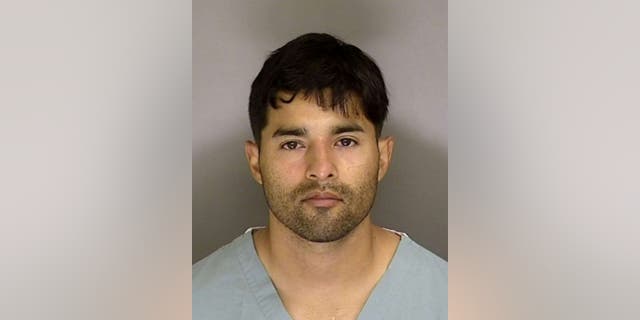
shooting four law enforcement officers – two of them fatally. Steven Carrillo,
32, allegedly shot and killed Federal Protective Service Officer David
Patrick Underwood and injured another officer as they stood in a
guardhouse on May 29. When investigators showed up at his house in Ben
Lomond, Calif., on June 6, he allegedly opened fire, fatally striking
Sgt. Damon Gutzwille and wounding at least one other deputy.
Steven Carrillo, 32, faces first-degree murder charges in the
shooting death of a California deputy, authorities say. (Santa Cruz
County Sheriff's Office)
Robert Alvin Justus Jr., 30, is charged with aiding
and abetting in connection with Underwood’s death – for allegedly acting
as the getaway driver. The criminal complaint alleges that the two men
met in an online group with ties to the “Boogaloo” movement, a loosely
defined violent ideology.
Carrillo was allegedly arrested in possession of the gun – a
privately made firearm with no manufacturer’s markings – used in both
the Oakland and Ben Lomond shootings. (DOJ)
About
a dozen of the arrests involved Molotov cocktails -- including those of
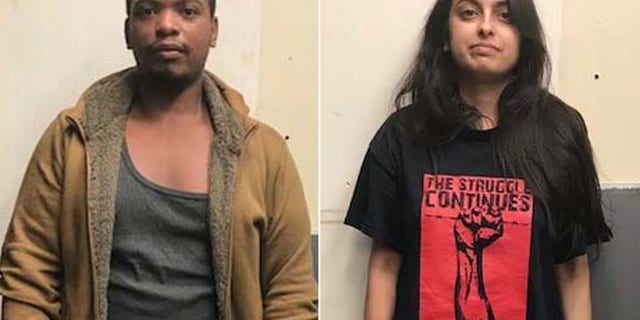
two New York City lawyers, Colinford Mattis, 32, and Urooj Rahman, 31,
accused of tossing one into a police vehicle.
Former prosecutors have come out in defense of Colinford Mattis,
32, and Urooj Rahman, 31, a pair of lawyers accused of firebombing a New
York City police vehicle last month.
In Las Vegas, Stephen T. Parshall, 35; Andrew Lynam, 23; and William L. Loomis, 40, allegedly planned to firebomb U.S. government buildings on May 30 before they were arrested in possession of Molotov cocktails. Investigators said they also had ties to the “Boogaloo” ideology. Ivan Jacob Zecher,
a 27-year-old convicted felon from Jacksonville, Fla., was arrested for
unlawful assembly for allegedly taking part in a crowd that blocked
traffic and hurled water bottles and rocks at local police. Then
investigators said they found Molotov cocktail in his backpack – which
counts as a firearm under federal law. Previously convicted felons are
not allowed to possess firearms. Arson attacks in cities around the country have often targeted police vehicles. Five men in their early 20s from Gainseville, Ga., allegedly set fire to a police car outside an officer’s personal residence on June 2. Margaret Aislinn Channon,
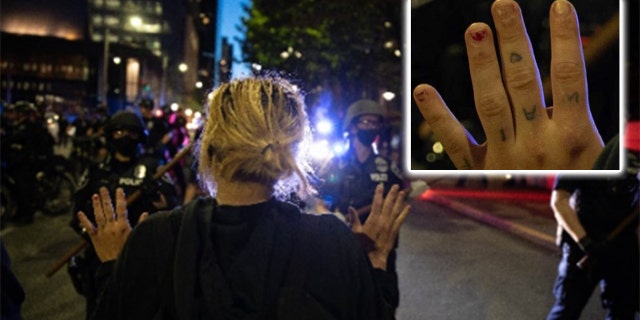
a 25-year-old from Tacoma, Wash., allegedly torched five unmarked
police vehicles in Seattle. She was identified by distinguishable
tattoos spotted on surveillance video, other images at the scene and her
own social media photos, according to the DOJ.
An image shows a woman raising her hands across from police – and
in it tattoos on her knuckles are visible. Investigators said those
tattoo matched ones they found on Channon when they searched her home.
(DOJ)
Federal investigators said they tracked down alleged arsonist Lore-Elisabeth Blumenthal,
33, after matching her T-shirt to one sold at an online Etsy store. She
is accused of burning two parked Philadelphia police vehicles near City
Hall on May 30. Branden Michael Wolfe, 23, allegedly lit a fire
at the Minneapolis Police Department’s Third Precinct building on May 28
– after officers withdrew and rioters overran the station. When
investigators arrested him a few days later, they said he was wearing
stolen police equipment. Richard Rubalcava,
of Raleigh, N.C., allegedly torched and looted two businesses during
riots on May 30. The DOJ said surveillance video shows him reentering a
Dollar General store multiple times and leaving with bags full of
merchandise before lighting a fire inside. He also allegedly stole a
cash register from a restaurant and left a burning towel inside before
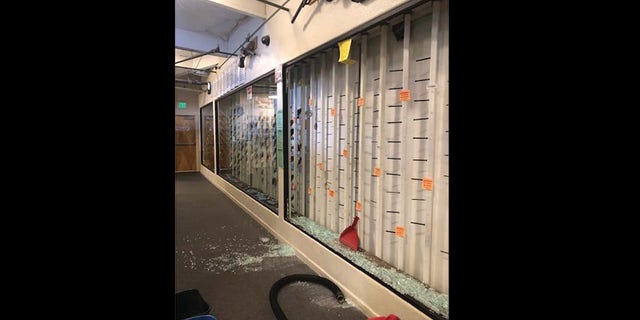
leaving. On June 1, a group of people broke into a gun store in Vacaville, Calif., and stole about 70 firearms. Investigators made five arrests and said they recovered 13 handguns.
Shelves were left empty after looters stole dozens of firearms
from Guns, Fishing and Other Stuff, a two-story gun and outdoor
recreation store in Vacaville, Calif., on June 1. (Courtesy DOJ)
Peter Fratus,
a 39-year-old from Massachusetts, faces charges of transmitting
threatening communications across state lines for allegedly sending
racist emails to Philadelphia Police Commissioner Danielle Outlaw. “While
the First Amendment gives us the right to express our own opinions,
violent physical threats are certainly not protected speech,” said
Michael J. Driscoll, special agent in charge of the FBI's Philadelphia
Division. “When someone threatens the life of another person, it’s a
clear red flag and we have to take their despicable words at face
value.” Also in Philadelphia, 24-year-old David Elmakayes is accused of blowing up an ATM and possessing an illegal firearm. The city saw dozens of ATM bombings
during the protests as looters attempted to break inside to their
safes, which killed at least one man. Police in the city have filed
local charges against at least one man, Talib Crump, for allegedly
selling homemade dynamite. And
seven people were arrested in Louisville, Ky., on riot-related charges
that included allegedly looting drugs out of a pharmacy -- leaving
patients unable to fill their prescriptions. Protesters have also vandalized, defaced and destroyed statues
that they find problematic around the country, particularly Confederate
monuments, but also depictions of the explorer Christopher Columbus and
former U.S. presidents -- including George Washington and Ulysses S.
Grant.
President Trump blasted Chicago
Mayor Lori Lightfoot and Illinois Gov. J.B. Pritzker in a letter
Friday over ongoing gun violence that has plagued the city in recent
years, accusing both Democrats of putting "your own political interests ahead of the lives, safety and fortunes of your own citizens."
Trump
cited a June 8 Chicago Sun-Times report that said 85 people were shot
and 24 killed during a violent weekend before saying the city is more
dangerous than the battlefields of Iraq and Afghanistan. Among
those killed over the deadly weekend referenced in the report was a
"hardworking father," a high school student and a college freshman who
hoped to become a correctional officer, Trump said. "Your lack of
leadership on this important issue continues to fail the people you have
sworn to protect," Trump wrote. "I am concerned it is another example
of your lack of commitment to the vulnerable citizens who are victims of
this violence and a lack of respect for the men and women in law
enforcement." Trump said Chicago has received millions in federal
funds to support public safety. He also extended an olive branch to both
leaders to tackle the city's high crime rate and high taxes. "If
you are willing to put partisanship aside, we can revitalize distressed
neighborhoods in Chicago, together," Trump said. "But to succeed, you
must establish law and order." Jordan Abudayyeh, Pritzker's press
secretary, called Trump a "failure" and said the letter was a political
stunt to distract from "from his long list of failures, especially his
response to the deadly coronavirus and nationwide calls for racial
justice," the Sun-Times reported. "The
people of this state and this nation have unfortunately come to expect
his unhinged attempts to politicize tragedy with his predictable and
worn-out strategy to distract, distract, distract," Abudayyeh said.
Lightfoot also responded via Twitter. "I
don't need leadership lessons from Donald Trump," she wrote, adding
that the letter was part of the "same old tired playbook." Trump
has tried casting himself as a "law and order" president and previously
accused elected leaders in Chicago and Democrats of being too soft on
crime. He has taken an even tougher stance amid nationwide protests that
have sometimes devolved into clashes with police and violence.
President Trump
announced Friday that he signed an executive order to protect American
monuments, memorials and statues and threatened those who try to pull
them down with “long prison time.” “I just had the privilege of
signing a very strong Executive Order protecting American Monuments,
Memorials, and Statues - and combatting recent Criminal Violence,” Trump
tweeted. “Long prison terms for these lawless acts against our Great
Country!” The new order enforces laws prohibiting the desecration
of public monuments, the vandalism of government property, and recent
acts of violence, withholds federal support tied to public spaces from
state and local governments that have failed to protect public
monuments, and withdraws federal grants for jurisdictions and law
enforcement agencies that fail to stop their desecration. It also provides assistance for protecting the federal statues. Meanwhile
on Friday evening, Attorney General Bill Barr directed the creation of a
task force to counter anti-government extremists, specifically naming
those who support the far-right “boogaloo” movement and those who
identify as Antifa. The task force will be headed by Craig
Carpenito, the U.S. Attorney for the District of New Jersey, and Erin
Nealy Cox, U.S. Attorney for the district of Northern Texas, and will be
composed of U.S. Attorneys’ Offices, the FBI and other relevant
departments, according to a press release. The group will share
information with local and state law enforcement and will provide
training on identifying anti-government extremists, according to an
internal Justice Department memo. The president has been teasing
his order related to memorials all week, as historic monuments and
statues have become the targets of anger and vandalism during Black
Lives Matter protests in the wake of George Floyd's police custody death in Minneapolis at the end of May. The
initial statues under fire were Confederate soldiers and generals
largely in the South due to the treatment of African-Americans, and even
some high-level military officials called for the renaming of Army
bases named after Confederate generals. The anger has since spread to
monuments of former presidents and others deemed to be “colonizers,”
such as Christopher Columbus, and even some who fought against slavery. On
Friday night, protesters plan to try to tear down the Emancipation
Statue of Abraham Lincoln in Lincoln Park. The statue shows the 16th
president holding the Emancipation Proclamation next to a kneeling,
shackled slave. Protesters say it does not depict the role slaves had in
securing their own freedom. Washington, D.C.’s congressional delegate, Eleanor Holmes Norton, said Tuesday she would introduce a House bill to remove the “problematic” statue. Last
weekend protesters tied ropes and tried to topple a statue of former
president Andrew Jackson in Lafayette Square Park, but were stopped by
law enforcement. In San Francisco, protesters defaced and toppled a
statue of Ulysses S. Grant, who led the Union Army during the Civil
War. Protesters that same night also tore down statues of St. Junipero
Serra and Francis Scott Key, who wrote the lyrics to "The Star-Spangled
Banner." This week McConnell listed the monuments that have been
defaced in recent days—noting that in Portland, Ore., a mob “graffitied a
statue of our first President, pulled it down, and burned an American
flag over his head. This is George Washington.” McConnell said
another Washington statue was defaced in Baltimore, a statue of Thomas
Jefferson was ripped down in Portland, and others were targeted. “This
is the general and first President who built our nation, and the author
of the Declaration of Independence. Genius statesmen who helped begin
this grand experiment that has brought freedom to hundreds of millions
and saved the world a few times for good measure,” McConnell said. “And
yet a crazy fringe is treating their monuments like vanity statues of
tinhorn tyrants.” He added: “Our Founding Fathers are being roped to the ground like they were Saddam Hussein. The list goes on.” McConnell was referring to the famous moment in 2003 when a 40-foot bronze statue of the Iraqi dictator was roped and pulled to the ground, symbolizing the end of his regime. Fox News' John Roberts, Jake Gibson and Brooke Singman contributed to this report.
WASHINGTON
(AP) — President Donald Trump is sharpening his focus on his most
ardent base of supporters as concern grows inside his campaign that his
standing in the battleground states that will decide the 2020 election
is slipping.
Trump
turned his attention this week to “left wing mobs” toppling Confederate
monuments and visited the nation’s southern border to spotlight
progress on his 2016 campaign promise to build a U.S.-Mexico border
wall.
He
ignored public health experts warning Americans to avoid large
gatherings by holding two large campaign events in Oklahoma and Arizona,
parts of the country where coronavirus infections are surging.
ADVERTISEMENT
With
his rhetorical turn, Trump is feeding red meat issues to a base that
helped spur his upset victory over Hillary Clinton in 2016. But he risks
appearing to ignore larger issues that are jolting the country, like
the pandemic and racial injustice, while underplaying economic issues,
even though polling shows that to be an area where Trump performs
relatively well.
“This
might be the only path for him at this point,” said Dan Schnur, who
served as a campaign adviser to Arizona Sen. John McCain and California
Gov. Pete Wilson. “Most of the center is no longer available to him.
Motivating his base is not just his best available strategy. It might be
the only one.”
The
president’s advisers believe there are few undecideds when it comes to
Trump, with only a sliver of voters who may change their mind and warm
to him. The more effective use of resources is to make sure those who
like him turn out to vote, according to campaign and White House
officials who spoke on condition of anonymity to describe internal
strategy.
Trump
takes a measure of comfort in the fact that he found himself in a
similar position in 2016. Polls throughout his race against Clinton
showed him with a deficit, often just as wide as some polls now suggest,
before he closed that gap in the final days of the campaign as the base
coalesced around him.
As
he did with Clinton, Trump has tried to drive up Democratic rival Joe
Biden’s negatives, pushing unsubstantiated claims about his mental
acuity and his son Hunter’s business dealings. But Trump so far has had
little success in driving Biden into the deeply negative territory where
Clinton found herself.
Biden’s
campaign is confident that the circumstances for Trump, who now has a
well-established political record, have complicated his ability to drag
down his opponent with a barrage of attacks.
ADVERTISEMENT
“The
reality is this is a different election than 2016 was,” said Symone
Sanders, a senior adviser to the Biden campaign. “In 2016, a lot of
voters went to the polls asking what kind of president Trump would be.
It’s no longer a theory of what kind of president Donald Trump will be.”
Trump
hopes to get as much of that base to turn out while persuading the
voters who have shown tepid enthusiasm for Biden to stay home. Indeed,
while many national and battleground polls show Trump trailing Biden,
surveys have suggested that some of the former vice president’s support
is lukewarm.
Trump’s
team feels confident that approximately 40% of the electorate supports
him and notes his approval rating has remained unusually stable during
his term. The president’s campaign advisers believe it comes down to
getting a bigger proportion of the smaller group of people who love
Trump to turn out than the larger group of voters who express tepid
support for Biden.
With
that in mind, the campaign has renewed its focus on plays to please the
base. Among them: the border wall and other hard-line immigration
executive orders; a promise to produce a list of conservative Supreme
Court nominees; public consideration of acknowledging Israel’s
annexation of parts of the West Bank to satisfy evangelicals; and, most
strikingly, a focus on reopening the nation’s economy over publicly
dwelling on the pandemic.
South
Carolina Sen. Lindsey Graham, one of Trump’s closest allies in
Congress, said Trump can win with “a little more message discipline” and
a focus on policies that separate him and Biden.
“Just make it more about policy and less about your personality,” Graham told reporters.
Last
weekend, Trump held a big-arena rally in Tulsa, Oklahoma, that drew a
relatively sparse crowd for a president who is used to overflow
audiences. He then took part on Tuesday in a jam-packed event at a
Phoenix megachurch — albeit in a smaller venue — for young
conservatives. Both are the sort of events that Trump is counting on
helping him turn the tide.
“Nov.
3 is a big day,” Trump told attendees at a Students for Trump event in
Phoenix. “Get out. Get the parents, get the friends, get the husband,
get the wife, get everybody.”
Arizona
has emerged as a growing hot spot for the virus, and Phoenix’s
Democratic mayor, Kate Gallego, implored that such an event — most
participants declined to wear masks and didn’t practice social
distancing — could not be safely carried out.
Karen
Kedrowski, a political scientist at Iowa State University, said such
events help Trump echo ardent conservatives’ frustrations that the
lockdown has lasted too long. But Trump’s attempt to amplify his message
through mass gatherings is perilous.
“The
president sees the need to electrify his base,” Kedrowski said. “But
what happens to the president if two weeks from now rally attendees are
becoming sick and spreading the virus in their communities?”
During
the event, Trump, who had stirred up controversy by using the racist
phrase “kung flu” to describe COVID-19, was reflecting on the many names
he’s heard the coronavirus called.
When he heard the pejorative yelled from the crowd, Trump smiled and said it, too. The audience roared in approval.
Biden
surrogates, including vice presidential contender Sen. Tammy Duckworth,
called out Trump for it. Still, Biden is being careful not to get
dragged into a culture war.
“We
have not let Donald Trump’s antics distract us from our message,”
Sanders said. “At the same time, we’re not going to sit back and allow
him to disparage large swaths of the electorate.”
New York Assemblyman Michael Blake speaks in New York City, Jan. 16, 2019. (Associated Press)
A New York state lawmaker who sought to replace a retiring member of Congress refused to concede defeat Thursday following Tuesday’s Democratic primary, claiming the election was plagued by “intentional black voter suppression.” State
Assemblyman Michael Blake, an African-American candidate, finished in
second place in the 15th Congressional District contest’s in-person
ballot count, the New York Daily News reported. The top finisher was New York City Councilman Ritchie Torres, who is also African-American. The
retiring congressman is U.S. Rep. Jose Serrano, a native of Puerto
Rico, who has represented the Bronx-based 15th district since 2013. Blake
claimed a polling site in the predominantly black Concourse Village
neighborhood was relocated without explanation, “forcing elderly voters
to walk 11 blocks away, putting their health at risk,” according to the
Daily News.
He also claimed another polling site “in the heart of
a Black neighborhood” didn’t open on time, prompting some potential
voters to give up. Blake also claimed that a high number of
affidavit ballots at a third location – filed by voters whose
registration was in dispute – might not have been counted. “Intentional
black voter suppression and undemocratic processes clearly don’t just
happen in the South but also in the South Bronx,” Blake wrote. “These
incidents, among others, are too pervasive to be a coincidence. They are
a concerted effort to suppress the Black vote.” Torres has held off from claiming victory, saying he wants all mail-in ballots to be counted – a process that could take weeks, the Daily News reported. “We
reiterate what Ritchie said on Election Night: Every vote must be
counted. We’re confident that Ritchie will emerge from the complete vote
as the decisive winner,” Torres’ campaign manager Nanette Alvarado told
the newspaper. One
Democratic source told the Daily News that the accusations seemed odd
coming from Blake, a vice chairman of the Democratic National Committee. “This
is a vice chair of the Democratic National Committee ... accusing the
Bronx Democratic Party of rigging an election for a candidate they
didn’t even endorse?” the source said. The New York City Board of Elections did not respond to a Daily News request for comment.
It was hard to tell if Joe Biden or President Trump
would be appearing in south central Pennsylvania on Thursday by the
looks of crowds gathered near the presumptive Democratic nominee's
campaign stop. Pro-Trump supporters were out in force in
Lancaster, holding Trump signs and chanting "Four more years!" and
"U-S-A!" as they gathered roughly 100 yards from where Biden would be unveiling his proposals on health care. At
one point, a large semi-truck, bearing photos of Trump and Vice
President Mike Pence, pulled up outside a local recreational center
where a pro-Trump crowd was assembled. The
truck drove in between the Trump supporters and another group nearby
that declared their support for the Black Lives Matter movement. Biden
traveled to the battleground state to meet with families who said
they've benefited from the Affordable Care Act, the health care
legislation also known as ObamaCare that was passed when Biden was
former President Barack Obama's vice president. The campaign stop came
on the same day the Trump administration was expected to urge the Supreme Court to invalidate the national health care law. "I
think it’s cruel, it’s heartless, it’s callous,” Biden said of Trump’s
attempts to dismantle ObamaCare. "It’s all because in my view he can’t
abide the thought of letting stand one of President Obama’s great
achievements." Biden also criticized Trump's notion that fewer
tests would mean fewer cases of the coronavirus, as health experts have
urged the importance of testing to limit the spread of the virus and
identify those infected. “He called testing, quote, a double-edge
sword,” Biden said. “Let's be crystal clear about what he means by that.
Testing unequivocally saves lives and widespread testing is the key to
opening our economy. That's one edge of the sword. The other edge, he
thinks that finding out that more Americans are sick will make him look
bad.”
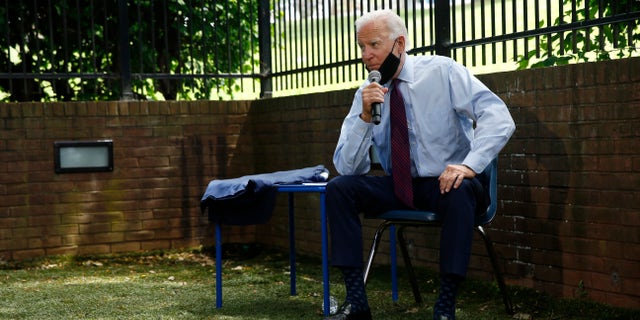
Democratic presidential candidate, former Vice President Joe Biden
speaks with families who have benefited from the Affordable Care Act,
Thursday, June 25, 2020, in Lancaster, Pa. (Associated Press)
Biden also mistakenly claimed that 120 million people had died from the novel coronavirus during the campaign stop -- overstating the number by about 1,000 times. “People don’t have a job, people don’t know where to go, they don’t know what to do,” Biden said Thursday. “Now we have over 120 million dead from COVID.” The
U.S. has seen at least 124,000 deaths -- not millions -- from COVID-19,
according to data from Johns Hopkins University. Worldwide, more
than 488,824 fatalities from the virus have been reported. Biden's
comments were immediately questioned by Republicans and the Trump 2020
Campaign team, which deemed the Democrat to be "very confused." “WHAT
IS GOING ON WITH JOE BIDEN?” Steve Guest, the Republican National
Committee’s rapid response director, tweeted out with a link to the
clip.
Biden snub of local media?
Meanwhile,
the LNP newspaper, headquartered in Lancaster, said it was not
permitted inside the building during Biden's appearance and suggested
that the Democrat's campaign was limiting local media's ability
to report on the visit. Lancaster's WGAL-TV claimed it was the only local television station in the Susquehanna Valley area to speak with Biden one-on-one. Biden has recently started to make more public appearances after months indoors amid the coronavirus pandemic. His
campaign has so far focused on small group gatherings to limit the
potential spread of the coronavirus, in contrast to President Trump, who
recently held rallies in Tulsa, Okla., and Phoenix. After the June 20 Tulsa event, dozens of Secret Service members were forced into quarantine because at least two of them had tested positive for the virus. “Donald
Trump needs to stop caring about how he looks to start caring about
what America has happened to the rest of America," Biden said. Fox News' Paul Steinhauser, Madeleine Rivera and Andrew O'Reilly contributed to this story.
President Trump's Fox News town hall with Sean Hannity on
Thursday night presented a rare opportunity for the nation's
commander-in-chief to answer questions coming directly from everyday
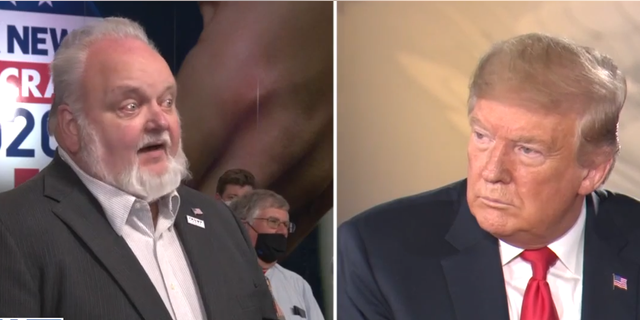
Americans. Town hall audience members in Green Bay, Wis., didn't
hold back, asking the president about numerous topics, including mail-in
voting, the recent rioting in America's cities -- and what
Trump considered to be his greatest accomplishment since taking office. Addressing one audience member's inquiry, Trump said he thought mail-in voting posed the “biggest risk” to a fair election come November.
'The most important question'
“I
think it’s the most important question I’ll be asked,” Trump said after
the audience member wanted to know how the president will make sure the
election is “free from fraudulent absentee votes and mail-in ballots.” Trump
raised his concerns about states like California that plan to do an
all-mail-in ballot election this fall over coronavirus concerns. The
president said mail-in ballots would call into question the integrity of
the election.
A "Hannity" town hall audience member in Green Bay, Wis., on
Thursday asks President Trump about protecting November's election.
California Gov. Gavin Newsom has been “mailing out
millions and millions of ballots,” Trump told the audience. “Where are
they going?...Is the postman going to hand them out? Are they going to
take them out of the mailbox?” The president added his concerns
that a country like China could “print millions of ballots using the
exact same paper” in an attempt to interfere in the election. Some
election officials and voting experts, however, have challenged the
president's assertion, pointing to safeguards that states use to protect
the authenticity of mail-in ballots. Trump also made a
distinction between mail-in ballots and absentee ballots because of the
safeguards in requesting an absentee ballot. “People go through a
process for that -- but the mail-in ballots, they mail them to anybody
and they send them out by the millions," the president said.
"The mail-in ballots, they mail them to anybody and they send them out by the millions." — President Trump
He
added that he has voted via absentee ballot because his voting address
is in Florida even though he spents most of his time at the White House
in Washingtion, D.C. SEAN HANNITY'S TOWN HALL WITH PRESIDENT TRUMP: PART 1 Trump added that he thought most people prefer to vote in person on Election Day. “We
went through World War I and we voted, we went through World War II and
we voted. And now we have a virus, and by that time [November] it’ll be
less and less," he said.
“We went through World War I
and we voted, we went through World War II and we voted. And now we
have a virus, and by that time [November] it’ll be less and less." — President Trump
'These people are vandals'
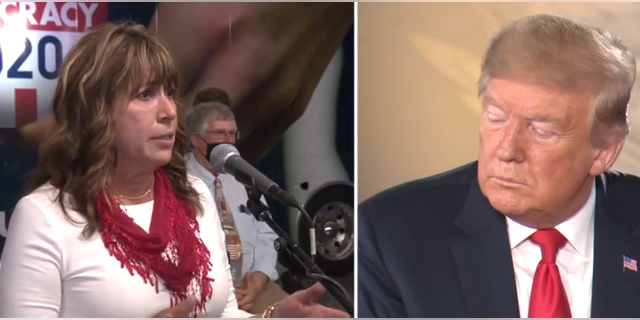
Another
audience member asked the president what the administration would do to
keep the streets safe after the unrest in Wisconsin this week. The
president responded by saying that if former Wisconsin Gov. Scott
Walker, a Republican, were still running the state, it wouldn’t have
happened. (Wisconsin's current governor is Tony Evers, a Democrat.)
An audience member in Green Bay, Wis., asks President Trump about
how the administration will keep the streets safe from unrest.
“You happen to have a Democrat governor right now,”
the president said. “Democrats think it’s wonderful that they’re
destroying our country. It’s a very sick thing going on, nobody’s ever
seen it.”
“Democrats think it’s wonderful that they’re destroying our country. It’s a very sick thing going on, nobody’s ever seen it.” — President Trump
Trump
also claimed the “radical left” was manipulating presumptive Democratic
presidential nominee Joe Biden and would soon “take him over.” “With
that being said, the Republicans have to get tougher,” Trump said. “I'm
telling them all the time, because they're sitting back, they want to
be politically correct. ... And we told them, every night we're going to
get tougher and tougher, and at some point there's going to be
retribution because there has to be.”
"Republicans
have to get tougher. I'm telling them all the time, because they're
sitting back, they want to be politically correct." — President Trump
“These people are vandals, but they're agitators. But they're really -- they're terrorists in a sense.”
'We'll have close to 300 judges'
When
asked by another audience member about what he considered his greatest
accomplishment while in office, Trump first noted the historic number of
judges his administration has been able to get confirmed.
An audience member in Green Bay, Wis., asks President Trump what he believes has been his greatest accomplishment.
“I think before I'm finished this term, we’ll have
close to 300 judges -- federal judges,” he said. “That's a number that
nobody can even believe, and part of it was that President Obama was
unable to get judges approved in a large number -- about 142 judges. So I
took it off, got them approved, and then got a lot approved beyond.” He
said he’s also proud of how his administration has rebuilt the
military, launched Space Force and gotten Republican-backed tax cuts
signed into law.
Taking on the media
Trump
also told Fox News host Sean Hannity he believed he wouldn’t have been
elected president in 2016 if he didn’t “take on the media.” “The
New York Times is so dishonest, The Washington Post is so dishonest.
They write things -- you can do something great and they can make it
sound horrible. You could do something, and they can make it sound
beyond belief bad, like it's the worst thing ever.”
"The
New York Times’ is so dishonest, The Washington Post is so dishonest.
They write things -- you can do something great and they can make it
sound horrible." — President Trump
During
the wideranging interview, Trump said he believes his former national
security adviser, John Bolton, should be prosecuted for
"releas[ing] classified" information. The president also said he plans
on building on the accomplishments from his first term if he is
reelected. "I
never did this before," Trump said of the presidency. "I didn't know
very many people in Washington. It wasn't my thing. I was from
Manhattan, from New York. ... Now, I know everybody and I have great
people in the administration."