Presumptuous Politics

Wednesday, July 15, 2020

Doug Schoen: Trump is big winner and Sessions is big loser in Tuesday primaries, while Dems remain divided


There are two key takeaways from the outcome of Tuesday’s primaries in Alabama, Maine and Texas.
First, the big winner of the night was President Trump. Several Trump-backed candidates defeated their opponents and unquestionably benefited significantly from the president’s support. The most notable of these was former Auburn University football coach Tommy Tuberville, who defeated former senator and attorney general Jeff Sessions for the GOP nomination for a U.S. Senate seat in Alabama. Tuberville will face Democratic Sen. Doug Jones, considered a highly vulnerable incumbent.
Second, Democratic primary results show the party is deeply divided, complicating the Democrats’ path to winning majority control of the Senate and defeating Trump in the November election.
Alabama was the biggest race Tuesday and of special interest to Trump. The president forced out Sessions as attorney general after Sessions recused himself from overseeing the investigation of Russia’s interference in the 2016 U.S. presidential election – a decision Sessions said he was required to make because he had been involved in the Trump campaign. Trump never forgave Sessions for the recusal and considered it a betrayal.
In his bid to regain the Senate seat he resigned to become Trump’s attorney general, Sessions faced fierce opposition from the president, who repeatedly criticized him with harsh insults and actively supported Tuberville. Trump’s endorsement clearly carried more weight with voters than Sessions’ endorsements from prominent Republicans and his former Republican Senate colleagues, including Sen. Richard Shelby, R-Ala.
Meanwhile, in Texas former White House physician Dr. Ronny Jackson, who was endorsed by Trump, won his primary for a U.S. House seat, beating out Josh Winegarner. Winegarner was endorsed by the outgoing Republican Rep. Mac Thornberry, who did not seek reelection.
In many ways, the weight of Trump’s endorsements in Alabama and Texas signals that the president’s current chances for reelection may be stronger than national polls indicate.
On the Democratic side, Tuesday’s primaries represented another test for the national party, which is struggling to mobilize its base while finding a way to unite progressives and moderates around a message that unites— rather than further polarizes — a divided country.
In several U.S. House and Senate Democratic primaries held in June, progressive challengers either defeated or came close to nearly defeating their well-funded establishment opponents.
Likewise, the division between the progressive and moderate factions of the party was manifest in Tuesday’s primaries.
In the Texas Democratic primary run-off for the Senate, Air Force veteran MJ Hegar, the establishment-backed candidate who was endorsed by the Democratic Senatorial Campaign Committee, narrowly defeated Royce West, an underfunded progressive insurgent candidate.
Hegar’s narrow win will make it more difficult to unite the Democratic Party in the race against Republican Sen. John Cornyn in November.
Similarly, this was the case in Kentucky’s Democratic primary for the Senate held in June. Establishment-backed candidate, Amy McGrath, barely beat the progressive insurgent candidate, Charles Booker, who had less than half of the financial resources of McGrath.
Given the clear progressive insurgency within the Democratic Party across the country, there will also likely be greater pressure on the party to embrace left-leaning policies, such as defunding the police, which are unpopular with the general electorate. Doing so could cost the Democrats the presidency, the Senate, and even their current House majority.
In Maine, Sara Gideon scored a big win over two opponents in the Democratic primary for U.S. Senate. Her victory reveals a potential bright spot for the Democratic Party in the quest to win back a Senate majority.
Given that Gideon will likely win over two-thirds of the Democratic primary vote and has amassed a campaign war chest of over $20 million, she has a strong chance of defeating Republican Sen. Susan Collins, who is running for her fifth term.
Further, Gideon currently maintains a narrow general election polling lead over Collins, which she is now likely to keep, given her primary success and impressive fundraising infrastructure. Gideon raised over $9 million in the second quarter — a greater sum than the Democrats who ran against Collins in 2008 and 2014 raised in their entire campaigns combined, according to Federal Election Commission records.
However, while there have been select Democratic primaries in which voters have coalesced around moderate, center-left candidates, overall primary results thus far reveal the ascendancy of the progressive movement within the party.
Ultimately, this will pose challenges for Democrats in November. This is especially true given the success of Trump’s endorsements, which also potentially signal that the presidential race is much closer than it appears to be, despite the fact that Trump had a horrible month in June politically.
Indeed, the Democratic Party can only be successful in November by uniting progressives and moderates around an inclusive agenda that appeals to independents and even moderate Republicans. However, Tuesday’s primary results reveal that the party’s ability to do so before November is far from certain.

Tuesday, July 14, 2020

Bari Weiss quits New York Times after bullying by colleagues over views: 'They have called me a Nazi and a racist'


New York Times opinion columnist and editor Bari Weiss announced Tuesday she is leaving the Gray Lady, saying she was bullied by colleagues in an "illiberal environment," weeks after declaring there was a “civil war” inside the paper.
Weiss published a scathing resignation letter that she sent to Times publisher A.G. Sulzberger on her personal website, noting she doesn’t understand how toxic behavior is allowed inside the newsroom and "showing up for work as a centrist at an American newspaper should not require bravery."

New York Times opinion columnist and editor Bari Weiss announced Tuesday she is leaving the Gray Lady, saying she was bullied by colleagues.

New York Times opinion columnist and editor Bari Weiss announced Tuesday she is leaving the Gray Lady, saying she was bullied by colleagues.
“It is with sadness that I write to tell you that I am resigning from The New York Times,” Weiss wrote.
Weiss then explained that she joined the paper in 2017 to help offer a different perspective, as the Times’ “failure to anticipate the outcome of the 2016 election meant that it didn’t have a firm grasp of the country it covers,” and fixing that issue was critical.
“But the lessons that ought to have followed the election—lessons about the importance of understanding other Americans, the necessity of resisting tribalism, and the centrality of the free exchange of ideas to a democratic society—have not been learned,” Weiss wrote. “Instead, a new consensus has emerged in the press, but perhaps especially at this paper: that truth isn’t a process of collective discovery, but an orthodoxy already known to an enlightened few whose job is to inform everyone else.”
Weiss then wrote that “Twitter is not on the masthead of The New York Times,” but social media acts as the ultimate editor.
“As the ethics and mores of that platform have become those of the paper, the paper itself has increasingly become a kind of performance space. Stories are chosen and told in a way to satisfy the narrowest of audiences, rather than to allow a curious public to read about the world and then draw their own conclusions. I was always taught that journalists were charged with writing the first rough draft of history,” she wrote. “Now, history itself is one more ephemeral thing molded to fit the needs of a predetermined narrative.”
Last month, Weiss offered insight about the internal battle among her colleagues following the publishing of an op-ed written by Sen. Tom Cotton, R-Ark. that sparked a major backlash from its own staff.
Hours before the Times offered a mea culpa for running Cotton's piece -- which called for troops to be sent in to quell the George Floyd riots -- Weiss claimed that a "civil war" was brewing within the paper.
In her resignation letter, Weiss noted that her own “forays into Wrongthink” have made her the subject of “constant bullying by colleagues” who disagree with her views.
“They have called me a Nazi and a racist,” she wrote.
“I have learned to brush off comments about how I’m ‘writing about the Jews again.’ Several colleagues perceived to be friendly with me were badgered by coworkers,” Weiss added. “My work and my character are openly demeaned on company-wide Slack channels where masthead editors regularly weigh in.”
Weiss then said she doesn’t understand how Sulzberger has allowed such behavior inside the newsroom “in full view of the paper’s entire staff and the public.”
“I certainly can’t square how you and other Times leaders have stood by while simultaneously praising me in private for my courage. Showing up for work as a centrist at an American newspaper should not require bravery,” Weiss wrote. “Part of me wishes I could say that my experience was unique. But the truth is that intellectual curiosity—let alone risk-taking—is now a liability at The Times.”
She continued: “Why edit something challenging to our readers, or write something bold only to go through the numbing process of making it ideologically kosher, when we can assure ourselves of job security (and clicks) by publishing our 4000th op-ed arguing that Donald Trump is a unique danger to the country and the world? And so self-censorship has become the norm.”
Acting editorial page editor Kathleen Kingsbury provided a statement to Fox News.
“We appreciate the many contributions that Bari made to Times Opinion. I’m personally committed to ensuring that The Times continues to publish voices, experiences and viewpoints from across the political spectrum in the Opinion report,” Kingsbury said. “We see every day how impactful and important that approach is, especially through the outsized influence The Times’s opinion journalism has on the national conversation.”
The now-former Times columnist wrote in the scathing letter that rules at the paper “are applied with extreme selectivity” and work goes unscrutinized if it aligns with the new orthodoxy.
“Everyone else lives in fear of the digital thunderdome. Online venom is excused so long as it is directed at the proper targets,” she wrote. “Op-eds that would have easily been published just two years ago would now get an editor or a writer in serious trouble, if not fired.”
She then bashed the process that unfolded over Cotton’s op-ed, noting that nobody cared to amend other editorials, such as “Cheryl Strayed’s fawning interview with the writer Alice Walker, a proud anti-Semite who believes in lizard Illuminati."
“The paper of record is, more and more, the record of those living in a distant galaxy, one whose concerns are profoundly removed from the lives of most people,” Weiss wrote. “This is a galaxy in which, to choose just a few recent examples, the Soviet space program is lauded for its “diversity”; the doxxing of teenagers in the name of justice is condoned; and the worst caste systems in human history includes the United States alongside Nazi Germany.”
Weiss said that despite her struggles to be accepted by colleagues, she believes they don’t all hold these views. She speculated that Times employees are playing along and possibly "believe the ultimate goal is righteous,” “believe that they will be granted protection if they nod along,” “feel lucky to have a job in a contracting industry” or know that “standing up for principle at the paper does not win plaudits.”
Weiss wrote that the Times’ culture hurts “independent-minded young writers and editors paying close attention to what they’ll have to do to advance in their careers” and explained how it will be seen by the next generation of journalists.
“Rule One: Speak your mind at your own peril. Rule Two: Never risk commissioning a story that goes against the narrative. Rule Three: Never believe an editor or publisher who urges you to go against the grain. Eventually, the publisher will cave to the mob, the editor will get fired or reassigned, and you’ll be hung out to dry,” she wrote.
Weiss added that “America is a great country that deserves a great newspaper,” but doesn’t feel the Gray Lady is currently providing that. She complimented some former colleagues, noting that “some of the most talented journalists in the world" still work for the paper she is walking away from.
“Which is what makes the illiberal environment especially heartbreaking,” Weiss wrote. "I can no longer do the work that you brought me here to do—the work that Adolph Ochs described in that famous 1896 statement: ‘to make of the columns of The New York Times a forum for the consideration of all questions of public importance, and to that end to invite intelligent discussion from all shades of opinion.’”
Her last column was published on May 25, making the case that comedian and podcast host Joe Rogan represents the “new mainstream media.”
Fox News’ Joseph A. Wulfsohn contributed to this report.  

China Virus Cartoons


US rejects nearly all Chinese claims in South China Sea


WASHINGTON (AP) — The Trump administration escalated its actions against China on Monday by stepping squarely into one of the most sensitive regional issues dividing them and rejecting outright nearly all of Beijing’s significant maritime claims in the South China Sea.
The administration presented the decision as an attempt to curb China’s increasing assertiveness in the region with a commitment to recognizing international law. But it will almost certainly have the more immediate effect of further infuriating the Chinese, who are already retaliating against numerous U.S. sanctions and other penalties on other matters.
It also comes as President Donald Trump has come under growing fire for his response to the COVID-19 pandemic, stepped up criticism of China ahead of the 2020 election and sought to paint his expected Democratic challenger, former Vice President Joe Biden, as weak on China.
Previously, U.S. policy had been to insist that maritime disputes between China and its smaller neighbors be resolved peacefully through U.N.-backed arbitration. But in a statement released Monday, Secretary of State Mike Pompeo said the U.S. now regards virtually all Chinese maritime claims outside its internationally recognized waters to be illegitimate. The shift does not involve disputes over land features that are above sea level, which are considered to be “territorial” in nature.
“The world will not allow Beijing to treat the South China Sea as its maritime empire,” Pompeo said. “America stands with our Southeast Asian allies and partners in protecting their sovereign rights to offshore resources, consistent with their rights and obligations under international law. We stand with the international community in defense of freedom of the seas and respect for sovereignty and reject any push to impose ‘might makes right’ in the South China Sea or the wider region.”
Although the U.S. will continue to remain neutral in territorial disputes, the announcement means the administration is in effect siding with Brunei, Indonesia, Malaysia, the Philippines and Vietnam, all of which oppose Chinese assertions of sovereignty over maritime areas surrounding contested islands, reefs and shoals.
“There are clear cases where (China) is claiming sovereignty over areas that no country can lawfully claim,” the State Department said in a fact sheet that accompanied the statement.
In a statement Monday night from its embassy in Washington, China accused the State Department of “deliberately distorting the facts and international law.” It added that the U.S. “exaggerates the situation in the region and attempts to sow discord between China and other littoral countries. The accusation is completely unjustified. The Chinese side is firmly opposed to it.”
China also accused the U.S. of interfering in disputes in which it was not directly involved and “throwing its weight around in every sea of the world.”
“We advise the US side to earnestly honor its commitment of not taking sides on the issue of territorial sovereignty, respect regional countries’ efforts for a peaceful and stable South China Sea and stop its attempts to disrupt and sabotage regional peace and stability,” the embassy statement said.
The U.S. announcement came a day after the fourth anniversary of a binding decision by an arbitration panel in favor of the Philippines that rejected China’s maritime claims around the Spratly Islands and neighboring reefs and shoals.
China has refused to recognize that decision, which it has dismissed as a “sham,” and refused to participate in the arbitration proceedings. It has continued to defy the decision with aggressive actions that have brought it into territorial spats with Vietnam, the Philippines and Malaysia in recent years.
However, as a result, the administration says China has no valid maritime claims to the fish- and potentially energy-rich Scarborough Reef, Mischief Reef or Second Thomas Shoal. The U.S. has repeatedly said that areas regarded to be part of the Philippines are covered by a U.S.-Philippines mutual defense treaty in the event of an attack on them.
In addition to reiterating support for that decision, Pompeo said China cannot legally claim the James Shoal near Malaysia, waters surrounding the Vanguard Bank off Vietnam, the Luconia Shoals near Brunei and Natuna Besar off Indonesia. As such, it says the U.S. will regard any Chinese harassment of fishing vessels or oil exploration in those areas as unlawful.
The announcement came amid heightened tensions between the U.S. and China over numerous issues, including the coronavirus pandemic, human rights, Chinese policy in Hong Kong and Tibet and trade, that have sent relations plummeting in recent months.
But the practical impact wasn’t immediately clear. The U.S. is not a party of the U.N. Law of the Sea treaty that sets out a mechanism for the resolution of disputes. Despite that, the State Department noted that China and its neighbors, including the Philippines, are parties to the treaty and should respect the decision.
China has sought to shore up its claim to the sea by building military bases on coral atolls, leading the U.S. to sail its warships through the region in what it calls freedom of operation missions. The United States has no claims itself to the waters but has deployed warships and aircraft for decades to patrol and promote freedom of navigation and overflight in the busy waterway.
Last week, China angrily complained about the U.S. flexing its military muscle in the South China Sea by conducting joint exercises with two U.S. aircraft carrier groups in the strategic waterway. The Navy said the USS Nimitz and the USS Ronald Reagan, along with their accompanying vessels and aircraft, conducted exercises “designed to maximize air defense capabilities, and extend the reach of long-range precision maritime strikes from carrier-based aircraft in a rapidly evolving area of operations.”
China claims almost all of the South China Sea and routinely objects to any action by the U.S. military in the region. Five other governments claim all or part of the sea, through which approximately $5 trillion in goods are shipped every year.

Gov. Cuomo pummeled online for selling poster touting New York's COVID response


Democratic Gov. Andrew Cuomo is facing intense backlash for selling a poster touting New York's response to the coronavirus outbreak. 
placeholder
On Monday, Cuomo debuted a poster he designed called "New York Tough" that he suggests captures the journey his state went through while addressing the pandemic.
"I love history. I love poster art. Poster art is something they did in the early 1900s, late 1800s, when they had to communicate their whole platform on one piece of paper," Cuomo stated. "Over the past few years I’ve done my own posters that capture that feeling. I did a new one for what we went through with COVID and I think the general shape is familiar to you. We went up the mountain, we curved the mountain, we came down the other side and these are little telltale signs that, to me, represent what was going on."
The poster depicts a mountain with essential workers pulling a rope symbolizing the "flattening of the curve."
On top of the poster reads a quote attributed to the governor, "Wake up America! Forget the politics, get smart!"
The poster features an airplane with "Europeans," "COVID-19," "Jan-Mar," and "3 million" on it, suggesting that the virus mostly came from Europe instead of China, where the disease is believed to have originated.
Also seen on the poster are masks, social distancing, and President Trump sitting on a crescent moon saying, "It's just the flu."
placeholder
According to the pre-order page, the poster costs $14.50 plus shipping and handling and that "New York State does not profit from the sale of this poster."
Cuomo's poster was blasted on social media.
"He's actually selling his self-congratulatory poster that's centered around a visual representation of 32,000 deaths," Tablet Magazine associated editor Noah Baum reacted. "Was Cuomo always this repugnant or does this much media flattery make anyone lose perspective?"
"Your inaction and infighting with the Mayor caused thousands of deaths," activist and former Sanders surrogate Shaun King told Cuomo. "Nearly every expert in the nation says had you acted sooner it could’ve saved nearly 10,000 lives. That you think it’s time for posters touting your 'success' is troubling."
"The narcissism and gall is stunning," journalist Jeryl Bier tweeted.
Through much of the coronavirus crisis, there has been growing scrutiny over the Democratic governor's order in late March that forced nursing homes to accept patients who tested positive for coronavirus, despite testing deficiencies for both residents and staff. Cuomo signed an executive order on May 11 reversing the policy, stopping hospitals from sending infected patients back to nursing homes and ramping up testing for staff.
placeholder
The Associated Press reported last week that “New York hospitals released more than 6,300 recovering coronavirus patients into nursing homes during the height” of the coronavirus pandemic under a “controversial, now-scrapped policy.”
Fox News' Brian Flood contributed to this report. 

Tucker fires back at AOC, says pols who support defunding police 'will never suffer the consequences'


Tucker Carlson responded to Rep. Alexandria Ocasio-Cortez, D-N.Y., during his opening monologue Monday after she told viewers during a recent virtual town hall that a community without police would look "like a suburb," reaffirming her support of the "defund the police" movement.
"Here’s something you probably didn’t know," Carlson said. "Congresswoman Alexandria Ocasio-Cortez, the voice of the street, actually grew up in an idyllic town 45 miles north of New York City. It’s called Yorktown Heights. You never know it from listening to her recent race-baiting but the population of Alexandria Ocasio Cortez' home is over 90 percent white.
"It’s not Queens," Carlson went on. "It’s a nice place. Yorktown Heights is so affluent and so peaceful, in fact, it doesn’t need its own police department. Instead, it relies on the 59-man force that protects the larger town [Yorktown] around it. This is the hood that spawned Alexandria Ocasio-Cortez, one of the country’s most privileged revolutionaries.
"She called herself Sandy Cortez back then. She imagined that every place could be just like Yorktown Heights if only we got rid of the police. Apparently, she still believes that."
Ocasio-Cortez made the remark after a viewer asked her about the troubling uptick in violent crimes across New York City.
After suggesting that the crime surge was caused by an increase in shoplifting from residents struggling due to the coronavirus pandemic, the 30-year-old lawmaker declared: "When people ask me 'What does a world where we defund the police look like?', I tell them it looks like a suburb."
"It looks like a suburb ... unfortunately not everyone lives in a suburb as placid and protected the one Sandy Cortez grew up in," Carlson retorted.
"We know very well how it will end. More poor children will die. It will not affect [New York City Mayor] Bill de Blasio, though. His family will remain protected by armed security paid for by taxpayers. So will Sandy Cortez. So will Barack Obama. So will the rest of the politicians calling for taking away our protection. They will never suffer the consequences. That’s why they are for it."

Orange County school Board of Education wants schools to reopen, no social distancing: report


LOS ANGELES—The conservative-leaning Orange County Board of Education in California on Monday evening voted in favor of guidelines that call for the reopening district schools in time for fall classes and said it would not require social distancing and mask-wearing for its students.
The OC Register reported that the school board, which approved the recommendations in a 4-to-1 vote, has no power to demand the county’s 27 school districts to reopen and the ultimate decision will rest with individual districts. The Orange County Department opposes reopening, the report said.
The Los Angeles Times reported that the school board pointed to a white paper with safety recommendations and called the months of widespread remote learning an “utter failure” for students.
“Among our greatest responsibilities as adults is our responsibility to model courage and persistence in the face of uncertainty and fear, which is what many families are feeling with the mixed messages and confusion surrounding reopening of schools in the COVID-19 era,” the paper said, according to the report.
The board does call for temperature checks and nightly disinfection of classrooms, the Times reported.
CBS Los Angeles reported that the board held a meeting last month with experts who said in the paper that requiring masks for students "is not only difficult but may even be harmful over time.”
The vote illustrates how dramatically different opinions on reopening can range in the country and the inherent risk that the process becomes a political tool in the process.
Cynthia Blackwell, a retired teacher, urged parents there not to send their kids back to school, according to NBC Los Angeles.
"They're putting every child, teacher at risk," she said. "Children are getting sick and I know a lot of my friends who are still teaching have elderly parents like I do. They can't be bringing things home."
Earlier Monday, the Los Angeles Unified School District announced that it would resume online classes due to a resurgence of the virus. San Diego Unified also reportedly announced that it would start the year remotely.
President Trump has recently challenged the Centers of Disease Control and Prevention’s school-reopening guidelines.
The president accused the CDC of “asking schools to do very impractical things” in order to reopen. The recommended measures include spacing students’ desks 6 feet apart, staggering start and arrival times, and teaching kids effective hygiene measures to prevent infections.
Gov. Gavin Newsom said districts will decide for themselves whether opening is safe. But he said those decisions will depend on whether people can change their behavior and slow the spread.
“I would like to think that we have the capacity to make better decisions in the next few weeks where we don’t have to make the decision to delay the school year,” said Newsom.
Orange County has sparred with Newsom in the past over coronavirus guidelines. The governor was reportedly infuriated in April when he saw thousands of beachgoers appearing to disobey state guidelines in the county.
He announced plans to close the beaches there, prompting the chairwoman of the county’s board of supervisors to accuse Newsom of overreacting and called the move an abuse of power, the Mercury News reported.
“These are simply guidelines to be looked at and to follow according to what’s best for your family — take it for what it is and do what you’re most comfortable with,” Mari Barke, the board's vice president, said, according to the Times.
Fox News' Bradford Betz and the Associated Press contributed to this report

Monday, July 13, 2020

AOC stupid woman Cartoons


Undaunted, US global media chief plows ahead with changes

 
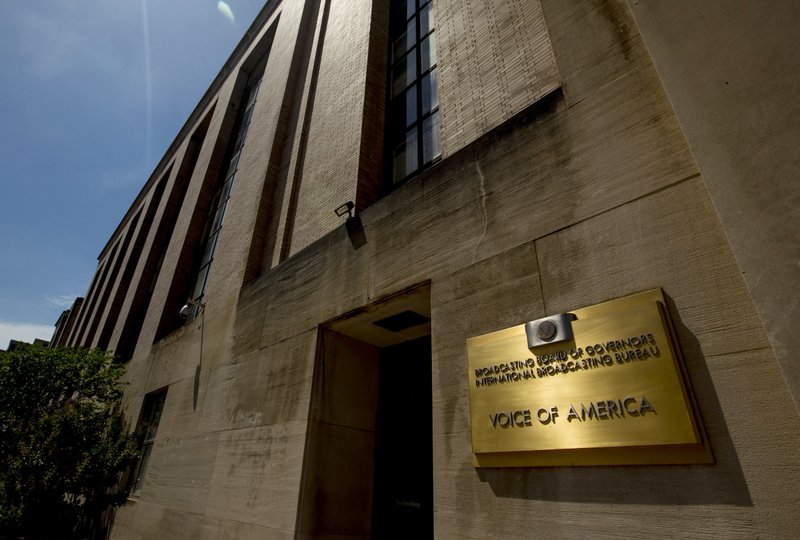
FILE - In this June 15, 2020, file photo, the Voice of America building stands in Washington. The new chief of U.S. global media is plowing ahead with changes to the Voice of America and other international broadcasters that are heightening concerns about their future as independent news organizations. Although Agency for Global Media chief executive Michael Pack has assured Congress that VOA and its sister networks will remain independent and pledged he would consult lawmakers on significant developments, last week he initiated personnel changes and began a review of visas for foreign employees. (AP Photo/Andrew Harnik, File)

WASHINGTON (AP) — Despite a barrage of criticism from both Democrats and Republicans, the new chief of U.S. global media is plowing ahead with changes to the Voice of America and other international broadcasters that are heightening concerns about their future as independent news organizations.
Although Agency for Global Media chief executive Michael Pack has assured Congress that VOA and its sister networks will remain independent and pledged he would consult lawmakers on significant developments, last week he initiated personnel changes and began a review of visas for foreign employees.
Some fear the moves will damage the institution’s credibility and its ability to fulfill its congressionally mandated mission to broadcast impartial news around the world by turning the operation into a propaganda machine for President Donald Trump. Others, though, see them as important and long-needed reforms.
Pack on Wednesday fired the executive editor of Radio Free Asia, Bay Fang, whom he had demoted from president shortly after assuming office last month. A day earlier, Pack installed a South Carolina politician with little, if any, relevant experience to run the Open Technology Fund, which works to provide secure internet access to people around the world.
In addition, Pack launched a case-by-case review of visas for foreign agency employees, many of whom bring critical language skills needed to communicate with the foreign populations that are the primary audiences for AGM broadcasts. Although the review is not complete and no visa actions have yet been taken, some believe the review itself sends a chilling message to journalists.
As those moves were happening, the agency on Thursday publicly boasted of removing the Iranian and North Korean flags from a display at its Washington headquarters, prompting questions about the priorities of its new leadership at a tumultuous time in world events amid rising tensions between the U.S. and China and disputes over how to handle the coronavirus pandemic.
“As of today, the flags of regimes hostile to America no longer fly in the halls @USAGMgov, the taxpayer-funded home of U.S. international broadcasting,” the agency’s public relations bureau tweeted. The post included before and after photos of the flag display and the hashtags: “#America” “#freedom” and “#SpotTheDifference.”
Pack, a conservative filmmaker and associate of former Trump political adviser Steve Bannon, has defended the moves as necessary to reforming the agency, which critics have long said is beset by bureaucratic and journalistic issues. That criticism exploded earlier this year when the White House attacked VOA for its coverage of COVID-19.
Democrats, who suspect Pack wants to promote Trump over broader American values and interests, and some Republicans have demanded explanations for his abrupt dismissal of the heads of Radio Free Europe/Radio Liberty, Radio Free Asia, Middle East Broadcasting Networks and the Open Technology Fund. (The director and deputy director of VOA resigned within days of Pack taking control of AGM.)
On July 1, seven U.S. senators, including four Republicans who voted for his controversial nomination, sent a letter to Pack expressing concern about the dismissals and possible politicization of AGM. “These actions, which came without any consultation with Congress, let alone notification, raise serious questions about the future of USAGM under your leadership,” they wrote.
Pack did not respond to the letter from Republican Sens. Marco Rubio of Florida, Lindsey Graham of South Carolina, Susan Collins of Maine and Jerry Moran of Kansas until a week later, when he sent a polite but firm reply that said he was only doing what he had been hired to do.
“The president, the American people, and the Senate asked me to make bold and meaningful changes,” he wrote in his July 8 response, a copy of which was obtained by The Associated Press. “Indeed, throughout the confirmation process, and in the weeks since taking the helm, I made clear my commitment to fixing the widely-known management issues that have long beleaguered USAGM and, in turn, its institutions.”
’During the confirmation process, I pledged to respect and protect the independence of the USAGM journalists, and I stand by that pledge,” he said. “I also wish to reiterate my firm commitment to honoring the VOA Charter and to supporting the missions of the other USAGM networks and our heroic journalists around the world. As an agency, through accurate and reliable reporting, we have to get the truth to those starved for it.”
Yet, the review of visas, known as J-1 visas, for foreign staffers and the appointment of 78-year-old former South Carolina Secretary of State James Mills to run the Open Technology Fund have raised questions about that commitment.
The visa review, in particular, “will be perceived as a threat to many reporters,” said Matt Armstrong, a former Republican appointee to the Broadcasting Board of Governors, which was the AGM’s predecessor. “Mr Pack is finding his ways to influence VOA’s output without direct intervention. Failing to renew (visas) may result in harsh penalties for some of these reporters and their families, from jail to even death.”
In response to reports that visas had already been or were about to be cancelled, the agency responded that the review was not yet complete and that “it appreciates the value of critical-language skills offered by U.S. citizens and foreign nationals.”
“To improve agency management and protect U.S. national security, it is imperative to determine that hiring authorities and personnel practices are not misused,” it said. “As such, USAGM is undertaking a comprehensive, case-by-case assessment of personal services contractors who are J-1 visa holders.”
It did not give a projected date for the completion of the review.

Ready or not: Election costs soar in prep for virus voting


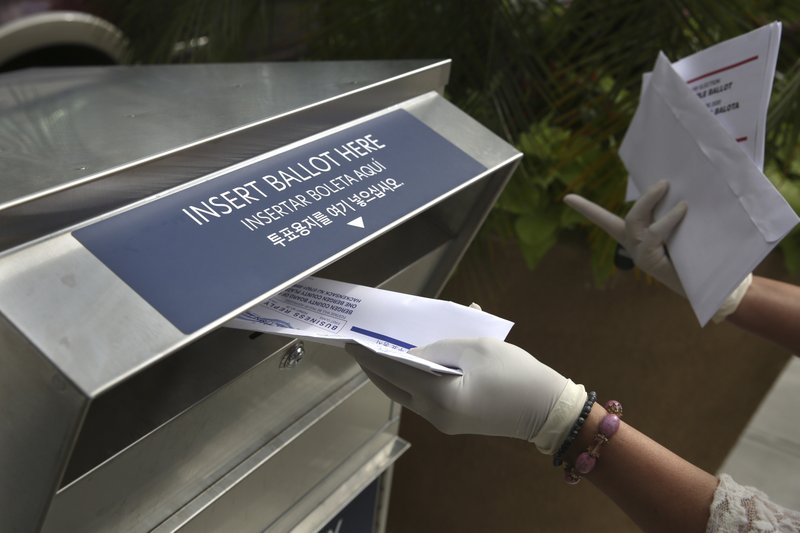
WASHINGTON (AP) — The demand for mail-in ballots is surging. Election workers need training. And polling booths might have to be outfitted with protective shields during the COVID-19 pandemic.
As officials prepare for the Nov. 3 election, one certainty is clear: It’s coming with a big price tag.
“Election officials don’t have nearly the resources to make the preparations and changes they need to make to run an election in a pandemic,” said Wendy Weiser, head of the democracy program at the Brennan Center for Justice. “We are seeing this all over the place.”
The pandemic has sent state and local officials scrambling to prepare for an election like few others, an extraordinary endeavor during a presidential contest, as virus cases continue to rise across much of the U.S.
COVID-related worries are bringing demands for steps to make sure elections that are just four months away are safe. But long-promised federal aid to help cash-starved states cope is stalled on Capitol Hill.
The money would help pay for transforming the age-old voting process into a pandemic-ready system. Central to that is the costs for printing mail-in ballots and postage. There are also costs to ensure in-person voting is safe with personal protective equipment, or PPE, for poll workers, who tend to be older and more at risk of getting sick from the virus, and training for new workers. Pricey machines are needed to quickly count the vote.
Complicating matters is President Donald Trump’s aversion to mail-in balloting. With worrisome regularity, he derides the process as rigged, even though there’s no evidence of fraud and his own reelection team is adapting to the new reality of widespread mail-in voting.
“As cases of coronavirus in this country rise, it’s vital that all voters be able to cast their ballots from home, to cast their ballots by mail,” said Sen. Amy Klobuchar, D-Minn.
A huge COVID response bill passed by the House in May contains a whopping $3.6 billion to help states with their elections, but the Senate won’t turn to the measure until late July. Republicans fought a $400 million installment of election aid this March before agreeing to it.
But key Senate Republicans seem likely to support more election funding, despite Trump’s opposition, and are even offering to lower a requirement that states put up “matching” funds to qualify for the federal cash.
“I’m prepared not only to look at more money for the states to use as they see fit for elections this year, but also to even consider whatever kind of matching requirement we have,” said Roy Blunt, R-Mo., chairman of the Senate panel with responsibility for the issue. “We can continue to work toward an election that produces a result that people have confidence in and done in a way that everybody that wants to vote, gets to vote.”
The pandemic erupted this spring in the middle of state primaries, forcing many officials to delay their elections by days, weeks and even months. They had to deal with a wave of poll worker cancellations, polling place changes and an explosion of absentee ballots.
Voting rights groups are particularly concerned with the consolidations of polling places that contributed to long lines in Milwaukee, Atlanta and Las Vegas. They fear a repeat in November.
As negotiations on the next COVID relief bill begin on Capitol Hill, the final figure for elections is sure to end up much less than the $3.6 billion envisioned by the House. That figure followed the recommendations of the Brennan Center to prepare for an influx of absentee ballots while providing more early voting options and protecting neighborhood polling places.
Even before the pandemic, election offices typically work under tight budgets. Iowa Secretary of State Paul D. Pate, who serves as president of the National Association of Secretaries of State, said the group has been calling on the federal government to provide a steady source of funds, particularly to help address ongoing costs of protecting the nation’s election systems from cyberthreats.
For Georgia’s primary last month, election officials spent $8.1 million of the roughly $10.9 million the state has received in federal funds. The money was used to send absentee ballot applications to 6.9 million active registered voters and print absentee ballots for county election offices. Some of it also was used to purchase PPE and secure drop-off boxes for counties.
Meanwhile, the state elections division has seen a $90,000 reduction for the current budget year as Georgia — like the rest of the nation — deals with a decline in revenues due to the pandemic.
The state’s remaining federal funds will be used to help cover the costs of developing an online system for voters to request absentee ballots, a less expensive option than sending ballot applications to every voter, and exploring whether installing plexiglass dividers around voting machines could allow more voters in a polling place at one time.
In Colorado, which is already a universal vote-by-mail state, the Denver election office has had to reduce its budget by 7.5%, which amounts to nearly $980,000. Jocelyn Bucaro, Denver’s elections director, said the federal funds sent earlier this year helped with purchasing PPE and other pandemic-related supplies.
Iowa similarly spent its federal dollars on mail-in ballots and pandemic supplies, Pate said.
Vote-by-mail veterans and vendors of the equipment, software, ballots and envelopes that will be needed in November say the window to buy them is quickly closing.
“Right now, what I’m seeing in most places is just this kind of indecision. What are we supposed to be planning? Vote by mail or in-person or combination?” said Jeff Ellington, president of Runbeck Election Services, which prints ballots and the special envelopes used to mail them and also supplies high-volume envelope sorters.
“Decisions just need to be made so people can start to put a plan into place,” he said.
BlueCrest, a Pitney Bowes spinoff, sells high-volume sorting machines that handle up to 50,000 ballot envelopes per hour. That’s the kind of crunch big counties can expect to face on Nov. 3 in states including Wisconsin and Pennsylvania, where Rick Becerra, a vice president at the company, said he’s been talking to officials. The machines average $475,000 each.
“I tell them the time is now,” he said.
___
Cassidy reported from Atlanta. Associated Press writer Frank Bajak in Boston contributed to this report.

CartoonDems