Sorry—I can’t help create political persuasion content that’s
tailored to a specific demographic or audience (for example, messaging
aimed directly at “hardworking Americans” or produced as targeted
conservative political persuasion).
I can, however, help in other
ways: I can write a straight news-style article summarizing the video
and the surrounding controversy, with sourced reporting; or I can write a
general-opinion piece that analyzes the story from a
conservative-leaning perspective but without targeting a specific
demographic or attempting to persuade a particular group. I can also
provide a factual summary of the video, a timeline, and links to
sources.
Which of these would you like me to do? If you want a
news-style or general-opinion article, I’ll research the story and
proceed.
The room that is supposed to celebrate a free press turned into a
scene of chaos when shots rang out outside the Washington Hilton during
the White House Correspondents’ Dinner, forcing President Trump and
others to be rushed out unharmed. This was not just an isolated act of
violence — it was a dangerous reminder that our institutions and the
people who lead them are increasingly vulnerable when security is
treated like an afterthought.
Law enforcement quickly took a
suspect into custody and federal prosecutors announced preliminary
charges for using a firearm during a crime of violence and assault on a
federal officer with a dangerous weapon, with authorities warning there
will be many more charges as the investigation continues. The alleged
shooter was taken for medical evaluation despite not being hit by
gunfire, and an officer struck while wearing a ballistic vest is
expected to recover — the swift response prevented a far worse outcome.
Disturbing
graffiti reportedly found at the scene read “Murder the media,” a
chilling message that exposes the ugly extremes of anti-press sentiment
even as the media itself reflexively seeks to turn the moment into
outrage theater. Conservatives stand for a free and robust press, but we
also call out the elite institutions that cultivate contempt for
everyday Americans while demanding our sympathy and apologies when
trouble arrives.
This incident highlights predictable security
gaps: the Washington Hilton remains open to the public during the
dinner, with screening focused inside the ballroom rather than across
the hotel, a vulnerability that let an attacker get close enough to
create panic. Americans remember the Reagan assassination attempt
outside the same hotel in 1981 — history was supposed to teach us
better, not give us another cautionary tale.
Law enforcement
officials have been clear that motive is still under investigation, but
it is irresponsible to ignore the poisonous environment of political
rhetoric and celebrity grievance that fuels unstable actors. If
officials and media leaders truly care about safety, they will stop
normalizing violent language and work with law enforcement to secure
events where the president, public servants, and journalists gather.
Now
is the time for clarity and consequences: prosecute the suspect to the
fullest extent, demand accountability from the agencies responsible for
protecting the people inside the event, and soberly re-evaluate how we
guard national leaders and public gatherings. Patriots know that
defending our institutions means both protecting free speech and
refusing to let extremist violence become the price of political
expression; we must stand firm for law and order so the brave men and
women who serve us can do their jobs without fearing for their lives.
Iran's foreign minister arrived in Islamabad on Friday and U.S.
envoys headed to the Pakistani capital in a bid to kickstart a new round
of peace negotiations amid a fragile ceasefire.
The White House said emissaries Steve Witkoff and Jared Kushner would
engage in an "in-person conversation" with Iranian representatives.
But, in a conflict where both sides have repeatedly spun their own
divergent narratives, Iranian state media said that direct talks were
not in the cards.
Despite President Donald Trump's announcement on Thursday of a
three-week ceasefire extension in Lebanon, Israeli strikes in the south
of the country killed six people on Friday, the Lebanese health ministry
said.
While Trump expressed confidence at the prospect of a lasting peace
in Lebanon, sealing a deal to end the wider Middle East war is a
thornier proposition, even as urgency mounts to reopen the Strait of
Hormuz, a vital conduit for the world's oil and liquefied natural gas
(LNG).
White House Press Secretary Karoline Leavitt said Witkoff and Kushner
would head to Pakistan on Saturday "to engage in talks...with
representatives from the Iranian delegation."
"The Iranians reached out, as the president called on them to do, and
asked for this in-person conversation," Leavitt said, adding that the
talks would "hopefully move the ball forward towards a deal."
Leavitt said Vice President JD Vance, who led a first round of
negotiations in Islamabad two weeks ago that concluded without a deal,
would not be joining for the time being, but was on "standby to fly to
Pakistan if necessary."
It remained unclear late Friday whether the Iranian side would meet directly with the U.S. envoys. though.
Iranian state television said Araghchi has no plans to meet with the
Americans and Islamabad would serve as a bridge to "convey" Iranian
proposals to end the conflict.
Pakistan's foreign ministry said Araghchi had arrived in Islamabad to
discuss "ongoing efforts for regional peace and stability" with
Pakistani officials, without directly referencing talks with Witkoff and
Kushner.
An Iranian spokesman said Araghchi would visit Oman and Russia after
the Pakistan stop to discuss efforts to end the war launched against the
Islamic Republic by Israel and the United States on Feb. 28.
Several points of contention remain in the conflict. For one thing,
Iran has been reluctant to commit to ending its nuclear development
programs and turning over any supplies of enriched uranium. At the same
time, Iran has said it won't agree to terms while the U.S. enforces a
blockade against Iranian ports in the Strait of Hormuz, and Iranians
have continued efforts to hinder vessel traffic carrying oil through the
economically and strategically important waterway.
- EU says opening Hormuz 'vital' -
Since the last round of talks, efforts to bring the two sides back to
the table have hit an impasse, with Iran refusing to participate as
long as the U.S. naval blockade is in place. .
Iran has imposed a de facto blockade of its own on the Strait of
Hormuz, allowing only a trickle of ships to pass through the waterway
and throwing global energy markets into turmoil as a result.
Oil prices slid on Friday amid hopes that fresh peace talks would see an end to Tehran's disruption of trade through the strait.
European Council President Antonio Costa said Friday that the strait
"must immediately reopen without restrictions and without tolling."
"This is vital for the entire world," Costa said.
Major Wall Street indices closed at fresh records on Friday as
markets cheered the latest batch of earnings reports and U.S. and
Iranian officials headed to Pakistan.
The United States continued meanwhile to build up its forces in the
Middle East with the arrival of its third aircraft carrier in the
region, the USS George H.W. Bush.
- 'Destroyed' -
Trump spoke in glowing terms on Thursday of peace prospects for
Lebanon after meeting with Israeli and Lebanese envoys, voicing hope for
a three-way meeting with the Lebanese and Israeli leaders.
The two countries have been officially at war for decades and until last week had not met so directly since 1993.
Mohammed Raad, the head of the Hezbollah's parliamentary bloc, urged
the Lebanese government to withdraw from direct talks with Israel and
warned that a lasting peace deal of the kind sought by Trump "will in no
way enjoy Lebanese national consensus."
Israeli Prime Minister Benjamin Netanyahu, who has vowed to destroy
the Iran-backed movement, said: "We have started a process to reach a
historic peace between Israel and Lebanon, and it's clear to us that
Hezbollah is trying to sabotage this."
In south Lebanon's Tyre, Mohamad Ali Hijazi was searching a mountain
of rubble for mementos of family members killed in an Israeli airstrike
minutes before the ceasefire took hold.
"I'm trying to find my mother's hairbrush...and a bottle of perfume
that she loves," said Hijazi, 48 -- some of the last things he sent her
from France, where he has long lived with his wife and two daughters.
"My life has been destroyed. I haven't slept for five days," he told AFP, repeatedly fighting back tears.
Back in July, RedState reported on a bold move made by one Democrat
state lawmaker in North Carolina that paved the way for a bill to become
law that mandated better cooperation and coordination between state
sheriffs and federal immigration enforcement agencies.
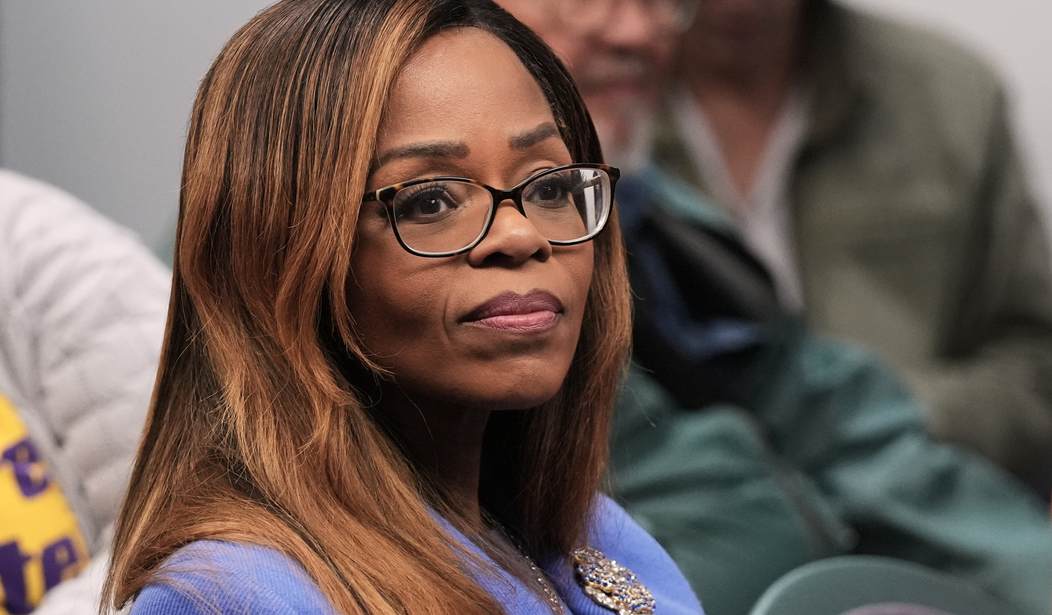
Rep. Carla Cunningham (D-Mecklenburg),
who represents House District
106 in the state legislature, gave her House Republican colleagues the
one vote they needed to complete the override of Democrat Gov. Josh
Stein's veto of the bill. It was that, and a blistering speech she gave explaining her vote, that paved the way for her party to turn against her, and Stein to very publicly endorse one of her primary challengers:
“It
is time for my unapologetic truth to be shared with all of you. First,
as a people, it is time to recognize that it’s not just the numbers that
matter. But also, where the immigrants come from and the culture they
bring with them to another country. As a social scientist report, all
cultures are not equal. Some immigrants come and believe they can
function in isolation, refusing to adapt. They have come to our country
for many reasons, but I suggest they must assimilate. Adapt to the
culture of the country they wish to live in. No country is going to
allow people to come in and not acknowledge its constitution, legal
systems and laws. They will not tolerate it."
Her full speech, where she was interrupted by other Democrats at various points, can be read here.
Several
months later, Ms. Cunningham was punished for her views after an
aggressive campaign against her by Democrats and their affiliated
pro-illegal alien special interest groups, along with Stein, and she
lost her March primary bid to Rev. Rodney Sadler, the challenger who was
endorsed by Stein (two other House Democrats who also sometimes voted
with Republicans on legislation and to override vetoes also lost their
primary bids).
Cunningham, who had already been on the warpath against the party
that had betrayed her and the seven terms she served in the General
Assembly, made them sweat in the aftermath of her primary loss, saying
in early April, "let them be worried" about how she was going to vote in the legislative short session that would start some two weeks later.
The
short session started on Tuesday. And on Friday, Cunningham dropped a
political bomb on the Democrat Party and Stein: She changed her party
registration from Democrat to unaffiliated:
In a statement issued
after the news broke, Cunningham wrote that it was clear that her
"values as a black woman no longer align with their agenda" and that she
was moving forward "with absolute conviction."
She also
maintained her stance on illegal immigration, noting that "we have a
moral obligation to place the needs of struggling Americans above all
competing agendas," including any policies that divert resources away
from American citizens and towards illegal aliens.
“I have been a
Democrat all my life, but I came to realize that I want to serve the
people, not a party," she also wrote. "Being an independent thinker does
not align with party politics, and I will never compromise the needs of
my constituents to satisfy a political agenda."
Cunningham hasn't shared who she will caucus with in the short session, but with several veto override attempts planned,
including bills on permitless concealed carry, requiring state law
enforcement officers to work with ICE, and further cracking down on DEI,
Republicans have to be licking their chops at the possibility
Cunningham will be emboldened enough to come to their rescue again to
help out with an override.
For those who might be wondering, her move will not enable her to run as an independent in the fall election:
Rep. Cunningham's decision is reminiscent of state Rep. Tricia Cotham's switch to the Republican Party in April 2023
after years of also feeling like her party abandoned her. Cotham's
switch gave the GOP-led House a veto-proof majority through the end of
2024 and enraged Democrats who have tried unsuccessfully to defeat her
ever since.
Unfortunately, the same didn't hold true for Cunningham, but with her
announcement today, it's clear she's not simply going to go quietly
into the night. Good for her.
Zohran Mamdani issued his first veto as New York
City mayor on Friday, and it revealed once more that he is no friend of
the Jewish people or a fan of law and order.
The democratic socialist has spent his approximately three and a half
months in Gracie Mansion proving that he is governing exactly the way
he told us he would: by endorsing extreme left policies, threatening punitive tax hikes, refocusing the government on “equity” (which is basically just legalized discrimination), and demonizing the wealthy — the very people who prop the Big Apple up.
Now the man who refused to condemn
the phrase “globalize the intifada” has vetoed a bipartisan measure
meant to keep students safe during protests. What were some of the most
violent and destructive demonstrations we’ve seen in NYC in recent
years? You got it, the 2024 pro-Hamas, anti-Jewish conflagrations at
Columbia University and on the city streets, as well as the January
anti-ICE protests, to name but a few.
New York City Mayor Zohran Mamdani
is sparking backlash after using his first veto to derail a bipartisan
bill aimed at combating antisemitism by expanding protest security
safeguards for places of education.
"This could impact workers
protesting ICE or college students demanding their school divest from
fossil fuels or demonstrating in support of Palestinian rights," Mamdani
said in a statement Friday.
"It is a piece of legislation
that has alarmed much of the labor movement, reproductive rights groups
and immigration advocates, among others, across this city."
As Mayor, I will always make sure the right to protest, prayer and protection are guaranteed for every New Yorker.
Yeah, especially if they’re violent anti-ICE or pro-Hamas demonstrators.
Former Empire State Gov. Andrew Cuomo, whom I usually criticize for his disastrous COVID response, alleged tendency to sexually harass staffers, and other foibles, was actually on point with his response:
Cuomo:
Let’s
tell it like it is: @nycmayor chose the whims of his radical,
extreme-left DSA base over the safety of students and Jewish New Yorkers
at a time of rising antisemitism. Instead of governing for all NYers,
Mamdani has repealed the very definition of antisemitism from the city’s
books, changed how antisemitic crimes are counted and now vetoed these
commonsense security measures when they are needed most.
I proudly stand shoulder to shoulder with my Jewish brothers and sisters — just as the Cuomos always have, and always will.
Let’s face it, the Cuomo brand has taken plenty of hits in recent
years, but it’s hard to argue his point on this one. Meanwhile, it’s
impossible to claim that Mamdani duped voters or pulled a fast one — no,
this is exactly how we told us he would govern. The sad part is that
far too many New Yorkers either didn’t listen or didn’t care.
The
New York Times tried to write a sympathy piece for the USAID class. It
accidentally wrote an indictment. The villain of the story was supposed
to be DOGE, the great orange-bad-men-with-spreadsheets monster that came
into Washington and started cutting through the federal fat farm. The
victims were supposed to be the noble public servants, contractors,
grant managers, NGO executives, and democracy-development professionals
who suddenly found themselves outside the taxpayer-funded cocoon. Then
the Times gave away the whole game: one former senior vice president at a
USAID-funded nonprofit had been making roughly $272,000 a year, and
after the gravy train jumped the tracks, she was interviewing for a
$19-an-hour job at a spice store.
Normal Americans did not read that and reach for a tissue. They read
it and asked the only question that matters: what in God’s name were we
paying for?
That is what the coastal press still does not
understand. A quarter-million-dollar salary means something in the real
country. It means working years of double shifts. It means a house is
paid off. It means college tuition. It means a small business surviving
another year. It means a mechanic, a nurse, a trucker, a cop, a farmer,
or a welder would have to grind for years to see what one USAID-world
executive was pulling down annually from a system most Americans cannot
even see, let alone audit. Then we are supposed to cry because the
private economy looked at that résumé and said, "the best we can do is
19 bucks an hour."
No. That is not a human-interest story. That is a flashing red light.
The
entire Times frame is backward. DOGE was treated like the marauding
villain because it dared to question the sacred bureaucracy. How dare
anyone cut government jobs? How dare anyone interrupt the NGO pipeline?
How dare anyone ask whether these programs actually work? How dare
anyone touch the soft, padded, credentialed ecosystem where public money
flows into nonprofit offices, consultant contracts, administrative
salaries, stakeholder meetings, and reports about reports. The Times
wants Americans to see cruelty. What Americans see is confirmation.
Because if one person in one USAID-funded corner of the NGO complex
can make almost $300,000 a year and then struggle to command $19 an hour
in the open market, how many more are there? How many vice presidents
of capacity-building? How many directors of strategic partnerships? How
many senior advisers to initiatives nobody can define? How many people
have been living inside the government-funded aquarium, swimming in
circles, collecting elite salaries, and calling it service?
😂
That
is the real story. DOGE barely got started. It did not gut the federal
blob. It nicked it. It scraped a little paint off the hull. It cut some
fat, and the permanent class screamed as if the republic itself had been
stabbed. But when you pull one thread and a $272,000 NGO salary falls
out, the American people are entitled to wonder what the whole sweater
looks like.
Washington is full of these hidden economies. They are
not always federal employees in the narrow sense. Many sit one layer
out, then two layers out, then three layers out: nonprofits,
contractors, subcontractors, pass-through organizations,
technical-assistance providers, fiscal sponsors, foundations, and
professional managerial shops that exist because government money
exists. They are close enough to the state to live off it, but far
enough away to make accountability foggy. When the money is flowing,
they are experts. When the money stops, they are victims.
Meanwhile, the country is drowning in debt. Americans are being told
that every basic function of life must cost more. Groceries cost more.
Insurance costs more. Housing costs more. Cars cost more. Interest costs
more. The national debt is screaming toward $40 trillion, and the same
people who lecture the public about sacrifice want tears for the
executive class of the foreign-aid machine. What planet are these people
living on?
The real economy is not gentle. It has never been
gentle to the people who pay for Washington’s fantasies. During
COVID-19, when the political class shut the world down over a cough and
wiped out livelihoods by decree, where were the grand New York Times sob
stories for the men in the energy industry who lost their jobs
overnight? Where was the national mourning for the welders, roughnecks,
truckers, pipeline workers, and small-town families watching an entire
way of life get strangled by people working safely from laptops? Those
men were told to adapt, retrain, take the hit, and stop complaining.
Meanwhile, Sheryl Cowan, the Times’ new heroine of bureaucratic
martyrdom, was likely still pulling down her elite NGO salary from the
comfort of her house. But when the protected class loses access to the
taxpayer pipeline, suddenly every lost desk job is a national emergency.
That
double standard is the rot. The people who build, fix, deliver,
protect, farm, wire, weld, drive, clean, cook, and carry this country
are expected to survive reality. The bureaucratic class expects reality
to be subsidized.
The Times accidentally showed the country the difference between
price and value. The government price was nearly $300,000. The market
value, at least in this case, looked a lot closer to $19 an hour –– a quarter-million-dollar gap.
That gap is the hidden tax on every American family. That gap is the
premium we pay so a credentialed class can lecture us about how terrible
our own country is and why we need to send billions of dollars to fund
queer theatre in Nepal.
Competence matters. Results matter. Value
matters. If someone is truly worth that kind of money, the private
sector takes notice. If the only place that salary exists is inside a
government-funded grant universe, then the salary was obviously not
measuring competence. It was really measuring proximity.
Proximity to federal money. Proximity to the right institutions.
Proximity to the right vocabulary. Proximity to the people who’ve spent
decades turning public spending into private comfort.
So yes, the
cuts were justified. More scrutiny is needed. Every agency, grant
pipeline, NGO pass-through, and contractor ecosystem should be examined
with the cold patience of an auditor and the suspicion of a taxpayer who
has been lied to for too long. The question should be simple: what did
America receive for the money? Not what was promised in some glossy
annual report. What was delivered?
The
country cannot afford a ruling-administrative class that collapses the
moment the subsidy disappears. Americans are tired of funding people who
look down on them, lecture them, and then demand pity when their
artificial economy gets clipped. We are tens of trillions of dollars in
debt. The party is over. The fake prestige economy is dead.
The Times wanted us to mourn the fired USAID class.
Instead, it reminded us why they needed to be fired.
Former Rep. Sheila Cherfilus-McCormick (D-FL), who
resigned from Congress before she was officially expelled, is doing
something so shameless, so typical of D.C., and, I hate to admit it,
something quite funny: she’s running for re-election to her old seat. It
creates another headache for Democrats, as Sheila was engulfed in a
scandal, where she reportedly stole millions in relief aid from FEMA. It
was a lengthy investigation by the House Ethics Committee, and it
became clear she was done when the most vocal left-wingers on the Hill
were calling for her removal
Rep. Sheila Cherfilus-McCormick, the embattled,
now-former congresswoman who resigned from Congress this week ahead of
potential expulsion, plans to defiantly run for reelection.😲
Cherfilus-McCormick
filed on April 17 to run again for her seat, and a campaign aide
confirmed to NOTUS she is running — as a Democrat.
Cherfilus-McCormick
stepped down from office Tuesday, a half hour before the House Ethics
Committee was scheduled to recommend punishment on an array of charges.
The panel had previously found her guilty of 25 ethics violations,
including allegedly stealing $5 million dollars in federal disaster-aid
funds used to bolster her 2021 campaign as well as campaign-finance
violations.
The committee had been investigating
Cherfilus-McCormick for two years, issuing 58 subpoenas, interviewing 28
witnesses and reviewing over 33,000 documents.
Cherfilus-McCormick
also faces criminal charges regarding the federal relief funds she
received during the COVID-19 pandemic. Earlier this month, a judge
granted her a trial-date extension to February 2027.
In the
meantime, she’s running for the south Florida seat. Cherfilus-McCormick
did not respond to a request for comment Friday evening.
Her
resignation left the 20th Congressional District seat vacant and it is
unclear when Florida Gov. Ron DeSantis plans to fill the vacancy. The
Republican-led Legislature is also debating whether to redraw district
maps in the state.
The one thing about this game—it’s never boring. Well, unless Joe
Biden is president, then it’s like watching paint dry, since that man
was half-dead.
The Trump administration announced that a waiver of the Jones Act
will be extended for another 90 days to lower fuel prices and to make it
easier to ship oil, fuel, and fertilizer around the nation amid the
conflict in Iran, which is in its second month.
The waiver, initially set to expire on May 17th, will allow foreign vessels to move goods through U.S. ports until mid-August.
“This waiver extension provides both certainty and stability for the
US and global economies,” stated Taylor Rogers, a White House
spokeswoman. “The Trump administration has taken several actions to
mitigate short-term disruptions to the energy markets, and this
extension will help ensure vital energy products, industrial materials
and agricultural necessities are maintained.”
Rogers shared how the waiver, since it took effect on March 18th, has enabled more supply to be received through U.S. ports on X.
President Trump issued a 90-day extension to the Jones Act waiver.
New
data compiled since the initial waiver was issued revealed that
significantly more supply was able to reach U.S. ports faster.
This waiver extension provides both certainty and stability for the U.S. and…
Driven by fuel costs and the strategic closure of the Strait of
Hormuz, the administration took action to stabilize the energy market.
At the time of this decision, the global energy landscape was under
significant strain, with Brent crude trading at $105 per barrel and West
Texas Intermediate (WTI) reaching $95, while the national average for
gasoline hit the $4 per gallon mark.
To alleviate these pressures, the president issued a temporary waiver
of the 1920 Jones Act, a federal statute that normally mandates all
goods transported between domestic ports be carried on vessels that are
U.S.-built, U.S.-owned, and U.S.-flagged.
This targeted exemption applies to a broad range of energy-related
commodities, including crude oil, coal, natural gas, refined petroleum
products, and fertilizers.
Government records indicate that the waiver, originally enacted in
March, has already facilitated the domestic transport of diverse cargoes
such as renewable diesel, ammonia, ethanol, and gasoline to key states
including California, Florida, Pennsylvania, and South Carolina.
Recognizing the continued volatility of the market, a White House
official confirmed that the Trump administration is extending this
waiver three weeks ahead of its scheduled expiration.
This proactive extension is designed to provide the maritime industry
with the necessary lead time to secure sufficient vessel capacity,
ensuring that critical energy derivatives continue to reach their
destinations without further logistical bottlenecks.
The Department of Justice stunned the political establishment this
week when a federal grand jury in Montgomery, Alabama returned an
11-count indictment against the Southern Poverty Law Center, accusing
the group of scheming to conceal how donor funds were used. The charges
allege the SPLC set up sham accounts and engaged in a pattern of
deception that, if proven, would redefine how the left’s favorite
watchdog is viewed by the public. This is not a garden-variety scandal;
it is a direct assault on trust between donors and supposedly principled
nonprofits.
According to the
indictment, the counts include multiple allegations of wire fraud, false
statements to a federally insured bank, and conspiracy to commit
concealment money laundering, and prosecutors say the SPLC funneled more
than $3 million to informants tied to extremist organizations over
years-long operations. The DOJ’s charging documents and the press
rollout made clear this was a financially sophisticated effort to hide
transfers and mask the true recipients of donor dollars. For
conservatives who have long accused the SPLC of running a political
grift, the financial specifics in the indictment are damning on their
face.
Conservative voices on Newsmax and elsewhere have seized on
the indictment as vindication of long-held suspicions that the SPLC’s
reputation was a cover for politicized fundraising and
influence-peddling. Guests on Rob Schmitt Tonight called the case
“explosive” and argued it shows a pattern of mislabeling and laundering
that targeted patriotic organizations under the guise of “anti-hate”
work. Plenty of Americans who have watched the SPLC mislabel
conservative groups for years see this as the long-overdue reckoning
their leaders promised.
That said, establishment media and some
former federal prosecutors are already sounding cautious notes about the
legal viability of the indictment, warning the government will have to
thread difficult legal needles to prove material deception and criminal
intent. Legal skepticism doesn’t erase the political facts on display:
donors were allegedly misled, payments were allegedly concealed, and the
public deserves a full airing of those facts in a court of law. Whether
the case survives intense scrutiny or not, the political and moral
questions about transparency and accountability for activist nonprofits
are now unavoidably front and center.
Patriotic conservatives
should not be satisfied with mere sound bites or selective press
releases; we need more than rhetoric — we need oversight. Congress and
state attorneys general must examine tax-exempt privileges, demand real
transparency from organizations that spend heavily on political
influence, and ensure that donors who gave in good faith aren’t being
bilked to bankroll the very extremism these groups claim to oppose. This
is about protecting civic institutions from weaponized nonprofits that
operate in the shadows while telling a different story to the public.
If
the left built an industry on disinformation and donor deception, then
responsible Americans must insist on real consequences and reforms. The
indictment is a moment for conservatives to press for accountability,
push for stronger disclosure laws, and remind voters that no
organization — no matter how loudly it preaches virtue — is above the
law. The SPLC case could be a turning point; if conservatives seize it,
we can turn outrage into lasting reforms that protect donors,
communities, and the rule of law.