Conservative Blogger
Efforts to secure a broader peace deal between the United States and Iran are increasingly being complicated by the growing influence of Iran’s Islamic Revolutionary Guard Corps. Analysts, diplomats, and even some U.S. officials have said that the militia group has emerged as the chief obstacle to meaningful negotiations. While Iranian civilian officials and some regime insiders have signaled interest in a negotiated settlement with Washington after weeks of military confrontation and economic turmoil, the IRGC appears determined to maintain a hard-line posture that preserves its power and regional leverage, according to reporting Friday by the New York Post. The Post reported that the paramilitary force — long considered the regime’s most powerful institution — has continued exerting decisive influence over Tehran’s strategy even as U.S. and Iranian intermediaries inch toward a tentative cease-fire framework. Secretary of State Marco Rubio
said Friday the Trump administration was still awaiting Iran’s formal response to the latest peace proposal, which has been shuttled between the sides through Pakistani mediators. Rubio told reporters the White House hoped Tehran would “seriously engage” with the framework despite continued military incidents in and around the Strait of Hormuz, according to The Guardian. According to multiple reports, negotiators are working from a proposed 14-point framework that would establish a temporary 30- to 60-day cease-fire, reopen portions of the Strait of Hormuz to commercial shipping, impose new limits on Iran’s uranium enrichment activities and create a path toward phased sanctions relief. The New York Post reported that discussions also include provisions addressing the fate of Iran’s stockpile of enriched uranium, U.S. naval operations in the Gulf and possible international monitoring mechanisms intended to prevent renewed attacks on shipping traffic. But the truce underpinning the negotiations has repeatedly shown signs of strain. The Guardian reported Friday that exchanges of fire in the Strait of Hormuz this week again raised fears the cease-fire could collapse before a final agreement is reached. The Washington Post separately reported that U.S. forces struck two Iranian-flagged tankers accused of attempting to breach the American naval blockade, while Iran accused Washington of sabotaging diplomacy through continued military action. Iranian missile and drone attacks targeting the United Arab Emirates earlier this week also underscored how volatile the situation remains despite ongoing negotiations, according to reporting from The War Zone. President Donald Trump has insisted the cease-fire remains intact
even after Iranian forces launched attacks on three U.S. Navy destroyers
in the Strait of Hormuz earlier this week.
Trump dismissed the incident as “a love tap” because no American ships were damaged and no U.S. personnel were killed, according to the New York Post.
Still, critics and foreign policy analysts argued the attacks demonstrated how fragile the truce has become and how easily hard-line factions inside Iran could derail the negotiations. But analysts say the IRGC has little incentive to support rapid normalization with Washington because prolonged confrontation enhances the organization’s political standing, economic influence and security authority inside Iran. “The IRGC benefits from a siege environment,” Ali Vaez, Iran project director at the International Crisis Group, said in analysis cited by the New York Post. Vaez argued that the war and Hormuz crisis effectively handed Tehran “a weapon of mass disruption” through its ability to threaten global shipping lanes. Reuters, in background reporting on the Revolutionary Guard’s expanding role, has described the organization as a “state within a state” that exercises sweeping influence over Iran’s military, economy and political system, in some cases eclipsing the country’s clerical establishment. The internal power struggle inside Tehran appears to have intensified after the death of Supreme Leader Ali Khamenei earlier this year and the rise of his son, Mojtaba Khamenei, amid wartime turmoil. Analysts cited in multiple reports have argued the succession crisis accelerated IRGC consolidation behind hard-line commanders and security elites. Güney Yıldız, writing in Forbes and cited in broader reporting on the conflict’s aftermath, said Mojtaba Khamenei’s elevation appeared to reflect “IRGC consolidation behind a pliant figurehead.” The Guard’s influence has also complicated attempts by outside mediators to stabilize the region after months of clashes involving the U.S., Israel and Iranian-backed proxy groups. The Guardian reported Friday that diplomats and mediators remain concerned hard-liners inside Tehran could undermine any tentative cease-fire arrangement by provoking fresh confrontations in the Strait of Hormuz or through proxy attacks elsewhere in the Middle East. Trump has maintained pressure on Tehran while also signaling openness to a negotiated outcome. The president recently said Iran appeared prepared to discuss restrictions on its nuclear ambitions while warning military strikes could resume if Tehran abandons diplomacy, according to The Guardian. Even so, several analysts warned that any agreement reached with civilian Iranian negotiators could still face resistance from IRGC commanders who view reconciliation with Washington as a direct threat to their authority. Navid Kermani, a scholar cited in reporting on the conflict’s impact inside Iran, argued the war did not weaken the regime so much as make it “more brutal,” with security institutions emerging even stronger amid the crisis. That assessment has fueled growing concern among Western diplomats that Iran’s internal power balance may now favor factions more interested in preserving permanent confrontation than achieving a durable peace settlement. © 2026 Newsmax. All rights reserved. |
 |
The Labour Party just suffered a massive loss; so far, the count has shown them losing a ton of seats in the local elections in the United Kingdom.
What was even better was who won, as we reported, referencing some harsh cope from the New York Times:
READ MORE: The Left Got Absolutely Destroyed in Thursday's UK Elections, but Who Won Is Even Better News Funny how people don't like unchecked immigration and the problems that come with that, among the other problems that the leftist Labour Party and Prime Minister Keir Starmer embraced. Labour lost even in places that had traditionally been their strongholds, which indicates they've lost the workers. The mess in the U.K. is where we could be heading if we had continued along the Democrat path and elected Kamala Harris instead of Donald Trump. So if you're Prime Minister Keir Starmer, what you would traditionally do is resign, and someone more in line with what the people want would emerge. But instead of doing
that, listen as Starmer indicates he's not resigning and he's just
going to double down on what has already failed.
He's going to "lay out the steps" for the change that people want. You know that he and his party haven't delivered during the time they've already been in office. Don't worry, they really mean it this time. Starmer is too cowardly to do the right thing. He's more concerned with his own power. We've already seen how feckless Starmer is in relation to his response on Iran, failing to stand with us properly to deal with a terrorist regime. READ MORE: Pure Gold: Watch Starmer Concede They Finally Have to Do Something About Strait But if he stays, he's likely to make Labour even weaker. Starmer was ratioed for being so clueless and cowardly. Rightly so. |
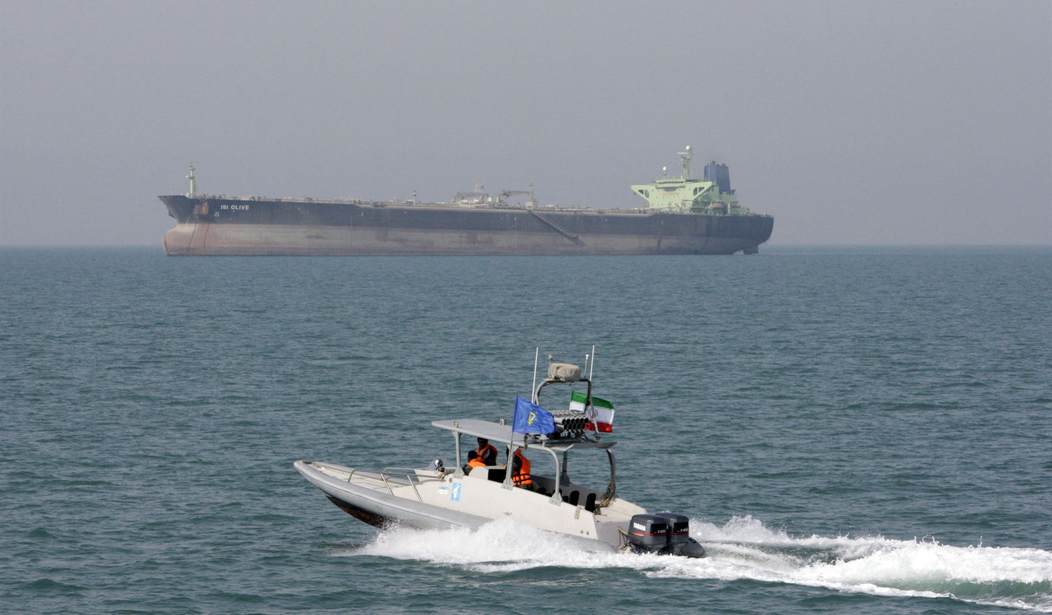 |
Iran took an action on Friday that had a lot of people scratching their heads because it didn't make a lot of sense. They announced that they had seized a tanker.
Wow, that sounds pretty bold. Except for one thing. It's a tanker, sanctioned by the U.S., carrying Iranian oil. Tehran said the tanker was "exploiting regional conditions." Their state media said the tanker had been turned over to judicial authorities. This may be one of the funniest things the Iranians have done so far. So it appears that either they seized a tanker shipping their own oil in the wake of the U.S. attacks on them on Thursday, to appear tough and make it look like they were doing something. Or someone running their oil even believed he could get over on the regime by moving stuff against what Iranian leadership wanted. Take your pick. Either way, it's hilarious. And are they stepping on the Chinese in the process, since it's reportedly "Chinese-managed"? They made what would appear to be a big boo-boo earlier in the week, firing on a Chinese tanker, which couldn't have made the Chinese happy. READ MORE: Iran Attacks Our Ships, and U.S. Makes the Regime Regret It Chinese-Owned Tanker Attacked, Set on Fire Near Hormuz Amid Iran Conflict Then, too, there was another report that may indicate a big problem for the Iranian regime.
More details on the problem:
One expert speculated there may have been an issue as the regime tries to use floating storage to not shut down or damaging their system.
Others speculated the regime might be releasing oil into the Gulf to avoid having to shut down the system. If that's true, they are really at the point of being up a creek without a paddle. |
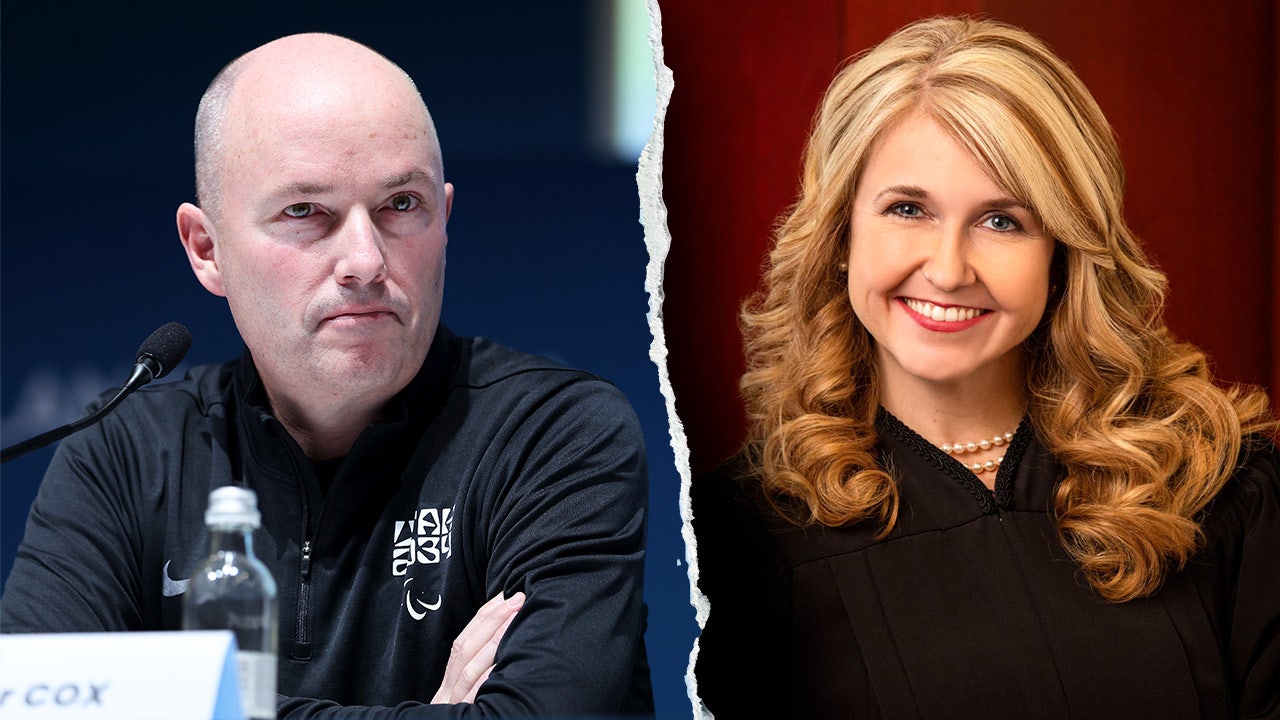 |
You know the axiom: Perception is reality in politics. Whether something is based on fact or fiction, if people think you’re corrupt or if your overall image looks bad, it could be your downfall. For Utah Supreme Court Justice Diana Hagen, the lesson was learned the hard way, as she resigned from the bench following accusations of an improper relationship with an attorney who was involved in this case that led to a pro-Democrat congressional map getting approved
Hagen Letter of Resignation by Robert Gehrke I mean, you could’ve done that, lady, if you weren’t sleeping around…allegedly. Backstory: a local judge, Dianna Gibson, ordered new maps to be drawn after nullifying one created by the Republican legislature. The same judge then approved another map proposed by the League of Women Voters of Utah and Mormon Women for Ethical Government, which the legislature appealed, claiming that Judge Gibson exceeded her authority. The Utah Supreme Court rejected the appeal in February, allowing this map to be used in the 2026 midterms. And now-former Utah Supreme Court Justice Diana Hagen voted in favor. |
 |
| Abby Philip |
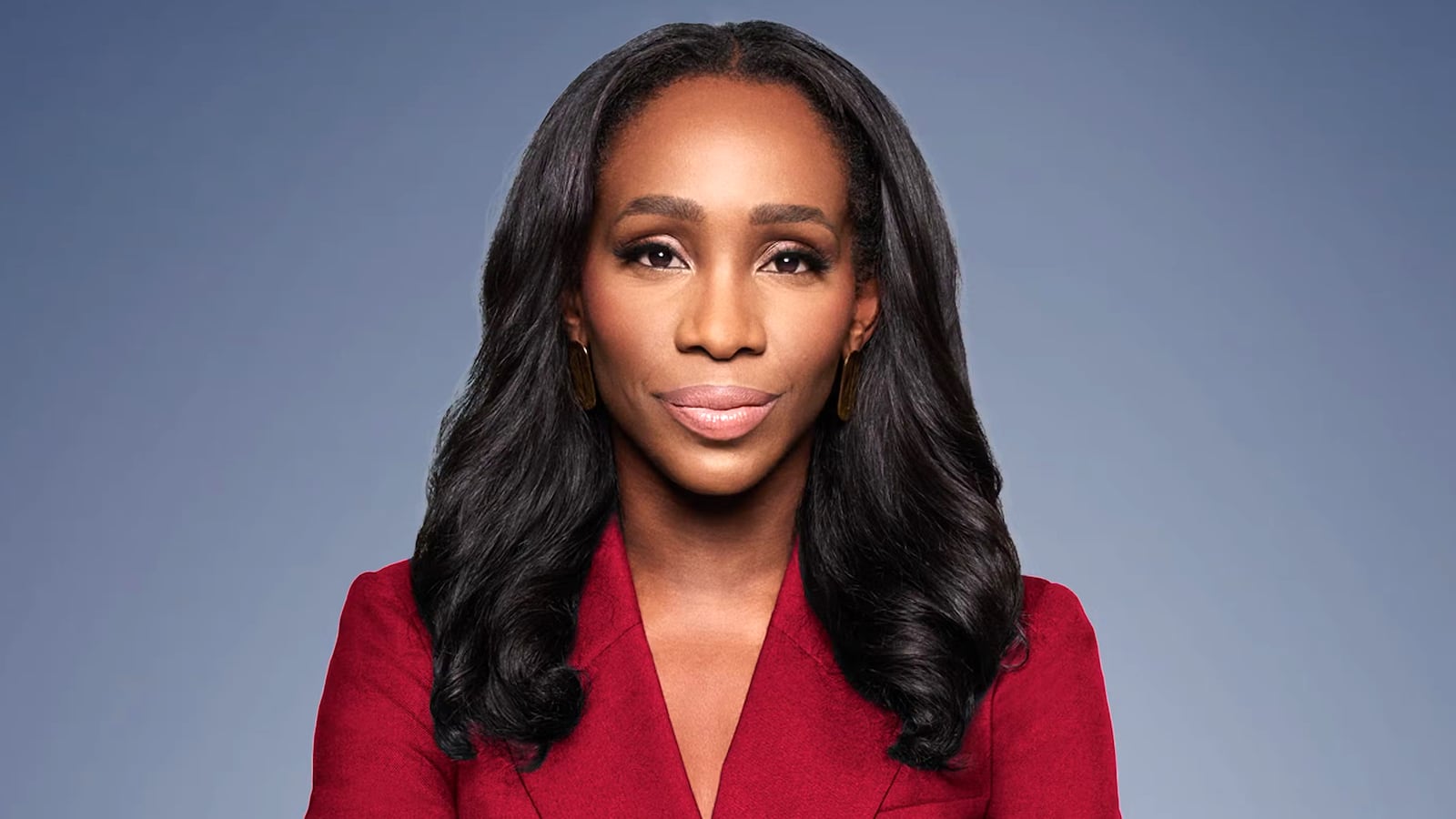
CNN host Abby Philip was having a rough day: the Virginia Supreme Court struck down the Democrats’ gerrymandered map. The reactions came quickly, wildly, and entertainingly, with many not reading the case or the opinion, which was written by a judge appointed by Sen. Mark Warner (D-VA) to the Virginia appeals court while he was governor. This positioned him to become a justice on the Supreme Court of Virginia.
"Virginia's constitution should apply to Florida. I am very smart." https://t.co/NL4Ik8jwJD
— Vince Coglianese (@VinceCoglianese) May 8, 2026
— Media Lies (@MediasLies) May 8, 2026Virginia Supreme Court knocks down congressional maps due to violating the states constitution.
CNN host Kasie Hunt: "How is any of this... good for America?"
Following the state constitution is bad for America? pic.twitter.com/WOjI1cDTg1
It was clear that Democrats violated procedure with this push to gerrymander the state, which could’ve given Democrats a 10-1 advantage. The timeline Democrats used to establish and vote on this amendment, permitting this wild map, violated the state constitution. There are processes and rules that must be followed, you clowns. The best part is that early voting partially sank the Democrats during oral arguments.
Philip said we were in the depths of hell following this ruling:
“We are in the depths of hell” Abby Philip has an EPIC meltdown on CNN NewsNight in the wake of the Virginia Supreme Court ruling that the Democrats’ gerrymandering was unconstitutional.
“America's redistricting battles just became a full-fledged war. Democrats are vowing to go… pic.twitter.com/uQ8qLNc4eq
— Steve Guest (@SteveGuest) May 9, 2026
“America's redistricting battles just became a full-fledged war. Democrats are vowing to go all in tonight after a consequential setback in Virginia. The state Supreme Court striking down the new congressional map that favors Democrats… for black voters in particular in the South they're looking to lose pretty much most if not all of their representation.
No, that’s not true, ma’am. There will be representation, but it’ll be black Republicans. Second, there are zero Republican House members in New England. It’s what it is.
Philip is insufferable, but usually calm and collected, so while she’s not animated, no doubt she was screaming inside.
We’re winning the redistricting battle. The midterms aren’t over yet, and Democrats being clear favorites is now uncertain.
Watching you guys go from celebrating gerrymandering to calling it undemocratic in less than a week is objectively hilarious. https://t.co/44Pz0PsBZl
— Bonchie (@bonchieredstate) May 1, 2026
There are 0 Republican seats in New England. https://t.co/FBCKiN3cqs
— Sean Davis (@seanmdav) May 1, 2026
 |
A federal grand jury has indicted a man in Georgia following a series of gruesome and graphic death threats directed at former Department of Homeland Security Secretary Kristi Noem and former Attorney General Pam Bondi. Elliott Owen Schroer, a resident of Toccoa, Georgia,
was taken into custody after investigators traced a string of violent messages posted to the social media platform X back to his account. According to the federal indictment, the threats were posted on or around April 3rd. Prosecutors say that Schroer’s messages toward Noem were particularly visceral, including specific “descriptions of physical mutilation and the use of a firearm.” One post purportedly stated he would “stab your eyes out with a dull knife,” while another threatened to use a “12-gauge slug” against her. A third post reportedly declared, “We will put your head on a stake.” Additionally, the communications directed at Bondi were equally direct, with one message simply stating, “We’re going to kill you Pam.” Federal authorities have charged Schroer with two counts of making threats via interstate communications and two counts of threatening former United States officials. Prosecutors argue further that these actions were not merely idle rhetoric, but were intended to retaliate against both women for their official duties during their respective tenures in government service. During his arraignment in federal court earlier this week, Schroer was granted a $10,000 bond, though his release comes with stringent conditions. He has been ordered to wear an electronic tracking device and is strictly prohibited from using any form of social media. Schroer is also barred from consuming alcohol, possessing firearms, or having any contact with either Bondi or Noem. A pretrial hearing has been scheduled for May 29th, as the legal proceedings continue to unfold in Atlanta. |
 |
The erosion of trust in our institutions is not an abstract theory —
it’s a lived reality for millions of hardworking Americans who watch
leaders and agencies they once respected stumble, stonewall, or double
down on failure. Glenn Beck’s conversation with Senator Rick Scott
captured a mood that any patriot should find uncomfortable: the
institutions meant to protect liberty increasingly look like
bureaucracies protecting themselves. If conservatives are serious about
saving the Republic, we must call out incompetence and corruption with
the same fervor we defend our Constitution. The fight over the filibuster is the latest battleground where institutional decay shows itself, with both parties posturing while ordinary citizens lose out. Washington plays procedural games — threatening to gut a tool that forces compromise or to weaponize it for partisan priorities — and the result is paralysis on issues that matter to families. This isn’t small-ball politics; it’s a symptom of a system that rewards theatrics over results. Rising gasoline prices are the immediate bite of bad policy, and working Americans feel it at the pump and in grocery bills every week. While elites lecture about transitions and green grand plans, families are forced to tighten their belts as national averages spike and supply-chain shocks reverberate through the economy. Leaders who promise prosperity must answer for policies that make life harder for the people they claim to represent. Abroad, the unraveling of America’s credibility is even more dangerous: the spiraling conflict with Iran has shown how quickly chaos abroad can boomerang into higher prices, supply shocks, and greater risk for American service members. The headlines of the past weeks — strikes, counterstrikes, and a brittle ceasefire — demonstrate that global instability translates into domestic pain and national insecurity. A strong, sober foreign policy would have prevented some of this; instead we get improvisation and excuses. On public health, revelations and indictments tied to COVID-era decision-making have shattered any naive faith that experts are immune from politics or misconduct. The recent Justice Department actions alleging concealed communications by a senior adviser show why Americans suspect that information was curated, not clarified, in a crisis when honesty mattered most. If we want future public-health responses to regain trust, there must be full transparency and real accountability — no special treatment for the elite. The surveillance state debate over FISA and Section 702 is another wrenching example: Congress finds itself torn between protecting citizens’ privacy and preserving intelligence tools, and the net effect is less trust in either claim. Lawmakers have punted, offered short-term extensions, and bickered about reforms while scandals about querying and overreach pile up, proving that secrecy breeds suspicion. Americans deserve both security and liberty, but Washington seems determined to give them neither without a fight. China’s reach into our economy and culture is equally alarming, and the recent settlement over TikTok’s U.S. structure proves that influence can come disguised as commerce and tech convenience. Deals stitched together in back rooms, even when touted as fixes, leave unanswered questions about algorithms, data, and the ideological sway over young Americans. Conservatives have warned for years that national security cannot be sold for short-term corporate profits; that warning is being vindicated as Americans demand transparency. If Americans are losing faith, it’s because those in power have repeatedly chosen protection of the institution over protection of the people. Restoring trust won’t happen through performative hearings or press releases; it will take real reforms, prosecutions where warranted, respect for constitutional norms like debate and due process, and leaders who place country above their club. The alternative is a slow slide into cynicism and decay — and that is a future no patriot should accept. |
 |
The political pyrotechnics from the left have finally met the cold reality of power. Tennessee Republicans unveiled a hard-line congressional map this week that explicitly carves up the state’s only remaining Democratic stronghold, making clear they intend to leave no room for one-party rule from Washington elites. Lawmakers moved fast during a special session to split the Memphis-based, majority-Black district into pieces that dilute its voting power, a maneuver designed to produce an effective 9-0 Republican congressional delegation if left unchecked. State legislators and GOP strategists argue the redraw corrects earlier maps and protects conservative policies across the Volunteer State. The timing follows a seismic legal shift from the nation’s courts that loosened federal constraints on race-based districting, opening the door for states to rework boundaries that previously preserved minority-majority seats. Republican majorities in statehouses aren’t wasting that opportunity, and Tennessee’s leaders moved to exploit the new legal landscape immediately. This outcome is no accident of policy alone; it’s also the political cost of Democrats’ theatrical tactics. When local Democrats and activists escalated protests—some even storming the state capitol in past years and drawing national headlines—their credibility with swing voters eroded and gave Tennessee Republicans the political cover to redraw maps in their favor. Conservative readers should not mourn this as
mere partisan triumph; it’s a reclaiming of representative government
from a self-destructive opposition that prefers virtue-signaling chaos
to sober governance. The people of Tennessee elected Republicans to
protect law and order, fiscal sanity, and parental rights, and now their
leaders are acting decisively to keep those priorities alive in
Congress. If Democrats thought disruption and performative outrage would translate into permanent political gains, they were mistaken. Hardworking Americans see through the stunts, and now the mapmakers in Nashville have given voters a clear choice: support common-sense conservatism or watch their coastal elites squander the country. Patriots should stay engaged, turn out to vote, and back leaders who defend the values that built this nation. |