The U.S. military has quietly helped guide dozens of commercial vessels through the Strait of Hormuz in recent weeks.
The mission has provided an alternative route for shipowners seeking to avoid Iranian interference, The New York Times reported Sunday.
U.S. Central Command has coordinated the passage of about 70
commercial ships into and out of the Persian Gulf during the past three
weeks, U.S. officials familiar with the effort told the Times.
Officials said many of the vessels traveled with their tracking
transponders switched off to reduce the risk of detection while
navigating the narrow waterway, which Iran has repeatedly threatened to
disrupt.
The Strait of Hormuz is a vital artery for global commerce, carrying
roughly one-fifth of the world's oil supply before hostilities with Iran
intensified.
The conflict has sharply reduced shipping traffic and contributed to disruptions in energy markets.
According to the report, vessels traveling near Iran's coastline
without Tehran's approval face a significant risk of attack from Iranian
drones or missiles.
Shipping analysts say the U.S.-coordinated routes appear to keep
ships closer to Oman and farther from Iranian-controlled waters.
While more than 100 commercial vessels typically crossed the strait
each day before military action against Iran, traffic remains
significantly below normal levels.
Even so, the U.S.-coordinated crossings suggest some shipowners are
willing to make the journey after weeks of delays that have stranded
vessels and crews throughout the region.
The American effort also gives shipowners an option that does not
require seeking Iranian permission or paying fees demanded for passage
through the strategic corridor.
CENTCOM confirmed it continues to work with commercial shipping
companies, though it is not currently providing direct naval escorts.
"Though U.S. forces are not escorting, we continue to communicate and
coordinate with commercial ships seeking to freely and safely transit
the Strait of Hormuz, a critical international corridor for regional and
global economies," CENTCOM spokesman Capt. Tim Hawkins said.
President Donald Trump earlier announced "Project Freedom," a
military initiative designed to help commercial vessels transit the
strait. The operation was later scaled back, but U.S. military officials
have continued efforts behind the scenes to assist ships making the
crossing.
U.S. officials maintain that Iran's claims of control over the
waterway are overstated and have sought to reassure shipping companies
that safe transit remains possible with proper coordination.
The guidance effort has been kept largely out of public view,
officials acknowledged, partly to prevent Iran from targeting vessels
that choose to travel under U.S. direction.
Meanwhile, the United States has increased pressure on Tehran through
a blockade targeting ships that have visited Iranian ports. Since
mid-April, U.S. forces operating in the Gulf of Oman have redirected 116
vessels, a move that officials say has significantly restricted Iran's
oil-export capabilities.
Negotiations over the future of the strait remain ongoing, though
U.S. officials said Sunday that Trump has toughened the terms of a
potential agreement with Iran that could reopen the vital shipping lane
to normal commercial traffic.
Okay, I thought Democrats had no conscience when it comes to the
latest revelations about the presumptive Democratic candidate for the
Senate in Maine, Graham Platner, with them scrambling from the questions
about him, and making clear that the only thing that matters to them is
control of the Senate. The effort to drag him across the line is truly
embarrassing.
But
Platner appears intent on imploding his campaign himself. He did an
interview with media, with his wife at his side, attacking
"establishment media outlets" running "gossip." What a trainwreck.
“It’s
no surprise to me that the establishment media outlets are just gonna
run gossip instead of wanting to talk about the things that actually
matter in this race, which are the material realities Mainers are
working with. These people are gonna try to make this race about
anything but what it’s supposed to be about, which is policy.
"Amy
and I have a very loving and very happy marriage. They would very much
like to try to rip that apart. They’re gonna come after us in every
awful way they possibly can, and we’re just gonna keep talking about the
fact that the hospitals are closing, childcare facilities are closing,
the fact that teachers and nurses aren’t paid enough, and the fact that
everybody down here continues to work harder and longer and get less.
But of course, the powers that be do not want us to talk about that, so
they’re just gonna do gossip instead."
A reporter then asks the obvious, "But the stories are true, about the texts?"
"No, this is the amazing part," Platner insisted.
"The
Wall Street Journal and the NY Times ran stories without any evidence
besides the gossip from a former staffer. I'm sorry, that's frankly,
journalist malpractice. We pushed back on it, they did it anyways."
He was asked, "So are you confirming that the messages did not exist?"
"I'm confirming what Genevieve McDonald [the whistleblower campaign operative] in the New York Times is not true," he replied.
"So
you never met with her, for lack of a better word, uncomfortable
sexting messages, as the campaign was going?" another reporter
inquired.
"We talked about things in Amy and I's marriage that
we've gone through over the years, we talked about that, because that's
our marriage," he responded. "And we discussed it with the campaign.
What Genevieve McDonald claims isn't true."
But the wife told
McDonald about the messages with women, and according to the media, the
campaign confirmed there were messages. So what is he even trying to
spin here?
Ms. McDonald said Ms. Gertner told her that her husband had been exchanging sexual messages with as many as a dozen women.
A
current Platner campaign official said Mr. Platner had been
communicating with up to six women. The conduct had stopped, the
official said, before the campaign launched.
The current official
said that the messages surfaced when Ms. McDonald asked Ms. Gertner if
there was anything she wanted to share amid an internal vetting process.
Ms. Gertner told the campaign that the couple had dealt with the issue
in counseling, according to the official.
NBC's Julie Tsirkin reported what the campaign is now saying about
this new interview from Graham Platner. They're trying to sell that he
isn't denying the texts, despite what he said.
Graham
Platner's campaign confirmed the authenticity of the messages reported
by WSJ/NYT, exchanged between his wife and former aide. @NBCNews
An official close to the campaign says Platner wasn't denying them
here, he was referring to the NYT not having the texts themselves. [...]
A campaign official says Platner “isn’t saying the texts to other women at the start of the marriage are not real. They are.”
The
official also said Platner was referring to “inconsistencies” in the
reporting “He’s frustrated by the sensationalization of several private
facts relayed by a former confidante to journalists.”
But what are the "inconsistencies"? The number of women? Do you really want to die on that hill?
According to The NYT, a current campaign official is saying he's disputing the number of women.
It's
quite something to watch a campaign implode in real time. But I think
we can officially say, Platner has jumped the shark with this spin, and
the campaign is trying to clean it up. They probably have the sense to
know other things might drop.
The Trump administration is done playing
defense on election integrity. On Friday, the U.S. Postal Service
(USPS) proposed sweeping new rules that would require states to submit
voter names, addresses, and unique ballot barcodes for federal
elections, giving the federal government real teeth to verify that mail
ballots are going to, and coming back from, actual eligible voters.
Trump signed the underlying executive order himself.
"There's been massive cheating that's gone on."
Will
Scharf, senior associate counsel to the president, laid out the problem
the order is designed to fix. Bloated voter rolls and a mail voting
system that, by design, offers almost no verification.
"We're
going to take federal data, we're going to ensure that each state's
election officials are provided with a comprehensive view of who the
eligible voters in their jurisdiction actually are, allowing them to
properly verify that everybody voting in their elections is legally able
to vote."
He continued.
"...it
orders the Postmaster General and the US Postal Service to take bold
new measures to verify that ballots both being sent to people are being
sent to people who are eligible to vote, and then that ballots being
returned are being properly returned by eligible voters only."
The proposed rule follows that blueprint
and finally adds accountability to a process that has operated largely
on the honor system. States would be required to submit voter lists tied
to unique barcodes on every outbound and return ballot envelope. USPS
would compare ballots sent against ballots returned and flag
discrepancies for further investigation, the kind of basic
chain-of-custody tracking that exists for virtually every other
sensitive document in America.
The rule would also require standardized Election Mail
logos, envelope design reviews, and state-specific participation lists
managed through a new Federal Ballot Mail Portal. Ballots that do not
meet the new standards, or are not tied to a state-submitted voter list,
could be rejected before they ever reach election offices.
Previously,
local election offices determined voter eligibility, maintained
mail-voter lists, designed ballot packets, and handed them off to USPS
for delivery with essentially no federal oversight. Under the proposal,
USPS would receive voter-list data from states, track ballots
end-to-end, and determine whether mailings meet the new federal
standards. The Postal Service goes from passive vendor to active gatekeeper, and that's exactly the point.
The administration isn't waiting on Congress to act. It directs USPS to build the system through the federal rulemaking process, with a 30-day public comment period before the rule can be finalized.
The
general election is five months away, and some states begin mailing
ballots roughly 60 days before Election Day. Cato Institute analyst
Stephen Richer has questioned
whether USPS can build the required infrastructure in time, a fair
logistical concern, though one the administration appears ready to take
head-on.
U.S. District Judge Carl Nichols, a Trump appointee, declined Thursday to block the executive order, ruling the legal challenge premature because the policies had not yet been implemented.
Predictably,
Democrats and left-wing activist groups are already lining up to fight
it in court. Senate Minority Leader Chuck Schumer reached for his usual script:
"Mail-in
voting is safe and secure — period. This new rule is just another
malicious attempt by the Trump administration to suppress the votes of
millions and try to throw the election results."
Notice
what Schumer didn't do: explain how verifying that ballots go to and
come from eligible voters constitutes "suppression." The League of
United Latin American Citizens (LULAC) and allied plaintiffs were
equally short on specifics:
"We are confident we will prevail in the end when this illegal and completely unworkable executive order is fully adjudicated."
"The
entire Trump Administration will continue lawfully enacting the agenda
President Trump was elected to enact — which includes the safety and
security of American elections."
The USPS
rule and the SAVE America Act, which would require photo ID and proof of
citizenship for federal voter registration, move on separate tracks.
The administration is pushing both simultaneously, and the USPS proposal advances through the rulemaking process regardless of what Congress does.
Democrats will sue. Activist groups will fundraise off it.
The media will call it voter suppression. The administration is moving
ahead anyway, and for the roughly 80 percent of Americans who
consistently tell pollsters they support basic election security
measures, that's the right call.
Graham Platner faced two bad stories this weekend:
he’s been sexting with other women while married, and he has an account
on an app known as a haven for pedophiles. The damage-control effort by
the man trying to unseat incumbent Republican Sen. Susan Collins also
turned into a disaster. Now, Sen. Cory Booker (D-NJ) was asked about
this guy by ABC News’ Jon Karl regarding the 2026 midterm implications,
and it was an answer the Platner campaign probably did not want to hear
New Jersey Sen. Cory Booker admitted he’s concerned about
scandal-scarred Maine Senate hopeful Graham Platner after it emerged
that he sexted several women.
“Yeah, I have concerns. The guy has
questions to answer, and that’s what campaigns are for,” Booker (D-NJ)
told ABC News’ “This Week” on Sunday when asked if the controversy could
imperil Dem hopes of flipping Maine’s seat.
Booker declined to
discuss the specific controversies dogging Platner ahead of the June 9
primary. Instead, he underscored the stakes of the battle for control of
the Senate.
[…]
On Saturday, it emerged that Platner’s wife
had tipped off his campaign to a series of sexting messages he made to
numerous women during recent years. Platner got married in 2023.
It
was also revealed that Platner had an account on Kik, an encrypted
messaging service popular for hookups. His account appears to still be
active.
[…]
Booker’s colleague, Sen. Andy Kim (D-NJ), largely sidestepped questions about whether he’s uneasy about Platner.
“Right
now, this information is out there,” Kim told CNN’s “State of the
Union” on Sunday. “With any campaign in the country, the character and
the transparency about the different candidates is going to come out.
That’s part of the campaign. And the voters will decide.”
Maine is a must-win for Democrats if they want to flip the Senate,
and it looks like some folks realize this guy is done. There are
reportedly more stories in the works about this oyster farmer with Nazi
tattoos.
Typically, one performs an autopsy after the subject is dead; when you do it while they’re still alive, it’s called a vivisection, and that’s what we’re going to do today with the Democrats’ soon-to-fail 2026 midterm campaign
to turn America into a more gender-confused version of Cuba.
Fast-forward to Thanksgiving 2026; let’s look back on what’s going to
happen, because you can see the outlines of the inevitable. They’re hoping for a blue wave; they’re going to look back and realize that they blew it.
The Democrats just aren’t good at electoral autopsies.
They just released one about the 2024 fiasco to a great clamor of
condemnation and indignation. Parts of it weren’t
politically correct and were therefore rejected, while other parts, like
the part that the senility of their first presidential candidate
played, were ignored. An autopsy should be a rigorous and objective
attempt to find out what went wrong, and it should tell some hard
truths. But the Democrats have a problem because what they embrace aren’t policies. They’re
not even ideologies. They are religious beliefs. They fill up the space
where normal people keep their faith. Democrat ideology is a substitute
for religion, so the problem is that if you dare to critique any of its
tenets, you’re not just wrong. You’re a heretic. You’re
a bad person for thinking that some women do not have penises, and that
America is not a roiling cesspool of racist hate. So, you can’t
discuss and debate it. All you can do is accept it, which means you can
never change it, no matter how much it hurts your cause.
The blue-haired weirdos, race hustlers, commies, and other degenerates that make up the bulk of the Democrat party don’t
want to hear the truth. They want to see you on your knees, chanting
their sacred dogma without hesitation, equivocation, or dissent. That’s why Democrat autopsies can’t work. They can’t
hear the hard truths because the truth is evil if it conflicts with
what they want to believe. They would much prefer to embrace a
politically correct wrong than an electorally useful right.
Well, let’s try it anyway.
Historical trends say that they’re going to win the House of Representatives. That’s
what usually happens in midterms, and the Republicans are facing
headwinds with the continuing war in Iran, economic discontent, and the
fact that voters get tired after a few years and tend to look to the
other party. But the Democrats aren’t riding high like they
were a couple of months ago. Their redistricting gambit has turned to
ashes in their soft, girlish hands. The Virginia scam failed. Some, but
not all, of the southern states are redistricting after racist
redistricting was banned – the Republicans have an Indiana goody-goody
sissy problem that needs to be addressed in other Red States, but that’s
a discussion for another time. The bottom line is that the Republican
bottom line for seats in the House of Representatives is pretty close to
the majority now. Sure, we can lose, and being Republicans, that’s the default mode, but some sort of sweep of 30 or 40 communist Democrats coming into office seems increasingly unlikely.
And a big part of that’s because of who they nominated. If they had only picked normal people, they might’ve
had that tsunami. The pathology report for a real autopsy would no
doubt mention the large number of active communists, femboys, and jihad
freaks that these people are nominating. And this is their best-case
scenario. They barely beat back the woman in Texas who was openly
suggesting that we stick Jews into camps; yep, all socialists are the
same, including national socialists.
And speaking of Graham Platner, here’s what the autopsy needs to ask just in time to spoil their tofu turkeys at Thanksgiving.
“How the hell did we get ourselves into the position where we nominated a guy with a Nazi tattoo on his chest, not to mention all the other weird stuff this guy had out there on the Interwebs?”
Think
about it. You have Senator Susan Collins, the most moderate of
Republicans, who knows Maine inside and out – everybody knows her
personally – and who is the chair of the Appropriations Committee, which
sends money to the Maple Syrup and Moose state, and who has a tradition
of beating normal Democrats like a drum despite polls that never call
the election right. And the Democrats decided that the right guy to take
her on was a guy with a Nazi tattoo.
A guy with a Nazi tattoo.
He had a freaking Nazi tattoo, people!
Sure,
the Red Brigades on X all had an excuse for it. Oh, it was an accident,
because lots of people accidentally get a Nazi tattoo. You know,
Scheiße happens. Or he was so stupid he didn’t know it was a
Nazi tattoo. Or it was no big deal, because it was only a Nazi tattoo
and, after all, the Nazis do share the same view of Jews as most
Democrats. Or, well, Trump was the real Nazi because of reasons, and
shut up.
No, that Nazi tattoo was no big deal, just like the stuff about rape being the woman’s fault, people from Maine being idiots, and take that, guys who got wounded, were no big deal. And hey, who hasn’t pleasured himself in a Porta-Potty and then written about it?
And, of course, because you knew it was coming, there was this
weekend’s revelation that he was exchanging nudes with random women who
were not his wife, who he loves very dearly, cross his heart and the
Nazi tattoo he had etched over it, but apparently not that dearly. It’s
unclear whether he was gleefully receiving pics from them, or if he was
transmitting pictures of der lil’ Fuhrer to them, or both. If he was
doing the sending, I wonder how he handled the tricky lighting in the
public toilet.
But you know what? To normal people, this was all a big deal. Nazi tattoos are bad, and candidates shouldn’t have them. The same with all the other stuff. Candidates shouldn’t
have to explain dozens of bizarre public statements that repel and
appall regular folks. Normal people looked at this guy, and then
compared him to sober, stable Susan Collins, and decided that no, we’re not going to vote for the communist who’s also a Nazi.
And
then there was Texas. That was another example of Democrats talking
themselves into thinking that they were going to convince normal people
to vote for a white guy because he’s a white guy who mouths
a bunch of blasphemous stuff about Jesus to fool the rubes. But this
was a guy who said that God is non-binary, that there are six genders,
that whiteness is a virus, and that meat is murder.
In Texas.
This is the guy Democrats ran in Texas.
That was objectively insane, at least for anyone with at least a passing knowledge of Texans. But that’s what Democrats did, and they spent tens of millions doing it.
The Democrat autopsy is going to have to grapple with the fact that they can’t seem to get a white guy who doesn’t
look like he drives a Subaru around elementary schools, offering little
boys off-brand 99 Cent Store candy to climb in and help him look for
his lost puppy. After Tim Walz, you would’ve thought there’d
be some soul-searching about how they select their white guys. Maybe
not have them code gender ambiguous. Maybe not have them babble BLM
crap. Maybe not provide the Republicans with countless video clips of
them casually blaspheming.
Democrats need to appeal to white
voters, so it might be a good idea to go out and actually meet some
normal ones, because every white guy they put up as a candidate turns
out to be some sort of freak who probably has something incredibly
creepy lurking in his browser history.
Now, once again, there were
plenty of Democrats on X explaining why James Talarico was the perfect
candidate for Texas and how he was going to transition the Lone Star
State blue. Except this guy reads as someone who’s about to transition himself.
When it comes to reading the room, Democrats are illiterate.
Oh,
and then there was that Abdul El-Sayed guy running for Senate up in
Michigan who was just an outright Hamas lover. You know, normal voters
don’t like that, and all the rationalizations in the world
pumped out over social media were never going to convince them to do it.
You lose when you go up against a guy named Mike Rogers with a guy
named Abdul who believes the same jihadi crap as millions of other
people named Abdul in the dismal Middle East.
And then there was Georgia, where Jon Ossoff had a good chance of
keeping Republicans from taking back the seat that should be theirs and
blew it by ending up on the ballot with the former mayor of Atlanta, who
was running for governor. Atlanta is a crime-ridden hellhole, and she’s the one who made it a crime-ridden hellhole, and people didn’t
want their whole state to be a crime-ridden hellhole. But she was a
black woman of black womanhood, and Ossof had to hang that millstone
around his neck to make sure those voters turned out. Instead, he got
turned out – hard.
And that’s how the Democrats’ dream of taking the Senate turned into a nightmare.
Now, I usually recommend against correcting our enemies when they’re making a mistake. I like to let it play out, let them cook, let them suffer. But I’m not worried about telling them exactly what’s going to happen. If they can’t see the obvious – that you don’t nominate a candidate with a Nazi tattoo, that you don’t nominate a candidate who looks like a gender-confused gnome, that you don’t nominate a candidate who gets extra attention at the TSA line, and you don’t
nominate a candidate who pals around with someone responsible for
turning Atlanta into the San Francisco of the South – then they’re certainly not going to listen to us.
And that’s fine. We want them to keep screwing up. We want them to do things that are insane, not only in retrospect, but in the present.
Hey, if they can’t see their mistakes, we can’t help them anyway. And they can’t help themselves.
(Background) US ambassador to Turkey and special envoy for Syria Tom
Barrack speaks during a joint press conference following his meeting
with Lebanon’s president at the Presidential Palace in Baabda on August
18, 2025. (Photo by ANWAR AMRO/AFP via Getty Images) / (Insert) US
President Donald Trump speaks during the National Memorial Day
Observance at the Memorial Amphitheatre in Arlington National Cemetery
in Arlington, Virginia on May 25, 2026.
United States Ambassador to Turkey Tom Barrack is gaining an expanded
role in the region, being named the special presidential envoy to both
Syria and Iraq, President Donald Trump announced.
Barrack has also been serving as the special envoy to Syria, a title
that recently expired, Secretary of State Marco Rubio explained.
“Ambassador Tom [Barrack] has played an invaluable role as our
Special Envoy to Syria. While that title is expiring, he will continue
to play a leading role for the Trump Administration in both Syria and
Iraq, where his expertise, relationships, and understanding of the
America First agenda will continue to deliver wins on behalf of our
great country,” Rubio posted to social media on Friday.
The president reported the expanded responsibilities for Barrack in a Sunday Truth Social post.
“I am pleased to announce that United States Ambassador to Türkiye,
Tom Barrack, who has done an outstanding job, will be named Special
Presidential Envoy to Syria and, likewise, Special Presidential Envoy to
Iraq, as we advance our strategic cooperation with the Governments of
Syria and Iraq, our relationship with them continues to grow!” Trump
said.
“Tom will remain Ambassador to Türkiye, and operate with the full backing of the United States Department of State,” he added.
Trump nominated Barrack to serve as the ambassador to Turkey in
March, 2025, and he was confirmed by the Senate in April of that year,
according to the U.S. Embassy & Consulates in Türkiye. In May of last year, Barrack was appointed to the role of special envoy for Syria.
“He will continue to play a vital role, not only as our Ambassador to
the Republic of Türkiye, but also as we advance the President’s
strategic cooperation with the government in Syria and begin our work
with the new government in Iraq,” Rubio said of Barrack on Saturday.
Following the collapse of the Bashar al-Assad regime and his ouster
in 2024, the U.S. has been working to strengthen diplomatic relations
with the Middle Eastern country under the presidency of Ahmed al-Sharaa.
According to reporting by the Associated Press, the U.S. State
Department notified congressional committees earlier this year relating
an “intent to implement a phased approach to potentially resume embassy
operations in Syria.” The U.S. embassy in Syria closed in 2012.
Last month, Trump congratulated Ali al-Zaidi on his nomination for Iraq’s prime minister, a position he was subsequently confirmed in.
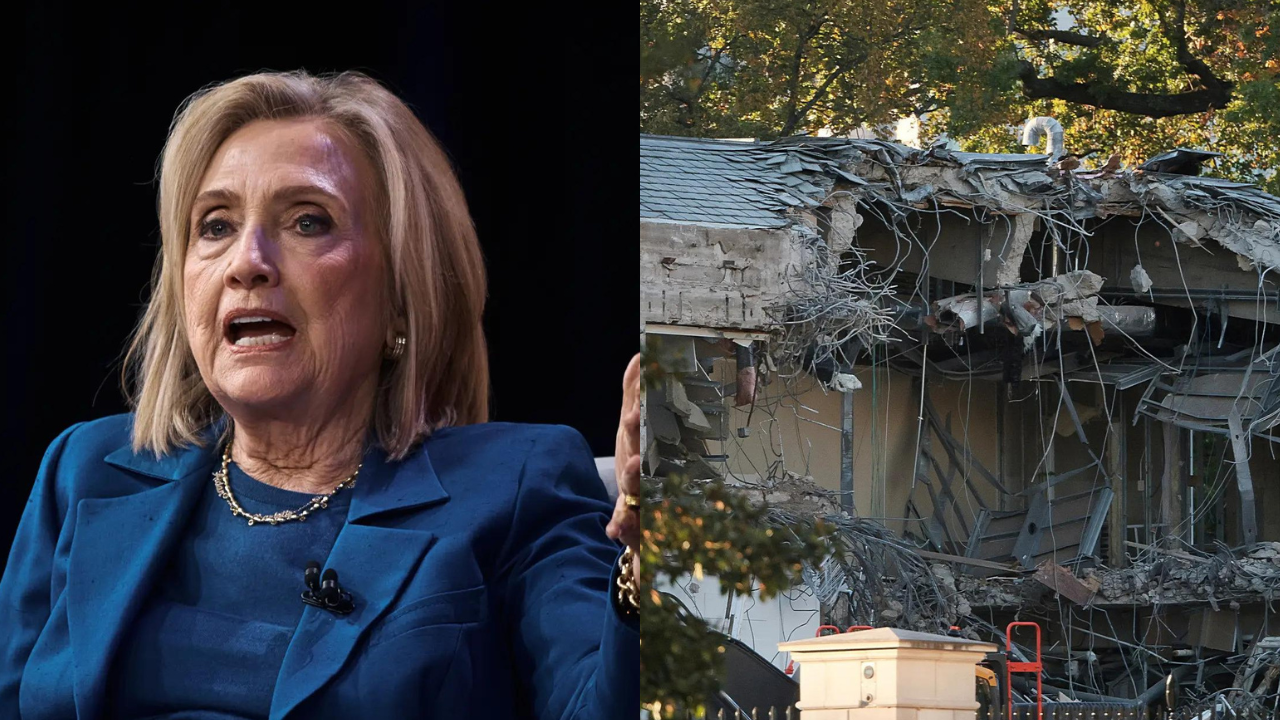
Former Secretary of State and former First Lady Hillary Clinton lit
up social media with a short, sour post about construction at the White
House — and the internet responded like she’d handed out free target
practice. Her one-line jab calling the White House “rubble” and “a cage
match” didn’t land as a serious preservation argument. Instead, it
opened the door for a nasty, quick backlash that said more about
partisan theater than historic preservation.
Hillary Clinton tweet sparks instant backlash
Clinton’s
X post read: “This is what Trump’s done to the people’s house: A third
of it is rubble. Another third is a cage match. What a metaphor.” That
short swipe — paired with an aerial photo of ongoing work on the grounds
— was meant to score points on optics. What it actually did was invite a
torrent of mocking replies and reminders about past Clinton-era
controversies, which conservatives were happy to repost with relish.
What’s really happening at the White House: East Wing work and a UFC ring
The
photo shows two things people already know about: crews have removed
parts of the East Wing as part of a major modernization to build a large
ballroom, and a temporary UFC-style arena has been set up on the South
Lawn for a 250th‑anniversary event. The administration says the ballroom
work is privately funded and calls complaints “fake outrage.” The UFC
says many tickets are for military personnel and that public viewing
will be arranged. So it’s construction and event staging, not permanent
ruin.
Why conservatives pounced — and why the fight matters
Conservatives
mocked Clinton and used the moment to raise old grievances about the
Clintons while also defending the President’s work on the grounds.
Preservationists and some reporters did raise legitimate questions about
process and historic impact, but most of the noise on X was political.
White House spokespeople pushed back hard, insisting they’re restoring
and improving, not vandalizing the people’s house. That argument has
traction when you remember the work is billed as privately funded.
Politics, optics, and the long game
This
little episode shows how fast every image becomes a political cudgel.
Hillary’s snide line was meant to land as moral high ground; instead it
handed conservatives a ready-made punchline. The real debate that should
follow is about transparency, preservation standards, and who pays for
big projects — not a viral pile-on. But in 2026, optics win headlines.
Clinton’s zinger will be forgotten by those who care about facts, and
cherished by those who like a good roast. Either way, the people’s house
keeps being a political battlefield.
Bill Maher raising an eyebrow and endorsing reality TV star Spencer
Pratt on live TV is one of those moments the political circus loves.
Whether you think it’s hilarious or tragic, it tells you a lot about
where the Democrats and the media elite are right now. The clip has been
shared widely, and the reaction from both sides is predictably loud and
petty.
Maher’s Surprise Turn
In a recent viral clip shared by Benny
Johnson, Bill Maher — long seen as a cantankerous left-leaning
commentator — appeared to throw his weight behind Spencer Pratt and
openly criticized Democrats. That is headline fuel. Maher is known for
shaking up his crowd and for saying things that make other liberals
nervy. When a media insider starts publicly dumping on their own team,
it deserves attention. It shows cracks in the narrative the mainstream
media likes to sell.
What This Says About Democrats
The
larger story isn’t the gossip. It’s the message: Democrats are losing
their hold on some of the people who used to back their brand of elite
politics. Voters want results, not personalities. When a celebrity
commentator pivots away from the party line, it’s a sign that elites are
out of touch. Democrats keep doubling down on culture-war posturing
while big parts of the country worry about wages, crime, and schools.
That mismatch is political kryptonite.
Why Celebrity Endorsements Are a Circus
Let’s
be blunt: Spencer Pratt is a reality TV figure, not a policy wonk.
Celebrity endorsements make for fun TV and trending clips, but they do
not replace serious ideas. Conservatives should not celebrate this as
proof of a wave. Instead, use it as a reminder. If GOP leaders want to
win, they need to offer clear plans on inflation, public safety, and
education — not just clap back on cable. Voters respect competence more
than celebrity drama.
Bottom Line
Bill Maher’s moment of
shock TV is a symptom, not the disease. The real problem for Democrats
is a long list of failed promises and a smug attitude from the elite
media that thinks sound bites are solutions. Republicans should welcome
the opening, but also show they have real answers. If the GOP can turn a
viral clip into a message voters understand, that’s how you win — not
by trading celebrity endorsements, but by offering results that matter
to everyday Americans.
President Donald Trump said he had secured guarantees from Iran that
it would not develop nuclear weapons, as reports emerged he had sent a
tougher peace proposal back to Tehran.
Any tweaks to the proposal could prolong even further an agreement to
formally end the Middle East war and open the Strait of Hormuz maritime
route after weeks of efforts to secure a deal despite fractious
rhetoric and the occasional flare up of armed conflict.
The New York Times and Axios media outlets reported on Saturday that
Trump had sent back a new framework to be considered by Iran with
"tougher" terms, though it was not immediately clear what that entailed.
Trump has said his priorities for any deal include stopping Iran from
any nuclear weapon development and re-opening the blockaded Strait of
Hormuz.
"The one guarantee that I have to have is that there will be no
nuclear weapons. They've agreed to that, and it was very interesting,"
he told his daughter-in-law Lara Trump in an interview broadcast on her
Fox News program on Saturday night.
But Tehran has previously cast doubt on Trump's assertions and the parties appeared far apart on their key priorities.
Iran has said it requires the release of $12 billion in frozen assets
before it moved to substantive talks on issues such as its nuclear
program and called earlier Trump comments that its enriched uranium -- a
precursor for nuclear weapons -- would be destroyed "baseless",
according to Iranian media.
Tehran has also insisted that Lebanon must be included in any end to
the war despite ongoing fighting, with Beirut accusing Israel of a
"scorched-earth policy" as its forces advanced and carried out further
airstrikes it says target Iran-backed group Hezbollah.
After Trump and US officials earlier said they were on the brink of
striking a deal, he struck a less urgent tone and hinted at renewed
military action in the Fox interview.
"I'm in no hurry," he said. "Slowly but surely we're getting, I
think, what we want and if we don't get what we want, we're going to end
in a different way."
- Flare ups -
That echoed comments from Pentagon chief Pete Hegseth who said at a
defense summit in Asia on Saturday that Washington was "more than
capable" of restarting the war if necessary.
Though daily strikes throughout Iran and the Gulf have stopped since
Tehran and Washington struck a temporary ceasefire in April followed by
historic talks hosted by Pakistan, bursts of armed conflict have
continued.
Iran's Revolutionary Guards had shot down a US military drone "about
to enter Iranian territorial waters to conduct hostile operations",
Iran's state broadcaster IRIB reported, an incident that has not been
confirmed by the United States.
Earlier in the week, the worst fighting since the fragile ceasefire
broke out when US forces carried out strikes on the Iranian port of
Bandar Abbas, countered by retaliatory fire from Iran.
Nevertheless diplomacy has continued with Trump under pressure to
reach an agreement that would lift US and Iranian competing blockades
around the Strait of Hormuz that have choked international oil supplies
and threatened the global economy with rising prices.
After Trump said on social media that Tehran would charge "no tolls"
on ships passing through the strait once the blockades were lifted under
any deal, Iranian news agency Fars cited sources saying "no such clause
appears in the text of the agreement."
Iran's ISNA news agency on Saturday cited lawmaker Alireza Salimi as
saying a plan "to implement Iran's management and sovereignty over the
Strait of Hormuz will soon be approved by parliament."
- Expanded Lebanon operations -
Israel's military issued evacuation warnings for more villages in
south Lebanon on Saturday, a day after Prime Minister Benjamin Netanyahu
said Israeli forces had pushed more than 30 kilometres (20 miles) into
the country.
Lebanese Prime Minister Nawaf Salam accused Israel of pursuing a
"scorched-earth policy and collective punishment", and called for "a
swift and real ceasefire."
Israel's military confirmed it was expanding its ground offensive in a
statement released early on Sunday, saying "a significant number" of
its forces had advanced past the Litani river and were carrying out
expanded operations against Hezbollah in the Beaufort Ridge and Wadi
al-Saluki area.
A truce between Israel and Hezbollah began on April 17 but has never
been observed, with both sides accusing each other of violating it.
In early March, Tehran-backed Hezbollah launched rockets at Israel in
retaliation for the killing of Iran's supreme leader in US-Israeli
strikes, prompting Israel to carry out near-daily air raids in Lebanon
and launch a ground invasion.
Israel and Lebanon began direct talks in April, with a fourth round expected in the coming week.