The U.S. State Department is urging American
citizens to depart Iran immediately, citing worsening security
conditions and widespread disruptions across the country.
In a nationwide security alert issued Feb. 6,
the Virtual Embassy Tehran warned of increased security measures, road
closures, public transportation interruptions, and ongoing internet
blockages. Iranian authorities continue to restrict access to mobile and
landline networks, while airlines are limiting or canceling flights
with little notice.
"U.S. citizens should expect continued internet outages, plan
alternative means of communication, and, if safe to do so, consider
departing Iran by land to Armenia or T rkiye," the alert read.
"Actions to Take:
Leave Iran now. Have a plan for departing Iran that does not rely on U.S. government help.
Flight cancellations and disruptions are possible with little warning. Check directly with your airlines for updates.
If you cannot leave, find a secure location within your residence
or another safe building. Have a supply of food, water, medications, and
other essential items.
Avoid demonstrations, keep a low profile, and stay aware of your surroundings.
Monitor local media for breaking news. Be prepared to adjust your plans.
Keep your phone charged and maintain communication with family and friends to inform them of your status."
Officials cautioned the U.S. government cannot guarantee safety for
those departing and stressed that Americans should not rely on U.S.
assistance to exit. The advisory also highlighted heightened risks for
dual U.S.-Iranian nationals, noting Iran does not recognize dual
citizenship and may detain individuals based on U.S. ties.
The United States has no diplomatic or consular relations with Iran,
with Switzerland serving as the protecting power for U.S. interests in
Tehran.
We saw how some deranged, sick leftists
celebrated the murder of Turning Point USA co-founder Charlie Kirk after
his brutal assassination in September 2025. It’s one thing to oppose
someone’s viewpoints; it’s another to take joy in their killing.
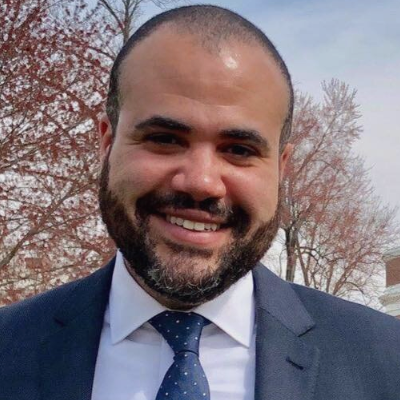
One of the worst of the lot was UCLA DEI chief Jonathan Perkins, and
he just found out that his demented views are too much for even the
administrators of that woke institution. He has no regard for the
sanctity of human life, but evidently, we’re supposed to cry over his pets:
UCLA finally fired its DEI chief months after the woke administrator publicly celebrated the assassination of conservative activist Charlie Kirk — but now he’s begging for donations to help with his pets.
Jonathan
Perkins, UCLA’s director of Diversity, Equity and Inclusion, was
finally given the ax in a letter on Friday after he gushed he was “glad”
about the vicious murder of the Turning Point USA founder.
“Given
the nature of your role as a Director of Race and Equity, the
university has determined that this conduct significantly undermined
trust in your leadership and adversely affected the office’s
effectiveness and credibility,” the university told him in a termination
letter obtained by the Los Angeles Times.
“It is
OKAY to be happy when someone who hated you and called for your people’s
death dies — even if they are murdered,” he wrote on the social media
app Bluesky. “Good riddance,” he added. “I’m always glad when bigots
die.”
Disgusting.
It seems like this creep has a history of stirring things up:
After waiting for the statute of
limitations to pass, he recanted his hoax admission. He recently
celebrated Charlie Kirk’s assassination and had also wished death upon
Justice Clarence Thomas.
Of course, Perkins, being the saint of a guy he appears to be, will take the matter to the courts:
His
last day on the payroll for the $137,000-a-year gig was Jan. 30,
according to the letter. It’s not clear what took the university so long
to make its determination.
And, of course, Perkins wants money.
He recently set up a GoFundMe for relocation expenses, legal fees, and
cash to help his two dogs and cats. I'm going to hold on to my dough,
thank you very much.
Maybe he was exercising his right to free
speech — but that doesn’t mean UCLA has to pay him for his vitriol. The
university, a public institution that is part of the once-revered
University of California system, rarely gets things right these days,
but they did here.
Bon voyage, Jonathan; good luck in finding another outlet for your hate.
Editor's Note: This article was updated to include more information about his GoFundMe.
The ongoing struggle to protect the right of public
employees to disassociate themselves from unions whose values they don’t
share has a number of heroes.
There’s Pamela Harris, for example, plaintiff in Harris v. Quinn, which affirmed the right of homecare providers to opt out of union membership and dues in 2014. Or Rebecca Friedrichs,
whose lawsuit against the California Teachers Association would have
extended the same right to all public employees had it not been
interrupted by the death of U.S. Supreme Court Justice Antonin Scalia.
And Mark Janus, who finally championed those rights in Janus v. AFSCME.
But
it’s worth remembering the path to freedom was pioneered years earlier
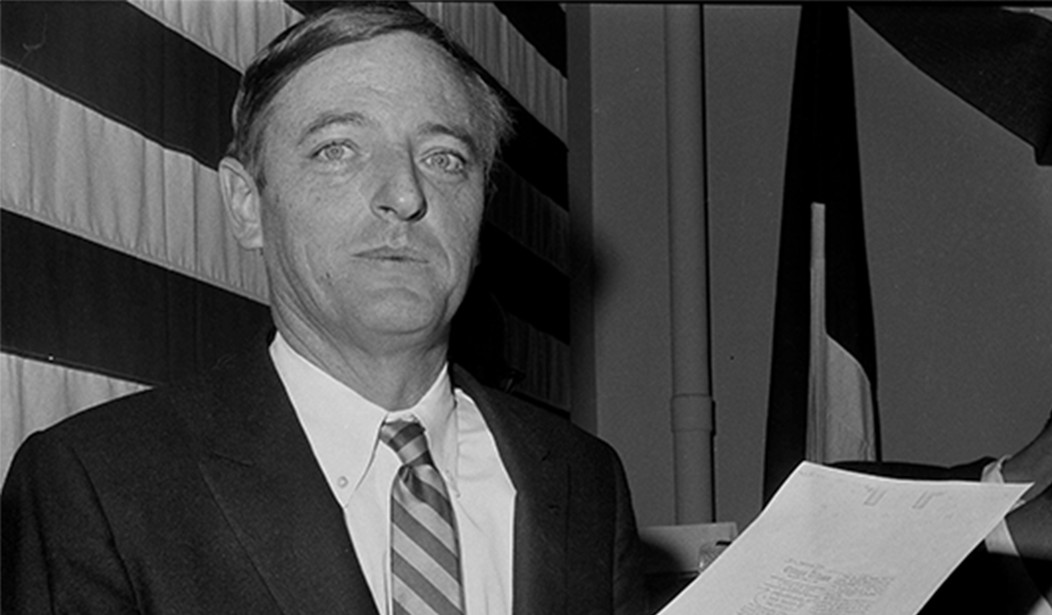
by National Review founder, author, columnist, TV commentator, and
liberal provocateur William F. Buckley Jr.
In fact, he
waged a seven-year legal battle making the familiar argument that his
First Amendment right to free speech was being impeded by laws requiring
him to join (and support with his dues) the American Federation of
Television and Radio Artists.
Although Buckley v. AFTRA didn’t relate specifically to public employees, as did later precedent-setters like Abood v. Detroit Board of Education (1977), Davenport v. WEA (2007), as well as Harris and Janus, Buckley’s attorneys nonetheless asserted that, since his TV show, “Firing Line,”
was created on and broadcast by taxpayer-supported public television,
the issue at stake differed fundamentally from similar disputes in the
private sector, where “union shop” arrangements are a matter to be
decided between labor and management.
In
an era when the most conservative voice liberals could find to revile
belonged to the maddeningly moderate Richard Nixon, and Ronald Reagan,
whose fully articulated conservativism wouldn’t win the White House
until 1980, was busy honing his message in the wilderness of California,
Buckley was the universally accepted face of the movement, and his
platform was an hour-long, stage-bound program relegated by most PBS
outlets to weekend afternoons.
In spite of all
obstacles, and devoid of any glitz or glamour, “Firing Line” quickly
developed a devoted following among Americans captivated by Buckley’s
wit and brilliance, and completely unaccustomed to hearing conservative
views espoused anywhere else.
In his 1970 lawsuit,
Buckley noted that he joined AFTRA when the show was launched in 1966
because union membership and dues were a condition of employment imposed
by New York’s WOR-TV, where the show was produced, and its parent
company, RKO General, Inc.
Later, he came to resent
having to support an organization whose values clashed with his own and
sought to opt out — just as hundreds of thousands of public employees
have since Janus v. AFSCME affirmed their First Amendment right to do so
in 2018.
“The requirement,” the complaint stated, “that plaintiff
Buckley be a member of defendant AFTRA, pay dues and obey orders as a
condition of his continued employment in the television and radio
industries, and the threatened denial of his access to television and
radio stations, places an unreasonable restraint upon plaintiff
Buckley's right of free speech, deprives him of his property without due
process of law and breaches his rights under the 1st, 5th and 9th
Amendments of the Constitution.”
Buckley added later,
“Many of the people in this country labeled as liberals eloquently
object to any compromise of the individual rights of the citizen against
the government, particularly in the field of free speech and privacy. I
think it is time they join me in demanding that the individual have a
right to join or not join, to pay dues or not pay dues, to a private
organization surrendering his right to speak.”
His words
eerily presaged the dozens of lawsuits still being filed in the wake of
Janus by public employees whose attempts to exercise their First
Amendment rights were suppressed or ignored by their union.
Buckley’s
suit was ultimately denied cert in 1974 by the U.S. Supreme Court and
remanded back to the lower courts, which had earlier ruled against him.
The
fight dragged on until 1977, finally concluding with a stipulation — or
agreement among the parties — that enabled both sides to claim victory.
Under the deal, the union was required to notify all its
signatories — the employers of broadcast performers — that performers
need not join the union to work in radio or television.
However,
performers working under AFTRA contracts could be required to pay union
initiation fees and dues, whether or not they are members.
Buckley
promptly resigned his membership in AFTRA but continued hosting “Firing
Line” until 1999. With 1,504 episodes during its 33-year run, it became
the longest-running public affairs program with one host in television
history.
Buckley died in 2008, but his logic still resonates on an issue very much still in the news today.
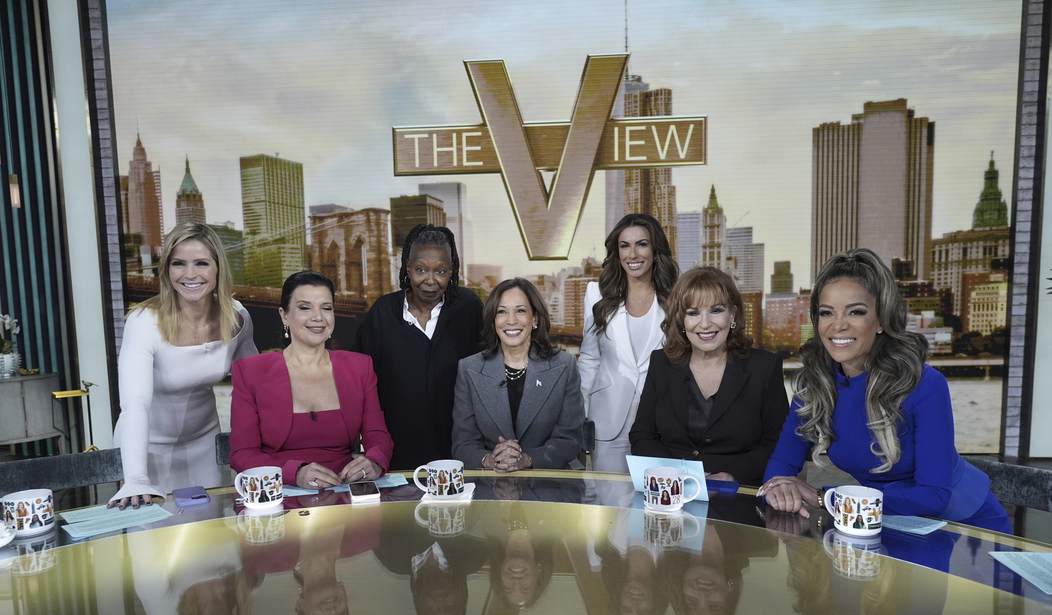
The Federal Communications Commission is reportedly investigating The View, according to a Fox News report.
The FCC is reportedly trying to enforce a January rule that requires “statutory equal opportunities" to broadcast television stations, including their late-night and daytime talk shows.
The show reportedly failed to file the right paperwork for
late-night and daytime talk shows when it hosted Texas Democratic Senate
candidate James Talarico, "which would implicitly indicate to the FCC
that Disney believes 'The View' is bona fide news and would be exempt
from the policy," Fox reported.
We'll have to wait and see whether the FCC forces The View to host more Republicans.
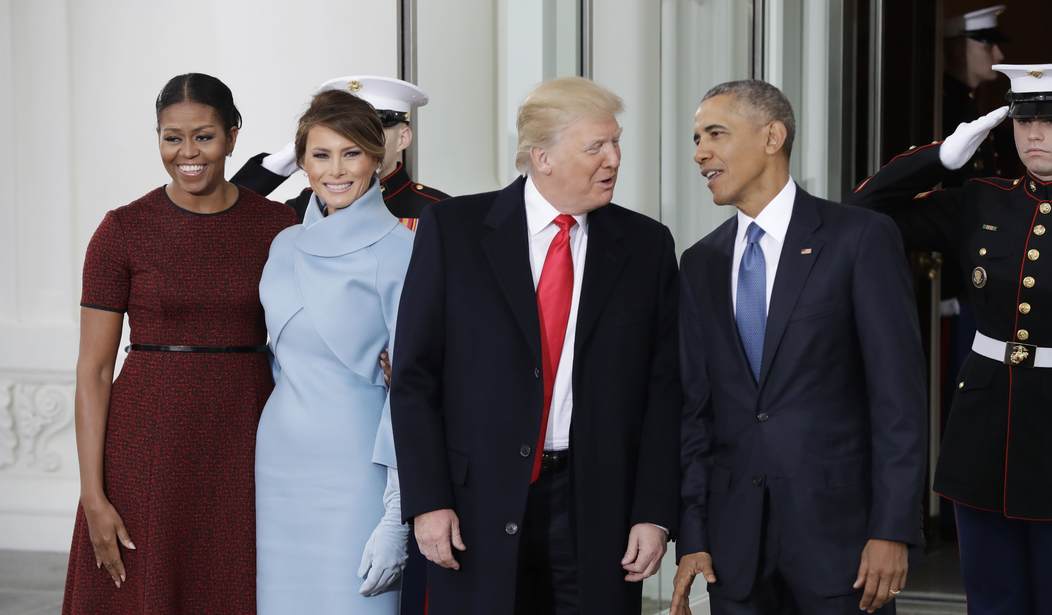
You knew the panicans, the
squishes, and the Democrats were going to go nuts over this video, which
really isn’t focused on the Obamas, but they were featured in a form
that many view as racist. Okay, that’s not fair; it’s not good. Both the
former president’s and the first lady’s heads are on two monkeys. It’s
not something you want to see coming out of the White House.
Then again, the media will likely frame this as ‘Trump White House
post racist video targeting the Obamas,’ when that’s not the case. Also,
it's an old video. The actual post deals with voter fraud and election
integrity. The video featuring the Obamas and every other major
political figure, including Joe Biden as a monkey eating a banana, is a
separate reel, and whoever cut this video forgot to edit it out. It was
not a member of the Trump team who cut this video. It was actually in
the original post:
Here’s the source of Trump’s Truth post.
It’s
a downloadable video that Trump then reuploaded. The Lion King meme
briefly appears at the end—after one whole minute—and was likely never
seen by Trump.
One minute and two seconds of seditious conspiracy captured on video tape.
RE: DOMINION & SMARTMATIC Election Rigging Systems
Cybersecurity
Expert — Colonel Phil Waldron: “Here is some of the treachery we
uncovered in the 2020 general election were that five key… pic.twitter.com/FmZ94mFibC
“This
is from an internet meme video depicting President Trump as the King of
the Jungle and Democrats as characters from the Lion King. Please stop
the fake outrage and report on something today that actually matters to
the American public,” said White House Press Secretary Karoline Leavitt.
It’s pretty
clear that the Obama Monkey video was a reels auto play at the end of a
screen recording of an election fraud video which is the video Trump
actually shared. pic.twitter.com/rQtNQsdOwa
Again, I simply do not care what makes the liberal media and
spineless Republicans unhappy. The communications here weren't the best,
I get that, but mistakes happen. And I simply couldn't care less about
this. This story will soon be gone and forgotten. Also, I get that you
must watch things to the end; who would think that clip would
accidentally pop up in a video about alleged voter fraud?
It's a wild story, but don't get too much heartburn over it. Only panicans are in a tizzy.
It was a dumb thing to post. BUT, I have a few questions:
Were you offended when @JoeBiden said “you ain’t really black” if you don’t know whether you want to vote for me or Trump”?;
Were you offended when Biden, for decades, falsely claimed that he “desegregated movie theaters… https://t.co/uAxLeBrOnJ
Cathy L. Lanier, Chief Security Officer for the NFL, speaks during a
press conference about public safety plans for Super Bowl LX at the
Super Bowl LX Media Center at the Moscone Center on February 3, 2026, in
San Francisco, California.
Super Bowl LX at Levi’s Stadium will be fortified by a “substantial
law enforcement presence” spanning land, air, and sea. While security
operations throughout the San Francisco Bay Area are extensive, Super
Bowl officials have noted that immigration officers will not be part of
the deployment for this Sunday’s game.
“We have multiple command centers that we are operating as the
federal government in concert with our local partners,” Jeff Brannigan,
the Department of Homeland Security (DHS) federal coordinator, told ABC News
on Friday. “It’s a broad footprint with a lot of personnel. Some are
uniformed and, very clearly, government officials of some way.”
As a Special Event Assessment Rating (SEAR) 1 event, the Super Bowl
is recognized for its significant national and international importance,
necessitating extensive interagency security support.
According to Associate Chief of Operations Brian M. Clark, this
year’s efforts include “hundreds of federal special agents” from across
the government.
While specific tactical details remain confidential, the security net
includes the FBI, ATF, U.S. Coast Guard, CISA, and Customs and Border
Protection (CBP). Additionally, the DEA’s Pacific and Southwest regions
will provide direct support to state and local law enforcement to ensure
a secure environment.
CBP will be considered the “front line,” with their job at the Super
Bowl being focused on safety and trade. They use X-ray scanners to check
vehicles for explosives, fly helicopters to monitor the airspace, and
seize counterfeit NFL merchandise. They are there to keep the venue
secure, not to perform immigration sweeps, officials added.
“For Super Bowl events, you have a lot of human trafficking that
comes in,” he said. “You’ll also see a lot of drug trafficking that
comes in the area for parties and things … So, we would like to say for
people to be aware, to have that conversation. Take this time, when
you’re gathering with your friends and family, have that conversation
about the dangers of fentanyl, because one pill, one time can kill.”
The Coast Guard is also deploying specially trained
explosive‑detection canines around Levi’s Stadium and other Super Bowl
event sites, and is assisting in monitoring for unauthorized drones in
the area.
“This is something that we do every day, just a more robust and
augmented response,” said Commander Jarod Toczko at Coast Guard Sector
San Francisco’s base on Yerba Buena Island on Wednesday. “When you have
an event such as this, obviously, that presents additional security
measures with the crowds that are gathering.”
Despite concerns over potential ICE activity in the Bay Area, NFL
Chief Security Officer Cathy Lanier stated that the agency will not be
involved in Super Bowl operations. The DHS further noted that no
immigration enforcement actions are planned, ensuring the security focus
remains strictly on public safety.
“We are confident of that,” Lanier stated at a public safety press
conference. “Our Department of Homeland Security, who’s been our partner
for more than 20 years now and is made up of more than 20 different
departments, will send a variety of different agencies. It does not
include ICE. There is no ICE deployed with us at the Super Bowl. And I
don’t believe there has been in the last several.”
Turning Point USA is shaking things up with a halftime show that’s
bound to raise a few eyebrows and pump up the volume, featuring none
other than Kid Rock. Known for his no-holds-barred style and love for
all things American, Kid Rock is set to deliver exactly what fans
expect, with a little something extra up his sleeve. While the left
might try to twist the narrative, Kid Rock gives assurance that this
show isn’t about hate—it’s about celebrating the love for country, good
music, and everything that ties them together.
This performance
isn’t just driven by the desire to play great music but by a passion to
entertain a part of America often overlooked by the mainstream. Kid
Rock, and many others like him, know that a huge chunk of our country
feels underserved by what’s coming out of Hollywood and the music
industry. They want their voices heard and their values showcased,
without being drowned out by a predictable chorus of coastal elites who
seem to dominate the entertainment biz.
Kid Rock points out a
fascinating trend in the industry—while music should unite us, it
sometimes becomes another battleground for ideological tussles. Is it
too much to ask to enjoy a show without knowing or caring about the
performer’s politics? For Kid Rock, choosing to vocalize his love for
America and his faith isn’t something to shy away from; it’s something
to celebrate. He isn’t shy about mixing things up and taking a stand,
even when it goes against the grain of what you might see under the
Grammy spotlight.
Kid Rock also acknowledges that this part of
America that cherishes its churches and flags feels insulted by many big
performances that often ignore their existence altogether. Sometimes, a
nod to God seems to draw more ire than applause, but Kid Rock feels
it’s okay to express a more free-spirited version of conservatism. After
all, his rendition of what it means to be a conservative includes a nod
or two to the finer things in life.
For those wondering what
surprises the halftime performance has in store, Kid Rock teases a
180-degree twist. He promises to bring the thunder as only Kid Rock can,
while also debuting something special he brewed up for the event. Once
the final play of the game ticks down, fans can expect to hear a new
track drop—an exclamation point on what promises to be an all-American
extravaganza. God bless the USA, and God bless Kid Rock.
As President Trump ups the ante in the Middle East, the United States
is sending a significant surge of military power to the region, a move
reminiscent of the tactics used in Venezuela. Yet, Iran presents a
different challenge altogether. As tensions simmer and the threat of
conflict rises, the stakes are high, and the impact could ripple
throughout the global oil market. After enduring a brief yet intense war
with Israel not long ago, Iran remains armed and ready, with thousands
of missiles at its disposal to potentially target both U.S. forces and
allies stationed nearby.
At the heart of this military buildup is
an impressive fleet of U.S. warships, affectionately dubbed by the
President as an “Armada.” This robust display of firepower includes 12
warships and the USS Abraham Lincoln, which is accompanied by three
guided missile destroyers currently sailing in the northern Arabian Sea.
Additional support vessels are positioned strategically in key
waterways, ensuring a strong presence in the Strait of Hormuz, the
northern Red Sea, and the Eastern Mediterranean. The Pentagon is also
keeping submarines nearby, although their exact locations remain
classified— much like a covert superhero squad.
Equipped with an
arsenal of advanced weaponry, the USS Abraham Lincoln and its
accompanying destroyers are well-prepared for any scenario. The aircraft
carrier is home to F-35C and F-18 fighter jets, which can strike
targets with precision, along with electronic warfare planes that jam
enemy defenses. The naval fleet’s capabilities are bolstered by guided
missile destroyers armed with Tomahawk cruise missiles, which can take
out threats swiftly, including those pesky Iranian missile systems that
proved to be a challenge during their recent skirmish with Israel.
On
the ground, U.S. bases scattered across the Middle East serve as
fortifications against potential Iranian aggression. Armed with
sophisticated air defenses, these installations are ready to protect
American troops and allied regions from incoming attacks. However, not
all host countries are on board with using their land as launchpads for
strikes against Iran. Saudi Arabia, the UAE, and Jordan have decided
against such roles, yet the U.S. military continues to conduct
surveillance operations and flight missions from these locations,
ensuring they remain vigilant.
To further underscore its
commitment to deterrence, the United States is relocating additional
THAAD and Patriot missile defense systems from bases in Texas and Japan.
Analysts point out that this move conveys seriousness about potential
military action, despite the logistical challenges and costs associated
with moving these sophisticated units. The U.S. is also prepared to
leverage aircraft stationed in Europe or the strategically important
island of Diego Garcia if the crisis escalates.
Ultimately,
President Trump’s military armada is part of a broader strategy to apply
pressure on Iran, encouraging negotiations over its nuclear ambitions.
However, the specter of conflict looms large. Should diplomatic efforts
falter, the consequences could lead to a larger regional war, a prospect
that keeps military planners and policymakers on high alert. As the
U.S. showcases its military might, the world watches closely, wondering
how the unfolding situation will shape the future of peace and stability
in the Middle East.
Iran has laid out a vision for a potential war
with the United States, detailing how it believes it could strike U.S.
military bases across the Middle East, cripple global energy markets and
pressure Washington into backing down, The Telegraph reported Thursday.
The plan was published by Tasnim, a news agency affiliated with
Iran's Islamic Revolutionary Guard Corps (IRGC). It outlines a
multi-stage conflict designed to offset America's military superiority
through asymmetric warfare.
The disclosure comes as diplomatic talks between Washington and
Tehran appeared close to collapse before both sides agreed to meet in
Oman.
President Donald Trump warned Wednesday that Iran's supreme leader, Ayatollah Ali Khamenei, should still be "very worried."
According to the report, Iran's scenario begins with U.S. air and
missile strikes on Iranian nuclear facilities, military installations,
and IRGC bases — many located in densely populated areas.
Tehran anticipates U.S. attacks launched from aircraft carriers,
strategic bombers, and allied bases, using stealth aircraft and
precision-guided weapons to overwhelm Iranian defenses.
Iran says it has prepared by dispersing assets, hardening facilities,
and constructing underground missile and command centers designed to
survive initial strikes. The goal, Iranian planners argue, is not to
prevent damage but to retain the ability to retaliate.
"We are ready for any action by enemies," Maj. Gen. Abdolrahim
Mousavi, Iran's armed forces chief of staff, said this week. "After the
12-day war, we changed our military doctrine from defensive to offensive
by adopting a policy of asymmetric warfare and a crushing response to
enemies."
The second phase would see Iran launching barrages of missiles and
drones at U.S. bases across the region. Targets would reportedly include
Al-Udeid Air Base in Qatar, Ali Al Salem Air Base, and Camp Arifjan in
Kuwait, facilities in the UAE, and U.S. positions in Syria and Iraq.
Amir Akraminia, Iran's army spokesman, claimed access to U.S. bases
is "easy." The report notes Iran previously struck Ain al-Asad Air Base
in Iraq in 2020, injuring more than 100 American troops.
Tasnim wrote that "Iran does not see itself as an 'isolated island'
in war," but as the center of a wider network involving its proxies
Hezbollah, Yemen's Houthi rebels, and Iranian-backed militias in Iraq.
These groups would be expected to open additional fronts against Israel, U.S. forces, and shipping lanes.
The plan also envisions cyber warfare targeting transportation
systems, energy infrastructure, financial networks, and military
communications. Iran believes cyber attacks could pressure countries
hosting U.S. forces to withdraw support.
Perhaps the most consequential threat involves the Strait of Hormuz,
through which roughly 21% of the world's oil supply passes. Iran has
repeatedly warned it could disrupt shipping through the narrow waterway.
Hossein Shariatmadari, a representative of Khamenei, said: "We can
impose restrictions against the United States, France, Britain, and
Germany in the Strait of Hormuz and not allow them to navigate."
Iran believes even partial disruption could send oil prices soaring
to $200 a barrel, inflicting severe global economic damage and
fracturing support for U.S. military action.
While U.S. contingency plans exist to keep Hormuz open, The Telegraph
notes that even limited interference would rattle global markets.
Iran's strategy ultimately rests on the belief that Washington lacks
the political will for a prolonged, multi-front conflict — a gamble that
carries enormous risks for both sides.