office made a surprise
visit on Tuesday to the Federal Reserve's headquarters renovation
project, as the Trump administration continues its pressure campaign
against the central bank.
The unscheduled visit was confirmed by a spokesperson for Pirro's office and was first reported by The Wall Street Journal.
After speaking with construction workers, two of Pirro's deputies
were advised they could not access the site without prior clearance and
they were given the contact information for the Fed's legal staff, the
Journal reported.
President Donald Trump has waged an aggressive campaign against top
Fed officials, including Fed Chair Jerome Powell,
whose term ends in
May, with the goal of lowering interest rates. The campaign has sparked
political outcry and court challenges.
The Department of Justice has been investigating Powell for his
oversight of the renovations to the central bank's headquarters in the
nation's capital.
Though a federal judge has found the probe to be a thinly disguised
effort to pressure Powell to lower interest rates or resign, the
department has said it would appeal.
Former Fed chairs and former government economic policy leaders from
both the Republican and Democratic parties have raised alarm about the
Trump administration's probe.
The Fed could not be immediately reached for comment. The Journal
reported that an outside lawyer for the Fed, Robert Hur, objected to
Tuesday's visit in a letter to Pirro's office.
Hur was cited as saying that the prosecutors appeared "without prior
notice" at the construction site, where they asked for a tour and said
they wanted to check on the progress of the renovation project.
The independence of central banks in setting rates to control
inflation is considered a central tenet of robust economic policy,
insulating monetary policymakers from short-term political
considerations to focus on longer-term efforts to keep prices stable.
Former Federal Reserve Governor Kevin Warsh has been nominated by Trump to head the central bank.
When armed individuals with bad intentions approach a building or an
event where there are lots of people, oftentimes the outcome is
devastating and horrific. We saw it with the Columbine and Sandy Hook
massacres, the Nashville Covenant School mass shooting, and the Abundant Life Christian School mass shooting, just to name a few.
But sometimes, when all is said and done, it's the good guys who win
at the end of the day, which is exactly what happened a week ago at a
high school in Oklahoma.
The scene of the attempted mass shooting
was Pauls Valley High School. And according to authorities, the school's
principal, Kirk Moore, was the main target. 20-year-old Victor Lee
Hawkins, a former student who investigators say admitted he was inspired
by Columbine, approached the school on the afternoon of April 7th,
armed with two semi-automatic pistols, per local reports, both of which
were loaded (note: the feature image above is not a picture of the gun
used in the shooting).
Here's what happened next after he walked into the front of the school:
Hawkins then pointed a gun at a student in the foyer and attempted to shoot, but the gun malfunctioned and did not fire.
The affidavit says Hawkins then stepped behind a vending machine “to clear the malfunction.”
Investigators say Hawkins then came back out and pointed his weapon at another student and fired a shot.
It says that the student put his hands in the air and asked Hawkins not to shoot him.
The document says Hawkins then lowered his gun. He told both students, whom he had just attempted to shoot, to leave the scene.
After
the students fled, it was at that point that Moore came out to look
into what was going on and saw Hawkins, who shot him in the leg. But
that didn't prevent Moore from tackling him onto a nearby bench, where
the assistant principal was able to retrieve the gun Moore had knocked
out of Hawkins' hand. Moore stayed on top of him to ensure he didn't get
away:
According to the affidavit, Moore then “wrestled with
Hawkins on a bench in the foyer and was able to remove Hawkins’ pistol
from his hand.” It says Moore and the school’s assistant principal then
lay on top of Hawkins until law enforcement arrived.
The video is incredible. Watch:
Y'all, Kirk Moore is no spring chicken. One report I read quoted
someone who said they'd known him for 55 years. So he is at least that
age, if not older. But this man did what needed to be done, and
countless lives were saved that day:
Pauls Valley, I should also note, is a small town:
Pauls Valley is a community of about 6,000 people 60 miles (96 kilometers) south of Oklahoma City.
As for Principal Moore's condition, he is expected to be okay. He issued this statement in response to the outpouring of support:
Pauls
Valley schools are safe communities unaccustomed to the type of threat
we witnessed on Tuesday. Nevertheless, like so many educators around the
country, we prepare for these events through training and careful
assessments of threats. I am grateful that my instincts and training, as
well as God’s hand, were available to come to me on Tuesday.
My
sincere thanks to the Pauls Valley police and fire departments, as well
as the Garvin County Sheriff’s Office, Oklahoma Highway Patrol and ATF
agents who responded to provide support. I am especially proud of the
Pauls Valley alumni among this group who so selflessly serve our
community and demonstrate the values of our school every day.
I
look forward to returning to work as soon as possible so that I may
continue my life’s work educating the next generation of Oklahoma
leaders. Until then, my thoughts are with our outstanding students, safe
today in the arms of their families and friends.
Get well soon, Principal Moore. And may God continue to bless you, the school, and its students.
New York City Mayor Zohran Mamdani celebrated his first 100 days in office
at a former factory in Queens, where he touted his administration’s
“historic achievements” like securing $1.2 billion for universal
childcare and fixing 100,000 potholes, and announced the location of his
first socialist pet project: a new city-owned grocery store.
“I know there are many who use ‘socialist’ as a dirty word, something
to be ashamed of,” Mamdani told his supporters. “They can try all they
want, but we will not be ashamed of using government to fight for the
many, not simply the few.”
Mamdani might believe that city-run grocery stores will benefit the many, but history tells a very different story.
“When
corporations control every part of the food supply chain, prices go up,
wages stay flat, and workers and customers both lose,” Mamdani said.
“That is why we are advancing a public option -- one rooted in the
belief that our city can and must intervene where the market has
failed.”
Has the market failed in New York City? Not exactly.
It is true that the price of groceries is well above the national average
in the Big Apple. However, it is also true that New York City has one
of the most restrictive zoning environments for grocery stores in the
nation.
“The most egregious planning barrier is that grocery stores over 10,000 square feet are not generally allowed as-of-right
in so-called ‘M’ districts, which are the easiest places to find sites
large enough to accommodate the large stores that national grocers are
used to,” notes Stephen Smith in an article titled “The Real Reasons New Yorkers’ Groceries Cost So Much.”
Consequently,
in New York City, to “open a full-sized grocery store in these areas, a
developer must seek a ‘special permit,’ which requires the full City
Council to get together and vote for an exception to the rules. This is a
long, uncertain process, and has in the past even been an invitation to
corruption.”
The New York City Council, which seems very enthusiastic about
Mamdani’s Soviet-style grocery stores, has used the “special permit”
process as a means of stopping national grocers from setting up shop in
the city limits on numerous occasions.
By denying permits to
major grocery chains, New York City is suffering from a lack of
competition, which is exacerbated by the fact that national grocers like
Walmart can use economies of scale to keep prices minimal.
Meanwhile,
New York City’s bodegas and mom-and-pop grocery stores have struggled
to keep pace with ever-rising rents and property taxes. With fewer
people working in downtown office buildings since the pandemic, many
small-time corner grocery stores have gone out of business, too.
Mamdani’s
solution, opening five city-run grocery stores over the next few years,
might be popular with NYC residents, but it will make the problem
worse, not better.
“We cannot accept a status quo where even the
most basic necessity -- putting food on the table -- feels out of reach.
This is about ensuring that every New Yorker, regardless of income or
ZIP code, has access to fresh, healthy food at a price they can afford,”
said Mamdani.
Unsurprisingly, Sen. Bernie Sanders (I-VT) chimed
in and praised Mamdani’s plan. “Today’s announcement by the mayor of new
city-run grocery stores is just another example of government working
for the people,” said the socialist senator.
But Bernie should know better.
Believe
it or not, Bernie Sanders honeymooned in the Union of Soviet Socialist
Republics in 1988. At the time, the Soviet Union was an economic basket
case. Its command-and-control economy was on the brink of total collapse
after decades of central planning had gone awry.
In the late 1980s, during Bernie's 10-day vacation, bread lines were the norm for the millions stuck behind the Iron Curtain.
New
York City Councilwoman Inna Vernikov, one of six Republicans in the
51-seat New York City Council, also knows about breadlines.
“I
didn’t escape a childhood of Soviet breadlines just to sit quietly while
a Mayoral frontrunner tries to make socialism seem like a great idea
for NYC,” Vernikov posted to X late last year.
Government-run
grocery stores are not novel, and they have never worked in practice.
However, like nearly all stupid socialist ideas, it may take a bitter
pill of reality, i.e., breadlines, for New York City residents to learn
this hard lesson.
Chris Talgo (ctalgo@heartland.org) is editorial director at The Heartland Institute.
Editor’s Note: New York City is now facing the consequences of Mayor Zohran Mamdani’s socialist takeover.
Speaker Mike Johnson is probably happy that Reps.
Tony Gonzalez (R-TX) and Eric Swalwell (D-CA)
are no longer in Congress.
Gonzalez was already out after losing his primary, which was
complicated by a personal scandal involving a reported affair with a
female staffer that ended with her suicide. Swalwell’s entire career
fell apart in less than three days amid rape and sexual misconduct
allegations. These two were part of a growing movement on the Hill to
expel these members.
Johnson is a process guy, so the hit list for the House got whittled
down big league with these resignations. That doesn’t mean the furor has
subsided—these two guys were bad news, Swalwell, especially. Yet, one
House member, a Democrat, has been through the process and a lengthy
investigation, so Mr. Johnson has no qualms about his feelings over Rep.
Sheila Cherfilus-McCormick (D-FL)
getting the boot.
Cherfilus-McCormick came under fire for reportedly stealing millions
in FEMA aid. Even the most left-wing voices in the House couldn’t defend
her. The initial plan for Democrats was to throw Swalwell to the wolves
if it meant dragging Republicans through the mud, with Republicans.
Gonzalez and Cory Mills (R-FL) are on the chopping block. The board has
changed again.
Why is it that this man can't seem to be normal?
Joe Biden stepped out of his darkened lair to attend the unveiling of
his portrait at Syracuse University, where he earned his law degree.
Like his career in public life, he was an unremarkable student, failing a
class for plagiarism and graduating near the bottom of his class.
Biden saw a black man and decided to claim he looked like Barack
Obama.
I, personally, don’t see the resemblance. He might as well have
said ‘Corn Pop’ is here, since apparently, all black people look the
same to Joe.
‘Look at this black, doesn’t he look like Obama?’ is peak Joe Biden. It’s still not as good as his remarks about Indians working at 7-Elevens
Former
President Joe Biden raised eyebrows Tuesday at Syracuse University
after making an awkward onstage remark comparing a Black member of the
school’s Board of Trustees to former President Barack Obama.
Biden
returned to his alma mater Tuesday to celebrate the unveiling of his
portrait, which will be permanently displayed in the law school's Law
Library Reading Room.
Video shows Biden speaking at the podium, addressing the law school's leadership by name before making the awkward joke.
"I always want to turn around to one guy and say.. 'Barack what are you doing?" Biden said as the audience laughed.
At least, he didn’t sniff hair, grab anyone, or touch people like we’ve seen him do many times. Please put Grandpa to bed.
Thank you.
Also, it wouldn’t shock me if Joe thought this black man was Barack Obama.
Senate Majority Leader John Thune says Democrats’ antics forced Republicans to fund the government “the hard way.”
While speaking to reporters following a policy luncheon on Tuesday,
Thune (R-S.D.) called out the left for delaying efforts to reopen the
government.
Thune revealed that Senator Lindsey Graham (R-S.C.) is preparing a
budget resolution to begin the reconciliation process to fund U.S.
Immigration and Customs Enforcement (ICE) and Border Patrol (CBP), which
could be introduced as soon as next week.
He also argued that these steps wouldn’t be necessary if Democrats had not made demands that were later dropped.
The Senate Republican also said despite Democrats’ “defund the
police” views, the GOP will work quickly and tirelessly to ensure
American workers are paid.
There’s a wild story out now: Even with all the sniping from Pope Leo
XIV, President Trump is still crushing it with church-going Catholics.
That’s right — 58 percent of those who show up for Mass say they approve
of Trump’s job performance. Looks like the Pope’s constant attacks
haven’t moved the needle one bit.
Let’s be real. The Vatican has
gone soft, worrying more about global piety conferences and climate
change than standing up for actual Christian values. Meanwhile, Trump
fights tooth and nail for religious freedom, the unborn, and the
heartland that the elites forgot. Maybe that’s why real Catholics—the
ones in the pews, not the champagne liberals or the out-of-touch
bishops—are sticking with Trump.
The
progressive media loves to parade the Pope around as if he can scold
Americans into submitting to their woke agenda. Sorry, but devout
Catholics aren’t listening. They know actions mean more than lectures.
Trump stands with families, faith, and America’s traditional values. Leo
XIV and his globalist pals prefer speeches at Davos.
Just like
the left, the Pope thinks people will simply fall in line because an
“authority figure” tells them to. That playbook might work in Brussels
or Hollywood, but Main Street USA isn’t buying it. These church-goers
care about strong borders, safe neighborhoods, and a president who
answers to them—not to a global UN crowd or a pontiff obsessed with
being “liked” by the liberal elite.
So here’s the real headline:
Catholics who take their faith seriously know exactly who’s on their
side. And it’s not the guy lecturing from Rome. Maybe the Vatican should
start worrying about its own crumbling credibility. Or is that too much
common sense for the so-called “moral leaders” of the left?
The latest clip from The View that’s gone viral shows the show’s
co-hosts lashing out at a young conservative woman who told Americans at
CPAC to have courage, marry, and start families — advice the panel
treated like a threat rather than a prescription for national renewal.
Conservatives are right to be outraged: Isabel Brown was offering a
commonsense call to rebuild the family, and instead of engaging, the
hosts chose mockery and moralizing.
Sunny Hostin’s line — that
it’s “reckless” to suggest people have children given an affordability
crisis and that a married household needs over $400,000 for childcare —
landed like a cultural grenade and exposed The View’s out-of-touch moral
calculus. That claim, repeated across the segment, turned a vital
debate about family and duty into a lecture from a privileged panel that
apparently believes only the wealthy should reproduce.
What makes
the moment worse is the double standard: when Democrats or
establishment figures praise family values the hosts applaud, but when a
conservative mother says the same thing the panel scolds her for being
“reckless.” This isn’t debate — it’s gatekeeping: only certain voices
get to talk about family and flourishing.
Conservatives aren’t
asking for charity; we’re arguing for bold cultural leadership that
encourages families and protects the most important institution in
society: the nuclear family. When The View sneers at that conviction,
they’re revealing an elitism that treats ordinary Americans’ choices as
irresponsible unless those choices are backed by elite credentials.
The
facts should humble every decent person: our country is seeing
declining birth rates and a real demographic challenge, not because
people don’t want kids but because cultural elites have made family
formation feel foolish or shameful. Instead of lecturing young couples
that having children is a reckless financial decision, elites should be
fighting to fix the economy and restore the dignity of family life.
Patriots
and parents watching this should take this clip for what it is — proof
that mainstream media has lost touch with the people who actually build
America. Cancel culture wasn’t satisfied with silencing dissent; now it
mocks the very idea of having children, and conservatives must push back
fiercely, defend family, and remind the nation that children are a
blessing, not a calamity.
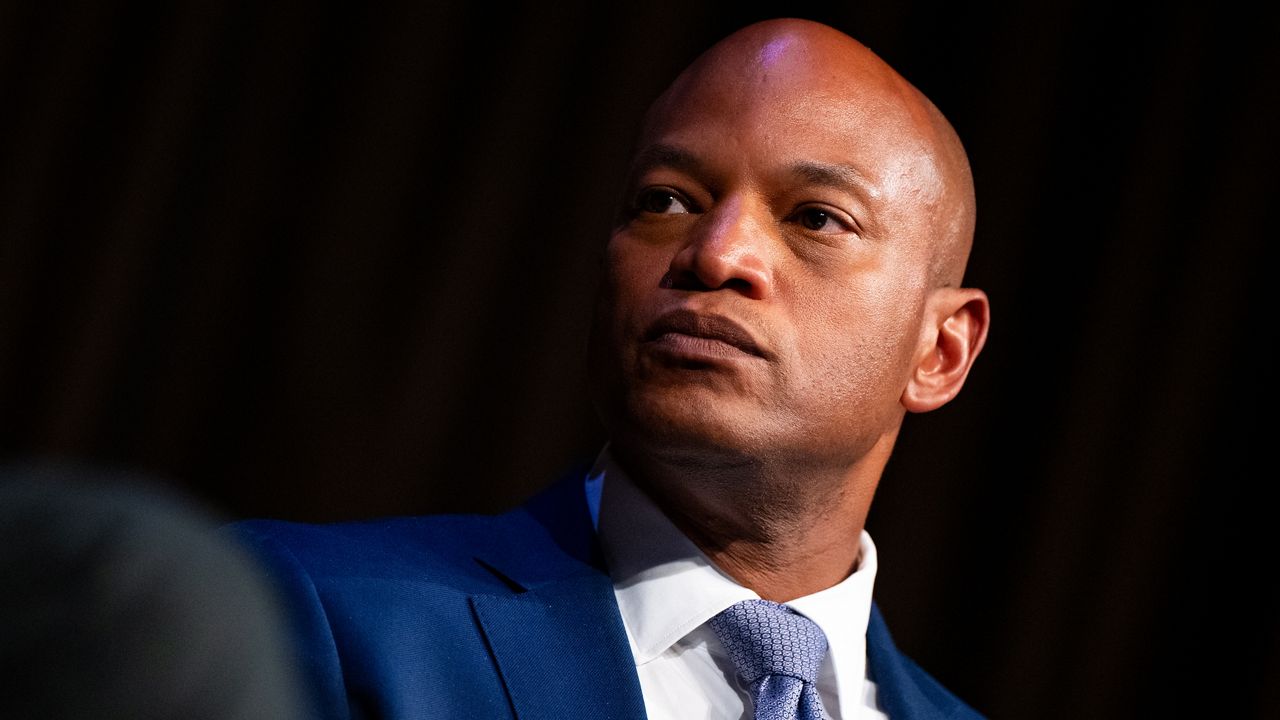
Maryland Democrats have rejected an effort to redraw the state's
congressional map to boost their party's chances in the midterm
elections, a setback for Gov. Wes Moore who put his clout behind the
attempt to blunt President Donald Trump's own redistricting campaign.
The clock officially ran out on the proposal late Monday night as the
state legislative session ended, a casualty of internal party
disagreements. In the end, the Maryland Senate left the bill in a
committee, with Democrats who control the chamber concerned it could
backfire under judicial review.
The unusual mid-decade redistricting, which started when Trump
encouraged Republican-controlled Texas to redraw their map last year, is
expected to continue next week.
Republicans want to change congressional boundaries during a special
legislative session in Florida, while Democrats are asking voters to
approve a redistricting referendum in Virginia.
But Democrats will not be poised to pick up a seat in Maryland, where
the proposed map would have made it easier for voters to oust the
state's lone Republican member of the U.S. House.
Moore, a potential 2028 presidential candidate, said he disagreed
with another powerful Maryland Democrat, state Senate President Bill
Ferguson, about "what is required to be able to make sure we're fighting
back" against Trump.
"This is not a political game to me," Moore said in an interview with
The Associated Press. "I don't look at this as some kind of political
talking point. I look at the fact that I think Donald Trump is actively
trying to manipulate and change the rules around the November election
and beyond because he knows he cannot win on his policies."
Ferguson has said redistricting could actually cost Democrats seats
in Maryland because, in the inevitable legal battle that would ensue, a
court could order a new map that would be even less favorable to the
party. He refused to budge despite pressure from Moore and U.S. House
Minority Leader Hakeem Jeffries.
While speaking at National Action Network in New York on Thursday
with the Rev. Al Sharpton, Moore complained that Trump was urging some
states to redraw maps to favor Republicans, while telling other states
to "sit on your hands."
"Don't play with me," Moore said. "And if the rest of the country is
going to have this conversation about mid-decade redistricting, then so
should Maryland, and so should every other state. Because until it is
done nationally, we have to make sure that this election is not stolen
right before our face so this pain is made permanent."
But while Moore named a panel in November that proposed the new map
for Maryland, the governor could not prevail on the heavily
Democrat Maryland Senate to approve it.
When it was before the Democrat-controlled General Assembly, the
governor told lawmakers in January that the state needed to act to
counter what he called "political redlining" by Trump in other states at
the cost of Black representation in Congress.
Moore, who is the nation's only serving Black governor, compared
Trump's push for Republican-friendly redistricting to discriminatory
housing practices, saying the president and his allies "are doing
everything in their power to silence the voices and trying to eliminate
Black leadership — elected leadership — all over this country."
Democrats outnumber Republicans 2-1 in Maryland and already hold a
7-1 advantage in the state's U.S. House delegation, with Rep. Andy
Harris the lone GOP representative.
The Maryland House passed legislation containing a new map in early February, but the measure ran into opposition from Ferguson.
The senator pointed out a map adopted in 2021 that would have made it
easier to flip Harris' seat was ruled unconstitutional by a judge who
called it "a product of extreme partisan gerrymandering." Maryland
passed another map in 2022, and the parties dropped their legal fight.
Meanwhile, here's a look at what's happening in other states this month in mid-decade redistricting efforts:
Republican Gov. Ron DeSantis has scheduled a special session next
week for the Republican-dominated Legislature to draw new congressional
districts.
Currently, 20 of Florida's 28 congressional seats are held by Republicans.
Congressional districts in Florida that are redrawn to favor
Republicans could carry big consequences for Trump's plan to reshape
districts in GOP-led states, which could give Republicans a shot at
winning additional seats in the midterm elections and retaining control
of the closely divided U.S. House.
Early balloting has already begun for a vote on a constitutional amendment for a new congressional map in Virginia next week.
After a cascade of redistricting efforts, Republicans believe they
can win a combined nine more U.S. House seats in Texas, Missouri, North
Carolina, and Ohio, while Democrats think they can win a total of six
more seats in California and Utah. Virginia could give Democrats an
extra four seats.