Presumptuous Politics

Thursday, June 4, 2026

Trump Won't Break Iran Ceasefire Unless US Troops Are Killed: WSJ

Trump Won't Break Iran Truce Unless US Troops Are Killed: WSJ
Trump Won't Break Iran Ceasefire Unless US Troops Are Killed: WSJ

President Donald Trump has told aides that he will not break the ceasefire with Iran or resume full-scale military operations unless American troops are killed, according to a report Wednesday in The Wall Street Journal.

The administration continues to pursue a broader agreement with Tehran despite signs the ceasefire remains fragile.

Trump has publicly suggested a deal could be near, while Iranian Foreign Minister Abbas Araghchi said this week there has been "no tangible progress" toward a final agreement.

Secretary of State Marco Rubio, meanwhile, argued Wednesday that "the war is over" and said the administration's focus is now on securing a lasting settlement.

According to the Journal, Trump has resisted pressure to respond to recent Iranian attacks with a broader military campaign, instead viewing the current ceasefire as the best opportunity to secure a diplomatic outcome and avoid a prolonged conflict in the Middle East.

The newspaper reported that the president remains focused on reaching an agreement that would prevent Iran from obtaining a nuclear weapon while reducing tensions in the region and protecting navigation through the Strait of Hormuz, one of the world's most important energy corridors.

Trump has repeatedly voiced optimism about the prospects for a deal.

Speaking this week, the president suggested negotiations were moving in the right direction and indicated that only a limited number of issues remained unresolved before an agreement could be reached.

Iranian officials, however, have offered a far more cautious assessment.

"There has been progress, but no agreement has been reached," Araghchi said, according to reporting cited by Newsmax.

The Iranian foreign minister also rejected suggestions that a breakthrough was imminent and said significant differences remain between the two sides.

Araghchi's comments highlighted the gap between Washington's increasingly upbeat public messaging and Tehran's insistence that major obstacles remain.

Rubio, meanwhile, sought to reassure lawmakers that the military phase of the conflict has largely ended.

"The war is over," Rubio said during congressional testimony, according to Newsmax. "We are not at war with Iran."


While acknowledging that isolated attacks and security incidents continue, Rubio argued they do not amount to a resumption of the broader conflict that erupted earlier this year.

"We're not looking to restart a war," Rubio said. "We're looking to prevent one."

The secretary also pointed to what he described as extensive damage inflicted on Iran's military capabilities during the fighting.

"Other than that, they're doing well," Rubio said sarcastically after listing damage to Iranian military infrastructure, including missile-launch facilities, air-defense systems and naval assets.

According to Rubio, Iran emerged from the conflict significantly weaker and less capable of threatening U.S. interests and regional allies.

The president has told advisers that the deaths of American service members would constitute a red line requiring a more forceful response, but absent such a trigger he intends to continue pursuing diplomacy.

That approach faces significant challenges.

The ceasefire has been tested repeatedly by sporadic attacks and continuing regional tensions, while negotiators continue to struggle with fundamental disagreements over Iran's nuclear program and the terms of any long-term settlement.

Still, the administration appears determined to keep talks alive.

© 2026 Newsmax. All rights reserved.


Spencer Pratt May Have Just Pulled Off What Every LA Insider Said Was Impossible

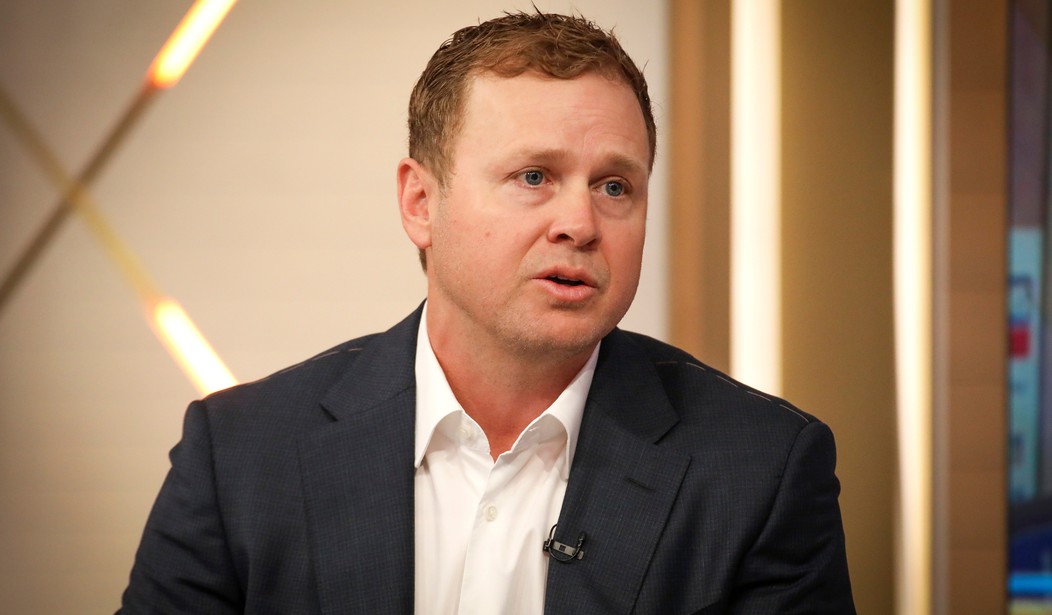
Los Angeles Mayor Karen Bass survived Tuesday's primary, advancing to a November runoff while political outsider Spencer Pratt muscled his way into second place (so far) on a campaign built entirely around her failures.

In the final update of the night, Bass held 34.78% (172,720 votes) to Pratt's 30.44% (151,149), with DSA-backed City Councilmember Nithya Raman at 22.32% (110,848). The last batch of 52,605 votes broke 37.6% for Pratt, 26.6% for Raman, and just 25.9% for Bass, extending Pratt's margin over Raman to more than 40,000 votes.

Decision Desk HQ projected Bass into the runoff early Wednesday morning, while Pratt, a first-time candidate who has never held elected office, was outpacing the veteran councilmember for the second runoff spot. 

Speaking with reporters after results began coming in, Pratt made clear he was ready for a long campaign against the incumbent.

"Obviously, God wanted 5 more months of me exposing all the failures of our mayor," Pratt said when asked how he was feeling about the results.

He added that he was eager for more time on a debate stage opposite her.

WATCH: I asked @spencerpratt if he’d debate Mayor Karen Bass again if he advances to the runoff.

“As many debates as Mayor Bass would like,” Pratt said.

He added that debating Bass has become “my most favorite thing to do.” pic.twitter.com/i79tOtfK0G

— Matthew Seedorff (@MattSeedorff) June 3, 2026

Pratt built his campaign on a simple argument: Bass had four years and made everything worse. He announced his run on the anniversary of the Palisades Fire, which burned down his own home, and has hammered the incumbent on rising costs, visible homelessness, crumbling infrastructure, and a wildfire recovery that residents say has moved far too slowly.

"Business as usual is a death sentence for Los Angeles, and I'm done waiting for someone to take real action," Pratt said at his candidacy announcement.

Pratt has repeatedly tied his candidacy to the Palisades Fire and the city's broader problems, arguing that Los Angeles residents are paying more while getting fewer basic services.

"I got in this because as a citizen, I felt like my city failed — myself, my neighbors, my family," he told reporters Tuesday night. "Mayor Bass has allowed the city to be covered in potholes. We don't have sidewalks. We don't have lights.”

Pratt also picked up a nod of approval from President Donald Trump, who recently said, "I heard he's a big MAGA person." In deep-blue Los Angeles, where Republicans make up less than 15% of registered voters, that kind of association is typically treated as political poison, which makes Pratt's second-place standing all the more striking.


Bass, for her part, has leaned on her record, claiming homelessness is down, and homicide rates are at their lowest since 1968. She has also argued that wildfire cleanup has been the fastest in U.S. history. She has pointed to a permanent affordable housing ordinance and the revival of the California Film and TV Tax Credit as wins from her first term.


Read More: Banana Republic by Mail: Why We Probably Won't Know Outcomes of CA's Crucial Primaries for Days

New Pro-Spencer Pratt Ad Eviscerates Leftist Thinking in Hilarious Fashion


Whether voters buy it is another question. Bass needed the full weight of the Democratic machine to get here: Former Vice President Kamala Harris, Gov. Gavin Newsom, former House Speaker Nancy Pelosi, and the city's powerful labor unions all lined up behind her.

She still only pulled 34.78% in her own city, and the late votes were trending away from her.

"I have devoted my entire life to serving the city that I love, where I was born, and I'm going to continue to do that all the way to victory in November," she told supporters.

More ballots remain outstanding, and California has a history of substantial vote updates after Election Day as mail and drop-off ballots continue to be counted. The race for second has not yet been called to advance to the runoff, but with Pratt sitting on a 40,301-vote lead over Raman and the final batch of the night trending heavily his way, he appeared well-positioned to secure the second slot and face Bass in November.

If the numbers hold, Los Angeles is headed for a November showdown between a career politician defending a troubled record and a political outsider who lost his home in a fire she failed to prevent. The issues driving the race, homelessness, public safety, wildfire recovery, and the basic functioning of city government are not going away. 


The Jihadist's Victory Shows that Ordinary Democrats Need to Stop Being the Tools of their Elites

When my younger brother was a tween, he fell in love with using the word “tool” as an insult. A tool is, in the urban dictionary definition, a person who is “used” by another for his/her own purposes. The tool lacks strong personal convictions on a certain issue and generally goes along with what he/she believes is expected of them without bothering to question the higher purpose. Once my brother discovered this word, he delightedly labeled everyone and anyone – myself, our father, my friends, (presumably) his own friends, etc. – as tools. 

Today, a big problem with the ordinary, everyday Democrats is that there are far too many tools among them who are blindly following the official party propaganda. 

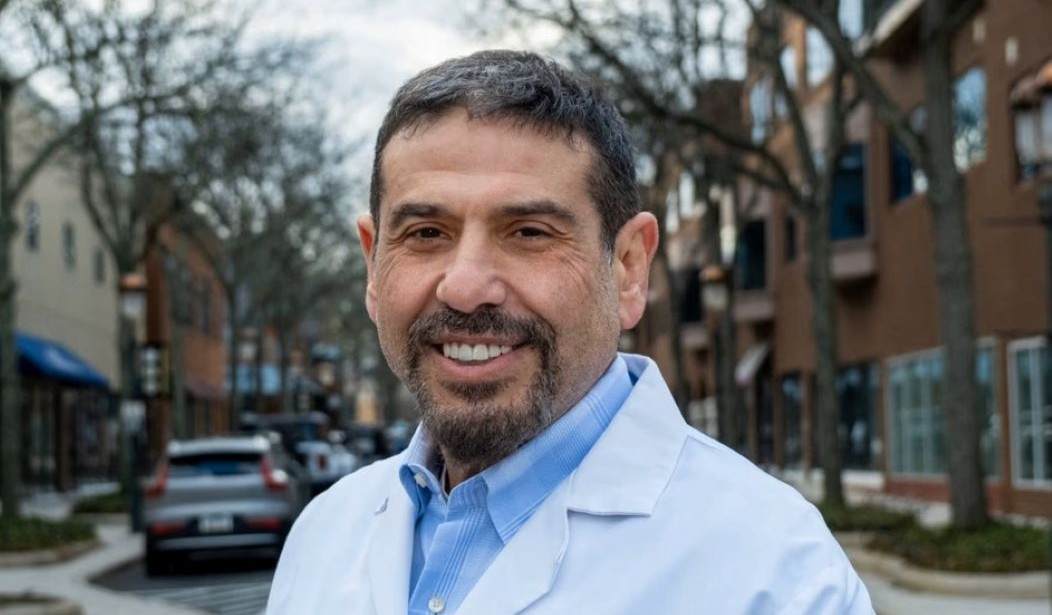
We can see this from the election results from Tuesday. In New Jersey, in a safely Democrat U.S. House district, Adam Hamawy, a radical Muslim terror-supporting surgeon, won the primary, despite these facts:

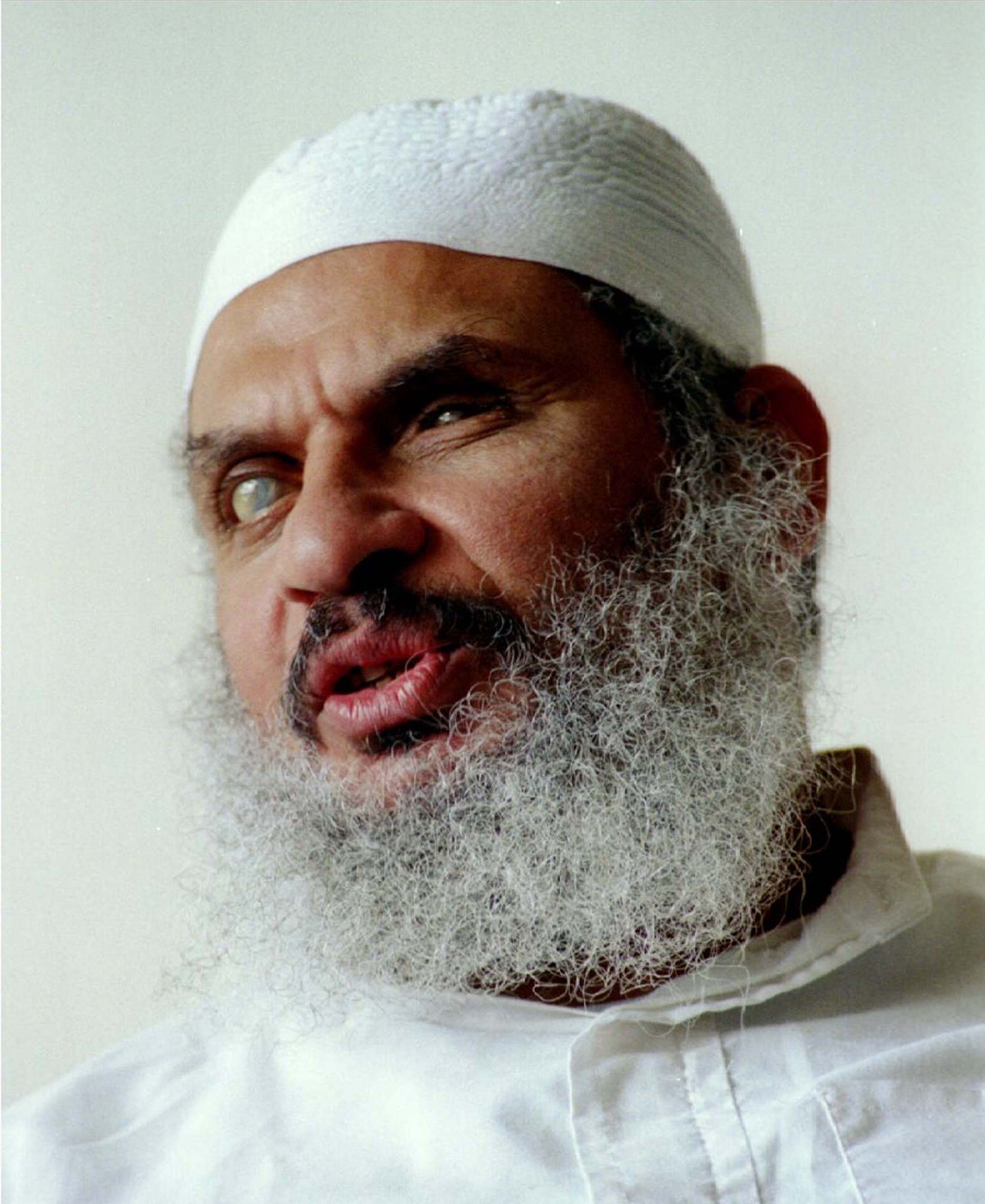
No Transfer for the Blind Sheik | Brookings 

Adam Hamawy testified on behalf of the "Blind Sheikh" Omar Abdel-Rahman, mastermind of the deadly 1993 World Trade Center bombing, concerning a conference to which Hamawy traveled with Abdel-Rahman where the sheikh and other jihadis promoted pro-terror views. According to the New York Post, which viewed the trial transcripts, Hamawy initially lied under oath and said the sheikh had not discussed jihad, only admitting the truth when confronted with evidence to the contrary. Hamawy traveled to Bosnia in 1994 with the “Benevolence International Foundation," which Bosnian authorities later shut down in an operation coordinated with U.S. authorities after they found the organization was a front for funding and supporting al-Qaida. Osama Bin Laden himself founded the offices where Hamawy worked. 

Hamawy has never ceased his radical Jihadism:


Not only that, but it appears Hamawy is still aligning himself with terror movements. In 2024, he visited Gaza (where the overwhelming majority of residents support jihad) and falsely accused Israel of "genocide," an accusation repeatedly debunked but dangerously effective in fueling violent antisemitism. While there, Hamawy worked as a surgeon at Gaza's European Hospital, which was subsequently exposed as a literal Hamas command center. Israel later eliminated Hamas boss Mohammed Sinwar and other key terrorists in a tunnel right under the hospital. Israel's military confirmed that Hamas used the hospital as a command center during the Oct. 7 atrocities, before Hamawy arrived there. There's even evidence that Hamas was holding Israeli hostages in the tunnels there while Hamawy was working at the hospital, per the Washington Free Beacon.

Hamawy easily won his Democrat primary with almost 30%. Despite all the disturbing information above being easily found in numerous local media sources, including the New York Post. Seemingly, all that mattered to those primary voters was that Hamawy hated President Trump, the GOP, the Jews, Israel, and other popular Democrat targets.


SEE ALSO: New Jersey Democrats Cross Point of No Return With Troubling House Primary Nominee


Hamawy is just the latest crazy and dangerous politician the Democrats have produced. He joins actual Nazi, all-around-degenerate, Senate candidate Graham Platner; the terror-supporting Commie Radical Muslim New York City Mayor Zohran Mamdani; the Palestinian Arab terror supporting and riot inciting Congresswoman Rashida Tlaib, and the Somali American terror and fraud supporter, and incest practitioner, Congresswoman Ilhan Omar

Since all these individuals hate Jews and are open socialists, I humbly suggest that we can accurately call them the “National Socialist – Nazi – Caucus.” 

Now, I have been quite open about my criticisms of the Democrat leftist elites. I have pointed out that they disgustingly practice defamation-by-political-campaigning that labels their Republican presidential opponents – whether they be George W. Bush, John McCain, Mitt Romney, or Donald Trump – the modern-day Hitler, a dangerous wanna be religiously fundamentalist dictator who is also a racist and a misogynist. I – and others – have pointed out that these elites have created leftist groups that practice actual violence and criminal activities, such as can be seen in the recent anti-ICE rioting in New Jersey. I have pointed out that many of the Democrat campaigns are centered on the use of the “big lie” strategy. I have pointed out that the Democrat elites are constantly projecting their own authoritarianism onto the GOP. And I have been critical of the increasing level of violence that has been incited by the elites against the Trump administration, Republican and conservative politicians, and now, even ordinary Republican voters.

But the ordinary Democrat needs to share some of the blame for all this, too. They are voting for these radicals and supporting their leaders' violent and defamatory campaigns. And some of them are the ones conducting the physical attacks. 

Now, it is very understandable that for an average Democrat supporter, who has a busy daily schedule, that he or she doesn’t have the time to implement a full investigation of the claims his/her party is peddling to him/her about every political or ideological subject. But, after all that has come out in recent decades, these voters should be making a more concerted effort to divine the real facts on at least some of the more politically charged issues.

Just as a shortcut, I would recommend that when the Democrat elites resort to the following key words – Donald Trump, Republicans, authoritarianism, lawfare, Nazism, ICE, illegal aliens, Israel, Islam, radical Islam, Islamophobia, terrorism, Jihadism – the ordinary, everyday Democrat voter should start off suspicious. For those topics, the ordinary Democrats should conduct a “reasonable” search of the topic online, which does not entail solely skimming MSM sources. 

If Adam Hamawy is winning a House seat today, the ordinary Democrat voters are, by definition, not conducting reasonable searches. And no, I strongly reject the idea that all ordinary Democrats are themselves radical and dangerous. 

I know some of them, so spare me that BS. 

Unfortunately, the ordinary Democrats are also not helping us “keep” our Republic, as Benjamin Franklin once admonished all Americans to do. It is way past the time that average Democrats do so, and stop being the tools of their elites.


Rahm Emanuel Nailed What's Wrong With the Dems in One Sentence

Rahm Emanuel Nailed What's Wrong With the Dems in One Sentence

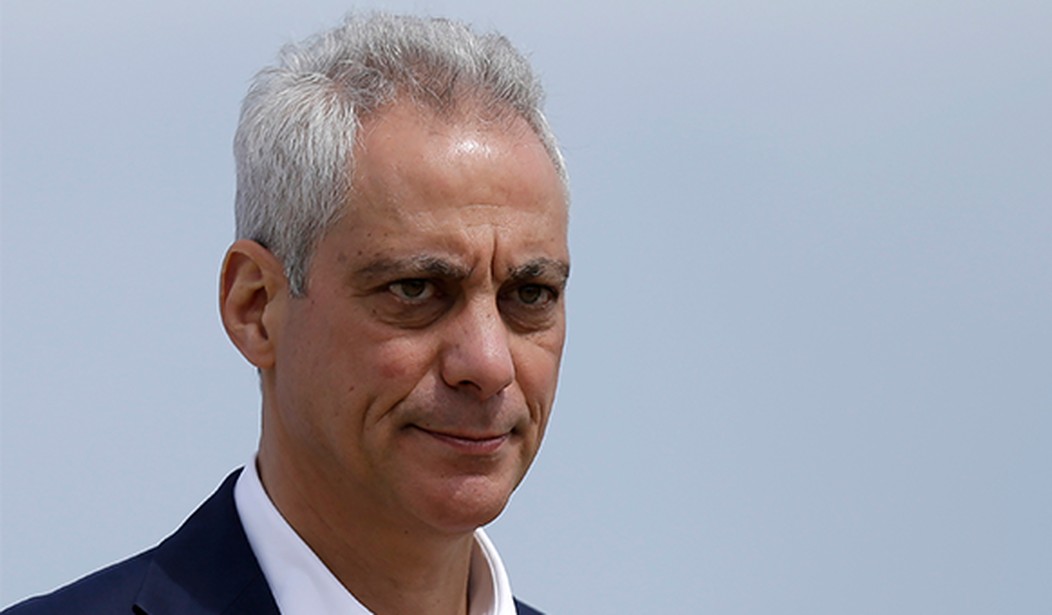
He might not be the Democrats' go-to person for advice. In fact, he’s not really loved either way, but former top Obama aide and Chicago Mayor Rahm Emanuel seems to understand what’s wrong with his party, and he’s not afraid to address it. He admits that Democrats have been poor at voter outreach. Their agenda is exclusionary, illiberal, and frankly, crazy. He doesn’t say the last part outright, but you get that impression when someone criticizes the progressive language, like calling Hispanic voters Latinx. That’s a white progressive creation, and nobody likes it. 


Emanuel sat down with Katie Couric, where he diagnosed his party’s issues in a single sentence:

KATIE COURIC: “Why do you think people feel so negatively about the Democratic party?”

EMANUEL: “Because we EARNED their disrespect — the hard way!”

“We did things that were really RIDICULOUS! We let a border get out of control, we talked about defunding the police, we called them Latinx — and NOBODY else in that group EVER identified themselves that way.”

I mean, where’s the lie? Emanuel said similar things to Jennifer Welch last year and got criticized for it: he said Democrats were getting a little too carried away about transgender issues. He was right. 


🚨NEW: Podcaster Jennifer Welch comes COMPLETELY UNGLUED when Rahm Emanuel brushes aside trans issues🚨

WELCH: "That is such bullsh*t! That is total bullsh*t! That is buying into the right-wing media narrative and I’m so sick of Democrats like you selling out and saying this ...… pic.twitter.com/4EFbaJrsad

— Jason Cohen 🇺🇸 (@JasonJournoDC) April 22, 2025


Oh, Here We Go Again: Those Damn Mail-in Ballots Have Severely Cut Into GOP Vote Totals in CA

Oh, Here We Go Again: Those Damn Mail-in Ballots Have Severely Cut Into GOP Vote Totals in CA

California elections are still being counted because that’s the system they have there. It might take a few weeks, months, or even a decade before the official results are announced. Not really, but the slow pace at which ballots are tallied in the Golden State is beyond absurd; even liberal reporters are starting to raise eyebrows — it shouldn’t be this way. 

Dmitri gave an overview of where things stand right now. 

In the governor's race, former television host and policy commentator Steve Hilton spent much of the campaign leading in public polling, while in Los Angeles, Spencer Pratt has emerged as a surprisingly viable contender after running a high-profile mayoral campaign that has attracted widespread media attention. As results continue to come in, both races are being closely watched for signs of whether California is about to have a major shift to the right in California.

As votes continue to be counted on Wednesday morning, here is where the candidates stand in their respective races.

As of Wednesday morning, with roughly 60 percent of the vote counted in California's gubernatorial primary, Republican Steve Hilton has maintained a lead over the Democratic field. Hilton has received about 28 percent of the vote, while former Health and Human Services Secretary Xavier Becerra trails at roughly 25 percent. Progressive billionaire Tom Steyer is currently in third place with around 20 percent.

Katie Porter has been defeated; she won’t be able to come back from her current position in the vote totals, no matter what. But one thing I forgot to mention, and it could hurt Republicans: those good old-fashioned mail-in ballot dumps, which have drastically reduced Republican vote totals across the board. 

We could be witnessing another political screw job, folks. 

JUST IN: Spencer Pratt drops to third in LA mayoral odds, trailing Mayor Bass & Democratic Socialist Nithya Raman. pic.twitter.com/co2rYiHorH

— Polymarket (@Polymarket) June 3, 2026

🚨 JUST IN: Nithya Raman is STRONGLY GAINING on Spencer Pratt in the late LA mayoral mail-in drops nearly 24 hours after poll close

If this keeps going, it will KEEP GETTING *MUCH* CLOSER.

In one drop, she closed ~3,000 votes, now trailing by 37,000. 322,000 votes remain.… pic.twitter.com/cVf47D8P5C

— Eric Daugherty (@EricLDaugh) June 4, 2026

🚨 NOW: A late mail-in ballot drop just came in and Republicans LOST it by a LOT, and the total votes remaining to count WENT UP

CALIFORNIA IS INSANE

California Gov ballot drop, LA, per VoteHub

🔵 Xavier Becerra: 26,434 (35.4%)
🔵 Tom Steyer: 22,025 (29.5%)
🔴 Steve Hilton:… pic.twitter.com/uY7nkUbXlA

— Eric Daugherty (@EricLDaugh) June 3, 2026

MORE: The late mail in some areas continues to show Steyer (3rd) is unlikely to lock Hilton out, as these are not the margin he wants, while Becerra has a much smaller gap to close (both would advance anyway)https://t.co/8eHrMNMt1p

— Eric Daugherty (@EricLDaugh) June 4, 2026
— End Wokeness (@EndWokeness) June 4, 2026


Trump not ruling out Gov. DeSantis for AG role


President Donald Trump has not ruled out Republican Florida Governor Ron DeSantis for a potential job in his Cabinet.

“Ron’s very good,” Trump told “Pod Force One” host Miranda Devine in an episode released on Wednesday, when asked if DeSantis (R-Fla.) would be considered for the U.S. Attorney General position after Pam Bondi’s removal.

“People thought of different names. There are some good names,” the president continued, though he noted that the term-limited governor “never talked about” the job.

Trump and DeSantis previously clashed as top rivals in the 2024 Republican presidential primary, during which Trump referred to the Sunshine State governor as “Ron DeSanctimonious.”


However, their relationship has seemed friendlier since Trump’s win, considering their shared values.

Trump told the New York Post DeSantis was “doing a very good job.”

“Ron’s good. He’s a friend of mine. He just named an airport after me,” he added. “They named the Palm Beach International Airport the Donald J. Trump International Airport.”  


“That’s a great honor,” he added.”

However, the president signaled that he was in no rush to name a permanent nominee for the top Department of Justice (DOJ) spot, expressing a desire to focus on Acting Attorney General Todd Blanche, Trump’s former personal attorney who took over the DOJ in Bondi’s absence.

“I wanted to see how he’s received … and he’s done a very good job,” Trump said of Blanche.


“There are a lot of great people,” President Trump said of his considerations for DOJ head. “The Republican Party — we have great people.”

President Trump says Acting AG Todd Blanche will become Attorney General: "I think you will, yeah."

Trump notes that Blanche is doing "a very good job at DOJ."

President Trump also has high praise for Ron DeSantis when asked by @mirandadevine on Pod Force One if the Florida… pic.twitter.com/pkbum5DcKL

— Steve Guest (@SteveGuest) June 3, 2026

The comments come as Florida prepares for its upcoming August 18th primary election to determine which candidates will compete to succeed the term-limited DeSantis in November.


Supreme Court Rebukes Judges, Lets Alabama Use GOP-Boosting Map

May be an image of text that says 'abc EWS EQUALJUSTICE-ONDER-LAW EQUAL USTICE UNDER-LAW NSAE BREAKING NEWS Supreme Court clears way for Alabama to use GOP-friendly GOP-frie election map .ScollApplewtile/AP le/AP Scolt'

The Supreme Court this week cleared the way for Alabama to use a new congressional map that boosts Republicans by one seat, reversing a lower court that had blocked the plan as “race-based.” The unsigned 6-3 order leaned heavily on the Court’s recent Louisiana v. Callais decision and pushed back on judges treating voting patterns as a racial proxy. For conservatives who oppose racial cartography and judicial micromanagement, this is a welcome rebuke to activist judges.

What the Supreme Court actually held

The Court said the district court erred when it struck down Alabama’s map. The high court pointed to its April Louisiana v. Callais ruling and reminded lower judges that the fact voters of different races favor different parties does not, by itself, prove racial gerrymandering. In short: racial voting patterns aren’t a magic wand that allows courts to redraw maps to produce desired partisan outcomes. This unsigned 6-3 action signals the justices aren’t going to let every redistricting fight become a race-first ruling.

Why the Alabama ruling matters for redistricting and the Voting Rights Act

The practical effect is clear: Alabama can use the GOP-friendly map and gain one more House seat. That matters because the state’s delegation has long leaned Republican, with one majority-black Democratic district. After Allen v. Milligan, some lower courts tried to force maps that look a certain way based on race. But the Court’s Callais line of decisions has narrowed how the Voting Rights Act gets used in redistricting fights. If courts can’t treat party choice as a racial stand-in, states regain some room to draw maps without being second-guessed for predictable voting behavior.


A rebuke to race-based cartography and judicial overreach

Let’s be blunt: sorting voters by skin tone to draw districts is a bad idea. It treats citizens as census categories instead of people with ideas. The district court’s insistence that Alabama needed an extra “Black-opportunity” district was a recipe for permanent racial blocs. Attorney General Steve Marshall pushed back, and the Supreme Court agreed that judges shouldn’t be the mapmakers of first resort. Democrats and activist groups will howl that the Voting Rights Act is being gutted, but the Court is right to stop turning race into the defining metric for every political map.

Bottom line

This decision is a win for common sense, state authority, and electoral stability. The Supreme Court has reminded lower courts to follow its rules, not rewrite them based on fears or political aims. Expect more fights over redistricting, of course. But for now the high court has said plainly: race can’t be the engine of every redistricting order. That’s a sound ruling for the rule of law and for voters who want to be represented, not boxed in by racial math.


CENTCOM Hellfire Disables Sanctions‑Busting Tanker Bound for Iran

US military 'disables' commercial ship heading to Iran with Hellfire missile

 CENTCOM says U.S. forces disabled a non‑compliant tanker in the Arabian Gulf after the ship ignored repeated warnings and tried to steam toward Iran. The strike — a Hellfire missile into the engine room — comes as part of a U.S. blockade of Iranian ports and follows a night of Iranian airstrikes aimed at U.S. bases. This is not a drill. It is enforcement of American will at sea, plain and simple.

What happened at sea

According to CENTCOM, the Botswana‑flagged M/T Lexie ignored orders over a full day and kept heading for Kharg Island. U.S. forces warned the crew multiple times, then disabled the tanker’s engines with a Hellfire missile so it could not reach Iran. CENTCOM says the blockade began in mid‑April, and U.S. forces have already disabled several commercial vessels and redirected many more as they enforce restrictions on shipping to and from Iranian ports.

Why the M/T Lexie mattered

This ship was no accident. Reporting notes the Lexie has a long record of moving Iranian oil in violation of sanctions — a pattern that stretches back years. The tanker was reportedly sanctioned last year after a history of sanctions‑busting trips. Claiming a bogus flag and pretending to be “just passing through” won’t work when American forces are watching the Strait of Hormuz and mean what they say.

Enforcing the blockade = protecting commerce and credibility

The Strait of Hormuz is where a lot of the world’s oil flow passes, and it’s been the spot where Iran has tried to bully shipping for decades. When ships try to run a blockade or ferry sanctioned oil, they’re not doing business — they’re supporting a hostile regime. The choice is simple: let them carry on and invite more brazen acts, or enforce the rules and stop the flow. It looks like this administration picked enforcement. For once, actions match words.

What comes next

Iran’s recent strikes against U.S. bases show the danger here. Escalation is real, but so is deterrence when the U.S. uses its tools decisively. Secretary of War Pete Hegseth even shared footage of the strike to make the point: America will stop ships that break the rules. The message should be clear to Tehran and to smugglers — violate sanctions or blockade measures, and you won’t make it to port. That is how you keep sea lanes open and American interests safe.

Wednesday, June 3, 2026

CartoonDems


Hilton, Becerra Lead in California Governor's Primary


Republican businessman and commentator Steve Hilton emerged as the frontrunner in California’s closely watched gubernatorial primary, leading the race to secure one of two spots in November’s general election.

With just over half of ballots counted Wednesday, Hilton held 27.8% of the vote, ahead of former Biden administration official and Democrat Xavier Becerra, who received 25.4%.

Under California’s controversial “jungle primary” system, all candidates compete on the same ballot regardless of party, and the top two vote-getters advance to the general election.

Democrat billionaire Tom Steyer trailed in third place with 19.6%, leaving Hilton in a strong position as Republicans seek to regain influence in a state long dominated by Democrat leadership.

The Associated Press has not yet called the primary for any candidate.

The state has a history of substantial vote updates after Election Day that can sometimes shift the outcome of elections as late-arriving mail and drop-off votes are counted. Hilton and Becerra were leading so far, with Steyer running slightly further back.

“Change is coming to California, and it’s long overdue,” Hilton told supporters after polls closed, reflecting his campaign message that the state needs a dramatic reset after more than 15 years of Democratic rule.

Steyer also campaigned on change, though through a vastly different lens. A former hedge fund manager turned climate activist, he pledged to raise taxes on corporations and the ultrawealthy like himself. He declared Tuesday that he would prevail over monied interests that strived to defeat him.

Becerra, meanwhile, pitched himself as the steady hand who can lead the state against intrusions from the Trump administration, touting his decades in public service in Congress, as state attorney general and as federal health secretary. Speaking to supporters, he said voters came around to his message after he initially was counted out.

“The underdog stayed in the fight,” Becerra said to applause.

California puts all candidates on a single primary ballot regardless of party, and the top two finishers advance to the November general election. About 60 candidates were on the ballot, most of them largely unknown to the state’s roughly 23 million voters.

The through line of the race was how to tackle the state's notoriously high cost of living.

Drivers were paying $6.08 per gallon at the pump as of the end of May, $1.65 higher than the national average, according to AAA. Meanwhile the nonpartisan Legislative Analyst’s Office has estimated that the typical home is about $775,000, more than double the national average.

And Californians pay the second-highest residential electricity rates behind Hawaii, according to the U.S. Energy Information Administration.

Steyer blamed the state's challenges in part on corporations that he said are ripping off Californians. He supports eliminating private health insurance in favor of a government-run system and pledged to break up major utilities and take on fossil fuel companies. Utility Pacific Gas & Electric was among the businesses spending money to defeat him.

 “We should have a system based on fairness, not asking for fairness,” Steyer said Tuesday, adding that his campaign “scared the hell out of the corporate interests who are used to getting their own way.”

Hilton said he would make Californians' first $100,000 free of income tax, increase oil production and freeze in-state tuition at public colleges and to try to make the state more affordable. He also pledged to slash regulations and to “revive” the state's economic prowess by reversing Democratic policies that make things more expensive.

That message resonated with voters like Republican Rosamaria Cerezo, a 57-year-old substitute teacher voted for Hilton.

“Both my husband and I have two jobs each just to make ends meet,” she said.

Despite the state's challenges, the candidates delivered upbeat messages about its potential. They pledged to ensure government works to serve all of its roughly 39 million residents.

“I ran for the job because I know how important California is as a shining light to the world,” Becerra told supporters.

He argued that his years of political experience prepared him to lead, and he highlighted his tenure as attorney general, when he filed more than 120 legal actions during Trump's first term, as evidence that he can protect Californians' interests.

Democrat Tamara Alton, a 65-year-old marriage and family therapist, was voting for Becerra because of his experience.

“I'm going to go with him because I want somebody that knows what they're doing,” Alton said.

Becerra also referenced his background as the son of two Mexican immigrants. In a state where nearly a third of voters identify as Hispanic or Latino, he would be the first Latino governor in more than a century.

California, he said, “regularly makes the improbable seem inevitable.”

Steyer ran the most expensive primary campaign in the country, dumping more than $215 million of his own money into it including a massive amount on advertising. That's likely just a preview of what he would spend should he advance to the general election.

His spending prompted some of his rivals to accuse him of trying to buy the election.

But some Democratic voters said they chose Steyer despite uneasiness with his wealth because of his focus on tackling climate change.

Jude Mayer, 24, said she was not thrilled about voting for a billionaire but Steyer “is talking about the environment in the way that I want to hear about it.”


CartoonDems