Flynn bombshells cast doubt on Mueller prosecutor Brandon Van Grack's compliance with court order
Explosive, newly unsealed evidence documenting the FBI's efforts to target national security adviser Michael Flynn -- including a top official's handwritten memo
debating whether the FBI's "goal" was "to get him to lie, so we can
prosecute him or get him fired" -- calls into question whether Brandon
Van Grack, a Justice Department prosecutor and former member of Special
Counsel Robert Mueller's Team, complied with a court order to produce
favorable evidence to Flynn. Since February 2018, Van Grack has been obligated to comply with D.C. District Court Judge Emmet G. Sullivan's standing order in the Flynn case
to produce all evidence in the government’s possession “that is
favorable to defendant and material either to defendant’s guilt or
punishment.” The order also requires the government to submit
favorable defense evidence to the court, including possible "impeachment
evidence" that could undermine witnesses, even if the government
believes the evidence “not to be material.” Van
Grack has long informed Sullivan that the government’s so-called
"Brady" obligations, referring to prosecutors' duty to turn over
exculpatory materials to defendants, have been met. In an October 2019
filing, Van Grack denied governmental misconduct and assured the court
that the government “has complied, and will continue to comply, with its
discovery and disclosure obligations, including those imposed pursuant
to Brady and the Court’s Standing Order.” In that same October
2019 motion, Van Grack elaborated on those claims, telling Sullivan that
the government had not “affirmatively suppressed evidence” or hid Brady
material. He denied that government was “aware of any information that
would be favorable and material to [Flynn] at sentencing.” Van
Grack further dismissed arguments by Flynn's attorney, Sidney
Powell, that “General Flynn was targeted and taken out of the Trump
administration for concocted and political purposes” as “conspiracy
theories.”
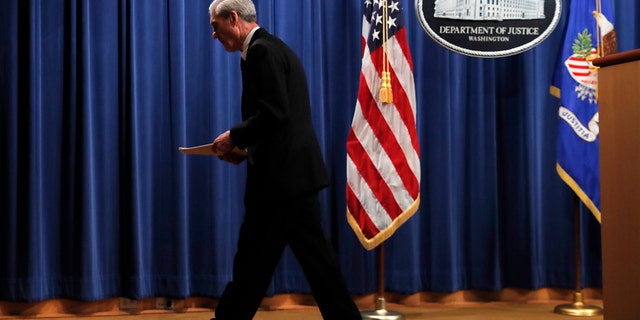
Special counsel Robert Mueller walks from the podium after
speaking at the Department of Justice Wednesday, May 29, 2019, in
Washington, about the Russia investigation. (AP Photo/Carolyn Kaster)
What Van Grack didn’t inform the court about – and
didn’t provide to Flynn – was the newly unsealed January 4, 2017
"Closing Communication" from the FBI Washington Field Office, which
recommended the FBI close its investigation of Flynn, as its exhaustive
search through government databases “did not yield any information on
which to predicate further investigative efforts." Van Grack also failed to provide evidence to Flynn’s attorneys that anti-Trump former FBI agent Peter Strzok then
immediately intervened and instructed the FBI case manager handling the
Flynn investigation to keep the probe open, followed by indicators
that the bureau would seek to investigate Flynn for possible violations
of an obscure 18th century law known as the Logan Act -- which has
never been utilized in a modern prosecution. Another Strzok text
mentions that the FBI’s "7th floor" – meaning FBI leadership – may have
been involved in the decision to keep the Flynn case alive. Instead,
Van Grack characterized Flynn’s alleged false statements as critical to
the FBI’s “legitimate and significant investigation into whether
individuals associated with the campaign of then-candidate Donald J.
Trump were coordinating with the Russian government in its activities to
interfere with the 2016 presidential election.” He
argued to Sullivan that Flynn’s “conduct and communications with Russia
went to the heart of that inquiry.” And Van Grack said that Flynn’s
alleged “false statements to the FBI on January 24, 2017, were
absolutely material.” But by that time, the FBI had already
cleared Flynn of any improper ties or coordination with Russia. Shedding
light on internal FBI deliberations, notes from the then-assistant
director of the FBI’s Counterintelligence Division Bill Priestap --
written before the Flynn interview and after discussions with then-FBI
Director James Comey and then-FBI Deputy Director Andrew McCabe, Fox
News is told -- show discussions of whether their “goal” was “to get him
to lie, so we can prosecute him or get him fired.”
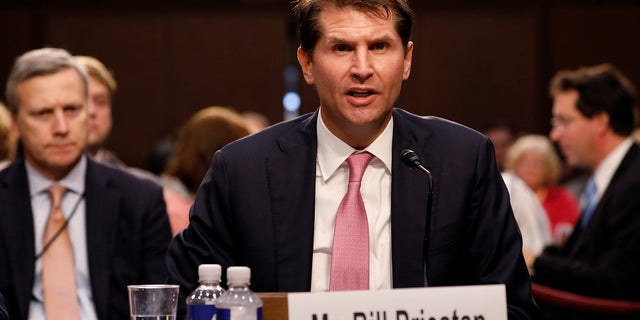
In this July 26, 2017 photo, Bill Priestap, assistant director of
the FBI's Counterintelligence Division, testifies during a Judiciary
Committee hearing into alleged collusion between Russian and the Trump
campaign.
(Reuters)
These unsealed notes further
suggest that agents planned in the alternative to get Flynn “to admit to
breaking the Logan Act” when he spoke to then-Russian Ambassador Sergey
Kislyak during the presidential transition period. The Logan Act
has never been used in a modern criminal prosecution and has a
questionable constitutional status; it was enacted in 1799 in an era
before telephones and was intended to prevent individuals from falsely
claiming to represent the United States government abroad. "Any
criminal investigation grounded in Logan Act questions is an obvious
political pretext to attack the Trump Administration," GOP Reps. Jim
Jordan and Mike Johnson wrote to FBI Director Christopher Wray on
Monday, in a letter seeking in-person interviews and key documents. "FBI
attorney Lisa Page admitted to Congress the Justice Department saw the
Logan Act as an 'untested' and 'very, very old' statute." This
new evidence puts Van Grack at risk for accusations that he was
misleading Sullivan as to the materiality of Flynn’s statements to FBI
agents Strzok and Joe Pientka when they interviewed him in the White
House on January 24, 2017. Jordan and Johnson are now specifically seeking to question Pientka, who participated in the January 2017 White House interview that led to Flynn's prosecution. Fox News has previously determined that Pientka was also intimately involved in the probe of former Trump aide Carter Page, which the DOJ has since acknowledged was riddled with fundamental errors and premised on a discredited dossier that the bureau was told could be part of a Russian disinformation campaign. Pientka was conspicuously removed from the FBI's website after Fox News contacted the FBI about his extensive role in Crossfire Hurricane Foreign Intelligence Surveillance Act (FISA) matters -- a change first noticed by Twitter user Techno Fog -- but sources say Pientka remains in a senior role at the agency's San Francisco field office. The
FBI, speaking to Fox News last December, asserted that reporting on
Pientka's identity would potentially endanger his life and would serve
no legitimate journalistic purpose. Republicans have previously sought
to question Pientka, however, beginning in 2018. On Monday, the FBI declined to provide any additional comment. For
an individual to be prosecuted for a false statement offense under
federal law, the lie must be “material.” The newly revealed materials
strongly suggest the FBI wasn’t truly concerned about Flynn’s call with
Kislyak during the presidential transition period. If the questioning of
Flynn by Strzok and Pientka were based on a pretext, that revelation
would arguably defeat any assertion that Flynn’s purported lies were
material. Other reports of edited information and a secret
agreement may put the issues surrounding the compliance with Sullivan’s
standing order into context. For example, the Mueller Report omitted key parts
of a voicemail from Trump lawyer John Dowd to Flynn’s former lawyers
discussing a joint defense agreement and the exchange of information. Additionally,
the release of emails from Flynn’s former attorneys at Covington &
Burling revealed the existence of “a lawyers unofficial understanding
that they are unlikely to charge [Michael Flynn Jr.] in light of the
[Flynn’s] Cooperation Agreement.” Per Flynn's former lawyers, this
served to "limit" what the government "have to disclose" to any
defendant against whom Flynn would have to testify. That
arrangement is contrary to the stated terms of the November 30, 2017
plea offer signed by Van Grack, Flynn, and his lawyers, which represents
that there were no other “agreements, promises, or understandings”
between the special counsel’s office and Flynn. Andrew McCarthy, a former federal prosecutor and Fox News contributor, has noted: “[F]ederal
law requires all terms of a plea agreement to be disclosed to the
court; prosecutors are not at liberty to obscure plea terms because they
are embarrassed or tactically harmed by having agreed to them.” The
dispute over the government’s compliance with Sullivan’s standing order
may bolster Flynn’s efforts to withdraw his plea or, ultimately, have
the case dismissed due to government misconduct. Powell has stated
that she expects more evidence to be produced soon, and has implied the
FBI doesn't even have any proof Flynn discussed the Obama
administration's sanctions with Russia's ambassador. "No lawyer for
@GenFlynn has heard the recording or seen the transcript [of Flynn's
intercepted calls with the ambassador]," Powell wrote on Twitter on Sunday. "I bet $1000 there is no mention of 'sanctions.'" During the White House interview, Flynn told the agents "not really" when
asked if he had sought to convince Kislyak not to escalate a brewing
fight with the U.S. over sanctions imposed by the Obama administration,
according to a FD-302 witness report prepared
by the FBI that has been disputed by Flynn's defense team. Flynn also
reportedly demurred when asked if he had asked Russia to veto a U.N.
Security Council resolution that condemned Israel’s settlements in the
West Bank, the FBI claimed. (The Obama administration abstained in that vote.) According to the FBI's 302, Flynn issued other apparently equivocal responses to FBI agents' questions, and at various points suggested that such conversations might have happened or that he could not recall them if they did. Meanwhile,
Van Grack’s name has been absent from the government’s latest court
filings and they have yet to respond to Flynn’s latest motion to
dismiss. Fox News' Brooke Signman and David Spunt, as well as Wilson Miller and The Associated Press, contributed to this report.




No comments:
Post a Comment