'Where is Christopher Wray?' GOP lawmakers say FBI director ignoring them -- and push ahead for key interviews
Reps.
Jim Jordan, R-Ohio, and Mike Johnson, R-La., on Monday night said FBI
Director Christopher Wray "has declined to respond" to their May 4
letter seeking information and interviews with key FBI officials after
the bombshell revelations in the Michael Flynn case -- prompting the lawmakers to take matters into their own hands. "Because
Director Wray has declined to respond to our request, we are forced to
write to you directly," Jordan and Johnson wrote in an extraordinary
letter to FBI agent Joe Pientka, who participated in the January 2017 White House interview that led to Flynn's prosecution. Fox News previously determined that Pientka also was intimately involved in the probe of former Trump aide Carter Page, which the DOJ has since acknowledged was riddled with fundamental errors and premised on a discredited dossier that the bureau was told could be part of a Russian disinformation campaign. Pientka was removed from the FBI's website after Fox News contacted the FBI about his extensive role in Crossfire Hurricane Foreign Intelligence Surveillance Act (FISA) matters -- a change first noticed by
Twitter user Techno Fog -- but sources said Pientka remained in a
senior role at the agency's San Francisco field office. The FBI told Fox
News shortly before Pientka's removal from the website that reporting
on his identity could endanger his life, even though he serves in a
prominent senior role at the bureau. Jordan and Johnson sent a
similar letter on Monday to an attorney for Bill Priestap, the former
assistant director of the FBI Counterintelligence Division. Explosive handwritten notes that
surfaced earlier this month -- written by Priestap after a meeting with
then-FBI Director James Comey and then-FBI Deputy Director Andrew
McCabe, Fox News is told -- suggested that agents planned to interview Flynn at the White House on January 24, 2017 "to get him to lie, so we can prosecute him or get him fired."
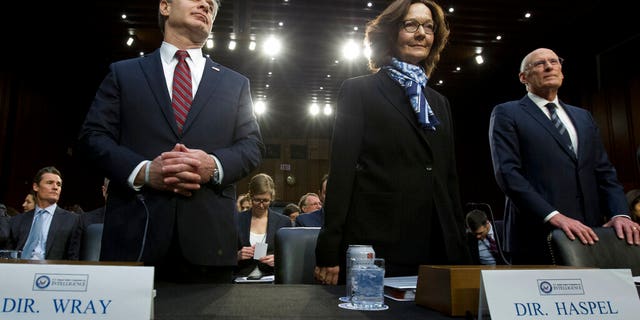
From left, FBI Director Christopher Wray, CIA Director Gina Haspel
and Director of National Intelligence Daniel Coats arrive to testify
before the Senate Intelligence Committee on Capitol Hill in Washington
Tuesday, Jan. 29, 2019. (AP Photo/Jose Luis Magana)
In the alternative, Preistap's note suggested a
possible goal was to get Flynn "to admit to breaking the Logan Act" when
he spoke to Russia's then-Ambassador Sergey Kislyak during the
presidential transition period. The Logan Act has never been
successfully used in a criminal prosecution and has a questionable
constitutional status; it was enacted in 1799 in an era before
telephones, and was intended to prevent individuals from falsely
claiming to represent the United States government abroad. Priestap's
memo conspicuously surfaced only this month, even though the Justice
Department and FBI had been under an obligation to turn over all
relevant, potentially exculpatory materials to Flynn's legal team since
February 2018. (Attorney General Bill Barr had appointed U.S. Attorney
Jeff Jensen to review the DOJ's handling of the Flynn case, and Jensen
apparently unearthed the documents.) Meanwhile,
top DOJ prosecutor who had repeatedly told the court that the FBI had
complied with the order, Brandon Van Grack, was abruptly pulled from the
case after Fox News pointed out his apparent misrepresentations. "Where is Christopher Wray?" Jordan tweeted Monday night.
"Where is Christopher Wray?" — Rep. Jim Jordan, R-Ohio
Flynn
ultimately pleaded guilty to one count of lying to Pientka and
anti-Trump FBI agent Peter Strzok in that White House interview, as his
mounting legal bills forced him to sell his home -- and prosecutors
floated bringing Foreign Agents Registration Act (FARA) charges for his
unrelated work in Turkey. Flynn is now seeking to withdraw his guilty
plea, and the DOJ has agreed that the case should be dismissed, citing
the new exculpatory evidence. D.C. District Court Judge Emmet Sullivan,
however, has indicated he may not dismiss the case without hearing more argument from third parties. During
the White House interview, Flynn told the agents "not really" when
asked if he had sought to convince Kislyak not to escalate a brewing
fight with the U.S. over sanctions imposed by the Obama administration,
according to a contested FD-302 witness report prepared by the FBI weeks
after the interview. Flynn also reportedly demurred when asked if he
had asked Russia to veto a U.N. Security Council resolution that
condemned Israel’s settlements in the West Bank. Flynn issued
other apparently equivocal responses to FBI agents' questions, and at
various points suggested that such conversations might have happened or
that he could not recall them if they did, according to the 302. But
questions remained as to the strength of the FBI's case. Then-FBI
Director James Comey admitted in 2018 that the Flynn interview at the
White House didn't follow protocol, and came at his direction. He said
it was not "something I probably wouldn't have done or maybe gotten away
with in a more... organized administration." And, then-FBI Deputy
Director Andrew McCabe later said the interview was "very odd" because
"it seemed like [Flynn] was telling the truth" to the two agents who
interviewed him. Flynn, the interviewing agents told McCabe, "had a very
good recollection of events, which he related chronologically and
lucidly," did not appear to be "nervous or sweating," and did not look
"side to side" -- all of which would have been "behavioral signs of
deception." Further, the FBI 302 indicated that Flynn apparently
was aware his communications had been monitored, and at several points
he thanks the FBI agents for reminding him of some of his conversations
with Russian officials. A Washington Post article
published one day before Flynn's White House interview with the agents,
citing FBI sources, publicly revealed that the FBI had wiretapped
Flynn's calls with Kislyak and cleared him of any criminal conduct. It
was unclear who leaked that information to the Post -- or why the FBI
would need to question Flynn about his contacts given that the bureau
had already recorded them.
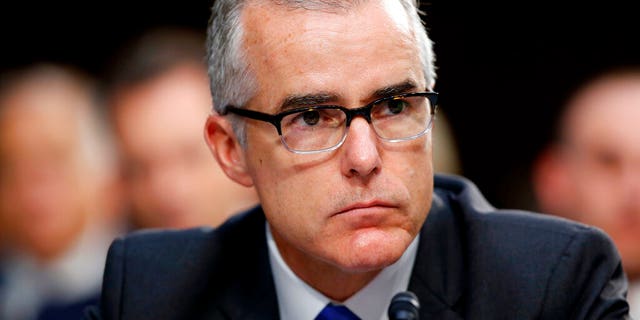
FILE - In this June 7, 2017, file photo, then-FBI acting director
Andrew McCabe listens during a Senate Intelligence Committee hearing
about the Foreign Intelligence Surveillance Act, on Capitol Hill in
Washington. (AP Photo/Alex Brandon, File)
Wray, earlier this year, suggested in testimony that several agents could be under internal investigation by the FBI. “As
for current employees, there are what I would call more line-level
employees who were involved in some of the events in the report, all of
those employees … were referred to our Office of Professional
Responsibility, which is our disciplinary arm," Wray said. He did not
elaborate. There was also action on the Senate side ono Monday. After weeks of bombshell revelations highlighting apparent FBI misconduct in the cases of Page and Flynn,
the Republican-controlled Senate on Monday took two major steps toward
launching its own comprehensive probe into the matter -- even as the
Justice Department's separate criminal investigation, led by U.S.
Attorney John Durham, continues. Senate
Judiciary Committee Chairman Lindsey Graham, R-S.C., specifically
announced Monday that his panel will soon vote on a subpoena
authorization related to the FBI's apparent surveillance abuses. In a
contentious interview, Graham recently told Fox
Business' Maria Bartiromo that Republicans would conduct a proper
investigation, but he was wary of interfering with the DOJ's "ongoing
criminal matter," referring to Durham's review. Graham's office
announced in a statement that his subpoena authorization "covers a
number of documents, communications and testimony from witnesses,
including [former FBI Director] James Comey, [former FBI Deputy
Director] Andrew McCabe, [former Director of National Intelligence]
James Clapper, [former CIA Director] John Brennan, [former Deputy
Attorney General] Sally Yates and others." A total of 53 other
names were on the list of potential subpoena recipients, including:
"Trisha Anderson, Brian Auten, James Baker, William Barr, Dana Boente,
Jennifer Boone, Kevin Clinesmith [the FBI lawyer who allegedly falsified a CIA email to
secure the Carter Page FISA warrant], Patrick Conlon, Michael Dempsey,
Stuart Evans, Tashina Gauhar [a top DOJ deputy when classified details
of Flynn's calls with the Russian ambassador were illegally leaked to The Washington Post],
Carl Ghattas, Curtis Heide, Kathleen Kavalec, David Laufman [who
arranged a key meeting with a Steele dossier source], Stephen Laycock,
Jacob Lew, Loretta Lynch, Mary McCord, Denis McDonough, Arthur McGlynn,
Jonathan Moffa, Sally Moyer, Mike Neufield, Sean Newell, Victoria
Nuland, Bruce Ohr, Nellie Ohr, Stephanie L. O’Sullivan, Lisa Page,
Joseph Pientka [who interviewed Flynn at the White House while also playing a key role in the Carter Page probe, and whom the FBI has hidden from scrutiny], John Podesta, Samantha Power, E.W. “Bill” Priestap [who authored the memo debating
whether the bureau simply wanted Flynn "fired"], Sarah Raskin, Steve
Ricchetti, Susan Rice, Rod Rosenstein, Gabriel Sanz-Rexach, Nathan
Sheets, Elizabeth Sherwood-Randall, Glenn Simpson, Steve Somma [an FBI
case agent who apparently was involved in several key FISA omissions],
Peter Strzok, Michael Sussman, Adam Szubin, Jonathan Winer, and
Christopher Wray."
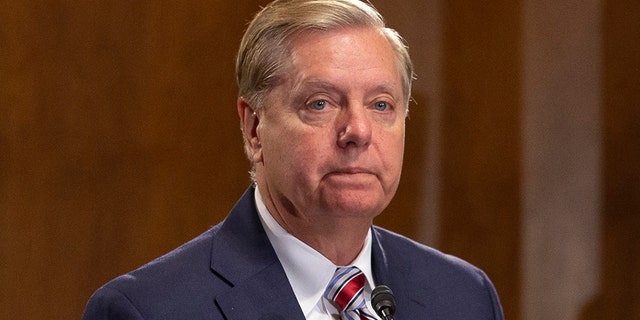
Senate Judiciary Chairman Lindsey Graham, R-S.C., has announced a
sweeping new Russia probe may be imminent. (Photo by Anna
Moneymaker/Getty Images)
Also Monday, Senate Homeland Security Chairman Ron
Johnson, R-Wis., requested that the Justice Department turn over an
unredacted copy of the email that former National Security Adviser Susan
Rice sent to herself on Inauguration Day -- a document that could shed
light on the secretive January 5, 2017 White House meeting in which then-President Obama shocked a top DOJ official with his knowledge of the FBI's Flynn probe. "I
understand your office is currently reviewing a January 20, 2017, email
from former National Security Adviser Susan Rice," Johnson wrote to
Attorney General Bill Barr. "In that email, Ambassador Rice summarized
an Oval Office meeting with President Obama and other administration
officials that occurred on January 5, 2017." Johnson continued: "A
majority of Ambassador Rice's email was declassified but a portion of
the email remains classified. The significance of that meeting is
becoming increasingly apparent as more and more information is
declassified. For these reasons, it is essential that Congress and the
American people understand what occurred during that January 5, 2017,
meeting and how it was later characterized by administration officials.
The declassification of Ambassador Rice's email, in whole, will assist
these efforts." Obama was aware of the details of Flynn's
intercepted December 2016 phone calls with Russia's then-Ambassador
Sergey Kislyak, apparently surprising Sally Yates in the Oval Office meeting, according to documents released this month as exhibits to the government's motion to dismiss the Flynn case. Obama personally had warned the Trump administration against hiring Flynn, and made clear he was "not a fan," according to
multiple officials. Obama had fired Flynn as head of the Defense
Intelligence Agency in 2014; Obama cited insubordination, while Flynn
asserted he was pushed out for his aggressive stance on combating
Islamic extremism. On January 5, 2017, Yates attended an Oval Office meeting with Comey, then-Vice President Joe Biden,
Brennan and Clapper, according to the newly declassified documents,
including an FD-302 FBI witness report. They were discussing Russian
election interference, along with Rice and other members of the national
security council. After
the briefing, Obama asked Yates and Comey to "stay behind," and said he
had "learned of the information about Flynn" and his conversation with
Russia's ambassador about sanctions. Obama "specified that he did not
want any additional information on the matter, but was seeking
information on whether the White House should be treating Flynn any
differently, given the information." A previous memo from Rice stated that Biden also stayed behind after the main briefing had ended. At
that point, the documents showed, "Yates had no idea what the president
was talking about, but figured it out based on the conversation. Yates
recalled Comey mentioning the Logan Act, but can't recall if he
specified there was an 'investigation.' Comey did not talk about
prosecution in the meeting." The exhibit continued: "It was not
clear to Yates from where the President first received the information.
Yates did not recall Comey's response to the President's question about
how to treat Flynn. She was so surprised by the information she was
hearing that she was having a hard time processing it and listening to
the conversation at the same time."




No comments:
Post a Comment