
 |
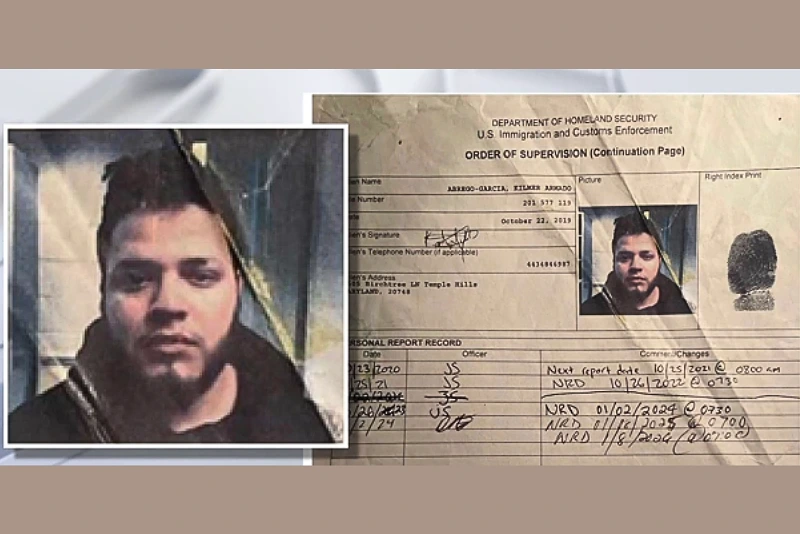
| Kilmar Abrego García. (Photo via: Department of Homeland Security) Nayib Bukele, the president of El Salvador,
stated that he has no intention of sending Kilmar Armando Abrego García back to the United States, following his deportation back to his native country. Despite a previous Supreme Court decision stating that the Trump administration should take “steps to facilitate” the possible return of the purported MS-13 member living in Maryland, who was deported to the Central American country, El Salvador President Nayib Bukele asserted on Monday that he is powerless to send the man back to the United States. Additionally, Salvadoran officials, including the president, are not obligated to adhere to rulings from the U.S. Supreme Court. U.S. Supreme Court rulings apply only within the jurisdiction of the United States. While there may be extradition treaties or international agreements between the U.S. and El Salvador, any cooperation based on those is voluntary and subject to Salvadoran law, not U.S. court mandates. The U.S. may request that El Salvador take certain actions, like extradition or deportation, but compliance is up to Salvadoran authorities — including the president. Abrego Garcia’s lawyer, Benjamin Osorio, told ABC News that he had “very serious concerns” about Bukele’s statement. According to Osorio, President Trump and Bukele are “both incentivized” to avoid bringing Abrego Garcia back.
The Salvadoran president elaborated further on his perspective regarding the issue.
Kilmar Abrego García and over 260 other suspected gang members were sent to the Terrorism Confinement Center (CECOT), a maximum security prison in Tecoluca, El Salvador, last month in accordance with the 18th-century Alien Enemies Act. Meanwhile, Abrego García’s family denies the Trump administration’s arguments in court filings that he is “confirmed to be a ranking member of the MS-13 gang by a proven and reliable source.”
Two immigration court rulings were referenced by Bondi as proof of Abrego Garcia’s connection to MS-13. He was refused bond in the initial ruling on April 24th, 2019, partly due to the fact that “the evidence shows that he is a verified member of MS-13.”
Abrego Garcia’s asylum application, in which he claimed he could be persecuted by groups like the Barrio 18 gang, was being considered when an immigration judge prohibited the federal government from removing him. On Monday, Secretary of State Marco Rubio made the case to reporters that “the president of the United States, not a court, conducts the foreign policy of the United States.”
A federal judge in Maryland had initially given Abrego García until April 7th to return to the United States. Even though the deadline was no longer in force, the high court had previously instructed the administration in an order issued on April 10th to “‘facilitate’ Abrego Garcia’s release from custody in El Salvador and to ensure that his case is handled as it would have been had he not been improperly sent to El Salvador.” Lower courts must demonstrate “deference owed to the Executive Branch in the conduct of foreign affairs,” according to a ruling by the Supreme Court. After facing an onslaught of press questions and statements essentially accusing the Trump administration of disregarding the Supreme Court, White House Deputy Chief of Staff for Policy Stephen Miller delivered a series of pointed remarks that swiftly subdued the boisterous reporters.
President Trump did not discuss the Abrego Garcia details publicly, but he did say that he would be open to expanding the deportation efforts with El Salvador. Since the October 2019 order was still in force, a Trump administration lawyer had falsely stated in a filing on March 31st that Abrego Garcia’s dismissal was the result of a “clerical error” and an “administrative error.” However, Miller refuted that allegation on Monday, asserting that the Justice Department attorney who filed that brief was later dismissed from the case by Attorney General Pam Bondi, while reiterating that Abrego Garcia’s deportation was not an error.
The administration also contended in a petition on Sunday that the Supreme Court’s decision did not impose any obligation on the United States to pressure El Salvador to free Abrego Garcia.
Meanwhile, online users took to X to share their perspectives and more surfacing news on the debated issue.
Stay informed! Receive breaking news blasts directly to your inbox for free. Subscribe here. https://www.oann.com/alerts |


No comments:
Post a Comment