Here's the Geopolitical Mistake Iran Made That Only Led to More Nations Lining Up Against Them
Iran had to act, but it only
worsened their situation: the Supreme Leader, Ali Khamenei, was dead,
and their military leadership was eliminated. They responded with
missile strikes against Israel and other Gulf nations. The idea was that
this would turn those countries against the United States and pressure
them to stop the air campaign. However, it backfired, causing the entire
region to turn against Iran—Saudi Arabia, in particular, sided with the
US, which is expected. While the kingdom often follows a narrative to
placate anti-Israel sentiments, it remains a rival of Iran both
geopolitically and religiously—the Saudis are Sunni and the Iranians are
majority Shiite, two branches that aren’t too cozy with one another
The Iranian regime, decapitated in the first hours of the
U.S.-Israeli campaign that started on Saturday, has responded by
striking at least nine countries across the Middle East, unleashing a
truly regional war.
The apparent calculation was that, by
targeting rich Persian Gulf monarchies that hold sway with the Trump
administration, Tehran could force Washington and Israel into a rapid
de-escalation.
Iran’s expectation was that, by squeezing oil
shipping through the Strait of Hormuz and disrupting air traffic, it
would cause unbearable pain to the Gulf nations that depend so much on
expatriate workers, tourism and overseas trade.
So far, this
calculus seems to have backfired. Gulf states, rattled by volleys of
Iranian drones and missiles targeting their hotels, ports and airports,
are concluding the Iranian peril must be confronted. Rather than seeking
an offramp, the prevailing mood in the Gulf—at least for now—is that
the Iranian regime can’t be allowed to get away with this unprecedented
onslaught on its neighbors.
The subplot to Iran’s nuclear
ambitions was Saudi Arabia’s declaration some 20 years ago that it would
start its own nuclear weapons program if Tehran acquired the bomb. No
one wants a nuclear arms race in the Middle East.
[…]
Iran
has struck all six of the oil-rich Gulf Arab states, including Oman,
which had mediated nuclear talks between Tehran and the Trump
administration. It also hit Jordan, Iraq and Israel. At first, all the
Gulf states publicly opposed the U.S.-Israeli assault on the Iranian
regime, which has already resulted in the death of Supreme Leader
Ayatollah Ali Khamenei and the killing of many Iranian military and
intelligence commanders.
The mood changed quickly once the brunt
of the Iranian response targeted cities such as Dubai and Abu Dhabi in
the U.A.E., Doha in Qatar, and Manama in Bahrain, inflicting widespread
damage to infrastructure and civilian casualties. In the U.A.E. alone,
Iran killed three people and injured 58 after firing 165 ballistic
missiles and 541 drones, most of which have been intercepted, according
to the Defense Ministry.
[…]
“Many people in the Gulf woke
up Saturday pissed off at the United States and Israel, and went to
sleep pissed off at Iran,” said William Wechsler, director of Middle
East programs at the Atlantic Council in Washington and a former U.S.
deputy assistant secretary of defense.
Saudi Arabia and the
U.A.E., which were engaged in an acrimonious diplomatic quarrel until
the weekend, put their disagreements aside for now as they showed a
united front against Iran.
Also, before the strikes, the Saudi Crown Prince Mohammed bin Salman
(MBS) reportedly spoke with President Trump privately, urging military
action against Iran (via WaPo):
President
Donald Trump launched Saturday’s wide-ranging attack on Iran after a
weeks-long lobbying effort by an unusual pair of U.S. allies in the
Middle East — Israel and Saudi Arabia — according to four people
familiar with the matter, as Israeli and U.S. forces teamed to topple
Iranian Supreme Leader Ali Khamenei after nearly four decades in power.
Saudi
Crown Prince Mohammed bin Salman made multiple private phone calls to
Trump over the past month advocating a U.S. attack, despite his public
support for a diplomatic solution, the four people said. Israeli Prime
Minister Benjamin Netanyahu, meanwhile, continued his long-running
public campaign for U.S. strikes against what he views as an existential
enemy of his country.
The combined effort helped lead Trump to
order a massive aerial campaign against Iran’s leadership and military,
which in its initial hour led to the death of Khamenei and several other
senior Iranian officials.
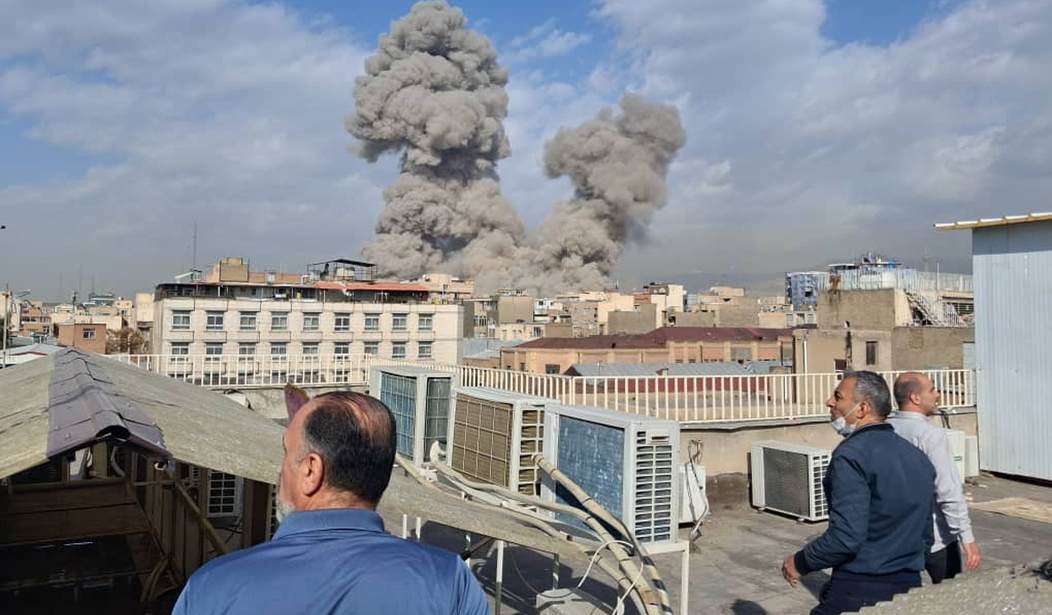
We learned Sunday that Iran is basically a rogue state right now, with no one in charge; everyone who could lead it is dead.


 CNN’s Scott Jennings once again took liberals to the cleaners on the Abrego Garcia case, the ‘Maryland man...

No comments:
Post a Comment