
 |
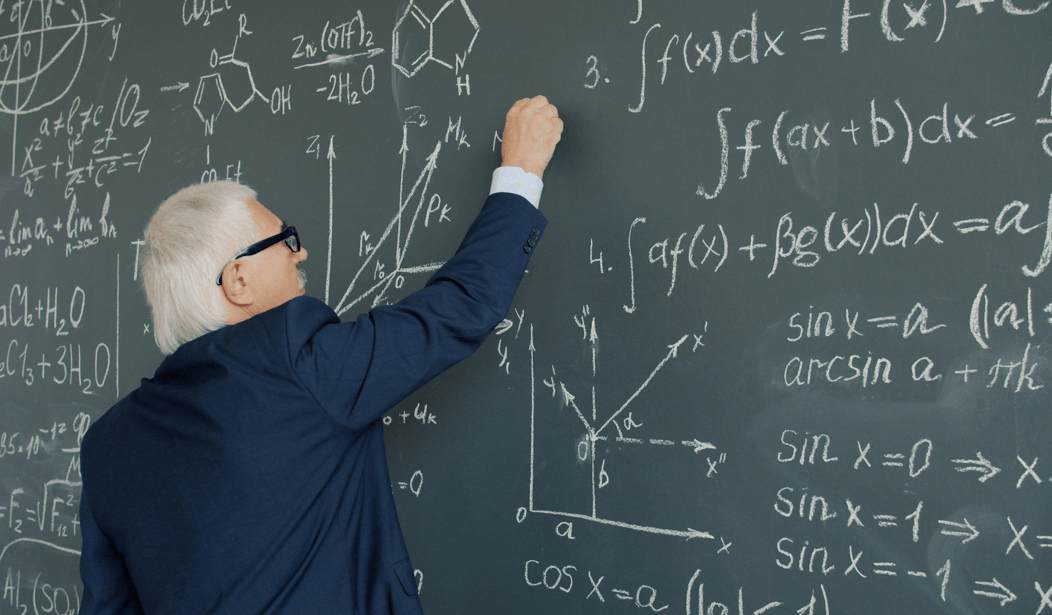
There was a time in American public education when teachers knew their job was to form human beings. That was a time when instructors demanded precision instead of self-expression, discipline instead of therapeutic jargon, and excellence instead of “safe spaces.” Yes, that was a time when a teacher could still say to a student, “Use your head, you vegetable,” without triggering a district-wide trauma response team armed with diversity consultants and defense attorneys. Edwin Barlow belonged to that time, for he truly was of another time: the time of the Greatest Generation. His life story was so extraordinary, and his methods so unorthodox, that anyone who experienced his mathematics classes would never experience education the same way again. Mister Barlow taught mathematics at Horace Greeley High School in Chappaqua, New York, for more than three decades. He was the school’s first “Teacher of the Year.” He demanded exactitude. He demanded attention. He demanded that we learn how to think. His classroom was not merely an invitation to learn; it was a command performance. And I was his student in the 1983 - 84 school year. In his class, I learned more than calculus. I learned that precision matters, that sloppiness of presentation reflects sloppiness of thought, and that intellectual rigor strengthens the mind. What made Mister Barlow extraordinary was not merely that he was demanding. Plenty of teachers are demanding. Plenty are eccentric. Plenty are feared. What made him singular was that beneath the volcanic, drill sergeant-inspired classroom persona existed a profound moral seriousness about education itself. Mister Barlow had a lifelong engagement with Catholic thought, classical philosophy, Aquinas, and rigorous logical systems. His methods were deeply old-world and, I came to believe, profoundly influenced by Thomistic and Jesuit educational traditions, even though he never once discussed his approach. Likewise, his classroom bore the unmistakable fingerprints of Jesuit intellectual formation. Traditional Jesuit education emphasizes rigor, disputation, repetition, precision, self-mastery, and the training of the entire intellect. Students were trained to think clearly under pressure. He would explain a concept twice “for the B students,” then a third time “for the C students,” because he refused to abandon weaker students to mediocrity. The students he rode hardest were precisely the ones he believed capable of much more than they were delivering. When he sensed unrealized potential being wasted, that’s when he took the student to task in a manner they would never forget. ALSO SEE: THE ESSEX FILES: A Teacher Who Grounded Us in Real History Because of Course: NYC Throwing Tax Dollars at Public Schools While Enrollment and Test Scores Tank There were students who entered his classroom convinced they were mediocre mathematics students and emerged performing at levels they themselves would have considered impossible months earlier. Many students who had struggled or coasted through school suddenly found themselves forced into genuine engagement for the first time in their lives. Some hated him for it. Others later realized he had fundamentally altered their standards for themselves forever. There was unquestionably a martial dimension to his philosophy of education. He demanded composure under pressure. He expected students to think while uncomfortable. He intentionally placed them at the blackboard, where anxiety, embarrassment, uncertainty, and scrutiny had to be confronted publicly rather than avoided. Modern educators would likely regard this as emotionally hazardous. I came to believe that, from his perspective, he was performing an act of protection. After his passing, I confirmed a long-standing rumor: Mister Barlow fought in WWII. He landed in Northern France a month after the invasion. A generation that survives world war often develops a very different conception of what constitutes “hardship.” Mister Barlow lived through an historical moment where entire societies collapsed because too many people surrendered reason, courage, vigilance, and moral seriousness. Mister Barlow’s classroom was partially an attempt to forge young people capable of surviving a harsh world. His terrifying classroom persona may have concealed something unexpectedly compassionate. He knew the world could be brutal. He simply refused to lie to students about it. The terrible irony is he believed that teenage intellectual laziness could lead to the beginning of civilizational decay itself…and it turns out that he was right. Today’s rotten educational establishment would diagnose Mister Barlow as a public menace. A man who barked at inattentive students, mocked sloppy work, and terrified teenagers into intellectual focus would be crucified by the administrative state. He would be investigated by HR departments. Parents would demand his firing. TikTok clips of his classroom outbursts would circulate under hashtags about “toxic learning environments.” The modern public school system has become a sprawling, self-serving, extortionate bureaucracy obsessed with identity politics, grievance hierarchies, and ideological conditioning. Students are taught that mathematics itself may be culturally oppressive. Discipline is viewed as authoritarian. Standards are “inequitable.” Failure is never the student’s responsibility because responsibility itself has become an intolerable burden in a culture determined to infantilize everyone forever. The result is a colossal educational catastrophe that Mister Barlow would have looked upon with undisguised contempt. Beyond his educational approach, Mister Barlow was a literal man of mystery. He erased much of his personal history. Such was his sense of humor that he was surrounded by rumors and myths so extravagant — that he himself stoked — that students half-believed he might literally be immortal. Upon his death, it was discovered that he lived in near-total austerity, possessing almost nothing, despite quietly leaving nearly half a million dollars to the Horace Greeley Education Fund — a charity dedicated to sending financially struggling students to college. Americans exhausted by ideological indoctrination masquerading as education should learn his story. Mister Barlow’s life stands as a rebuke to the comforting lie at the heart of contemporary education: that protecting students from discomfort prepares them for the world. That is why, long after the slogans and fads of modern pedagogy have vanished into the ash heap of educational history, people like me will still remember — and endlessly champion — the terrifying old calculus teacher who demanded they think. |


No comments:
Post a Comment