
 |
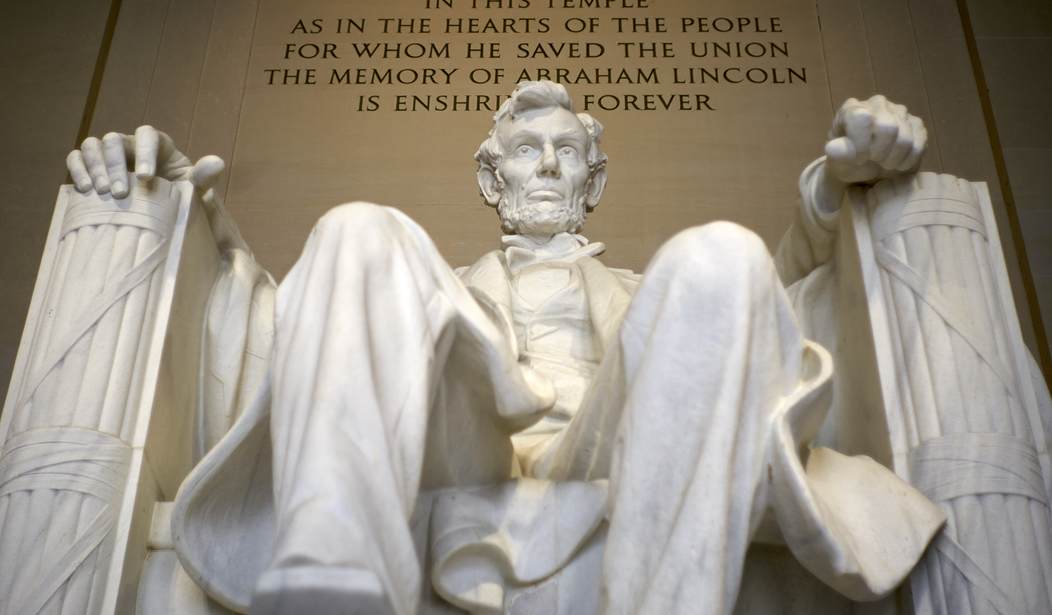
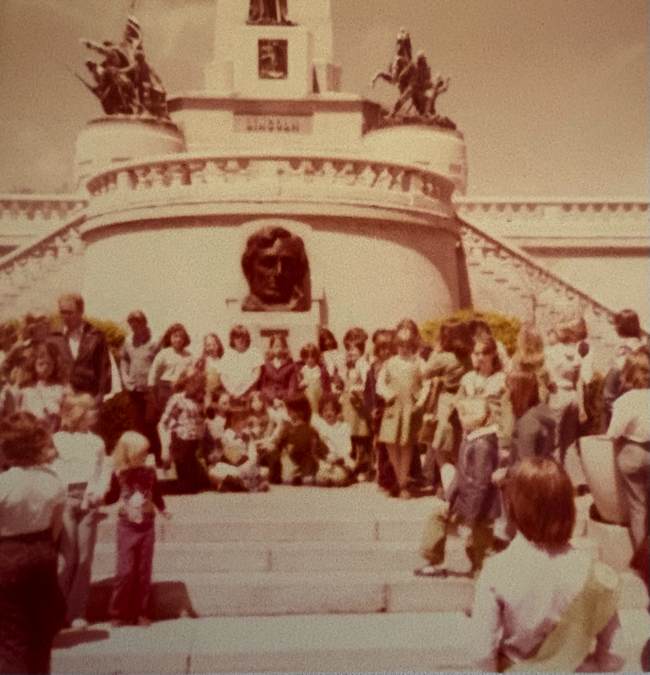
In the lead-up to the nation's semiquincentennial, there's been a renewed focus on the Founding Fathers. That's to be expected as we reflect on how our nation came to be. Somehow, as they declared, then battled for and won independence, they had the wisdom and foresight to design and build a remarkable foundation — one that has not only endured for a quarter-millennium, but grown and thrived in a way I expect none of them could have imagined. Not without its struggles, to be sure. America is still a toddler in some respects — or perhaps an adolescent. It has had its fair share of growing pains, even descending into civil war less than a century after its founding. He was not, of course, a "Founding Father," but Abraham Lincoln's role in guiding the nation through its most fraught years and out the other side of the hell that was the Civil War places him shoulder to shoulder with the founders, so it seems fitting to honor him as we honor them. An Early AppreciationI don't recall a time when I didn't have at least some understanding of the significance of his presidency. The fact that his tomb, home, and other Lincoln sites are located next door in Illinois made learning about him all the more appealing and accessible. While I confess I don't recall all that much about it, I do recall a Girl Scout trip to Springfield, Illinois, in the spring of 1980 to visit the tomb and museum and the home where he and Mary Todd lived.
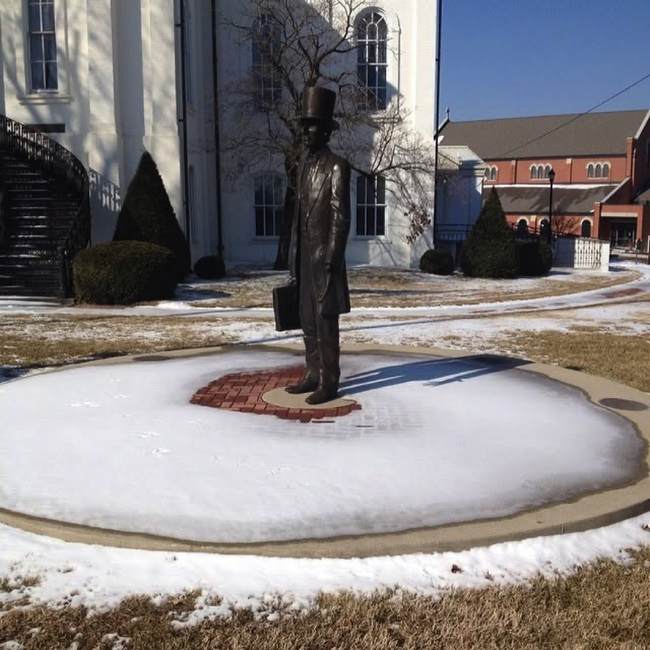
(Apologies for the quality of the photo — cameras weren't quite so advanced in those days.) READ MORE: What Lies Beneath: Massive Secret Vault Under Lincoln Memorial to Be Opened to Public for America250 'I Still Have a Dream' – MLK Jr.'s Niece Rejects SPLC's Hate-Mongering in Powerhouse Testimony The Lincoln LawyerAs an adult, my own legal career helped foster an abiding affinity for the self-taught trial lawyer. In the winter of 2014, I found myself following in his footsteps, so to speak, as I argued before the Illinois Court of Appeals in Mt. Vernon. Lincoln himself appeared there some 155 years earlier (before the Illinois Supreme Court, which was housed there at the time) and successfully argued a major tax case on behalf of the Illinois Central Railroad. My case involved a railroad as well — only as the opposition — and, like Lincoln, I won that one.
The Second Inaugural AddressBut for all my familiarity with Lincoln, I hadn't looked closely at his second inaugural address until just recently. While its closing paragraph begins with the familiar "With malice toward none with charity for all...," the paragraphs preceding it were new to me. And as I read them now, in this moment in our history, they land differently than I suspect they would have even a decade ago.
The address was delivered on March 4, 1865, just 41 days before Lincoln would be felled by an assassin's bullet. Despite its brevity — roughly 700 words — the address somehow managed to wrap its arms around the tragedy of the previous four years while speaking to the future with hope. Perhaps it's my editor's brain, but what jumped out to me there was this: "...is as well known to the public as to myself..." This was long before social media. News in 1865 traveled in analog fashion. And yet, Lincoln was confident that the American populace was fairly well up-to-speed on the status of the conflict. With far less access to information, they were nevertheless well-informed.
While Lincoln remained hopeful for the future of the nation, he wasn't interested in glossing over how it had been fractured, nor did he shy away from calling out those whose aim was a house divided. I read this: "Both parties deprecated war but one of them would make war rather than let the nation survive, and the other would accept war rather than let it perish," and cannot help but see its overlay on the divisions we face today.
This, of course, was my "Whoa!" moment — or moments, I should say. There's so much packed into this paragraph. First, that he marched straight on into the fire — there's no sugarcoating here; no delicate dance around the gaping wound at the heart of it all. He names slavery and shames it, recognizing that it "constituted a peculiar and powerful interest" and was the cause of the war. Yes, I think it's fair to say there were other issues, but Lincoln drills right down to the core here. He acknowledges that neither side fully appreciated the magnitude of taking up arms against their fellow countrymen — the nightmare it would unleash. But isn't that the way of history? And of the human condition? Even when we know, on some level, we're headed down a dangerous path, we all too often forge ahead. And then, the words that pierce the heart: "Both read the same Bible and pray to the same God and each invokes His aid against the other." One sentence. Nineteen words. And yet, so much said. Now, we might look at this through 2026 eyes and think the reading the same Bible and praying to the same God premise no longer holds — at least not for many. But I would submit that even those who have rejected God and His Word remain subject to it. And believer or no, when you're praying for the destruction of your fellow countrymen, something's gone terribly awry. Of course I can't "hear" Lincoln's voice, but something I've come to understand through my years of editing is that each writer has a distinct voice, and my inner ear "hears" more than just the words on the screen when I read them. When he speaks of slavery as an offense — a sin — while recognizing "this mighty scourge of war" as the wages of it, I hear both anguish and true faith in a sovereign God — an Almighty who loves us enough to call us to account. And when Lincoln puts it like this, we're hit with the enormity of it:
I'm not into numerology, but his reference to 250 years of unrequited toil leaped out at me in light of the current moment. And through it all, Lincoln weaves the recognition of a righteous God.
Moral Clarity and an Enduring LegacyThough it may be less familiar than the Gettysburg Address or his first inaugural, his second inaugural may contain Lincoln’s most enduring lesson: A nation can tell the truth about its wounds without surrendering its hope, and it can seek justice without giving itself over to vengeance. And that he's able to simultaneously acknowledge our imperfect understanding while exhorting the nation to come together and bind its wounds, I believe, sums up why Abraham Lincoln can rightly be seen as a Founding Father and celebrated right alongside the others as we mark this monumental occasion. Somehow, despite the deep divisions that threatened to tear the nation asunder — despite all the havoc wreaked and all the blood spilled — Lincoln managed to keep the nation from coming completely apart, thus ensuring that we survived to see America 250. |


No comments:
Post a Comment