
 |
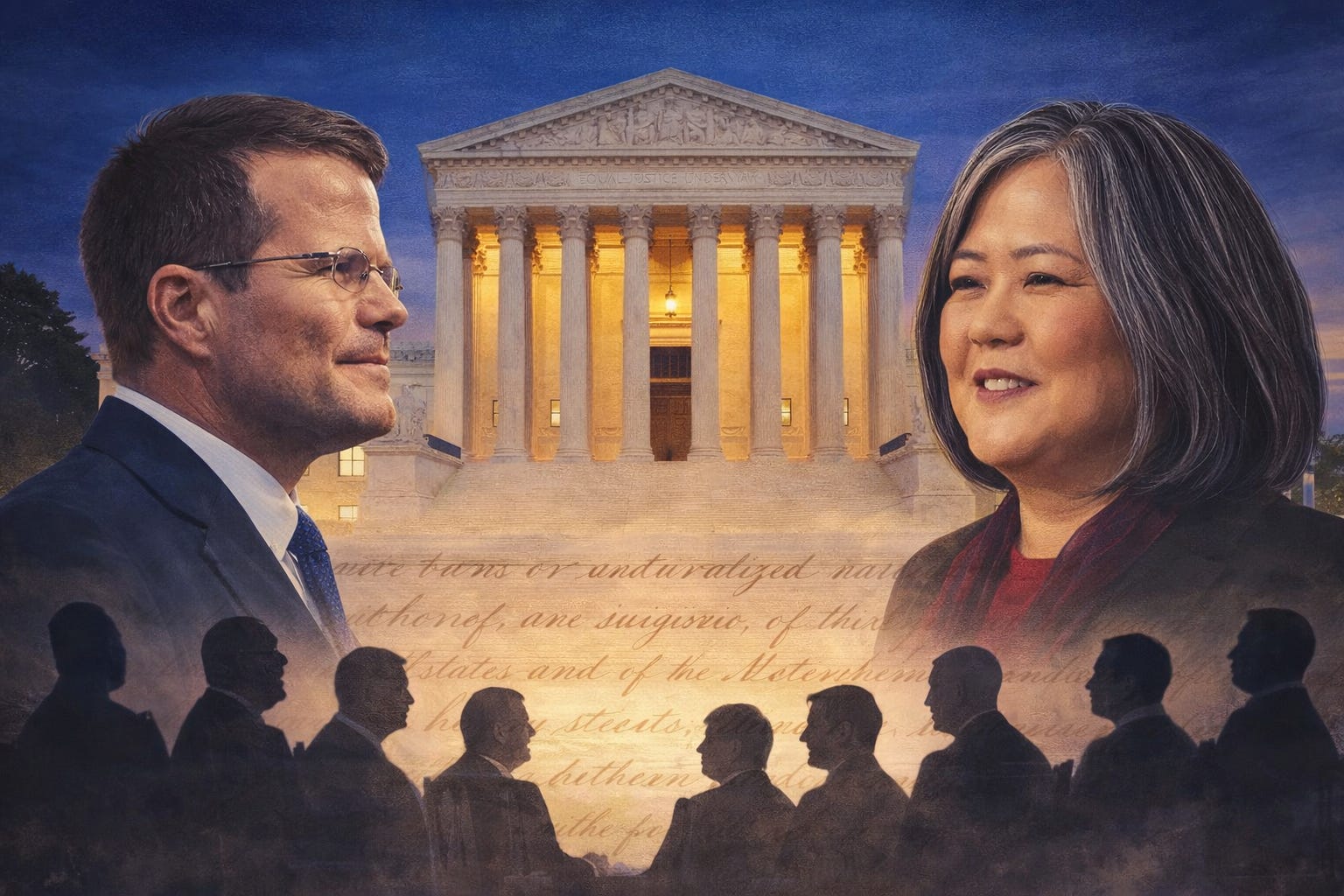
The Supreme Court's 6-3 decision in Trump v. Barbara struck down President Donald Trump's executive order ending birthright citizenship. But a closer read of the 194-page opinion shows the court's self-identified originalists sharply divided over what the 14th Amendment's framers actually meant, with only Justice Amy Coney Barrett joining Chief Justice John Roberts on the constitutional rationale and Justice Brett Kavanaugh voting to void the order on statutory grounds alone. Roberts, writing for a five-justice bloc that included Justices Sonia Sotomayor, Elena Kagan, Barrett, and Ketanji Brown Jackson, traced an unbroken line from English common law through the antebellum era to the Reconstruction Congress, concluding that the Citizenship Clause "incorporated the common law and granted citizenship to nearly all children born in the United States." The majority held that children born to parents unlawfully or temporarily in the country are "subject to the jurisdiction" of the United States and thus citizens at birth. Kavanaugh concurred in the judgment but departed from the constitutional reasoning, basing his vote on 8 U.S.C. Section 1401(a), the Immigration and Nationality Act provision that mirrors the Citizenship Clause. He wrote that Trump's order "does not violate the Fourteenth Amendment" but does contravene federal statute and suggested Congress could amend the law to establish new exceptions. The principal dissent, authored by Justice Clarence Thomas and joined by Justice Neil Gorsuch, ran 91 pages and called the majority's account "not historically accurate." Thomas argued the 14th Amendment's framers meant to secure citizenship for the freed slaves, not for children of parents merely sojourning in the country, and said the ruling "adds to the sad history" of an amendment he views as repurposed beyond what its Reconstruction-era authors intended. Justice Samuel Alito, in a separate 39-page dissent, called the ruling a "mistake" that "preserves a powerful incentive to enter or remain in this country illegally." Gorsuch added a three-page solo dissent questioning the majority's reliance on the 1898 Wong Kim Ark precedent, though he acknowledged doubt that the executive order could lawfully reach children of long-settled undocumented parents. The split leaves the constitutional holding resting on five votes rather than six, a distinction Trump seized on when he said on Truth Social that Congress could "make it up" through legislation without a constitutional amendment. Kavanaugh's opinion supplies some support for that view; the majority's does not. Any statutory rewrite would still face the five justices who ruled the Constitution itself compels birthright citizenship for nearly all children born on U.S. soil. Executive Order 14160, signed Jan. 20, 2025, directed federal agencies to withhold citizenship documentation from certain children of noncitizen parents. The Migration Policy Institute estimated that roughly 255,000 children born each year stood to lose recognized citizenship had the order taken effect. Jim Thomas ✉Jim Thomas is a writer based in Indiana. He holds a bachelor's degree in Political Science, a law degree from U.I.C. Law School, and has practiced law for more than 20 years. © 2026 Newsmax. All rights reserved. |


No comments:
Post a Comment