WASHINGTON
(AP) — Abortion rights as well as protections for young immigrants and
LGBT people top an election-year agenda for the Supreme Court. Its
conservative majority will have ample opportunity to flex its muscle,
testing Chief Justice John Roberts’ attempts to keep the court clear of
Washington partisan politics.
Guns could be
part of a term with plenty of high-profile cases and at least the
prospect of the court’s involvement in issues revolving around the
possible impeachment of President Donald Trump and related disputes
between the White House and congressional Democrats.
The
court also could be front and center in the presidential campaign
itself, especially with health concerns surrounding 86-year-old Justice
Ruth Bader Ginsburg.
Its biggest decisions are likely to be handed down in late June, four months before the election.
If
last year was a time for the court to maintain a collective low profile
following Justice Brett Kavanaugh’s stormy confirmation, the new term
marks a return to the spotlight.
“The court
seemed to do everything it could to rise above the partisan rancor,”
said David Cole, the national legal director for the American Civil
Liberties Union. “This term, it’s going to be harder for the court.”
How
far the court is willing to go in any case that is likely to divide the
liberal and conservative justices probably will come down to Roberts.
He is essentially the court’s new swing justice, a conservative who is
closest to the court’s center. He also has spoken repeatedly against the
perception that the court is a political branch of government, much
like Congress and the White House.
Last
term, on the same day in late June, Roberts joined the conservatives in
ending federal court challenges to partisan electoral maps and sided
with the liberals to block the administration from adding a citizenship
question to the 2020 census.
The new term
might pose the sternest test yet of Roberts’ stewardship of the court.
Roberts also would preside over any Senate trial of Trump, if the House
impeaches the president.
The justices return
to the bench Monday with cases about whether states can abolish an
insanity defense for criminal defendants and allow non-unanimous juries
to convict defendants of some crimes.
The
next day, they will take up two cases about whether federal civil rights
law protects LGBT people from workplace discrimination. They are the
first rights cases since the retirement of Justice Anthony Kennedy, who
provided the fifth vote for and wrote the court’s major gay rights
decisions.
With
Kavanaugh in Kennedy’s place and Trump’s other appointee, Justice Neil
Gorsuch, also on the bench, the outcome is far from certain. The Trump
administration also has reversed the Obama administration’s view that
LGBT people are covered by the Title 7 provision of the 1964 Civil
Rights Act that prohibits workplace discrimination on the basis of sex.
“It
would be huge for the LGBT community to have protection in the private
sector from employment discrimination,” said Paul Smith, a veteran
Supreme Court litigator who has argued past gay rights cases.
Legislation
is pending in Congress that would remove any doubt about Title 7′s
application in cases of sexual orientation and gender identity, but is
unlikely to pass the Republican-controlled Senate.
In
November, the justices will hear arguments over the Trump
administration’s plan to end the Obama-era program that has protected
roughly 700,000 young immigrants from deportation and provided them with
permits to work in the United States legally.
Lower courts have so far blocked the administration from ending the Deferred Action for Childhood Arrivals program.
As
in the LGBT rights cases, the court fight over DACA could be made
irrelevant by congressional action authorizing the program. But Congress
seems unlikely to do anything before the court rules.
The
abortion case probably will be argued during the winter and is another
test of whether the change in the court’s composition will result in a
different outcome. The Louisiana law that forces abortion providers to
have admitting privileges at local hospitals is virtually the same as a
Texas law the court struck down in 2016, when Kennedy joined the liberal
justices to form a majority.
Roberts
dissented in 2016, but he voted with the liberals in February to block
the Louisiana law, at least temporarily. It was a rare vote against an
abortion restriction that could point up the tension between Roberts’
legal views on abortion and his institutional interests in upholding
even prior decisions with which he disagrees.
Apart
from its lineup of big cases, the court itself could be an issue in the
unfolding presidential campaign. Some Democrats and liberals are
talking about structural changes to increase the size of the court or
limit the terms of future justices.
The 2016
campaign played out amid a Supreme Court vacancy following Justice
Antonin Scalia’s death in February. While Senate Republicans blocked any
consideration of President Barack Obama’s nomination of Judge Merrick
Garland, Trump released a list of potential nominees and about
one-quarter of Trump voters said the Supreme Court was the most
important factor in their vote for him.
Senate
Majority Leader Mitch McConnell, R-Ky., has said Republicans would
confirm a Trump nominee to the Supreme Court, even if a vacancy arose
during 2020.
Election-year retirements are
very unusual, and the two oldest justices, Ginsburg and 81-year-old
Stephen Breyer, would not want to give Trump a third high court seat to
fill. Both were appointed by President Bill Clinton, a Democrat.
But
Ginsburg has had two bouts with cancer in less than a year, including
radiation treatment in August for a tumor on her pancreas. She has kept
up a steady stream of public appearances to signal that she is still
here. The events, she said, energize her. “When I am active, I am much
better than when I am just lying about feeling sorry for myself,” she
said at an appearance in New York.
She’s
hardly alone on the lecture circuit. Justice Sonia Sotomayor and Gorsuch
have been out trying to drum up sales for their new books. Even the
newest justice, Kavanaugh, will raise his profile somewhat. He is
scheduled to be the principal speaker at the Federalist Society’s
November dinner in front of more than 2,000 people.
WASHINGTON (AP) — Secretary of State Mike
Pompeo said the State Department intends to follow the law in the House
impeachment investigation and vigorously defended President Donald
Trump, dismissing questions about the president’s attempts to push
Ukraine and China to investigate a Democratic political rival.
The
Trump administration and House Democrats often disagree about what the
law requires, leaving open the question of how Pompeo may interpret
Democrats’ demands for key information about Trump’s handling of
Ukraine.
Pompeo, speaking Saturday in
Greece, said the State Department sent a letter to Congress Friday night
as its initial response to the document request and added, “We’ll
obviously do all the things that we’re required to do by law.” He has
allowed Democrats to interview a series of witnesses next week. Among
them is Gordon Sondland, the U.S. ambassador to the European Union,
another key figure in the probe.
The
administration has struggled to come up with a unified response to the
quickly progressing investigation. Democrats have warned that defying
their demands will in itself be considered “evidence of obstruction” and
a potentially impeachable offense.
Pompeo
has become a key figure in the Democrats’ investigation. He was on the
line during the July phone call in which Trump pressed Ukrainian
President Volodymyr Zelenskiy to investigate former Vice President Joe
Biden and his son, Hunter — sparking a whistleblower complaint and now
the impeachment inquiry.
Pompeo had initially tried to delay a handful
of current and former officials from cooperating with the inquiry and
accused Democrats trying to “bully” his staffers.
On Saturday, Pompeo did not back off his defense of Trump’s call with Ukraine.
“There
has been some suggestion somehow that it would be inappropriate for the
United States government to engage in that activity and I see it just
precisely the opposite,” he said.
Trump has offered a series of contradictory statements when it comes to the Democrats’ subpoena of White House records.
Asked
Wednesday whether the White House intended to comply, Trump told
reporters, “I always cooperate,” even as he dismissed the inquiry as “a
hoax.” A day later, however, Trump had a different answer for the same
question, saying he would instead leave the matter to his lawyers.
“That’s up to them to decide,” he said, “But the whole investigation is crumbling.”
By
Friday, however, Trump confirmed reports the White House was preparing a
letter to House Speaker Nancy Pelosi, D-Calif., arguing that Congress
cannot undertake an impeachment investigation without first having a
vote to authorize it. Pelosi has insisted the House is well within its
rules to conduct oversight of the executive branch under the
Constitution regardless.
A conservative comedian lashed out on Twitter on
Friday, saying the company sent him a "hateful conduct warning," which
could affect his ability to tweet, on the same day he was to visit the White House for the Young Black Leadership Summit.
“People
want to take my account down because I said Schiff Should Resign,
called out AOC & I support Pres @realDonaldTrump,” Terrence K.
Williams, a vocal Trump supporter, told his more than 600,000 followers,
asking them to retweet a hashtag to protect his account.
“This is
outrageous,” he wrote. “The day that I go to the White House is the day
that they notify me that my account may be in possible violations of
hateful conduct. … None of my conduct is hateful. I am a comedian, a
conservative Trump-supporting comedian and they want to take me down
because people have jumped on the Trump train after watching my
content."
"I am a comedian, a conservative
Trump-supporting comedian and they want to take me down because people
have jumped on the Trump train after watching my content." — Terrence K. Williams
The
message from Twitter did not prevent Williams from attending the White
House event and meeting President Trump, as Williams documented in
another Twitter post.
"I MET PRESIDENT TRUMP TODAY!," the comedian wrote Friday.
"Growing
up I went from foster house to foster house & i never thought I
would be at the White House... let alone speak on the same stage with
Pres @realDonaldTrump a man that loves the black community"
One of the tweets flagged by Twitter involved Williams saying Rep. Adam Schiff,
D-Calif., needs to resign and asserting that Schiff helped write the
whistleblower’s complaint about a Trump phone call with the president of
Ukraine.
Another tweet that was flagged said Rep. Alexandria Ocasio-Cortez
didn’t condemn the idea of eating babies after a demonstrator suggested
people should eat babies to combat climate change at one of her town
halls.
A political group that supports Trump later admitted they staged the demonstration, and Ocasio-Cortez said she deliberately tries to avoid escalating confrontations when she faces hecklers at public events.
It’s not clear what part of the tweets Twitter took issue with.
Twitter
said in its message to Williams, “We are writing to inform you that
certain content on your Twitter account … has been flagged for possible
violations of Twitter’s hateful conduct policy and/or laws of USA.”
Twitter added that if the flagged content isn’t in violation of its policy, it may still restrict Williams' account.
Twitter’s
"hateful conduct" policy says in part: "You may not promote violence
against or directly attack or threaten other people on the basis of
race, ethnicity, national origin, sexual orientation, gender, gender
identity, religious affiliation, age, disability, or serious disease. We
also do not allow accounts whose primary purpose is inciting harm
towards others on the basis of these categories.”
In April 2018, Williams spoke out after Facebook suspended his account.
Want to be miserable? Just three states offer an array of places you may like.
Business Insider recently released its list of the 50 most miserable cities in America – with cities in California (10), New Jersey (9), and Florida (6), accounting for half the list.
In
compiling its rankings, Business Insider said it used U.S. Census
information to analyze 1,000 U.S. cities on metrics such as crime, drug addiction, population changes, job opportunities, commute times, household incomes, abandoned homes and effects from problems such as natural disasters.
It decided that Gary, Ind., just outside Chicago, was the nation’s most miserable city, followed by Port Arthur, Texas, and Detroit.
What
the most miserable cities had in common, according to the outlet, were
“few opportunities, devastation from natural disasters, high crime and
addiction rates, and often many abandoned houses.” The
data appear to support President Trump’s recent criticisms of
California. Last month, the president charged that urban areas in the
Golden State continue to “destroy themselves” by failing to address serious issues such as homelessness.
The
10 California cities and their rankings were: Bell Gardens (14);
Compton (41); El Monte (22); Hemet (44); Huntington Park (10); Lancaster
(50); Lynwood (21); Montebello (40); Palmdale; and San Bernardino (42).
The nine New Jersey cities and their rankings were: Camden (8);
Newark (5); New Brunswick (11); Passaic (4); Paterson (19); Plainfield
(30); Trenton (17); Union City (15); and West New York (29).
The
six Florida cities and their rankings were: Fort Pierce (34); Hialeah
(13); Miami Gardens (28); North Miami (25); North Miami Beach (33);
Hallandale Beach (37).
KABUL,
Afghanistan (AP) — The Taliban met U.S. peace envoy Zalmay Khalilzad in
the Pakistan capital for the first time since President Donald Trump
declared a seemingly imminent peace deal to end Afghanistan’s 18-year
war ‘dead’ a month ago, a Taliban official said early Saturday.
He
offered few details of Friday’s meeting between Khalilzad and the
Taliban delegation led by Mullah Abdul Ghani Baradar, a co-founder of
the movement that was ousted in 2001 by the U.S.-led coalition. The
official spoke on condition of anonymity because he was not authorized
to speak to the media.
U.S. officials however have been keen to say there is no resumption of peace talks, at least not now in Islamabad.
Still, the meeting is significant as the United States seeks an exit from Afghanistan’s 18-year war.
Khalilzad
has been in Islamabad for much of the week meeting with senior
government officials in what the U.S. State Department described as
follow-up meetings he held in New York during last month’s U.N. General
Assembly session. At the time he met Pakistani Prime Minister Imran
Khan, who has been calling for a resumption of peace talks.
The
Taliban delegation led by Mullah Baradar __one of its more powerful
members __ arrived separately in the Pakistani capital for meetings with
government officials they said were being held to discuss a wide range
of political issues relating to the more than 1.5 million Afghans still
living as refugees in Pakistan.
Baradar was
arrested in Pakistan in 2010 in a joint Pakistani-CIA operation after he
secretly opened peace talks with the then-Afghan President Hamid
Karzai, attempting to sideline Pakistan and against the U.S. strategy at
the time, which did not support talks with the Taliban.
In
2018, Baradar was released from jail to facilitate peace talks after
Khalilzad was appointed U.S. peace as Washington sought a way to exit
America’s longest military engagement.
More
than 14,000 U.S. troops are still in Afghanistan and Trump has
repeatedly expressed his frustration with their continued deployment,
complaining they have taken on the duties of policing the country, a job
he said the Afghan government needed to do.
During
the past year, Khalilzad held nine rounds of talks with the Taliban in
the Middle eastern State of Qatar, where the insurgents maintain a
political office.
In early September a deal
seemed imminent, but a fresh round of violence and the death of a U.S.
soldier caused Trump to suddenly tweet the end to talks, including the
cancellation of an agreement signing ceremony in Camp David, about which
few had been aware.
There were no details about the Pakistani meetings Friday.
During
the Doha talks, Khalilzad and Baradar held one-on one meetings and in
recent weeks the Taliban had travelled to China, Russia and Iran to drum
up support for a return to talks.
But in Afghanistan, the country is still awaiting the results of presidential polls held on Sept. 28.
The
leading contenders are President Ashraf Ghani and his current partner
in the unity government, Chief Executive Abdullah Abdullah.
Abdullah
has already said he believes he has won while Ghani’s supporters are
declaring he has the necessary votes, causing many to fear political
chaos. Preliminary results are not expected before Oct. 17 and the final
results until Nov. 7. If there is no clear winner with 51% of the vote,
a second round will be held within two weeks of the final vote
announcement.
Secretary of State
Mike Pompeo missed Friday’s deadline to comply with a subpoena issued
by three Democrat-led House committees last week to hand over documents
related to the department’s dealings with Ukraine and President Trump’s personal attorney Rudy Giuliani, Fox News has confirmed.
The
subpoena came as Congress conducts a probe into a whistleblower’s
complaint to the national intelligence community over Trump’s July 25
phone call with Ukrainian President Volodymyr Zelensky -- the incident
that has since touched off the Trump impeachment inquiry.
The president is under fire for urging Zelensky, during that call, to investigate Democratic 2020 presidential frontrunner Joe Biden, his son Hunter Biden, and the Ukrainian firm Burisma, where Hunter Biden held a board position.
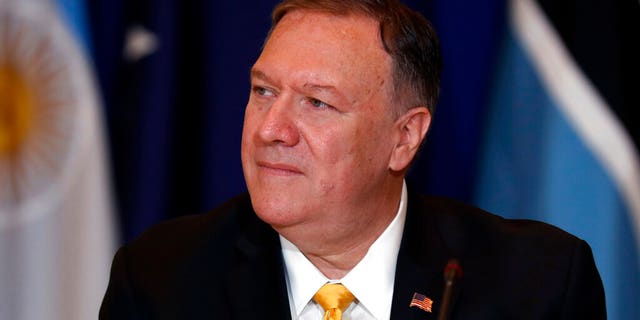
U.S. Secretary of State Mike Pompeo listens during an event hosted
by the Department of State's Energy Resources Governance Initiative in
New York, Thursday, Sept. 26, 2019. (Associated Press)
Last week, the chairmen of the three House panels -- Reps. Adam Schiff,
D-Calif., of the Intelligence Committee; Eliot Engel, D-N.Y., of the
Foreign Affairs Committee; and Elijah Cummings, D-Md., of the Oversight
and Reform Committee -- demanded a list of State Department officials
who might have been involved with the Ukraine conversation. The chairmen
additionally requested any State Department records about Giuliani, and
any records relating to U.S. military aid to Ukraine. (Giuliani had
traveled to Ukraine on business on behalf of the president, he told Fox News' Sean Hannity on Wednesday.)
Fox
News confirmed the State Department is in touch with the three House
panels regarding the deadline breach. Trump told reporters he would send
House Speaker Nancy Pelosi
a letter Friday, saying the White House would not comply with the
impeachment inquiry until it is made official by a vote before the
entire chamber. It was unclear if the State Department failed to comply
with the subpoena at Trump's request.
Pompeo confirmed Wednesday
-- while in Rome -- that he was on the July 25 call, describing his
involvement as appropriate, and within the purview of his role as
secretary of state. As a stand-off between the executive branch and
Congress escalated, he also said he would fight a request from the
Democratic chairmen for depositions from five State Department
officials. He accused the lawmakers of not giving department employees
enough time to prepare and voiced concern that the committee was trying
to prevent State Department counsel from participating.
"What we
objected to was the demands that were put that deeply violate
fundamental principles of the separation of powers," Pompeo said. "They
contacted State Department employees directly and told them not to
contact legal counsel at the State Department.”
"What
we objected to was the demands that were put that deeply violate
fundamental principles of the separation of powers. They contacted State
Department employees directly and told them not to contact legal
counsel at the State Department.” — Secretary of State Mike Pompeo
Lawmakers
from the Foreign Affairs, Intelligence and Oversight committees moved
forward with testimony from their first key witness Thursday --- former
U.S. envoy to Ukraine Kurt Volker, who resigned last week after
receiving word his name had surfaced in the whistleblower complaint.
Text messages released by Volker to Congress show U.S. officials
involved with Ukraine arguing internally last month over whether Trump
was engaged in a quid pro quo. Fox News on Friday also obtained Volker’s
prepared testimony, in which he details his interactions with Trump
lawyer Rudy Giuliani, who was probing whether Burisma had sought to
garner influence with Biden by paying high fees to his son.
A
memorandum of the July 25 call between Trump and Zelensky released last
month showed that while Trump sought a Ukrainian probe into the Biden
family, he did not explicitly use the $400 million in military aid as
leverage. Trump tweeted Thursday that he had an "absolute right, perhaps
even a duty, to investigate or have investigated corruption, and that
would include asking or suggesting other countries to help us out!"
Joe
Biden has acknowledged on camera that in spring 2016, when he was vice
president and spearheading the Obama administration's Ukraine policy, he
successfully pressured Ukraine to fire top prosecutor Viktor Shokin. At
the time, Shokin was investigating Burisma Holdings — where Hunter had a
lucrative role on the board despite limited relevant expertise. Biden
allies maintain his intervention was driven by corruption concerns.
Michael
Atkinson, the inspector general of the intelligence community, gave
testimony before the House Intelligence Committee on Friday, as he was
the first to receive the whistleblower complaint. The complaint was
eventually declassified by the Trump administration and a redacted
versions sent to Congress. House Democrats are scheduled to hear
testimony from several other officials next week. Fox News’ Chad Pergram, Brooke Singman, Alex Pappas and Catherine Herridge contributed to this report.
Former U.S. Rep. Trey Gowdy blasted House Intelligence Committee Chairman Adam Schiff, D-Calif., saying Schiff made himself a "fact witness" with the revelation that his office had contact with the Trump-Ukraine whistleblower.
"Right now he's made himself a fact witness," Gowdy told "The Story with Martha MacCallum" on
Friday. "He is in the evidentiary chain for what happened with this
whistleblower and I hope the Republicans make him testify."
Gowdy
also mocked Schiff for being awarded “Four Pinocchios” by the
Washington Post on Friday, claiming he hadn't told the truth about his
knowledge of the whistleblower.
Schiff has played a leading role
in investigating the Trump-Ukraine scandal but hasn’t been truthful in
the process, according to Washington Post fact-checker Glenn Kessler.
"I
think you got four [Pinocchios] only because you can't get five," Gowdy
joked. "He got the maximum sentence you could get from the Washington
Post fact checker -- and don't you know how hard that was for the
Washington Post to give Adam Schiff four Pinocchios?"
"He
got the maximum sentence you could get from the Washington Post fact
checker -- and don't you know how hard that was for the Washington Post
to give Adam Schiff four Pinocchios?" — Trey Gowdy, former congressman from South Carolina
The
former congressman from South Carolina called Schiff a "career
offender" when it came to the truth and asked how long House Speaker Nancy Pelosi would put up with Schiff.
"The
same guy that had the parody a week or so ago, the same guy that says
he has evidence that even [former Special Counsel Robert] Mueller
couldn't find," Gowdy said. "The question I had is, How long is Speaker
Pelosi going to put up with Adam mishandling this investigation?" Fox News' Brian Flood contributed to this report.