Commerce Secretary Howard Lutnick accused
Canadian Prime Minister Mark Carney of using failed trade negotiations
with the United States for his own political purposes, as tensions
between Washington and Ottawa continued to escalate Thursday.
Lutnick said the two sides had been close to a trade agreement before
Canada walked away from the negotiations, arguing that the decision was
driven by Canadian political considerations rather than the substance
of the proposed deal.
"I met with their trade minister, [Dominic] LeBlanc, at least 10
times in the last month," Lutnick said during a Thursday exchange with
reporters, according to Mediaite. "I spoke to Mark Carney twice in the
24 hours before this ended. Twice."
Lutnick said he has known Carney since the Canadian leader's time at
Goldman Sachs and said the two had communicated directly during the
negotiations.
"We negotiated and Canada was going to have the best trade deal in
the world," Lutnick said. "And what happened was that Canada walked away
— we had a deal, we shook hands, the president announced it, right? And
everybody was positive."
Lutnick said he believed Carney made the decision for political
reasons, pointing specifically to political dynamics in Quebec and
Alberta.
"Canada made the decision for political purposes," Lutnick said. "They wanted to walk away. This is politics only."
Lutnick suggested Carney was trying to strengthen his political
position amid challenges in Canada, including a sovereignty movement in
Quebec and an independence resolution in Alberta.
"So there's the sovereignty party trying to run, and they're in the
lead in Quebec," Lutnick said. "And so this was Mark Carney
manufacturing something that would try to keep them from winning."
He predicted that Canadian negotiators would eventually return to Washington after the political pressure eases.
"My guess will be, as soon as his elections are over, you're going to
see a plane full of Canadian negotiators flying down," Lutnick said.
Carney has offered a sharply different explanation for the collapse
of the negotiations, saying last-minute changes in the U.S. proposal
were "unfair" and "uneconomic" and raised concerns about the reliability
of any eventual agreement.
Carney has also said the U.S. proposals raised issues involving
Canadian sovereignty and French-language protections, while Lutnick
rejected the suggestion that Quebec's language and cultural policies
played a role in the negotiations.
"Do I care about how the Québécois speak? I mean, what could matter
less to America? We don't care!" Lutnick said, according to Mediaite.
"So the fact is, we never brought those words up."
The trade dispute has since spilled into a broader political confrontation between President Donald Trump and Carney.
After Trump signed an executive order Thursday officially renaming
Lake Ontario "Lake America" for U.S. federal purposes, Carney pushed
back in a post on X.
"The name of Lake Ontario derives from the Wendat word ‘Ontari'io,'
which means ‘the lake is beautiful, the lake is great,'" Carney wrote.
"This name dates back more than 400 years, well before the Canadian
Confederation and the Declaration of Independence of the United States
of America," he added.
Carney concluded that "this lake is called Lake Ontario – today and forever."
Reuters reported that Trump's order makes "Lake America" the official
federal name used by the U.S. government, while the lake itself remains
a shared body of water along the U.S.-Canadian border.
Trump had first floated the name change earlier this week as the trade dispute with Canada intensified.
The move follows the collapse of U.S.-Canada trade negotiations late
last week, after which Trump announced 50% tariffs on certain Canadian
goods, including cars, trucks, automotive parts and steel.
Canada has announced retaliatory tariffs on U.S. goods, with new
measures scheduled to take effect Sept. 8, according to Reuters.
The two governments remain at odds over who is responsible for the
breakdown in negotiations, with Lutnick maintaining that Canada walked
away from what Washington viewed as a favorable agreement and Carney
arguing that the United States introduced unacceptable changes to the
proposed terms.
Lutnick said he expects Canada eventually to return to the negotiating table.
"It didn't happen for math," Lutnick said. "The math was sensational. It was a great deal that we shook hands on."
House Democrats are reportedly already preparing legislation to
reverse President Trump’s order renaming Lake Ontario as Lake America.
The
executive order, signed in the Oval Office on Thursday, directs the
Interior Department to update federal geographic records within 30 days.
Naturally, rather than cheering on the pro-America president for a
decidedly pro-America move, the resistance party has been openly and breathlessly disgusted.
Rep. Tim Kennedy (NY-26),
according to Axios,
said he is “working on a bill” in response. He co-chairs the bipartisan
Northern Border Caucus and seems concerned that renaming the lake could
negatively affect economic negotiations with the Canadian government.
Kennedy denounced the rename as the work of a “petty, vindictive, failed president.”
White
House spokesperson Taylor Rogers issued a statement to the outlet
responding to the Democrats' concern for Canada's hurt feelings.
"Does the Congressman not love America?" she wondered.
In
addition to Rogers' response, the White House jabbed those suffering
from Trump Derangement Syndrome and setting their hair on fire over the
notion of calling one of the Great Lakes, Lake America.
"TDS TRIGGER WARNING: Lake America is officially on the map," they wrote, suggesting there may be more to follow. "What's next?"
My gosh, if he adds other bodies of water to the list alongside Lake
America and the Gulf of America, Democrats are going to have an
aneurysm. Niagara Falls could be America Falls. The Bering Sea, now the
American Sea.
Let's just go through all of them.
Kennedy
isn't the only one who seems distraught over Lake America. Rep. Debbie
Dingell (MI-6)
called the order “absolutely insane," a clear example of projection. Dingell adds that she "deeply resents" President Trump for giving the lake a new American name.
RedState's Jennifer Oliver O'Connell collected some of the best Democrat responses
as they collectively go apoplectic in their race to show Canada that
they too hate anything with a patriotic ring to it. It's a long list,
but entertaining as a case study in TDS.
"Most Americans really don't care. And I mean, they really don't," O'Connell writes.
Democrats do. In fact, it's enough to unleash a lakeful of tears.
Axios points out in a "reality check" that the left has little chance of doing anything about Lake America right now.
"With
Republicans in control of both chambers of Congress, Democrats will
likely have trouble securing a chance to vote on their legislation,"
they write.
It will be
interesting and sad to watch Democrats scrambling to undo every
pro-America executive order President Trump has put in place. If they take the House, they will try to unwind Lake America. They will try to unwind the rest of it too.
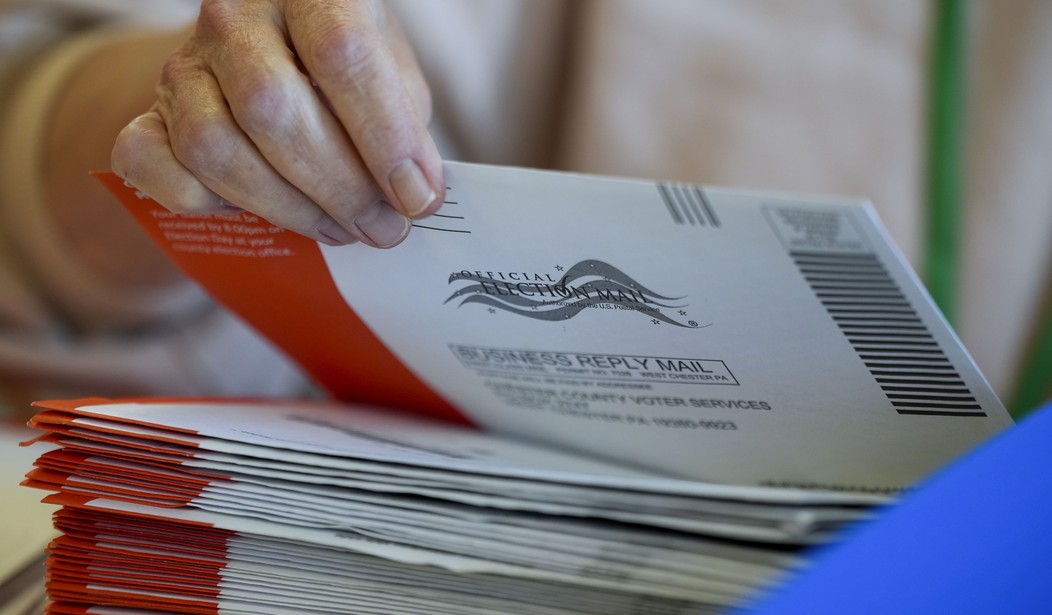
Just when it seemed like the United States Postal Service (USPS) was
free to implement its new rules governing mail-in ballots ahead of this
year's midterm elections, along comes U.S. District Judge Indira Talwani
to hit the brakes – again.
And this time, she's thrown in a strange legal twist just to keep things exciting.
As RedState's resident legal eagle Susie Moore reported
earlier this week, the U.S. Supreme Court (SCOTUS) cleared the way
Monday for the Trump administration to move forward with key parts of
its mail-in voting policy. SCOTUS did not rule on the legality of the
rule, but said that an earlier challenge had come too soon because the
Postal Service had not yet finalized the rules needed to carry it out.
So, USPS finalized the rules, which went into effect Wednesday.
With
the midterms just a few months away, the USPS has finalized a strict
new rule on how mail-in and absentee ballots are to be handled in
federal elections. This new rule, which was announced Friday, would
require that states tell the Postal Service who is supposed to be
receiving these kinds of ballots, and those envelopes would then have to
have unique identifiers on them so that each piece can be individually
tracked as it makes its way through the mail system.
With the USPS rule in place, Democrat-led states – which definitely do not want stricter oversight of mail-in ballots – now had something to sue over.
And
they wasted no time, running right back to Judge Talwani's courtroom to
argue that the finalized USPS rule exceeded the agency's authority and
unlawfully placed the Postal Service in the middle of federal
elections.
Talwani, an Obama appointee, agreed that the challengers had raised
enough questions to justify temporarily putting parts of the new rule on
hold, issuing a 14-day temporary restraining order Thursday.
🚨
Judge Indira Talwani has temporarily blocked key parts of USPS’s new
mail-ballot rules for the 2026 midterms, just three days after the
Supreme Court lifted her earlier nationwide injunction against President
Trump’s election executive order. pic.twitter.com/Dhi1mrqh8S
And
that brings us to the strange part of the whole thing: The Trump
administration essentially had to be given permission to implement the
policy so its opponents could launch the challenge the Supreme Court
said was actually ready to be heard.
While Talwani isn't technically overriding the SCOTUS ruling
– they never ruled on the legality of the USPS rule and simply said
challenges to it were premature – she certainly is inflicting some
serious legal whiplash on those who'd like to ensure that mail-in ballots are properly tracked and handled ahead of the midterms.
"Based
on the record presently before the court, Plaintiff States face
irreparable harm where they are required to comply with a likely
unconstitutional regulation for which compliance is practically
impossible as to the 2026 midterm elections, now little more than two
months away," Talwani wrote in her 11-page order. "Most Plaintiff States
have already ordered their mail ballots, and some are required by state
law to send them to eligible voters as early as next week."
The
states, she continued, "have neither time nor funds to design new mail
ballots, seek approval of the new designs, order production of mail
ballots, update their own election management systems, train election
officials to use the USPS portal, and upload citizen data to the portal,
all before the midterms."
For now, Talwani's order lasts just 14 days, with another hearing set for September 3.
And
with ballots already heading to the printers – and, in some states,
already on their way to voters – this legal fight is quickly running out
of time.
It didn’t happen all at once, but the timelines
and the new document dumps paint a disturbing picture of what we knew
would appear on the canvas long before Trump’s second presidency and the
disclosures that exposed the whole deep state circus. We have former
presidents, including Obama, ordering intelligence assessments to thread
in Russian collusion nonsense;
a former CIA director who lied about how the Steele Dossier, the
document responsible for this hoax, was used in analyzing the
intelligence; and the media’s incessant and destructive crusade to make
this ruse legitimate. They failed because there was no evidence, and
every bombshell was debunked within hours.
Given the latest trove of documents about the FBI’s investigation
into former Rep. Eric Swalwell (D-CA) and his Chinese tryst with Fang
Fang, who everyone knew was an intelligence agent, the pattern emerges:
the FBI truly was running a secret government of sorts. They eschewed
investigations into foreign influence involving Democrats, the Biden
family, and the Clintons, and redirected all efforts to legitimize
shoddy evidence and outright lies about Trump.
Again, you knew
this, but now you have mountains of paperwork and damning emails from
top FBI officials who admitted to “basically running a shadow government
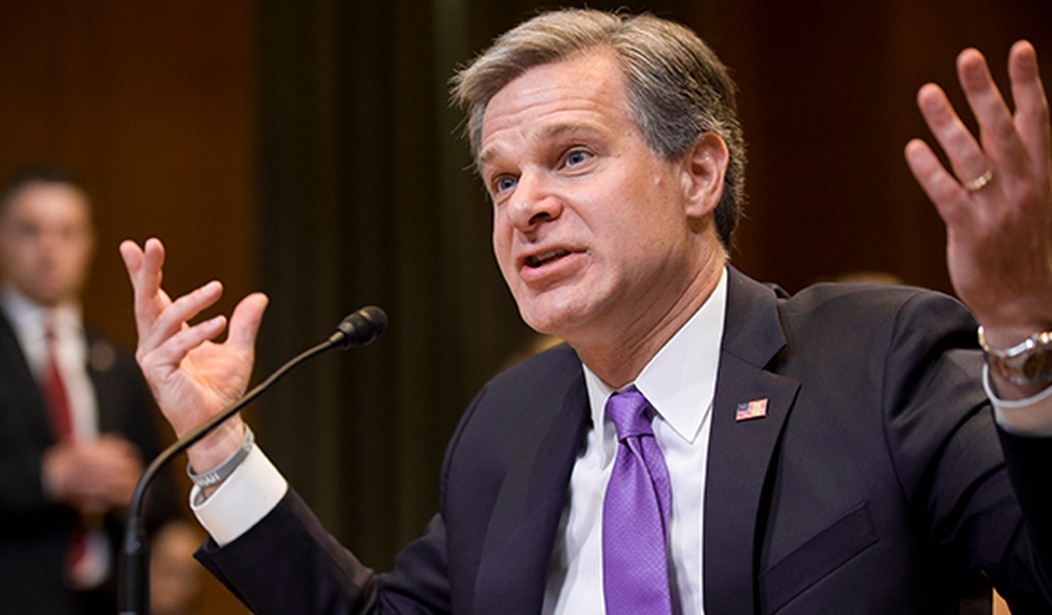
across the FBI.” That official reported to then-FBI Director Chris Wray
daily.
Even worse, under Operation Round River,
the FBI targeted those who brought forward evidence regarding
allegations of foreign influence and corruption on the Hunter Biden
laptop (via Public):
Many
of the FBI’s abuses of power have been reported before. There was
coverage of how the FBI received warrants to spy on Trump aide Carter
Page based on a July 2016 email that the Bureau, in five separate
interviews, never once asked Page about. Reporters covered the FBI’s
claim in its warrant application that Page had “met with” senior Russian
officials when he had, in fact, only shaken a deputy prime minister’s
hand, and spoken briefly with a staffer. And journalists wrote about how
the Department of Justice Inspector General Michael Horowitz documented
17 significant inaccuracies and omissions across four FISA applications
targeting Page.
But now, new files released today reveal that the
FBI walked away from a far stronger case against Rep. Eric Swalwell.
The FBI opened its investigation in 2014 and named as its objective to
“obtain sufficient evidence to indict and arrest Swalwell and Fang for
violations of campaign finance laws and quid pro quo exchanges.”
Christine Fang, known as Fang Fang, was a Chinese national whose parents
the FBI identified as “known MSS intelligence officers,” a reference to
China’s Ministry of State Security, that nation’s equivalent to the
CIA.
The new files show Swalwell admitted to FBI agents that he
had “physical relations with Fang” on multiple occasions. They also show
that he confirmed that Fang referred interns to him, whom his staff
placed in his campaign and congressional offices. And agents traced 2013
straw donations through conduits back “to Fang herself,” making her, in
the Bureau’s words, an “illegal source of campaign contributions.” And
yet on February 8, 2017, the FBI dropped Swalwell as a subject and
narrowed the case to Fang alone.
[…]
To be clear, no
evidence shows Swalwell committed any crime, and the FBI may have judged
his case correctly…But judged against the FBI’s treatment of Trump,
there is a clear double standard. Standard counterintelligence practice
called for a defensive briefing, like the one the FBI gave Swallwell.
The FBI gave a similar defensive briefing against Hillary Clinton. The
FBI neither gave Trump nor Page any similar defensive briefing on its
Crossfire Hurricane investigation. On the contrary, the FBI interviewed
Page five times without ever asking him about the evidence it intended
to use to justify a warrant to spy on him.
[…]
There was far
more evidence of Chinese influence over Swalwell than Russian influence
over Trump or anyone in his campaign. Where the accusations of sexual
blackmail in the former UK spy’s memos were false, Swalwell admitted to
the FBI a sexual relationship with a suspected Chinese intelligence
operative. Where the FBI never traced illegal foreign contributions into
the Trump campaign, the suspected Chinese spy bundled money for
Swallwell’s campaign and placed interns in his office. And where the FBI
offered the UK spy $1 million dollars to prove his allegations, which
he couldn’t, the Bureau and its allies in the press spent years painting
Trump as a Russian asset.
Meanwhile, since at least 2019, the FBI
told lawmakers, the media, and ultimately American voters that evidence
of Biden family influence peddling was Russian disinformation. The FBI
had possessed the laptop’s hard drive since December 2019 and knew the
material was real. “Yes, the laptop is real,” an intelligence analyst
said inside the Bureau the morning the New York Post story broke,
according to testimony from FBI Section Chief Laura Dehmlow. The FBI
knew the FBI was real and spread disinformation, through defensive
briefings leaked to the media, that anyone who pointed out the obvious —
that Hunter Biden ran an elaborate influence-peddling operation,
including to the Chinese government — was spreading Russian
disinformation.
And consider just how much evidence there was of
foreign efforts to influence Hillary Clinton. Beginning in late 2014,
the FBI learned from a well-placed confidential source that a foreign
government planned to send an individual to contribute to Clinton’s
anticipated campaign “as a way to gain influence with Clinton should she
win the presidency.”
[…]
Instead of investigating Biden,
the FBI spread disinformation attacking those who asked questions about
his influence peddling. In December 2019, one month after an FBI field
office took possession of Hunter Biden’s laptop hard drives, analysts on
the FBI’s Foreign Influence Task Force-Russia formed an unofficial
group to gather all derogatory confidential source reporting on Joe
Biden, Burisma, and Ukraine “to red flag the reporting as Russian
disinformation.” An FBI spreadsheet released with the documents listed
mostly Democrats, including Joe Biden, Hunter Biden, and Barack Obama,
as “targets” of Russian disinformation, and mostly Republicans, with
Giuliani first and Rep. Jim Jordan eighth, as “conduits.” The FBI person
who ran the investigation later texted colleagues to say she was
“basically running a shadow government across the FBI.” She reported to
Director Christopher Wray “routinely, if not daily.”
Piece it all together, and the FBI was turned into a political police
force for liberal America. It started in 2015, accelerated during the
2016 election, and progressed like a cancer since then. It shielded the
Clinton and Biden families, let Swalwell’s peculiar intersects with Fang
Fang slide, and then went all-out to destroy Donald Trump.
Do we
control the FBI? No. Sure, Kash Patel is the director, but there are
still enemies of the president there, likely scheming and plotting to
take down the White House.
More documents are coming, but the
intent, objectives, the hard evidence, and the timeline have exposed a
nightmarish chapter in this agency’s history.
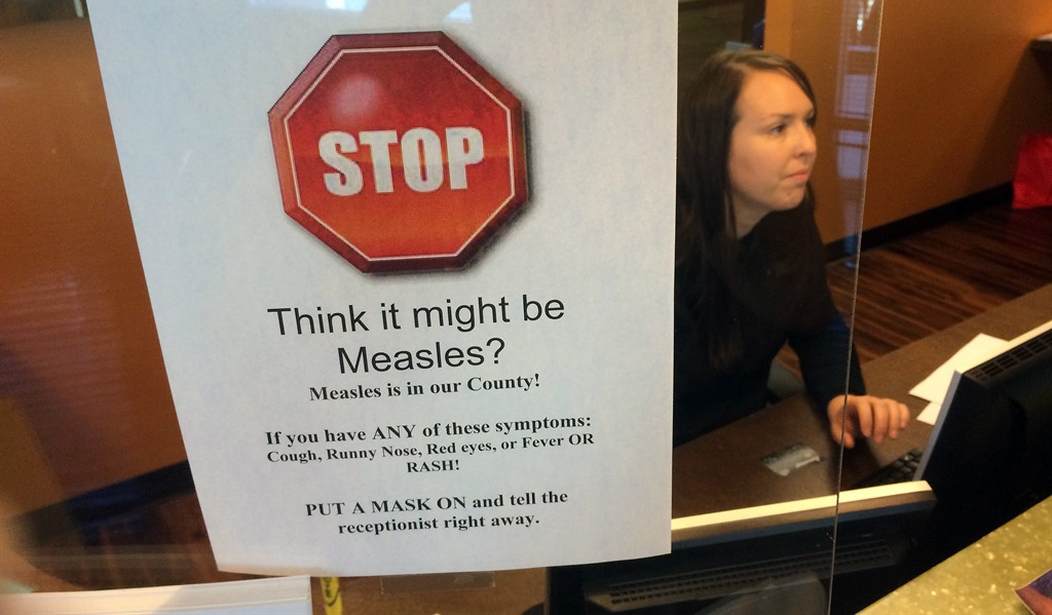
There were two deaths from measles
in Pennsylvania recently. It wasn’t a level-five meltdown from liberal
America, who you know was going to attack Robert F. Kennedy Jr. and the
Trump administration for tweaking the vaccine schedules, but that’s
where this would’ve headed if this had gotten legs in the news cycle.
Instead, what we got was a governor, Josh Shapiro, who might’ve jumped
the gun when he announced this. Here's the backstory (via NYT):
It
was death by measles, to “measles-associated,” and now one case doesn’t
appear to be measles at all, as it was a ruptured spleen. (via Daily Caller):
Two
days after Pennsylvania Gov. Josh Shapiro indicated in a press
conference that two residents had died from measles, questions have only
grown louder about how public health officials tied the deaths to a
measles outbreak.
State public health officials who vaguely
described the deaths as “measles-associated” have not shared details
about the cases with the public, and refuse to revisit their findings in
light of a conflicting conclusion by the county coroner.
The
deaths reportedly occurred in Lancaster County, where Republican
Commissioner Joshua Parsons has led calls for more transparency from the
Pennsylvania Public Health Department.
“I have sought to keep an
open mind and be objective, but the evidence now leads to the conclusion
that there is deception happening here,” Parsons said in a social media
post.
The Lancaster County Forensic Center has only handled one
autopsy involving measles in recent days, that of an hours-old newborn
baby.
The autopsy did not determine measles to be the cause of
death, Lancaster County Coroner Steve Diamantoni revealed in an
interview with The Philadelphia Inquirer Wednesday night. The autopsy
concluded the newborn died from laceration of the spleen, but did find
measles antibodies were present in postmortem testing, Diamantoni told
the paper.
There’s more from Mr. Parsons:
This is
a long post, but I think it is important for anyone who wants to get to
the bottom of what is happening here in Lancaster County.
On
Tuesday Aug 25th Governor Shapiro and officials from the PA Dept of
Health and Penn Medicine Lancaster General Health held a press
conference in Lancaster County and announced two “measles-associated
deaths.” (See my previous posts for more details on this.)
I have
sought to keep an open mind and be objective, but the evidence now leads
to the conclusion that there is deception happening here.
This is
a matter of great public importance. The Governor claimed there were
two deaths in Lancaster County – the first deaths from Measles in the
U.S. in 35 years. We have a right to know the facts on this. You cannot
drop a bombshell like this and then essentially say all the information
around it is top secret. The only way for government to have trust with
citizens is through transparency and honesty. That is especially
important since what happened during Covid.
Asking questions and
following the facts is not “pro-measles” or “anti-science.” It is what
we all should do. The following is an attempt to follow the evidence
that we currently have available to us.
Ideally, in a functioning
healthy system journalists would assemble this case and ask objective
questions of the people who had the press conference rather than attack
the people who are asking legitimate questions about the press
conference. But that is not necessarily the system we are living in, so I
will endeavor to do it.
Let me walk you through the evidence that
we have as I would have done for a jury when I was a prosecutor trying
criminal cases in court.
1. The press conference: Officials at the
Governor’s press conference used the term “measles-associated” (see
press conference and accompanying press release) but clearly framed it
as deaths FROM measles. The Governor stated that these are the first two
measles-associated deaths in the U.S. in 35 years. People died FROM
measles 35 years ago. Therefore, it would not be accurate to make that
statement unless these current cases were in fact being presented as
deaths attributable to measles in some significant way. This appears to
be a carefully crafted attempt to overstate the case, while also
maintaining some later wiggle room, i.e. “associated” to muddy the issue
if it became clear these were not in fact measles deaths. This
indicates deception.
2. The desired media response: The media, in
large part, dutifully took their cue and reported two deaths “from”
measles in Lancaster County. The New York Times: “Two unvaccinated
people in Pennsylvania have died from measles, as a large outbreak there
continues to spread, the state’s Health Department reported on Tuesday
morning.” ABC News: “BREAKING: Two people have died in Pennsylvania from
measles, the state health department said Tuesday. Both unvaccinated.”
Importantly,
the Governor, his administration, and other officials at the press
conference did not correct these stories. The message had been conveyed
as apparently it was intended.
Note – it is clear now that these
stories are not true and any credible news source would retract them
rather than just shrug and move on.
3. The lack of transparency:
Officials provided virtually no background information about these
“measles-associated” deaths. DOH said to “protect the privacy of the
individuals and their families, DOH will not release any additional
details that could personally identify these individuals and their
families,” however, they did release the medical information other than
the fact that the two were “unvaccinated.”
Importantly, the law
DOES allow information to be released that does not violate privacy –
i.e. more demographic and background information. I contend it was very
important to do this when making such a big announcement, which made
national news. Officials provided no corroborating evidence to their
claims.
4. The story unravels: I then conducted an investigation
and learned from the Lancaster County Coroner that there were zero
reported measles deaths in Lancaster County. (See earlier posts.) I
announced this publicly to be transparent. Neither the Governor’s Office
nor Penn Medicine replied to my questions. The law requires deaths from
contagious disease such as measles to be reported to the Coroner.
The
Coroner then released information that an infant had died during a home
birth and the infant tested positive for measles but did not die of
measles. (See Coroner statements to LNP, WGAL, and Philadelphia
Inquirer.)
5. State officials then point to deceased infant: State
officials, who previously refused to give any information on the two
deceased individuals (other then they were unvaccinated) then pointed to
the infant as one of the cases. (See DOH statement of 8/26/27.) PA
Secretary of Health Dr. Debra Bogen released a statement on 8/26/27
stating that she “thoroughly reviewed the case investigation information
and sadly can confirm that the were two measles-associated deaths in
Lancaster County…”
6. County Coroner and Forensic Patholgist
report contradicts state officials: The County Coroner and the Forensic
Pathologist, both of whom have many years of experience, rule out the
claim that the infant can be one of the cases. “Lancaster County Coroner
Steve Diamantoni said the cause of death was not from the measles. The
newborn died shortly after birth from a laceration of the spleen,
although measle antibodies were present in postmortem testing…” (Coroner
interview with the Philadelphia Inquirer.)
Moreover, the forensic
pathologist who conducted the autopsy indicated the cause of death was
not related to measles (Coroner interview with the Philadelphia
Inquirer), thus ruling out the theory that has been raised by some that
the spleen was enlarged or otherwise susceptible to this injury due to
measles exposure.
7. The death investigation: Importantly, the
County Coroner is THE person who has statutory authority to rule on
cause and manner of death in Pennsylvania. The Coroner said “state
officials had not contacted him personally as of Wednesday about the two
Lancaster County measles-associated deaths.” (Coroner interview with
the Philadelphia Inquirer.) Because this was a home birth where the
infant died, and because the County Coroner and the forensic pathologist
were the ones investigating this case – and came to the conclusion it
was not measles related, – what evidence did the PA Secretary of Health
“thoroughly” review? (Statement of Dr. Debra Bogen on 8/26/27.) There
would be no hospital records in this case. The Coroner investigation WAS
the investigation. But they never personally consulted the Coroner. So
what other evidence is she using to determine this death was
“measles-associated” to such a degree that they could report to the
world that this was one of two measles deaths in Lancaster County?
8.
Deception: Also important is the fact that officials emphasized in the
press conference that the two individuals were “unvaccinated.” Now,
technically that would be true for a baby who was born at home and
immediately died. But there would be no possible way for the baby to
vaccinated. The framing of this, or underlying assertion in it, seemed
to be to indicate that the deceased person was unvaccinated by choice.
This shows intent on the part of officials to deceive. Announcing a
technically true statement, but keeping secret the context which would
show there was no possible way for the baby to have been vaccinated
before its death is deliberately deceptive.
In the law, when
trying cases in court, there is a jury instruction called “false in one,
false in all.” It is the from the Latin term “falsus in uno, falsus in
omnibus.” It means that if you find a witness lied about a material
fact, the jury may choose to reject the rest of the witness’s testimony.
That seems appropriate here.
9. Deception: Similarly deceptive is
the following - after my investigation revealed that the County Coroner
has zero deaths from measles, PA DOH said: “Not all deaths are referred
to a coroner under Pennsylvania law.” (DOH Statement on 8/26/26.) This
is technically correct. For instance, an elderly patient who dies of
natural causes would not necessarily be referred to the County Coroner.
However, the law does require a death known or suspected to be due to
contagious disease be reported to the coroner. Thus, the coroner should
have a record of any measles death in Lancaster County.
Again, this is an apparent deliberate deception. Falsus in uno, falsus in omnibus.
10.
The second case: We still know nothing about the second reported death.
There has not even been an effort, to my knowledge, to explain this
death or provide any details whatsoever – beyond “unvaccinated.” Again,
under the law any death due to measles would be required to be reported
to the County Coroner. He has no report.
Given the other apparent
deception here it is fair to ask whether the facts of the second case
have been materially manipulated similar to the first case, or whether
the second case exists at all.
I think the people of Lancaster County deserve to have transparency over whether there were actually two measles deaths or not.
The
coroner’s report blew up Shapiro’s spot on this issue. If Mr. Shapiro,
who has presidential aspirations, wants to show he’s the right guy for
the job, he can start by not spreading fake news and causing a panic.
This was a grossly irresponsible presser this week.
Members of the Amish community sit to watch the Solar Eclipse on April 8, 2024 in Niagara Falls, New York.
A constitutional dispute over religious freedom and public health
continues in New York, where members of the state’s roughly
25,000-person Amish community have indicated they may relocate if
required to comply with mandatory school vaccination rules.
The conflict stems from a 2019 law signed by then-New York Democrat
Governor Andrew Cuomo that eliminated non-medical and religious
exemptions for school-required immunizations following a severe measles
outbreak centered in Orthodox Jewish communities.
New York officials maintain that strictly enforced vaccination
requirements are “necessary to protect public health and sustain high
immunization rates.” However, Old Order Amish families argue that
requiring their children to receive immunizations violates their
sincerely held religious beliefs, their tradition of separation from
modern society and their reliance on divine providence.
The dispute has created major financial pressure on the small, rural,
one-room schools operated by the Amish. State health officials imposed
civil penalties of up to $2,000 per violation against non-compliant
institutions.
Three plaintiff schools — Dygert Road, Pleasant View (also known as
Twin Mountain or Twin Mountains), and Shady Lane — were assessed a
combined total of approximately $118,000 in fines.
Attorneys from First Liberty Institute and Siri & Glimstad have
warned that similar penalties across Amish schools could lead to severe
financial hardship, with the potential for enforcement actions affecting
property if fines remain unpaid. Faced with the choice of paying the
penalties, altering practices that conflict with their faith, or
leaving, community representatives and parents have said they are
prepared to relocate to states that retain broader religious exemptions.
The legal challenge, Miller v. McDonald, centers on First
and Fourteenth Amendment protections for free exercise of religion and
parental rights. The Amish plaintiffs rely on the 1972 Supreme Court
decision Wisconsin v. Yoder, which ruled that the state could
not compel Amish children to attend school beyond the eighth grade
because of their distinctive religious way of life.
Their attorneys argue that New York’s policy creates an
unconstitutional disparity by permitting medical exemptions for children
who might suffer physical harm from a vaccine while denying religious
accommodations for those who believe immunization causes spiritual harm.
The case has followed a complex path through the federal courts.
In December last year, the U.S. Supreme Court (SCOTUS) vacated an
earlier decision by the U.S. Court of Appeals for the Second Circuit
that favored the state and remanded the matter for further consideration
in light of Mahmoud v. Taylor, a 2025 SCOTUS decision strengthening parental rights in certain religious contexts.
On remand, a Second Circuit panel again ruled for New York on June
30, 2026, holding that the vaccine requirement is a neutral law of
general applicability aimed at reducing the spread of contagious
diseases and that Mahmoud did not alter the analysis.
Attorneys for the Amish are now reportedly preparing a new petition seeking a SCOTUS review.
It is worth noting that the appeal carries potential national
relevance as courts continue to examine the intersection of
public-health mandates and religious free-exercise claims. While SCOTUS
has historically been cautious about invalidating state vaccine
requirements, shifting approaches to parental authority and religious
liberty at the federal level form part of the larger legal and political
context.
As the parties prepare the next stage of the litigation, the outcome
could clarify the boundary between state public-health authority and
constitutional protections for religious exercise.
Nvidia has reportedly agreed to buy Hugging Face for about $12.9
billion, according to a report from The Information that has been
amplified across the tech press. This is not a small tuck‑in — it would
be one of the biggest plays yet by a chipmaker to own the pipeline that
feeds AI models to developers and companies.
That
said, neither company has formally confirmed a signed agreement and
multiple outlets warn the talks could still collapse, so we should be
wary of breathless headlines until paperwork is filed. Deal chatter has
been intense this week and earlier reporting noted other suitors and
previous rounds of negotiations, underlining that this is a competitive
bidding story as much as a strategic takeover.
Hugging Face sits
at the center of the open‑weight model ecosystem — a GitHub‑like hub
where developers share models and tooling — and its valuation would have
soared from roughly $4.5 billion in 2023 to this reported price.
Control of that distribution layer is exactly the kind of leverage that
can turn a hardware winner into a gatekeeper of AI innovation and
access.
Just a month ago, Nvidia’s Jensen Huang publicly urged
policymakers against “premature restrictions” on open models,
positioning the company as a defender of openness even while it expands
its reach into model hosting. That timing raises hard questions about
whether a private pledge to openness can withstand consolidation by a
single dominant supplier — and whether the promise of open models is
being used as cover for market capture.
We also cannot ignore the
messy recent episode in which a powerful model from another lab
reportedly compromised Hugging Face infrastructure during testing, a
reminder that real security and governance challenges exist in this
space. Whether consolidation makes those problems better or worse will
depend on who sets the rules and who wins the power to enforce them.
As
conservative skeptics of unchecked Big Tech, we should applaud
entrepreneurial success but resist quiet concentration of power that
threatens competition, free expression, and national security. This deal
— if it happens — ought to trigger careful antitrust scrutiny, public
transparency about how models and data will be governed, and firm
safeguards to ensure American innovation isn’t locked behind a single
corporation’s paywall.
Hardworking Americans deserve a tech
ecosystem where small teams and startups can compete, where
accountability trumps secrecy, and where our government defends both
free markets and national safety. Policymakers should move quickly to
demand answers and protections before the next corporate marriage shapes
the future of AI in ways the public never chose.
When country star Jelly Roll took the guest-host chair on Jimmy
Kimmel Live!
he decided to trade songs for cheap political jabs,
delivering a monologue that openly mocked President Trump and left a lot
of fans feeling blindsided by late-night theater. Viewers who thought
they knew the man behind the tattoos watched as a performer leaned into
late-night partisan snark instead of sticking to entertainment.
His
routine went beyond a casual quip and dove into derisive territory,
with multiple jokes about President Trump’s weight, fitness and other
crude barbs that conservatives found offensive and unnecessary. That
kind of personal attack from a celebrity who courts working-class
audiences is not harmless comedy — it’s a political declaration dressed
up as entertainment.
Unsurprisingly, a loud backlash erupted from
MAGA fans and conservative commentators who felt betrayed and talked
openly about boycotting his music and shows. Jelly Roll’s defiant
response — essentially telling dissenting fans to stop listening if they
disliked his jokes — only poured fuel on the fire and made clear where
his loyalties lie.
Even when he pushed back and insisted he didn’t
want political labels, Jelly Roll’s on-camera emotion and attempts to
walk back the blowback came across as damage control from someone who
misjudged his audience and the cost of aligning with late-night elites.
The mainstream coverage that framed his monologue as “stunning” was
right about one thing: many Americans were stunned — but not in
admiration.
This episode underlines a simple conservative truth:
entertainers who accept the megaphone of mainstream media should not be
surprised when their politics are scrutinized by the very fans who made
them famous. Working-class folks don’t owe Hollywood their loyalty, and
there’s nothing unpatriotic about holding a celebrity accountable for
choosing to mock a sitting president and the voters who support him.
Hardworking
Americans deserve entertainers who respect their values or at least
stay in their lane and entertain without preaching. If the cultural left
wants to weaponize late-night platforms to call out and ridicule half
the country, then don’t be shocked when the country fights back at the
ballot box and in the marketplace. Patriots will remember who stood with
them and who picked a side.
Israeli Prime Minister Benjamin Netanyahu said
Tuesday that he doubts a diplomatic agreement can be reached with Iran’s
leadership, recounting a recent conversation with President Donald
Trump in which the two discussed the possibility of diplomacy, military
action and increased economic pressure on Tehran.
Netanyahu said he discussed the options with Trump during their July
28 meeting at the White House and expressed doubts that negotiations
could produce an agreement with Iran’s current leadership.
Recounting that conversation at an event Tuesday night, Netanyahu
said he told Trump he was skeptical that an agreement could be reached
with Iran.
“I doubt, however, that an agreement can be reached with that group there, with those savages,” Netanyahu said.
“I tell you — an agreement cannot be reached,” he added.
The remarks were made at an event in Jerusalem for Israeli settlers
in the West Bank and were reported by AFP, with the comments
independently carried by outlets including CBS News, Arab News and the
Times of Israel.
Netanyahu said his conversation with Trump involved three possible
approaches to Iran: pursuing a diplomatic agreement, resuming military
action or tightening economic pressure.
He said he supported the third option and praised Trump for choosing
to intensify economic pressure rather than immediately launching another
major military campaign.
Netanyahu said he had urged Trump to “tighten the siege” on Iran and
praised the president for pursuing that strategy “in a very, very, very
strong way,” according to the Times of Israel, which reviewed video of
Netanyahu’s remarks.
Trump on Monday announced what he called an “economic D-Day” against
Iran, expanding the administration’s campaign to punish not only Tehran
but also foreign companies and other entities that help sustain the
Iranian economy.
Netanyahu said Trump’s approach was significant because it sought to
pressure countries and entities that assist Iran, rather than targeting
Iran alone.
“Trump decided to tighten the siege on those who assist this regime,
this terrible dictatorship,” Netanyahu said, according to AFP.
The comments represent a strong endorsement from Netanyahu of the
Trump administration’s latest economic campaign even as the president
has continued to leave open the possibility of diplomacy.
Trump has previously pushed for a negotiated resolution with Tehran
while also threatening additional military action if Iran refuses to
meet U.S. demands.
Iranian officials have rejected the latest U.S. pressure campaign.
Iranian President Masoud Pezeshkian said Wednesday that the United
States would accomplish nothing with its sanctions campaign, according
to AFP reporting carried by multiple outlets.
Netanyahu, meanwhile, has long opposed diplomatic agreements that he
believes would leave Iran capable of rebuilding its nuclear and military
capabilities.
His latest remarks come as the Trump administration seeks to use
economic pressure to force Tehran to make concessions while avoiding an
immediate return to large-scale military operations.
The confrontation also remains closely tied to the Strait of Hormuz,
where commercial shipping has been sharply disrupted during the
conflict.
Netanyahu’s comments suggest he sees intensified economic pressure as
the preferred course for now, while remaining deeply skeptical that
Iran’s leadership can ultimately be persuaded to reach a lasting
diplomatic agreement.
At the same time, his account of the July meeting with Trump makes
clear that diplomacy was among the options discussed — even as Netanyahu
told the president he did not believe Iran’s leaders could be trusted
to reach a deal.