Americans' perceptions of corruption in the
federal government have reached their highest level in two decades, with
nearly nine in 10 adults saying corruption is widespread, according to
new Gallup polling.
The survey
found that 89% of U.S. adults believe government corruption is
widespread, up 10 percentage points from last year and significantly
higher than the 72% to 79% range recorded between 2010 and 2025.
The increase has been driven largely by Democrats, whose perceptions
of widespread government corruption have risen sharply since President
Donald Trump returned to the White House.
In 2024, former President Joe Biden's final full year in office, 57%
of Democrats said government corruption was widespread. That figure
climbed to 76% in 2025, Trump's first year back in office, before
surging to 91% this year.
Political independents showed a similar shift, with 90% saying government corruption is widespread, up 12 points from 2024.
Republicans' views have changed considerably less. Eighty-three
percent now say government corruption is widespread, compared with 87%
in 2024. About eight in 10 Republicans have held that view during each
of the past two years.
The Gallup poll was conducted by telephone from May 1 to June 10
among a random sample of 1,000 Americans ages 15 and older. The poll has
a margin of error of plus or minus 4.1 percentage points.
Gallup said the partisan trends suggest Democrats' perceptions are
more closely tied to which party controls the White House, while
Republicans appear to hold a more consistent view that government is
broadly corrupt regardless of which party is in power.
The results show a widening gap between the United States and other advanced economies.
Gallup polling across the 38 member countries of the Organisation for
Economic Co-operation and Development found the median share of adults
who viewed government corruption as widespread declined from 69% in 2009
to below 60% beginning in 2022.
Complete 2026 data are not yet available for all OECD countries, but
the median stood at 59% in 2025. The U.S. figure was 79% that year, 20
percentage points above the OECD median and the highest level of
perceived government corruption among OECD countries.
The gap could grow further once complete international data for 2026
are available, given that the U.S. figure has increased to 89%.
The United States also ranks near the top globally. Since 2023, only
four of the 132 countries where Gallup has asked the question annually
have recorded figures nominally higher than the current U.S. level:
Lebanon at 92% in 2024, Peru at 92% in 2025, and Ghana and Nigeria at
90% in 2024.
Americans also increasingly perceive corruption as widespread in
business, although the figure remains substantially lower than for
government.
Seventy-one percent of Americans said corruption is widespread in
U.S. businesses, an eight-point increase from last year. That leaves an
18-point gap between perceptions of corruption in government and
business, the largest Gallup has recorded in the United States since it
began tracking the measures in 2006.
Between 2006 and 2025, perceptions of government corruption averaged 11 points higher than perceptions of business corruption.
The latest findings also show broad agreement among Americans despite
political divisions. With 91% of Democrats, 90% of independents, and
83% of Republicans now saying government corruption is widespread, large
majorities across the political spectrum share that perception.
We've been seeing a lot of polling numbers lately as we get closer to the midterms.
Normally,
the advantage goes to the political party out of power. But there are a
variety of reasons to think positively about the question if you are a
Republican. People do have long memories for how bad things were under
Joe Biden. They're also looking at how radical the Democrats have become
with their embrace of the socialists and all the radical things that
they are advocating that would harm the economy and the country.
So while this Harvard-Harris poll is surprising and disturbing some
on the left, if you take the above into account, it makes sense.
Now, you see why the left is losing it? If that's even close to being true, the Democrats are in trouble.
That
has the Republicans up by two among likely voters in the generic
congressional ballot. Now, while the poll would likely be considered an
outlier, Harvard/Harris is one of the most credible polls around.
They
have Democrats ahead by two among registered voters, but the likely
voter number is generally considered more accurate. But even Democrats
up two is also not bad for Republicans when the polls seem to frequently
underestimate Republicans/overestimate Democrats.
Not only is the likely number good for Republicans; look at how it's moved since March.
It's gone from +4 for Democrats in March to now +2 for the GOP. That's certainly moving in the right direction.
7 in 10 said they were likely to vote in the midterms, with Republicans slightly more likely than Democrats to vote.
The GOP was at 79 percent to reject extremists like radical Twitch streamer Hasan Piker,
and even the Democrats were at 72 percent on that, so that seems a
pretty unifying concept. That's an indication that pointing out the
Democrats' closeness to Piker can have an effect on a race, such as the
one with Michigan Democrat Senate nominee Abdul El-Sayed.
Another way to look at this is in how I mentioned in a prior story
that the summer polls tend to have the numbers more out of whack in
favor of the Democrats. Then, as we move to the fall, the numbers come
back more to reality.
In that analysis, Echelon
pollster Patrick Ruffini noted that 3,312 polls had, on average,
overestimated Democrats by 3.7 points over the past four election
cycles. During the summer, the error rate was about 5.9 percentage
points.
So this poll may be a sign of that return to reality.
I give a caution as I would to any poll: it's one poll. Only we can
make it happen by getting out and voting to make it so. But I would also
note that this is largely before the money influx expected from the
Trump super PAC and money that might come in from Elon Musk. Once that
is in, the numbers should be even better than now.
More than 180 Jewish entertainers recently signed an open letter
backing actor Mark Ruffalo against criticism over his public activism
regarding Israel and Gaza. The latest controversy erupted
after Ruffalo opposed the high-profile media merger between Paramount
and Warner Bros. Discovery, pointing to tech contracts with the Israeli
military to attack the deal.
Conservative and pro-Israel groups argued that using foreign military
claims to target a domestic corporate transaction crossed into
antisemitic tropes. Rather than addressing that concern, the open letter
framed all criticism as unfair industry pressure and cast Ruffalo as a
figure under siege. In doing so, it reveals something larger about
Hollywood: a willingness among some Jewish public figures to prioritize
progressive solidarity over the hard lessons of Jewish history and the
security of the Jewish state.
Ruffalo has long been outspoken. He
has accused Israel of committing genocide in Gaza, endorsed the
International Criminal Court’s pursuit of Israeli leaders, and
repeatedly treated Israel’s defensive war after the Oct. 7, 2023, Hamas
massacre as the primary moral offense. Hamas terrorists murdered about
1,200 people that day, mostly civilians, and took more than 250
hostages.
The group’s charter and actions leave no doubt about
its goal of destroying Israel. Ruffalo’s language does not treat that
reality as decisive. Instead, it elevates casualty figures from a war
Hamas deliberately prolonged by embedding among civilians and rejecting
successive cease-fire proposals that would have returned hostages.
Conflating those defense operations with corporate antitrust fights
shows how far the progressive anti-Israel crusade now extends into
everyday industry business.
The letter from the entertainers does not grapple with any of this.
It treats the protests against Ruffalo as the problem rather than
examining whether his charges against Israel meet a basic standard of
accuracy or fairness. Jewish identity
is not a political loyalty test, and Jews disagree among themselves on
policy. Yet history supplies a clear warning. For centuries, accusations
of collective guilt, exaggerated claims of influence, and the denial of
Jewish self-defense have preceded real violence.
After Oct. 7, antisemitic incidents
rose sharply in the United States and Europe. Encampments, street
protests, and social media campaigns often slid from criticism of
Israeli policy into open celebration of Hamas. Against that backdrop,
high-profile Jewish figures lining up behind rhetoric that paints Israel
as uniquely evil look less like independent thought and more like an
effort to stay on the right side of industry fashion.
Entertainment
has always rewarded certain postures. In recent years the preferred
posture has been a progressive internationalism that views Western
power, including Israeli power, with suspicion while treating groups
like Hamas with a measure of understanding. Actors and writers who adopt
that posture find affirmation.
Those who insist that a Jewish state has the same right to defend its
citizens as any other nation risk being labeled extremists. The result
is a quiet inversion: Jewish performers who distance themselves from
Israel’s right to exist as a secure democracy receive applause, while
those who defend it face professional friction. Faith and peoplehood
become optional when they conflict with the dominant script.
This
is not a call for silence on Palestinian suffering. The civilian toll in
Gaza is real and tragic. Responsibility for that toll begins with the
decision by Hamas to launch a massacre, refuse to release hostages, and
use its own population as cover. Israel’s imperfect but democratic
institutions, independent courts, and repeated offers of territorial
compromise stand in contrast to the rejectionism and theocratic
brutality of its enemies. Pretending otherwise does not advance peace.
It simply makes the next Oct. 7 more likely.
The letter in support
of Ruffalo is free speech, and the signers are entitled to it. What
they are not entitled to is immunity from the observation that their
stance aligns with a broader cultural pattern in which Jewish safety and
historical memory rank below the need to signal the correct politics.
Hollywood’s moral confidence has always been selective.
On this issue, it remains so. Jewish entertainers who treat Israel’s
defenders as the greater threat while soft-pedaling the record of those
who openly seek Jewish destruction have made a choice. History will
record whether that choice looks wise.
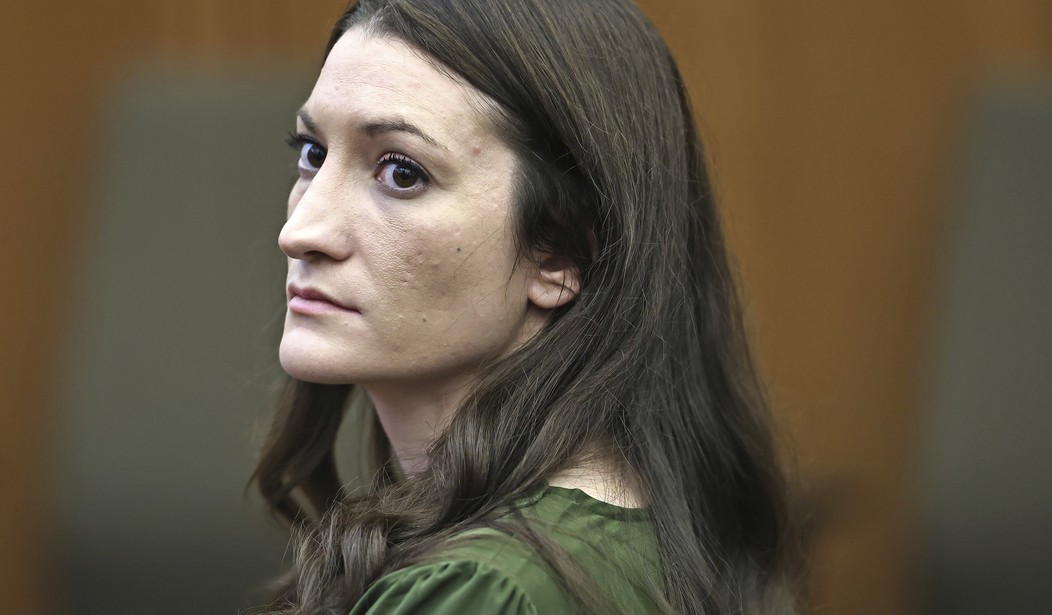
As of this writing, the Lindsay Clancy case is heading toward a hung
jury and a mistrial because, apparently, you can’t get 12 Americans to
agree that you shouldn’t strangle your three little kids. OK, that’s a
bit glib. The legal issue really has to do with whether the jurors
believe she had a mental defect that made her unable to tell right from
wrong, but this isn’t a hard case. It’s an easy case. It’s only made
hard because a significant percentage of our society has decided that
reason is inconvenient, as it leads to results that they don’t prefer,
so they’ve decided to jettison it completely in exchange for a paradigm
in which feelings determine reality. The advantage of a feelzocentric
paradigm is obvious. You always get the result you want because the only
criterion for any issue is how you feel.
Left unchecked, this idea would be the death of civilization. But of
course, the irony is that only civilization can allow the frivolity of a
feelzocentric paradigm to persist. Its practitioners are made safe and
secure by those of us bound to the harsh rigors of reason. Basically, we
create a world where they can act like idiots and not get themselves
killed by other people who are controlled by their emotions. You know,
kind of like the entire Third World.
I watched some of the closing
arguments in the Clancy case, and I did it through the eyes of a
30-year trial lawyer. The defense was in the toughest position because
the facts are all against the defendant – she killed her children, one
by one, after tricking her husband into leaving her alone so she could
strangle them without him stopping her. She then tried to kill herself.
All of this is indisputable evidence that she knew what she was doing
was wrong when she did it, thereby meaning she was not insane under the
law. Understand that merely having a mental illness diagnosis – and
about half of young liberal women are diagnosed with some form of mental
illness – is not, in itself, a golden ticket to escape from criminal
liability. The test is right and wrong – can you tell the difference?
And with the facts clearly showing that she could, the defense needed to
find an alternative villain. Oh, it was the doctors. It was people in
her life who didn’t care enough about her. Someone else was to blame,
anyone else. And the defense had to exempt her from responsibility. Oh,
she was a good mother – yeah, he actually said that. I’m still trying to
figure out why a lawyer would start an argument in the heads of the
jurors, most of whom would respond to that with, “How can she be a good
mother when she killed her own kids?”
But that’s most of the jurors. Not all of them. Not the feelzocentric ones.
And
I listened to the prosecution's closing argument. When you’re doing a
closing argument, you want to sum up the evidence, tie it to the law as
instructed by the judge, and hand it over, wrapped up in a little bow,
to the jury so it has no choice but to rule for your client. And the
district attorney here was, I thought, fantastic in the parts I saw.
Very calm, very methodical, highlighting bits of evidence, comparing
them to the law, and telling the jury what they all meant. It was cool,
rational, and logical, and that was probably the problem.
The
facts, the evidence, and the law all told the jury that it had no choice
but to find her guilty of three cruel and atrocious murders. But all
that was outweighed by the feelz.
See, my mistake in appreciating
the job the prosecutor did was that I assumed that if you made a
rational argument supported by evidence, people would nod along. I
should’ve known better. After all, I’m on X enough to know better. A
significant number of people no longer respond to rational arguments.
They choose the result they want and work backward to get it. That’s why
you have morons asserting that the husband did it even though Lindsay
Clancy’s lawyers don’t dispute that it was her hands that choked the
life out of her children. That’s the power of feelz. Feelz let you
ignore evidence that undermines what you want and let you manufacture
evidence that doesn’t exist in your head. It’s OK to assume facts not in
evidence if it gets you to the result you want.
That’s why you never want an engineer on your jury, or anyone else
whose occupation involves objective obstacles like physics or gravity.
You want liberal arts types, for whom there is no objective truth.
That’s why you want to get wine women on your juries if making your case
requires evading personal responsibility, especially white affluent
women with a taste for oaky Chardonnay and a husband who dreams of
leaping off a bridge.
This has been going on for a while. Thirty
years ago, some lunatic actually allowed me on a DUI case as a juror.
Let’s just say with my résumé, you would never want me on any jury ever.
That’s because I’m going to ask questions and think about things.
Remember, lawyers want jurors who aren’t going to do either of those
things. That goes for both sides. In any case, the guy blew out the
breathalyzer and was a staggering mess when the cop hooked him up. It
should’ve been case closed. But no, he was an immigrant, and the Santa
Monica housewife on the jury told us that we couldn’t expect immigrants
to understand that driving around like Foster Brooks motoring back from
New Year’s at the Kennedy compound was wrong. The jury hung. Oh, and the
best part came later, because I knew that there was some evidence out
there that wasn’t being admitted. I called the prosecutor after the case
ended, and he told me the dude was arrested coming home from the party
where he was celebrating getting back his driver’s license after his
previous DUI conviction.
But in the past, that kind of moron was always kind of the exception.
It was also the exception in society. We used to look down on people
who weren’t rational. But now we look on them as sensitive, as caring
and compassionate. Our Oprahized society celebrates those who prioritize
the feelz. How it’s caring and compassionate to let a woman who
throttled a trio of babies escape punishment is beyond me. Like you, my
mind can’t wrap around people who are entirely bereft of reason in favor
of emotion.
We see it online, too, with irrational people
babbling endlessly about stupid nonsense in defiance of objective fact.
Every time you see some idiot talking about Epstein or those evil
Zionist Jews, you’re not talking to somebody rational. You’re not
talking to somebody who cares about the facts. You’re talking to someone
who’s picked a side and is attempting to shout down the world until the
intimidated populace simply concedes. But there is right and wrong.
There is truth and falsehood. Epstein was a bad guy, but he wasn’t the
head of a giant conspiracy, and no, all your disfavored politicians were
not in cahoots with him. No, the Israelis are not committing genocide,
and they are not in the wrong here; the semi-human jihadist terrorists
of Hamas, Hezbollah, and all the rest are.
And no, it’s not the billionaires’ fault that the feelz people are freaking losers.
Rejecting
rationality is more than just annoying. It’s dangerous. You don’t want
to live in a post-reason world. You know all those millions of illegal
aliens trying to come here? They’re trying to come here largely because
the hellholes they crawled out of are our preview of the post-reason
world. The success and dominance of European civilization was based on
its embrace of reason, despite interludes of irrationality. You know all
those boring, stolid, hard-working Europeans, who put their noses to
the grindstone and created all that greatness, including, but not
limited to, conquering and settling the United States of America and
making it a superpower? That was reason at work, not feelz.
But sadly, those who find reason too inconvenient and prefer the
cheat code that is governing yourself by emotion have no conception of
this. They assume the world that reason created is the world’s default
mode, and that they have the luxury of embracing a feelzocentric
paradigm. A certain percentage of the population has always done that,
but it’s always been low. Now it’s in danger of becoming the majority.
And when it becomes the majority, what happens to civilization?
Well,
I’ve spent a lot of time overseas, so I have got some pretty bad feelz
about how that will work out if we let it happen here. And the inability
of a dozen Americans to look at the obvious facts and return a guilty
verdict on this hideous woman does not bode well for the future.
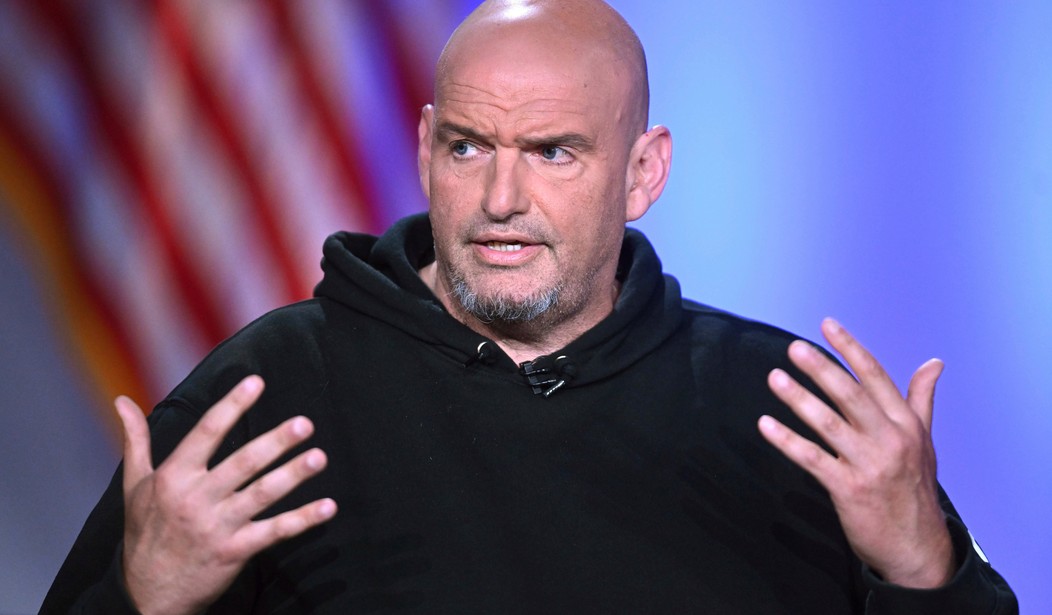
Pennsylvania Sen. John Fetterman continues to double down on his role as one of the lone voices of sanity within the Democrat Party.
On Tuesday, the senator called out the Democratic Socialists of America (DSA)
for what he described as its true goals: taxing middle-class white
Americans and seizing the means of production. This, of course, runs
counter to their typical point of wanting to help working class
Americans, because of course on the American left, that comes with a
healthy handful of DEI. Fetterman also criticized the DSA for some of
its defining traits, including being anti-American and anti-capitalist.
"The DSA, they're deeply anti-American. They're deeply anti-capitalism. They're deeply anti-the American way of life," Sen. Fetterman
said. "But when you look at the kind of individuals that are actually
in the DSA, you know, they're living in a house that their dad bought it
for one and a half million dollars, and they're refurbishing it for
another million or more."
"They want to impoverish middle-class
whites and, you know, seize all the production. So, absolutely. You
know, I would think every single Democrat should condemn the DSA," he
added. "This is not like a Big Tent situation.
They should have their own entire party and run alone as the kinds of
communist and socialist and anti-American party that they are."
His
comments came just hours after Congress voted to condemn socialism,
a
resolution opposed by 192 Democrats. For many Democrats, the DSA offers
an opportunity to broaden the party’s coalition and, in turn, improve
its prospects in national elections, under the banner of a “big tent.” But that tent comes with consequences. Opening the party to the DSA risks an ideological takeover
of the Democrat Party by its most radical elements, pushing the broader
coalition further left and placing one of the country’s most dangerous
ideologies on the ballot.
Packaged meat is displayed for sale at a supermarket in Houston, Texas,
on September 2, 2026. US President Donald Trump announced on August 21,
2026 that the United States would temporarily allow a greater volume of
foreign beef imports, in his latest bid to lower costs for American
consumers as midterm elections approach.
The Department of Justice (DOJ) announced the expansion of its probe
to eight major United States retailers to investigate soaring beef
prices, among a broader push by the Trump Administration to lower the
costs of grocery staples for Americans.
According to data from the Bureau of Labor Statistics (BLS) Consumer
Price Index (CPI), retail prices for beef and veal were 9.4% higher in
July 2026 compared to the same 12-month period ending in July 2025.
Ground beef prices jumped 9%, uncooked steaks rose 9.6% and uncooked
roasts surged 13.5% — all far exceeding the overall inflation rate of
3.4%.
According to the DOJ on Tuesday, the department’s Antitrust Division
has expanded its investigation to include eight U.S. grocery chains amid
soaring beef prices — which have risen 10% over the past year.
@JusticeATR has expanded its investigation to include 8 of the largest grocers when it comes to beef affordability. @ASGWoodward sent letters to the following regarding the recent increases in the retail price for beef:
Associate Attorney General Stanley E. Woodward Jr. sent letters
to Kroger, Publix, Walmart, Albertsons, Aldi, Ahold Delhaize
USA, Costco and Amazon, centering on “the recent increases in the retail
price for beef,” according to the DOJ.
The letters, dated July 16th, called beef prices “a matter
of critical concern to the American public, and a priority for the
United States Department of Justice.”
“We will be seeking data and information that we anticipate to be in
your company’s records relating to your company’s retail sales and
prices, wholesale purchases and prices, costs and margins for beef
products, pricing and purchasing strategy, your company’s analyses of
market trends in the wholesale or retail price of beef, and information
about factors influencing beef prices,” the statement continued.
Sent to the company’s legal teams, the letters called for prompt
disclosure regarding the retailer’s beef pricing, margins, and costs,
alongside an “explanation and analysis of trends in the retail and
wholesale beef markets.”
The rising costs are driven by several factors, including severe
droughts across major cattle-producing regions that have reduced
pastureland and increased feed costs, forcing ranchers to liquidate
herds and pushing U.S. cattle inventories to multi-decade lows.
Because of cattle’s multi-year biological growth cycle, rebuilding
those supply levels takes years rather than months. Consequently,
constrained supply alongside elevated production and feed costs
continues to drive retail prices higher despite steady consumer demand.
A $20 million line was quietly tucked into a massive California
spending package this week. If the language sticks, money from the Motor
Vehicle Account — the fund paid for by your vehicle registration and
driver fees — could be used to pay California Highway Patrol officers to
serve as personal security for current and former state elected
officials and their families. That means drivers, already paying
sky-high fees, might also be asked to underwrite political protection
details.
What the budget sneak says
The line item
authorizes CHP officers to serve as personal security for elected
officials based on law‑enforcement threat assessments and pulls the cash
from the Motor Vehicle Account (MVA). Supporters, including Governor
Gavin Newsom’s office, say this is about rising threats and
public‑safety realities. As spokesman Brandon Richards put it, “We
unfortunately live in a time when threats and political violence against
public officials are very real, and on the rise,” and protection
choices will be made by law enforcement. Fine. But the finance choice
matters just as much as the safety claim.
Why California drivers should care
The
MVA is meant for transport priorities: DMV operations, highway safety,
and CHP traffic enforcement. It is funded by registration fees and is
already under pressure. Senator Roger Niello warned the account could be
bankrupt in two to three years and called diverting these funds
“inappropriate” and possibly unconstitutional. Taxing motorists to
protect political figures who can raise campaign cash looks like a
bait‑and‑switch with a bad ending for commuters and small businesses
that already shoulder the burden.
Taxpayer priorities versus political security
There
are other options besides dipping into driver fees. Campaign funds and
private security are already lawful tools for officials to secure
protection when needed. The CHP already has a Protective Services
Division and has protected former officials on prior trips. So the
question is simple: if a governor or former official needs personal
security, why not pay for it from campaign war chests, private funds, or
the General Fund — not the pot drivers use to keep the DMV open and
potholes fixed? Sneaking a $20 million line item into a 300‑page bill,
filed over a weekend, looks more like political cover than budget
prudence.
What to watch next
Reporters and taxpayers
should demand the exact bill text, cost estimates from the CHP and the
Legislative Analyst’s Office, and an on‑the‑record answer from the
governor about whether he will use the program. If lawmakers are serious
about protecting officials, they can do it without robbing motorists.
Lawmakers who care about fiscal honesty should strip this carve‑out,
choose a proper funding source, or require officials to use their own
resources. Until then, California drivers should treat this as yet
another toll on liberty — and on their registration renewals.
A federal judge in Virginia quietly told Big Tech it can keep its
crown jewels. In a sealed decision handed down Wednesday, the court
declined to force Google to sell its ad-technology business — even after
the same judge had already found the company operated a monopoly last
year.
U.S. District Judge Leonie Brinkema👇
The antitrust fight began
when the Justice Department and a coalition of states filed suit in
2023, alleging Google built and protected an illegal grip on the tools
that run the open web’s ad markets. In April 2025 the court found Google
had willfully monopolized publisher ad servers and ad exchanges,
setting the stage for a remedy phase where divestiture was squarely on
the table.
Washington and the plaintiffs pushed hard for
structural relief — selling off AdX or parts of Google Ad Manager to
break up a tangled ecosystem that funnels advertising dollars to
Alphabet. But the judge rejected that hard remedy and instead signaled
she would impose behavioral fixes, keeping the company’s ad-exchange
intact while ordering operational changes that will remain under seal
for now.
Make no mistake: Google’s dominance is real and
dangerous. The court itself concluded the company’s practices harmed
publishers and skewed competition, yet the outcome looks like the system
protecting one of its own rather than restoring free markets for
American businesses. The lesson for the rest of corporate America is
clear — maintain scale and influence and the machinery of power will
dodge the sharpest penalties.
The secrecy around the remedy is
especially galling. The judge’s short, sealed order gives Washington a
two-week window to hide details before public scrutiny, a move that
smacks of process over principle and leaves small publishers and
consumers in the dark about how the monopoly will be reined in. If
enforcement means private backroom fixes instead of public
accountability, then antitrust becomes a theater act and not a defense
of the marketplace.
Patriots who believe in competition should not
be confused: this is not a defense of corporate privilege, it is a
demand for honest enforcement. Conservatives must push for transparency,
urge state attorneys general and Congress to stop playing games with
sealed remedies, and support concrete reforms that prevent a handful of
firms from controlling the digital lifeblood of our economy and public
square.
The people who build and run small businesses deserve
markets that work, not adjudications that quietly preserve the status
quo. Americans should watch this case closely, hold officials
accountable, and insist that when a court finds a monopoly it doesn’t
just hand it back to the monopolist with a polite warning.
Keith Ellisonwas the first Muslim elected to the United States Congress.
Election: Elected on November 7, 2006.
Service: Represented Minnesota's 5th congressional district in the U.S. House of Representatives from 2007 to 2019.
Party: Democratic Party.
Swearing-In: He took his ceremonial oath on a historic English translation of the Qur'an that once belonged to President Thomas Jefferson.
Later Career: He left the House in 2019 to serve as the Attorney General of Minnesota, becoming the first Muslim elected to statewide office in the U.S.
Minnesota now belongs to the Muslims thanks to the Democrat Party.