Presumptuous Politics

Saturday, September 26, 2026

Trump Rescinds $810 Million in Funds Tied to Illegal Immigration, Race Programs

Exclusive | Trump cancels nearly $1B in funding for illegal immigrants and  race-focused programs in new 'pocket' rescission

President Donald Trump on Friday moved to cancel $810 million in congressionally appropriated federal funding, including money tied to programs involving illegal immigrants and race-focused initiatives, using a budget maneuver known as a “pocket rescission.”

The move, reported by the New York Post, comes as the Trump administration continues a broad effort to tighten immigration enforcement and impose tougher rules across the immigration system while redirecting federal spending toward the president's policy priorities.


A rescission is the cancellation of money that Congress has already appropriated but that has not yet been spent.

Under the normal process established by the 1974 Impoundment Control Act, the president can ask Congress to rescind the money, but Congress has 45 days of continuous session to act on the request.

If Congress does not approve a presidential rescission request within that period, the funds generally must be made available for obligation, according to the Bipartisan Policy Center, which published an updated explanation of the process this month.

A pocket rescission is different because of its timing: The president submits the rescission request close enough to the expiration of the affected funds that they can lapse before Congress has completed the 45-day review period.

The Government Accountability Office has concluded that the Impoundment Control Act does not permit a president to withhold funds proposed for rescission through their expiration date if Congress has not affirmatively approved the cancellation.

The Bipartisan Policy Center, however, noted this month that no court has definitively ruled on the merits of whether the Impoundment Control Act permits pocket rescissions, making the legal status of the maneuver disputed.

The Trump administration has nonetheless embraced the tactic, previously arguing that it is a lawful tool for eliminating federal spending that conflicts with the president's priorities.

In August 2025, Trump used a pocket rescission to seek the cancellation of about $4.9 billion in foreign-aid funding, with the White House describing the move as the first use of the mechanism in nearly 50 years and saying the spending violated Trump's “America First” priorities.

That 2025 action was challenged in court, but the Supreme Court allowed the administration to continue withholding the funds while the litigation proceeded, without resolving the underlying question of whether pocket rescissions are lawful, according to the Bipartisan Policy Center.

The administration's latest action comes as Trump has made immigration enforcement a central focus of his domestic agenda, moving beyond border security to address deportations, visas, asylum, federal benefits and other aspects of the immigration system.

The administration has expanded Immigration and Customs Enforcement operations and deportation efforts while seeking to restrict access to federally funded programs for people who are ineligible for them.

Trump also has pursued tighter rules affecting legal immigration.

On Sept. 18, Trump extended for another year restrictions on H-1B nonimmigrant workers that require employers seeking to bring certain workers into the country to make a $100,000 payment, saying the program had been exploited to replace American workers with lower-paid labor.

The administration also this month restored broader discretion for immigration officers to determine whether certain applicants are likely to become a “public charge,” allowing officials to consider a wider range of factors involving an immigrant's potential reliance on government benefits.

The Department of Homeland Security said the rule, which took effect Sept. 18, was intended to restore the principle that immigrants should be self-reliant and that government benefits should not incentivize immigration.

The funding move therefore comes amid a broader administration effort to align federal spending and immigration policy with Trump's stated priorities, including stronger enforcement against people in the country illegally and tighter scrutiny of people seeking to enter or remain in the United States.

The latest action also follows Trump's use of rescission authority in 2025.

In July 2025, Trump signed the Rescissions Act of 2025 after Congress approved roughly $9 billion in spending cancellations involving foreign aid and public broadcasting.

That was a regular rescission, however, because Congress ultimately approved the cancellations. The Congressional Research Service said the law marked the first time since 1992 that a president had successfully invoked the Impoundment Control Act to secure passage of a rescission bill.

The roughly $5 billion pocket rescission Trump pursued a month later was a separate action and did not require Congress to enact a rescission bill before the affected funds expired.

The distinction is significant because a regular rescission follows the congressional process established by law, while a pocket rescission relies on the timing of the request and the approaching expiration of the funds — a practice GAO has said is not authorized by the Impoundment Control Act.

Friday's $810 million move puts the administration back into that disputed territory as the fiscal year approaches its Sept. 30 end and Trump continues using federal spending decisions as another means of advancing his broader policy agenda.

Credit:  

© 2026 Newsmax. All rights reserved.


The Essex Files: Restoring Integrity: Why the SCOTUS Noncitizen Voter Roll Decision Is a Major Win

The Essex Files: Restoring Integrity: Why the SCOTUS Noncitizen Voter Roll Decision Is a Major Win

The Supreme Court has temporarily revived the Trump administration’s expanded Systematic Alien Verification for Entitlements (SAVE) program, which allows state and local officials to use federal records to help verify voters’ citizenship status. 

In a 6-3 ruling, the Court stayed a lower court order that had vacated the modified program while the government’s appeal proceeds. The decision allows the Trump administration to move forward with a system designed to cross-check registration records against available citizenship data. This is not about restricting legitimate participation. It is about ensuring that only eligible citizens cast ballots.

For years, states have managed their own rolls with varying degrees of success. Some update records regularly. Others lag, leaving outdated entries that can include people who have moved, died, or never met the basic requirement of citizenship. 

Federal involvement in building a shared tool to flag potential noncitizen registrations offers a practical way to close those gaps. States retain control over their elections. They simply gain better information to act on.

Citizenship is a clear legal threshold for voting in federal elections. When that line blurs, confidence erodes. A database that helps election officials identify and remove ineligible names strengthens the system rather than weakens it. Accurate rolls mean ballots from real American citizens carry their proper weight. They also reduce opportunities for those who should not be voting to slip through.

Critics raise concerns about errors and overreach. Those concerns deserve attention. Any list must include strong verification steps, appeals processes, and protections against mistaken removals. 

Technology is imperfect, and citizenship records themselves can contain gaps. Careful implementation matters. Still, the alternative of leaving known problems unaddressed is worse. Transparency and regular audits can address legitimate worries without abandoning the goal of clean lists.

Past efforts at list maintenance have shown both the difficulty and the value of the work. Shared data reduces duplication of effort across states and improves consistency. When officials can check a registration against reliable federal information, they are better equipped to keep the rolls current. This does not require new restrictions on who may register. It requires better tools to confirm eligibility after registration occurs.

The practical result should be straightforward. Election officials gain a resource to flag registrations that may require further verification. Those ultimately determined to be ineligible can be removed through established procedures. Fraud becomes harder to attempt when basic eligibility checks improve. Eligible citizens retain the right to vote, although some may be asked to provide additional proof of citizenship if SAVE cannot confirm their status. The process remains under state authority, with federal data serving as a supporting resource rather than a replacement for local control.

The ruling also does not authorize a wholesale pre-election purge. Federal law generally bars systematic voter-roll removals within 90 days of a federal election, although individualized citizenship inquiries remain permissible.

Public trust in elections depends on the belief that rules are enforced evenly. When questions arise about noncitizen participation, even if the scale is debated, the response should be better information rather than dismissal. A well-designed database provides that information. It supports the principle that American elections belong to American citizens.

Implementation will test the details. Data quality, privacy safeguards, and coordination with states will determine success. Those details deserve scrutiny. The core purpose does not. Maintaining accurate voter lists is routine administrative work in a healthy democracy. Expanding the tools available for that work is a reasonable step.

The Supreme Court’s decision temporarily lifts the lower court order while the appeal proceeds. What follows is the harder task of building a system that works fairly and effectively. Done right, it will help ensure that only those eligible under the law participate. That outcome strengthens elections for everyone who follows the rules.

Credit:  https://redstate.com/


Republican Megadonor Tightens His Purse Strings Over Senate's Refusal to Pass the SAVE America Act

Timothy Mellon — Climate Criminals

Wyoming billionaire and GOP megadonor Timothy Mellon, the grandson of industrialist Andrew Mellon, was the savior who donated $130 million to the U.S. government in order for our soldiers to be paid when Democrats shut the government down. In 2024, Mellon poured close to $200 million into President Donald Trump's SuperPac MAGA Inc., and Republican Senate and congressional campaigns. With Trump's presidential win and Republican majorities in both the House and the Senate, it was money well spent.

But for 2026, the reclusive mogul has scaled back his spending, reportedly because of Senate Majority Leader John Thune's failure to get the SAVE (Safeguard American Voter Eligibility) America Act passed.

Elections have consequences, and so should the terrible decisions of Thune and the GOP elite who enable him.

One of the Republican Party’s biggest donors has sharply reduced his giving ahead of the midterm elections, especially to Senate Republicans, a decision driven largely by the party’s failure to pass a far-reaching bill of voting restrictions.

The donor, Timothy Mellon, a reclusive Wyoming billionaire who is a grandson of the Gilded Age industrialist Andrew Mellon, gave nearly $200 million to support President Trump and other Republicans in the 2024 election. Only Elon Musk donated more.

Two years later, Mr. Mellon has given just $3 million or so in publicly disclosed donations to Republican candidates or groups. He also made a $20 million donation last month to help House Republicans, according to two people briefed on the contribution, which will not be disclosed until the next financial reports.

But Mr. Mellon has given nothing publicly so far to support Senate Republicans this fall — a move that has been conspicuous in the party’s financial circles, and shows how some influential Republicans remain angry about the party’s inability this summer to pass the voting legislation, called the SAVE America Act.

While Mellon hasn't dropped the moolah, it doesn't mean he's not dropping it at all. But he does appear to be bypassing the National Republican Senatorial Committee (NRSC).

After making an average of 28 donations in each of the last four election cycles, Mr. Mellon has made only five publicly disclosed contributions in the 2026 cycle so far. He donated nearly $2 million in private stock to MAGA Inc.; $1 million to the Congressional Leadership Fund; and smaller five-figure checks to three other conservative-aligned super PACs. Two of those groups backed candidates for the Senate who criticized Mr. Thune and lost their Republican nominating fights.

Campaign finance reports show only public donations through June 30 for some federal committees, and through Aug. 30 for other committees. More donations from Mr. Mellon to Republicans could be revealed in the coming weeks. His $20 million donation in August to the Congressional Leadership Fund, the group backing House Republicans, is set to be disclosed in an F.E.C. report by Oct. 15. The super PAC declined to comment.

Notably absent so far: any donations to help elect Senate Republican nominees this fall.

Can you blame him? Along with the Senate Republicans' failure to pass the SAVE America Act, they passed another continuing resolution instead of funding the government. Next week will close out the legislative session where it will come as a great surprise to the American people if anything relevant gets accomplished.   

Quarterly FEC reporting comes through again in October, so we may find Mellon has kept his powder dry for the sole purpose of carpet-bombing the high stakes Senate races in Michigan, Ohio, Minnesota, and Texas. Bottom line: if you are giving that much money, you expect results and the candidates who will deliver them. If Republicans lose their majorities because of the Senate's failures, other donors may just follow Mellon's lead in future elections. 

There are donors who legitimately expect Republicans to fulfill the president's agenda, and not just play the game of controlled opposition.

Credit:  https://redstate.com/


The New Class Society: The Productive vs the Unproductive

The New Class Society: The Productive vs the Unproductive

Around the world, we are seeing a rise not only in right-wing populism but also in left-wing populism. The central slogan of left-wing populists is the fight for greater justice. The demand for justice has one great advantage: nobody disagrees. Who is against justice? And who would demand that things become more unjust?

Yet it usually remains entirely unclear what justice is supposed to mean. Let me start with what I consider unjust. This morning, millions of people got up to create value. The baker was in his bakery at four in the morning baking bread. The entrepreneur was thinking about how to develop a better product, win customers, and create jobs. The plumber drove to a customer to repair a broken heating system. And others got up and started thinking about how they could make life more difficult for productive people. Left-wing politicians think about which new tax they can use to stir up resentment against the rich. The equal opportunities officer searches job advertisements for a word that might violate some regulation. The NGO activist develops the next campaign for new bans, regulations, and restrictions on entrepreneurs, landlords, or motorists. One group produces, repairs, invents, and invests. The other taxes, regulates, controls, and prohibits.


Fifty years ago, the sociologist Helmut Schelsky defined productive work as the production of material goods that sustain and improve life, including material services that make life easier and more secure. “The defining feature of this structurally ‘divided society,’” Schelsky wrote, “is that one group of the population performs this productive work and has to live from it, while the other social group exploits this productive work in order to pursue its own interests at the expense of the other.”

One group, the productive group, produces goods and services that other people voluntarily buy. But it has to hand over an increasing share of what it earns to the unproductive, who themselves create no value. This group lives from compulsory levies, above all taxes. Universities are producing an increasing number of people who have no skills for which there is demand in the market – in other words, skills for which consumers would voluntarily pay. As the number of unproductive people increases, taxes and public debt must rise, because these are the only sources that finance the unproductive. That is also why they constantly demand higher taxes and more public debt.

The problem is that in many countries the number of productive people has been declining for years, while the number of unproductive people has been rising. Take Germany as an example: The number of public-sector employees increased from 4.65 million in 2014 to 5.38 million in 2024 – an increase of almost 16 percent. By 2025, the figure had already reached around 5.5 million, meaning that approximately one in eight employed people now works directly for the state. If employees of institutions and companies organized under private law but predominantly owned by the public sector are included, the number was as high as approximately 6.94 million in 2024.

The problem is that not many politicians and commentators address the exploitation of the productive by an ever-growing number of unproductive people as a central issue. Instead, in common usage, “justice” is equated with “equality.” The longing for equality is old. The authors of early utopian novels were almost obsessed with the idea of equality. In almost all utopian visions, private property is abolished and every distinction between rich and poor eliminated. Hardly anyone who complains about “social injustice” today would advocate such radical egalitarianism. Almost everyone accepts that there should be differences in income, but many immediately add that these differences should not be “too large.” But what is too large, and what is acceptable?

Even the expression “distribution of society’s wealth” is misleading. There is no wealth that is produced by society; rather, the wealth in a society is the sum of what individual people produce and exchange. The economist Thomas Sowell argues that if there really were some pre-existing total amount of income or wealth that simply appeared, like manna from heaven, then the moral question would naturally arise as to what share each member of society should receive. But wealth, he emphasizes, is produced; it does not simply exist.

The Nobel Prize-winning economist Angus Deaton argues that progress always goes hand in hand with inequality. Throughout history, the fruits of progress have rarely been distributed equally. A better world necessarily creates differences, and escaping premature death results in inequality, Deaton argues.

The hope that increasing equality will reduce dissatisfaction with “social injustice” is, in my view, poorly founded. For example, equality between men and women has increased enormously in most Western countries over recent decades, yet dissatisfaction with the inequalities that remain has increased at the same time.

Credit:  

Rainer Zitelmann is the author of the books "The Power of Capitalism"  https://the-power-of-capitalism.com/ and "How Nations Escape Poverty" https://nations-escape-poverty.com/


Sophie Cunningham Perfectly Defended Sydney Sweeney's Gambling App Ad From the Woke Mob

Sophie Cunningham Perfectly Defended Sydney Sweeney's Gambling App Ad From the Woke Mob

It's an old story now, but the good news is you can’t cancel Sydney Sweeney. The Left has tried, and they’ve failed. They went nuts over her jeans ad for American Eagle. And now they went bananas over her Novig ad, a sports betting app, because she’s naked and showing off her stuff. The feminists decided to form a circling firing squad and attack her, which never really went anywhere. 


This little tantrum lasted a few days before the normies finally hit the mute button and ignored these nasty women. But Sophie Cunningham decided to drop a rational take, which likely would’ve set off another meltdown if this woke fire wasn’t extinguished organically by then. She got the ad: men, sports, naked women. The ad did what it was intended to do, with Sweeney signing off. There’s no exploitation, and it’s not even about women’s sports. It’s a gambling ad. Touch grass, ladies:

Sophie Cunningham is confused at why people are mad at Sydney Sweeney for her revealing sports ad:

“Why are girls mad? That is literally what she does… Men, sports, naked women. Of course that’s gonna draw attention… Go do your thing sis.” pic.twitter.com/r8V4LYWsq4

— Hater Report (@HaterReport) September 18, 2026

Also, Sharon Stone weighing in on this is hilarious. 


The woman who flashed her stuff in Basic Instinct is upset with this ad. Sharon, your movies are good, but sit this one out. 

Leftist logic here is completely deranged

So the Sydney Sweeney ad “set women back by centuries" but sex work is real work, industrial-scale porn is empowering and doing OnlyFans is feminist progress?

Meanwhile the thing actually harming women’s sports - men in women’s sports,… https://t.co/wYPbGiHmNd

— Melissa Chen (@MsMelChen) September 15, 2026

Credit: https://townhall.com/ 


SCOTUS allows Trump admin. to use the SAVE program to verify citizenship of voters

The U.S. Supreme Court building stands as the sun sets on September 14, 2026 in Washington, DC. The Supreme Court announced today that they will block President Trump's mail-in ballot rules. (Photo by Finn Gomez/Getty Images) / (R) The recently unveiled seal of the U.S. Department of Homeland Security is shown displayed on a podium at a media conference announcing Operation Predator July 9, 2003 in Washington, DC. The Department of Homeland Security announced Operation Predator, which is an initiative designed to protect children from pornographers, child prostitution rings, Internet predators, alien smugglers, human traffickers and other criminals. (Photo by Alex Wong/Getty Images)

The United States Supreme Court has temporarily allowed the federal government to use the Department of Homeland Security’s Systematic Alien Verification for Entitlements (SAVE) database to verify voter eligibility, granting President Donald Trump a victory after a district judge blocked its use.

The decision in Department of Homeland Security v. League of Women Voters came on Friday, allowing government agencies to utilize the program following a DHS expansion that added information from Social Security Administration (SSA) records, including Social Security numbers, and to allow states to conduct bulk searches in addition to individual searches.


The League of Women Voters sued, arguing that the system violated the Social Security Act’s confidentiality protections.

A federal district court agreed with the challengers’ request to vacate the modified SAVE program, rejecting the government’s request to put that ruling on hold while it appealed. It also rejected the government’s initial request for a stay.

The Supreme Court’s order is not a final decision on the underlying lawsuit. Instead, it grants a temporary stay to the federal government, blocking the district court’s order while the Trump administration’s appeal proceeds.

“The order below prevents the Federal Government from using the program it believes is best suited to the task,” the majority wrote in the unsigned order.

The majority pointed to 8 U.S. Code 1373, which prohibits government entities from restricting the DHS from obtaining immigration status information and likely gives the DHS the authority to request and receive SSA information.

Justice Ketanji Brown Jackson dissented, joined by Justices Elena Kagan and Sonia Sotomayor.

Oral dissents are back in vogue at the Supreme Court as liberals lament  latest rulings | CNN Politics 

“The harm caused by burdening or disenfranchising even a few lawful voters outweighs the nonexistent harm that the Government experiences when it is prevented from taking an action that it likely lacks the authority to take,” Jackson wrote.

DHS General Counsel James Percival responded to the high court’s decision in an X post on Friday.

“Yes, you read that right. We had to file an emergency petition in the Supreme Court just so we could use government data to help states stop noncitizens from illegally voting,” said Percival.

Credit:  https://www.oann.com/


Brewery that offered free beer when Trump dies faces possible closure after state revokes alcohol permits

Minocqua brewing company Kirk Bangstad

The owner of Minocqua Brewing Co. said Monday that the Madison taproom in Wisconsin will likely shut down by the end of the year after state officials revoked the company’s alcohol permits.

Channel 3000 reported that Minocqua Brewing Co. owner Kirk Bangstad said the Madison taproom is likely to shut down as the business continues fighting the state’s decision. 

The brewery has become known for its outspoken messaging against President Donald Trump.

Minocqua brewing Wisconsin

A split image of the Minocqua Brewing Company and its owner, Kirk Bangstad. Photos taken on unknown dates. (Google Maps; Facebook/Minocqua Brewing Company)

The Wisconsin Department of Revenue (DOR) revoked brewing permits for the company’s Minocqua and Madison locations after alleging violations involving beer transported from Illinois without the required permits and tax payments. The brewery has disputed the state’s action and accused officials of targeting it because of its political views.

The department told Fox News Digital in a statement Thursday that there is a hearing on the company's appeal on Nov. 18, and that the revocation does not take effect until appeals are done, adding that the "DOR is dedicated to fair and consistent enforcement of alcohol beverage regulations in Wisconsin and takes action when the laws are not followed, as occurred here."

Bangstad’s breweries have made headlines for offering free beer if President Trump dies.

On Jan. 22, the Minocqua Brewing Company appeared to suggest it would give free beer to patrons if Trump was killed, and while not explicitly using his name, posted on Facebook, "Free beer, all day long the day he dies."

facebook post by Minocqua Brewing Company

The Minocqua Brewing Company is under fire again for explosive calls for political violence against President Donald Trump. (Minocqua Brewing Company/Facebook)

"Show us this post when it happens in a few months and we’ll make good on that promise," the post continued. 

The post was updated to say, "We meant the Madison Taproom because that’s open all year, if he dies in the summer, then it’s gonna be the Minocqua Taproom."

In reply to comment on the post, the company also did not refer to Trump by name but said the message referred to a high-profile figure when asked whether the timeline for the deal could be moved up earlier.

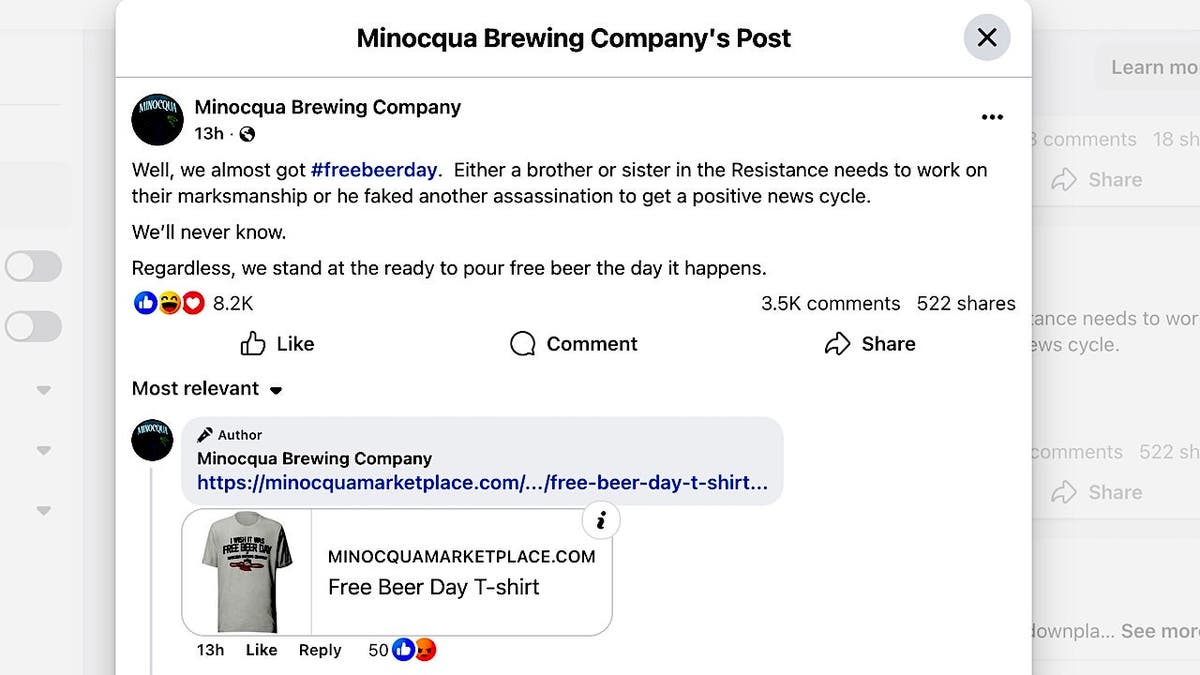
After the April shooting at the White House Correspondents’ Dinner where Trump was present, the company wrote on Facebook, "Well, we almost got #freebeerday."

Minocqua Brewing Company

The Minocqua Brewing Company in Wisconsin has a history of pushing progressive politics. (Screenshot/Google Earth)

The brewery also offered half-price beer when Sen. Mitch McConnell dies.

"When they announce that McConnell’s Faustian dance has finally ended, we’re gonna start serving our beer at ‘half price,’ because we promised #halfpricebeerday on the day they unplug the ventilator," the brewery said in an Instagram post.

McConnell, who is 84, was absent from the Senate for months after being hospitalized for a fall in his home earlier this year. The Kentucky Republican returned to the Senate last week ahead of key votes. 

Bangstad, who owns the brewery, is also the founder of the Minocqua Brewing Company SuperPAC, which "aims to remove Republican federal and state elected officials who perpetuated the election lies that caused the Insurrection of January 6, 2021, and whose downplaying of the seriousness of COVID-19 caused so many unnecessary deaths in our country," according to the brewery’s website.

Reached for comment by Fox News Digital, the brewery made disparaging remarks about Trump and again noted that it will host a "#freebeerday" when the president passes. 

"Reminder, however, no red hats allowed," the brewery added.

Credit: 

Rachel del Guidice is a culture reporter for Fox News

Rachel del Guidice - Fox News Culture Reporter | Fox News 

 covering the intersection of politics, faith, family, and American culture.


'Squad' Democrat slammed by Trump admin for most 'radical' plan targeting ICE yet

'Squad' Democrat slammed by Trump admin for most 'radical' plan targeting ICE yet

DHS Sec. Markwayne Mullin joins 'Saturday in America' to highlight border enforcement updates and criticize the Biden administration border policies following 16 straight months of zero releases under current enforcement. He reiterates that DHS and ICE remain committed to targeting high-risk individuals to keep American communities safe.

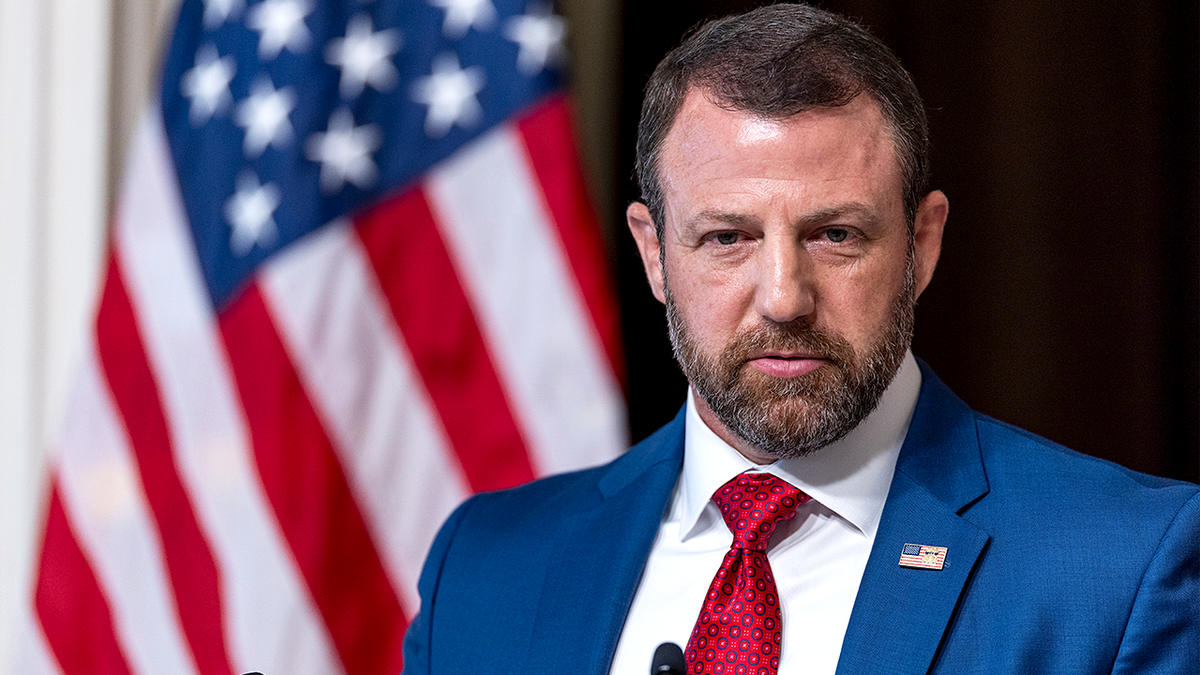
EXCLUSIVE: Department of Homeland Security (DHS) Secretary Markwayne Mullin is firing back at a progressive House Democrat who is pushing one of the most radical Trump administration crackdowns yet.

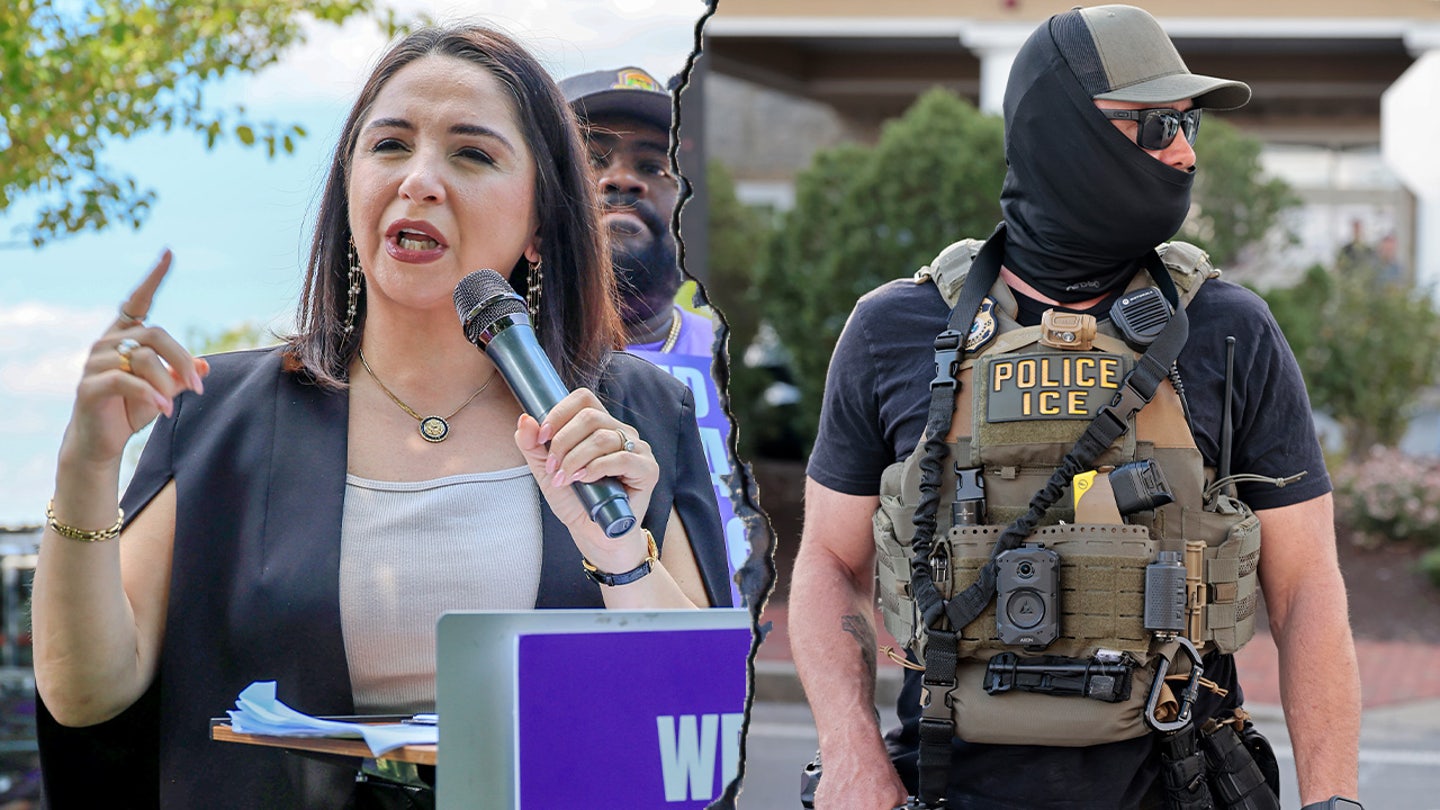
Mullin and his DHS spokesperson both criticized legislation by Rep. Delia Ramirez, D-Ill., a member of the progressive "Squad," that would dismantle most of the department and abolish Immigration and Customs Enforcement (ICE).


"Radical leftists are calling to defund the police and abolish DHS. It’s NEVER going to happen. Our 270,000 DHS patriots are keeping Americans SAFE— unlike this open-borders politician who refuses to prioritize Americans over illegal aliens," Mullin told Fox News Digital.

His spokesperson went even further, telling Fox News Digital that Ramirez "should be thanking our law enforcement for removing these dangerous criminals from her district—NOT vilifying law enforcement."

"This type of rhetoric is contributing to a more than 1,300% increase in assaults against them as they put their lives on the line," the DHS spokesperson said. "While sanctuary politicians smear ICE, law enforcement is arresting criminals and saving countless American lives."

DHS also pointed Fox News Digital to a list of illegal immigrants arrested in Ramirez's home state of Illinois. It included Bulgarian national Rumen Georgriev, who was convicted of "rape with a weapon," Abdukadir Haji of Somalia, who DHS said was convicted of "sex assault and rape," and Cuban national Samuel Reyes-Silva, who was convicted of "robbery and homicide."

Ramirez's legislation, the Reimagining Safety Act, would create a "Department of Community Safety" while dismantling DHS as it is currently known.

DHS Secretary Markwayne Mullin speaks during Washington news conference.

Homeland Security Secretary Markwayne Mullin speaks during a news conference at the Eisenhower Executive Office Building on July 17, 2026, in Washington, D.C. (Jim Lo Scalzo/EPA/Bloomberg via Getty Images)

Certain agencies like the Transportation Security Administration (TSA), the Federal Emergency Management Agency (FEMA), the Cybersecurity and Infrastructure Security Agency (CISA), Coast Guard, and customs functions would be preserved.

The bill would abolish ICE and "begin the process of establishing a separate civil immigration system," according to a release. It would also abolish Customs and Border Protection (CBP), the agency charged with keeping the southern border free of illegal crossings.

Democrat calls to abolish ICE have swelled in recent months amid bipartisan criticism of President Donald Trump's handling of immigration, reigniting most recently when agents shot a Venezuelan national in Austin, Texas. Backlash has also been targeted at federal immigration officials' killing of two U.S. citizens earlier this year.

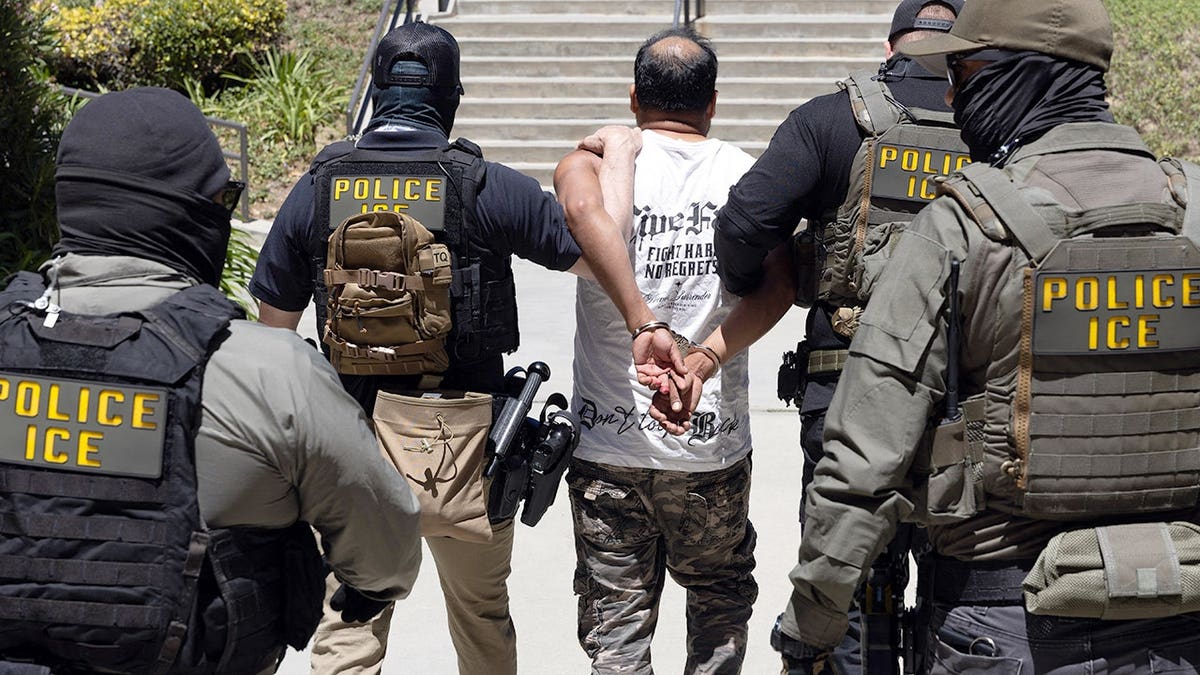
ICE agents with a detainee

Immigration and Customs Enforcement (ICE) agents walk a detainee out of the Ventura County Government Center in Ventura, Calif., on July 27, 2026. (Blake Fagan/AFP via Getty Images)

But Ramirez's bill would go further in dismantling the current anti-illegal immigration enforcement system with its call to end CBP as well as ICE.

She fired back at the Trump administration's criticism in a statement to Fox News Digital, "Every day, Americans wake up with a new reason to dismantle DHS, reimagine safety, and build something that honors our shared humanity. The people have the power to reshape the government: instead of the weapon DHS has proven to be, we need a department built on the best parts of who we are and can be, and the best examples of how we can take care of each other in hard times."

"Markwayne and DHS will keep spreading cheap lies and fearmongering in a desperate attempt to save face because dismantling DHS and building something new is part of how we hold them accountable, stop corruption, and end their lawlessness," Ramirez said.

Credit: 

Elizabeth Elkind is a politics reporter for Fox News Digital leading coverage of the House of Representatives. Previous digital bylines seen at Daily Mail and CBS News.

Follow on Twitter at @liz_elkind and send tips to elizabeth.elkind@fox.com


Friday, September 25, 2026

CartoonDems


Fear of Democratic Socialists Drives November Turnout Plans for Some Trump Voters

Fear of Democratic Socialists Drives November Turnout Plans for Some Trump  Voters

Don Jernigan, a retiree in Virginia Beach, is disappointed by most politicians, Democrat and Republican. That includes President Donald Trump, whom he helped elect in 2024.

But Jernigan, 76, says he plans to "hold his nose" and vote for Republican candidates in November's midterm elections. In his view, "the Democrats are now being controlled by the democratic socialists," he said, "and we've fought wars to keep that away from us."

While many analysts argue that Trump's low approval ratings could dampen Republican turnout in November, conversations with 18 Trump voters, including Jernigan, suggest electoral victories by progressive Democrats have energized some conservatives — even those disappointed by Trump.


Conducted with a group of Trump voters who have spoken with Reuters regularly since he returned to ‌office, the interviews do not point to broad enthusiasm for Republican candidates themselves.

Dissatisfaction with Republican nominees for national or statewide office was rife among the group, particularly among voters in battleground states with races ​that could prove pivotal in deciding which party controls Congress. Chief among their concerns were the Iran war and Trump's handling of the economy.

Even so, many of those critical of the president said they would do all they can to deny Democrats control of either house of Congress.

Nearly all of the 18 voters said they were alarmed by ⁠the prospect of far-left candidates winning more seats in Congress; many expressed deep concern that progressives, if elected in meaningful numbers, would attempt to enact what they view as a socialist — or even communist — agenda ​in which the government tightly restricted citizens' choices about where to spend and earn money.

Seven said that concern alone left them more motivated to vote for a conservative candidate in November.

Trump and other Republicans have ⁠accused Democrats of embracing communist ideology, a charge Democrats reject as a deliberate misrepresentation of their policies.

Democratic socialists advocate pursuing progressive policies, such as government-run universal health insurance or wealth taxes, through democratic processes. In contrast, communism seeks to abolish private ownership of property and create a classless society — ideas that the democratic socialists seeking election reject.

In Georgia, where voters will elect a governor and U.S. senator in November, David Ferguson said he hasn't found any candidates in either party whom he can "strongly get behind" ‌in the general election.

Yet Ferguson, 54, a mechanical engineer and account manager for an industrial supply company, said he fears that if progressive and socialist candidates got more power in Congress, they would try ​to exert "way too much ‌control over markets and things that the government does not need to be involved in."

On the other side of the state, near Savannah, insurance firm employee Amanda Taylor was so disappointed by this year's candidates that she didn't vote in Georgia's primary election. But she said the rise of democratic socialists nationwide would "absolutely" help ‌push her to the polls in November, even though she wasn't aware of any such candidates on her ballot.

Like Ferguson, Taylor, 53, worried such movements would pull the U.S. "towards communism, where your government is dictating the groceries that you can get and you're waiting in lines for bread" and that they would require schools, bathrooms and sports teams to recognize the gender identity of transgender individuals.

Trump and ⁠other Republican leaders have pumped up their attacks on socialism and communism this campaign season after a ‌series of left-wing Democrat primary victories, including a win by Michigan U.S. ⁠Senate nominee Abdul El-Sayed, whom the president called a "Communist loser."

El-Sayed, who faces former U.S. Rep. Mike Rogers in November, describes himself as a progressive candidate and not a socialist.

But Trump's messaging appears to be sticking — even with Republicans unhappy with the party's leadership.

In Grand Rapids, Michigan, Terry ⁠Alberta said he ⁠expects to split his ballot between Democrat and Republican candidates in November, because he leans Republican but mistrusts any candidate with an endorsement from Trump, whom he sees as increasingly volatile and prone to "silly games" with other countries.

"I don't like the radicalism on either side," said Alberta, 65, a pilot. He ‌said his vote will also be motivated by concern that El-Sayed secretly supports policies he has publicly disavowed, such as imposing Islamic sharia law on the U.S.

Some voters in the group saw opportunity in the rising popularity of progressive candidates on the left. In Wisconsin's August primary election, recent college graduate William Brown, 21, cast a "strategic" vote for Francesca Hong, a democratic socialist candidate, who narrowly lost her bid to become the state's Democrat nominee for governor.

Had ‌Hong won, Brown thought the ​Republican nominee could have defeated her more easily than a moderate ‌Democrat — and her agenda seemed so radical that "not only would she not have been able to pass a lot of it through the legislature, but a lot of it would have been court challenged," Brown said.

Others viewed the recent success of left-wing candidates as a warning sign about the increasingly extreme nature of U.S. politics.

"My biggest fear is that it will be a ​constant impeachment of Donald Trump," said Lesa Sandberg of St. George, Utah, who runs an accounting business, rents properties and works for a Republican political action committee.

Sandberg, 58, expects the Senate to remain under Republican control, preventing new progressive U.S. representatives from actually pushing through a socialist agenda. But for the sake of national unity, she said, she hopes Democrats "won't elect their extreme left, just like I hope we ‌don't elect our extreme right."

Credit: newsmax.com 


CartoonDems