Americans Were Hungry. FDR’s Government Was Killing Pigs to Raise Prices.
In 1933, about one-quarter of America's workforce was unemployed. Hunger and malnutrition were widespread, families had lost homes and savings, and millions were trying to survive an economic catastrophe.
Franklin Roosevelt's government responded to part of that crisis by paying farmers to destroy things Americans could use.
In a country with abundant resources, the largest force of skilled labor, and the most productive industry in the world, many found it hard to understand why the depression had occurred and why it could not be resolved. Moreover, it was difficult for many to understand why people should go hungry in a country possessing huge food surpluses. Blaming Wall Street speculators, bankers, and the Hoover administration, the rumblings of discontent grew mightily in the early 1930s. By 1932, hunger marches and small riots were common throughout the nation.
In June of 1932, nearly 20,000 World War I veterans from across the country marched on the United States Capitol to request early payment of cash bonuses for their military service that weren't due to be paid until 1945. The marchers, who the organizers called the "Bonus Expeditionary Force" but who became widely known as the Bonus Army, spent several days in Washington, D.C., pressing their case, but a Congressional bill to pay the bonus was defeated. On July 28, U.S. troops and tanks commanded by General Douglas MacArthur
dispersed the marchers and destroyed their makeshift camps in the city.
The Agricultural Adjustment Act rested on an economic theory that sounded tidy in Washington. Farm prices had collapsed because farmers were producing more than markets could absorb.
Reduce the supply, officials reasoned, and prices would rise, and higher prices would restore farm income.
Farmers desperately needed help. The question is what Washington chose to do with that desperation.
Pigs that couldn't economically be processed for food were turned into grease and tankage. About 100 million pounds of edible pork did reach relief programs.
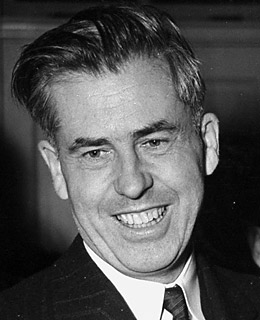
The USDA's ownhistory says officials expected the slaughter to provoke public outrage but considered the action necessary. Agriculture Secretary Henry Wallace
later acknowledged how disturbing the policy looked, describing the destruction of growing production as a grim consequence of an economy Washington believed had become badly unbalanced.
The administration understood exactly what it was doing.
The U.S. Department of Agriculture's concern with price-support and adjustment legislation is carried out under a series of interrelated laws passed by Congress from 1933 to 1984. Beginning with the major proposals of the 1920s for handling and marketing farm surpluses, this history records the establishment of price-support and adjustment programs with the Federal Farm Board in 1929 and the Agricultural Adjustment Acts of 1933 and 1938, and then traces their evolution through 1984. This half century of development is important because it forms the foundation for implementing current and future farm legislation. Key words: Price support, production adjustment, history, Depression. PREFACE Congress will consider new farm legislation in 1985 to replace the expiring Agriculture and Food Act of 1981. In preparation for these deliberations, the Department of Agriculture and many groups throughout the Nation are studying the experience under the 1981 law and preceding legislation to see what lessons can be learned that are applicable to the 1980s. This history of USDA price-support and adjustment programs supplements an earlier series of background papers on the key characteristics of 14 commodities, the farm industries which produce them, and the farm programs under which they are produced.
Cotton received similar treatment. Prices had fallen from 29 cents per pound in 1923 to 6.5 cents in 1932. Roosevelt's administration set out to eliminate 10 million acres, roughly 25% of the cotton already growing in American fields.
The target was reached.
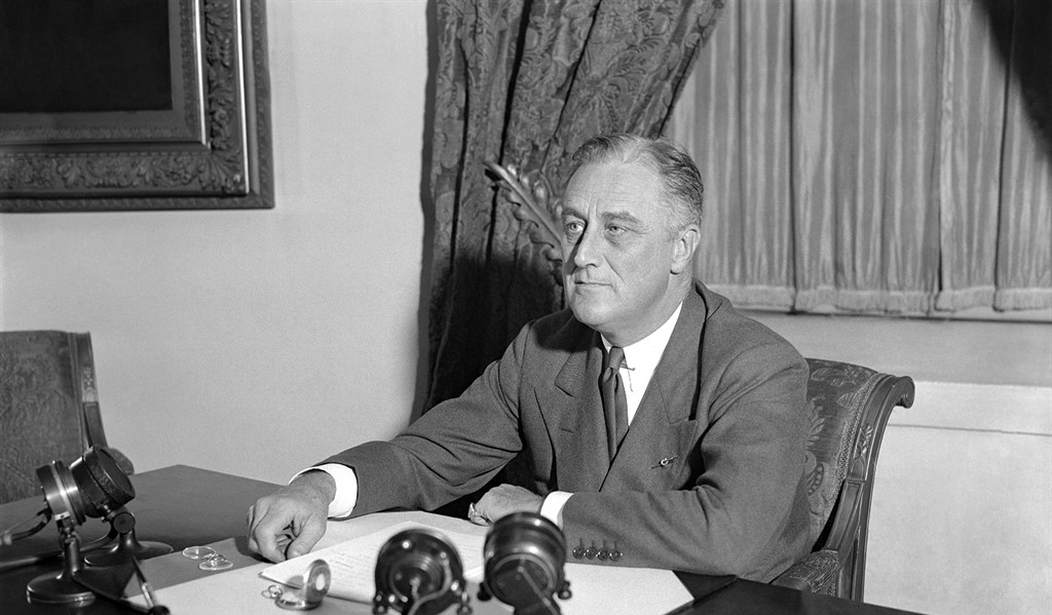
Roosevelt personally urged farmers to participate. He told Agriculture Secretary Wallace that growers had a patriotic responsibility to reduce the oversupply and thereby obtain better prices for what remained.
I know that for the past two weeks the representatives of the farm adjustment administration have been presenting to the 2,000,000 producers of cotton the hard facts of supply and demand, but the real question is, are the cotton growers ready to recognize these facts and seize their opportunity.
I myself am one of those who as a planter of cotton has suffered from the absurdly low prices of the past few years. What I am concerned about, and what every other cotton grower ought to think about, is the price of cotton next year if cotton acreage is not reduced.
There are two reasons why every cotton grower should go along with the Government's national responsibility. The first is the patriotic duty of making the plan a success for the benefit of the whole country; and the second is the personal advantage to every cotton grower in helping as an individual to reduce an oversupply of cotton and thereby obtaining a better price for what he grows.
The responsibility rests on the individual grower, and I believe that we can get substantial unity among our more than 2,000,000 cotton producers for this program of a planned and orderly harvest.
Here was the New Deal in its purest form. Washington looked at collapsing prices and concluded that prosperity could be engineered by making useful goods scarcer.
Prices were indeed desperately low. Farmers were going broke, and doing nothing wasn't an acceptable answer.
But destroying production while Americans lacked food, clothing, work, and money should disturb us even if the program improved farm prices.
Roosevelt remained unapologetic. In 1935, he ridiculed critics for shedding "crocodile tears" over the slaughter of little pigs and defended his farm programs as necessary corrections to a failed economic order.
Let me make one other point clear for the benefit of the millions in cities who have to buy meats. Last year the Nation suffered a drought of unparalleled intensity. If there had been no Government program, if the old order had obtained in 1933 and 1934, that drought on the cattle ranges of America and in the corn belt would have resulted in the marketing of thin cattle, immature hogs and the death of these animals on the range and on the farm, and if the old order had been in effect those years, we would have had a vastly greater shortage than we face today.
Our program- we can prove it—saved the lives of millions of head of livestock. They are still on the range, and other millions of heads are today canned and ready for this country to eat.
I think that you and I are agreed in seeking a continuance of a national policy which on the whole is proving successful. The memory of old conditions under which the product of a whole year's work often would not bring you the cost of transporting it to market is too fresh in your minds to let you be led astray by the solemn admonitions and specious lies of those who in the past profited most when your distress was greatest.
You remember and I remember that not so long ago the poor had less food to eat, and less clothes to wear, at a time when you had practically to give away your products. Then the surpluses were greater, and yet the poor were poorer than they are today when you farmers are getting a reasonable, although still an insufficient, price.
FDR inherited a terrible mess, and he deserves to be judged against the severity of the problem he faced.
He also deserves to be judged by the solution he chose.
When Americans were hungry and farmers were desperate, Washington decided part of the answer was fewer pigs, less cotton, and government checks for producing less.




No comments:
Post a Comment