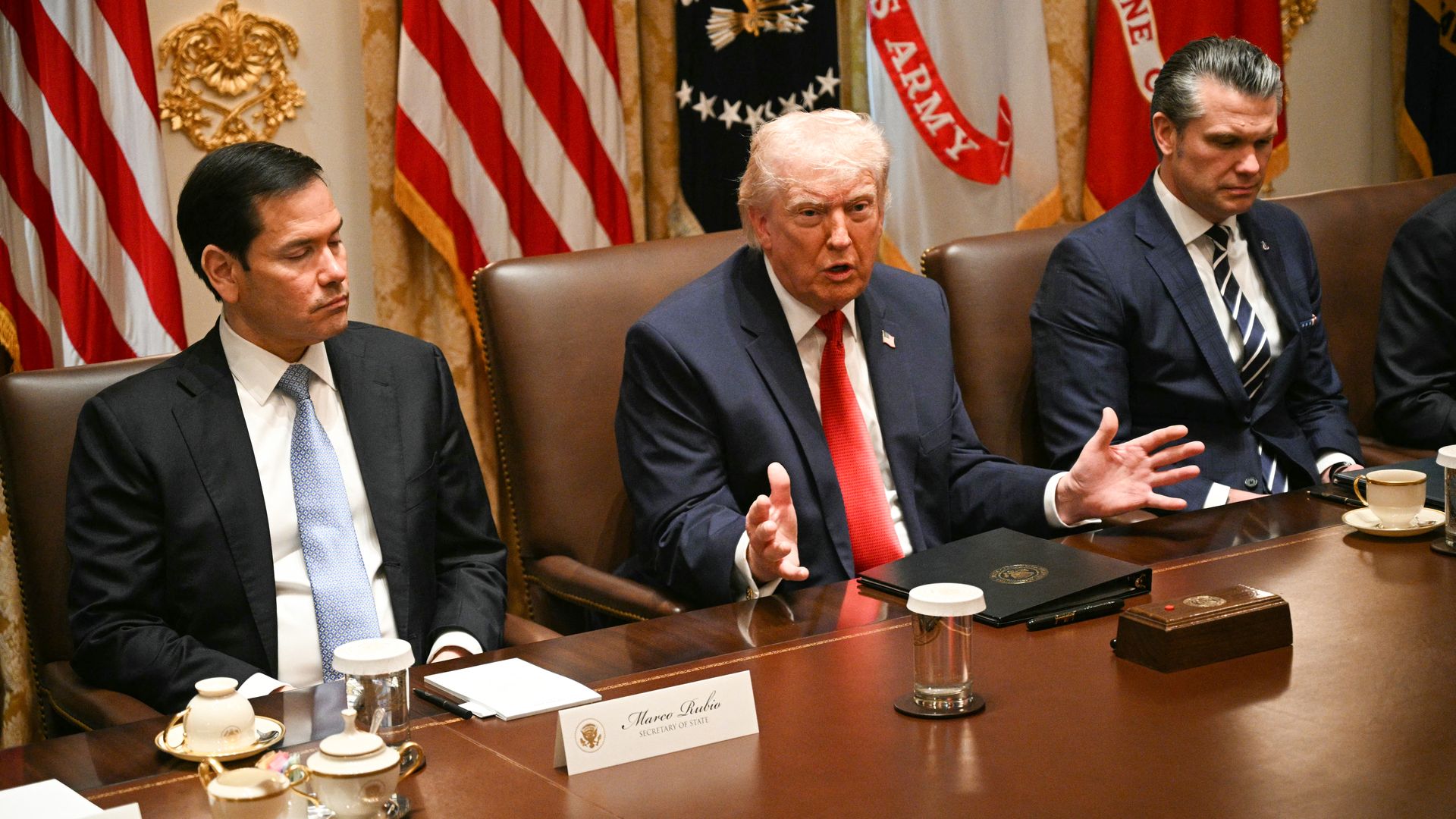
President Donald Trump's low approval ratings in California will not
determine the outcome of the state's closely watched governor's race,
Republican gubernatorial candidate Steve Hilton told The Hill on Sunday.
Hilton said, "This election is going to be about the future of California and the fact that we're desperate for change."
Hilton, a conservative commentator
and former adviser to former British Prime Minister David Cameron, has
received Trump's endorsement but argued that state-specific issues —
including poverty, unemployment, and the high cost of living — are
driving voter concerns.
"That's entirely due to Democrat
policies after 16 years of one-party rule," Hilton said, adding that his
campaign will focus on offering "a completely new direction" for the
state.
Polling underscores the political challenges Republicans face in California. A survey
conducted last May by the Public Policy Institute of California found
that 29% of adults in the state approve of Trump, including 82% of
Republicans, 31% of independents, and just 6% of Democrats.
The comments come ahead of a key
primary debate scheduled for Wednesday on KTLA-TV in Los Angeles, as
candidates vie to advance from the June 2 primary under California's
top-two system, in which the two highest vote-getters advance to the
general election regardless of party.
The race tightened following the withdrawal of former Rep. Eric Swalwell after multiple women accused him of sexual misconduct.
A recent poll
by Emerson College found Hilton leading with 17% support among likely
voters, followed by Riverside County Sheriff Chad Bianco and businessman
Tom Steyer at 14% each.
Former Rep. Katie Porter and former Health and Human Services Secretary Xavier Becerra each polled at 10%.
California has not elected a Republican governor since Arnold Schwarzenegger left office in 2011.
Despite the crowded field, Hilton
dismissed the likelihood that two Republicans could advance to the
general election, citing what he described as the financial strength of
Democrat-aligned groups and candidates.
"You've got the massive financial
power of the government unions and their corrupt relationship with
Democrat politicians," Hilton said. "They will spend whatever it takes
to make sure that there's a Democrat in the top two."
Hilton
said he expects either Steyer or Porter to emerge as the leading
Democrat contender and warned that Republicans must consolidate support
to avoid being shut out of the general election.
This week seems to be rife with journalistic
malpractice from outlets either running with leaked and unsubstantiated
material that tries and fails to put Trump administration officials in a
bad light or works to erode and undermine our nation's institutional
bodies of governance.
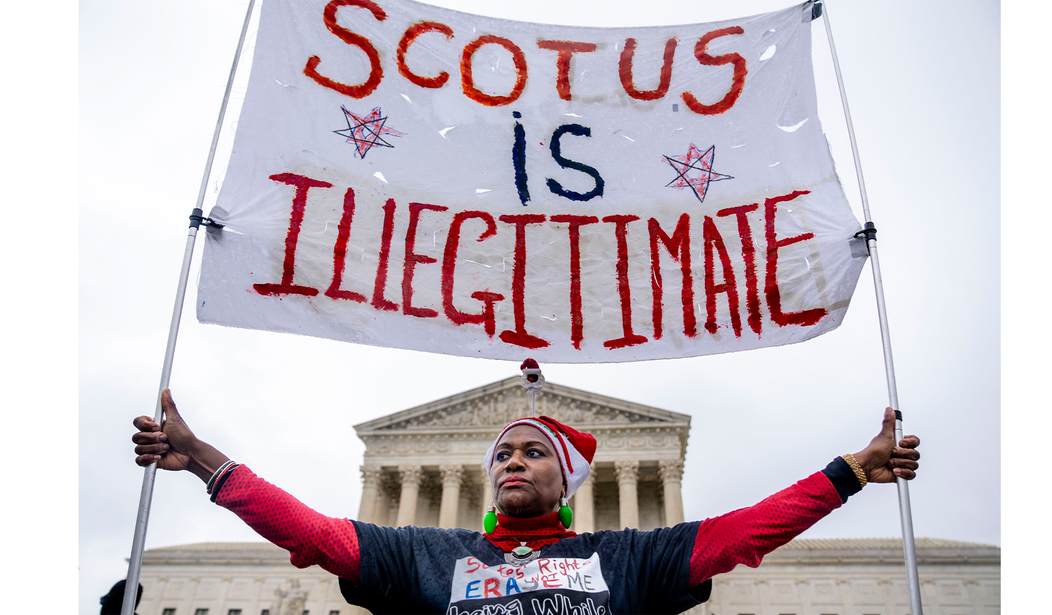
The latest installment from The New York Times involves leaked memos from the United States Supreme Court, verified by more anonymous sources.
The
Times spoke to 10 people, liberals and conservatives, who were familiar
with the deliberations over the pivotal emergency order and who spoke
on the condition of anonymity because confidentiality was a condition of
their employment.
Amazing how one can fail so spectacularly on this basic tenet of integrity. God help us.
The
papers expose what critics have called the weakness at the heart of the
shadow docket: an absence of the kind of rigorous debate that the
justices devote to their normal cases.
After obtaining the papers,
The Times confirmed their authenticity with several people familiar
with the deliberations and shared them with a spokeswoman for the court.
The Times posed detailed questions to the justices who wrote the memos;
they did not respond.
Nor should they.
As RedState reported in February,
Chief Justice Roberts took action to secure the integrity of the
court's processes after the 2022 leak of the draft opinion in Dobbs v. Jackson Women's Health.
Two months later, if this latest tranche of leaked memos is any
indication, it hasn't worked. Between justices Sonia Sotomayor and
Ketanji Brown Jackson publicly criticizing their constitutionalist
colleagues, and the legacy media's breathlessly publishing unsourced and
leaked material, soon there will not be a Supreme Court left to
preserve.
Of course, the NYT has invented a
"shadow docket" scandal from the Court's use of emergency rulings,
particularly in the area of executive powers of the President of the United States.
Emergency orders based on abbreviated briefing and almost
no deliberation have now become commonplace, notably in cases arising
from challenges to presidential actions. Critics call this new way of
doing business the “shadow docket.”
How stunning and brave. The "critics" are also nameless blobs whose opinion holds as much credibility as these leaking anonymous employees.
The
New York Times has obtained those papers and is now publishing them,
bringing the origins of the Supreme Court’s shadow docket into the
light.
The 16 pages of memos, exchanged in a five-day dash,
provide an extraordinarily rare window into the court, showing how the
justices talk to one another outside of public view.
The
leaked memos were in reference to a 2016 emergency ruling against the
Obama administration on the Clean Energy Plan. From here, the NYT
created an entire narrative that blocking then-President Barack Obama's
aims to save the planet was not only terrible, but rooted in Chief
Justice John Roberts personal animus toward Obama.
However, the
same so-called shadow docket methods employed in 2016 have been used in
2025 to issue favorable rulings on President Donald Trump's use of
executive powers. And in the NYT's world, this is beyond the pale. The
paper further claims that Chief Justice Roberts has allowed this use of
shadow docket methodology to run amok, firing off emergency rulings
instead of going through the court's hallowed deliberative judicial
process.
Viewed through the outlet's TDS-riddled glasses,
everything is stupid, including Supreme Court decisions. This has become
incredibly tiresome.
At the time, the ruling seemed like a curious one-off.
But that single paragraph turned out to be a sharp and lasting break.
That night marks the birth, many legal experts believe, of the court’s
modern “shadow docket,” the secretive track that the Supreme Court has
since used to make many major decisions, including granting President
Trump more than 20 key victories on issues from immigration to agency
power.
From this, the NYT surmises that Roberts is on Team Trump. Quite a leap.
In
the Trump era, he and the other conservative justices have repeatedly
empowered the president through their shadow docket rulings. By
contrast, the papers reveal a court wielding those same powers to block
Mr. Obama. Justice Samuel A. Alito Jr. warned that if the court failed
to stop the president, its own “institutional legitimacy” would be
threatened.
The court’s liberals pushed back, but compared with
their recent slashing dissents, they were not especially forceful,
mostly confining their arguments to procedures and timing.
[...]
Since
that breakneck February 2016 exchange, the emergency docket has swelled
into a major part of the court’s business, as the justices have
short-circuited the deliberations of lower courts. The decisions are
technically temporary, but are often hugely consequential.
Rulings
with no explanation or reasoning, like the sparse paragraph from that
February night, have become routine. The emergency docket is now a
central legacy of the court led by Chief Justice Roberts.
NYT finally came to this gobsmacking conclusion:
Read
a decade later, the memos suggest that none of the justices fully
appreciated what they were doing: embarking on a questionable new way of
operating.
So, Chief Justice Roberts and all the other justices at that time
were not only partisan hacks, but they failed to fully weigh the gravity
of their decisions. This comes off as elitist and patronizing on its
face.
The NYT did not miss a step, burnishing Obama's legacy while
painting Roberts' motivation in his ruling against Obama in the fact
that then-Senator Barack Obama voted against Roberts' confirmation to
the Supreme Court. What rank nonsense.
The president
was under enormous pressure to address the global climate crisis. He had
campaigned on that promise, then for eight years as the planet heated,
he failed to get major environmental legislation through Congress. With
his term about to end, this was his last chance to act.
The chief
justice was eager to assert his institution’s authority and to rein in
Mr. Obama’s Environmental Protection Agency, which he believed had
sidestepped a recent ruling.
How exactly does the NYT explain the egregious 2012 Obamacare ruling where Roberts created a tax from whole cloth?
True,
Chief Justice Roberts had cast the decisive vote in 2012 to save the
centerpiece of the Affordable Care Act, Mr. Obama’s signature
legislative achievement. But that was approved by Congress.
Yes, that explains everything. Puddle-depth reasoning right here.
The
NYT does admit that Obama's second term was marked by him essentially
going rogue, from the Dreamers to the Iran nuclear deal, to his Clean
Power Plan, which was simply a climate change makeover of the entire
energy sector.
The chief justice
and some of his colleagues were watching warily, concerned the president
was going past what the Constitution allowed him to do on his own. In a
2014 opinion written by Justice Antonin Scalia, the court warned Mr.
Obama that he needed to tread carefully in setting environmental policy
without congressional approval.
With the legal challenges to the Clean Power Plan rising quickly to
the highest court, and media outlets like the NYT carrying water for the
Obama administration on this signature climate legislation, according
to the NYT's reading of these memos, Chief Justice Roberts was decisive
in his actions to expedite a ruling.
On Feb. 5, the
internal correspondence obtained by The Times shows, the chief justice
circulated a blast of a memo, insisting that the court halt the
president’s plan.
His arguments were forceful, quick, and filled
with confident predictions. The court was going to give the case a full
hearing eventually, he forecast. At that point, the justices would vote
to overturn the Obama plan, he said, because it went beyond the
boundaries of the Clean Air Act.
For now, the chief justice
contended that the court had to act immediately because the energy
industry “must make changes to business plans today.”
“Absent a
stay, the Clean Power Plan will cause (and is causing) substantial and
irreversible reordering of the domestic power sector before this court
has an opportunity to review its legality,” he wrote.
It
appeared that Chief Justice Roberts surmised that, if the court was
able to do its normal deliberations, the court would ultimately rule
against the Clean Power Plan, so a stay was in order. Frankly, this is
the role of the Chief Justice, and the more conservative-leaning
justices backed his play. The more liberal justices, not so much, as
referenced by the response by Justice Elena Kagan.
Court
action at this point in the process would be “unprecedented,” she
added. She mentioned that she was inclined to find that the Obama plan
was lawful, but she said the thin briefing made it difficult for her “to
determine with any confidence which side is ultimately likely to
prevail.”
Justice Alito issued a salvo on the same day as Justice
Kagan, with neither of them addressing the other. Echoing the chief
justice’s sense of insult and suspicion about the Obama administration,
he wrote that the E.P.A. appeared to be trying to render the court
irrelevant.
Of course, the NYT continued to color their narrative, saying Roberts
distrusted the Obama administration; so, he used strong-arm tactics to
create what has become what they consider a dangerous precedent.
Over
just five days, the justices had decided the issue. Even as they
debated the Obama plan’s possible burden on the power industry, in the
entire chain of correspondence obtained by The Times, not a single
justice, conservative or liberal, mentioned the dangers of a warming
planet as one of the possible harms the court should consider.
In
light of the entire climate boondoggle and Green New Scam being
dismantled and debunked in real time, Roberts could practically be seen
as Nostradamus for blocking the Obama administration's plans to destroy
America's energy sector. The NYT notes that this emergency decision
would be the last for Justice Antonin Scalia. Four days later, Scalia
would be found dead, leaving a vacancy in the highest judicial body that
would not be filled that year. Because it was an election year,
then-Senate Majority Leader Mitch McConnell (R-KY) refused to advance
President Obama's nomination of Merrick Garland. Despite McConnell's
terrible legacy of late and ignominious retirement from the Senate,
McConnell will be forever remembered for saving the nation from a
lifetime Merrick Garland appointment to the court.
The NYT further
concluded that this emergency docket process is a bane to SCOTUS that
has contributed to the undermining of the judicial body.
And, yeah, it's all Trump's fault.
Since
then, even as the court’s approval ratings dropped, applications like
the one it confronted a decade ago have proliferated, swamping the
court’s ordinary work.
This is partly a consequence of a
gridlocked Congress and presidents willing to push the boundaries of
executive power, particularly Mr. Trump.
But it is also the result
of the justices’ decision to entertain emergency requests like the one
in 2016, warping procedures that had developed over centuries.
Perhaps someone could also point out to the brain
trust at the NYT that it is the Left's penchant for lawfare and the
activist judges who make these highly partisan and ideologically skewed
decisions that have resulted in the need for a method that expedites
reviews and judgments by the highest court.
Of all people, Justice Sotomayor admits as much.
In
an appearance this month at the University of Alabama, Justice Sonia
Sotomayor reflected on the unceasing flood of emergency applications.
There was some controversy this week about President Donald Trump
being critical of Pope Leo for being weak on crime and his remarks about
the U.S. military action in Iran.
The pope had made prior comments about immigration and the military
action against Iran that were critical of the Trump administration's
actions before Trump's remarks. But then the media seemed to be trying
to interpret a variety of remarks he made after Trump's criticism as an
effort to attack Trump and promote controversy.
As we reported
earlier, Pope Leo attempted to set the record straight, saying that the
media had been pushing a "certain narrative that has not been accurate
in all its aspects." Gee, it sure sounds like he's calling out the media
for how they've been reporting this.
The
pope said what came next was "commentary on commentary," trying to
interpret what he was saying. Translation? Trying to read anything he
said as an attack on Trump.
He said the remarks he made in
Cameroon that were prepared two weeks before, before any of the Trump
comments were then made to look like he was trying to "debate the
president" when he was not trying to do so, "which was not my interest
at all."
Yet multiple media outlets, including Reuters, interpreted that speech, in which he spoke about tyrants, as related to Trump.
This tweet was also cast as an attack on Trump by some, despite the fact that it was clearly hashtagged "Cameroon."
So
when it came down to it, when the pope was trying to draw attention to
the important issues that needed to be addressed with the problematic government of President Paul Biya, the media was ignoring that in favor of their "focus on Trump" fix.
The
Vatican had said fighting corruption in the mineral-rich central
African country would be one of the themes of Leo’s visit, and the
American pope didn’t hold back in addressing Biya and government
authorities in an address at the presidential palace.
“In order
for peace and justice to prevail, the chains of corruption — which
disfigure authority and strip it of its credibility — must be broken,”
Leo said. “Hearts must be set free from an idolatrous thirst for
profit.”
If you think about what the pope is saying, he's saying to the media
and the others involved: Don't try to manipulate my words for your
narrative about Trump.
Vice President JD Vance welcomed what Pope
Leo had to say and had the perfect response to his shooting down the
media narrative.
I am grateful to Pope Leo for saying
this. While the media narrative constantly gins up conflict–and yes,
real disagreements have happened and will happen–the reality is often
much more complicated.
Pope Leo preaches the gospel, as he
should, and that will inevitably mean he offers his opinions on the
moral issues of the day. The President–and the entire
administration–work to apply those moral principles in a messy world.
He will be in our prayers, and I hope that we'll be in his.
Good
for Vance, that's a great response. Let all sides call out the media
for always trying to manipulate the narrative. Vance recognizes that
yes, they may have differences on policy, and the Trump administration
has to do what is best for the country, regardless of what differences
the pope may have. The pope doesn't have the intel that Trump has on
threats from Iran, and as the Border Czar Tom Homan said, may not even
understand how the Trump policy on immigration is better, not just for
the country but for saving lives as well. He said he was willing to talk
with the folks at the Vatican and give them some facts.
That
would be a great way to take it from here. And maybe now the pope might
be more open to understanding that the media narrative about things
like the Iran action and immigration might not be as he might think when
he sees how the media has behaved here.
We cannot collaborate with Democrats. Period.
They’re insane, motivated by the overeducated, wealthy, white,
nose-pierced, and blue-haired radicals that form the core of their
political base.
They’re held hostage by activist crazies. That’s why we
need to eliminate the filibuster in the Senate and accomplish as much as
possible, give our members something to energize their supporters at
home, and stop the Democrats’ use of illegal aliens to boost their
political power. We need to pass the Save America Act.
At the very least, we can ensure that only Americans vote in our
elections. Plus, whatever economic action items that were deemed DOA due
to the 60-vote threshold.
If we don’t act and Democrats retake
Congress, the list of atrocious policy points here is staggering. Look,
not everything will get passed, but imagine the disastrous Biden agenda
on steroids. Here’s what the Left is cooking up, based on what
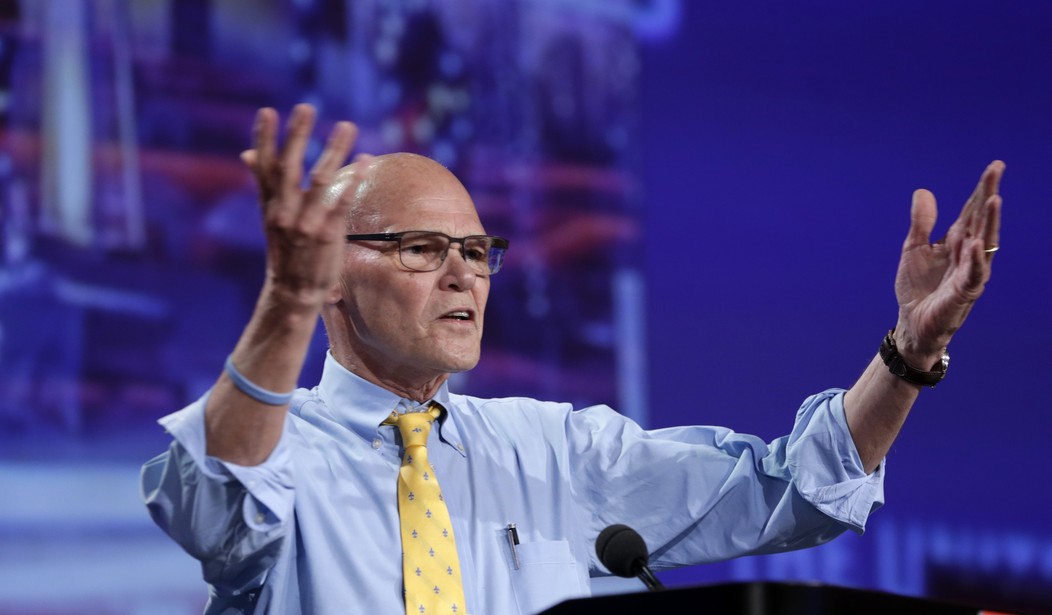
Democratic operative James Carville said on the Policon podcast.
Grant statehood to Washington D.C. and Puerto Rico, so that the Democrats can unlock 4 extra seats in the Senate.
Pack the U.S. Supreme Court from 9 Justices up to 13 Justices, adding another 4 Left-wing Justices to the court.
Reopen the U.S.-Mexico border and grant mass-amnesty to every single alien currently inside of the United States.
His advice to Democrat politicians: “Don’t run on it. Don’t talk about it. Just do it.”
They know the census is approaching. They see how blue states may
lose electoral votes, and the possible weakening of the Voting Rights
Act could significantly advantage Republicans.
Being the better person doesn’t score us brownie points. Nuke the filibuster, John Thune. Look what’s coming if we lose.
Bill Maher had former Obama White House Chief of
Staff Rahm Emanuel and former Biden National Security Adviser Jake
Sullivan as guests on his show Friday night. So, bear with us here, but
the Eric Swalwell fiasco was brought up, and the HBO host did not hold
back: he clearly never liked him. Swalwell appeared on Real Time a
couple of times, and Maher said that his ‘creepdar’ increased with this
guy. Ask his staff, he never liked him. Yet, Maher is still learning the
ways of the corrupt media. He seemed shocked that he was protected by
the media and that his tendencies were an open secret.
💥NEW:
Bill Maher on Eric Swalwell: "We had him on a couple of times. Ask my
staff: I never liked him. I don’t have good gaydar — but I got creepdar.
I always thought this guy was a f*cking creep. I never liked him." pic.twitter.com/QCMWJoU0hw
“Ask
my staff: I never liked him. I don’t have good gaydar — but I got
creepdar. I always thought this guy was a f*cking creep. I never liked
him,” he said.
Swalwell saw his entire career collapse last
weekend when multiple women leveled allegations of sexual misconduct and
rape against him. He withdrew from the California governor’s race last
Sunday and resigned from Congress two days later, just hours after
another woman accused him of raping her in 2018. Democrats claim they
knew nothing. That’s simply not believable, especially for Nancy Pelosi,
who had Eric in her inner circle.
No one knew? Of course they
did. Sen. Ruben Gallego (D-AZ) virtually spilled the beans in a
disastrous presser this week, where the Arizona Democrat said he had
heard he was flirty in years past.
Also, Bill, you almost have
it: Swalwell was protected by the media because he attacked Trump. He
had a purpose. When he ran for office and faced scrutiny, which brought
out stories of alleged sexual assault and misconduct, he was thrown to
the wolves. And Democrats tried to drag Reps. Tony Gonzalez (R-TX) and
Cory Mills (R-FL) into the mud with their own baggage. If Swalwell was
the price to be paid, so be it. This is politics, and nothing, not even
friendship, outweighs ambition or the desire to gain an advantage in a
fight.
The media will always protect Democrats. Welcome to the party, pal.
President Donald Trump announced that the U.S. Navy has seized an Iranian-flagged cargo ship in the Gulf of Oman.
Trump said on Truth Social on Sunday that the 900-foot-long ship
attempted to run a blockade and ignored warnings to stop. He added that
the United States responded by striking the vessel’s engine room.
The ship is now in U.S. custody and has a long history of sanctions violations.
President Donald Trump Truth Social post
In a separate post, the president slammed Iran for firing on European
ships in the Strait of Hormuz on Saturday,
saying the U.S. is offering a
fair deal he hopes they take.
Trump warned that if they don’t take a deal, they will be brought down fast.
The mainstream media is at it again, gaslighting patriots by treating
the Vatican like a neutral moral referee while cheerleading when the
Pope takes shots at our commander-in-chief. CBS’s 60 Minutes ran a
glowing segment this month elevating the new pontiff into a political
critic of U.S. policy, and the narrative was clear: if you question
globalist moralizing, you’re the problem.
The 60 Minutes piece
introduced the man now calling himself Leo XIV as the first U.S.-born
pope, Robert Prevost, and framed his calls for peace as a rebuke of
President Trump’s posture toward Iran and immigration enforcement. The
segment quoted the Holy Father condemning threats to “destroy” a
civilization and urging the faithful to lobby politicians for peace, a
sermon that crossed easily from spiritual counsel into partisan
pressure.
Conservatives should not be shy about calling this what
it is: an institution with immense moral authority stepping into the
middle of American politics and trying to dictate foreign-policy
decisions. When a global religious leader chastises a president for
defending the nation, it’s not humility—it’s overreach, and American
sovereignty deserves its defenders.
Make no mistake, defending our
homeland against a regime that exports terror is not bloodlust, it is
the solemn duty of any nation that wishes to survive. The Pope’s
high-minded platitudes about “peace at all costs” ring hollow if they
ignore the brutal realities that free nations face, and they risk
empowering regimes that do not share Western values or respect our
citizens’ safety.
The piece also showcased American cardinals
weighing in on policies here at home, even going as far as to attack ICE
and the administration’s immigration enforcement as “lawless.” Pastors
and bishops who want to be pastors should remain pastors — not
substitute for the political class or the activist left. Religious
leaders ought to minister to souls, not provide cover for open-borders
chaos that hurts working families.
Worse, the Vatican’s foray into
foreign-policy critique reportedly prompted an awkward exchange with
the Pentagon, showing this isn’t mere moralizing but a real push to
influence U.S. strategy. Americans who cherish national defense, secure
borders, and the rule of law shouldn’t be lectured by clerics living
thousands of miles away while our servicemen and women confront threats
on the ground.
Patriots ought to stand firm: we respect faith, but
we reject clerical micromanagement of American policy. Call your
representatives, support leaders who put citizens first, and don’t let
sanctimonious elites—no matter their robes—shame you into surrendering
safety and sovereignty. America’s priorities must be set by her people,
not by pontiffs with press hits and pontifications.
American farmers are sounding the alarm, and they should not be
ignored. A sprawling drought has settled over huge swaths of this
country — a “monster” dry spell that meteorologists now say is the worst
for this time of year since modern records began — and that reality
will not be solved with platitudes from Washington. Hardworking men and
women who feed America are watching their wells, pastures, and spring
planting disappear beneath a relentless shortage of water, and that has
real consequences at the grocery store.
Out West, the traditional
safety net of snowpack has failed this winter; mountains that once
stored the season’s water are bone-dry, which means rivers, reservoirs,
and irrigation systems will struggle through the summer. When snowpack
and groundwater fall, the burden shifts immediately to farms and ranches
that rely on that water to raise crops and livestock; this isn’t
theoretical — it’s happening now. The federal drought monitoring systems
report large percentages of the Lower 48 in drought, and NASA’s
satellite data show groundwater losses that should scare any sensible
policymaker awake.
USDA field reports back up what farmers are
saying: topsoil and subsoil moisture are short to very short across
critical producing states, planting is behind schedule in many areas,
and those deficits translate into smaller harvests and higher prices
down the line. This is not a distant headline for someone else —
Nebraska ranchers, Midwestern wheat growers, and Southern cattle
producers are already seeing the stress in their fields and on their
balance sheets. When soil is dry and seedbeds fail, production falls;
supply shocks follow, and working families pay the price.
Conservative
voices, led by commentators like Glenn Beck, have warned openly that
these shocks compound global risks: fertilizer shortages, energy price
spikes, and geopolitical disruptions can turn a localized drought into a
systemic food crisis if leaders flinch. Beck has been blunt — supply
chains are thin, fertilizer and fuel are critical inputs, and when those
fray the people who plant and harvest bear the cost first and worst.
Americans should listen to those warnings and demand real preparedness
rather than more excuses from career politicians.
This is a test
of leadership and of conservative principles: trust in individual
farmers, cut the red tape strangling domestic production, and stop
sacrificing American energy and fertilizer independence on the altar of
virtue-signaling policies. Instead of punishing farmers with burdensome
regulations and leaving them dependent on foreign inputs, we should
unleash common-sense reforms — streamline permitting for water
infrastructure, prioritize domestic fertilizer production, and defend
reliable energy so tractors, trucks, and processing plants keep running.
No one should pretend bureaucratic band-aids will substitute for real
policy that protects food on the table.
Families and communities
need to get serious about resilience. Support local producers, build
state and private food reserves, and encourage conservative-led state
initiatives that back agribusiness rather than kneecap it. The men and
women who put bread on American tables are not asking for charity;
they’re asking for policy that respects their labor and safeguards our
food supply from preventable failures.
Patriots know that America
does not cower when faced with challenge — we respond. Call on your
representatives to prioritize farm security, demand transparent action
plans for drought mitigation, and keep pressure on leaders who think
symbolic gestures replace hard work and permanent solutions. Our farmers
are on the front line of national security; it’s time Washington
treated them that way.
President Donald Trump held a Situation Room
meeting Saturday morning to address rising tensions in the Strait of
Hormuz and ongoing nuclear talks with Iran, according to Axios, citing
U.S. officials.
The meeting comes as the fragile ceasefire between the U.S. and Iran
is set to expire within days, with no confirmed timeline for the next
round of negotiations.
Iran signaled a renewed threat to the key shipping corridor Saturday and carried out attacks on vessels in the region.
The move followed Trump’s recent suggestion that a deal to end the conflict could be imminent.
One senior U.S. official told Axios that absent progress, hostilities could restart in the near term.
Top administration officials attended the meeting, including Vice
President JD Vance, Secretary of State Marco Rubio, Secretary of War
Pete Hegseth, and Treasury Secretary Scott Bessent.
Also present were White House Chief of Staff Susie Wiles, envoy Steve
Witkoff, CIA Director John Ratcliffe, and Joint Chiefs Chairman Dan
Caine, according to the report. The White House declined to comment.
Diplomatic efforts have continued through intermediaries.
Pakistani Army Chief Asim Munir recently hosted talks in Tehran aimed
at bridging differences between the two sides, and Trump has spoken
directly with both Munir and Iranian officials, Axios reported.
Iran’s Supreme National Security Council said it has received updated
U.S. proposals and is reviewing them, though no response has been
issued.
A source familiar with the negotiations told Axios that tensions
flared again after both sides made headway on key issues, including
uranium enrichment and Iran’s nuclear stockpile.
Speaking Saturday at the White House, Trump accused Iran of testing
limits, saying the country "got a little cute" and warning that Tehran
"can’t blackmail us."
He added that discussions remain active and said he expects to know soon whether the talks will move forward.