Canadian Prime Minister Mark Carney is accelerating efforts to deepen economic and strategic ties with Europe as relations with the United States deteriorate, The Wall Street Journal reports.
Carney has directed Canada’s special envoy to Europe to explore arrangements short of European Union membership that could give Canada closer access to the bloc’s $21 trillion single market. Officials are considering deeper cooperation in energy, artificial intelligence, critical minerals, defense and other strategic industries, according to the Journal.
The proposals could include easier movement of Canadian goods, services and workers into Europe, visa-free living and work arrangements, joint data centers and satellite networks, expanded research ties and participation in the EU’s study-abroad program.
This Video shows the Europe that Canada wants to join.
Carney’s strategy represents a significant shift for Canada, whose economy has been closely integrated with the United States for decades. Canada sends roughly two-thirds of its exports to the U.S.
European officials see Canada as a potential test of whether the EU can offer closer ties to a major democracy without full membership. But the Journal reports that significant obstacles remain, including regulatory differences, questions over Canadian sovereignty and Europe’s limited ability to replace the U.S. market.
Carney has argued that the deterioration in U.S.-Canadian relations represents a lasting rupture rather than a temporary disruption. European and Canadian officials are now working to turn the proposed realignment into concrete agreements.
In 1933, about one-quarter of America's workforce was unemployed. Hunger and malnutrition were widespread, families had lost homes and savings, and millions were trying to survive an economic catastrophe.
Franklin Roosevelt's government responded to part of that crisis by paying farmers to destroy things Americans could use.
In a country with abundant resources, the largest force of skilled labor, and the most productive industry in the world, many found it hard to understand why the depression had occurred and why it could not be resolved. Moreover, it was difficult for many to understand why people should go hungry in a country possessing huge food surpluses. Blaming Wall Street speculators, bankers, and the Hoover administration, the rumblings of discontent grew mightily in the early 1930s. By 1932, hunger marches and small riots were common throughout the nation.
In June of 1932, nearly 20,000 World War I veterans from across the country marched on the United States Capitol to request early payment of cash bonuses for their military service that weren't due to be paid until 1945. The marchers, who the organizers called the "Bonus Expeditionary Force" but who became widely known as the Bonus Army, spent several days in Washington, D.C., pressing their case, but a Congressional bill to pay the bonus was defeated. On July 28, U.S. troops and tanks commanded by General Douglas MacArthur
dispersed the marchers and destroyed their makeshift camps in the city.
The Agricultural Adjustment Act rested on an economic theory that sounded tidy in Washington. Farm prices had collapsed because farmers were producing more than markets could absorb.
Reduce the supply, officials reasoned, and prices would rise, and higher prices would restore farm income.
Farmers desperately needed help. The question is what Washington chose to do with that desperation.
Pigs that couldn't economically be processed for food were turned into grease and tankage. About 100 million pounds of edible pork did reach relief programs.
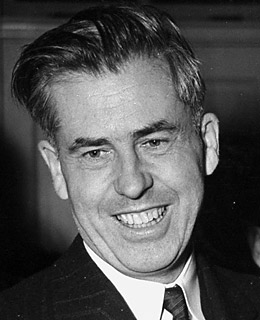
The USDA's ownhistory says officials expected the slaughter to provoke public outrage but considered the action necessary. Agriculture Secretary Henry Wallace
later acknowledged how disturbing the policy looked, describing the destruction of growing production as a grim consequence of an economy Washington believed had become badly unbalanced.
The administration understood exactly what it was doing.
The U.S. Department of Agriculture's concern with price-support and adjustment legislation is carried out under a series of interrelated laws passed by Congress from 1933 to 1984. Beginning with the major proposals of the 1920s for handling and marketing farm surpluses, this history records the establishment of price-support and adjustment programs with the Federal Farm Board in 1929 and the Agricultural Adjustment Acts of 1933 and 1938, and then traces their evolution through 1984. This half century of development is important because it forms the foundation for implementing current and future farm legislation. Key words: Price support, production adjustment, history, Depression. PREFACE Congress will consider new farm legislation in 1985 to replace the expiring Agriculture and Food Act of 1981. In preparation for these deliberations, the Department of Agriculture and many groups throughout the Nation are studying the experience under the 1981 law and preceding legislation to see what lessons can be learned that are applicable to the 1980s. This history of USDA price-support and adjustment programs supplements an earlier series of background papers on the key characteristics of 14 commodities, the farm industries which produce them, and the farm programs under which they are produced.
Cotton received similar treatment. Prices had fallen from 29 cents per pound in 1923 to 6.5 cents in 1932. Roosevelt's administration set out to eliminate 10 million acres, roughly 25% of the cotton already growing in American fields.
The target was reached.
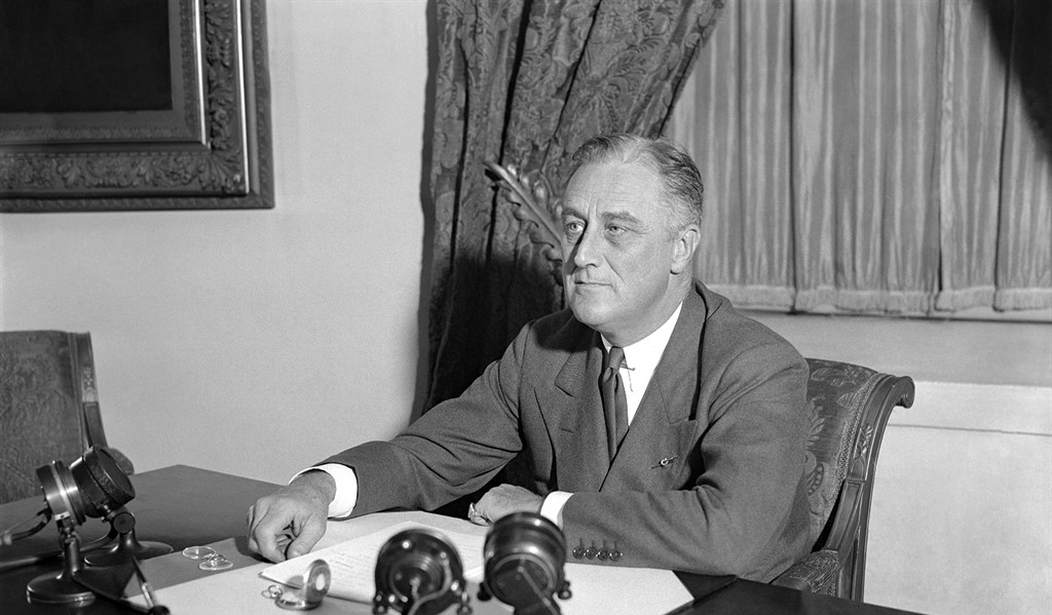
Roosevelt personally urged farmers to participate. He told Agriculture Secretary Wallace that growers had a patriotic responsibility to reduce the oversupply and thereby obtain better prices for what remained.
I know that for the past two weeks the representatives of the farm adjustment administration have been presenting to the 2,000,000 producers of cotton the hard facts of supply and demand, but the real question is, are the cotton growers ready to recognize these facts and seize their opportunity.
I myself am one of those who as a planter of cotton has suffered from the absurdly low prices of the past few years. What I am concerned about, and what every other cotton grower ought to think about, is the price of cotton next year if cotton acreage is not reduced.
There are two reasons why every cotton grower should go along with the Government's national responsibility. The first is the patriotic duty of making the plan a success for the benefit of the whole country; and the second is the personal advantage to every cotton grower in helping as an individual to reduce an oversupply of cotton and thereby obtaining a better price for what he grows.
The responsibility rests on the individual grower, and I believe that we can get substantial unity among our more than 2,000,000 cotton producers for this program of a planned and orderly harvest.
Here was the New Deal in its purest form. Washington looked at collapsing prices and concluded that prosperity could be engineered by making useful goods scarcer.
Prices were indeed desperately low. Farmers were going broke, and doing nothing wasn't an acceptable answer.
But destroying production while Americans lacked food, clothing, work, and money should disturb us even if the program improved farm prices.
Roosevelt remained unapologetic. In 1935, he ridiculed critics for shedding "crocodile tears" over the slaughter of little pigs and defended his farm programs as necessary corrections to a failed economic order.
Let me make one other point clear for the benefit of the millions in cities who have to buy meats. Last year the Nation suffered a drought of unparalleled intensity. If there had been no Government program, if the old order had obtained in 1933 and 1934, that drought on the cattle ranges of America and in the corn belt would have resulted in the marketing of thin cattle, immature hogs and the death of these animals on the range and on the farm, and if the old order had been in effect those years, we would have had a vastly greater shortage than we face today.
Our program- we can prove it—saved the lives of millions of head of livestock. They are still on the range, and other millions of heads are today canned and ready for this country to eat.
I think that you and I are agreed in seeking a continuance of a national policy which on the whole is proving successful. The memory of old conditions under which the product of a whole year's work often would not bring you the cost of transporting it to market is too fresh in your minds to let you be led astray by the solemn admonitions and specious lies of those who in the past profited most when your distress was greatest.
You remember and I remember that not so long ago the poor had less food to eat, and less clothes to wear, at a time when you had practically to give away your products. Then the surpluses were greater, and yet the poor were poorer than they are today when you farmers are getting a reasonable, although still an insufficient, price.
FDR inherited a terrible mess, and he deserves to be judged against the severity of the problem he faced.
He also deserves to be judged by the solution he chose.
When Americans were hungry and farmers were desperate, Washington decided part of the answer was fewer pigs, less cotton, and government checks for producing less.
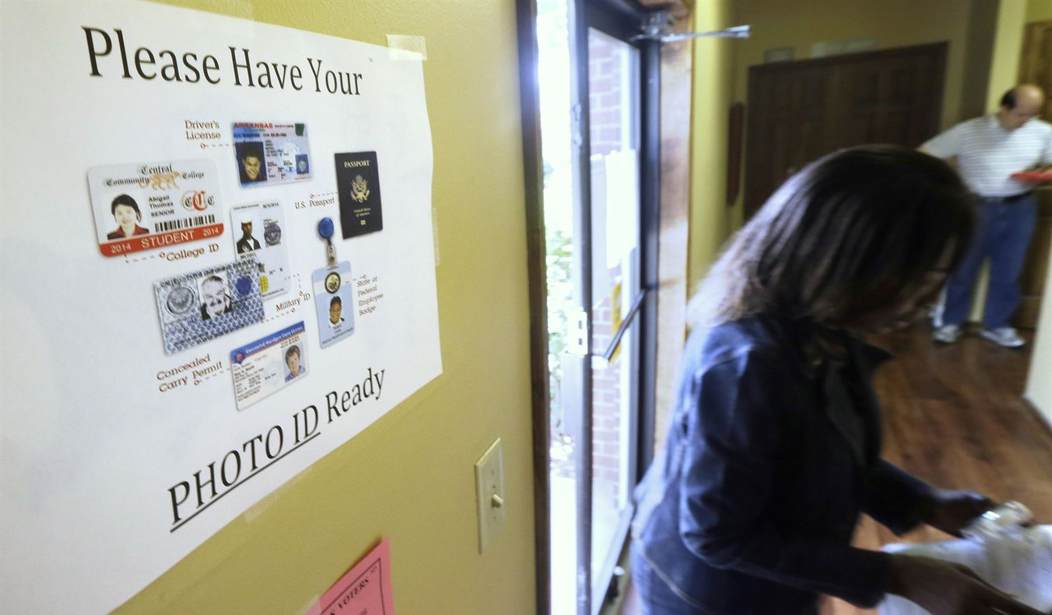
That’s the mantra of modern-day Democrats who require identification to get into everything from national conventions to campaign events, but then call the act of proving you are legally entitled to vote in elections “racist” and “fascist.”
Photographic IDs are “facist,” if you will.
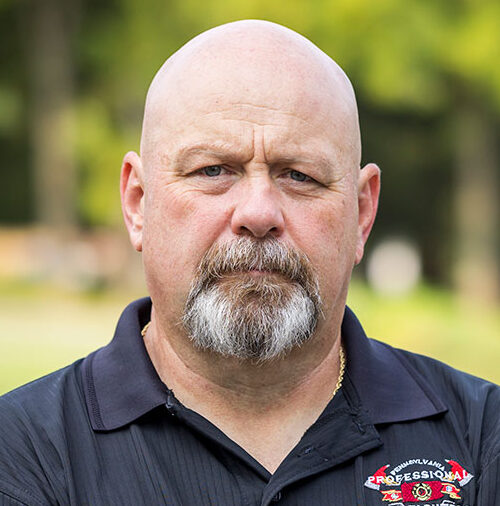
Take Pennsylvania Democratic congressional candidate Bob Brooks.
He is a Bernie bro who has attacked the SAVE America Act as an effort to “restrict voting rights.”
No, it’s a restriction on illegally voting in elections. And we now have thousands of cases of it happening, by the way. So, there is no more argument that “it never happens.”
So it comes down to this: Do you want to allow illegal voting and disenfranchise legal voters? Or do you want to disenfranchise people who are too lazy to go through the simple act of adulting to get a photo ID?
Well, 80 percent of the American people prefer the former to the latter.
But when it comes to campaign events, Brooks has a different standard than that he wants for U.S. elections: Bring an ID or you can’t participate in his “democracy.”
So, either he is a virulent racist because he thinks black people are too lazy and dumb to get IDs and thus passing the SAVE America Act is an attack on civil rights, or he is a virulent racist because he thinks black people are too dumb and lazy to get IDs and he wants to keep them out of his campaign events.
Hey, those are his rules, not mine.
Brooks, the Democrat nominee challenging Republican Rep. Ryan Mackenzie
in Pennsylvania's 7th Congressional District, has been endorsed by Sen. Bernie Sanders and other intellectually dishonest politicians.
A former Bethlehem firefighter, Brooks served with the department from 2005 to 2025 and has led the Pennsylvania Professional Fire Fighters Association since 2021.
Earlier this year, Brooks took aim at Republican election-integrity proposals, including the SAVE America Act, which would impose federal proof-of-citizenship and voter-identification requirements.
“Donald Trump and Washington Republicans are once again resorting to lies about our elections because they’re failing to address skyrocketing costs here at home,” Brooks told The Morning Call in an April candidate questionnaire.
“The truth is we have some of the best-run elections in the country right here in Pennsylvania,” he continued. “I oppose the SAVE Act and I oppose efforts to restrict voting rights.”
The House passed the expanded SAVE America Act in February by a 218-213 vote.
But Brooks' own campaign is demanding identification before allowing people into at least some of his political events.
Breitbart News reported Friday that Brooks' campaign required attendees to present identification and denied entry to at least one person who attempted to attend. Video published with the report showed the would-be attendee being turned away.
National Republican Congressional Committee spokesman Reilly Richardson told Breitbart that Brooks “doesn’t care about who votes in our elections but has no problem requiring ID to attend his ritzy campaign events.”
The controversy is particularly notable in Pennsylvania, where most returning voters are not required to produce identification when voting in person.
Under current Pennsylvania rules, voters must present identification when voting for the first time at a particular polling place. That identification does not necessarily have to include a photograph.
Acceptable forms include a Pennsylvania driver's license, government ID, passport, military ID, student or employee ID, voter-registration card, utility bill, bank statement, paycheck, or certain other documents.
Pennsylvania's broader photo-ID requirement, enacted in 2012, was struck down by the Commonwealth Court in 2014.
That leaves Brooks in the politically awkward position of opposing federal legislation that would require voters to prove their identity while his own campaign demands identification from people seeking access to its events.
If you take him at his word, he is a racist. But the simplest explanation for his hypocrisy is that he is intellectually dishonest.
Either way, you probably don’t want a guy like Brooks in Congress voting on the nation’s election laws.
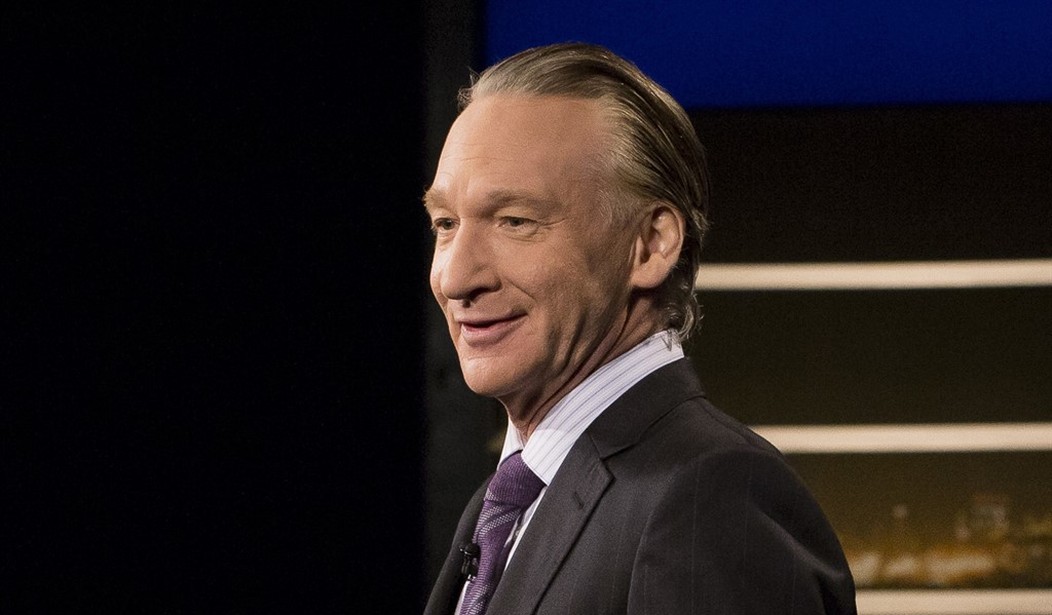
Grab a seat for this one because Bill Maher once again took a blowtorch to his side on the 25th anniversary of the 9/11 attacks. It was a banger, as the kids would say — an evisceration of progressive narratives about the deadliest terrorist attack in modern history.
First, he took aim at the likes of the BBC and CBC, which issued memos about covering terrorist attacks, like 9/11, to the point that they warned their reporters not to even use the word, as it’s emotionally loaded and could create a barrier to understanding. Maher’s reply was simple: you know what that really does: lying.
9/11 was a terrorist attack, and the worst thing about it was the 3,000 people who were murdered that day, not the Muslims who were placed under suspicion or the Islamophobia that followed. It’s not even remotely close. There is a clash of civilizations, as Maher said, between radical Islam and Western liberalism. We support religious freedom and the equality of women, and we are not throwing gay people off rooftops. That’s their side, and what Maher found disturbing is how many liberals now side with the Islamists, citing a poll of Gen Z idiots in which one in five thinks Osama bin Laden was an ‘okay’ guy.
He’s Luigi Mangione in a turban, quipped the HBO host.
Maher added that the biggest cowards post-9/11 are Democratic Party politicians, whose moral confusion, which has become cancerous over the past quarter century since the attacks, has been laid bare by the Gaza War: a strip of land the Israelis gave back as part of a peace deal, made possible when then-Prime Minister Ariel Sharon ditched Likud to form the now-defunct Kadima Party. It was later taken over by Hamas, a terrorist organization, and used to launch attacks on Israel. Israel launched a counterattack after the equivalent of their 9/11, the October 7 attacks, isn’t genocide. And yet, it’s the issue Democrats police their candidates like the Gestapo—they must say it, or at least not bash the terrorists.
It’s not a genocide, never was, and never will be. Israel stockpiled 1.8 million tons of aid, delivered it to Gaza, and allowed nearly 40,000 Gazans to leave and seek medical treatment—that’s not genocide. Maher also said that the Israelis are the ‘Indians’ in this war, the indigenous people with historical rights to this piece of land that is their ancestral homeland. As he noted in his monologue, this is why TikTok isn’t a good main hub of information, but you knew that already.
And if one wonders why antisemitism has exploded, this is why.
President Donald Trump has called upon the Smithsonian’s American History Museum to launch a celebration of George Washington by constructing a new exhibit detailing his life and legacy ahead of the 300th anniversary of his birth.
Trump has demanded the process to construct the five-year-long exhibit begins with the installation of an 11-foot-tall statue of America’s first president to replace the current Infinity statue in the plaza outside the venue.
“That strange modernist sculpture tells visitors nothing about America, inspires no one, and honors none of our Great American Heroes,” Trump said on social media.
“Replace a sculpture that says nothing about America with the man who, more than anyone else, says everything about America,” Trump said in a second post. “This is how we should begin to honor George Washington in the lead-up to his 300th birthday in 2032.”
Trump also blasted the Smithsonian for failing to include a “Center for American Heroes” on the 250th anniversary of American independence, which instead constructed a “Center for Restorative History” with a “decolonization plan” to focus on the oppressed under President Joe Biden.
Trump explained that the Center currently features an exhibit that describes the period between Christopher Columbus’s discovery of America in 1492 to American independence in 1776 as the “Great Unsettling” of North America.
Trump has indicated that the 11-foot statue should only be the start of the revitalization of the museum, and that a 30-foot statue of Washington needs to be installed on the day that the Washington exhibit opens.
An Afghan woman accused of supporting an Islamic State of Iraq and al-Sham (ISIS)-inspired 2024 shooting plot on Election Day has been deported from Texas in the U.S. Department of Justice’s (DOJ’s) first use of the U.S. Alien Terrorist Removal Court (ATRC).
On Friday, the DOJ announced the removal of Nazira Haji Zada, 47, who lived in Fort Worth, Texas, and admitted to conspiring with at least one other individual to purchase two AK-47 rifles, 500 rounds of ammunition and 10 magazines to carry out an attack on or around November 5, 2024, on behalf of ISIS.
Zada was described by the department as the “matriarch” of her family. Her son, Abdullah Haji Zada, and son-in-law, Nasir Ahmad Tawhedi, were previously arrested and convicted for the Election Day plot.
Her case was the first to have been brought before the ATRC since it was established by Congress in 1996. The application to remove her was filed on July 15th and certified by Attorney General Todd Blanche. She appeared in court for the first time on July 30th, presided over by ATRC Chief Judge Joan N. Ericksen, who signed the order to remove her to her country of origin.
The DOJ said that the U.S. government provided Zada with two federal public defenders and approximately half a terabyte of documents supporting the government’s case.
“This landmark case, resulting in the prompt removal of this alien terrorist to her country of origin, is a win for national security and the rule of law,” Blanche stated. “Those who support and condone terrorism should not be living in the United States, and this first-ever case before the ATRC shows how the Department will use every tool at its disposal to protect our country.”
Tawhedi and Abdullah were arrested on October 7, 2024, after buying weapons and ammunition from an undercover Federal Bureau of Investigation (FBI) employee.
Abdullah, who was 17 at the time of his arrest, entered his guilty plea as an adult and was sentenced to 15 years in prison. He will also be deported to Afghanistan following his incarceration, as stipulated by his plea agreement.
In June 2025, Tawhedi, 28, pled guilty to conspiring and attempting to provide material support and resources to ISIS, a designated foreign terrorist organization, and receiving, attempting to receive, and conspiring to receive firearms and ammunition in furtherance of a federal crime of terrorism. He is awaiting sentencing.
“This is a historic and vitally important step in our work to protect the U.S. homeland from terrorism,” said Director Kash Patel. “An individual who supported a plot by ISIS-sympathizing family members to commit an attack in America has paid the price for that. She came to our country, betrayed it, and has now lost the right to live here and enjoy our democratic freedoms.”
“Zada supported her sons’ terrorist plot to attack the United States while she enjoyed the privilege of residing here as a resident alien,” Assistant Attorney General for National Security John A. Eisenberg said. “She abused our Nation’s hospitality and represented a clear threat to our national security. The United States is a safer place now that her sons are in custody and she has been deported.”
“Those who support terrorism against the American people will face the consequences,” stated State Department Spokesman Tommy Pigott. “We will secure our borders, and we will use every tool to stop those who intend us harm from entering or remaining at-large in our country.
In the first-ever case before the United States Alien Terrorist Removal Court (ATRC), Nazira Haji Zada, 47, an Afghan national previously residing in Fort Worth, Texas, was removed from the U.S. after conceding that she is an alien terrorist. As the matriarch in her family, she… pic.twitter.com/91lv3Ixqbb
Americans pride themselves on privacy in their own homes, but a new independent investigation has blown open a worrisome truth: some LG smart TVs appear to be logging conversations and scanning everything on your local network even when the screen looks dark. The 135-minute technical report led by Gamers Nexus and collaborators found that LG sets can capture microphone audio in standby, store it, and then upload that data once the TV reconnects to the internet — a finding that should make every household uneasy.
The same probe uncovered that these televisions sweep local Wi‑Fi to fingerprint phones, laptops, and other devices, and that automatic content recognition (ACR) systems are gathering surprisingly granular viewing and ambient information. Security researchers reproduced recordings and network captures that show audio being stored locally and later transmitted, behavior experts say is tantamount to surveillance when users are unaware.
Worse still, the reporting released clips from LG’s own business-facing materials where executives boast about owning “the glass” — the literal window into American living rooms — and pushing data-driven ad solutions, underscoring the financial incentives behind this mass harvesting of everyday life. When companies treat our living rooms as advertising platforms, liberty and dignity are the losers, because what’s monetized is your private life.
LG has pushed back hard, calling some of the claims inaccurate, but the pattern here is familiar: industry denials followed by technical disclosures and regulatory scrutiny. Remember that last year Texas sued major TV makers over ACR practices, and LG reached a settlement that required clearer disclosures and opt‑outs — yet this investigation suggests the fixes weren’t nearly enough. Americans shouldn’t have to trust corporate promises when hard, repeatable tests show otherwise.
The practical takeaway for families is urgent and simple: disconnect smart TVs from your home network unless you absolutely trust the device, disable voice and ACR features, and use external streaming hardware that you control. The researchers who did this work recommend keeping these sets offline entirely and relying on devices you can audit; that advice should be followed by every parent and patriot who values a private home.
This isn’t just about annoying targeted ads — it’s about the slow creep of a surveillance economy that treats Americans as data points to be bought, sold, and weaponized by algorithms. Conservatives who believe in limited government and personal sovereignty must demand transparency, stronger consumer safeguards, and real penalties for companies that harvest intimate details without meaningful, informed consent. No corporate checkbox should substitute for the Bill of Rights when it comes to the sanctity of the home.
Now is the time for voters and lawmakers to act: require meaningful disclosures, ban hidden microphones that operate in standby, and restore simple, enforceable privacy rights so a family’s living room remains theirs. If we allow Big Tech and complicit manufacturers to normalize this behavior, we’ll wake up one day to a country where nothing inside our walls is sacred — and that future is unacceptable to any free American.
A Massachusetts courtroom produced the kind of gut‑wrenching result every citizen who believes in law and order feared: on September 4, 2026 a judge declared a mistrial after jurors deadlocked in the case of Lindsay Clancy, the mother accused of killing her three young children. The legal roller coaster that followed the January 24, 2023 slayings now faces a bitter pause, and hardworking Americans deserve answers about why a resolute single juror could derail deliberations.
Reports now make clear the split was 11 to 1, with jurors saying the lone holdout admitted he had reasonable doubt yet refused to return an acquittal by reason of insanity. That paradox — acknowledging doubt but clinging to a personal verdict — will leave many patriots scratching their heads and asking whether juries are getting the instructions and respect for the rule of law they need.
What jurors described from inside the room is even more disturbing: one juror says the holdout mimicked strangulation with an exercise band and scrolled his phone during deliberations, behavior that sounds less like civic duty and more like grotesque performative stubbornness. If true, that conduct undermines public confidence in a system that demands seriousness when deciding life and death questions for victims and defendants alike.
Fellow jurors told reporters the holdout offered no new evidence to justify his position and would not explain why he declined to join the majority that found reasonable doubt about Clancy’s criminal responsibility. Courtroom efforts to remove the holdout were denied and, after supplemental instructions failed, the judge had little choice but to call off the verdict, leaving the family, the community, and the nation in limbo.
Across the country this mistrial has become a mirror showing how divided we are over justice and mercy; some see a failure to hold an obvious killer accountable and others see the legal system doing its awkward work to balance culpability and mental illness. That national divide should not let us forget the three little lives lost and the responsibility of courts to deliver clear, decisive outcomes that protect the innocent and punish the guilty.
Americans who believe in accountability should demand answers: prosecutors must seriously consider a retrial, judges must enforce standards that keep jury deliberations focused and honest, and citizens must insist that the system serve victims first. We owe it to the Clancy children, to every grieving parent, and to the rule of law to make sure a single, inexplicable holdout does not become a loophole that allows tragedy to go unanswered.
President Donald Trump said on Friday he would not oppose Chinese automakers building cars in the United States despite some concerns from U.S. lawmakers and car companies.
"If China wanted to come in and open a plant to build their cars here, I'd be okay with that," Trump said in an interview on the Fox News program "The Ingraham Angle."
"Japan does it, but they hire our people. The big thing is they hire our people," he said.
He added that he does not want Chinese automakers to build cars in Mexico and ship them to the United States. "I'm not knocking Chinese cars," Trump said.
U.S. automakers have urged Trump, who is due to meet Chinese President Xi Jinping in Washington in two weeks, not to agree to allow Chinese automakers access to the U.S. market.
On Wednesday, Sen. Elissa Slotkin, a Michigan Democrat, said there were "rumors that Trump is planning to allow Chinese cars to be sold in the U.S., as part of a larger deal he’s putting together. That would be a strategic mistake."
Trump called Slotkin's statement a "total phony rumor" and said he had kept Chinese vehicles out of the United States.
A regulation imposed by former President Joe Biden's administration in early 2025 effectively bans all Chinese automakers from selling or building passenger vehicles in the U.S. Washington also maintains more than 100% tariffs on Chinese electric vehicles.
Last week, a group representing nearly all major automakers urged Congress to quickly pass legislation permanently barring Chinese vehicles from the U.S. market.
The Alliance for Automotive Innovation, which represents General Motors, Ford, Toyota, Volkswagen , Hyundai, Honda, Stellantis and others, called for passage of the bill by the end of December.
"Right now, Chinese automakers are dumping subsidized vehicles with connected software and hardware around the world," the group's CEO, John Bozzella, said in a letter to congressional leaders.